Revenue Growth: Bank Statement Converter Insights
I launched the Bank Statement Converter with a simple idea and a clear goal: make financial data more accessible. Fast forward to today, we're pulling in $40K MRR. How did we get here? Back in 2022, we started modestly with just $6K MRR. Since then, we've deployed precise strategies to grow our user base and refine our business model. This journey hasn't been without its challenges: I had to tweak our monetization strategy and optimize our monthly traffic to sustain exponential growth. As a builder, I'm sharing the steps that transformed a simple website into a revenue-generating machine.
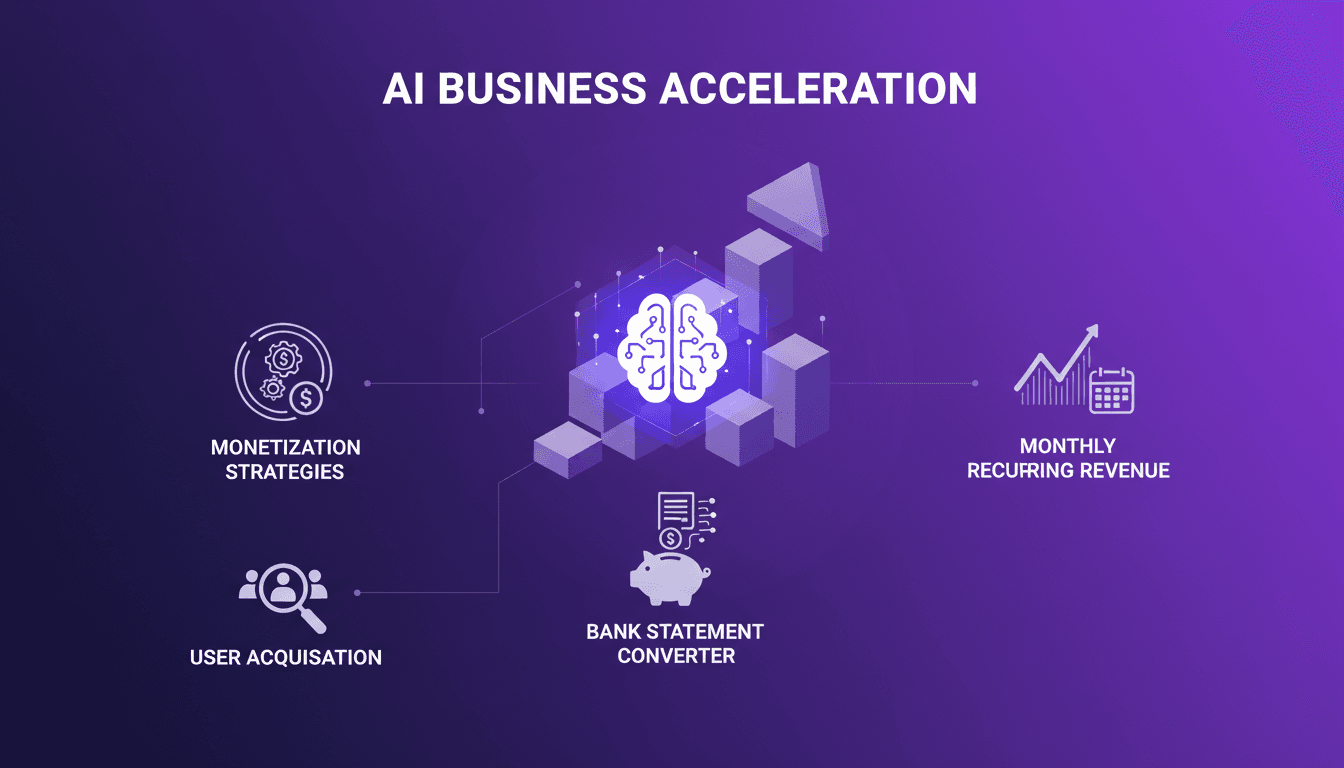
When I launched the Bank Statement Converter, I set myself a challenge: make financial data more accessible. Fast forward to today, and we're hitting $40K in monthly recurring revenue, but getting here required some strategic pivots. Back in 2022, we started modestly with $6K MRR. From there, it was all about orchestrating growth with precision: I had to tweak our monetization strategy and expand our user base. I learned the hard way that optimizing monthly traffic would be key to sustaining our growth. This journey is a testament to how a simple website can become a revenue-generating powerhouse if done right. I'm sharing our journey, our mistakes, and our successes to give you a peek into our strategy.
Launching the Bank Statement Converter
The idea for the bank statement converter was born out of a personal need to simplify financial data management. I was tired of spending hours manually handling bank statements, and I knew there had to be a better way. Initially, setting up the backend posed challenges, especially regarding data security. I had to juggle multiple technologies to ensure sensitive information remained protected.
To minimize initial costs and speed up deployment, I leveraged existing tech stacks. Why reinvent the wheel? By using tools like Node.js and PostgreSQL, I was able to build a solid foundation quickly. Word of mouth was our first ally in acquiring initial users. A few small-scale digital marketing campaigns also helped spread the word about our product. Thus, our first batch of users came through these combined efforts.
- Utilizing existing technologies to reduce costs
- Importance of data security from the outset
- Acquiring first users through word of mouth
Navigating Revenue Growth from 2022 to Now
In 2022, we started with a MRR (Monthly Recurring Revenue) of $6,000. That year, the focus was on refining the product. I wanted every user to have a smooth and intuitive experience. By adjusting conversion rates and optimizing user experience, we boosted our MRR to $14,000 in 2023. It was a significant leap forward, but I knew there was still potential.
In 2024, through strategic partnerships and expanded features, we reached $27,000 MRR. Today, we sit at $40,000, with a strategy focused on sustaining growth and user retention. However, watch out, too rapid growth can be tough to manage without the right infrastructure.
- MRR 2022: $6,000
- MRR 2023: $14,000
- MRR 2024: $27,000
- Current MRR: $40,000
Understanding User Base and Customer Metrics
With 75,000 total users, our conversion rate from free to paying customers is a key indicator of our success. Of course, not all become paying, but it's crucial to analyze acquisition channels to determine which offer the best ROI. This analysis has allowed me to better balance user growth with operational and server costs.
Customer feedback is crucial in our product iterations. I've learned that small improvements, often stemming from direct feedback, can have a significant impact. So, never underestimate the importance of your users in the continuous improvement process.
- Total number of users: 75,000
- Importance of customer feedback in product optimization
- Balancing growth with operational costs
Monthly Traffic Insights and Optimization
Our traffic surged by X% after implementing SEO strategies and content marketing. Understanding traffic patterns is essential to optimize server loads and reduce downtime. I often resort to A/B testing on our landing pages to improve conversion rates.
You also need to watch out for seasonal traffic dips. Planning campaigns accordingly can help maintain a steady flow of visitors. I always recommend monitoring these trends and adapting quickly to fluctuations.
- Traffic optimization through SEO
- A/B testing to improve conversions
- Planning campaigns based on seasonal trends
Future Growth Trajectory and Market Position
To grow further, exploring new markets and potential integrations is on our roadmap. It's crucial to continue improving service delivery to stay ahead of the competition. However, identifying potential threats and preparing with mitigation strategies is also necessary.
Finally, balancing growth with sustainability is essential to ensure long-term success. I've been burned before by neglecting this aspect, but today, it's a priority in every decision I make.
- Exploration of new markets
- Continuous service improvement
- Preparation for potential threats
- Balance between growth and sustainability
So, what are the concrete takeaways from the Bank Statement Converter journey? First, the MRR growth from $6,000 in 2022 to $40,000 now is rock solid. I learned that focusing precisely on user needs allowed us to adapt our business model to be sustainable. Next, the key is to continuously analyze market demands—never stagnate. Finally, customer loyalty and monthly traffic increase don't just happen; they're the result of strategic work on user experience. Looking ahead, I'm convinced any project can follow this trajectory as long as we stay focused on execution. Are you looking to scale your own project? Apply these insights to your workflow. Don't forget to watch the original video for a deeper understanding of the process—it's packed with great ideas. You'll see, it's a real game changer, but watch out, without a clear strategy, excitement alone won't cut it.
Frequently Asked Questions

Thibault Le Balier
Co-fondateur & CTO
Coming from the tech startup ecosystem, Thibault has developed expertise in AI solution architecture that he now puts at the service of large companies (Atos, BNP Paribas, beta.gouv). He works on two axes: mastering AI deployments (local LLMs, MCP security) and optimizing inference costs (offloading, compression, token management).
Related Articles
Discover more articles on similar topics

Revenue Growth: Simple Site, $40K a Month
I started with a simple idea: a bank statement converter tool. Fast forward a few years, and I'm pulling in $40K a month. How did I build this? First, I launched a basic tool. Then, I expanded the user base and turned the idea into a revenue machine. We'll cover the key milestones, traffic growth, and how I turned users into paying customers. If you're looking to boost your site, this is the place to be.
Growing Your App Revenue to $17K/Month
I've been deep in the app dev trenches, and believe me, growing an app to $17K a month isn’t just luck—it's strategy, the right tools, and a sprinkle of vibe coding magic. In this article, I’ll walk you through our journey with Wrestle AI, touching on everything from our revenue model to influencer marketing and technical stack. If you're aiming to turn your app into a revenue powerhouse, you're in the right place.
Why We Donated MCP to Linux
I was knee-deep in code when the idea hit me—what if we made the Model Context Protocol open-source? It wasn't just about sharing; it was about community and innovation. Donating the MCP to the Linux Foundation was our way of pushing boundaries and inviting others to join the journey. The technical challenges were many: security, context bloat, but that’s what makes the project exciting. The Agentic AI Foundation plays a crucial role in MCP's adoption and impact within the AI community. Our decision wasn't just a donation; it was an invitation to innovate together. Now, let's dive into the details.
Claude: Philosophy and Ethics in AI
I joined Anthropic not just as a philosopher, but as a builder of ethical AI. First, I had to grasp the character of Claude, the AI model I’d be shaping. This journey isn't just about coding—it's about embedding ethical nuance into AI decision-making. In the rapidly evolving world of AI, ensuring that models like Claude make ethically sound decisions is crucial. This isn't theoretical; it's about practical applications of philosophy in AI. We tackle the character of Claude, nuanced questions about AI behavior, and how to teach AI ethical behavior. As practitioners, I share with you the challenges and aspirations of AI ethics.
Treating AI Models: Why It Really Matters
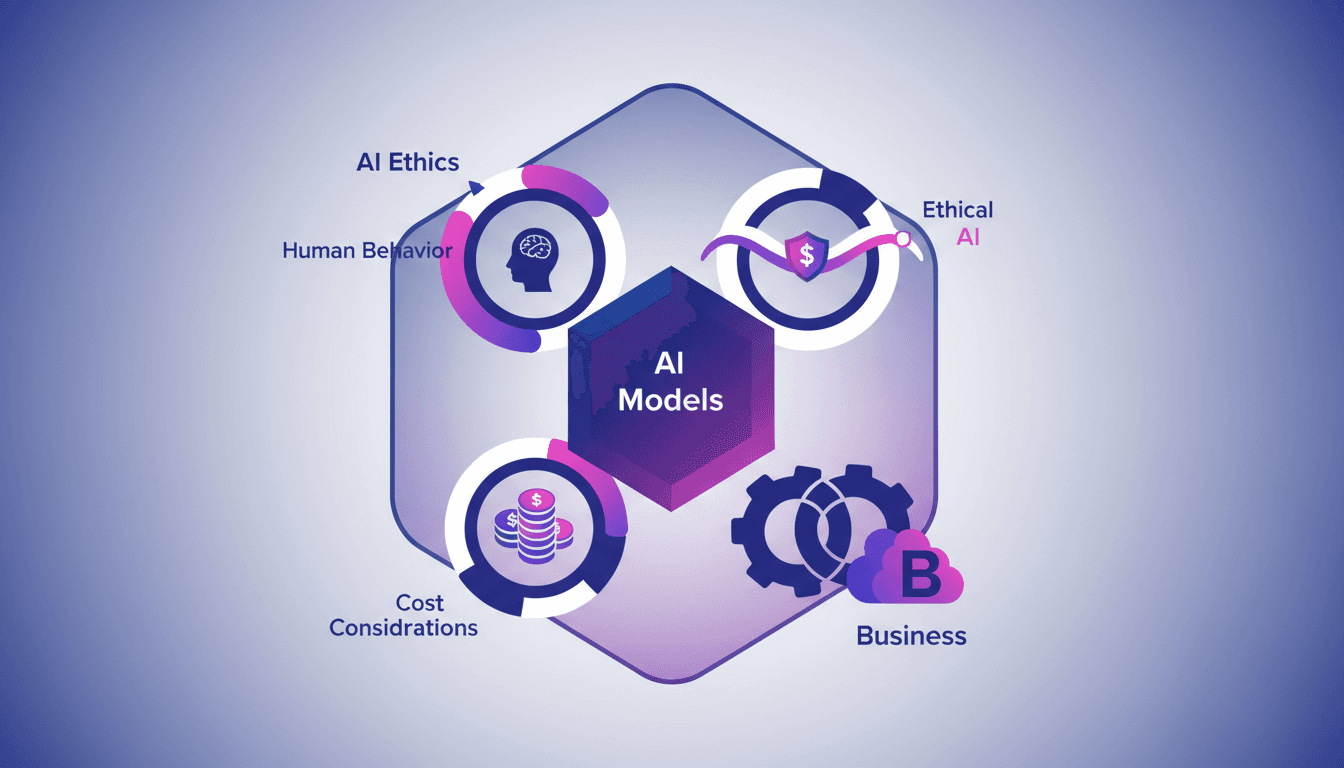
I've been in the trenches with AI models, and here's the thing: how we treat these models isn't just a tech issue. It's a reflection of our values. First, understand that treating AI models well isn't just about ethics—it's about real-world impact and cost. In AI development, every choice carries ethical and practical weight. Whether it's maintaining models or how we interact with them, these decisions shape both our technology and society. We're talking about the impact of AI interactions on human behavior, cost considerations, and ethical questions surrounding humanlike entities. Essentially, our AI models are a mirror of ourselves.