Nvidia's Personal AI Supercomputer: Project DIGITS
I’ve been knee-deep in AI projects for years, but when Nvidia announced their personal AI supercomputer, I knew this was a game changer. Powered by the gb10 Grace Blackwell chip, this beast promises to handle models with up to 200 billion parameters. This isn't just tech hype; it's a shift in how we can build and deploy AI solutions. With power a thousand times that of an average laptop, this isn't for amateurs. Watch out for the pitfalls: before diving in, you need to understand the specs and the costs. I'll walk you through what's changing in our workflows and what you need to know to avoid getting burned.
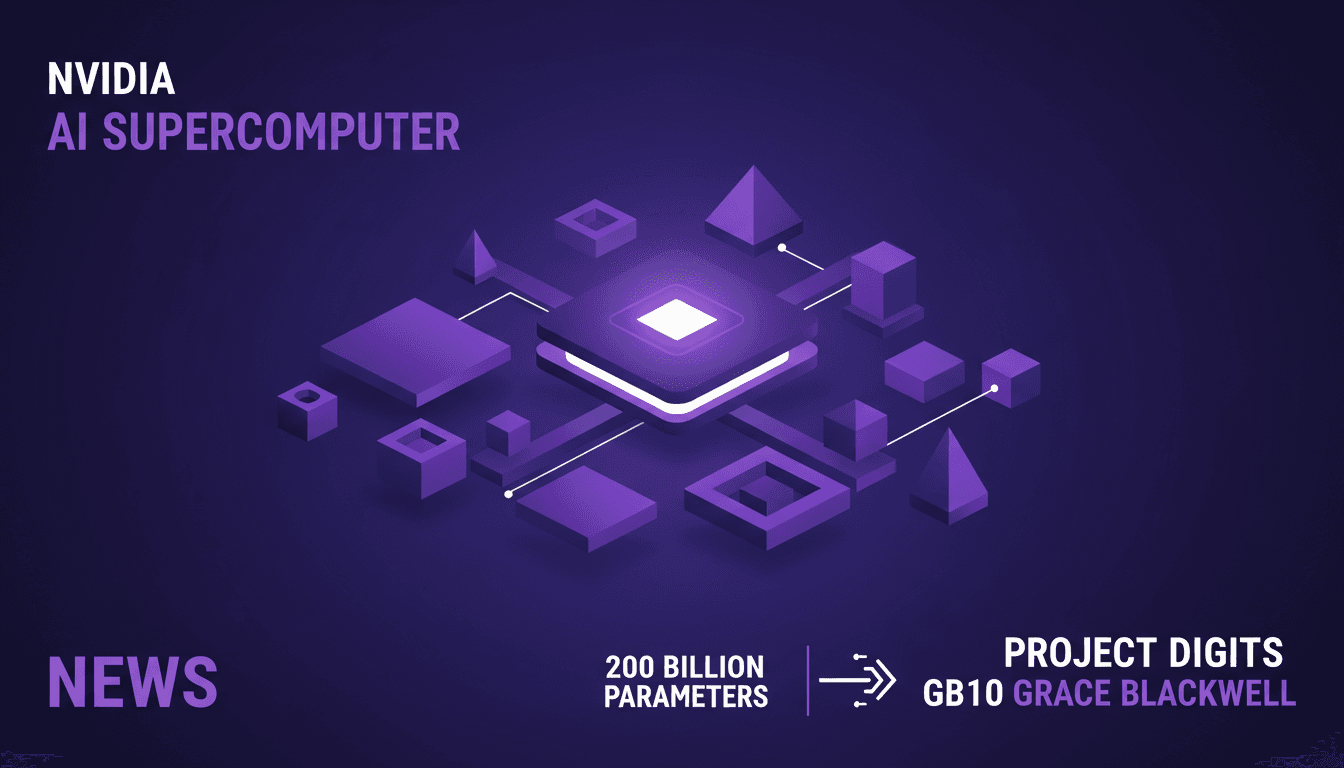
When Nvidia unveiled their personal AI supercomputer, I knew we were looking at a real game changer. With the gb10 Grace Blackwell chip, Project DIGITS isn't just a gadget. It's a behemoth capable of handling models up to 200 billion parameters – a thousand times more powerful than your average laptop. For those of us orchestrating AI solutions daily, this is a quantum leap. But watch out: the price and complexity aren't trivial. I've been burned by tech promises too good to be true in the past, so I'm sharing my practical take on what really works and what can trip you up. We'll delve into the real implications on our workflows, the business impact, and what it means for you, the savvy user. Don't get blinded by the marketing; let's dive into the concrete.
Unpacking Nvidia's Personal AI Supercomputer
So, Nvidia just dropped something that could seriously disrupt how we approach AI at a personal level. We're talking about Project DIGITS, their personal AI supercomputer. This isn't just a gadget; it's a massive leap forward in personal computing power. Imagine a machine that's a thousand times more powerful than your average laptop. Yes, you read that right, a thousand times. This is what makes this project so exciting for us developers who often need to handle complex AI models without access to massive infrastructures.
This supercomputer is built to handle complex AI models with ease. For someone like me who spends hours optimizing models, this machine could be a game changer. It promises to give us an autonomy we never had before. Imagine running natural language processing (NLP) models or complex simulations right from your desk. I can already see the potential impact on projects that would have otherwise required colossal resources.
Harnessing 200 Billion Parameter Models
Let's cut to the chase: what does it mean to run models with up to 200 billion parameters? For starters, this is a level of capability that was once reserved for massive data centers. When working on NLP projects, I often have to balance power and efficiency, and here, this machine could offer the best of both worlds.
The practical applications are numerous. Whether it's NLP or complex simulations, the ability to handle such vast models opens doors. But watch out, with great power comes great responsibility, especially in terms of costs and efficiency. I've seen projects where we got burned trying to do everything in-house. Here, the promise is to train and deploy models faster, but that doesn't mean we should proceed mindlessly.
- Capability to run models up to 200 billion parameters
- Practical applications in NLP and simulations
- Balance between power, efficiency, and cost
Inside the gb10 Grace Blackwell Super Chip
Let's dive into the guts: the gb10 Grace Blackwell chip. For me, this is where the real revolution lies. This chip is a genuine game changer for personal AI computing. Performance-wise, it promises unmatched efficiency. Imagine benchmarks that make any developer's dream. But let's be honest, it's not all sunshine and rainbows.
The performance is there, no doubt about it. But you also have to consider the limitations like heat, power consumption, and potential bottlenecks. I've faced these issues with other hardware, and you need to be ready to tackle these challenges. This chip promises great things, but it also requires careful orchestration to avoid common pitfalls.
- gb10 Grace Blackwell chip: a true game changer
- Impressive performance and benchmarks
- Watch out for heat and power consumption
Pricing and Market Impact
Let's talk numbers: this personal AI supercomputer will set you back $3,000. Yes, it might seem steep, but when you compare what you get, it's a very enticing offer. For me, who often had to juggle traditional setups, the value is undeniable. It's democratizing access to high-end computing power.
But who should invest in this technology? For AI startups and educational institutions specializing in AI training, it's a wise investment. For the average Joe, maybe not. But for those of us who live and breathe AI, it's an opportunity not to be missed.
- Cost of $3,000 for cutting-edge AI capability
- Value comparison with traditional setups
- Democratizing access to computing power
Public Interest and Future Potential
There's a huge buzz around this launch, and it's not without reason. Public interest is palpable. This machine could be the catalyst for a major industry shift. Imagine a world where every developer, every researcher has access to such power right at their desk. It could redefine the tech landscape of tomorrow.
I predict that these personal supercomputers could become the norm, paving the way for innovations we haven't even imagined yet. It's an exciting time to be in the AI field, and I can't wait to see where this leads us.
- Significant public interest
- Potential market and industry shifts
- Future prospects for AI evolution
"The ability to handle models up to 200 billion parameters is a major leap for personal AI."
So, what do I take away from Nvidia's personal AI supercomputer? First, we're talking about a machine a thousand times more powerful than your average laptop. If you've ever tried running those massive 200 billion parameter models, you know it's a game changer. Secondly, let's talk about the gb10 Grace Blackwell super chip, the beating heart of this beast. You plug this in and enter a new dimension of computing power. But watch out, you'll need to evaluate your needs because the price tag can be a bit daunting. It's perfect for businesses ready to invest in pushing AI limits. Looking forward, I see AI projects transformed by this tech, but you don't jump in blindly. Ready to revolutionize your AI projects? Dive into the specs, evaluate your needs, and imagine the impact. And to dig deeper, I suggest watching the full video to catch every detail: #Nvidia Personal #AI Supercomputer Project DIGITS!.
Frequently Asked Questions

Thibault Le Balier
Co-fondateur & CTO
Coming from the tech startup ecosystem, Thibault has developed expertise in AI solution architecture that he now puts at the service of large companies (Atos, BNP Paribas, beta.gouv). He works on two axes: mastering AI deployments (local LLMs, MCP security) and optimizing inference costs (offloading, compression, token management).
Related Articles
Discover more articles on similar topics
Becoming an AI Whisperer: A Practical Guide
Becoming an 'AI Whisperer' isn't just about the tech, trust me. After hundreds of hours engaging with models, I can tell you it's as much art as science. It's about diving headfirst into AI's depths, testing its limits, and learning from every quirky output. In this article, I'll take you through my journey, an empirical adventure where every AI interaction is a lesson. We'll dive into what truly being an AI Whisperer means, how I explore model depths, and why spending time talking to them is crucial. Trust me, I learned the hard way, but the results are worth it.
Claude: Philosophy and Ethics in AI
I joined Anthropic not just as a philosopher, but as a builder of ethical AI. First, I had to grasp the character of Claude, the AI model I’d be shaping. This journey isn't just about coding—it's about embedding ethical nuance into AI decision-making. In the rapidly evolving world of AI, ensuring that models like Claude make ethically sound decisions is crucial. This isn't theoretical; it's about practical applications of philosophy in AI. We tackle the character of Claude, nuanced questions about AI behavior, and how to teach AI ethical behavior. As practitioners, I share with you the challenges and aspirations of AI ethics.
Treating AI Models: Why It Really Matters
I've been in the trenches with AI models, and here's the thing: how we treat these models isn't just a tech issue. It's a reflection of our values. First, understand that treating AI models well isn't just about ethics—it's about real-world impact and cost. In AI development, every choice carries ethical and practical weight. Whether it's maintaining models or how we interact with them, these decisions shape both our technology and society. We're talking about the impact of AI interactions on human behavior, cost considerations, and ethical questions surrounding humanlike entities. Essentially, our AI models are a mirror of ourselves.
Integrate Langsmith and Claude Code: Build Agents
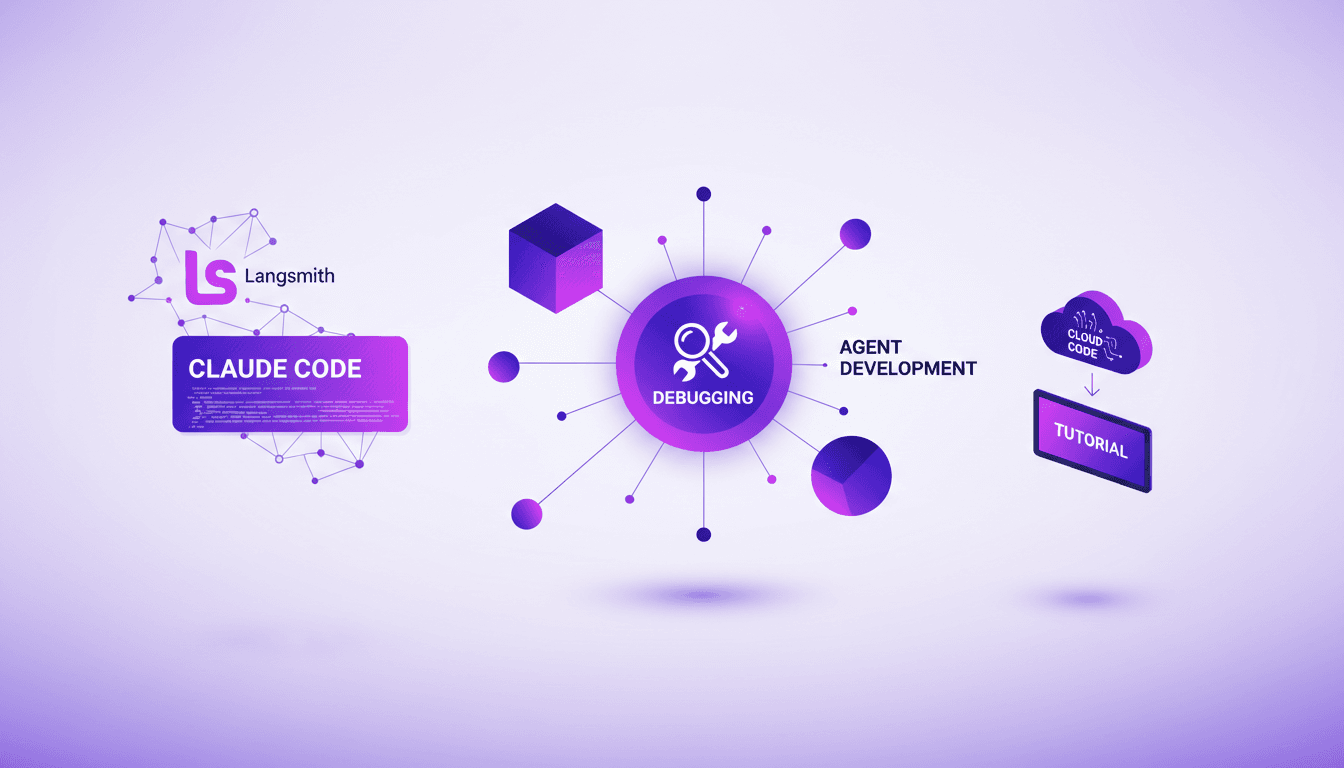
I've been knee-deep in agent development, and integrating Langsmith with code agents has been a game changer. First, I'll walk you through how I set this up, then I'll share the pitfalls and breakthroughs. Langsmith serves as a robust system of record, especially when paired with tools like Claude Code and Deep Agent CLI. If you're looking to streamline your debugging workflows and enhance agent skills, this is for you. I'll explore the integration of Langsmith with code agents, Langmith's trace retrieval utility, and how to create skills for Claude Code and Deep Agent CLI. Iterative feedback loops and the separation of tracing and code execution in projects are also on the agenda. I promise it'll transform the way you work.
Unlocking Gemini 3 Flash: Practical Use Cases
I dove into Gemini 3 Flash expecting just another AI tool, but what I found was a game changer for OCR tasks. This model, often overshadowed by the Pro, turns out to be a hidden gem, especially when you factor in cost and multilingual capabilities. In this article, I'll walk you through how Gemini 3 Flash stacks up against its big brother and why it deserves more attention. We're talking efficiency, technical benchmarks, and practical use cases. Spoiler: for certain tasks, it even outperforms the Pro. Don't underestimate this little gem; it might just transform your OCR handling without breaking the bank.