Becoming an AI Whisperer: A Practical Guide
Becoming an 'AI Whisperer' isn't just about the tech, trust me. After hundreds of hours engaging with models, I can tell you it's as much art as science. It's about diving headfirst into AI's depths, testing its limits, and learning from every quirky output. In this article, I'll take you through my journey, an empirical adventure where every AI interaction is a lesson. We'll dive into what truly being an AI Whisperer means, how I explore model depths, and why spending time talking to them is crucial. Trust me, I learned the hard way, but the results are worth it.
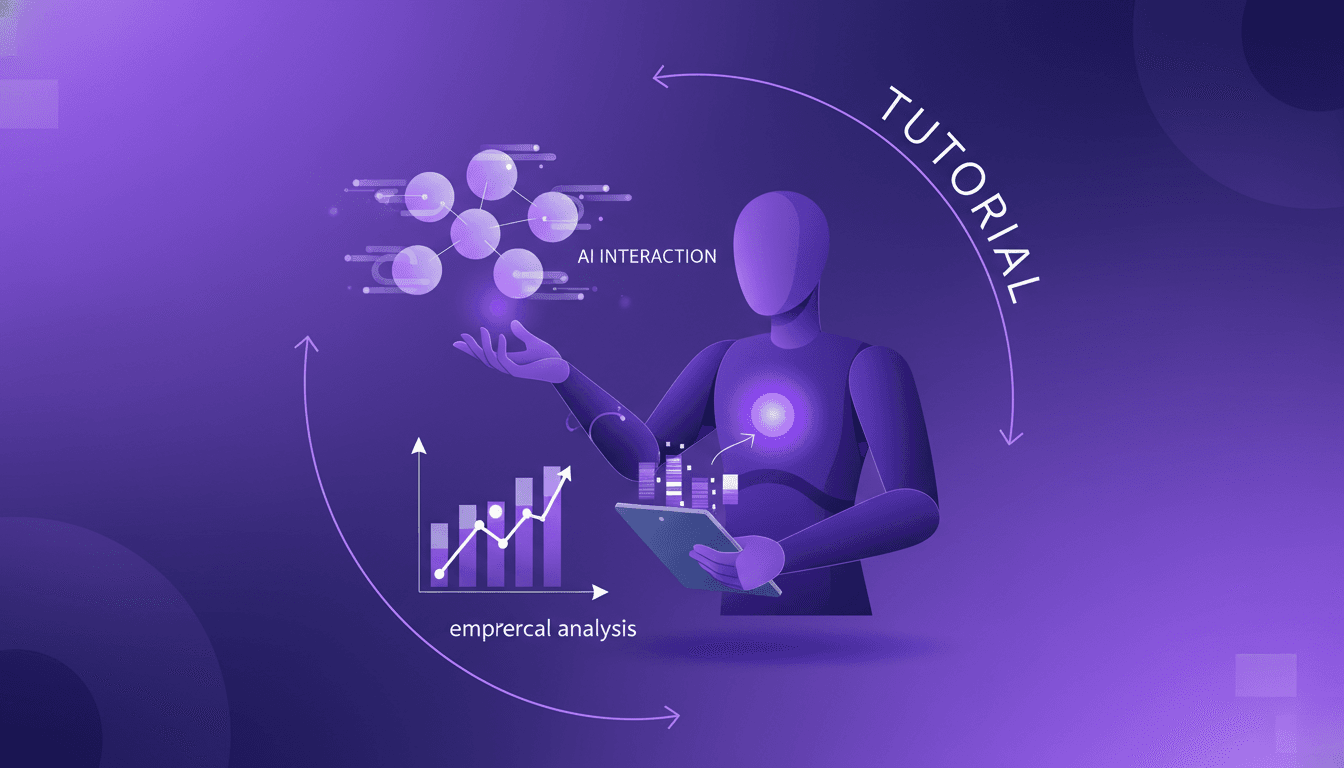
I've spent countless hours interacting with AI models, and let me tell you, becoming an 'AI Whisperer' isn't just about understanding the tech. It's about diving deep into the unknown, where every interaction is a learning opportunity. First, I connect the models, orchestrate them, and often get surprised by their outputs. That's where the real learning starts, right on the field. In this article, I'll walk you through what it truly takes to master AI interaction, based on my own journey. From empirical analysis of models to understanding their outputs, I'll share what I've uncovered. Being willing to spend a lot of time talking to these models is crucial. Sometimes I've had to rethink my approach, but that's how I've learned to make the most out of these tools. And trust me, the results are game-changing.
Role of an AI Whisperer: More Than Just Interaction
When I started as an AI whisperer at Anthropic, I quickly realized that this role is much more than merely interacting with models. It's fundamentally about the willingness to interact frequently and deeply with AI models. It's like getting to know a person: you need to spend time, engage, and understand their reactions. Our work is intensely hands-on, and without constant interactions, you can't truly grasp the "shape" of a model or how it reacts to different stimuli. Essentially, it's not just about successes, but learning from failures because that's how you find out what works and what doesn't.
An AI whisperer also needs to understand that models aren't infallible. It's crucial to have a hands-on approach, get your hands dirty, test, and experiment. We learn as much, if not more, from our mistakes as we do from our successes. This is the most rewarding part of the job: the ability to question ourselves and adjust our approach based on the results obtained.
- Constant Interaction: Essential for understanding the model.
- Failures and Successes: Both are valuable teachers.
- Hands-on Approach: Necessary for deep understanding.
Empirical Analysis: The Backbone of AI Work
Empirical analysis is at the heart of our work. I've spent countless hours analyzing model outputs, understanding why a model provided a particular response. This is where experience comes into play. Once, I spent an entire night dissecting a model's responses after a minor change, just to see how it adapted. This kind of empirical work allows us to make significant adjustments to the models.
However, beware of the pitfalls in empirical analysis. It's easy to get lost in the details and forget the main objective. Just because a model works well in a specific case doesn't mean it's foolproof. Always keep the bigger context in mind.
- Hours of Analysis: Indispensable for understanding models.
- Empirically-Based Adjustments: Crucial for continuous improvement.
- Common Pitfalls: Getting lost in details, forgetting the broader context.
Interacting with AI Models: A Hands-On Approach
Interacting with AI models is a constant dance between testing and adjustment. I usually start with a simple prompt, then observe the responses. Next, I test different scenarios to see how the model reacts. Tools like simplified graphic interfaces or APIs are invaluable allies. But beware, don't blindly trust the initial outputs from the model. They're just a starting point.
Iterative testing is essential. Sometimes, a small change in the input can completely alter the output. That's why I always prefer to make several iterations before drawing conclusions. The mistake would be thinking the first result is the correct one.
- Initial Prompt: Starting point for interaction.
- Tools and APIs: Essential for facilitating testing.
- Iterative Testing: Never trust the first result.
Understanding and Responding to Model Outputs
Interpreting unexpected model responses is part of our daily routine. Sometimes, a model surprises you with an output that seems out of place. That's when you need to dig deeper: what could have caused this response? When that happens to me, I backtrack, review the prompt, adjust, and test again. The key is not to be discouraged by these "mistakes" but to see them as learning opportunities.
It's also important to keep context in mind. A response that seems incorrect in one context may be perfectly logical in another. I've often seen misunderstandings due to misinterpretation of context.
- Unexpected Responses: Learning sources, not failures.
- Context: Essential for understanding outputs.
- Constant Adjustment: Necessary for refining results.
Exploring the Depths of AI Models: Beyond the Surface
Exploring the depths of AI models is both fascinating and complex. It's not just about understanding surface-level responses but diving into the internal mechanisms of the model. I've spent weeks exploring the insides of a particular model, and believe me, you learn a lot about how it "thinks".
But beware, there's a trap here: don't overcomplicate things. Sometimes, a simple approach works just as well, if not better. It's a delicate balance between deep exploration and staying efficient.
- Deep Exploration: Necessary for comprehensive understanding.
- Complexity: Don't overcomplicate things unnecessarily.
- Balance: Between depth and efficiency.
Becoming an AI whisperer is about way more than just technical chops. It's about being curious, persistent, and learning directly from the models. First key takeaway: you've got to be willing to interact with the models a lot. That's where the magic happens, in those repeated exchanges. Second, empirical analysis is crucial. It's by experimenting in the domain that you truly see how models behave. Lastly, understanding model outputs is often more art than exact science. The unexpected insights I've uncovered by digging a bit deeper have been a real game changer for me. But watch out, there are always limits to keep in mind. Models aren't infallible and require a good dose of human judgment. Ready to dive deeper? I suggest you start experimenting with your own models. The surprises are worth it! And for a bit of guidance, check out the original video: 'What does it take to be an AI whisperer?' on YouTube.
Frequently Asked Questions

Thibault Le Balier
Co-fondateur & CTO
Coming from the tech startup ecosystem, Thibault has developed expertise in AI solution architecture that he now puts at the service of large companies (Atos, BNP Paribas, beta.gouv). He works on two axes: mastering AI deployments (local LLMs, MCP security) and optimizing inference costs (offloading, compression, token management).
Related Articles
Discover more articles on similar topics

AI Evaluation Framework: A Guide for PMs
Imagine launching an AI product that surpasses all expectations. How do you ensure its success? Enter the AI Evaluation Framework. In the rapidly evolving world of artificial intelligence, product managers face unique challenges in effectively evaluating and integrating AI solutions. This article delves into a comprehensive framework designed to help PMs navigate these complexities. Dive into building AI applications, evaluating models, and integrating AI systems. The crucial role of PMs in development, iterative testing, and human-in-the-loop systems are central to this approach. Ready to revolutionize your product management with AI?
Unlocking Gemini 3 Flash: Practical Use Cases
I dove into Gemini 3 Flash expecting just another AI tool, but what I found was a game changer for OCR tasks. This model, often overshadowed by the Pro, turns out to be a hidden gem, especially when you factor in cost and multilingual capabilities. In this article, I'll walk you through how Gemini 3 Flash stacks up against its big brother and why it deserves more attention. We're talking efficiency, technical benchmarks, and practical use cases. Spoiler: for certain tasks, it even outperforms the Pro. Don't underestimate this little gem; it might just transform your OCR handling without breaking the bank.
Harnessing Gemini 3 Flash: Cost Savings and OCR Performance
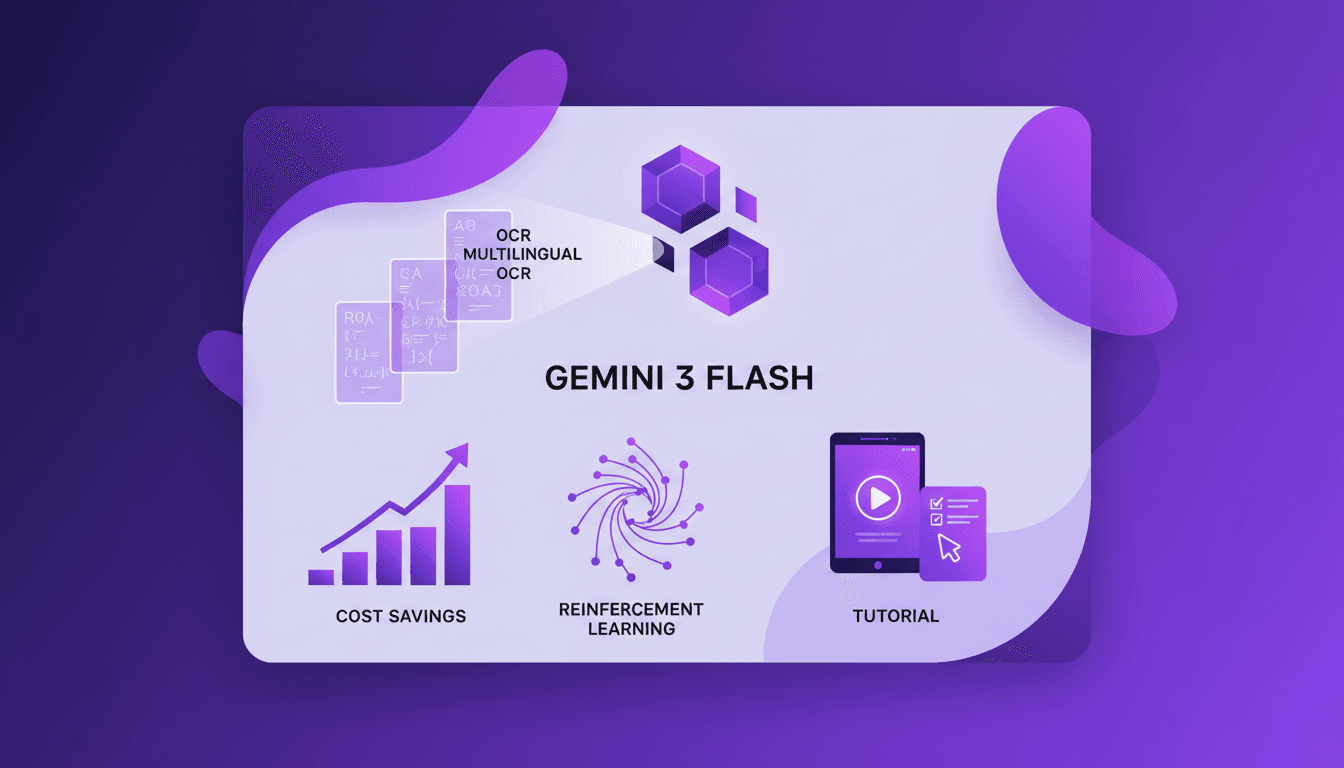
I remember the first time I switched to Gemini 3 Flash. We were drowning in document digitization costs, paying a premium for features we didn't fully exploit. That's when I decided to explore Gemini 3 Flash, and what I found was a game changer. In the world of OCR and document digitization, balancing cost and performance is crucial. Gemini 3 Flash offers a compelling, cost-effective solution, especially compared to its pricier sibling, Gemini 3 Pro. Priced four times cheaper, it's a boon for multilingual digitization projects. Let's dive into the OCR performance, the power of Gemini 3 Flash, and why it might just be the catalyst for your next project.
Cut Costs with Gemini 3 Flash OCR
I've been diving into OCR tasks for years, and when Gemini 3 Flash hit the scene, I had to test its promise of cost savings and performance. Imagine a model that's four times cheaper than Gemini 3 Pro, at just $0.50 per million token input and $3 for output tokens. I'll walk you through how this model stacks up against the big players and why it's a game changer for multilingual OCR. From cost-effectiveness to multilingual capabilities and technical benchmarks, I'll share my practical findings. Don't get caught up in the hype, discover how Gemini 3 Flash is genuinely transforming the game for OCR tasks.
Gemini 3 Flash: Upgrade Your Daily Workflow
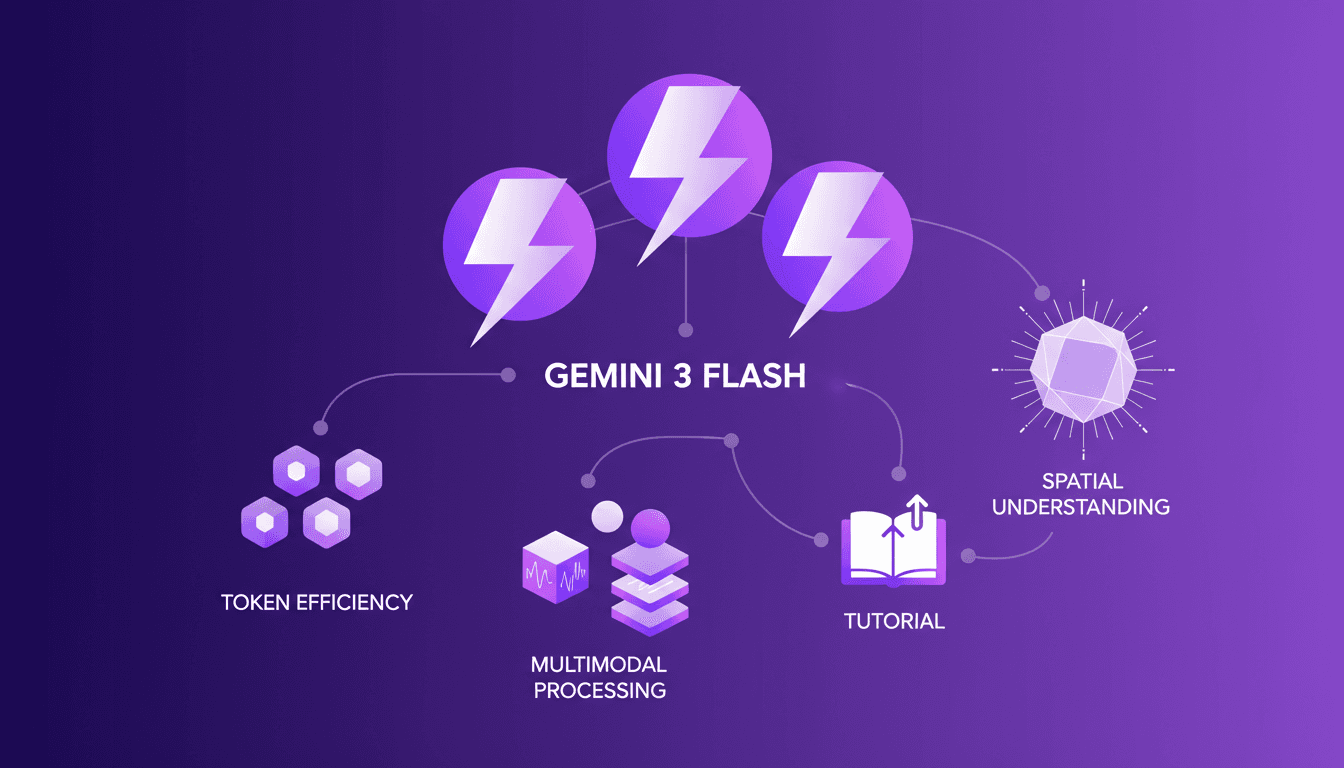
I was knee-deep in token usage issues when I first got my hands on Gemini 3 Flash. Honestly, it was like switching from a bicycle to a sports car. I integrated it into my daily workflow, and it's become my go-to tool. With its multimodal capabilities and improved spatial understanding, it redefines efficiency. But watch out, there are limits. Beyond 100K tokens, it gets tricky. Let me walk you through how I optimized my operations and the pitfalls to avoid.