Harnessing Gemini 3 Flash: Cost Savings and OCR Performance
I remember the first time I switched to Gemini 3 Flash. We were drowning in document digitization costs, paying a premium for features we didn't fully exploit. That's when I decided to explore Gemini 3 Flash, and what I found was a game changer. In the world of OCR and document digitization, balancing cost and performance is crucial. Gemini 3 Flash offers a compelling, cost-effective solution, especially compared to its pricier sibling, Gemini 3 Pro. Priced four times cheaper, it's a boon for multilingual digitization projects. Let's dive into the OCR performance, the power of Gemini 3 Flash, and why it might just be the catalyst for your next project.
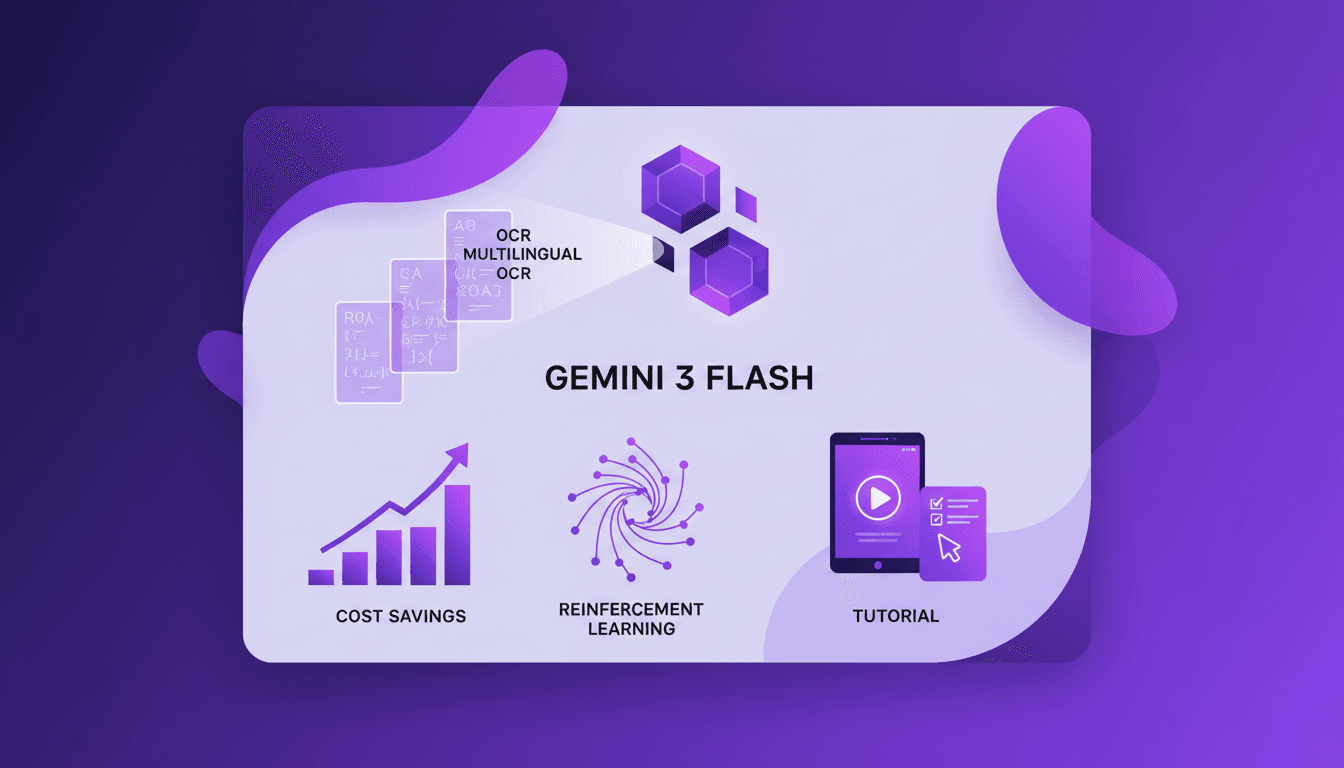
I remember the first time I switched to Gemini 3 Flash. We were drowning in document digitization costs, paying a premium for features we didn't fully exploit. That's when I decided to delve into Gemini 3 Flash, and what I found was a game changer. In the world of OCR and document digitization, finding that balance between cost and performance is crucial. Gemini 3 Flash offers a powerful, cost-effective solution, especially when compared to its pricier sibling, Gemini 3 Pro. Priced four times cheaper, it's a boon for multilingual digitization projects. We're going to dive into the OCR performance, the power of Gemini 3 Flash, and why it might just be the catalyst for your next project. We'll also discuss its technical specifications and how it stacks up against other models like Deep See OCR and Azure OCR. Get ready to discover how you can maximize savings while maintaining top-notch performance.
Cost-Effectiveness: Gemini 3 Flash vs. Gemini 3 Pro
When diving into cost optimization for our projects, the Gemini 3 Flash stands out as a no-brainer. Why? Because it's four times cheaper than the Gemini 3 Pro. Let's talk numbers: for one million input tokens, Flash costs just $0.50, compared to $2 for the Pro. For output tokens, it's $3 versus $12 for the Pro. That's significant savings, especially when handling large data volumes. But watch out, hidden costs related to token usage can add up quickly if you're not careful. I've been burned a few times myself.
Key Takeaways:
- Massive savings on input and output token costs.
- Ideal for large-scale projects where every dollar counts.
- Be wary of hidden costs from excessive token usage.
OCR Performance and Multilingual Capabilities
I've tested the Gemini 3 Flash on various multilingual documents, and honestly, it holds its own. Its OCR performance score is 0.12, almost as good as the 0.15 of the Pro. This is crucial for our global projects where multilingual text recognition is a must. That said, don't overestimate its capabilities on highly complex documents. It sometimes required fine-tuning to get perfect results, especially on Bengali documents where it processed a document in 25 seconds.
Key Takeaways:
- Competitive OCR performance, nearly on par with the Pro.
- Strong multilingual capabilities for global projects.
- Fine-tuning needed for very complex documents.
Benchmarking Against Other OCR Models
When I compared the Gemini 3 Flash with models like Deep See OCR and Azure OCR, it holds its ground. Each model has its strengths depending on the use case. For instance, Flash excels in processing speed, a definite plus for everyday tasks. However, there are trade-offs between cost and performance. Sometimes, Flash's simplicity beats the complexity of other systems for routine tasks.
Key Takeaways:
- Flash stands out for its processing speed.
- Ideal choice for less complex everyday tasks.
- Watch out for trade-offs between cost and performance depending on the use case.
Reinforcement Learning Enhancements
The Gemini 3 Flash leverages reinforcement learning for adaptive improvements. Over time, this translates to better accuracy. But be aware, the initial setup can be time-consuming. Once set up, reinforcement learning can optimize token usage, saving costs long-term. However, don't entirely rely on the algorithm; manual checks are still crucial.
Key Takeaways:
- Reinforcement learning enhances accuracy with use.
- Potentially long initialization but beneficial in the long run.
- Importance of maintaining manual checks to ensure quality.
Practical Use Cases for Gemini 3 Flash
In my agency, the Gemini 3 Flash has been a boon for document digitization projects on tight budgets. For example, it efficiently handled large volumes of multilingual data. Integration with our existing workflows was seamless, but you need to plan for initial setup complexity. That said, planning is key to avoiding unpleasant surprises.
Key Takeaways:
- Ideal for document digitization projects with tight budgets.
- Proven efficiency in handling large data volumes.
- Seamless integration but requires rigorous planning for initial setup.
So, the Gemini 3 Flash has really earned its spot in my toolkit. The cost-effectiveness is unbeatable: 50 cents per million token input and $3 for output, making it four times cheaper than the Pro model. Sure, it might lack some advanced features, but if you're looking to optimize document digitization without breaking the bank, it's tough to beat.
Key takeaways:
- OCR Performance: Character recognition is robust, even multilingual.
- Direct Savings: The cost per token is a real advantage.
- Comparison: Against models like Deep See OCR, the savings are significant without sacrificing too much performance.
Looking ahead, I'd say the Gemini 3 Flash could be a real game changer for those looking to cut costs while maintaining operational efficiency. Ready to streamline your workflow with Gemini 3 Flash? Dive in and start experimenting.
For a more in-depth look and some underrated use cases, I recommend checking out the original video: The Most Underrated Gemini 3 Flash use-case!. You might pick up some pointers that could change your approach.
Frequently Asked Questions

Thibault Le Balier
Co-fondateur & CTO
Coming from the tech startup ecosystem, Thibault has developed expertise in AI solution architecture that he now puts at the service of large companies (Atos, BNP Paribas, beta.gouv). He works on two axes: mastering AI deployments (local LLMs, MCP security) and optimizing inference costs (offloading, compression, token management).
Related Articles
Discover more articles on similar topics
Optimizing Function Gemma for Edge Computing
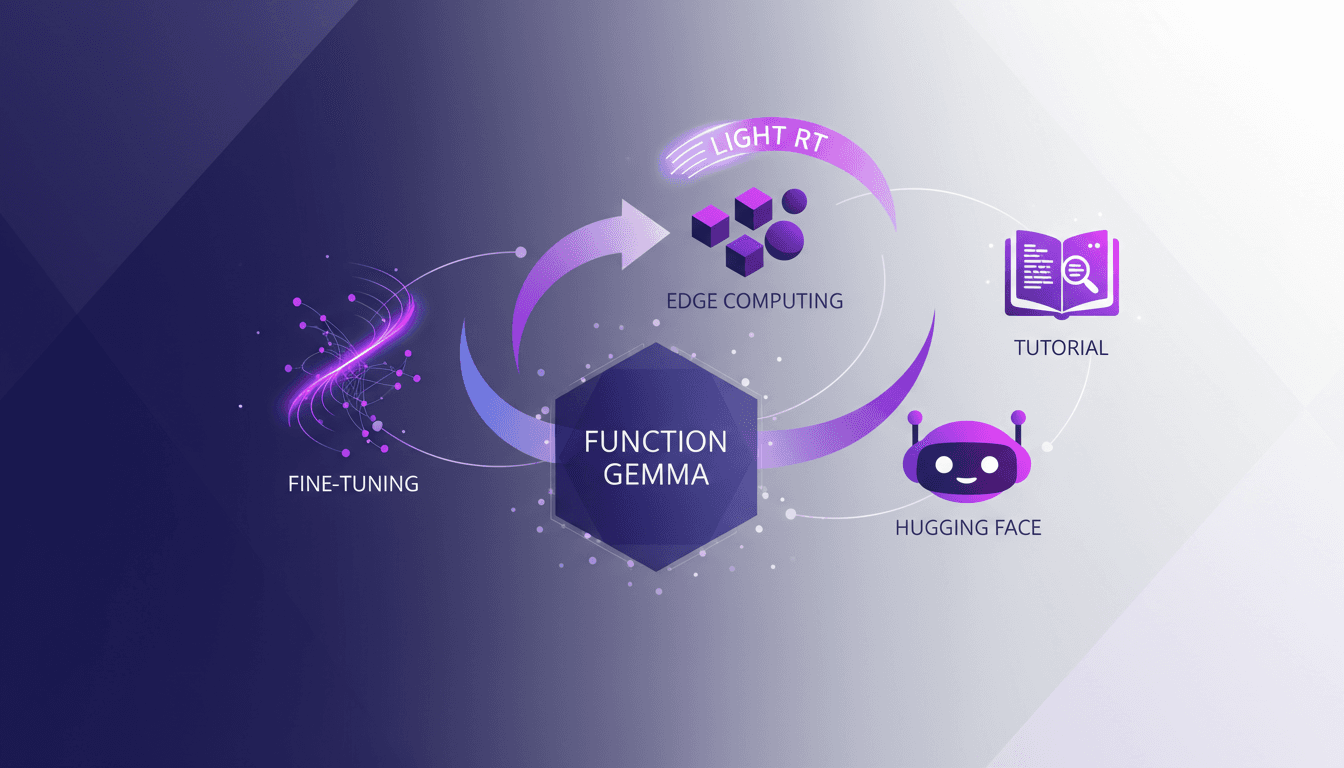
I remember the first time I deployed Function Gemma on an edge device. It was a game changer, but only after I figured out the quirks. With its 270 million parameters, the Gemma 3270M model is a powerhouse for edge computing. But to really leverage its capabilities, you need to fine-tune and deploy it smartly. Let me walk you through how I customized and deployed this model, so you don’t hit the same bumps. We're talking customization, deployment with Light RT, and how it stacks up against other models. You can find Function Gemma on Hugging Face, where I used the TRL library for fine-tuning. Don’t get caught by the initial limitations; improvements are there to be made. Follow me in this tutorial and optimize your use of Function Gemma for edge computing.
Cut Costs with Gemini 3 Flash OCR
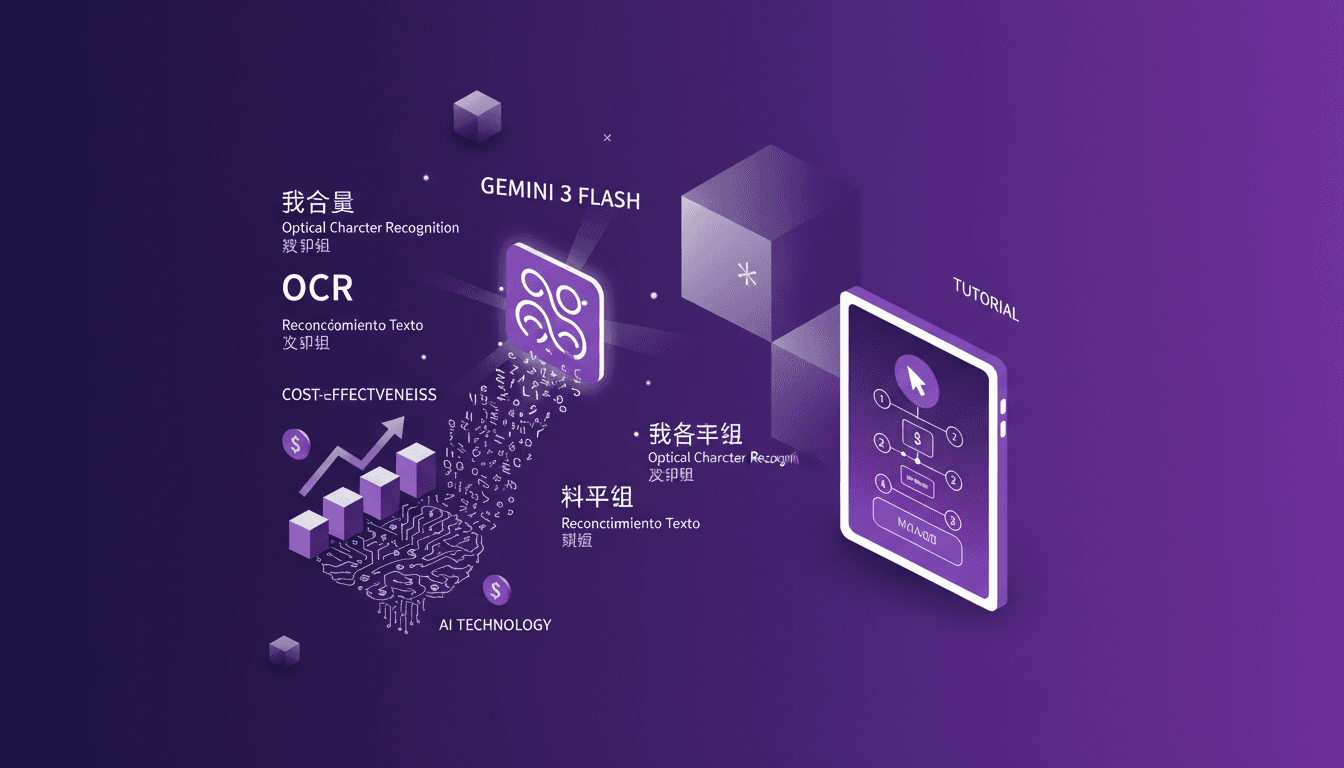
I've been diving into OCR tasks for years, and when Gemini 3 Flash hit the scene, I had to test its promise of cost savings and performance. Imagine a model that's four times cheaper than Gemini 3 Pro, at just $0.50 per million token input and $3 for output tokens. I'll walk you through how this model stacks up against the big players and why it's a game changer for multilingual OCR. From cost-effectiveness to multilingual capabilities and technical benchmarks, I'll share my practical findings. Don't get caught up in the hype, discover how Gemini 3 Flash is genuinely transforming the game for OCR tasks.

Function Gemma: Function Calling at the Edge
I dove into Function Gemma to see how it could revolutionize function calling at the edge. Getting my hands on the Gemma 3270M model, the potential was immediately clear. With 270 million parameters and trained on 6 trillion tokens, it's built to handle complex tasks efficiently. But how do you make the most of it? I fine-tuned it for specific tasks and deployed it using Light RT. Watch out for the pitfalls. Let's break it down.
Gemini 3 Flash: Upgrade Your Daily Workflow
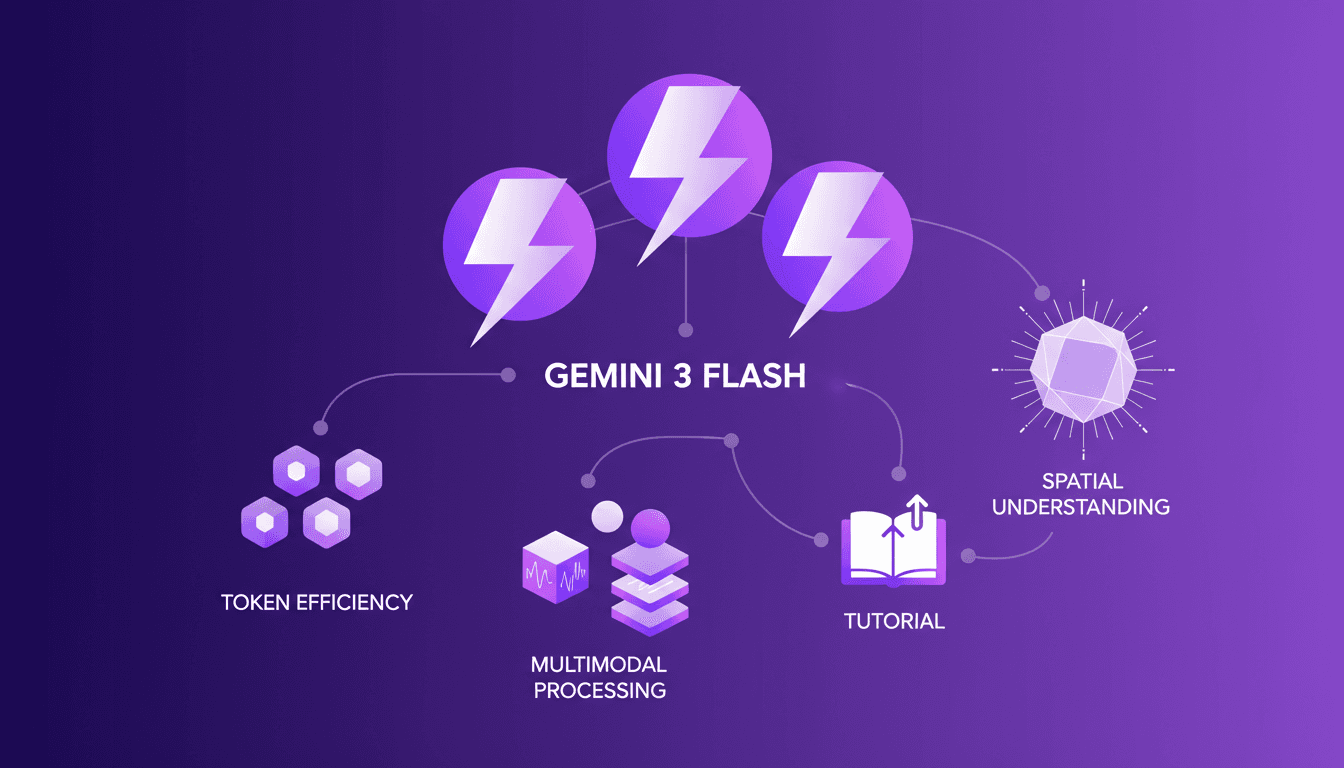
I was knee-deep in token usage issues when I first got my hands on Gemini 3 Flash. Honestly, it was like switching from a bicycle to a sports car. I integrated it into my daily workflow, and it's become my go-to tool. With its multimodal capabilities and improved spatial understanding, it redefines efficiency. But watch out, there are limits. Beyond 100K tokens, it gets tricky. Let me walk you through how I optimized my operations and the pitfalls to avoid.
Mastering Gemini Interactions API: Practical Guide
I dove headfirst into the Gemini Interactions API, and let me tell you, it's a game changer if you know how to wield it. First, I connected the dots between its features and my daily workflow, and then I started seeing the real potential. But watch out, it's not all sunshine and rainbows—there are some quirks to navigate. By understanding its multimodality, managing tokens efficiently, and leveraging server-side state persistence, I was able to integrate advanced AI interactions into my applications. But honestly, I got burned more than once before mastering its nuances. So, are you ready to explore what the Gemini API can really do for you?
Unlocking Gemini 3 Flash: Practical Use Cases
I dove into Gemini 3 Flash expecting just another AI tool, but what I found was a game changer for OCR tasks. This model, often overshadowed by the Pro, turns out to be a hidden gem, especially when you factor in cost and multilingual capabilities. In this article, I'll walk you through how Gemini 3 Flash stacks up against its big brother and why it deserves more attention. We're talking efficiency, technical benchmarks, and practical use cases. Spoiler: for certain tasks, it even outperforms the Pro. Don't underestimate this little gem; it might just transform your OCR handling without breaking the bank.

System Prompt Learning for Code Agents: A Guide
Imagine coding agents that continuously learn, adapting with every line of code. This is the promise of system prompt learning. In the AI realm, this method is emerging as a powerful technique, especially for coding agents. This article dives into the intricacies of this approach and compares it with traditional methods like reinforcement learning. Discover how benchmarking with SWEBench and tools like Claude and Klein measure this technique's effectiveness. Also, explore the role of advanced language models (LLM) as judges in evaluating these prompts and how this method stacks up against others like GEA. The article highlights the impact of prompt learning on coding agent performance and emphasizes the importance of eval prompts in this context.