Mastering Gemini Interactions API: Practical Guide
I dove headfirst into the Gemini Interactions API, and let me tell you, it's a game changer if you know how to wield it. First, I connected the dots between its features and my daily workflow, and then I started seeing the real potential. But watch out, it's not all sunshine and rainbows—there are some quirks to navigate. By understanding its multimodality, managing tokens efficiently, and leveraging server-side state persistence, I was able to integrate advanced AI interactions into my applications. But honestly, I got burned more than once before mastering its nuances. So, are you ready to explore what the Gemini API can really do for you?
I dove headfirst into the Gemini Interactions API, and let me tell you, it's a game changer if you know how to wield it. Right from the start, I connected the dots between its features and my daily workflow. Then, I started seeing the real potential. But watch out, it's not all sunshine and rainbows—there are some quirks to navigate. For instance, understanding its multimodality and managing tokens efficiently is crucial to avoid pitfalls. Server-side state persistence is another puzzle I had to solve—I got burned at least three times before I really figured out how to orchestrate it. But once I got the hang of it, the impact on my application was direct. Using tools like Google search, code execution, and the URL context tool, I was able to build advanced AI interactions that transformed my product. So, ready to see what the Gemini API can really do for you by 2025?
Getting Started with Gemini Interactions API
Diving into Google's Gemini Interactions API feels like unlocking a sophisticated toolkit for developers. First, I connected using the 1.55.0 version of the Google Gen AI SDK, which is essential for making the most out of this API. Right off the bat, three main tools stood out: Google search, code execution, and URL context. These aren't just gimmicks, but levers for smarter interactions.
My initial impressions were mixed. On one hand, access to agents like Gemini Research is a major plus, but navigating the documentation was a time-consuming hurdle. Efficiency lies in the ability to juggle different sections of the guide without losing track. Be careful, a wrong read can cost you hours.
- Google Gen AI SDK version 1.55.0 is required.
- Three main tools: Google search, code execution, URL context.
- Dense but essential documentation.
Features and Multimodality: Making the Most of It
Multimodality in the API is like having a Swiss army knife. You can process images, audio, even PDF files. I've integrated these features into my existing systems, but it wasn't without challenges. Token management is crucial for balancing output and reasoning tokens. I discovered that the API starts implicit caching beyond 1000 tokens, which can be an advantage or a drawback depending on your needs.
Integrating these features required balancing complexity and functionality. More features often mean more complexity, and I sometimes found myself rethinking my approach to avoid turning a time saver into a time sink.
- Multimodal support: images, audio, PDF.
- Implicit caching beyond 1000 tokens.
- Balance between complexity and functionality.
Server-side State Persistence and Background Execution
One feature that impressed me the most is server-side state persistence. It allows for seamless interactions, especially in multi-turn chat scenarios. You can finally stop resending everything with each request. As for background execution, it's a game-changer. Imagine delegating long tasks to the agent without keeping the connection open. I've used this for background audio processing, and honestly, it's a massive time saver.
However, watch out for pitfalls: poorly orchestrating these executions can lead to state conflicts or data loss. I got burned several times before understanding the nuances of agent orchestration.
- Memory persistence for multi-turn interactions.
- Background execution for long tasks.
- Watch out for state conflicts.
Structured Outputs and Function Calling: A Deep Dive
Structured outputs are the holy grail for data handling. With the API, I can manipulate responses as JSON objects, greatly simplifying processing. I've implemented function calls directly in the API, and seeing this in action in real scenarios is astonishing. However, there are limitations. Sometimes the API doesn't respond as expected, and you have to tinker to work around these issues.
Pro tip: don't overload function calls. Too many calls can slow down your system and negate the advantage you're seeking.
- Outputs as JSON for easy manipulation.
- Built-in function calls.
- Don't overload calls.
Tools, Functionality, and Looking Ahead
The API offers a range of tools, and I must admit some are still in development. But by 2025, enhancements are expected, especially with the integration of Gemini 3 models. My hands-on experience highlights a few critiques: some tools are still too rudimentary, and the documentation could be more concise.
As a developer, it's essential to keep a critical eye on what's working and what's just noise. I'm excited to see how this API evolves, but for now, one must juggle between expectations and current capabilities.
- Expectations for improvements by 2025.
- Tools still in development.
- Critiques based on practical experience.
For more insights, check out guides like the Claude Code-LangSmith Integration Guide and System Prompt Learning for Code Agents.
So, after diving into the Gemini Interactions API, I found its power and quirks. First, understanding its features and limitations is key to really harnessing its potential. Watch out for the trade-offs, especially with token management and server-side state persistence. Also, remember that version 1.55.0 of the Google Gen AI SDK is mandatory. Lastly, with tools like Google search, code execution, and the URL context tool, you can really enhance your projects. It's all about keeping on experimenting and learning. Ready to dive in? Start with the Gemini API today and see how it can transform your projects. And to dig deeper, watch the original video "The Gemini Interactions API" on YouTube: https://www.youtube.com/watch?v=aZgH_wnmedQ. It's worth it for a deeper understanding of the nuances.
Frequently Asked Questions

Thibault Le Balier
Co-fondateur & CTO
Coming from the tech startup ecosystem, Thibault has developed expertise in AI solution architecture that he now puts at the service of large companies (Atos, BNP Paribas, beta.gouv). He works on two axes: mastering AI deployments (local LLMs, MCP security) and optimizing inference costs (offloading, compression, token management).
Related Articles
Discover more articles on similar topics
Claude Code-LangSmith Integration: Complete Guide
Step into a world where AI blends seamlessly into your workflow. Meet Claude Code and LangSmith. This guide reveals how these tools reshape your tech interactions. From tracing workflows to practical applications, master Claude Code's advanced features. Imagine fetching real-time weather data in just a few lines of code. Learn how to set up this powerful integration and leverage Claude Code's hooks and transcripts. Ready to revolutionize your digital routine? Follow the guide!

Chasing Hard Problems in Innovation
In the fast-paced world of technology, the greatest innovations often arise from tackling daunting challenges. Are you ready to chase those hard problems? This article delves into the art of pursuing technically challenging ideas. It highlights how courage and sharp skills are essential for innovation. Avoid isolation: discover the vital importance of customer feedback in refining your products. Learn to balance product readiness with customer interaction. Read on to understand how the brightest minds of our time chase hard problems to shape the future.

System Prompt Learning for Code Agents: A Guide
Imagine coding agents that continuously learn, adapting with every line of code. This is the promise of system prompt learning. In the AI realm, this method is emerging as a powerful technique, especially for coding agents. This article dives into the intricacies of this approach and compares it with traditional methods like reinforcement learning. Discover how benchmarking with SWEBench and tools like Claude and Klein measure this technique's effectiveness. Also, explore the role of advanced language models (LLM) as judges in evaluating these prompts and how this method stacks up against others like GEA. The article highlights the impact of prompt learning on coding agent performance and emphasizes the importance of eval prompts in this context.
Optimize Your Code with Juny: Integration Efficiency
I stumbled upon Juny while looking to streamline my coding workflow. Sponsored by JetBrains, this tool promises to cut through the noise and focus on what truly matters: efficient, minimalistic coding. Picture an IDE that seamlessly integrates with IntelliJ IDEA or PyCharm to boost productivity without the usual clutter. Juny positions itself as an anti-vibe tool, perfect for professional developers aiming to optimize their code with minimal friction. Plus, it supports multiple languages and frameworks, making team onboarding and codebase understanding a breeze. Whether you're joining a new team or refining your solo project, Juny might just be the game changer you've been waiting for.
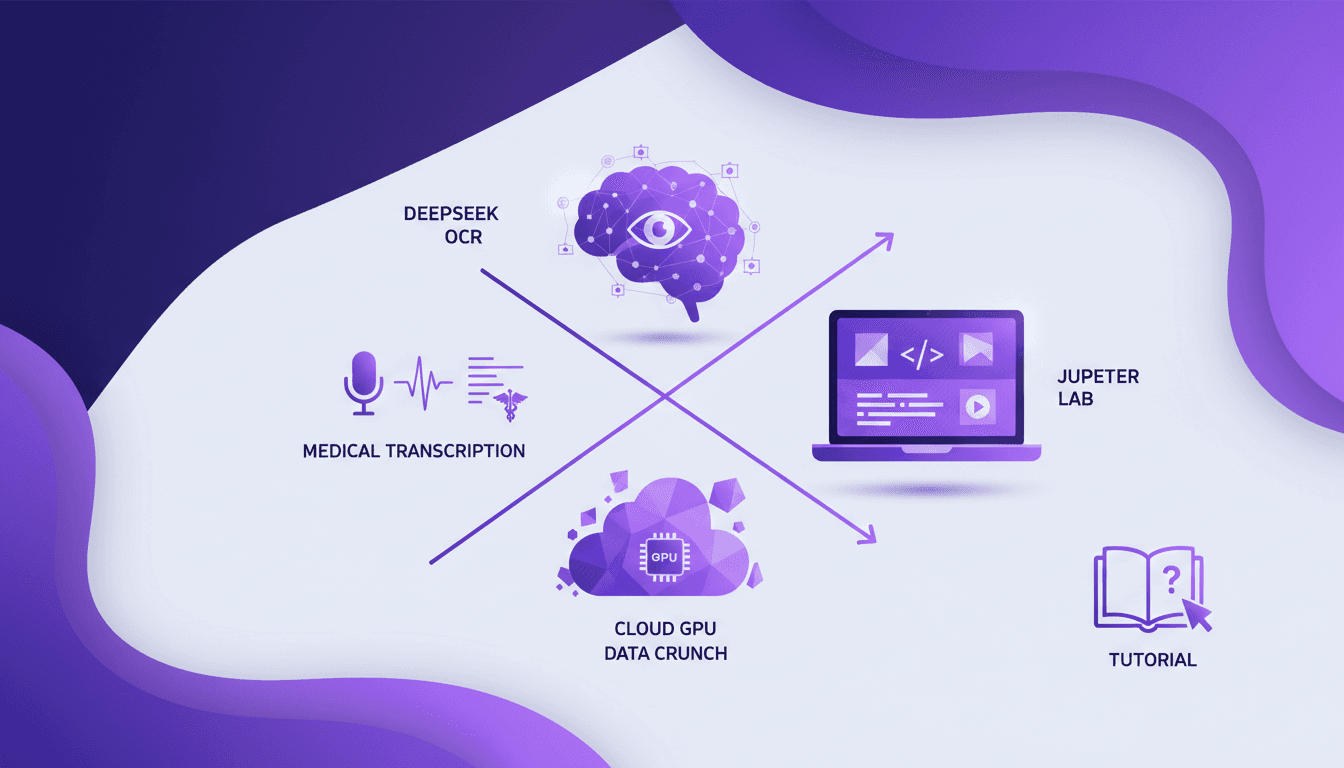
Running Deepseek OCR on Cloud GPU: A Hands-On Guide
I've been diving into OCR solutions for a while, but when I ran Deepseek OCR on a cloud GPU, things got real. In this hands-on guide, I'll walk you through how I set it up using Data Crunch and why it's a game changer for privacy and sustainability. We'll dig into configuration, costs, and how to optimize your GPU usage. With Deepseek OCR, we're talking about an open-source tool that's perfect for medical transcription and handwriting recognition. I'll share the technical steps on Jupyter Lab and how to effectively manage instances to maximize your ROI.
Cut Costs with Gemini 3 Flash OCR
I've been diving into OCR tasks for years, and when Gemini 3 Flash hit the scene, I had to test its promise of cost savings and performance. Imagine a model that's four times cheaper than Gemini 3 Pro, at just $0.50 per million token input and $3 for output tokens. I'll walk you through how this model stacks up against the big players and why it's a game changer for multilingual OCR. From cost-effectiveness to multilingual capabilities and technical benchmarks, I'll share my practical findings. Don't get caught up in the hype, discover how Gemini 3 Flash is genuinely transforming the game for OCR tasks.
Gemini 3 Flash: Upgrade Your Daily Workflow
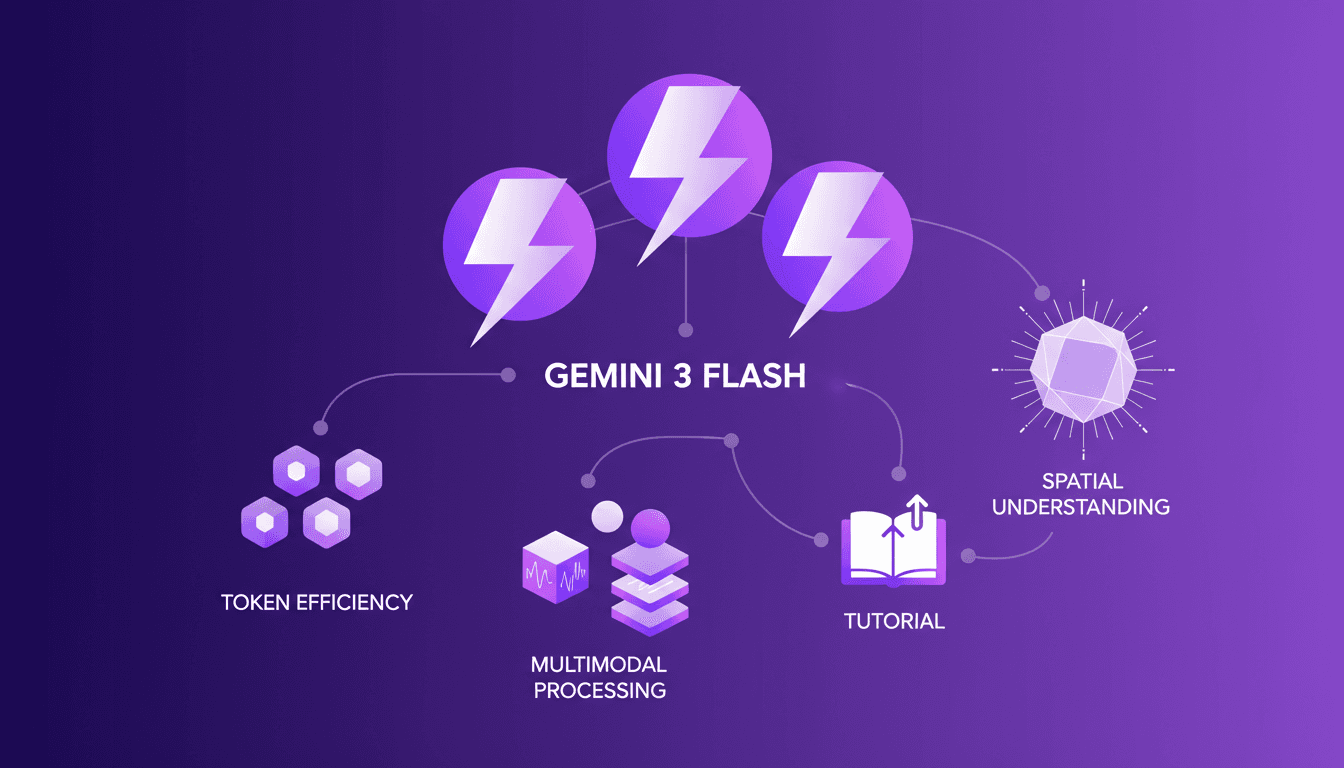
I was knee-deep in token usage issues when I first got my hands on Gemini 3 Flash. Honestly, it was like switching from a bicycle to a sports car. I integrated it into my daily workflow, and it's become my go-to tool. With its multimodal capabilities and improved spatial understanding, it redefines efficiency. But watch out, there are limits. Beyond 100K tokens, it gets tricky. Let me walk you through how I optimized my operations and the pitfalls to avoid.

Function Gemma: Function Calling at the Edge
I dove into Function Gemma to see how it could revolutionize function calling at the edge. Getting my hands on the Gemma 3270M model, the potential was immediately clear. With 270 million parameters and trained on 6 trillion tokens, it's built to handle complex tasks efficiently. But how do you make the most of it? I fine-tuned it for specific tasks and deployed it using Light RT. Watch out for the pitfalls. Let's break it down.