Optimizing Function Gemma for Edge Computing
I remember the first time I deployed Function Gemma on an edge device. It was a game changer, but only after I figured out the quirks. With its 270 million parameters, the Gemma 3270M model is a powerhouse for edge computing. But to really leverage its capabilities, you need to fine-tune and deploy it smartly. Let me walk you through how I customized and deployed this model, so you don’t hit the same bumps. We're talking customization, deployment with Light RT, and how it stacks up against other models. You can find Function Gemma on Hugging Face, where I used the TRL library for fine-tuning. Don’t get caught by the initial limitations; improvements are there to be made. Follow me in this tutorial and optimize your use of Function Gemma for edge computing.
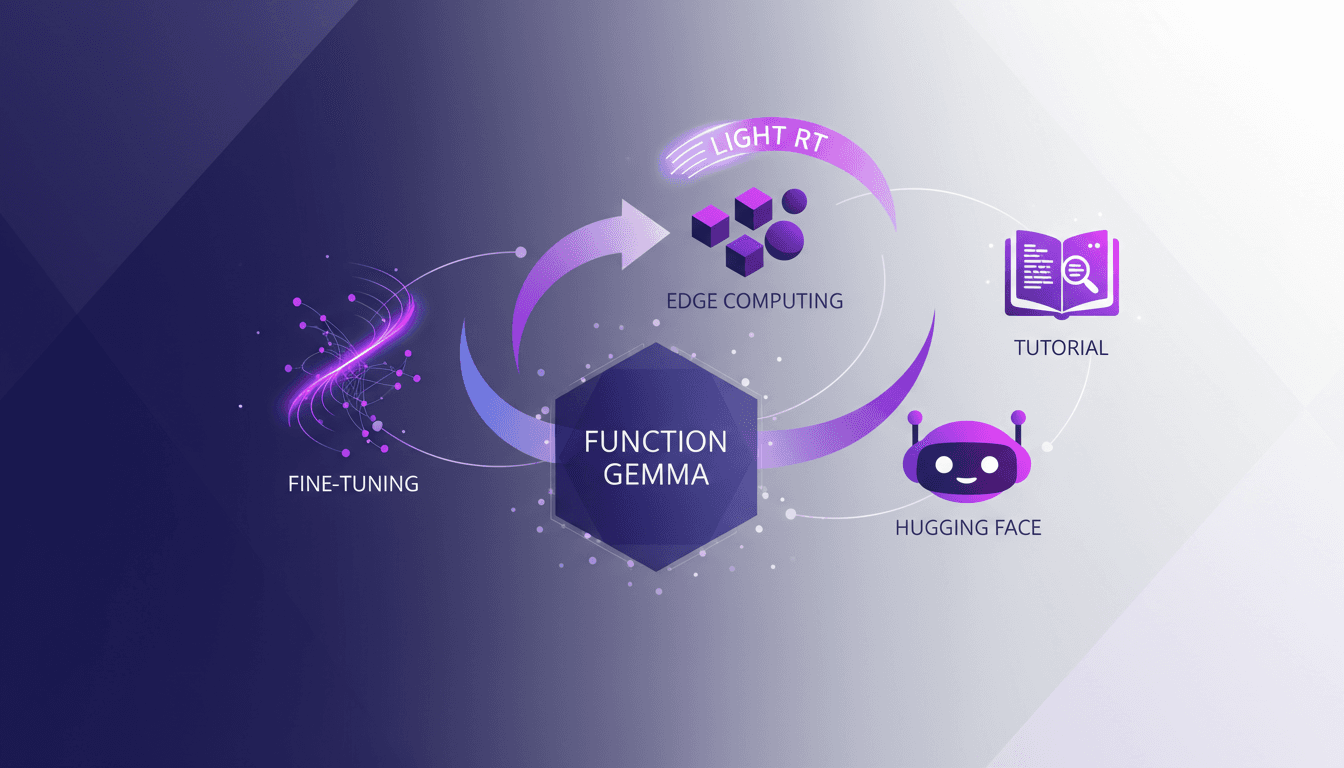
I remember the first time I deployed Function Gemma on an edge device. It was truly a game changer, but only after navigating a few quirks. I connect the Gemma 3270M model, with its 270 million parameters, and orchestrate it for edge computing. But here's the thing: to harness its full potential, you need to customize it properly. I got burned learning that without fine-tuning, you're quickly limited. Let me guide you through the steps: how I customize, deploy using Light RT, and boost its performance compared to other models. You can access Function Gemma on Hugging Face where I used the TRL library for effective fine-tuning. Don’t get caught by the initial limitations. Improvements are both possible and crucial. Follow my experience and optimize your deployment of Function Gemma for edge computing.
Understanding Function Gemma and Its Capabilities
Let me be upfront: when I first hooked up the Gemma 3270M model with its 270 million parameters, I was genuinely impressed by its power despite its compact size. In the realm of edge computing, where every byte counts, this model stands out as an ideal solution. Why? Because Gemma was designed from the ground up to operate on the edge, where resources are limited but responsiveness is critical. With its training on 6 trillion tokens, the model has learned a lot while remaining small enough to run on mobile devices.
However, it's not all smooth sailing. I noticed initial limitations, especially with complex tasks like scheduling meetings. But that was before discovering how fine-tuning can address these issues. Essentially, with a few adjustments, Gemma can become a true Swiss army knife for edge applications.
Customizing Function Gemma for Specific Tasks
To get the best results with Function Gemma, customization is key. I used the Hungace TRL library to fine-tune it to my specific needs. Customizing the model allows us to fully leverage its 100 million transformer parameters. Why is this crucial? Because each edge task has its own requirements, and a generic model will not suffice.
Initially, I faced challenges, particularly in adjusting the data to be compatible with Gemma. However, with perseverance, I found practical solutions. For instance, by adjusting hyperparameters and using specific datasets, I was able to significantly reduce validation loss, substantially improving the accuracy of targeted tasks.
Deploying on Edge Devices with Light RT
For efficient edge deployment, Light RT is a game-changer. I used it to streamline the deployment process, which is crucial for ensuring maximum efficiency. Here's how I proceed:
- First, I convert the model to be compatible with Light RT.
- Then, I load it onto the target device, such as a smartphone.
- Next, I run tests to ensure everything functions as expected.
But watch out, there's a trade-off between deployment speed and model size. The larger the model, the slower the deployment. This is where Gemma shines: a compact yet powerful model. Working on the Mobile Actions dataset, I observed an accuracy improvement from 58% to 85% after fine-tuning.
Fine-Tuning Process and Continuous Improvements
Fine-tuning is not a one-off operation. It's an iterative process. Since the initial deployment, I've refined methods to optimize performance while considering the resource constraints of edge devices. By utilizing the 170 million parameters in embeddings, I've further optimized specific tasks.
After each iteration, I measure the impact of the changes made. For example, by tweaking training configurations, I've reduced task execution errors. This continuous improvement process is essential to get the most out of Function Gemma.
Accessing Function Gemma on Hugging Face
To fully leverage Function Gemma, you can access it via Hugging Face. The platform offers not only the model but also a support community and resources to help you customize it. Compared to other models on Hugging Face, Gemma stands out for its ease of adjustment for specific tasks.
In terms of updates, the Gemma team plans to continue enriching the model with new features and improvements. If you're interested in edge computing, I highly recommend keeping an eye on their roadmap.
Deploying Function Gemma on edge devices is a strategic play, not just technical tinkering. First, I fine-tune the deployment strategy to unlock its true potential. We can leverage the 270 million parameters of the Gemma 3270M model and its 6 trillion trained tokens for specific tasks, while keeping an eye on the 100 million transformer parameters. Then, deploying with Light RT can be a game changer, but watch for performance bottlenecks.
This approach can really boost edge deployments if done right. Consider diving into the resources on Hugging Face to start customizing your models—it's worth the effort. Ready to optimize your edge deployments with Function Gemma? Check out the resources and get started. Watch the video "FunctionGemma - Function Calling at the Edge" on YouTube (https://www.youtube.com/watch?v=Zj_cvQKcH4g) for a deep dive and some pro tips.
Frequently Asked Questions

Thibault Le Balier
Co-fondateur & CTO
Coming from the tech startup ecosystem, Thibault has developed expertise in AI solution architecture that he now puts at the service of large companies (Atos, BNP Paribas, beta.gouv). He works on two axes: mastering AI deployments (local LLMs, MCP security) and optimizing inference costs (offloading, compression, token management).
Related Articles
Discover more articles on similar topics

Function Gemma: Function Calling at the Edge
I dove into Function Gemma to see how it could revolutionize function calling at the edge. Getting my hands on the Gemma 3270M model, the potential was immediately clear. With 270 million parameters and trained on 6 trillion tokens, it's built to handle complex tasks efficiently. But how do you make the most of it? I fine-tuned it for specific tasks and deployed it using Light RT. Watch out for the pitfalls. Let's break it down.

LLM Memory: Weights, Activations, and Solutions
Imagine a library where books are constantly shuffled and some get misplaced. That's the memory challenge for Large Language Models (LLMs) today. As AI evolves, understanding LLMs' limitations and potentials becomes vital. This article delves into the intricacies of contextual memory in LLMs, highlighting recent advancements and ongoing challenges. We explore retrieval-augmented generation, embedding training data into model weights, and parameter-efficient fine-tuning. Discover how model personalization and synthetic data generation are shaping AI's future.
Cut Costs with Gemini 3 Flash OCR
I've been diving into OCR tasks for years, and when Gemini 3 Flash hit the scene, I had to test its promise of cost savings and performance. Imagine a model that's four times cheaper than Gemini 3 Pro, at just $0.50 per million token input and $3 for output tokens. I'll walk you through how this model stacks up against the big players and why it's a game changer for multilingual OCR. From cost-effectiveness to multilingual capabilities and technical benchmarks, I'll share my practical findings. Don't get caught up in the hype, discover how Gemini 3 Flash is genuinely transforming the game for OCR tasks.
Gemini 3 Flash: Upgrade Your Daily Workflow
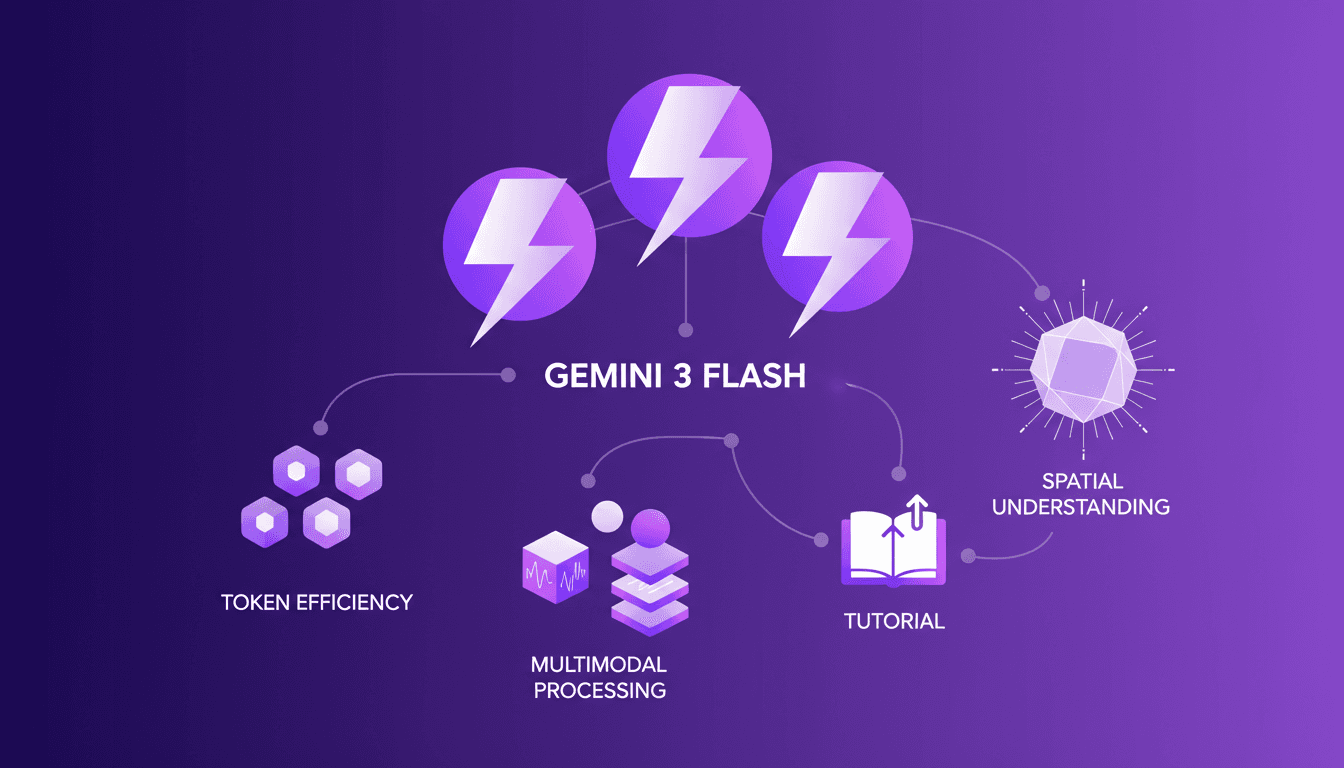
I was knee-deep in token usage issues when I first got my hands on Gemini 3 Flash. Honestly, it was like switching from a bicycle to a sports car. I integrated it into my daily workflow, and it's become my go-to tool. With its multimodal capabilities and improved spatial understanding, it redefines efficiency. But watch out, there are limits. Beyond 100K tokens, it gets tricky. Let me walk you through how I optimized my operations and the pitfalls to avoid.
Mastering Gemini Interactions API: Practical Guide
I dove headfirst into the Gemini Interactions API, and let me tell you, it's a game changer if you know how to wield it. First, I connected the dots between its features and my daily workflow, and then I started seeing the real potential. But watch out, it's not all sunshine and rainbows—there are some quirks to navigate. By understanding its multimodality, managing tokens efficiently, and leveraging server-side state persistence, I was able to integrate advanced AI interactions into my applications. But honestly, I got burned more than once before mastering its nuances. So, are you ready to explore what the Gemini API can really do for you?