Multi-Agent Orchestration: Patterns That Work
Having spent 18 years building data systems, I've learned that chaos isn't just possible—it's inevitable without the right orchestration. In distributed systems, juggling multiple agents can quickly become a nightmare. But with the right multi-agent orchestration patterns, I've turned this complexity into a well-oiled machine. Dive into the real-world strategies that work: from state management to data contracts, and failure recovery. If you've ever seen two agents calculate different credit scores for the same customer (750 vs. 680), you know what I'm talking about. Welcome to the world of production-grade multi-agent architecture, where every decision impacts efficiency, cost, and reliability.
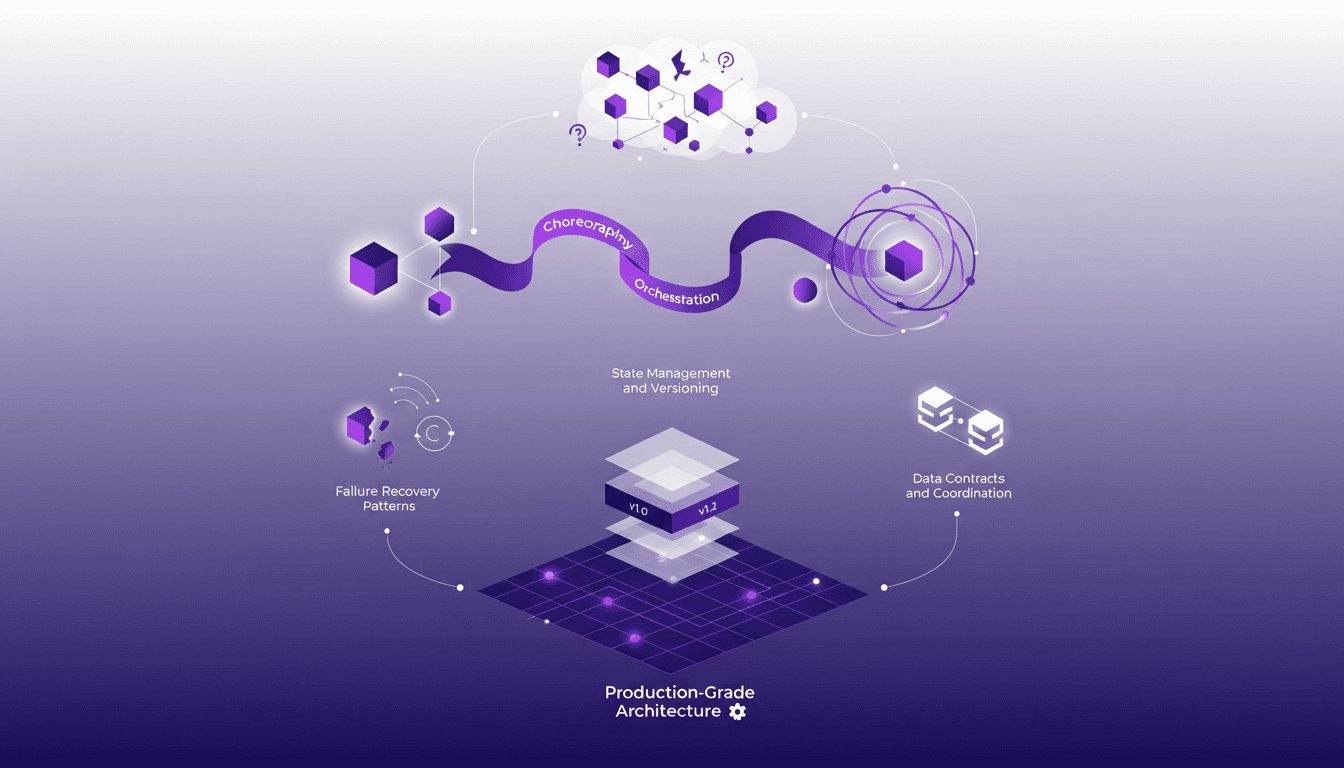
I've spent 18 years building data systems, and if there's one thing I've learned, it's that chaos is not just a possibility—it's a guarantee without the right orchestration. Managing distributed systems with multiple agents can quickly spiral into chaos (I've been burned by it). But by applying effective multi-agent orchestration patterns, I've turned that complexity into a well-oiled machine. Let's dive into my real-world strategies: state management, data contracts, and failure recovery. Picture two agents calculating different credit scores for the same customer (750 vs. 680) — that's the kind of mess you can avoid with effective orchestration. Every decision impacts efficiency, cost, and reliability. In this talk, I'll share how I orchestrated these systems to make them actually work.
Understanding Complexity in Multi-Agent Systems
Oh, multi-agent systems. It's like trying to conduct an orchestra with musicians who have never met. The inherent complexity of these systems lies in coordination. When you shift from a single-agent system to a five-agent system, complexity increases by 25 times. Yes, you read that right, 25 times! I've been there, and trust me, it's no fairytale. Without proper orchestration, what seems like a beautiful symphony can turn into total chaos. For instance, imagine a credit decisioning system producing inconsistent scores: 750 by one agent and 680 by another for the same customer. That's real-life experience.
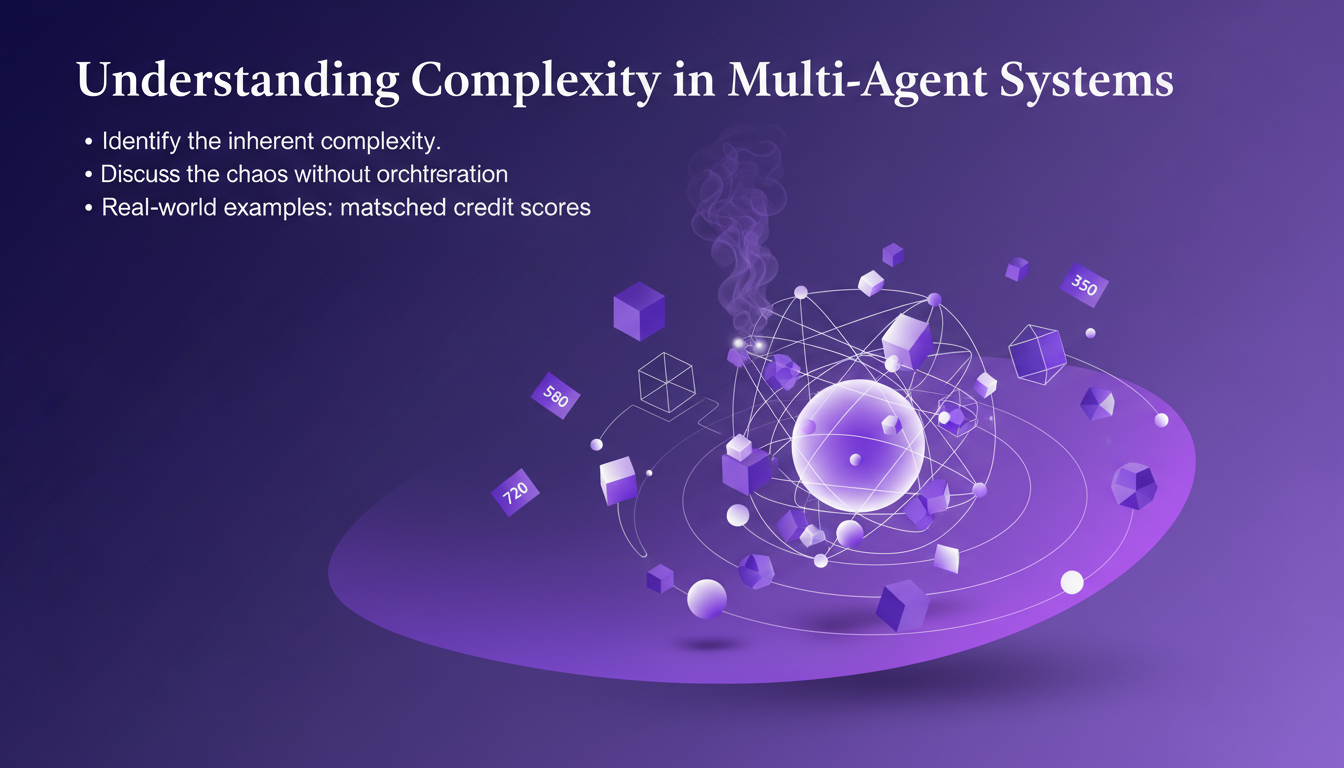
Without a clear structure, you end up with agents using outdated or incorrect data, which can lead to disastrous business decisions. This complexity demands structured orchestration to be managed. That's where techniques like choreography and orchestration come into play.
Choreography vs Orchestration: Making the Right Choice
So, choreography or orchestration? That's the question. Choreography is like a dance where each agent knows its role through events. But watch out, it can quickly become unmanageable without strong observability. Orchestration, on the other hand, is more centralized. A central coordinator manages everything, which is ideal for complex dependencies. I've often seen choreography shine in environments where agent autonomy is crucial, but orchestration is unbeatable when it comes to managing stable and complex workflows.
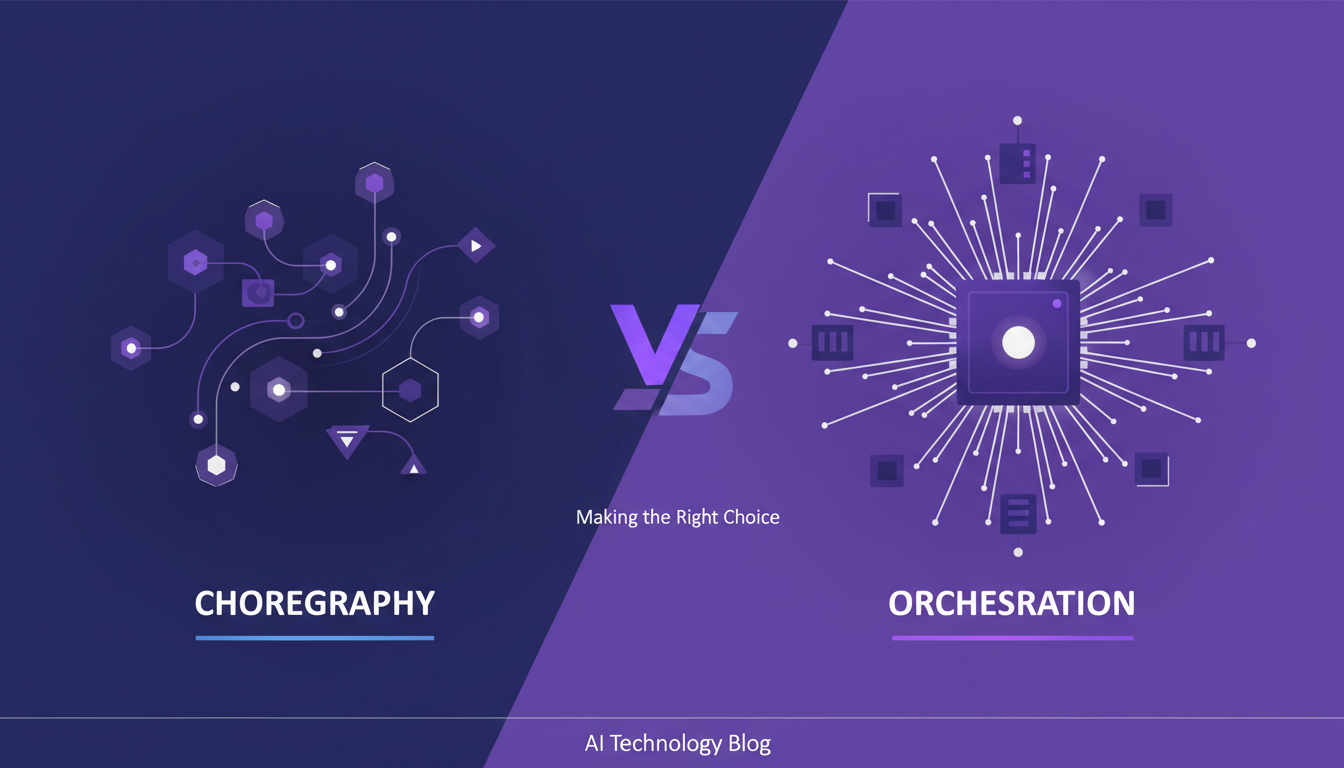
In my projects, I've noticed that centralized systems offered better reliability, even if it meant sacrificing a bit of autonomy. Choosing the right model really depends on the specific needs of your system.
State Management and Versioning: Keeping It Immutable
Now, let's talk about state management. Immutable versioning is crucial to avoid race conditions and ensure a clear lineage of data among agents. I learned the hard way that bad versioning can produce disastrous results, like a version 7 where the output was completely flawed.
Good state management involves taking immutable snapshots. This means every state update is a new version, not an overwrite. It allows you to roll back if something goes wrong. Ensuring consistency among agents is essential to avoid issues like the ones I've encountered.
Failure Recovery Patterns: Circuit Breaker and Saga
Speaking of issues, how do you handle failures in a distributed system? I use the Circuit Breaker pattern to prevent failure cascades. It's like an electrical circuit breaker: it cuts the circuit in case of overload. The Saga pattern, on the other hand, compensates distributed transactions. In a production deployment, I've seen how using these patterns could make the difference between a total failure and a smooth recovery.
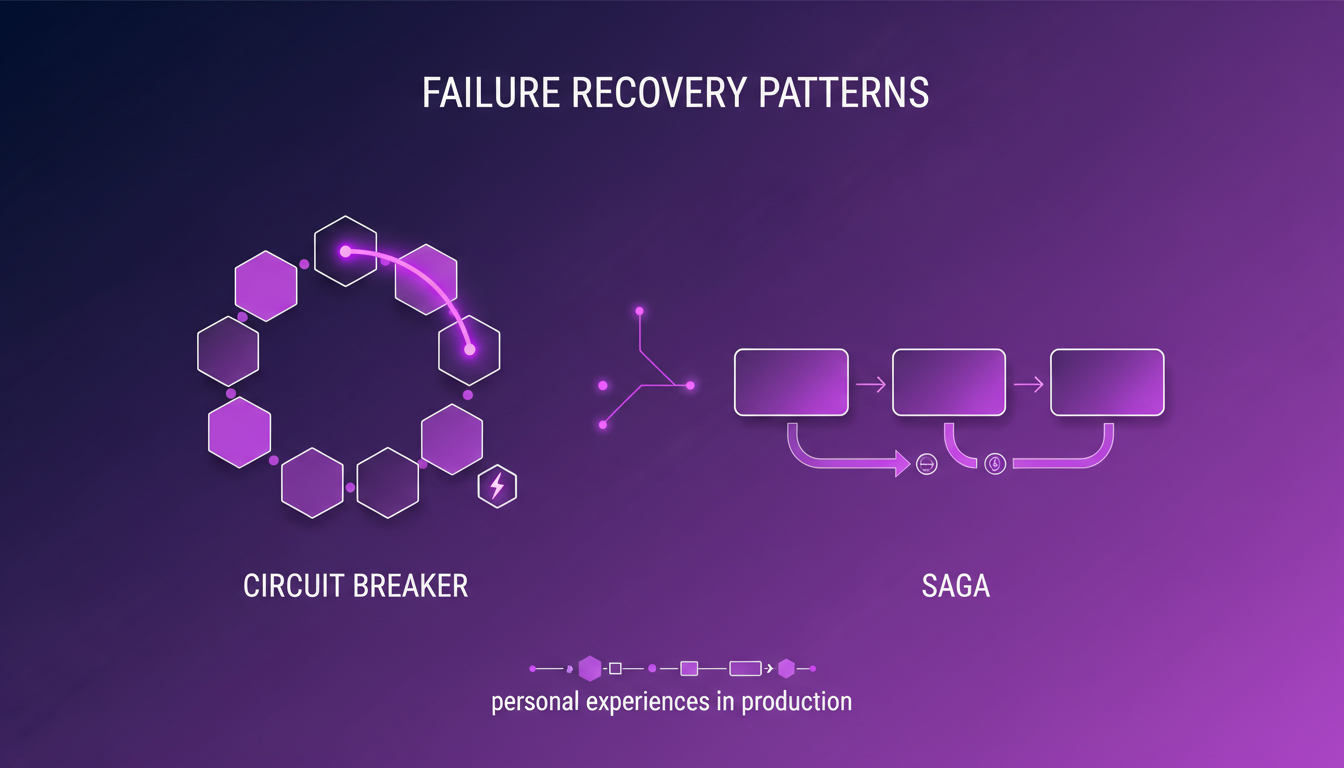
The key is finding the balance between complexity and reliability. Too much complexity and you lose performance, too little and you risk critical failures.
Data Contracts and Coordination: Ensuring Smooth Communication
Finally, let's talk about coordination through data contracts. These contracts define the input and output requirements between agents, which is crucial to avoid issues of poor data handoffs. I've seen systems crash due to poor data transmission, but with well-defined contracts, this risk is greatly reduced.
Data contracts facilitate coordination and increase system efficiency. By using them, you ensure that each agent knows exactly what to expect from its peers.
In sum, orchestrating a multi-agent system is a challenge that requires experience and methodology. I hope these insights will help you avoid the same mistakes I've made and build more robust systems.
Navigating multi-agent systems isn't just about dodging chaos—it's about crafting a symphony of interactions. Here's what I took away:
- Orchestration Patterns: Choosing the right pattern is crucial. I noticed a massive difference when I switched from orchestration to choreography in certain workflows.
- State Management and Versioning: Never underestimate version control. Like that version 7 disaster—one bad output can mess up your whole system's reliability.
- Failure Recovery Patterns: Solid recovery patterns can be the difference between a system that bounces back and one that crumbles.
When I talk about turning multi-agent chaos into choreography, that's where the real game changer lies. But watch out, complexity can creep in if you're not vigilant.
Ready to turn your multi-agent chaos into choreography? Start implementing these strategies today and watch your systems thrive. For a deeper dive, I highly recommend watching the original video on YouTube: https://www.youtube.com/watch?v=2czYyrTzILg. It's a must-watch for any serious practitioner.
Frequently Asked Questions

Thibault Le Balier
Co-fondateur & CTO
Coming from the tech startup ecosystem, Thibault has developed expertise in AI solution architecture that he now puts at the service of large companies (Atos, BNP Paribas, beta.gouv). He works on two axes: mastering AI deployments (local LLMs, MCP security) and optimizing inference costs (offloading, compression, token management).
Related Articles
Discover more articles on similar topics
Handling Sales Objections: Practical Techniques
Ever been in a sales meeting where you couldn't quite read the room? I've been there, and here’s how I handle it when objections seem invisible. In sales, recognizing objections—or their absence—is crucial. I'm not talking theory, but real-world scenarios. How can AI lend a hand? I'll share how I uncover hidden motivations through precise questioning and create space for genuine communication. It's not about overusing AI, but integrating it smartly into the sales process. Let’s dive into this tutorial with practical techniques that I use daily to navigate these tricky waters.
Cloud Code Source Leak: Implications Unveiled
I was knee-deep in debugging when the news hit: Cloud Code's source code had leaked. My first thought? This changes everything. As someone who's worked with similar architectures, I get the stakes. Let's dive into the architecture, security implications, and what the future holds for AI coding tools. 512,000 lines of code converted overnight, and over 41,000 copies already circulating. It's time to see how we, as builders, need to adapt to this new reality.
Harnessing Read-Only AI for Enhanced Safety
I've been in the AI trenches long enough to know when something's underrated. Read-only AI, for instance, is a game changer for safety and analysis. Just think about this: shaving off 30 seconds from your weather checks. It might seem trivial, but stack up these small wins, and you'll see why I call it a game changer. In this talk, I dive into how read-only AI can not only optimize your workflow but also provide a robust defense against cognitive exhaust fumes and the mosaic effect, two often-overlooked yet crucial concepts for any practitioner. I'll walk you through how these approaches, combined with cross-source analysis, can uncover unique insights and bolster the security of your personal AI systems.
API Platform Engineering: A Practical Case
I've been knee-deep in platform engineering at Banking Circle, where we handle a staggering €1 trillion annually. With 700 financial institutions counting on us, our mission is clear: streamline workflows through API-based solutions and AI integration. But it's no walk in the park. Let me show you how we tackle these challenges: self-service, APIs, and AI agents. Our team of 250 engineers is at the forefront, leveraging metrics like Dora to measure success. Dive into how we preempt workflow failures with a 'shift left' approach and encourage contributions to our internal platforms.
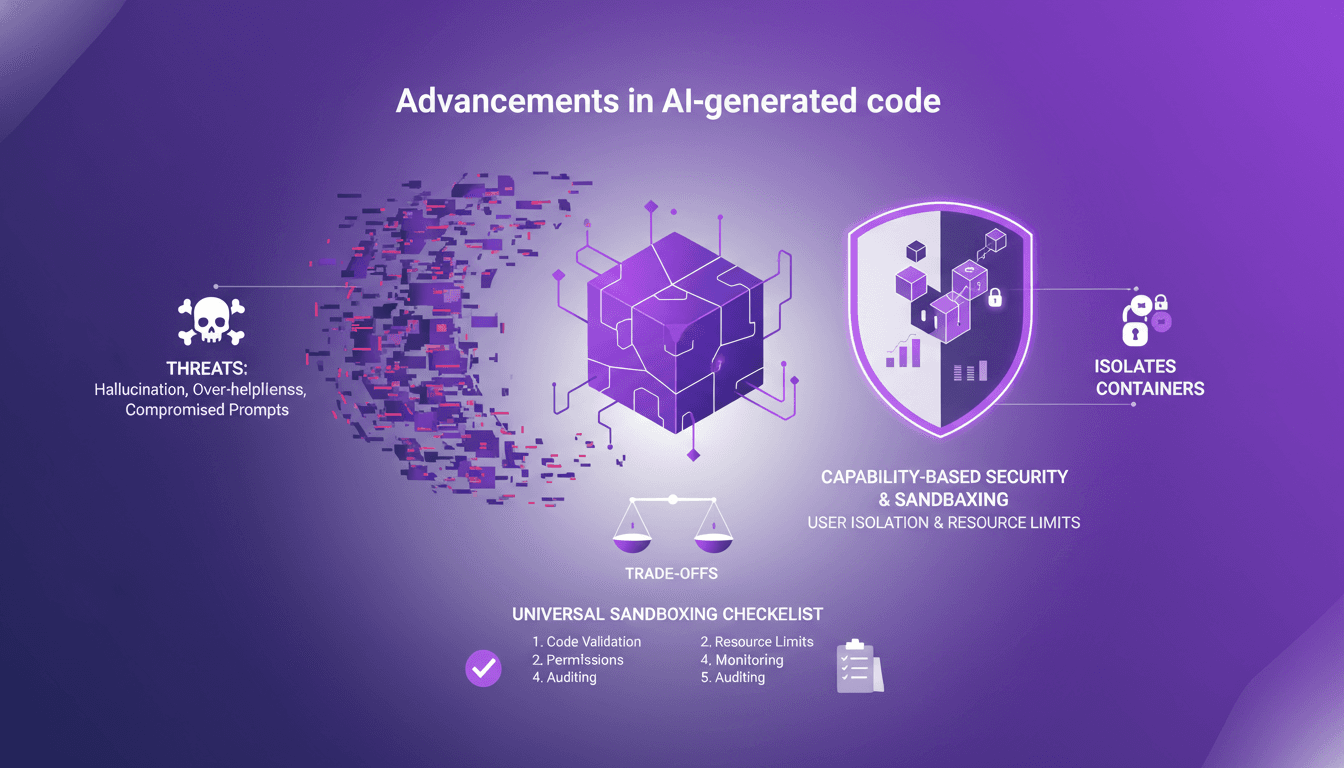
Sandboxing AI Code: Secure Your Projects
I've been burned by AI-generated code more times than I'd like to admit. From hallucinations that crashed my server to overly helpful suggestions that sent me spiraling down rabbit holes, I knew I had to sandbox that AI code. First, I'll walk you through why sandboxing is crucial, then how I set it up to protect my projects. With AI-generated code becoming more prevalent, robust security practices are essential. We’ll explore the threats posed by AI code and how sandboxing can mitigate these risks. (Hint: containers and isolates each have their trade-offs.)