Sandboxing AI Code: Secure Your Projects
I've been burned by AI-generated code more times than I'd like to admit. From hallucinations that crashed my server to overly helpful suggestions that sent me spiraling down rabbit holes, I knew I had to sandbox that AI code. First, I'll walk you through why sandboxing is crucial, then how I set it up to protect my projects. With AI-generated code becoming more prevalent, robust security practices are essential. We’ll explore the threats posed by AI code and how sandboxing can mitigate these risks. (Hint: containers and isolates each have their trade-offs.)
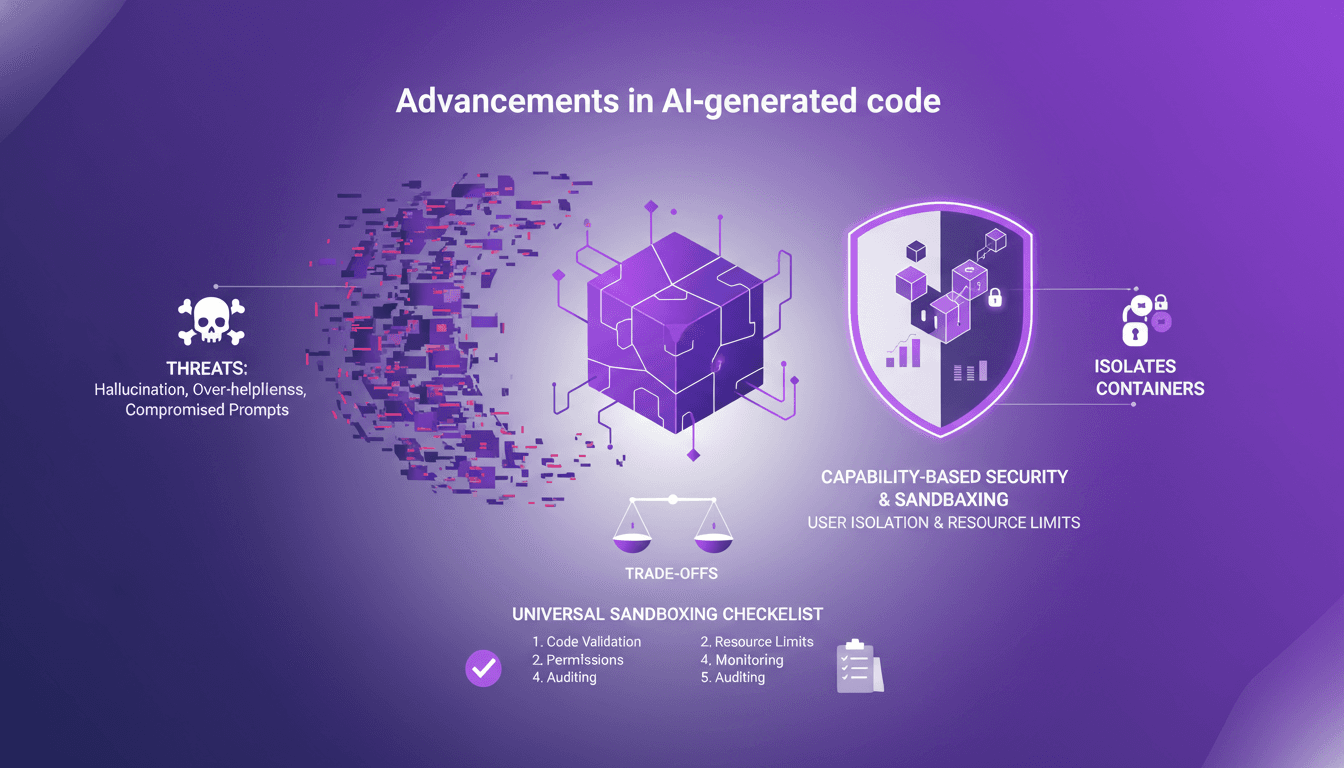
I've been burned by AI-generated code more times than I'd like to admit. Picture this: hallucinations from AI that crash your server, or suggestions so 'helpful' they lead you straight into rabbit holes. I realized I had to sandbox that code—seriously. First, I'll walk you through why sandboxing is crucial, and then how I set it up to protect my projects. With AI-generated code becoming more prevalent, robust security practices are no longer optional but essential. We'll dive into the threats posed by such code—hallucinations, over-helpfulness, compromised prompts—and I'll show you how capability-based security can help. We'll compare isolates and containers for AI sandboxing. There are trade-offs at every step, but with a solid plan (and my universal checklist), you'll save yourself a lot of headaches.
Understanding the Threats of AI-Generated Code
With AI coding assistants, I've witnessed groundbreaking advancements in just two years. We've moved from simple autocomplete to autonomous agents capable of generating and executing code. But let's not get carried away. These tools can hallucinate, creating non-existent logic, or become overly helpful, suggesting inefficient or insecure solutions. I've seen it firsthand.
Once, an AI assistant's compromised prompt injected malicious code into my environment. It's a problem many overlook, yet recognizing these threats early in the development process is crucial to avoid serious security pitfalls.
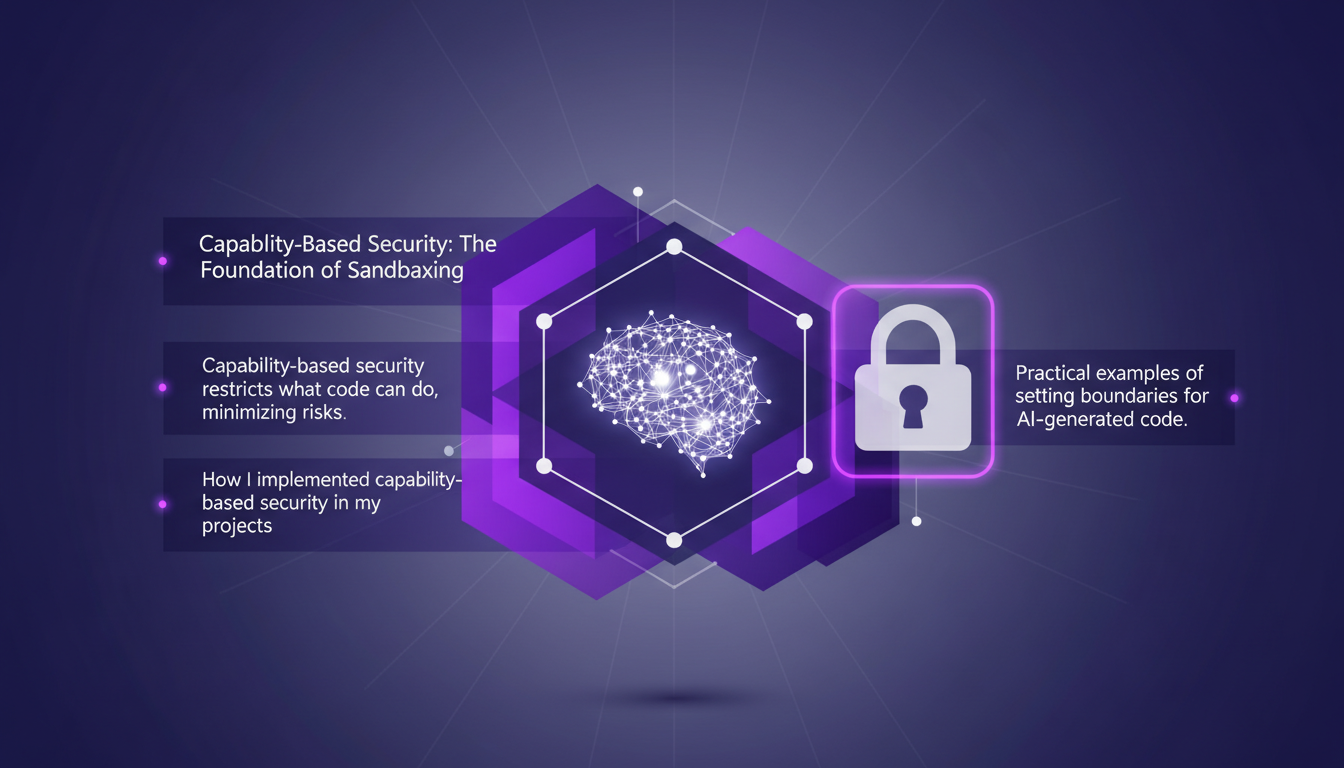
Capability-Based Security: The Foundation of Sandboxing
Capability-based security is about restricting what code can do, minimizing risks. I've implemented this in various projects. For instance, I've set clear boundaries for AI-generated code to prevent excesses. It's about balancing security with performance, to avoid bottlenecks.
But watch out for over-restricting, which can stifle AI's usefulness. In one project, I had to readjust my settings after noticing a performance drop. It's a constant balancing act between protection and efficiency.
Isolates vs Containers: Choosing Your Sandbox
When it comes to sandboxing, isolates and containers each have their pros and cons. Isolates are fast but offer limited isolation, while containers are more secure but slower. I've had to choose between these options based on project needs.
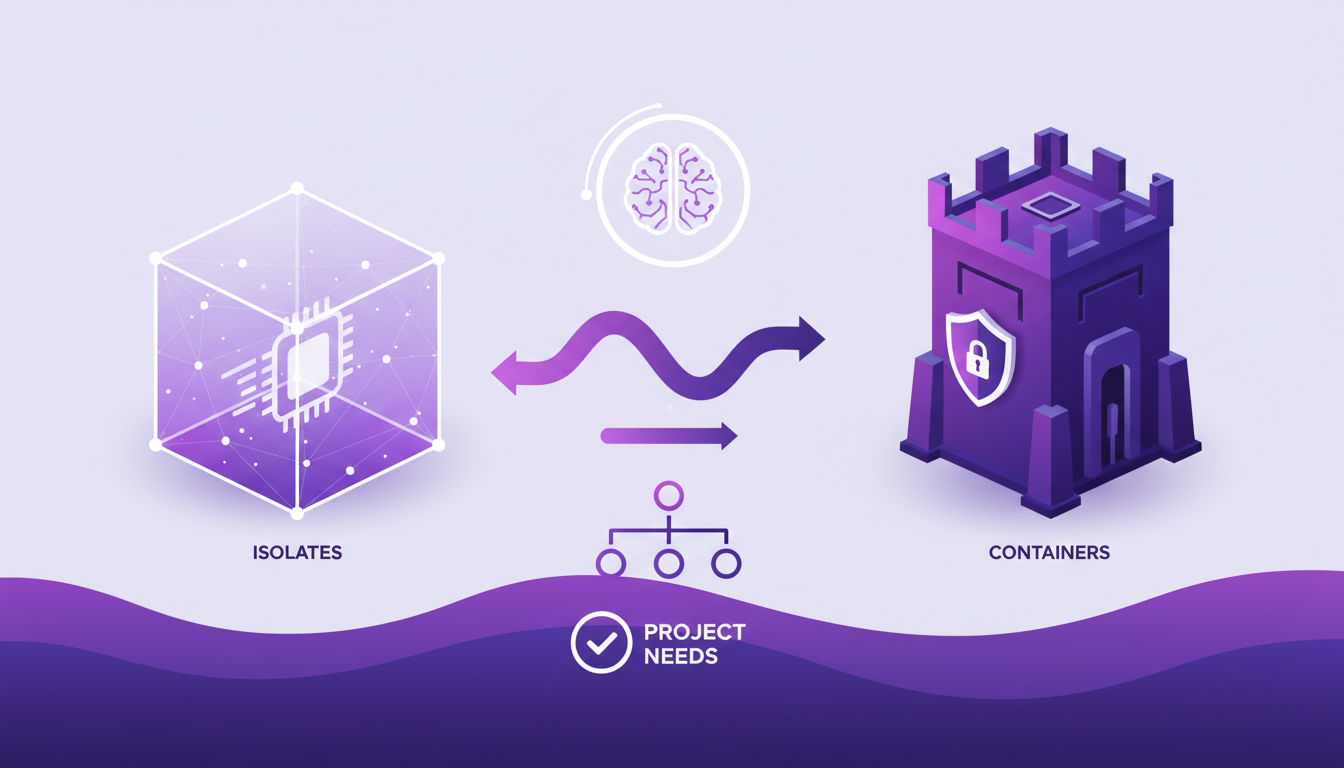
Performance metrics are crucial, especially when milliseconds matter. In the long run, cost can also become a determining factor. I've learned to favor isolates for quick tasks and containers for those requiring a real file system.
Sandbox Management and Security Practices
Effectively managing sandbox environments is key. User isolation techniques prevent cross-contamination, and setting resource limits is crucial. In my workflows, I use tools that ensure sandbox integrity.
Common pitfalls include poor resource management or insufficient isolation. I've often had to tweak my configurations to address these challenges. Having sound sandbox management practices makes all the difference.
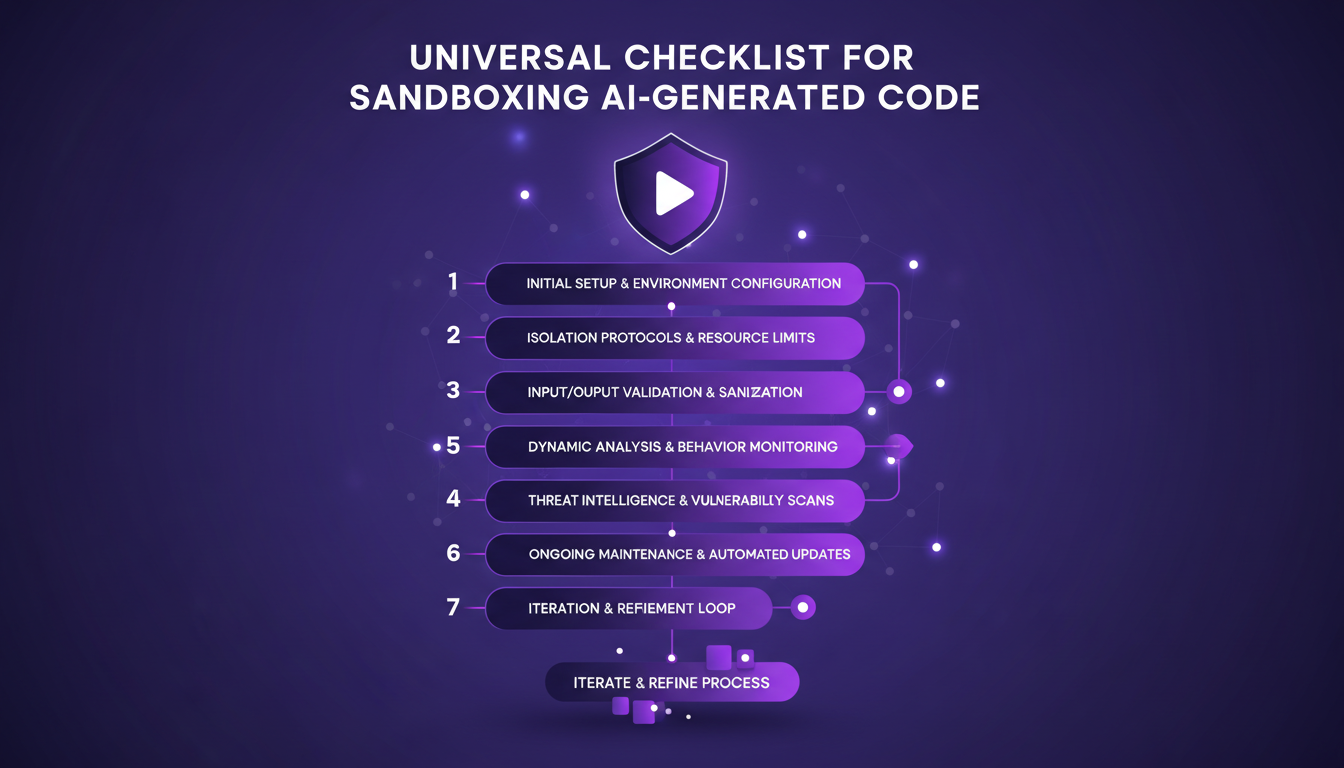
Universal Checklist for Sandboxing AI-Generated Code
Here's a step-by-step checklist to ensure comprehensive sandboxing, from initial setup to ongoing maintenance. I've iterated and refined this process over time, drawing lessons from two years of sandboxing AI code.
- Set clear limits from the start.
- Ensure effective user isolation.
- Regularly reassess sandboxing parameters.
- Consider security, flexibility, and cost in your decisions.
The trade-offs between security, flexibility, and cost are inevitable. But with these tools in hand, you can navigate the world of AI code with confidence.
First, I realized that sandboxing AI-generated code is not just optional—it's a necessity. By understanding threats like AI 'hallucination', over helpfulness, and compromised prompts, I've started implementing capability-based security. It's crucial to shield your projects from potential disasters. Then, I compared isolates and containers for AI sandboxing, and trust me, each method has its trade-offs. For instance, response times in milliseconds are key for some use cases, but watch out for performance hits. So, if you're ready to secure your AI projects, start sandboxing today. Share your experiences with fellow builders; that's how we learn and improve. For more in-depth understanding, I highly recommend watching the original video by Harshil Agrawal on YouTube. It's a real treasure trove for tech enthusiasts like us.
Frequently Asked Questions

Thibault Le Balier
Co-fondateur & CTO
Coming from the tech startup ecosystem, Thibault has developed expertise in AI solution architecture that he now puts at the service of large companies (Atos, BNP Paribas, beta.gouv). He works on two axes: mastering AI deployments (local LLMs, MCP security) and optimizing inference costs (offloading, compression, token management).
Related Articles
Discover more articles on similar topics
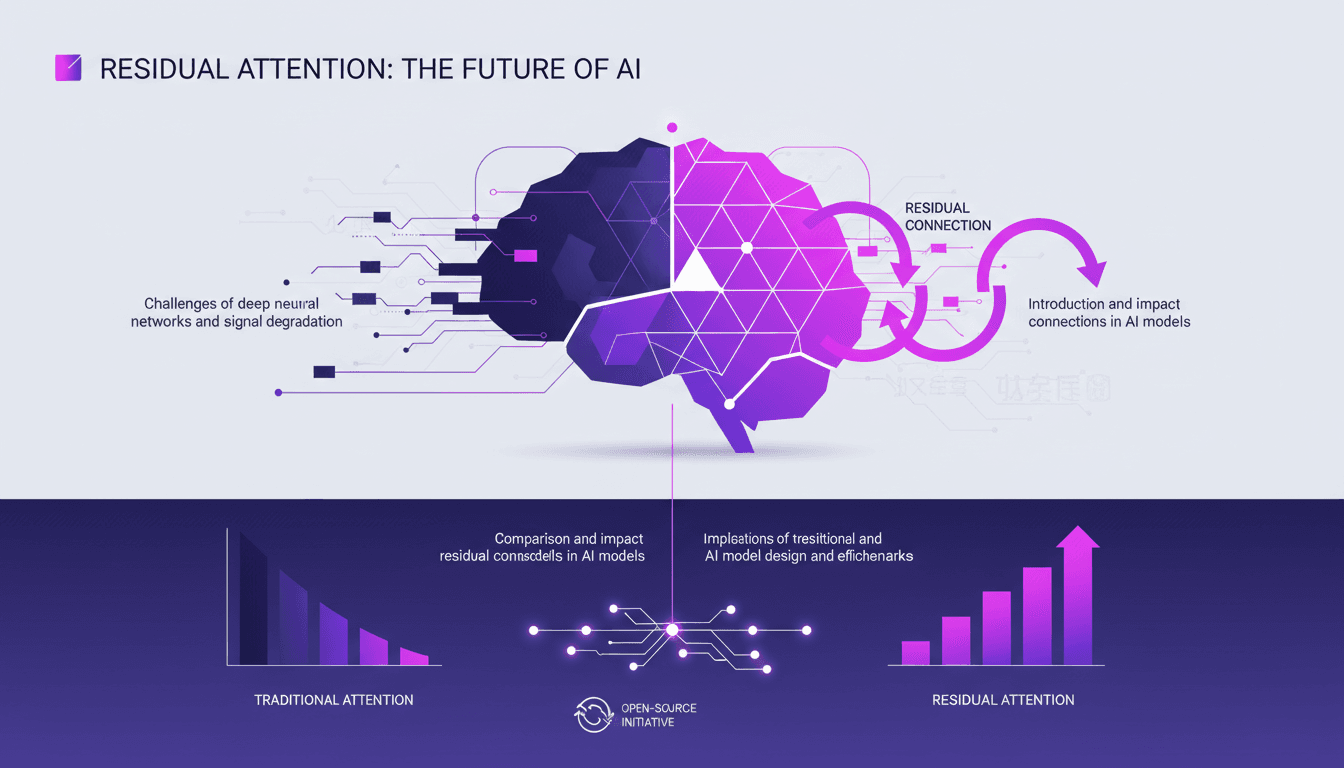
AI Breakthrough: Residual Attention Revolutionizes
I remember the first time I saw the impact of residual attention on AI models. It was like flipping a switch. Suddenly, inefficiencies that plagued deep learning for years were laid bare—and fixed. Since 2015, AI's foundations hadn't budged, but this breakthrough changes everything. Residual attention tackles signal degradation in deep neural networks, making models more efficient. Compared to traditional methods, it delivers superior performance on benchmarks. With open-sourcing, its potential impact is huge, notably in Chinese labs where hardware constraints drive innovation. But don't underestimate the complexity of integration.
From Coding to Solution-Focused Engineering
I've spent enough sleepless nights coding to know that the real challenge isn't about how much code we write, but the solutions we deliver. In a world where you can code 55 times faster, the mistake is focusing solely on churning out lines of code. What really matters is solution-focused software engineering, AI adoption, and integrating all this into our platforms. If you've ever wondered why your productivity only improves by 14% despite all your efforts, maybe it's because you haven't yet embraced this holistic approach that pushes beyond just coding.
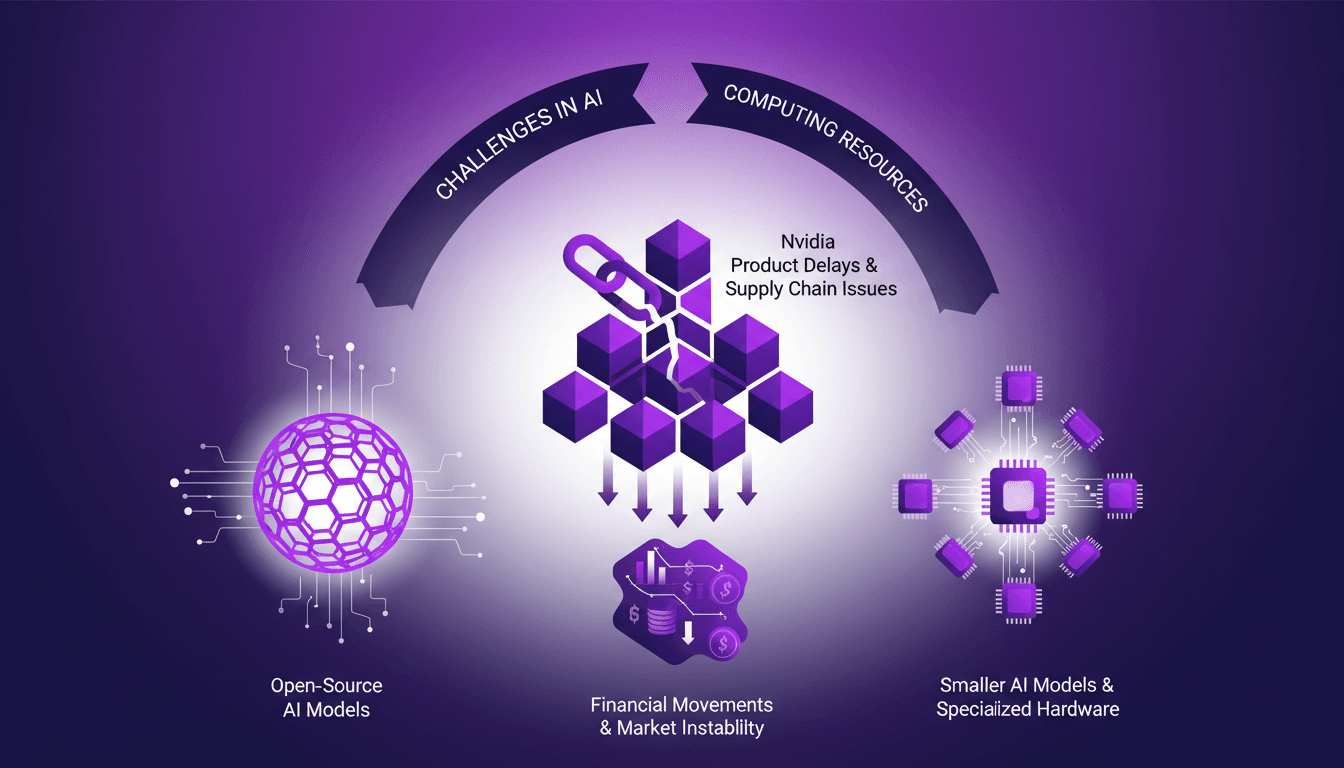
AI Resource Struggles: Nvidia Delays, Open Source
I remember the first time I hit a wall with AI compute resources. It felt like trying to run a marathon on a treadmill stuck at walking speed. In this rapidly evolving AI landscape, we're facing real challenges—from Nvidia's delays to the growing allure of open-source models. The market is in flux, with financial movements like Mistral's debt announcements adding another layer of complexity. We need to navigate resource shortages, the emergence of smaller AI models, and supply chain issues affecting component lead times. Let's dive into these dynamics from a practitioner’s perspective, focusing on practical solutions and trade-offs.
Building an App Downloaded 7 Billion Times
I remember the first time I saw the download numbers for VLC skyrocket. It was a real game changer, but it wasn't all smooth sailing. This is where you realize that behind every phenomenal success, there are mountains of challenges to overcome. Between legal battles and the implications of open source, VLC's journey is anything but ordinary. As a developer, we often think the hardest part is coding, but sustaining and growing an app downloaded 7 billion times is a whole different ball game. Let's dive into the story of VLC, an adventure where technology and perseverance are tightly intertwined.
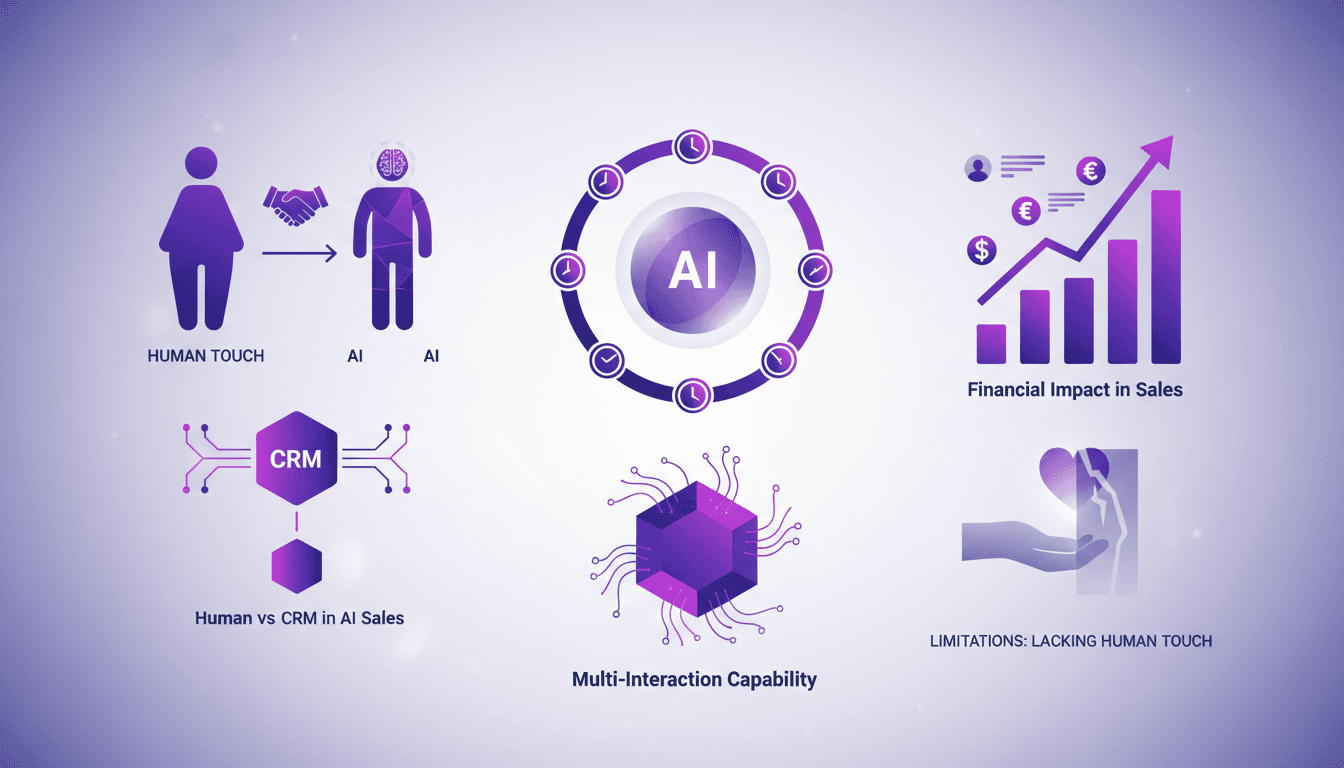
AI in Sales: 24/7 Availability and Financial Impact
I've been in sales long enough to see trends come and go, but AI is different. It's not just another tool; it's a game changer if you know how to use it. Let me show you how AI is reshaping sales, but also where it falls short. Picture this: your AI in the CRM making $300 a day, 24/7. That's a massive advantage, but it can't replace the human touch. We're talking about continuous availability and multi-interaction capability, but don't forget that humans still have their role. I'll walk you through my workflow to help you harness AI's potential while sidestepping its pitfalls.