Handling Sales Objections: Practical Techniques
Ever been in a sales meeting where you couldn't quite read the room? I've been there, and here’s how I handle it when objections seem invisible. In sales, recognizing objections—or their absence—is crucial. I'm not talking theory, but real-world scenarios. How can AI lend a hand? I'll share how I uncover hidden motivations through precise questioning and create space for genuine communication. It's not about overusing AI, but integrating it smartly into the sales process. Let’s dive into this tutorial with practical techniques that I use daily to navigate these tricky waters.

Ever been in a sales meeting where you just can't read the room? Been there, done that. And when objections seem invisible, what’s my move? In sales, recognizing the absence of objections is as crucial as spotting them. This isn't about theory; it's about what's really happening in the field. That's where AI steps in. I’ve learned not to get burned by asking the right questions to uncover true motivations. Sometimes, it's about strategically stepping back to move forward. You need to create space for genuine communication, and AI can be a powerful ally in that process. But watch out, it’s not about overusing it. In this tutorial, I’m going to show you the techniques I use every day to navigate these tricky situations.
Recognizing the Absence of Objections
In sales, I’ve often found myself facing prospects who seemed too quiet. Initially, I thought it was a good sign: no objections, no problem... rookie mistake. The absence of objections can actually be a major red flag. It often indicates that the prospect is not engaged or is hiding their true concerns.
For me, learning to read between the lines was a turning point. I started spotting suspicious silences and digging deeper to discover what was really going on. Here are some practical cues to watch for:
- The prospect avoids direct questions.
- Responses are vague or repetitive.
- No feedback on proposals or ideas presented.
These signals taught me to be proactive, not to wait for the client to speak up spontaneously.
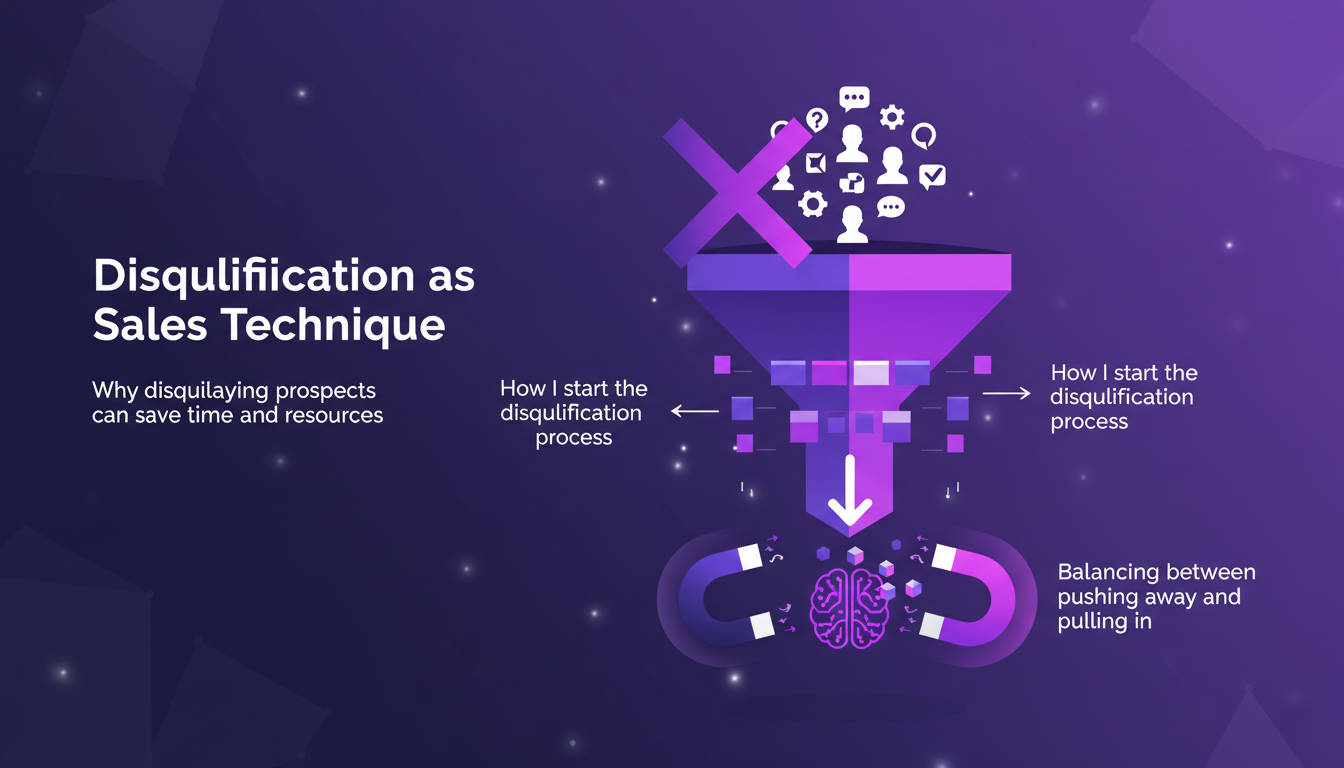
Disqualification as a Sales Technique
Disqualifying prospects might seem counterintuitive, but trust me, it's a game changer. In my journey, I’ve realized not all prospects are worth the time and resources. Disqualification allows for efficient time management.
When I start the disqualification process, I focus on signals indicating a prospect is not truly interested or ready to move forward. For instance:
- Lack of urgency or a clear need.
- Unavailable or unengaged decision-makers.
- Inadequate or undefined budget.
But watch out, you need to balance between pushing away and pulling in. Pushing too hard can scare off a potential client who might have converted with a bit more time.
Uncovering True Motivations Through Questions
Asking the right questions is a powerful weapon in sales. I’ve discovered that certain questions can reveal the true intentions of the prospect. For example:
- "What’s stopping you from committing today?"
- "What are your main decision criteria?"
- "Is there anything in particular that concerns you?"
These questions, coupled with active listening, allow me to understand deeper motivations. I adapt based on the responses, adjusting my approach to better meet the client’s specific needs.

Creating Space for Genuine Communication
To encourage honest dialogue, I’ve adopted techniques to create an open environment. This means letting the client express themselves without interruption while asking open-ended questions. I’ve often observed that talking too much can stifle conversation. It’s crucial to find a balance between talking and listening.
Genuine communication not only helps to better understand the client but also leads to better sales outcomes. A client who feels listened to is more likely to share their true concerns, making negotiation easier.
Role of AI in Sales Processes
Integrating AI into my sales workflow has been a real game changer. AI tools can identify silent objections by analyzing conversations and detecting hidden intentions. For example, software like Everworker allows for real-time objection classification and strategy adjustment accordingly.

However, it's important not to rely entirely on AI. It provides valuable insights but does not replace human judgment. The future of AI in sales is promising, but it should be used as a complementary tool, not a miracle solution.
First, recognizing the absence of objections in a sales conversation is key. If no one's raising issues, I start questioning: is it really the right time for us to work together? Next, disqualification is an art. When I use it, I don’t waste time on those who aren’t committed. And then, AI is a game changer for uncovering true motivations. But watch out, you need to ask the right questions to create space for genuine communication. So, don’t stay on the surface, integrate these techniques into your next sales pitch and see the difference it makes. Check out the full video on YouTube to dig deeper: we’re all in this together, learning as we go!
Frequently Asked Questions

Thibault Le Balier
Co-fondateur & CTO
Coming from the tech startup ecosystem, Thibault has developed expertise in AI solution architecture that he now puts at the service of large companies (Atos, BNP Paribas, beta.gouv). He works on two axes: mastering AI deployments (local LLMs, MCP security) and optimizing inference costs (offloading, compression, token management).
Related Articles
Discover more articles on similar topics

Building Lasting Buyer Relationships in Sales
I’ve stopped just sending deals to buyers. Now, I build strong relationships and truly understand their goals. This shift has transformed how I approach sales. In real estate, it’s easy to get lost in numbers and transactions. But I’ve found that real success comes from understanding buyer needs and leveraging AI to enhance our sales tactics. By spending less time pushing deals and more time listening, I’ve forged long-term relationships that deliver real value. If you really want to make it in this field, it's time to rethink your strategy. Instead of sending deals, connect with your clients and prioritize their needs. You’ll see, the impact on your sales will be significant.

How AI Handles Every Sales Objection
I've been in sales long enough to know that objections are inevitable. But when AI stepped into the game, I realized we could tackle these hurdles more efficiently. Let me walk you through how AI learned to navigate the tricky waters of sales objections. We're not talking theory here—this is practical, field-tested strategy. With AI, we can dissect objections into manageable layers and address them systematically. It's a real game changer, but watch out for the limits, especially when it comes to understanding prospects' motivations. I'll show you how we move from 'Let me think about it' to closing a deal.
Reviving Dead Leads: AI in Real Estate
I remember staring at a list of 'dead leads', convinced they were a lost cause. Then it hit me: what if I could automate a follow-up system with AI? I dove in, connected our CRM to an AI model, orchestrated the whole thing, and boom, $200K in revenue. Think your dead leads are hopeless? Think again. In real estate, follow-up is often the game changer. With AI, I transformed forgotten contacts into a goldmine. We often underestimate the hidden potential in our databases. Don't just watch your prospects fade away. Revive them, reinvent your strategy with AI, and watch the magic happen.

Optimize Sales: Don't Let Your Best Reps Do This
I used to think my top salespeople should handle every stage of the sales process. Big mistake. I discovered that role specialization can significantly boost our conversion rates. Let me walk you through how I optimized our workflow for better results. In sales, every lead is gold, but not every task should fall into the lap of your best closers. Inspired by Henry Ford, I restructured our operations so everyone focuses on their core strength. The outcome? Less wasted time, more appointments set, and skyrocketing conversion rates.

Avoid Identity Objections in Car Sales
In the tough world of car sales, I've learned the hard way that identity objections can make or break a deal. The first time I faced it, I stumbled. But now, I navigate these situations with a clear strategy. It's not just about specs or price; it's about who the customer is or wants to be. Let's break down how identity plays a crucial role in sales and how you can turn it to your advantage.