React Compiler: Transforming Frontend
I still remember the first time I flipped on the React Compiler in a project. It felt like turning on a light switch that instantly transformed the room's atmosphere. Components that used to drag suddenly felt snappy, and my performance metrics were winking back at me. But hold on, this isn't magic. It's the result of precise orchestration and a bit of elbow grease. In the ever-evolving world of frontend development, the React Compiler is emerging as a true game changer. It automates optimization in ways we could only dream of a few years ago. Let's dive into how it's reshaping the digital landscape and what it means for us, the builders of tomorrow.
I remember the first time I turned on the React Compiler in a project. It felt like flipping a switch that instantly brightened the room. Suddenly, components that used to drag felt snappy, and performance metrics were smiling back at me. But it's not magic—it's the result of precise orchestration and a bit of elbow grease. The React Compiler is shaking up frontend development. It's automating optimization in ways we only dreamed of a few years ago. In this episode of the Beyond Coding Podcast, Lydia Hallie takes us behind the scenes of this transformation. We'll break down how the React Compiler is redefining our coding practices, its impact on performance and development, and what it means for the future of developers, especially as AI and generated code start to play bigger roles. Ready to see what the future holds?
Understanding the React Compiler
When I first got my hands on the React Compiler, I thought, "Finally, a way to optimize my components without the hassle." For those of us who have spent countless hours juggling memoization, use memo, and use callback, this compiler is a godsend. Essentially, it automates these cumbersome tasks by compiling our code into a single Single Static Assignment (SSA), which is crucial for avoiding unnecessary re-renders. You can imagine my relief when I learned that Instagram saw a 30% performance improvement thanks to this technology. That's some real-world impact!
Then there's this concept of vibe coding. Basically, writing code without worrying about render cycles. It's liberating, but watch out, there are limits. If you exceed 100K tokens, be prepared for surprises.
Automating Component Optimization
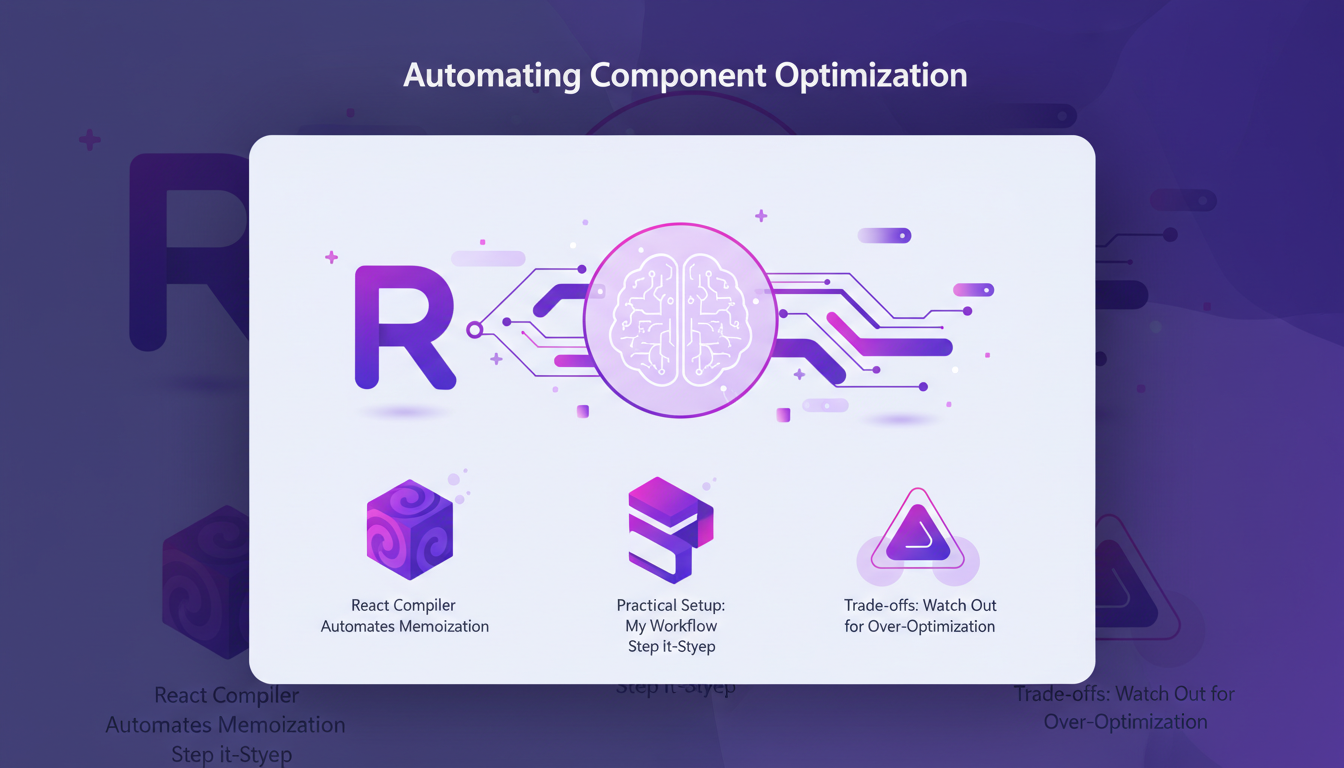
The real power of the React Compiler lies in its automation of memoization. In my practice, I've seen how it takes over value memorization and optimizes them in real time. My workflow? Simple:
- First, I check compatibility with
npm recompile. - Then, I integrate the ESLint plugin to prevent compilation errors.
- Finally, I add it to my build pipeline, and voilà!
But beware of over-optimizing. Sometimes, it's better to keep manual control. I've had components perform worse after an automatic optimization, so stay cautious.
Integrating React Compiler in Your Workflow
To integrate the compiler into your workflow, start with a basic setup. I had a few hiccups initially, especially with incompatible dependencies. But once I got past that, it's smooth sailing.
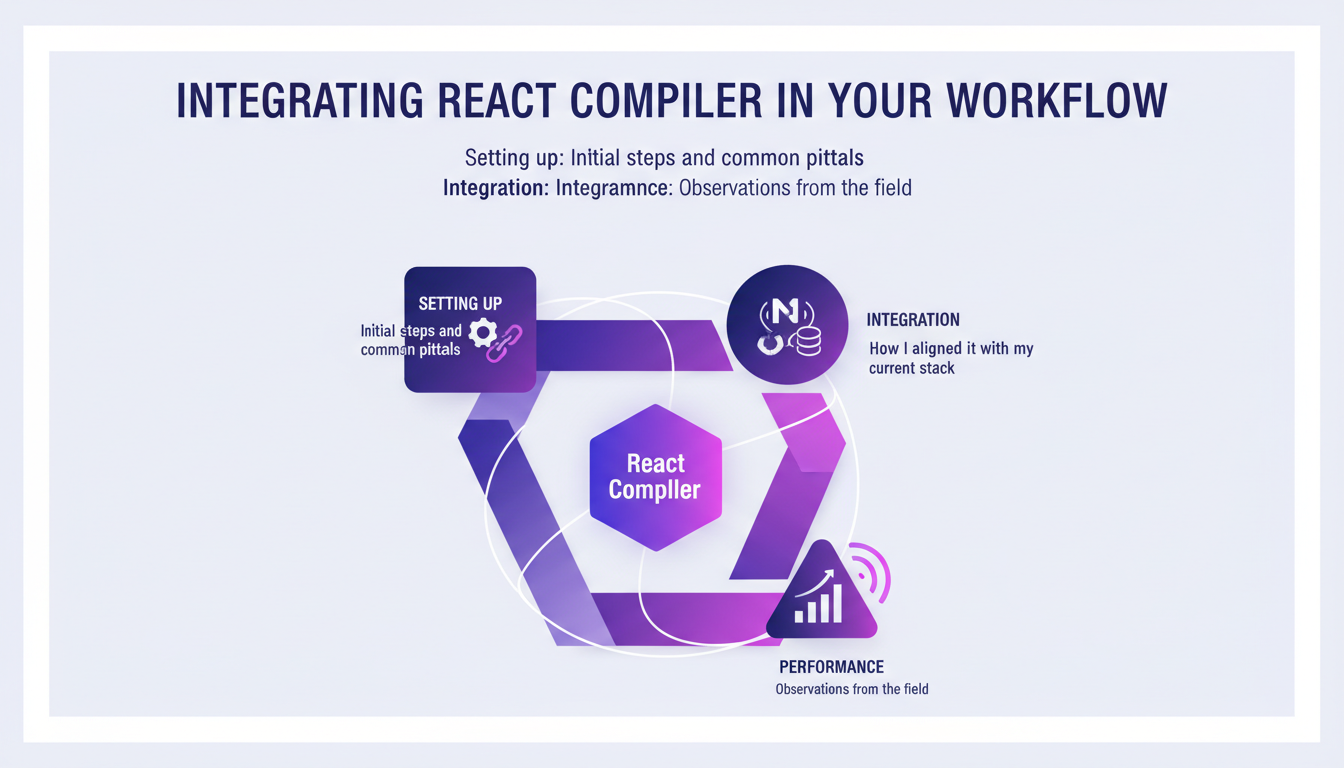
What surprised me was the fluidity it brings. Less code to maintain, fewer bugs linked to memoization. But don't expect miracles everywhere. Sometimes, the performance gains don't justify the integration effort, especially if your codebase is already well-optimized.
Performance and Development Impact
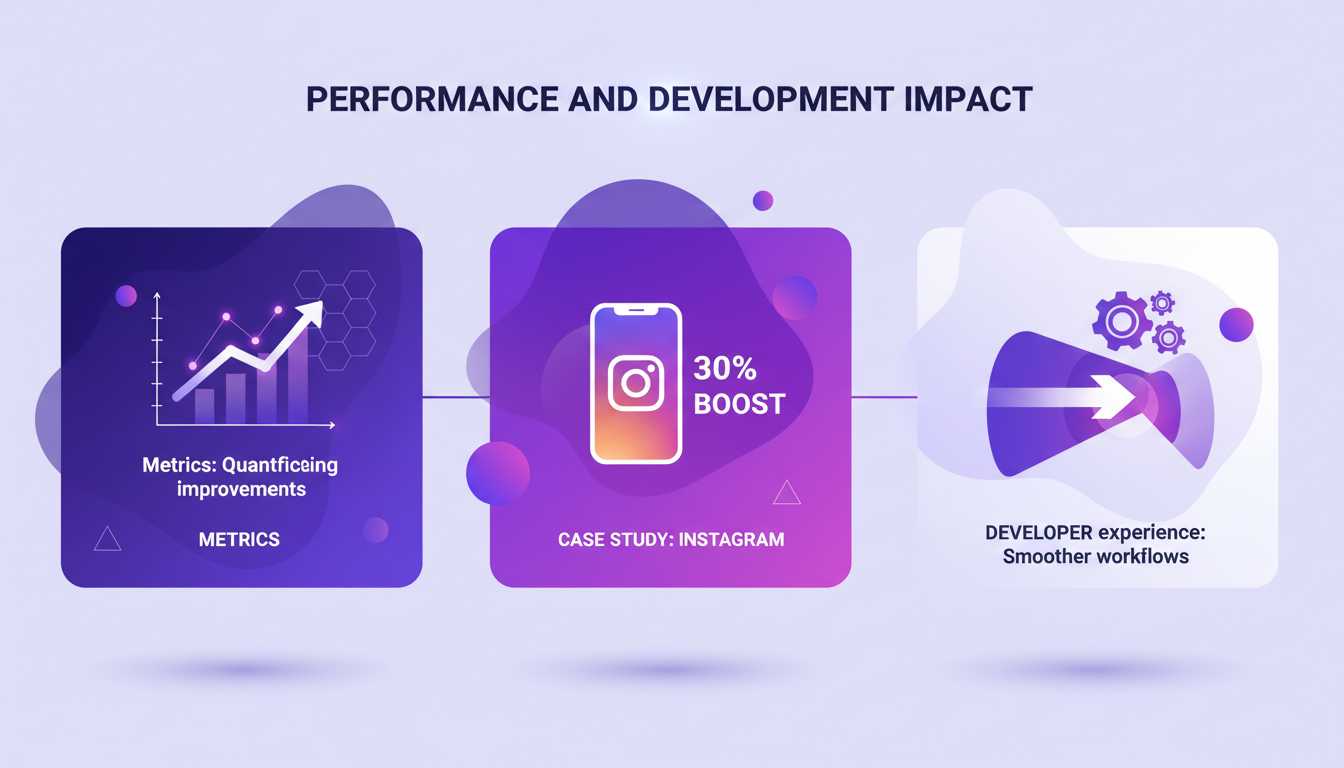
Speaking of metrics, what struck me was the reduction in render time. With Instagram, we're talking about a 30% boost, which is huge. But it's not just that. Developers' daily routines are lightened. Less time spent solving rendering issues means more time to innovate.
Currently, the adoption of the compiler is rapidly expanding. It's a hot topic at discussions at the React Summit 2025. But keep an eye on trends: some developers still prefer traditional methods.
React Compiler in the AI-Driven World
The future of development lies in AI, and the React Compiler fits perfectly into this dynamic. It automates repetitive tasks, freeing up time to focus on more complex tasks. For junior developers, it's a double-edged sword: now they need to focus on more strategic skills.
Compared to other frameworks, React keeps a leg up. But beware, adaptability is key. As Lydia Hallie often says, "Keeping a connection to your code is essential, even in an AI-dominated world."
In conclusion, prepare for the future. Keep up with evolutions, but never lose sight of the added value you can bring as a human developer.
So, the React Compiler is truly a paradigm shift in how we tackle frontend development. First, it automates component optimization, allowing us to focus more on user experiences. Then, you need to thoughtfully integrate this tool into your workflow because, while powerful, it has its limits. For instance, its automation capabilities don't replace a thorough understanding of your code. But honestly, it frees up a ton of time, letting us focus on what really matters. I'm convinced that by 2025, we'll look back and wonder how we managed without it. Ready to transform your workflow? Dive into the React Compiler and see the difference for yourself. And to really dig into the topic, I recommend watching Lydia Hallie's original video. It's packed with practical insights. [YouTube link: https://www.youtube.com/watch?v=yKCWzWSwAK0]
Frequently Asked Questions

Thibault Le Balier
Co-fondateur & CTO
Coming from the tech startup ecosystem, Thibault has developed expertise in AI solution architecture that he now puts at the service of large companies (Atos, BNP Paribas, beta.gouv). He works on two axes: mastering AI deployments (local LLMs, MCP security) and optimizing inference costs (offloading, compression, token management).
Related Articles
Discover more articles on similar topics
Launch SaaS Without Code Using Data Button
Ever thought launching a SaaS without writing a single line of code was a pipe dream? I did too, until I stumbled upon a game-changer: Data Button. Let me walk you through how I launched my own SaaS, integrating Firebase authentication and deploying it seamlessly, all without touching a line of code. In today's tech world where time and efficiency are crucial, this approach not only saves time but also drastically cuts costs, making it perfect for startups with limited resources. By organizing my files using the MVC design pattern and deploying directly to a custom domain, I've simplified the SaaS deployment process with AI.
Build Your Own AI Fashion Influencer
I dove into the world of virtual try-on tech to build my own AI fashion influencer. It's like playing dress-up, but with code. First, I integrated an AI model using tools that cost less than a dollar per virtual try. Each generation takes about 40 seconds and costs just 4 cents. It's a real game changer for fashion advertising. I'll walk you through how I orchestrated everything—from model integration to cost management—and how this opens up new monetization opportunities in the industry. Don't get burned by context limits; beyond 100K tokens, it gets tricky. Ready to transform your fashion marketing approach with AI? Follow along, I'll show you how.
Becoming an AI Whisperer: A Practical Guide
Becoming an 'AI Whisperer' isn't just about the tech, trust me. After hundreds of hours engaging with models, I can tell you it's as much art as science. It's about diving headfirst into AI's depths, testing its limits, and learning from every quirky output. In this article, I'll take you through my journey, an empirical adventure where every AI interaction is a lesson. We'll dive into what truly being an AI Whisperer means, how I explore model depths, and why spending time talking to them is crucial. Trust me, I learned the hard way, but the results are worth it.
AI Innovations 2025: Gemini and Google Beam
I was at Google I/O 2025, and the buzz was palpable. As a builder, I'm always on the lookout for tools that make a real difference in my workflows. This year, Gemini AI and Google Beam caught my attention. We're not just talking about minor upgrades; these are genuine game changers. New products and subscription plans, Gemini AI's evolution, and breakthroughs in scientific research are shaking things up. AI in immersive video communication and disaster response is no longer just a promise; it's a reality. With the Ironwood TPU delivering 42.5 exaflops of compute per part, performance has skyrocketed. It's time to dive into these innovations and see how they can transform our projects in real ways.

Voice Cloning: Efficient Model for Commercial Use
I dove into voice cloning out of necessity—clients needed unique voiceovers without the hassle of endless recording sessions. That's when I stumbled upon this voice cloning model. First thing I did? Put it against Eleven Labs to see if it could hold its ground. Voice cloning isn't just about mimicking tones—it's about creating a scalable solution for commercial applications. In this article, I'll take you behind the scenes of this model: where it shines, where it falters, and the limitations you need to watch out for. If you've dabbled in voice cloning before, you know technical specs and legal considerations are crucial. I’ll walk you through the model's nuances, its commercial potential, and how it really stacks up against Eleven Labs.