Building an AI Closer: Busting Sales Training Myths
I've spent countless hours trying to get AI to close sales for me, and let me tell you, we're not there yet. But I've learned what it can do now and how to make it work effectively. In the sales world, AI is the shiny tool everyone talks about. Yet, it can't close a deal on its own—yet. What it can do is transform our approach to sales training and execution, especially in identifying and addressing customer pain points. We might be five years away from AI closing a sale, but with the right instructions, it can already recommend 80% of solutions based on pain identification. Follow along, and I'll show you how to orchestrate this for direct impact.
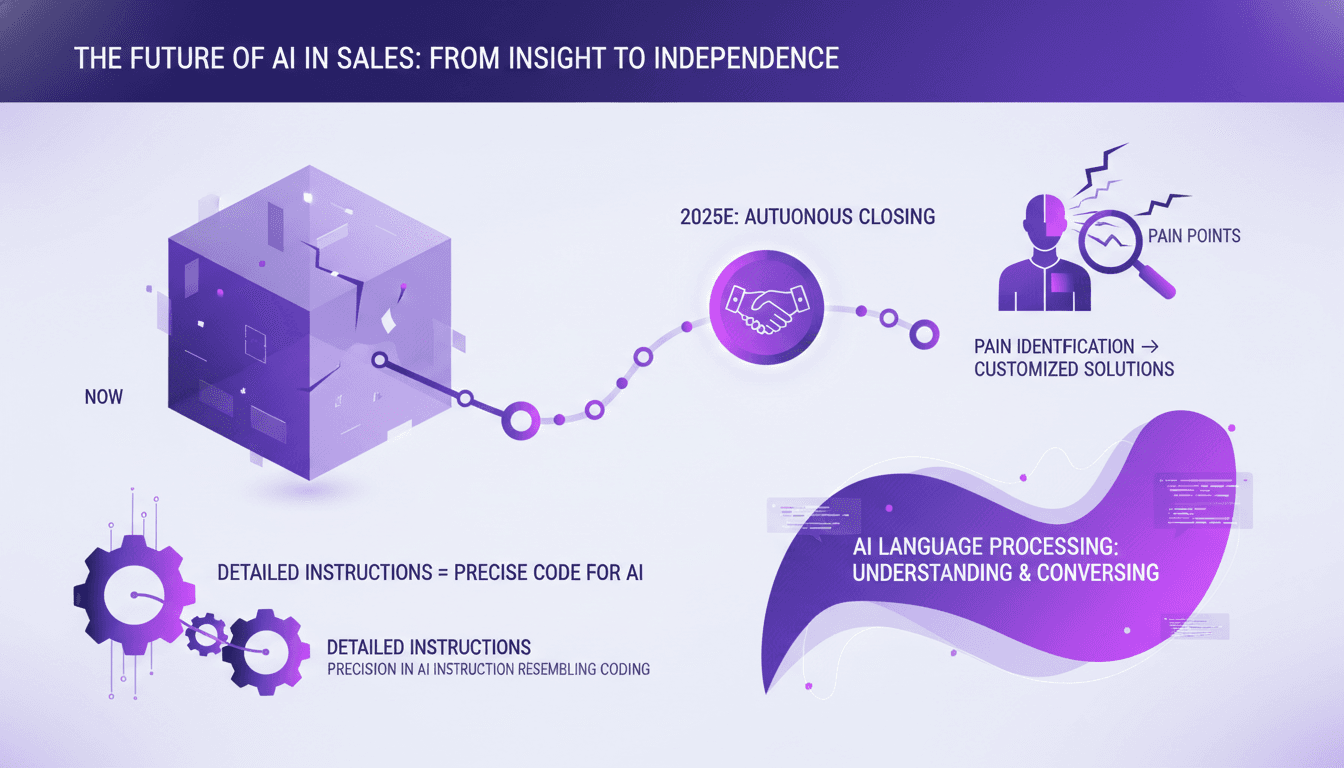
I've spent countless hours trying to get AI to close sales for me, and let me tell you, we're not there yet. But what I've learned about AI's current capabilities might just be a game changer. In the sales world, AI is the shiny new tool everyone talks about. But let's be clear, it can't close a deal on its own—yet. What it can do is transform how we approach sales training and execution, especially when it comes to identifying and addressing customer pain points. Imagine: with precise instructions, AI can already recommend 80% of solutions based on pain identification. And while we might be five years away from AI that can close a sale, understanding how to orchestrate it correctly has a direct business impact. I'll show you how I've integrated it into my workflow, and you'll see that even its current limitations can be an asset.
AI's Current Role in Sales: What It Can and Can't Do
I've often faced the question of whether AI can truly close a sale. For now, the answer is a resounding no. We're still about five years away from AI being able to autonomously close a sale. In my firm, AI is a powerful tool for crunching mountains of data and providing valuable insights, but it lacks that human touch necessary to seal the deal.
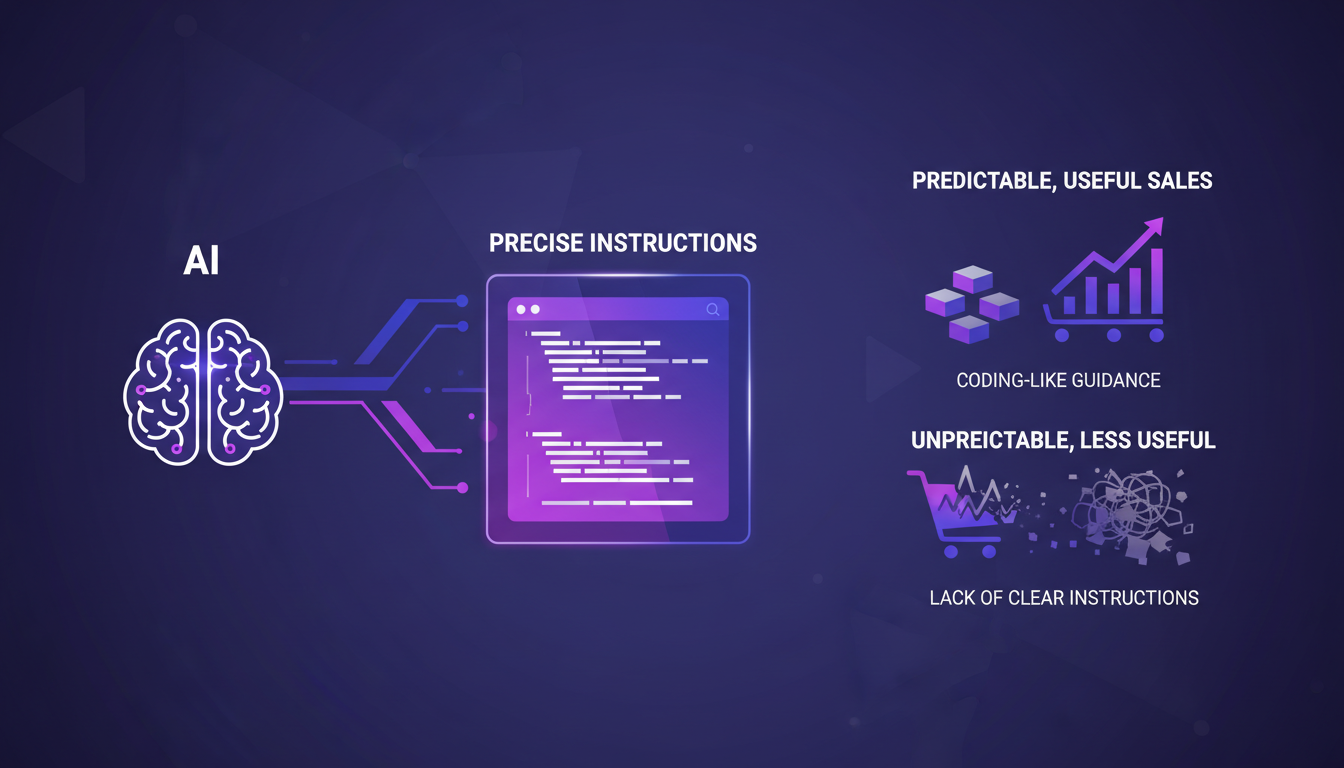
Practically, AI enhances efficiency by taking repetitive tasks off our plates and refining decision-making processes. However, make no mistake, it's not replacing an experienced salesperson anytime soon. AI serves more as an assistant, like a co-pilot guiding you without taking the wheel.
- Data Analysis: AI excels at sifting through complex data.
- Process Assistance: It simplifies and speeds up administrative tasks.
- Insight: Provides recommendations based on customer behavior analysis.
The Importance of Detailed Instructions: Coding for Sales
If you've ever coded, you know that a single mistake can crash everything. With AI, it's the same story. Without detailed instructions, AI becomes a loose cannon. I learned the hard way that AI needs precise directives, almost like coding in English. You need to be explicit and granular.
In practice, this means that for each sales phase, I must provide AI with precise instructions on the keywords to identify and the actions to take. Without these instructions, AI can produce unexpected results that aren't always useful.
- Precision: Every word counts in the instructions given to AI.
- Granularity: Instructions must be detailed, sometimes resembling code.
- Flexibility: While detailed, instructions must allow for real-time adjustments.
Identifying Sales Pain Points: The Key to Effective AI Output
Understanding customer pain is crucial for AI to recommend relevant solutions. I've found that 80% of AI's recommendations are based on identifying these pain points. This involves analyzing customer feedback and purchasing behavior.
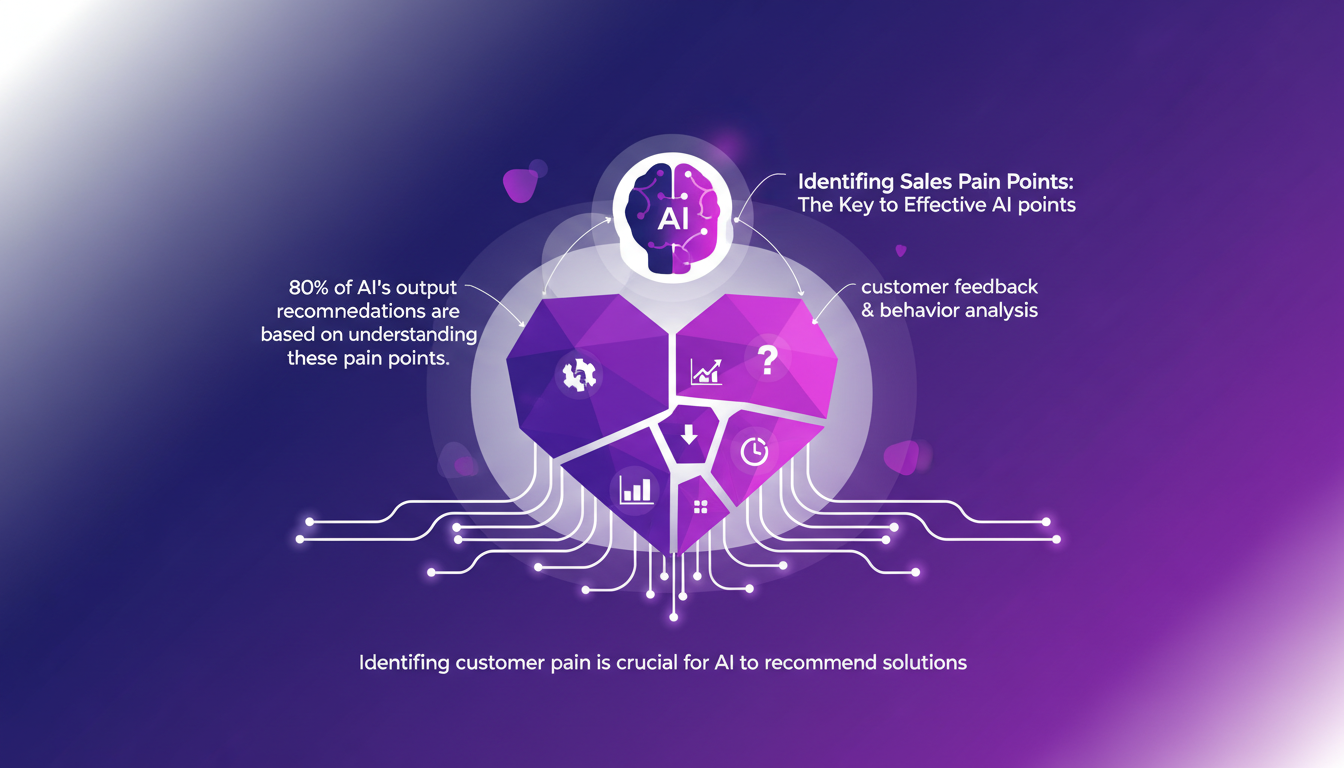
As a practitioner, I ensure to gather all possible customer data, from reviews to behavior on our site, to provide AI with the necessary inputs. This helps us better understand where the shoe pinches and adjust our sales strategies accordingly.
- Feedback Analysis: Customer reviews are a goldmine for AI.
- Behavior Observation: Buying habits reveal valuable insights.
- Personalization: Use this data to tailor the customer approach.
Output Distribution: Tailoring AI Recommendations
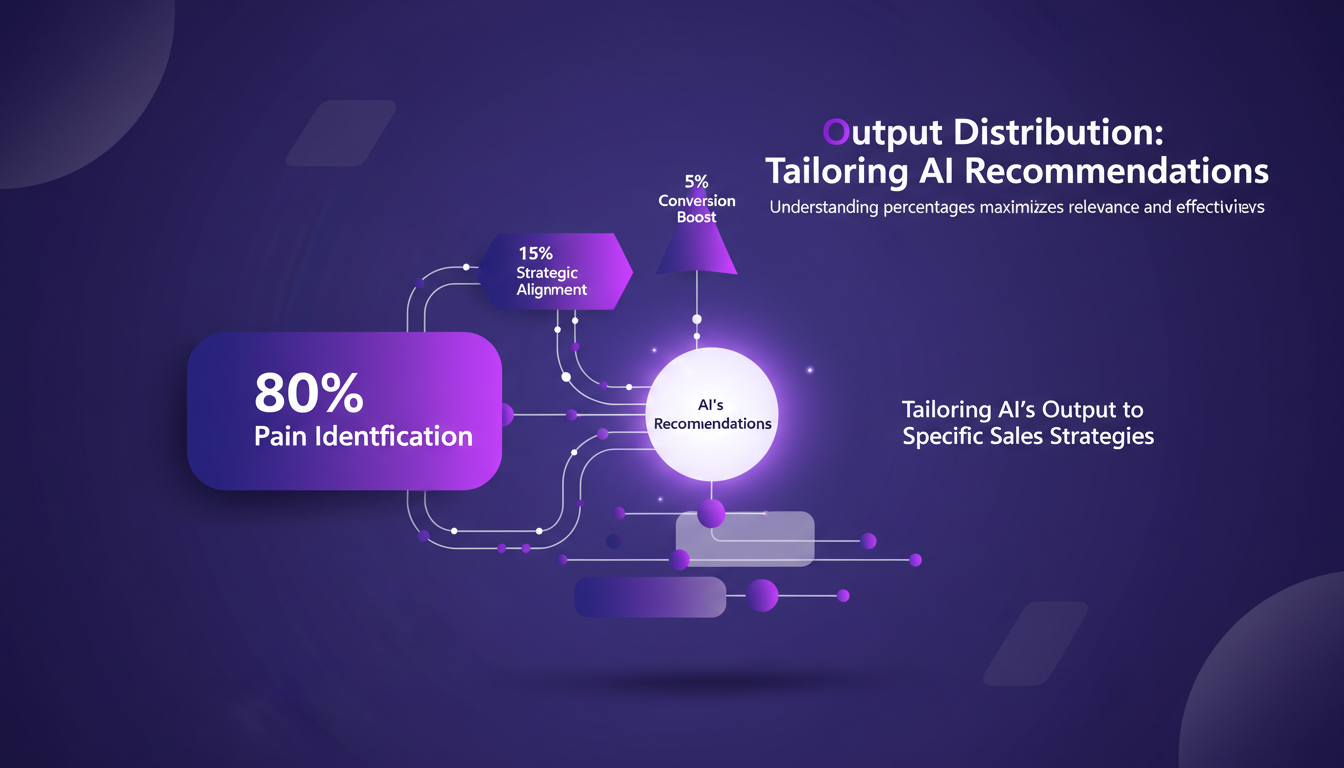
AI's recommendation distribution depends on pain identification: 80% of recommendations address main issues, 15% secondary issues, and 5% peripheral elements. Knowing these percentages helps adjust sales strategies.
By properly orchestrating these recommendations, we can maximize the relevance and effectiveness of AI in the sales process. I've learned that this distribution optimizes commercial impact by focusing on what truly matters to the client.
- Focus: Prioritize recommendations based on issue importance.
- Adaptability: Adjust strategies in real-time according to AI recommendations.
- Optimization: Maximize sales effectiveness by adapting recommendations.
The Road Ahead: Preparing for AI's Future in Sales
Despite its current limitations, AI is a game changer with incredible potential to revolutionize sales. Integrating AI into existing workflows is crucial to get the most out of it. In my experience, staying informed about AI advancements is essential to leverage its future capabilities effectively.
I strive to stay ahead by following trends and testing new AI solutions. It's not about adopting every available tool, but selecting those that truly add value to our processes.
- Integration: Embed AI into current processes for maximum impact.
- Technological Watch: Stay informed about new AI advancements.
- Adaptation: Be ready to adjust strategies as AI evolves.
For further insights, check out our articles on AI limitations in sales, like "Debunking AI Closers: Truths and Limits" and other resources like AI's potential impact.
Bringing AI into sales isn't about replacing humans, it's about enhancing what we can do. I've seen AI boost effectiveness by focusing on pain identification, with 80% of its recommendations hitting the mark. But let's be clear, we're still about five years away from AI autonomously closing deals. So for now, I ensure to give AI detailed instructions to harness its power fully. Here are my key takeaways:
- AI is at least five years from being able to close a sale by itself.
- It already recommends actions based on pain identification 80% of the time.
- Pay close attention to the instructions you feed it for optimal results.
The future of sales with AI is bright, but we need to embrace its current limits. Start weaving AI into your sales strategy today and keep an eye on its evolution. For a deeper dive, I strongly recommend checking out the original video, which offers valuable insights. Watch the video.
Frequently Asked Questions

Thibault Le Balier
Co-fondateur & CTO
Coming from the tech startup ecosystem, Thibault has developed expertise in AI solution architecture that he now puts at the service of large companies (Atos, BNP Paribas, beta.gouv). He works on two axes: mastering AI deployments (local LLMs, MCP security) and optimizing inference costs (offloading, compression, token management).
Related Articles
Discover more articles on similar topics
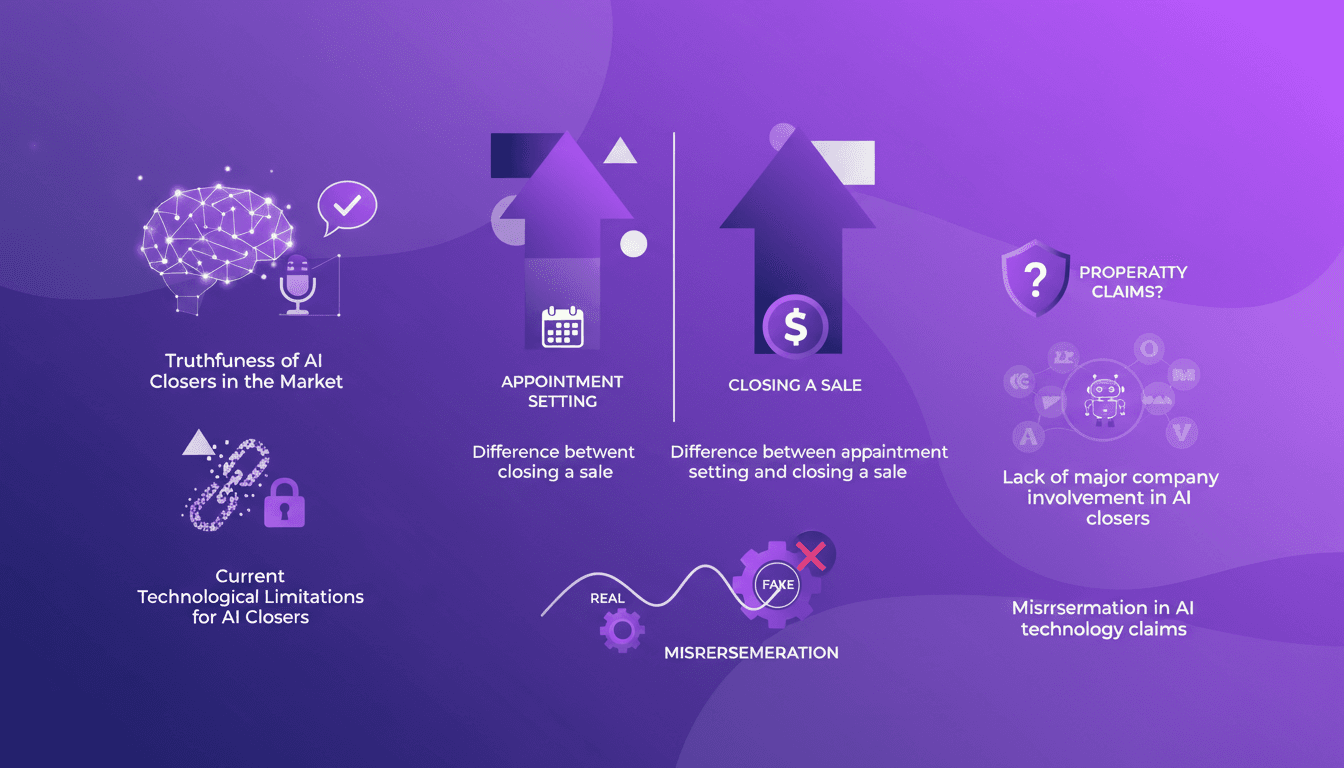
Debunking AI Closers: Truths and Limits
I've been in the trenches with AI tech for years, and if there's one thing I've learned, it's that not everything that glitters is gold—especially when it comes to AI closers. Let's cut through the noise and get real about what's happening in the market. There's a lot of buzz around AI closers, but are they really the game-changers they're hyped up to be? Let's dig into the claims, the reality, and where the tech actually stands. Between current technological limitations, the difference between appointment setting and closing a sale, and claims of proprietary solutions, it's time to debunk all this. And if the big companies aren't jumping in, there's probably a good reason for that.
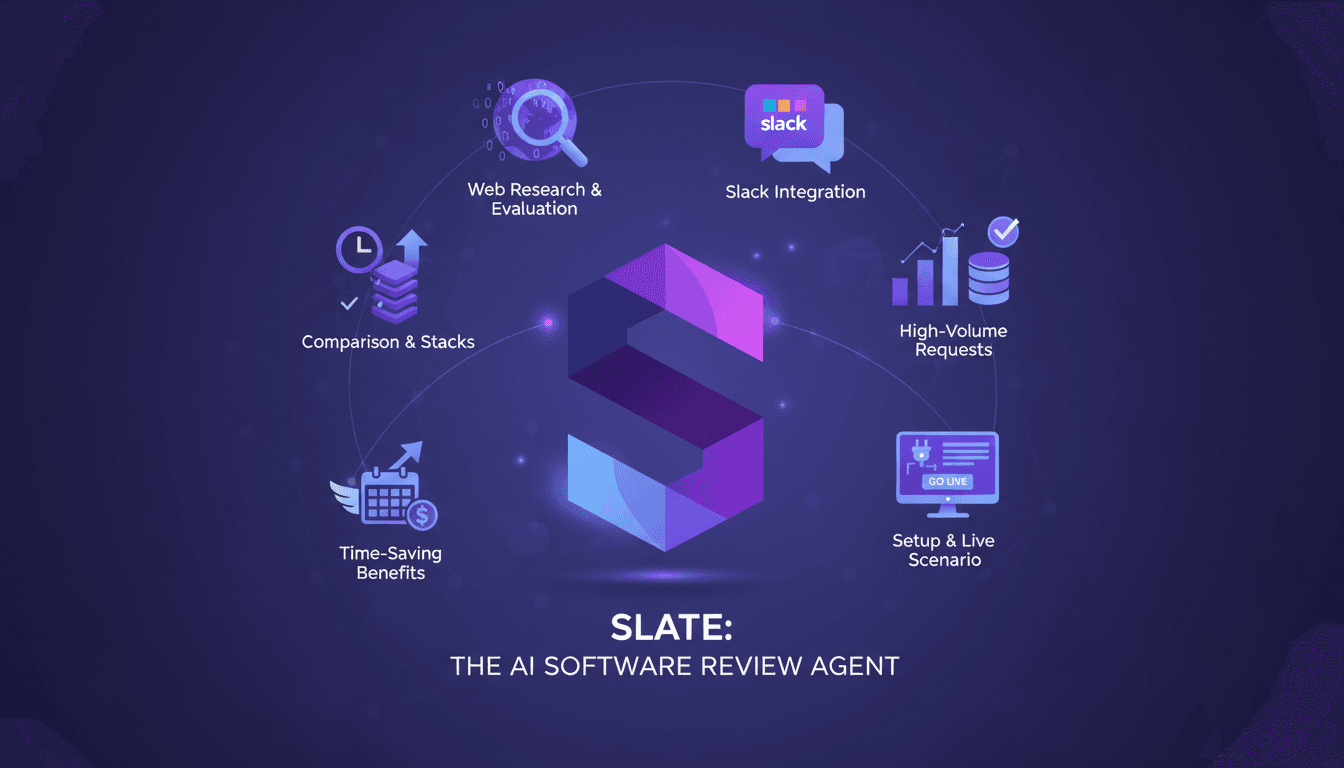
Slate: Software Review Agent in Action
I've spent years in the trenches of IT procurement, juggling endless software requests and trying to keep everyone happy. Then I discovered Slate, a software review agent, and it was a real game-changer. Slate doesn't just perform web research; it evaluates software based on our approved stacks. And the best part? Its seamless integration with Slack makes it a powerhouse for IT and procurement teams. In this article, I'll walk you through how I set up Slate and how it has revolutionized our request management, especially during high-volume periods. Time savings, stress reduction: I'm sharing my experience with you.
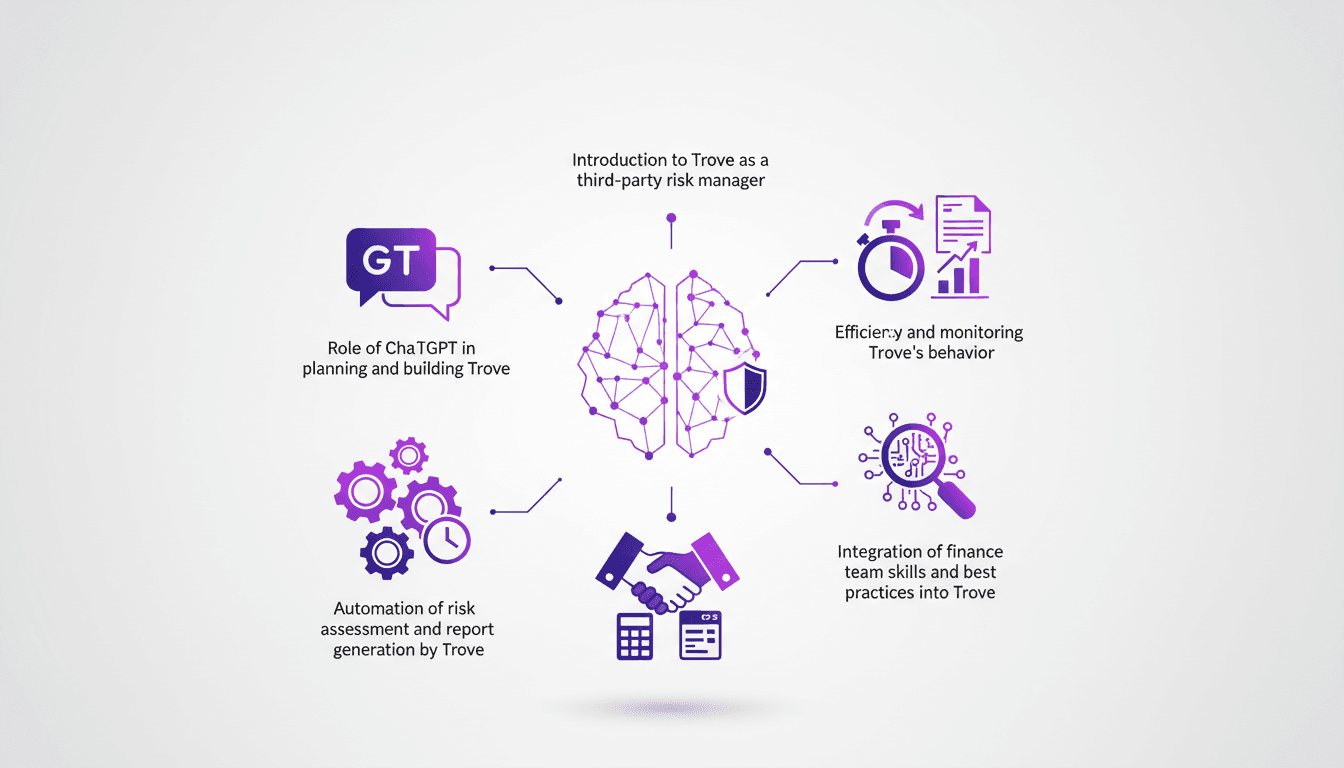
Managing Third-Party Risks with Trove and ChatGPT
I've been in the trenches of risk management for years, and when I first stumbled upon Trove, I knew it could change the game. Trove, paired with ChatGPT, offers a fresh approach to handling vendor due diligence with automation at its core. First, I connect Trove to our risk management system, then I integrate ChatGPT to automate risk assessment and report generation. In a matter of minutes, Trove completes what used to take hours. But watch out, you need to monitor its behavior and align it with our finance team's best practices. I'll walk you through how I orchestrated this integration and the efficiency gains I've seen.
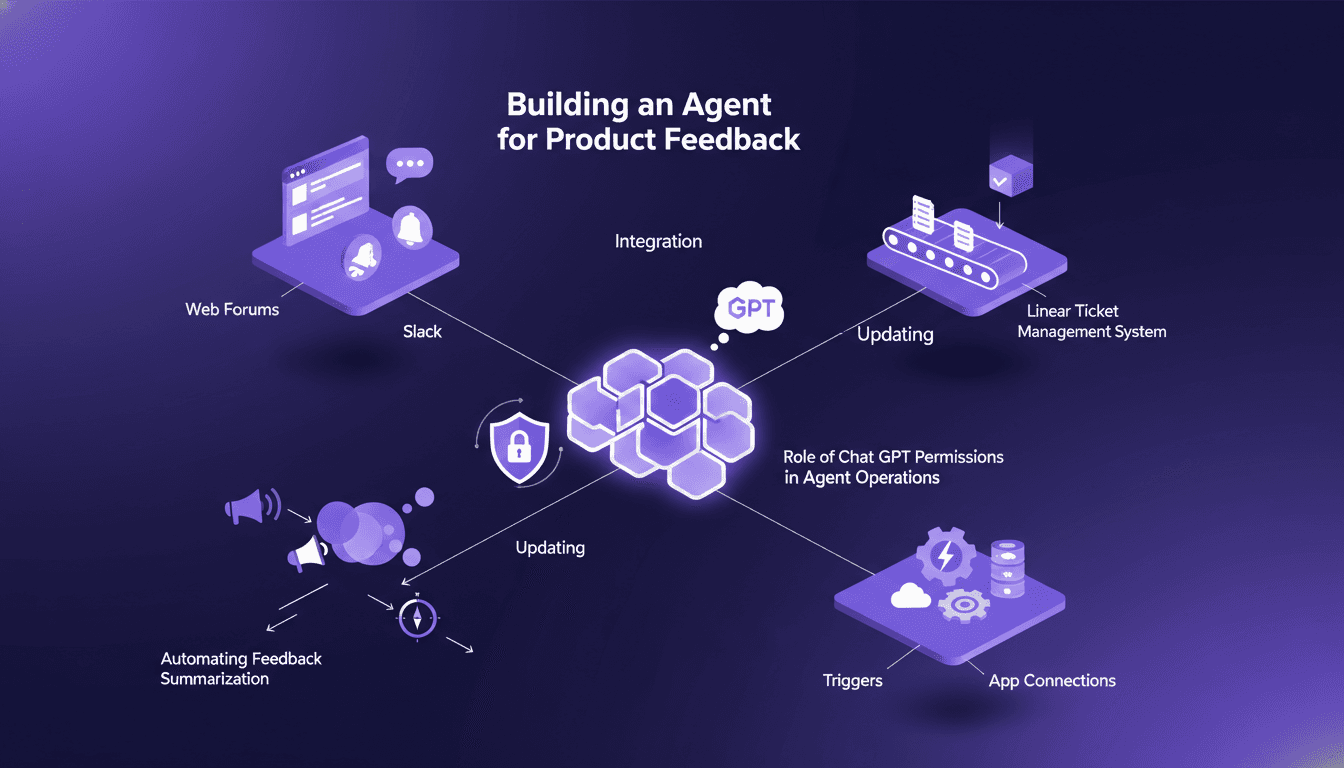
Building a Product Feedback Agent: Step-by-Step
I've been knee-deep in the chaos of product feedback, trying to streamline how we handle it. Building an agent to automate this process was a game changer for me. Picture this: by integrating Chat GPT with platforms like Linear, I managed to automate the entire workflow, saving enormous time and boosting accuracy. I'll walk you through how I built this product feedback routing agent, pitfalls to watch out for, and how you can do the same to transform your feedback management.
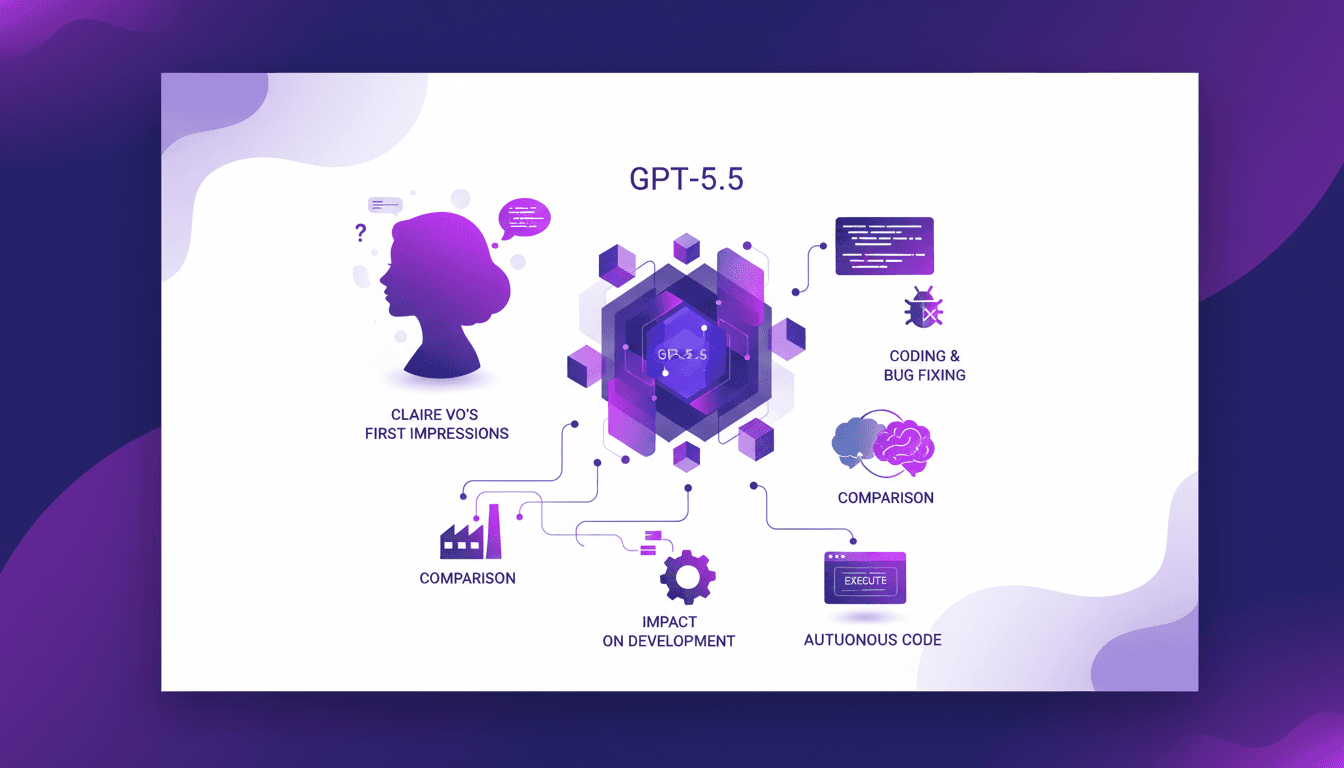
First Impressions of GPT-5.5 by Claire Vo
I remember when I first dove into GPT-5.5. It felt like opening a toolkit with a new, sharper tool, ready to redefine how I handle coding tasks. Claire Vo shares her first impressions of this model that seems to push the boundaries of AI in software development. From autonomous code execution to bug fixing, there's a lot to explore. And with a 98% accuracy in fixing bugs, it's no empty promise. In this interview, Claire takes us through her discoveries, comparing GPT-5.5 with previous models and assessing its potential impact on the software development process.