Boosting Web Search with GPT-5.3: Practical Guide
I've been tweaking search results for years, but integrating GPT-5.3 changed everything. With the latest enhancements, understanding user queries has become more nuanced. In this article, I walk you through how to leverage these advancements for better web search results. We'll dive into the importance of subtext, the enhancements in GPT-5.3, and how they make responses more natural and conversational. You'll see practical cases like planning a biking trip or understanding baseball rule changes. It's a powerful tool, but watch out for context limits—beyond 100K tokens, things get tricky. I'll share how I orchestrated these elements for direct user experience impact.
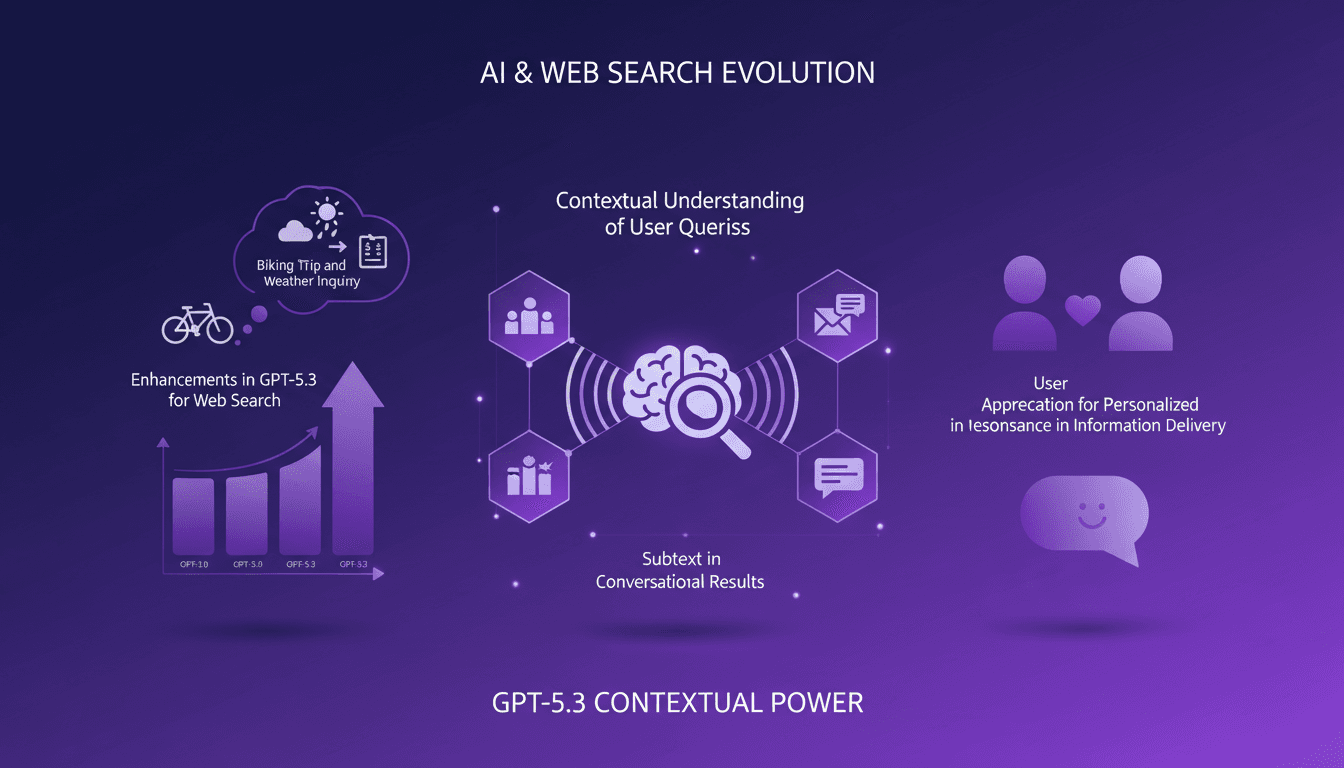
I've been tweaking search results for years, but when I integrated GPT-5.3, it was like upgrading from a bike to a sports car in understanding user queries. With GPT-5.3's latest enhancements, nuance is the name of the game, and it's time to harness it. In this article, I'll walk you through how I orchestrated these changes to boost web search results. I connect the dots between subtext enhancements and the crucial importance of understanding the context of queries. You'll see how this can transform a simple question about May's weather in the Alps into a personalized response that emotionally resonates with the user. It's a powerful tool, but watch out—context limits beyond 100K tokens can get tricky. I'm sharing my missteps, successes, and how I piloted these elements for direct impact on user experience.
Understanding Subtext in Search Results
When we talk about web search, subtext is crucial for capturing the intent behind queries. I use subtext to refine the accuracy of search results. Without this understanding, you miss the nuance that differentiates similar queries with different intents. For instance, 'May's weather' can mean very different things depending on whether you're in France or Japan.
"Subtext is super important. The information you're looking for changes depending on why you're looking for it."
The real challenge lies in teaching AI to recognize these subtle differences. I had to go through several iterations before the model recognized these nuances. It's like teaching a machine to read between the lines, which is no small feat.
Enhancements in GPT-5.3 for Web Search
GPT-5.3 has really improved how I handle web searches. I've noticed a significant reduction in irrelevant results. The model's ability to handle complex queries is much better. However, watch out for context limits, especially with large datasets.
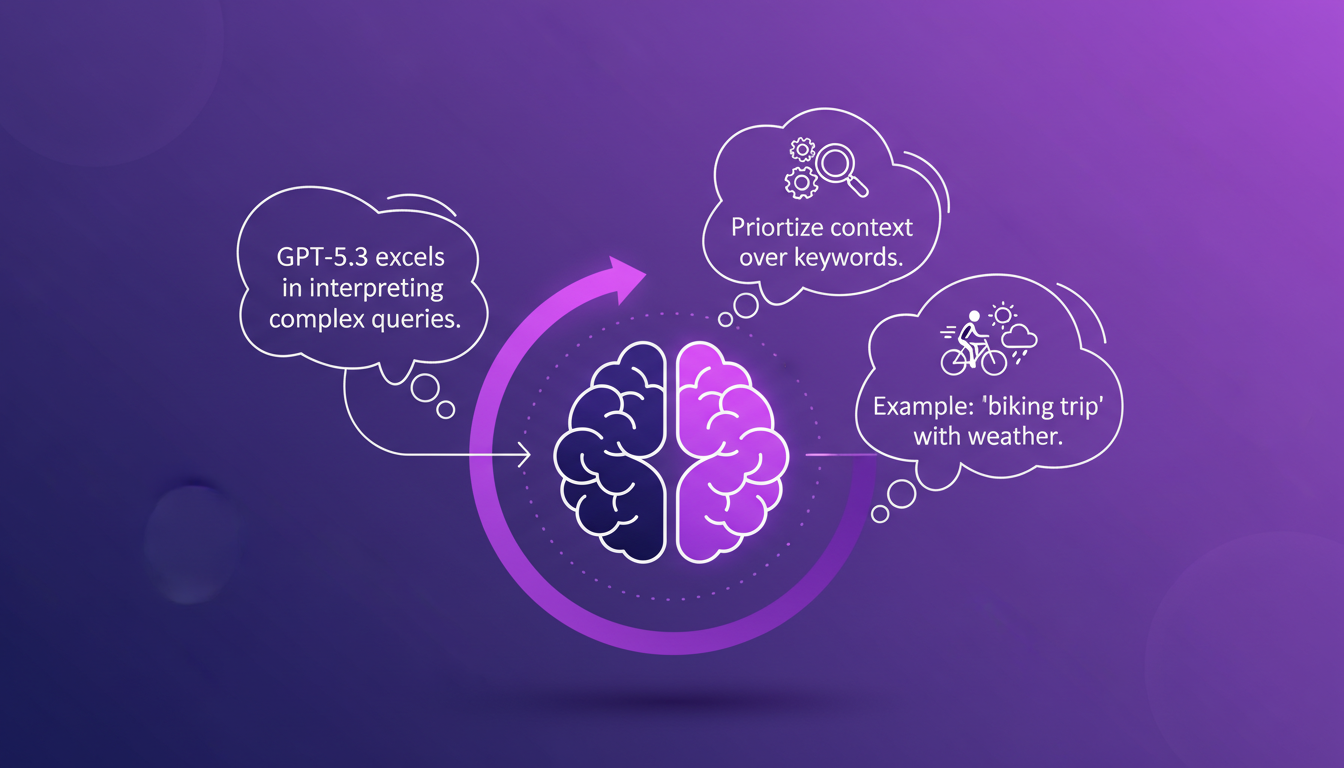
The integrated conversational AI responses enhance user satisfaction. Yet, even with these improvements, you need to be cautious of context limits because beyond 100,000 tokens, it can get tricky.
Contextual Understanding of User Queries
GPT-5.3 excels in interpreting complex queries. I've set up workflows to prioritize context over keywords. It's crucial. For example, when asked about a "biking trip," I consider weather factors.
There are trade-offs: balancing depth of understanding with response time. Sometimes it's faster to process simpler queries. But when precision is needed, this model is unbeatable.
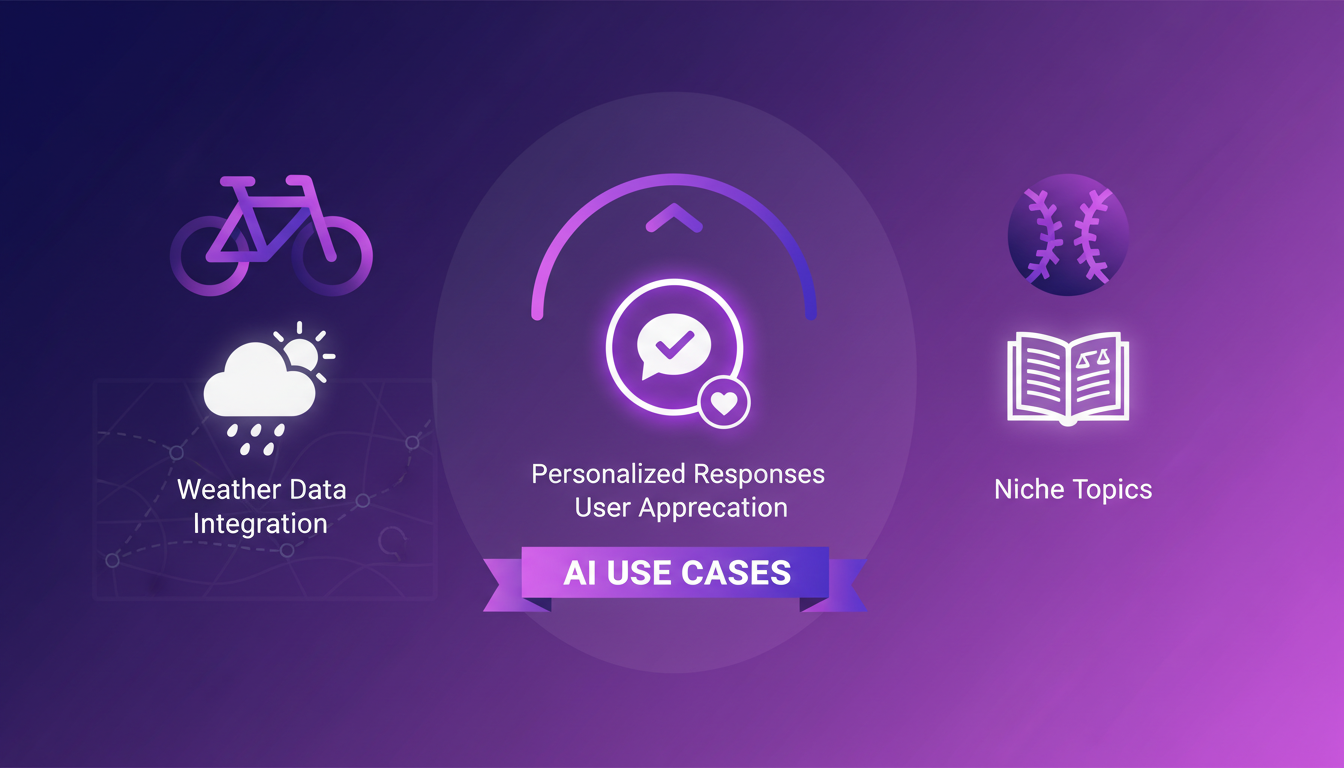
Use Cases: Biking Trip and Baseball Rules
The biking trip case is telling. By integrating weather data, you get tailored responses. For baseball rules, the model handles niche topics with precision. User feedback highlights appreciation for these personalized, relevant responses.
But beware, there are limits to data availability for niche topics. I got burned thinking the model could handle data it didn't possess.
Personalized Responses and Emotional Resonance
Personalization boosts user engagement and satisfaction. GPT-5.3's conversational tone makes interactions more natural. I've implemented feedback loops to refine response personalization. Emotional resonance can be a game changer, but it requires careful orchestration.
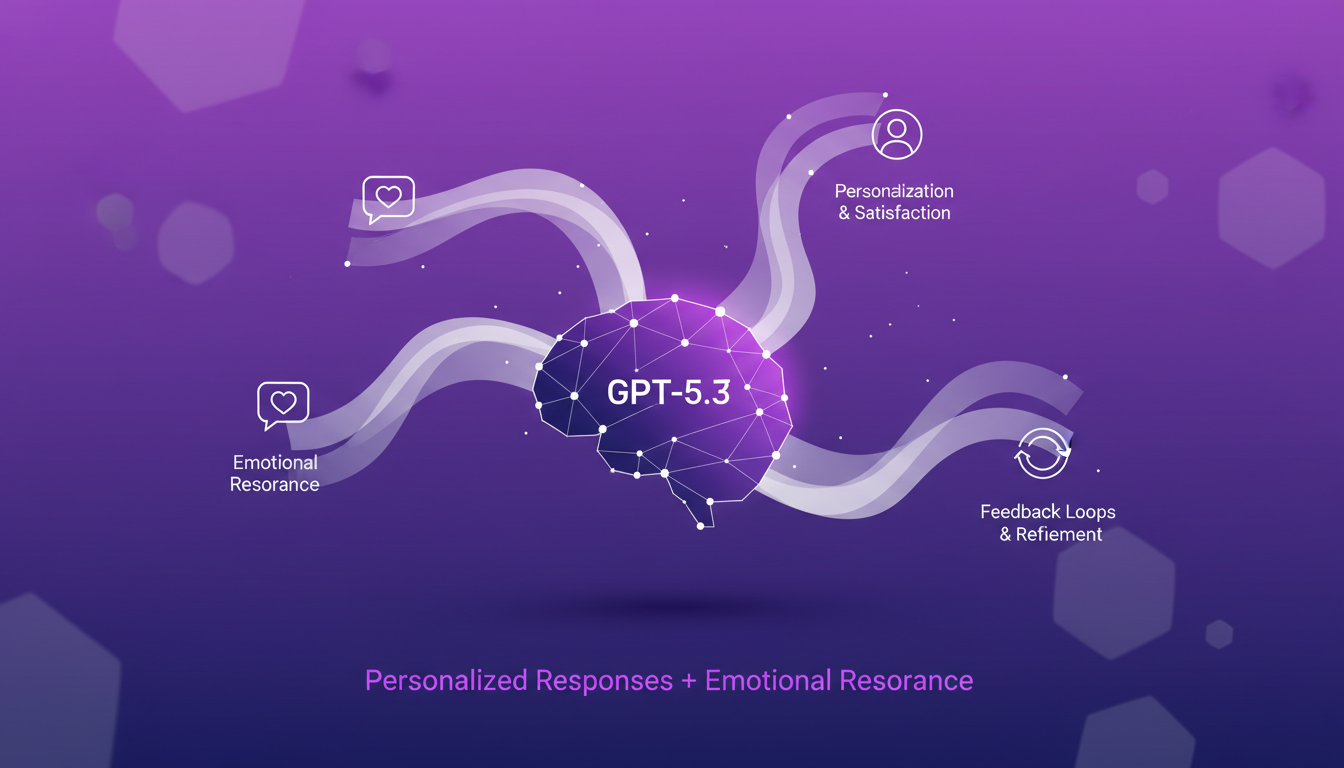
However, don't overuse personalization to avoid performance issues. Sometimes, a simple and quick response is better than an overly elaborate one that slows everything down.
Integrating GPT-5.3 into our web search workflows has truly been a game changer. First, by understanding and applying subtext, I've been able to enhance the relevance of search results. Then, leveraging the enhancements in GPT-5.3, the accuracy of searches hit a new high, boosting user satisfaction. But watch out, managing the contextual understanding of queries is key to avoid off-topic responses. Finally, adopting a natural and conversational tone in responses has transformed user interaction.
Looking ahead, I see even more room for improvement by fine-tuning these strategies. It's exciting to witness web searches becoming more personalized and resonant. So, I encourage you to try these strategies in your own setup. Experience the impact of GPT-5.3 for yourself and share your experiences. Together, we can refine our approaches and push the boundaries.
To dive deeper and see it all in action, check out the full video here: Improving Web Search Results in GPT-5.3.
Frequently Asked Questions

Thibault Le Balier
Co-fondateur & CTO
Coming from the tech startup ecosystem, Thibault has developed expertise in AI solution architecture that he now puts at the service of large companies (Atos, BNP Paribas, beta.gouv). He works on two axes: mastering AI deployments (local LLMs, MCP security) and optimizing inference costs (offloading, compression, token management).
Related Articles
Discover more articles on similar topics
Reducing Overcaveating in GPT-5.3
I remember the first time I encountered overcaveating in AI models. It was like talking to someone who couldn't stop hedging their bets. With GPT-5.3, I've finally found a way to cut through the noise and get straight answers. This version has significantly improved understanding of user intent and precision in interactions. But watch out for contextual limits. When I configure these models, I always make sure to test use cases where precision is crucial, and not get burned by poor performance. In short, GPT-5.3 is a game changer, but you need to know how to use it right.
Nanabano 2: Setup, Comparison, and Tips
I dove into Google Nanabano 2 expecting just another AI tool, but what I found was a real game-changer for image generation. Let me walk you through how I set it up and what makes it tick. With high visual fidelity and multilingual support, Nanabano 2 holds a lot of promise, but how does it perform in the real world? I compared it with the Pro version, explored its features, and tested its rendering and image generation capabilities. In just 12 minutes, I'll show you how to access Nanabano 2, leverage its real-time translation capabilities, and why it might just become your favorite new tool.
Nano Banana 2: Smaller, Faster, Cheaper
I've been in the trenches with image generation tools, and when Nano Banana 2 hit my workflow, it was a game changer. Smaller, faster, cheaper – it's not just marketing fluff. Let me walk you through how I've leveraged its capabilities to streamline my projects. With enhanced performance and cost-effectiveness, Nano Banana 2 transforms integration with tools like Google Cloud and Vertex AI. For those of us relying on precision and speed, understanding its integration is crucial.
Minimax M2.5: Unpacking Strengths and Limits
I've had my hands on the Minimax M2.5, and trust me, it's not just another model on the shelf. I integrated it into my workflow, and its affordability made me rethink my entire setup. But hold on, it's not just about the price tag. This model stands out with its technical specs and efficiency. So why should the Minimax M2.5 get your attention? We're diving into its strengths, limitations, and how it stacks up against competitors. We'll also discuss reinforcement learning strategies and potential use cases. Get ready, because this model might just shake up your work approach.
WebM MCP: Use Cases and Future Prospects
When I first heard about WebM MCP, I was skeptical. But after diving in, wrapping my head around its APIs, and seeing the potential, I realized it's a game changer for AI agent deployment. Developed by Google and Microsoft, WebM MCP offers a new way to handle media processing with AI agents. In this article, I share my hands-on experience, pitfalls to avoid, and how I integrated this tool into my daily workflow. Imagine managing thousands of tokens for each processed image, with just two APIs to master. I'll guide you through the benefits, use cases, and future prospects of this powerful tool.