WebM MCP: Use Cases and Future Prospects
When I first heard about WebM MCP, I was skeptical. But after diving in, wrapping my head around its APIs, and seeing the potential, I realized it's a game changer for AI agent deployment. Developed by Google and Microsoft, WebM MCP offers a new way to handle media processing with AI agents. In this article, I share my hands-on experience, pitfalls to avoid, and how I integrated this tool into my daily workflow. Imagine managing thousands of tokens for each processed image, with just two APIs to master. I'll guide you through the benefits, use cases, and future prospects of this powerful tool.
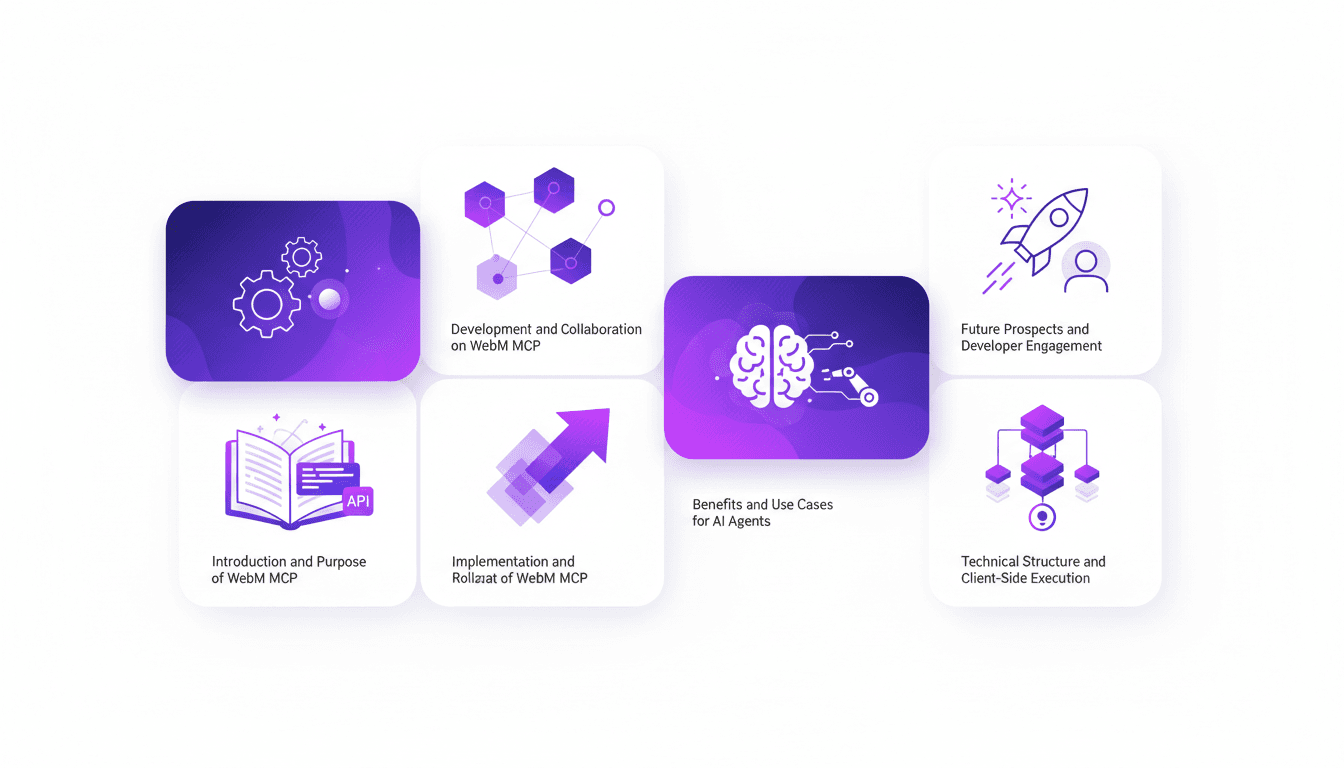
When the Google Chrome team first mentioned WebM MCP, I was skeptical. But once I dove in, dissected its APIs, and saw its potential, I realized it's a game changer for deploying AI agents. WebM MCP is a collaborative effort between Google and Microsoft, offering a new way to handle media processing with AI. I'll walk you through how I implemented it: first, I got into the APIs — there are two main ones, so it's manageable. Then, I started integrating it into my workflows. We're talking thousands of tokens processed per image, and it works. But watch out, there are pitfalls. I got burned a few times before finding the right approach. In this article, I share my practical insights, mistakes to avoid, and how this new tool can transform your AI deployments.
Understanding WebM MCP and Its Purpose
Introduced last year by Microsoft and Google, the WebM MCP (Model Context Protocol) aims to streamline media processing using AI agents. I remember when I first heard about this innovation, I immediately thought it was a silver bullet for all media processing problems. Rookie mistake. In reality, WebM MCP is built on three pillars: context, capabilities, and coordination. Each of these elements is crucial for understanding how AI can effectively interact with websites.
The fundamental goal of WebM MCP is efficiency and real-time processing. It's a paradigm shift from the days when agents had to guess what actions to perform on a site, often scraping HTML or using screenshots. I got burned thinking this simplification rendered old methods obsolete. But watch out, there are limits not to overlook, especially regarding the complexity of user interactions the protocol must handle.
Development and Collaboration on WebM MCP
Collaboration between Google and Microsoft really kicked off in the third quarter of last year. It was an exciting time, with key development milestones that influenced my implementation. One of the main challenges I faced was staying up to date with frequent updates and community feedback. User feedback was crucial for refining the tool.
I contributed to the discussion by sharing my own challenges and solutions, which allowed me to adapt my approach based on protocol updates. However, the tool's evolution was not without hurdles, particularly regarding integration with existing systems.
APIs and Functionality: Declarative vs. Imperative
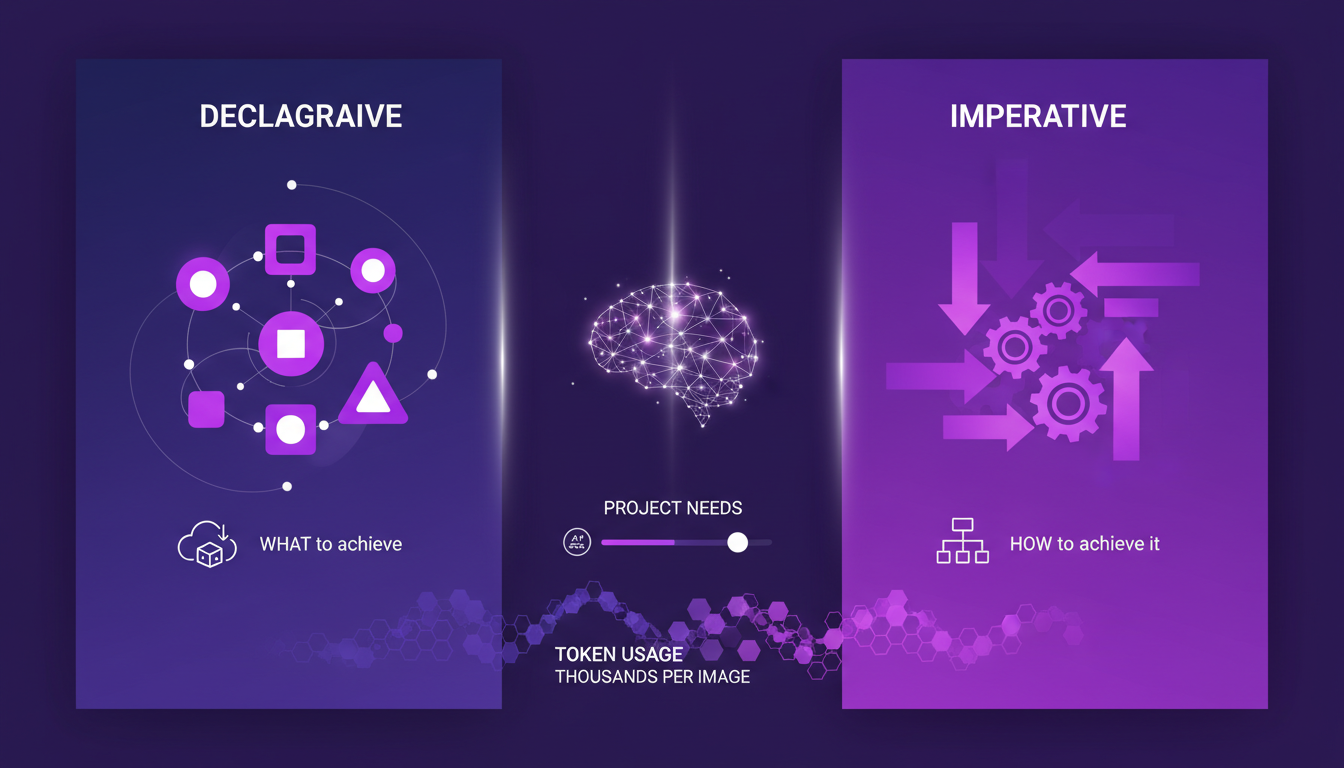
One of the crucial decisions I had to make was choosing between the declarative API and the imperative API. The former is ideal for standard actions and enhancing existing HTML forms with tool descriptions. It seems simple, but watch out for token costs: we're talking thousands of tokens for each image processed. The imperative API, on the other hand, is more suited for complex dynamic interactions requiring JavaScript execution.
These APIs integrate into existing workflows, but there's always a trade-off between flexibility and simplicity. I've often opted for simplicity, but in some cases, the flexibility of the imperative API proved indispensable.
Implementing and Rolling Out WebM MCP
Implementing WebM MCP was no walk in the park. I followed a step-by-step process, starting with testing client-side execution in browsers. This has advantages, like improved speed, but also presents downsides, particularly in terms of security. Human-in-the-loop interactions were essential for enhancing result accuracy.
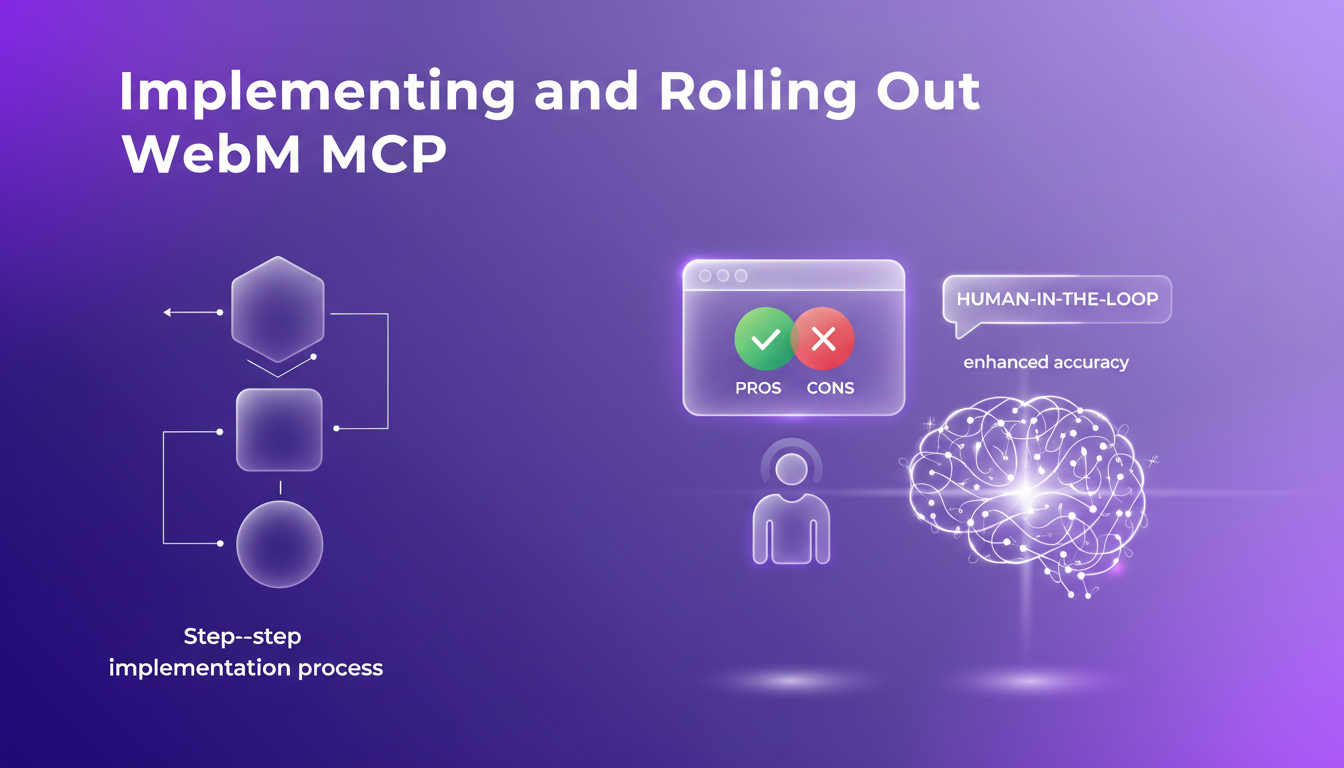
Initial rollout challenges were numerous, but by adjusting my strategies, I managed to overcome them. The impact on project timelines and cost efficiency was significant, though nuanced by technical constraints that required constant adjustments.
Benefits, Use Cases, and Future Prospects
The benefits of implementing AI agents with WebM MCP have been tangible. I've explored several real-world use cases, particularly in the field of automating daily tasks. Future prospects are promising, with potential updates announced at Google Cloud Next or Google IO.
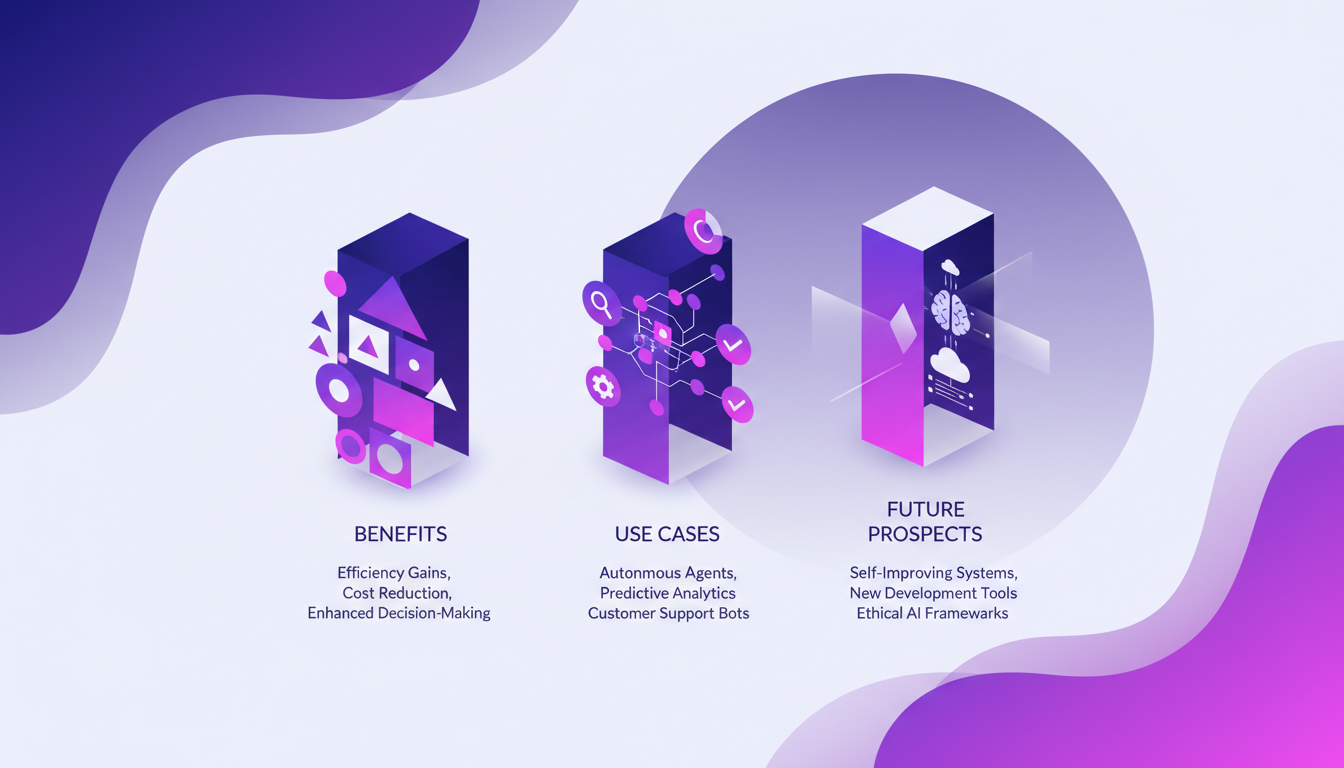
Despite the advances, there are still limitations and areas for improvement. For instance, full integration with legacy systems can be complex, and token consumption needs optimization. Developer engagement and community-driven improvements are essential for the future of WebM MCP.
- Optimize token usage to reduce costs.
- Monitor future updates to stay current.
- Adapt strategies based on community feedback.
- Explore new use cases to maximize impact.
Ultimately, WebM MCP represents a significant advancement in AI agents' interaction with websites, but it requires a thoughtful and adaptable approach to be fully effective.
WebM MCP has really been a game changer for me in the realm of media processing with AI agents. First off, dealing with the thousands of tokens per image was a challenge, but the two different APIs available helped me streamline efficiency and capability in my projects. Even though Microsoft and Google only pitched the idea last year, the implementation and rollout of WebM MCP have been beyond expectations.
- WebM MCP's APIs offer incredible flexibility to cater to specific needs.
- Image processing with WebM MCP, while token-heavy, leads to significant quality improvements.
- Collaborative development has allowed for rapid and effective refinement of the approach.
Honestly, if you're looking to enhance your AI media processing, dive into WebM MCP. Now's the time to experiment with its APIs and share your insights with the community. Don't forget to check out the full video for a deeper understanding: The Rise of WebMCP. It’s worth watching to see how it can fit into your workflows.
Frequently Asked Questions

Thibault Le Balier
Co-fondateur & CTO
Coming from the tech startup ecosystem, Thibault has developed expertise in AI solution architecture that he now puts at the service of large companies (Atos, BNP Paribas, beta.gouv). He works on two axes: mastering AI deployments (local LLMs, MCP security) and optimizing inference costs (offloading, compression, token management).
Related Articles
Discover more articles on similar topics
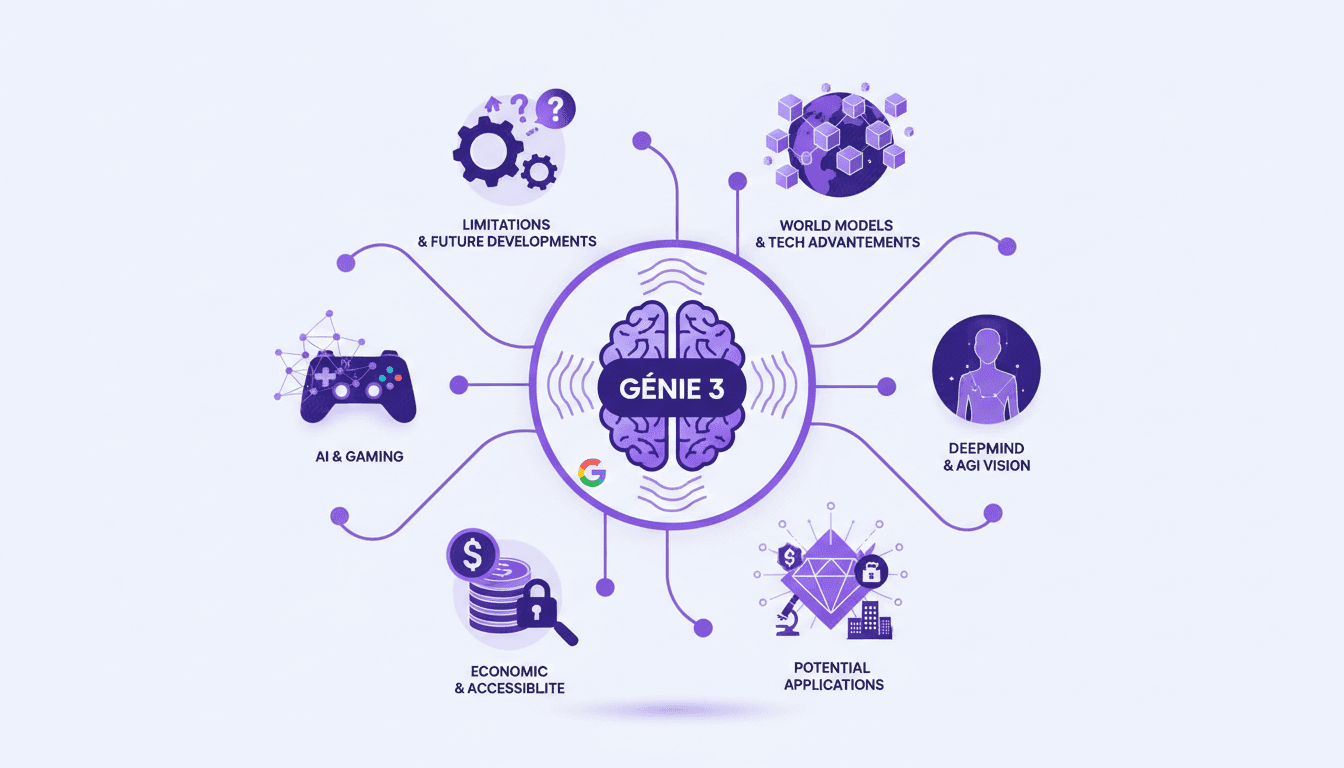
Google's Génie 3: Breaking Reality, New Horizons
I remember the first time I saw Google's Génie 3 in action. It felt like stepping into a new dimension. This isn't just tech hype—it's a game changer, but with some caveats. Google's Génie 3 project is setting new standards in AI, especially in the gaming industry. But watch out, every tech comes with its limitations and trade-offs. Génie promises a world generated in 60 seconds, but requires a rethink on economic accessibility and potential applications across various fields. I got burned thinking it was all-powerful, but in reality, there are nuances to understand.
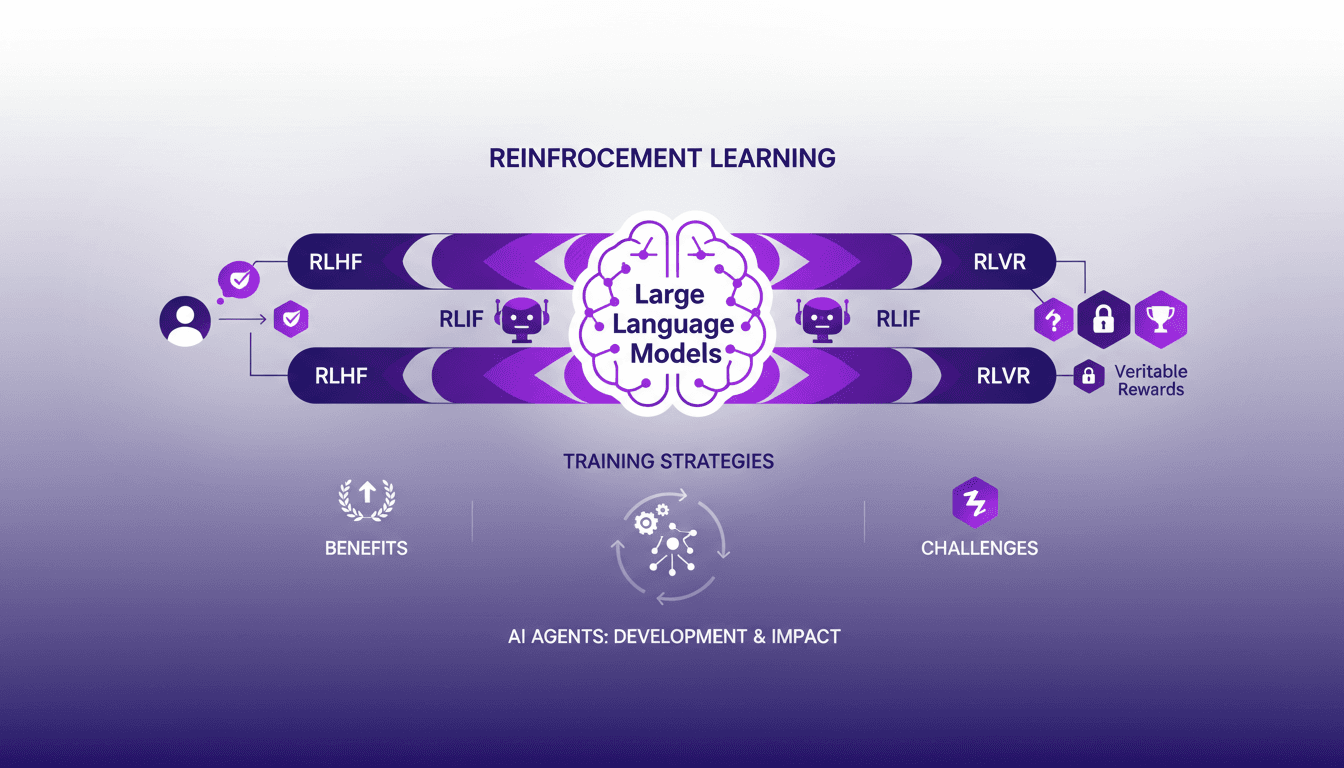
Reinforcement Learning for LLMs: New AI Agents
I remember the first time I integrated reinforcement learning into training large language models (LLMs). It was 2022, and with the development of ChatGPT fresh in my mind, I realized this was a real game-changer for AI agents. But be careful—there are trade-offs to consider. Reinforcement learning is revolutionizing how we train LLMs, offering new ways to enhance AI agents. In this article, I'll take you through my journey with RL in LLMs, sharing practical insights and lessons learned. I'm diving into reinforcement learning with human feedback (RLHF), AI feedback (RLIF), and verifiable rewards (RLVR). Get ready to explore how these approaches are transforming the way we design and train AI agents.
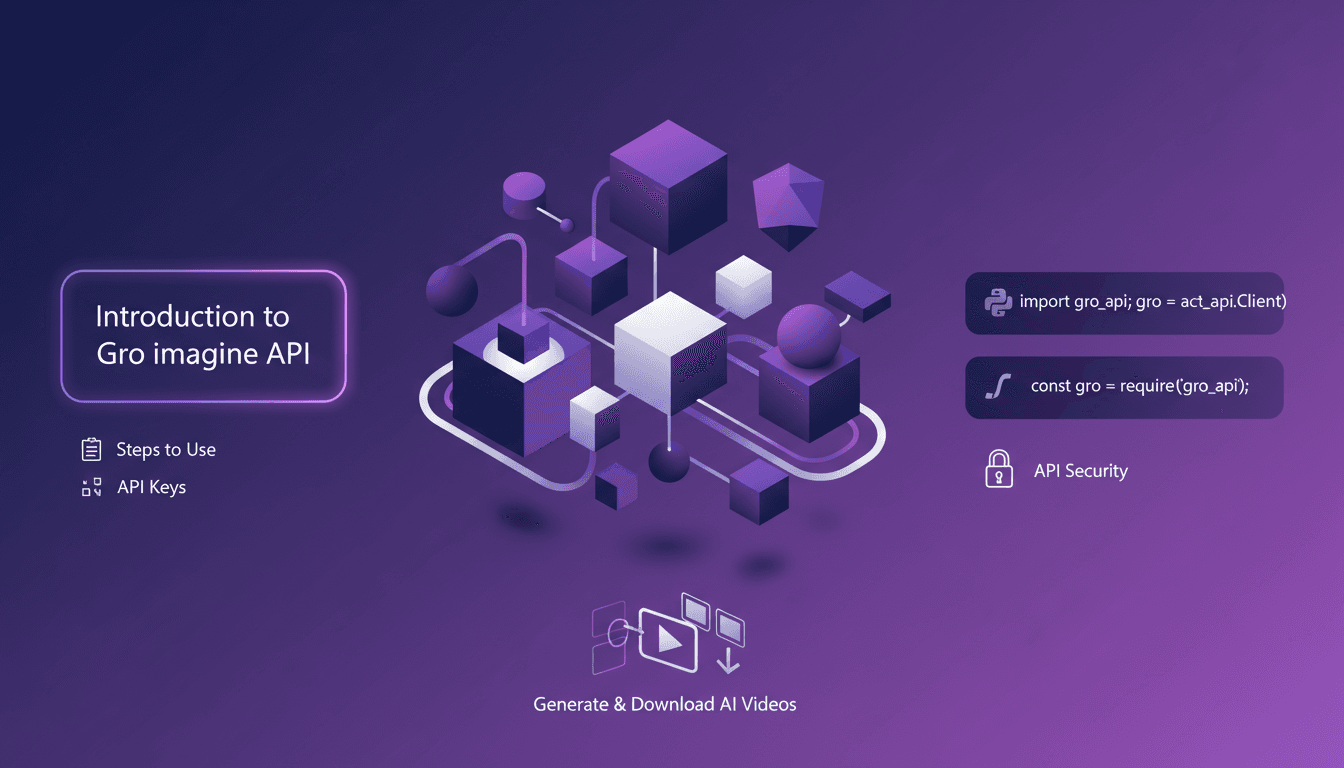
Gro Imagine API: Use Effectively
I dove straight into the Gro Imagine API and found it surprisingly straightforward once I got my hands dirty. This API turns text into video, and it’s truly a game changer. But watch out for the quirks: over 15 seconds and you're in trouble. Let me walk you through how I set it up, step by step, with Python and JavaScript snippets for interaction. Securing your API keys is essential, and I’ll guide you on generating and downloading your AI-generated videos without a hitch.

XR Glasses Evolution: Success and Limits
Walking through CES 2026, I couldn't ignore the buzz around Rokin's booth. Everyone was talking about their lightweight XR glasses, and I had to see what the fuss was about. From crowdfunding triumphs to sleek designs, these glasses are shaking up the market. It's not just tech novelty anymore; these glasses are becoming practical, everyday tools. Rokin and Rokid are leading the charge, showing that XR glasses evolution is just taking off. But beware, not everything is perfect, and it's crucial to understand the limits to avoid getting burned.
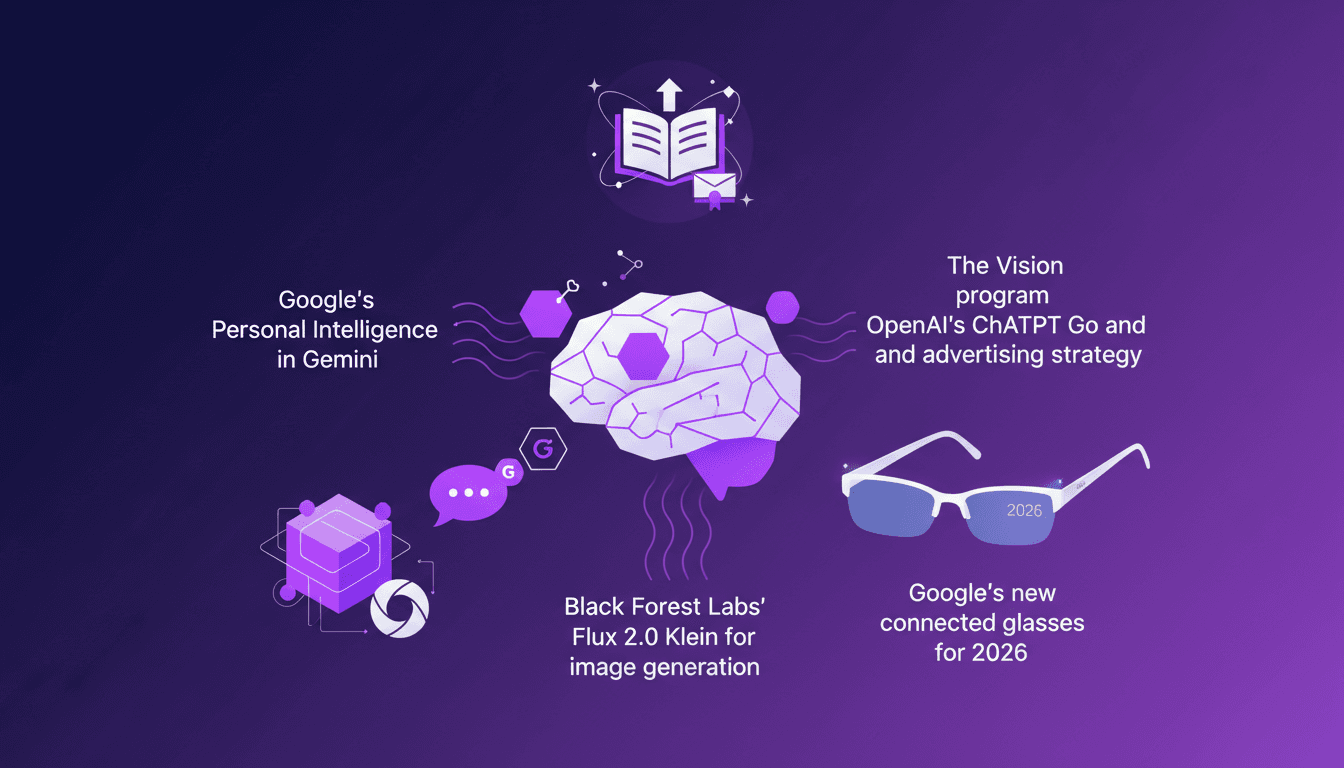
Google Gemini: Personal Intelligence Unveiled
I've been knee-deep in AI development for years, and Google's latest moves are making waves. With the launch of Personal Intelligence in Gemini, we're entering a new era. But let's be clear, not everything's groundbreaking. From futuristic gadgets like connected glasses set for 2026 to the Vision program's educational offerings, there's a lot to unpack. Don't get swept away by the hype. What really interests me is how these innovations translate into tangible impacts on our daily lives. Let's break it all down together.