Google's Génie 3: Breaking Reality, New Horizons
I remember the first time I saw Google's Génie 3 in action. It felt like stepping into a new dimension. This isn't just tech hype—it's a game changer, but with some caveats. Google's Génie 3 project is setting new standards in AI, especially in the gaming industry. But watch out, every tech comes with its limitations and trade-offs. Génie promises a world generated in 60 seconds, but requires a rethink on economic accessibility and potential applications across various fields. I got burned thinking it was all-powerful, but in reality, there are nuances to understand.
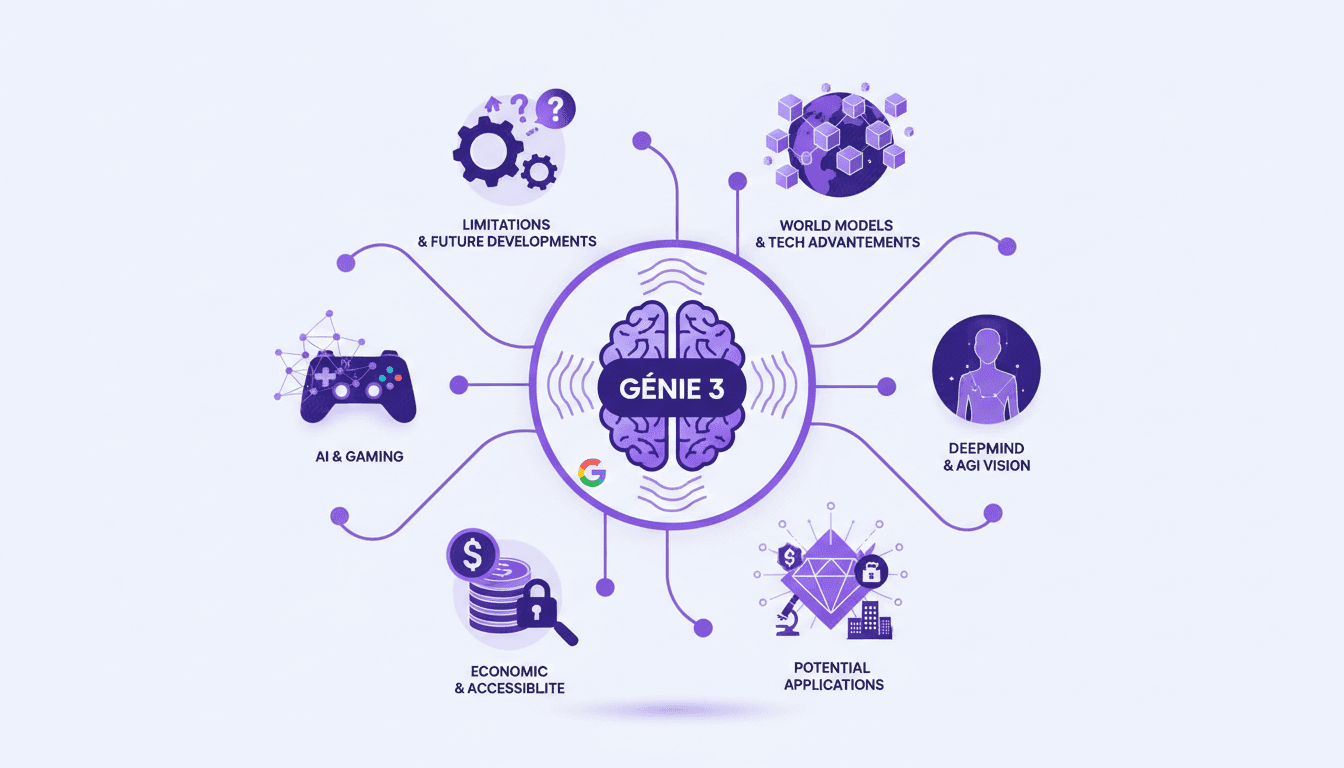
I remember the first time I saw Google's Génie 3 in action. It felt like stepping into a new dimension—and it's not just tech hype. We're talking about a real game changer, but with some caveats. Google's Génie 3 project is setting new standards in AI, particularly in the gaming industry. Picture this: a world generated in 60 seconds, the perfect balance between quality and consistency, but it raises questions about economic accessibility and potential applications. You might think Deep Mind is nearing AGI, but every tech advancement has its limits. I got burned a few times, believing it was the ultimate solution, but in practice, there are nuances to master, especially in a context where 33% of American developers have lost their jobs in the past two years. Génie's economic impact and future prospects are vast, but you need to juggle the trade-offs and truly understand what you're dealing with.
Introduction to Google's Génie 3 Project
First off, Google's Génie 3 Project is like opening a gateway to another dimension. We're talking about AI-driven world models capable of generating 3D environments in real-time from simple text descriptions. It's akin to playing God, yet it's today's technology. What makes this possible is the concept of Zero Shot Transfer, a key technology enabling real-time 3D world generation without the need for retraining. Imagine an AI that can learn a task in a virtual world and execute it flawlessly in the real world. That's the potential of Génie 3.
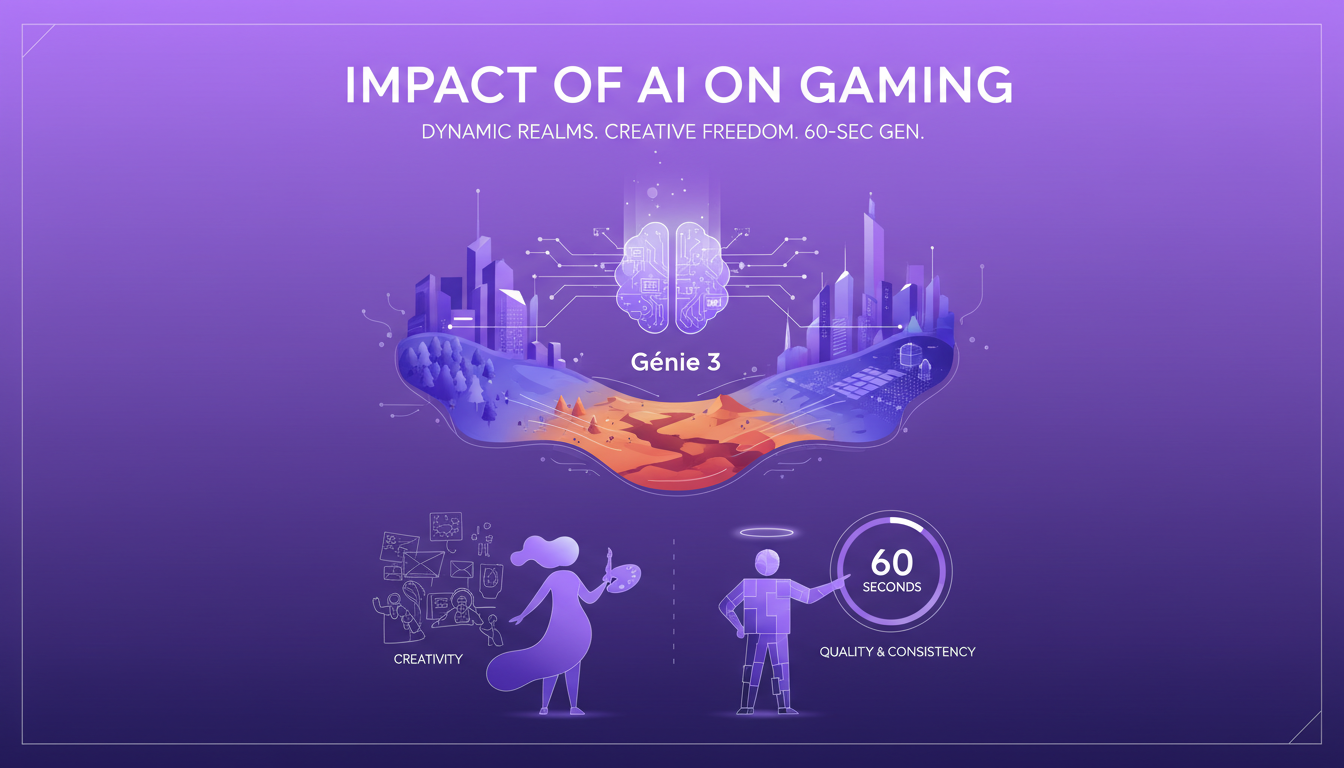
The maintenance of visual memory is crucial for the consistency of generated worlds. In Génie 3, this memory extends up to a minute, allowing objects to remain in place even if you move away and return. This is essential not only for video games but also for other applications.
"DeepMind, in collaboration with Google, is crafting a project that could well be the springboard towards AGI."
Impact of AI on the Gaming Industry
The impact of Génie 3 on the gaming industry is simply enormous. Dynamic, real-time environments are game-changers for game design. Developers can focus more on creativity, less on technical constraints. It's like opening Pandora's box, but beware, there's a catch.
The real challenge is hitting the 60-second sweet spot for generation. Beyond this, quality and consistency can suffer. It's a lesson I've learned the hard way. 33% of American developers have already faced layoffs in this sector, highlighting how the industry is shifting.
The transition to these new technologies has a significant economic impact. For more insights, check out XR Glasses Evolution: Success and Limits.
Technological Advancements in World Models
World models are evolving with AI, offering unprecedented realism. However, balancing computational load with real-time performance is a juggling act. This is where Zero Shot Transfer comes into play, allowing AI to adapt without retraining, saving valuable time and resources.
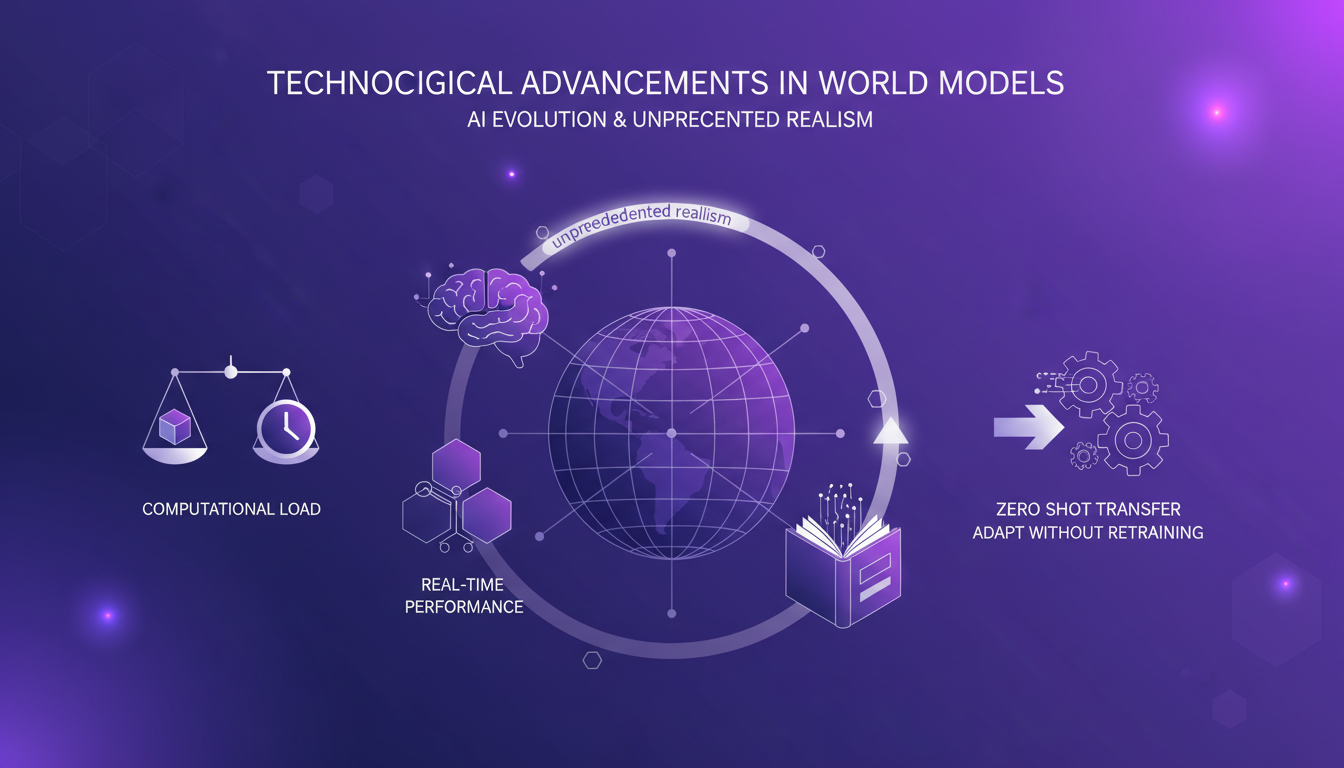
However, current models struggle with large-scale environments. It's a point I can't emphasize enough. The key is finding the balance between load and performance.
To delve deeper, visit Project Genie: Experimenting with infinite, interactive worlds.
DeepMind's Vision for AGI
DeepMind's vision for AGI is to create intelligence that understands and interacts with the world like a human. Génie 3 is a step towards this vision, but we're not there yet. Imagine AI capable of transforming not just gaming but all digital interactions.
But there are hurdles: ethical considerations and computational costs remain significant challenges. It's like trying to fit a Formula 1 engine into a regular car. It requires adjustments and compromises.
For more details, explore What Is Zero-Shot Learning? | IBM.
Current Limitations and Future Developments of Génie
Génie 3's real-time capabilities are impressive, but they're also resource-intensive. It's somewhat the Achilles' heel of this technology. For widespread adoption, economic and accessibility aspects must be considered.
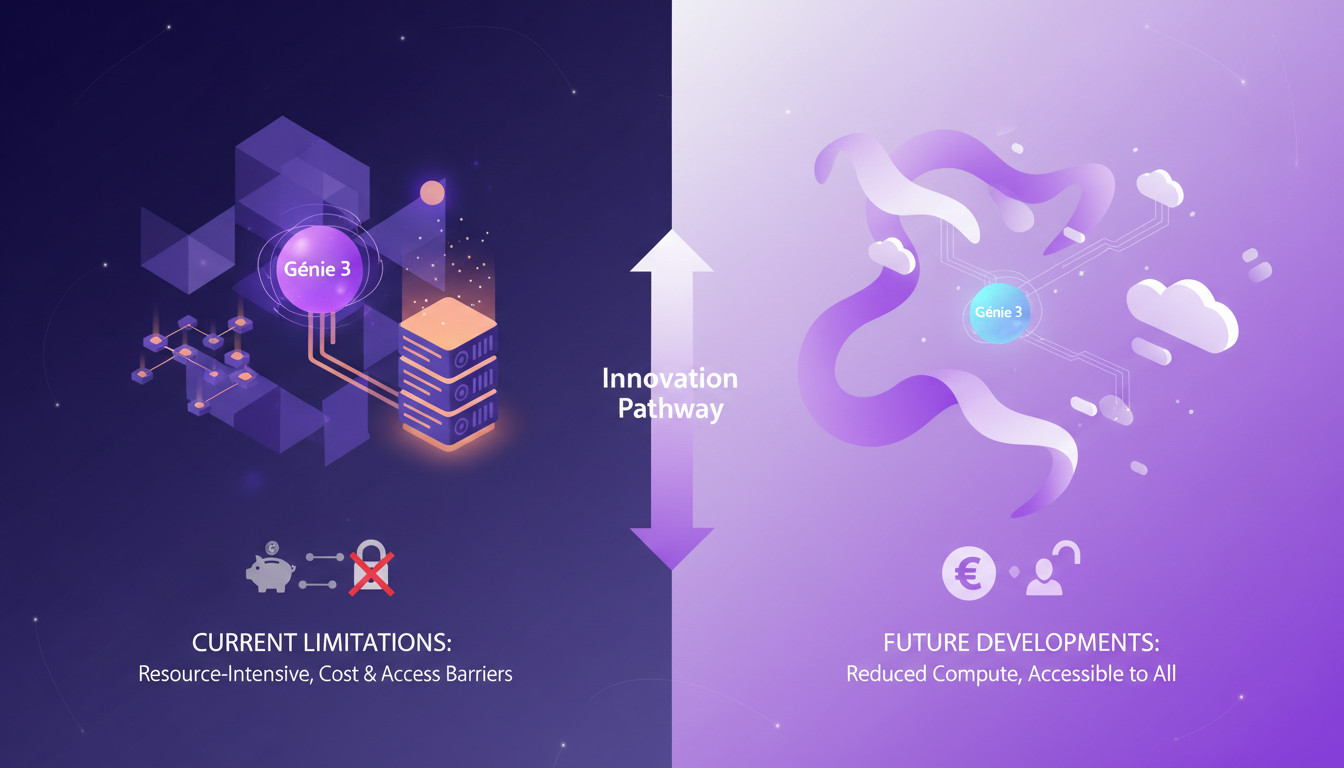
Future developments will focus on reducing computational demands, and the potential applications are vast: gaming, education, virtual reality. It's a rapidly expanding field with enormous potential.
For a better understanding, read Google Gemini: Personal Intelligence Unveiled.
Génie 3 is definitely a game changer in AI, particularly for gaming. But, like any new tech, you can't just plug it in blindly. Here’s what I’ve found:
- Strategic Integration: 60 seconds is the sweet spot for balancing quality and consistency in generated worlds. Don't go beyond to avoid glitches.
- Market Impact: With 33% of developers laid off, leveraging Génie 3 is crucial to stay competitive.
- Time Constraints: California time (6 PM) reminds us that timing is key for staying updated with tech releases.
Génie 3 has the potential to shift the landscape, but you need to handle it carefully, aware of its limits. Stay tuned for updates to harness its full potential. I highly recommend watching the presentation video: https://www.youtube.com/watch?v=s7KauXw4Hrc. It’s worth the watch to understand how to effectively integrate it into your projects.
Frequently Asked Questions

Thibault Le Balier
Co-fondateur & CTO
Coming from the tech startup ecosystem, Thibault has developed expertise in AI solution architecture that he now puts at the service of large companies (Atos, BNP Paribas, beta.gouv). He works on two axes: mastering AI deployments (local LLMs, MCP security) and optimizing inference costs (offloading, compression, token management).
Related Articles
Discover more articles on similar topics

XR Glasses Evolution: Success and Limits
Walking through CES 2026, I couldn't ignore the buzz around Rokin's booth. Everyone was talking about their lightweight XR glasses, and I had to see what the fuss was about. From crowdfunding triumphs to sleek designs, these glasses are shaking up the market. It's not just tech novelty anymore; these glasses are becoming practical, everyday tools. Rokin and Rokid are leading the charge, showing that XR glasses evolution is just taking off. But beware, not everything is perfect, and it's crucial to understand the limits to avoid getting burned.
Google Gemini: Personal Intelligence Unveiled
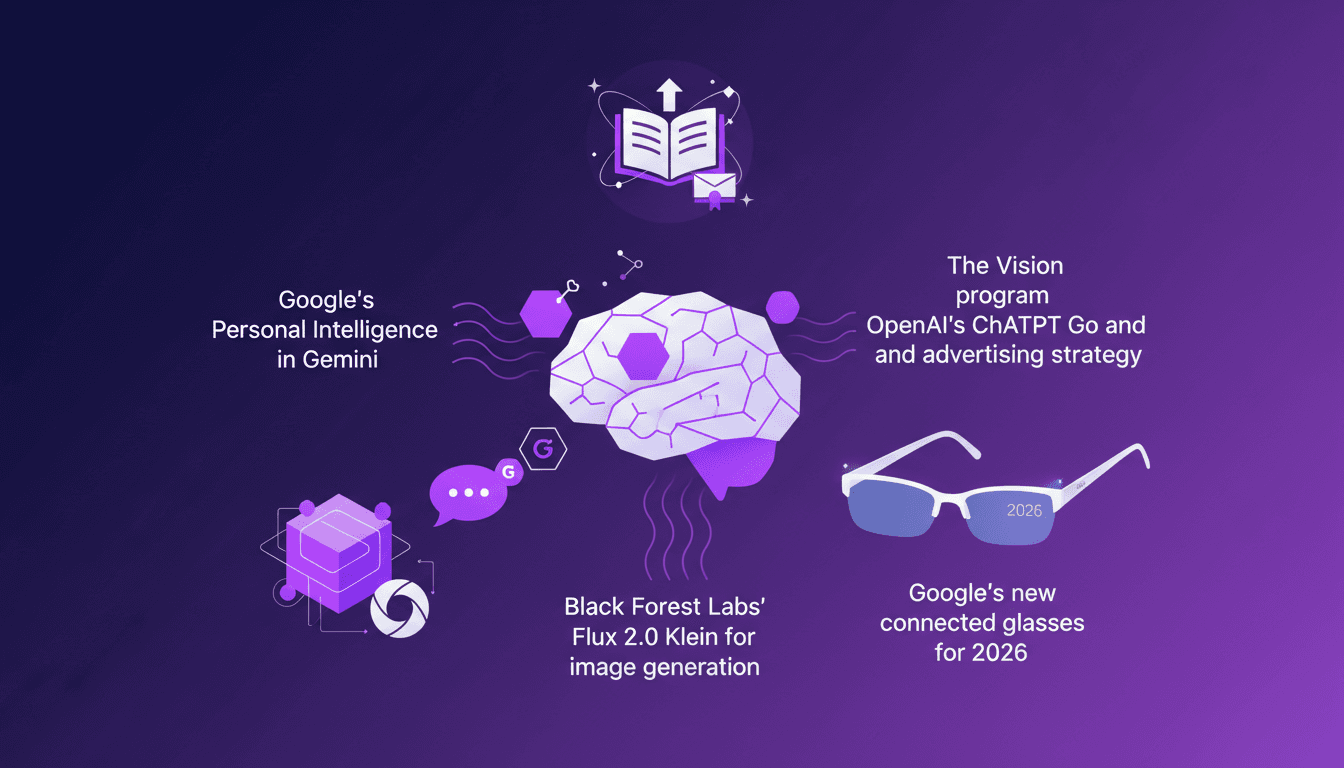
I've been knee-deep in AI development for years, and Google's latest moves are making waves. With the launch of Personal Intelligence in Gemini, we're entering a new era. But let's be clear, not everything's groundbreaking. From futuristic gadgets like connected glasses set for 2026 to the Vision program's educational offerings, there's a lot to unpack. Don't get swept away by the hype. What really interests me is how these innovations translate into tangible impacts on our daily lives. Let's break it all down together.
Gro Imagine API: Use Effectively
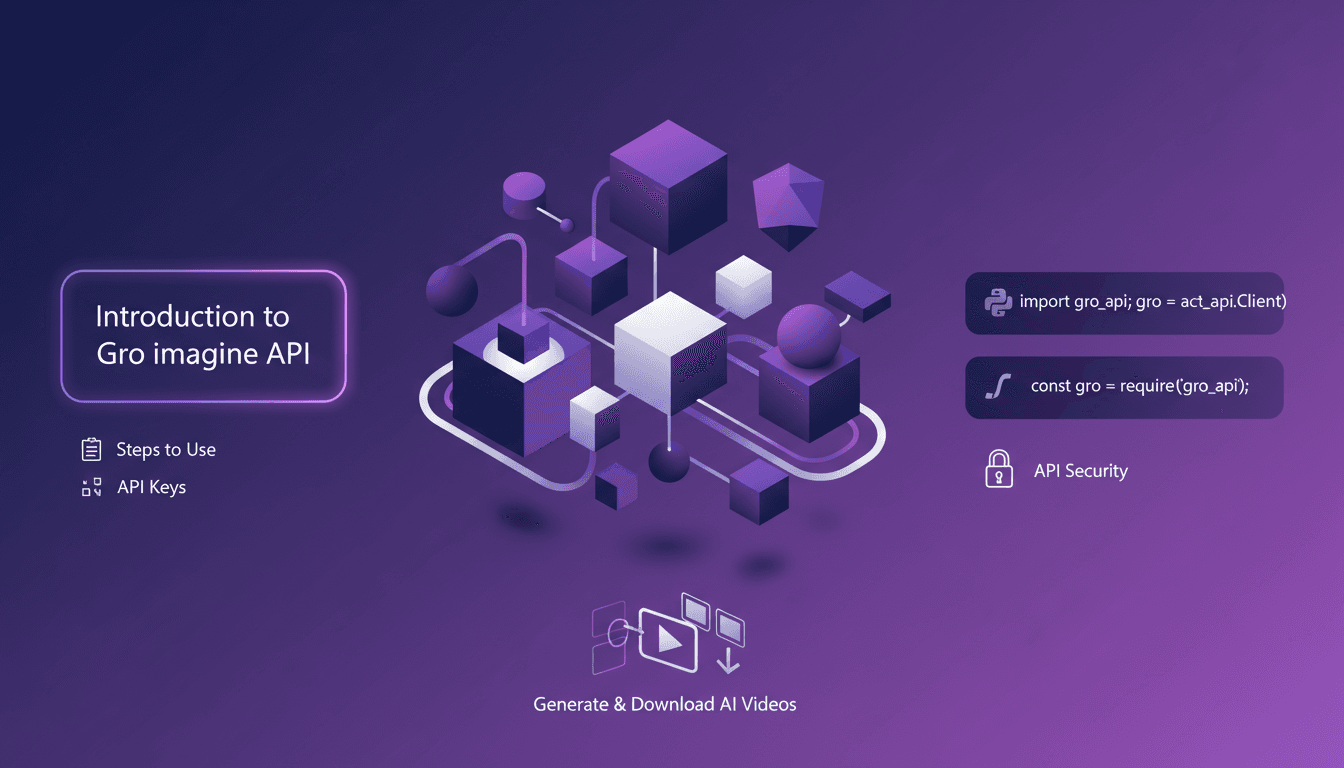
I dove straight into the Gro Imagine API and found it surprisingly straightforward once I got my hands dirty. This API turns text into video, and it’s truly a game changer. But watch out for the quirks: over 15 seconds and you're in trouble. Let me walk you through how I set it up, step by step, with Python and JavaScript snippets for interaction. Securing your API keys is essential, and I’ll guide you on generating and downloading your AI-generated videos without a hitch.
Securing Clawbot: Protect Your Open Ports
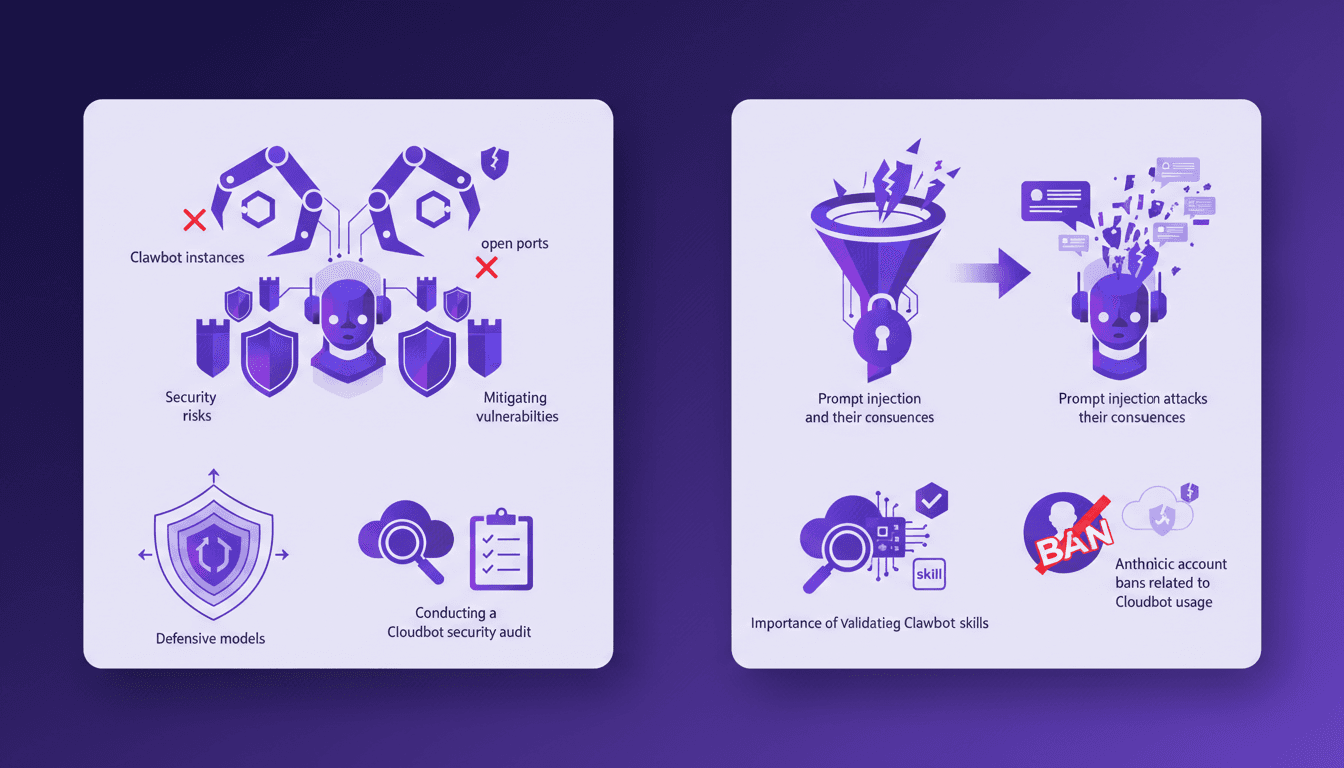
I've been there—staring at a Clawbot instance with ports wide open, feeling the chill of potential security breaches. So, how did I secure my setup and avoid costly mistakes? Let's dive into Clawbot vulnerabilities, from prompt injections to weak skill validations. First, I shut those darn open ports. Then, I beef up skill validations to prevent Clawbot from doing things it shouldn't. But watch out for prompt injection attacks—they're sneaky and Anthropic isn't shy about banning accounts. I share my steps to audit your Clawbot system's security and protect your digital assets efficiently.
Kimmy K2.5: Mastering the Agent Swarm
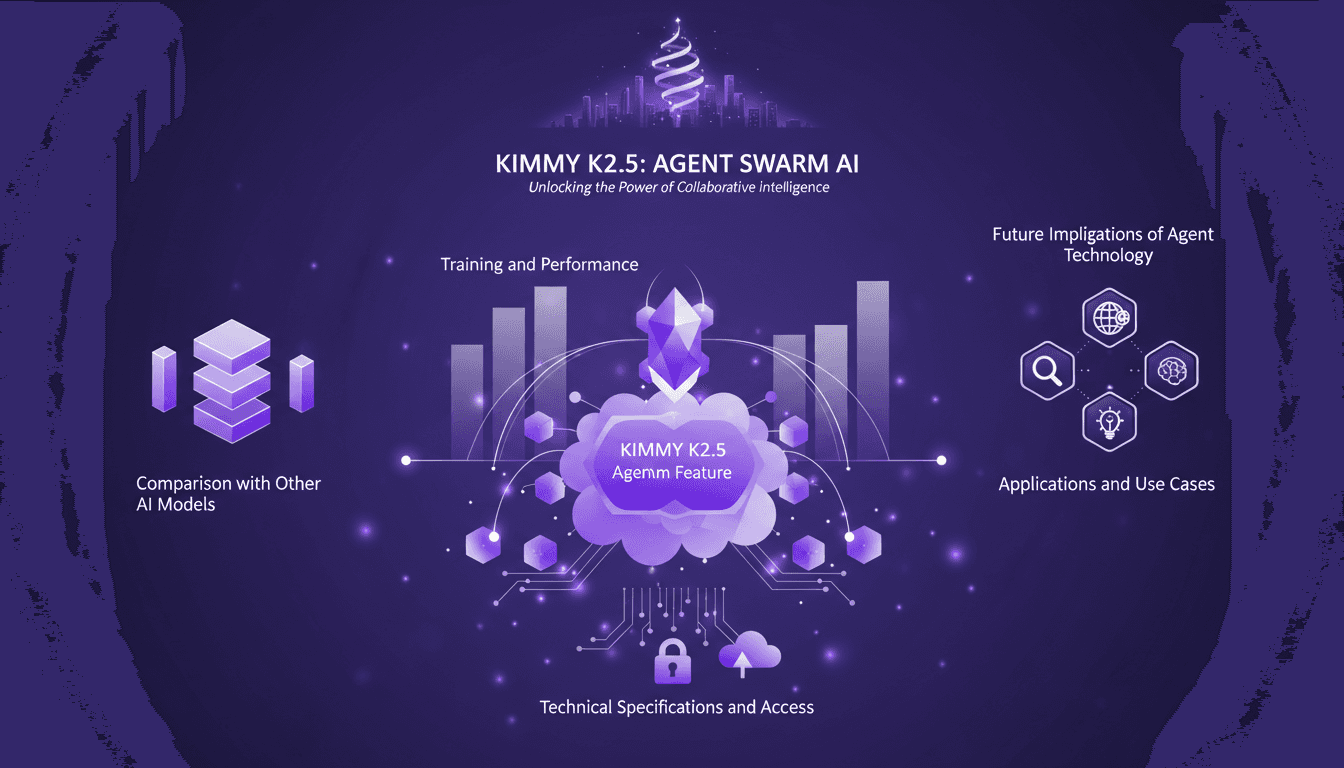
I remember the first time I dove into the Kimmy K2.5 model. It was like stepping into a new AI era, where the Agent Swarm feature promised to revolutionize parallel task handling. I've spent countless hours tweaking, testing, and pushing this model to its limits. Let me tell you, if you know how to leverage it, it's a game-changer. With 15 trillion tokens and the ability to manage 500 coordinated steps, it's an undisputed champion. But watch out, there are pitfalls. Let me walk you through harnessing this powerful tool, its applications, and future implications.