Battling Software Complexity: Effective Practices
I've spent over 30 years in the trenches of software development, and if there's one thing I've learned, it's that complexity can kill your software faster than an unchecked bug. Let's talk about how I tackle this beast daily. From architecture to AI tools, managing complexity is about making smart choices. Here's how I do it, with practical workflows and lessons learned from the field. We'll dive into effective software architecture practices, managing complexity, and the role of AI. I've got some insights on open source contributions and the importance of continuous learning. Balancing simplicity and complexity in code is crucial, and the future of automated coding is one to watch. Get ready for a journey through the world of software development, where every decision counts.
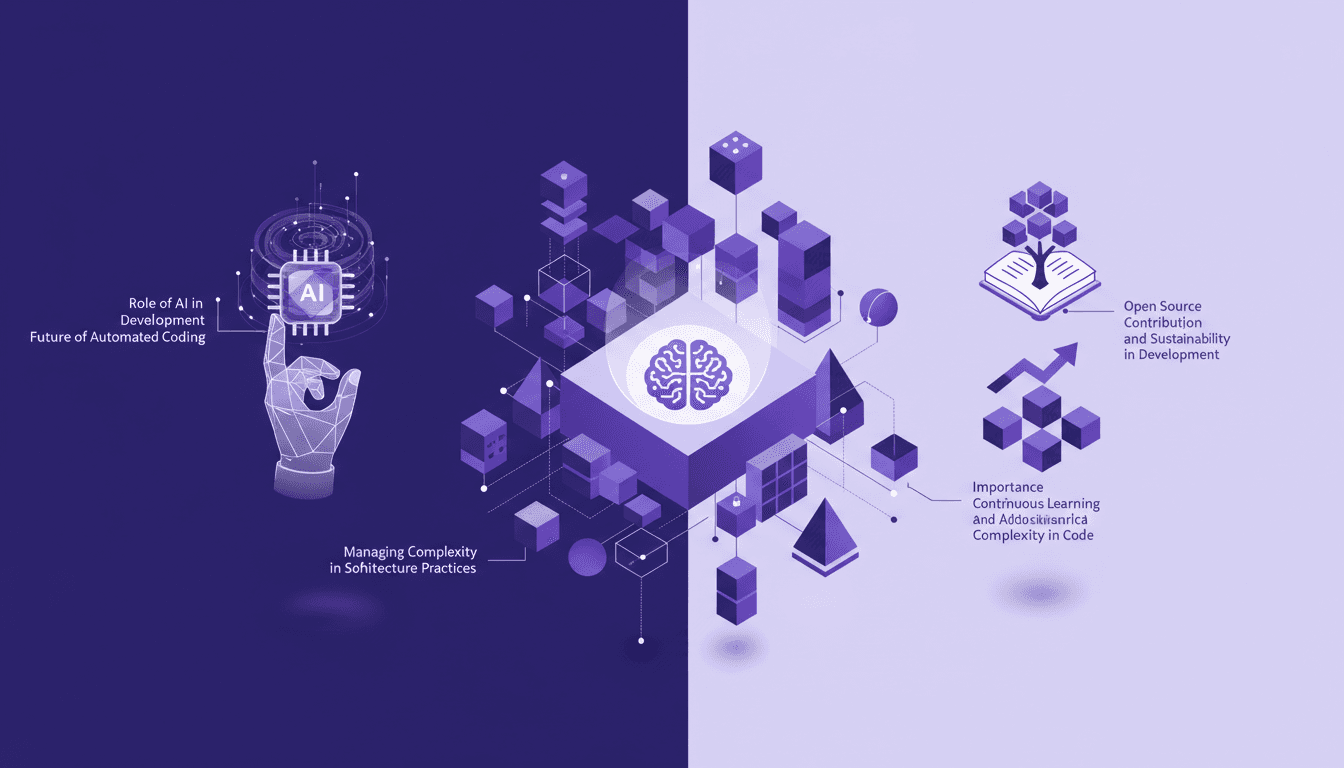
I've been in the trenches of software development for over 30 years. Trust me, complexity can kill your software faster than a bug left unchecked. So, how do I tackle this beast daily? It starts with smart choices, whether it's in architecture or leveraging AI tools. I connect solid architectural principles with effective practices. But it's not just theory—I'm talking about concrete workflows, born from my own mistakes and triumphs. I've spent countless hours capturing historical context through commits and pull requests, and it pays off. We'll dive into the importance of continuous learning and how to maintain a balance between simplicity and complexity. Get ready to explore how every decision can directly impact your software development journey.
Effective Software Architecture Practices
When it comes to software architecture, I always start with the Single Responsibility Principle. It's my go-to strategy for keeping modules clean and manageable. One module, one task, and you avoid the pitfalls of spaghetti code. Then there's Event Sourcing. I use this tool to manage complex data changes without losing track of what's going on. It's like having a historical record of every change, but don't overdo it.
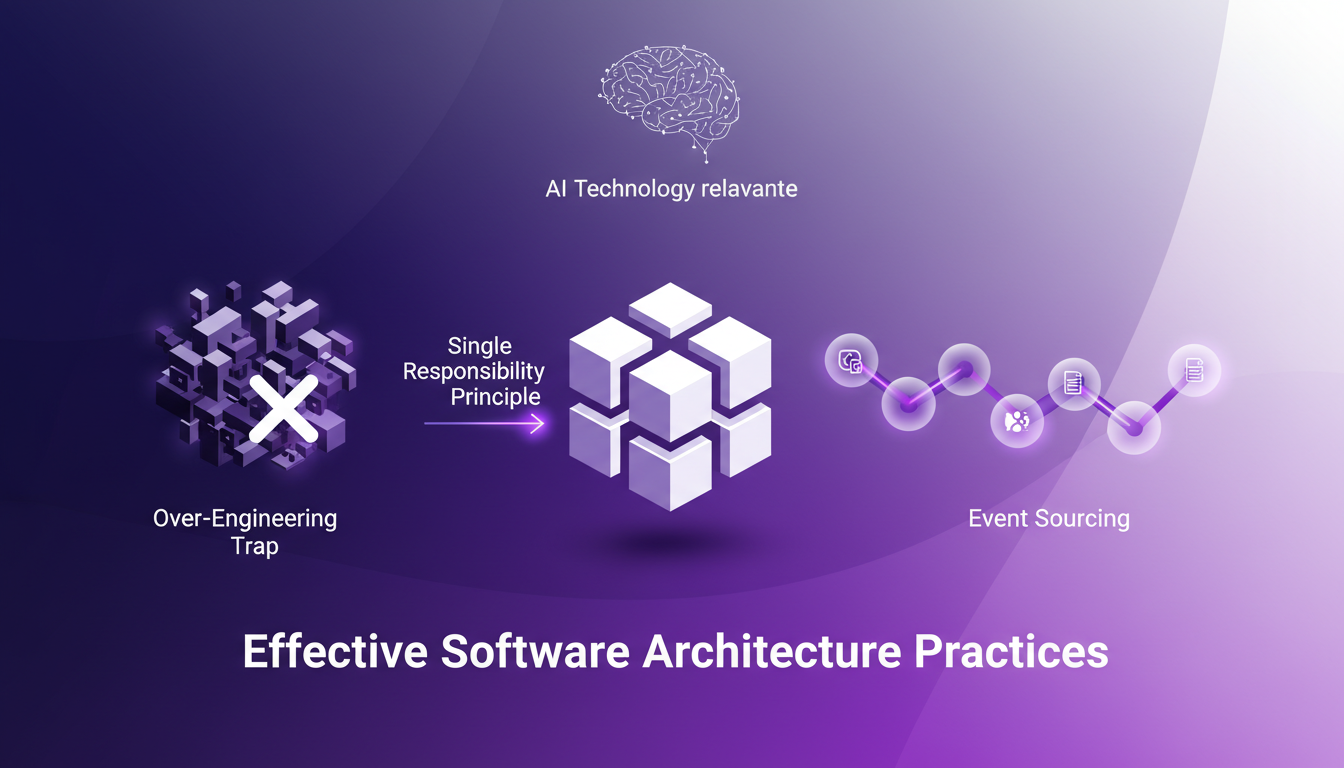
I've spent over 80 hours documenting contexts through commits and pull requests. But watch out, over-engineering is a trap. Sometimes simpler solutions are more effective. You need to know when to stop.
Managing Complexity in Software Development
Complexity isn't just a technical challenge; it's a team one. I prioritize clear communication and documentation. I use Test Driven Development (TDD) to catch issues early. It's a time-saver in the long run, even if it requires an initial investment. Balancing legacy code with new features is a tricky balance.
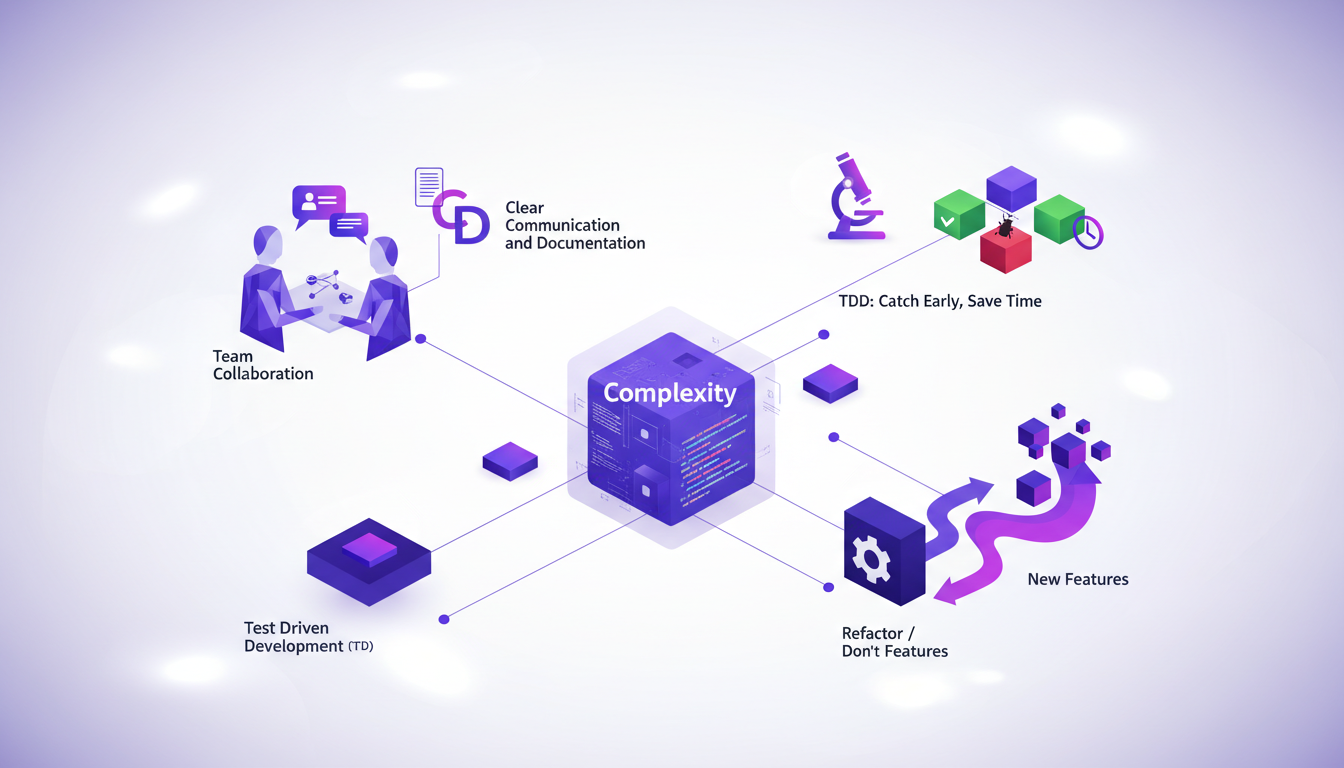
Continuous learning is critical. I dedicate time weekly to stay updated on new practices. It keeps me from getting stuck in old habits.
Role of AI in Software Development
AI tools are game changers, but they have limits. I use them to augment—not replace—my workflow. AI assists in code reviews, catching what I might miss after hours of staring at the screen. But be careful, over-reliance on AI can be dangerous. It's a tool, not a crutch.
I've seen AI tools reduce my development time by around 15%, freeing me up for more creative tasks. But it's crucial to maintain a critical eye on these tools.
Open Source Contribution and Sustainability
Contributing to open source is about sustainability. I've been doing it for 15 years, and it's all about balance. Open source licensing can be a minefield—choose wisely to avoid legal headaches. I encourage my team to contribute to open source. It's a great way to learn and give back to the community.
Sustainability means maintaining your projects. I allocate specific time for updates and community interaction.
Balancing Simplicity and Complexity in Code
Simplicity is key, but not at the cost of functionality. I aim for a balance that serves the application's needs. Over-simplification can lead to a lack of scalability. I've learned this the hard way.
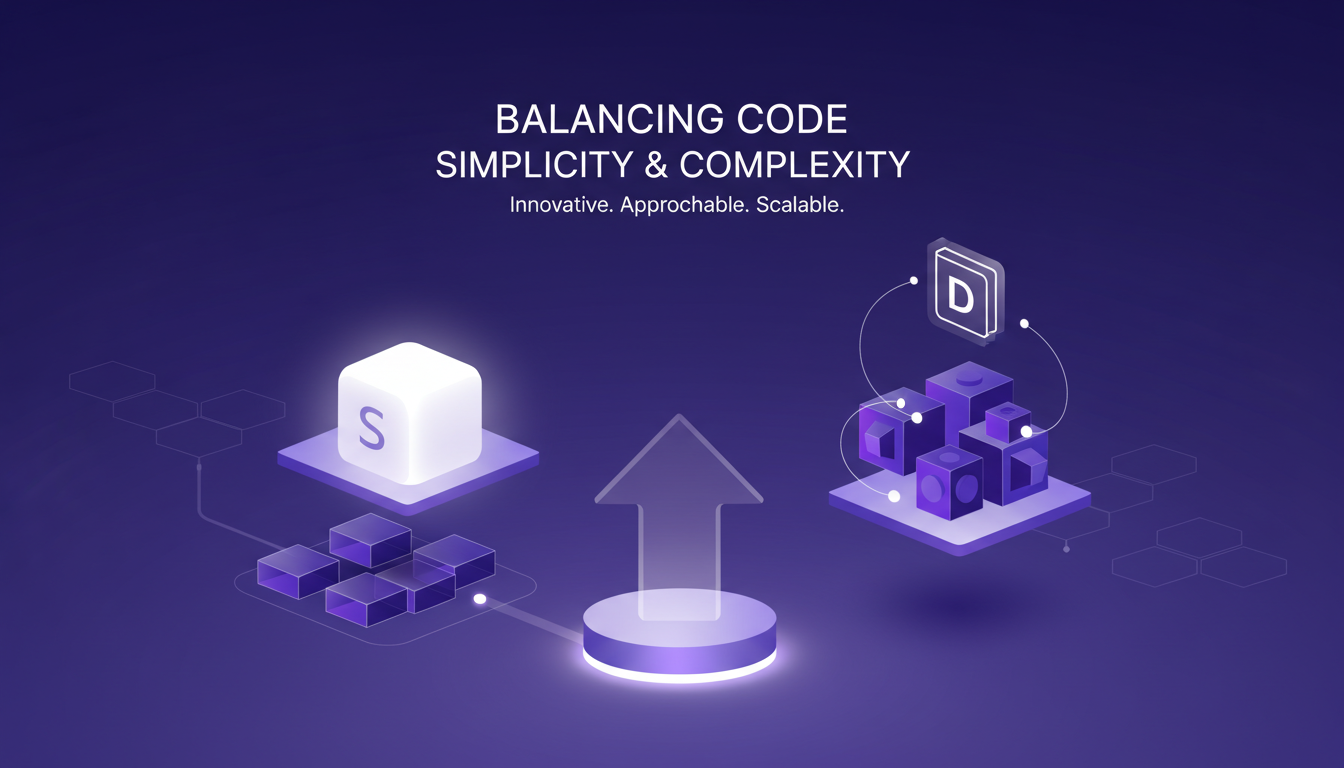
Documentation is your friend. It helps keep track of why decisions were made. I use historical context—captured through commits and tickets—to guide my coding decisions.
"Watch out, over-engineering is a trap. Sometimes simpler solutions are more effective."
- Start with the Single Responsibility Principle to keep code clean.
- Use Event Sourcing to track complex changes.
- Avoid over-relying on AI in your workflow.
- Contribute to open source for learning and sustainability.
- Document your decisions to guide future development steps.
Managing complexity in software development isn't about eliminating it entirely, but about orchestrating it effectively. Here's what I take away:
- Element Selection: With 15 different elements to choose from, it's about picking the ones that best align with your architecture. Don't overload your project unnecessarily.
- Context Capture: I've spent 80 hours capturing historical context through commits and pull requests. It's a valuable resource—use it to make informed decisions.
- Open Source Contributors: Invest in open source contributions for sustainability. It pays off in the long run.
Looking forward, integrating AI into your toolset can be a game changer, but watch out for application limits. Ready to tackle complexity head-on? Start small, iterate, and keep learning. Your software will thank you.
For deeper insights, watch the full video: YouTube link. As colleagues, let's share these practical insights to move forward together.
Frequently Asked Questions

Thibault Le Balier
Co-fondateur & CTO
Coming from the tech startup ecosystem, Thibault has developed expertise in AI solution architecture that he now puts at the service of large companies (Atos, BNP Paribas, beta.gouv). He works on two axes: mastering AI deployments (local LLMs, MCP security) and optimizing inference costs (offloading, compression, token management).
Related Articles
Discover more articles on similar topics
AI Agents: Speeding Up Software Development
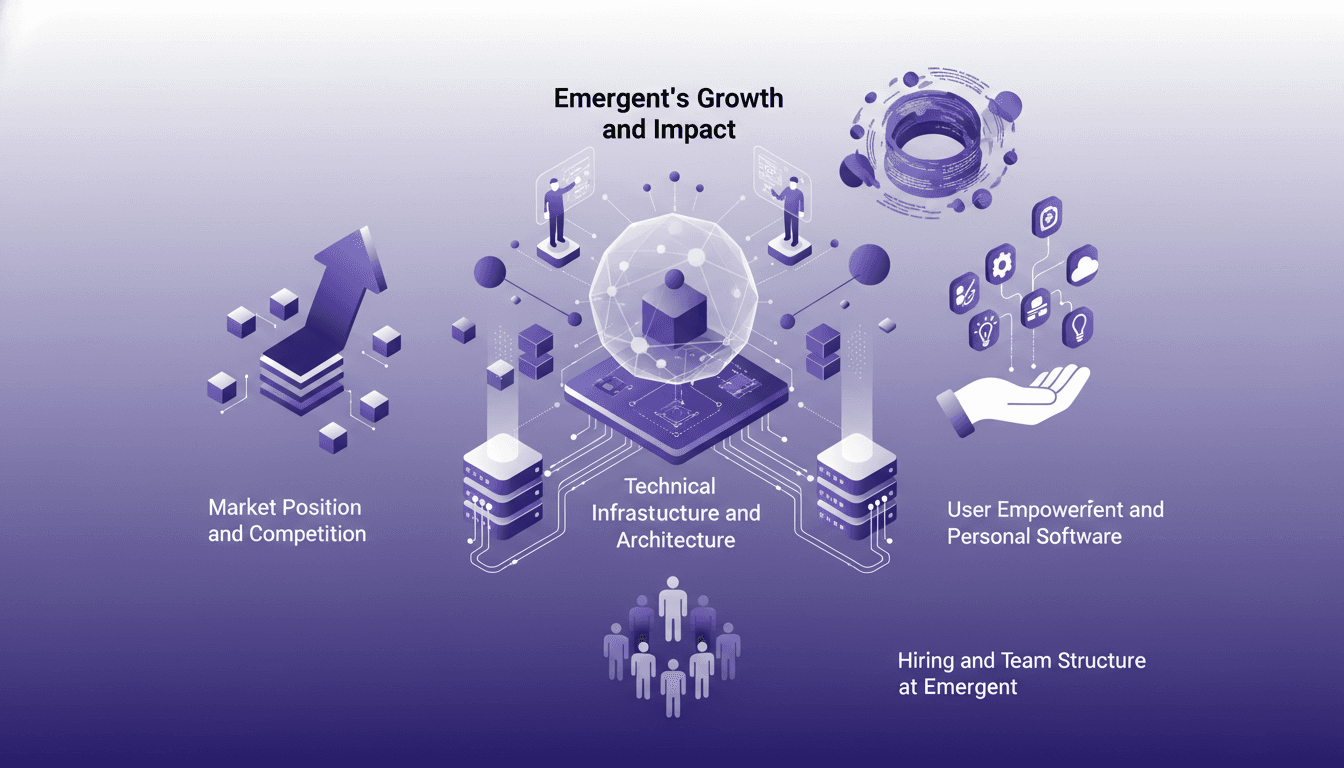
I've been knee-deep in AI development for years, and when I first heard about Emergent's AI agents for non-technical users, I was skeptical. But diving into their infrastructure and seeing the impact firsthand, I realized these tools are reshaping software development. Emergent has built a platform where even non-tech users can harness AI agents’ power. With a growing user base and robust infrastructure, they're setting new tech industry standards. From technical architecture to user empowerment and even team structure, this is a game-changer. Sure, there are challenges, but the potential is massive.
Accelerate Software Development with Codex
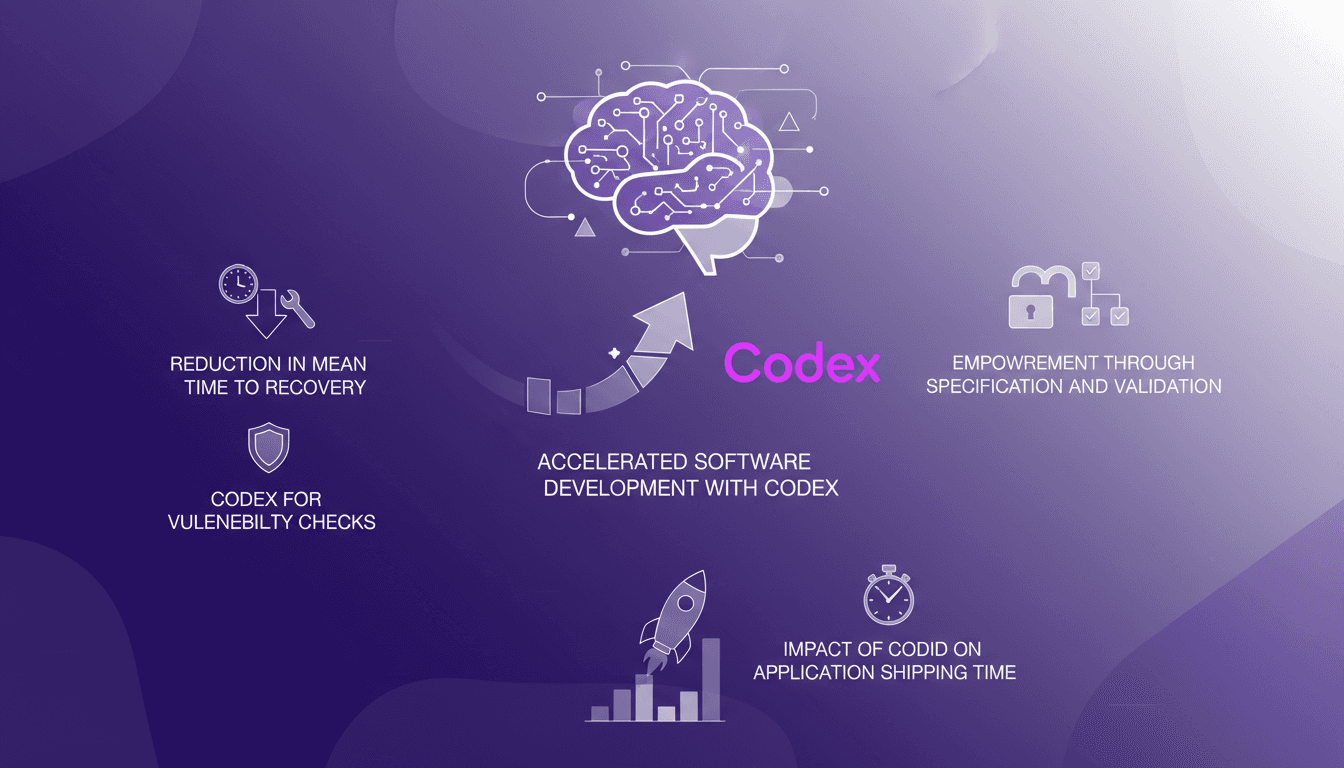
I've been deep in the trenches with Rakuten, navigating the labyrinth of software development, and I can tell you Codex has revolutionized our workflow. Cutting our mean time to recovery by 50% isn't just a theoretical win—it's a real-world game changer. Picture this: I connect Codex for vulnerability checks, I orchestrate it for specification and validation, and suddenly, our product application shipping time shrinks dramatically. It's been a true game changer for us, and I'm going to walk you through how we've tapped into this goldmine.
Deploying Mistral Small 4: Practical Use Cases
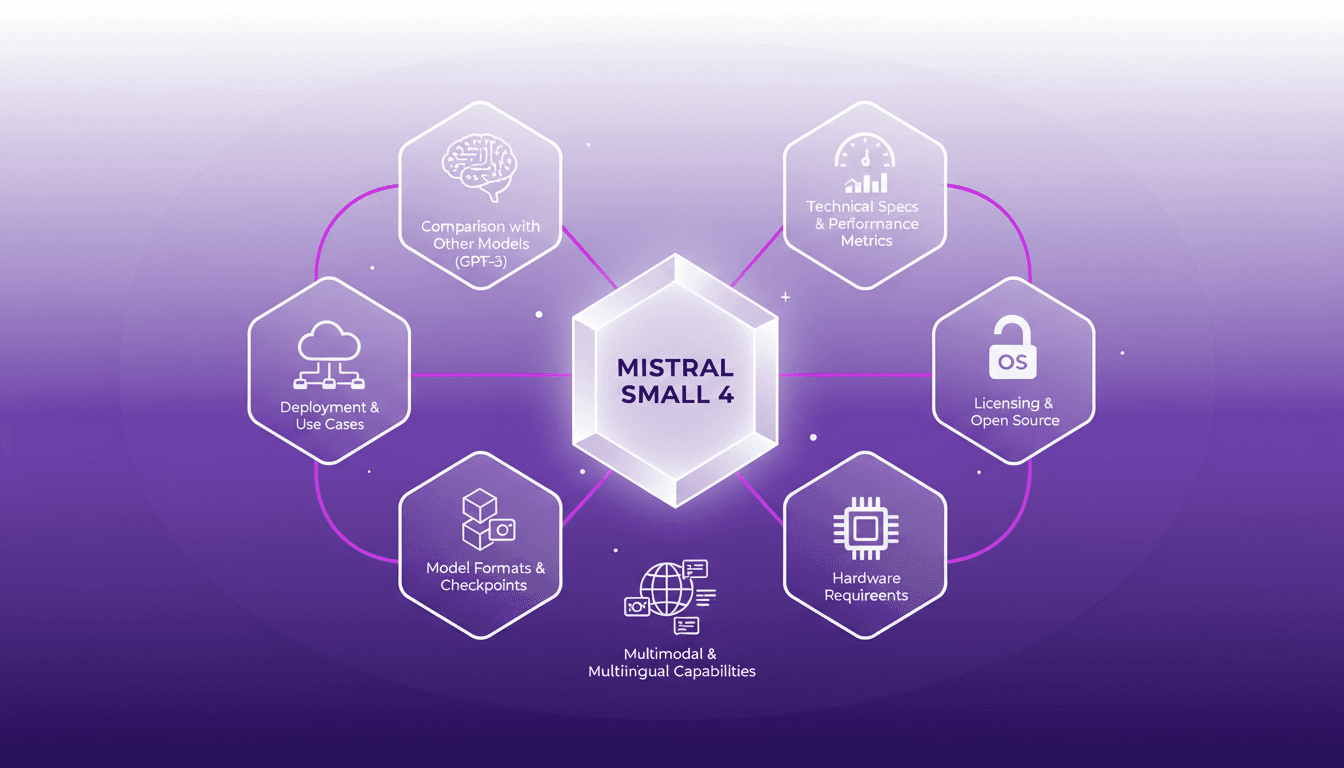
I dove into the Mistral Small 4 model recently, and let me tell you, it's a beast with its 119 billion parameters. But don't let that scare you; it’s all about how you harness it. With its multimodal and multilingual capabilities, this model is truly a game changer. I'll walk you through its setup, the trade-offs I encountered, and where it truly shines. Whether you're comparing it to GPT-3 or trying to grasp the hardware requirements, there's plenty here to optimize your AI approach. Watch out, though—underestimating the technical specs can hit you hard on performance.
AI for Empowerment: Rakuten and Codex
I vividly remember the first time I saw AI in action at Rakuten. It wasn't just about automation; it was about revolutionizing personal empowerment. With Codex, we've transformed how people interact with technology, and it's a game changer. Sure, I've hit roadblocks with context limits, but once we adjusted our approach, the impact was immediate. AI isn't just a tool; it's an ally for personal empowerment. In this talk, I'll show you how Rakuten and Codex are paving the way for this transformation.
AI Improvement: Cutting Costs and Time
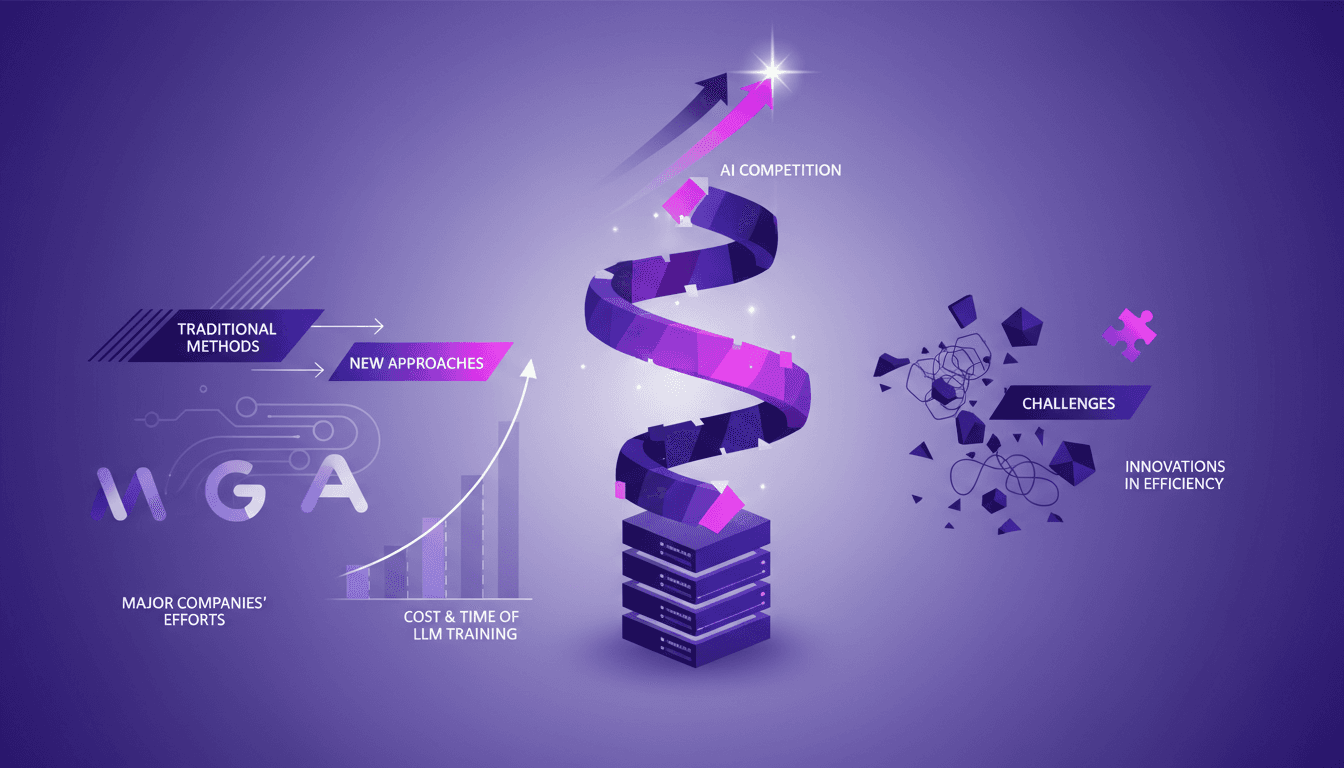
I remember the first time I heard about 'recursive self-improvement' in AI—it sounded like sci-fi. But diving into it, I realized it's the future—if we can manage the costs and time. Training an LLM costs hundreds of millions and takes months. I'm right in the thick of this race to develop faster and cheaper solutions. Let's break down how we're tackling this, the challenges in model training, and why traditional methods just won't cut it anymore. Trust me, this is practical stuff, not corporate fluff.