AI in Software Engineering: Revolution or Evolution?
I've been in the trenches of software engineering long enough to know AI isn't replacing us, but it's definitely reshaping our landscape. I've plugged AI-powered low-code platforms into legacy systems, and trust me, it's a game changer. We're talking redefined workflows, the essential blend of high-code and low-code, and what this means for us engineers. If you're still running 60-year-old COBOL apps, it's time to wake up! AI isn't just theory; it's what I'm doing every day to meet evolving demands. And while automation takes over 98% of the time, knowing when and how to intervene is critical. Let's discuss how these changes affect our roles and how to stay at the cutting edge.

I've been in the trenches of software engineering long enough to know that AI isn't here to replace us, but it's definitely reshaping the landscape. Picture AI-powered low-code platforms breathing new life into legacy systems (yes, those 60-year-old COBOL apps still lurking). I've connected these platforms to aging systems, and trust me, it's a game changer. This isn't just theory—it's what I'm doing every day to modernize my agency and keep up with evolving demands. Automation reduces our intervention to just 2% of the time, but those 2% are critical. The impact is direct: redefined workflows, the essential blend of high-code and low-code, and what this means for us engineers. Let's talk about the future of software engineering skills and AI integration, and how to stay relevant in this evolving landscape. Don't get left behind—engage with your customers, understand their business problems, and stay at the forefront.
AI-Powered Low-Code Platforms: Game Changer or Just Hype?
Integrating AI-powered low-code platforms into my existing workflows has been a revelation. I connected my systems to tools like Outsystems, and let's just say it was transformative. We're talking about a 20% boost in productivity just by automating previously manual processes. But watch out, it's easy to get swept up in the excitement. When it comes to complex tasks, low-code hits its limits and high-code becomes essential. It's like trying to fix a car with a Swiss Army knife: sometimes you need specialized tools.
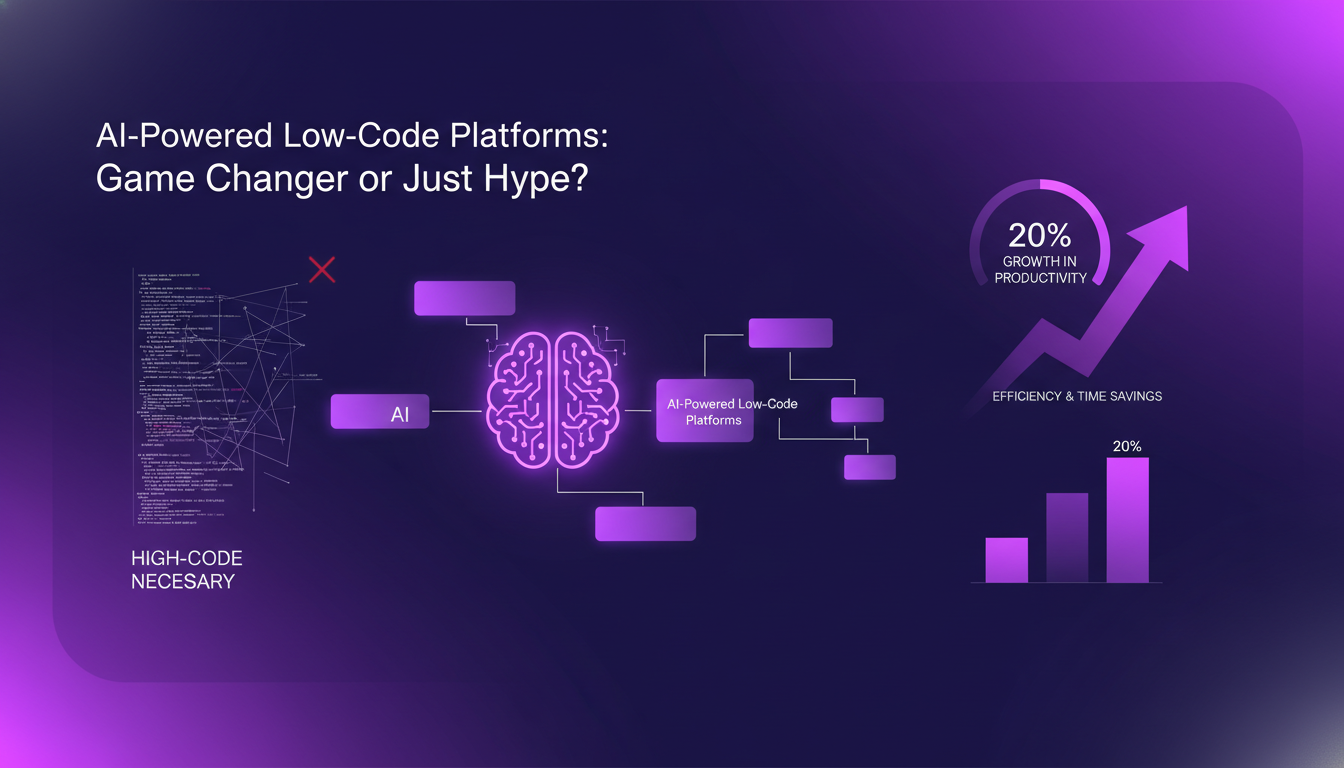
In industries like finance, AI agents have optimized processes such as mortgage application analysis, reducing human intervention to just 2% of the time. However, non-deterministic systems can lead to unpredictable outcomes, requiring human intervention to correct the course.
Automation may seem magical, but it requires human oversight to avoid unforeseen pitfalls.
Blending High-Code and Low-Code: My Approach
The first step in integrating high-code with low-code in my IT projects was understanding the business problems to solve. I started by mapping processes to identify where innovation could truly add value. Challenges weren't lacking, especially in orchestrating agentic workflows. However, by staying close to customer needs, I was able to overcome these obstacles.
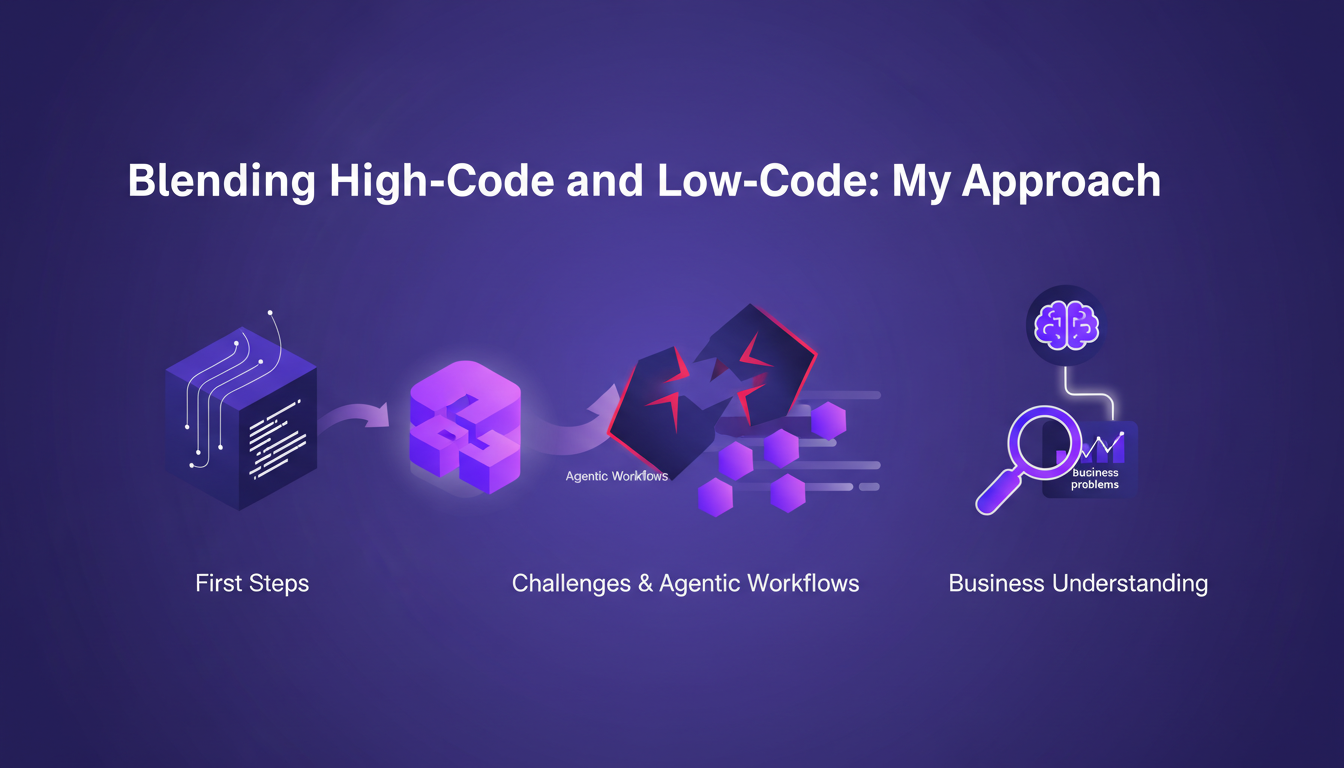
Knowing when to innovate and when to stick to high-code is crucial. I've seen hybrid approaches succeed especially well in environments where agility and stability are paramount. For instance, in the banking sector, combining the strengths of both approaches has optimized account management while maintaining robust security.
Modernizing Legacy Systems with AI: A Practical Guide
When I tackled modernizing a 60-year-old COBOL application, I turned to AI tools to automate as much as possible. This reduced manual intervention to just 2% of the time, freeing up my teams for higher-value tasks. Such modernization led to significant cost savings and improved operational efficiency.
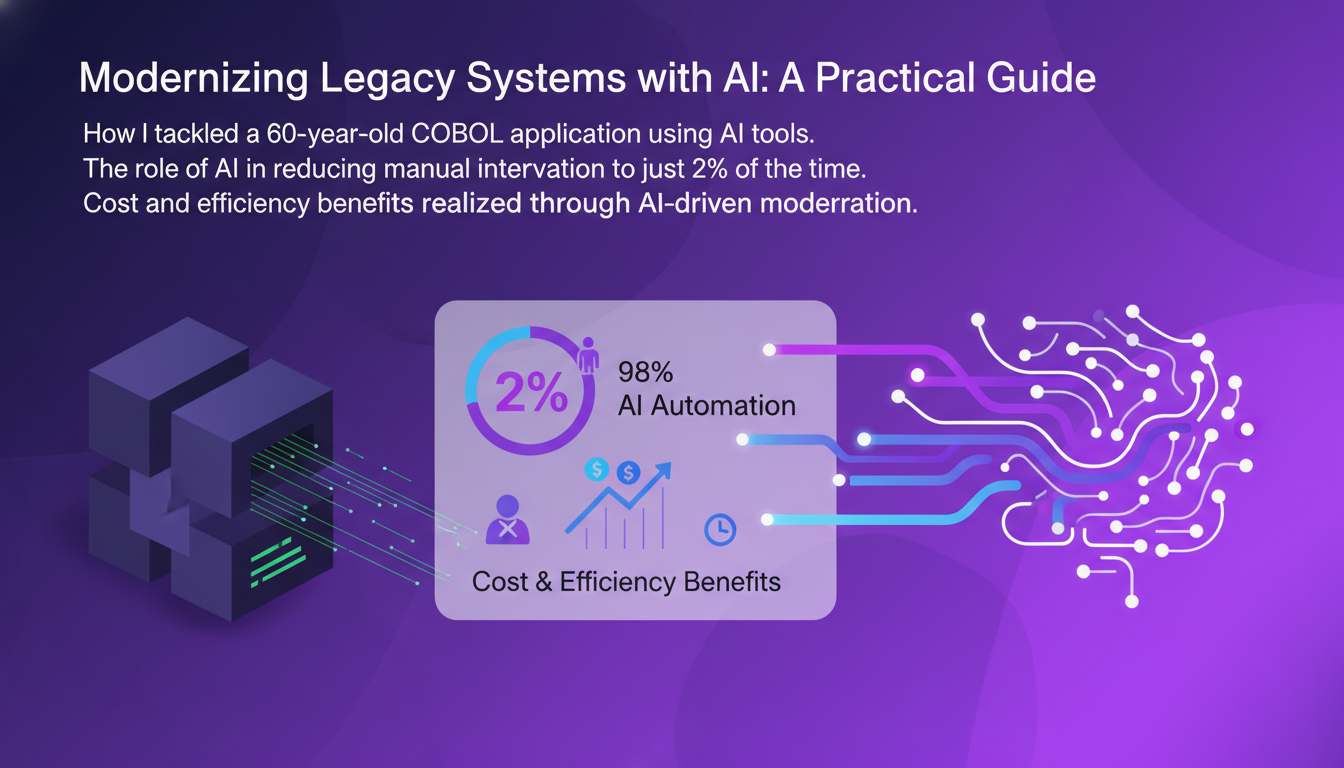
However, AI's limits quickly become apparent. Legacy systems often need a human touch to navigate historical complexities. I've found that a mixed approach, combining human expertise and AI power, is often the most effective way to avoid pitfalls.
Evolving Software Engineering Skills: What You Need to Know
To stay relevant in today's tech landscape, I've prioritized key skills like customer engagement and forward deployed engineering. Software engineering is no longer just about code; only 20% of the job involves writing code. In 100 years, the skills required will continue to evolve, but the importance of human engagement will remain central.
Continuous adaptation is crucial. Participating in hackathons or exploring how to boost your skills through hackathons can offer unique opportunities to stay updated.
AI's Impact on Job Roles: Navigating the Changes
With increasing automation, it's inevitable that some positions are at risk. Yet, I've prepared my team for these changes by maximizing each employee's potential. Emphasizing soft skills is as crucial as technical skills.
Successful transitions, as demonstrated by integrating a forward deployed engineering model, not only retain talent but also optimize team performance. For those looking to pivot, reading about mastering software engineering from junior to architect can provide useful insights.
I've integrated AI into my projects, and it's not the enemy—it's a powerful ally. When I blend high-code and low-code approaches, I'm not just surviving, I'm thriving in this new era. Here are some key takeaways:
- I saw a 20% growth thanks to this agentic system definition. It's a real game changer, but watch out for over-engineering.
- We still run 60-year-old COBOL apps in our enterprise. With AI, modernizing these legacy systems is easier, but careful integration is key.
- Automation reduces human intervention to just 2% of the time, freeing us up for innovation. Just make sure AI doesn't become a black box.
I'm convinced that the future of software engineering lies in experimenting with AI. So start integrating it into your projects today! And to dive deeper, check out the full video here: [YouTube link].
Frequently Asked Questions

Thibault Le Balier
Co-fondateur & CTO
Coming from the tech startup ecosystem, Thibault has developed expertise in AI solution architecture that he now puts at the service of large companies (Atos, BNP Paribas, beta.gouv). He works on two axes: mastering AI deployments (local LLMs, MCP security) and optimizing inference costs (offloading, compression, token management).
Related Articles
Discover more articles on similar topics
Impact of AI on Hiring Junior Engineers
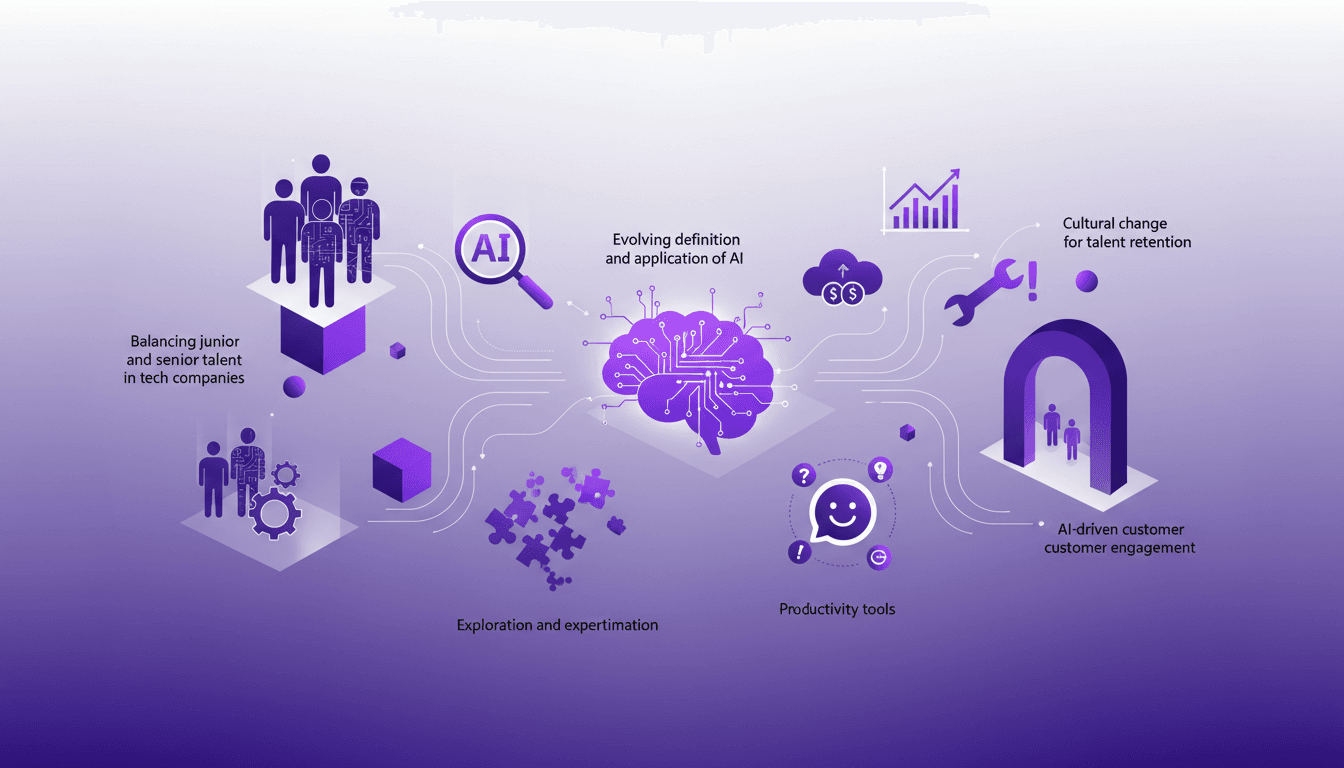
I've been deep in the tech hiring trenches, and AI is shaking things up. Initially, it was just about evaluating junior engineers' skills. But then I realized it's about adapting these talents to AI-driven roles. AI isn't just a buzzword; it's redefining productivity and expectations. In this article, I dive into how AI impacts our hiring processes and the critical balance between junior and senior talent. We'll explore the practical implications, challenges, and opportunities for tech companies. Make no mistake, integrating AI into your teams is more than just adding another tool to your toolkit.
Boost Your Skills through Hackathons
I've been through countless hackathons, and let me tell you, they're not just about caffeine-fueled coding marathons. They're a crash course in real-world problem-solving and innovation. At Booking.com, these events are a staple, offering a platform for collaboration, creativity, and even career advancement. Beyond the speed of coding, hackathons develop essential skills, both technical and soft. Whether you're a developer, designer, or data scientist, these intense sessions push you to iterate, test, and learn new technologies like AI. And the best part? It's a learning environment where mentorship and guidance are abundant. Dive into this world and see how these experiences can propel your career forward.
Building with AI: Beyond UX Focus
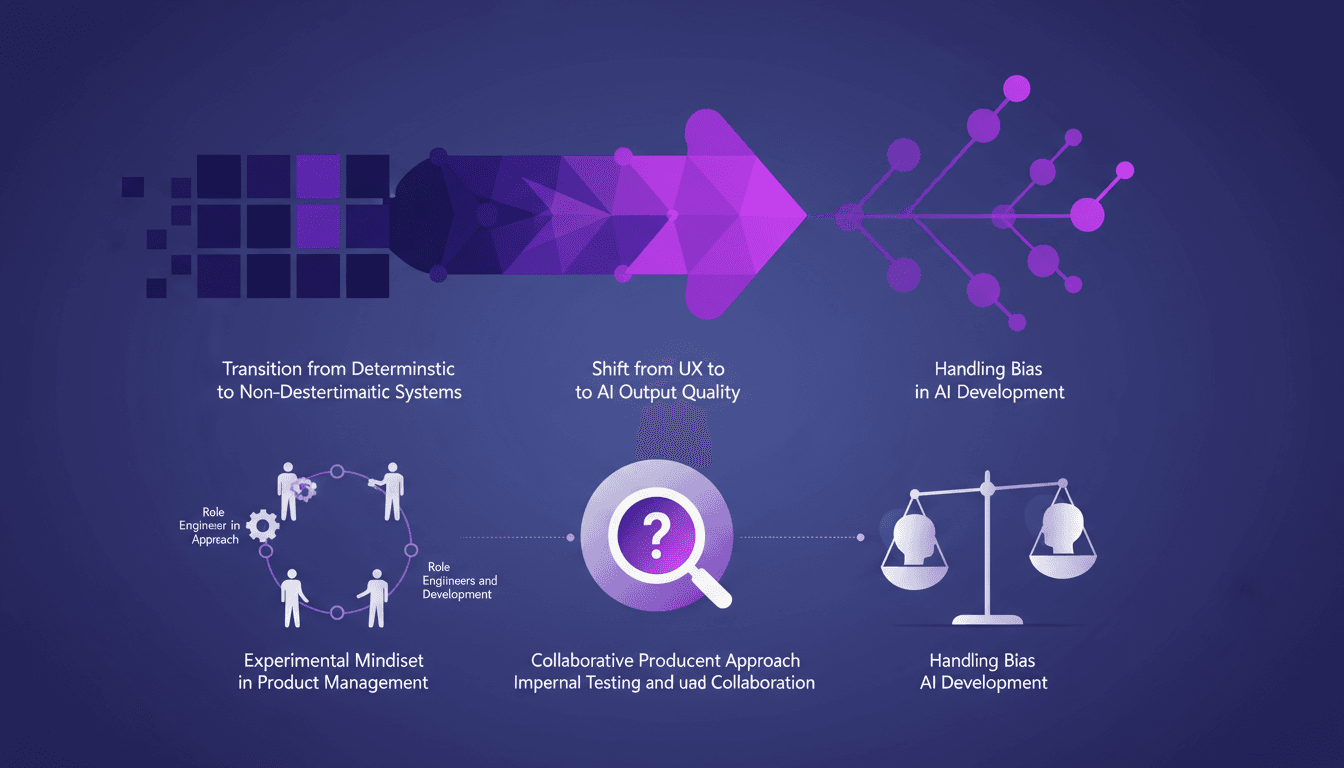
I remember when UX was king. We poured hours into perfecting interfaces, but now, it's all about the AI's output quality. The game has changed, and if you're still focused solely on UX, you're missing out. As a developer, I see it at every step: we've shifted from deterministic systems to non-deterministic ones, and it changes everything. We need an experimental mindset, involve users internally, and collaborate more. Engineers play a central role in this new paradigm, especially when handling AI biases. So, let's dive into this hot topic and see how it impacts our product management.
Mastering Software Engineering: From Junior to Architect
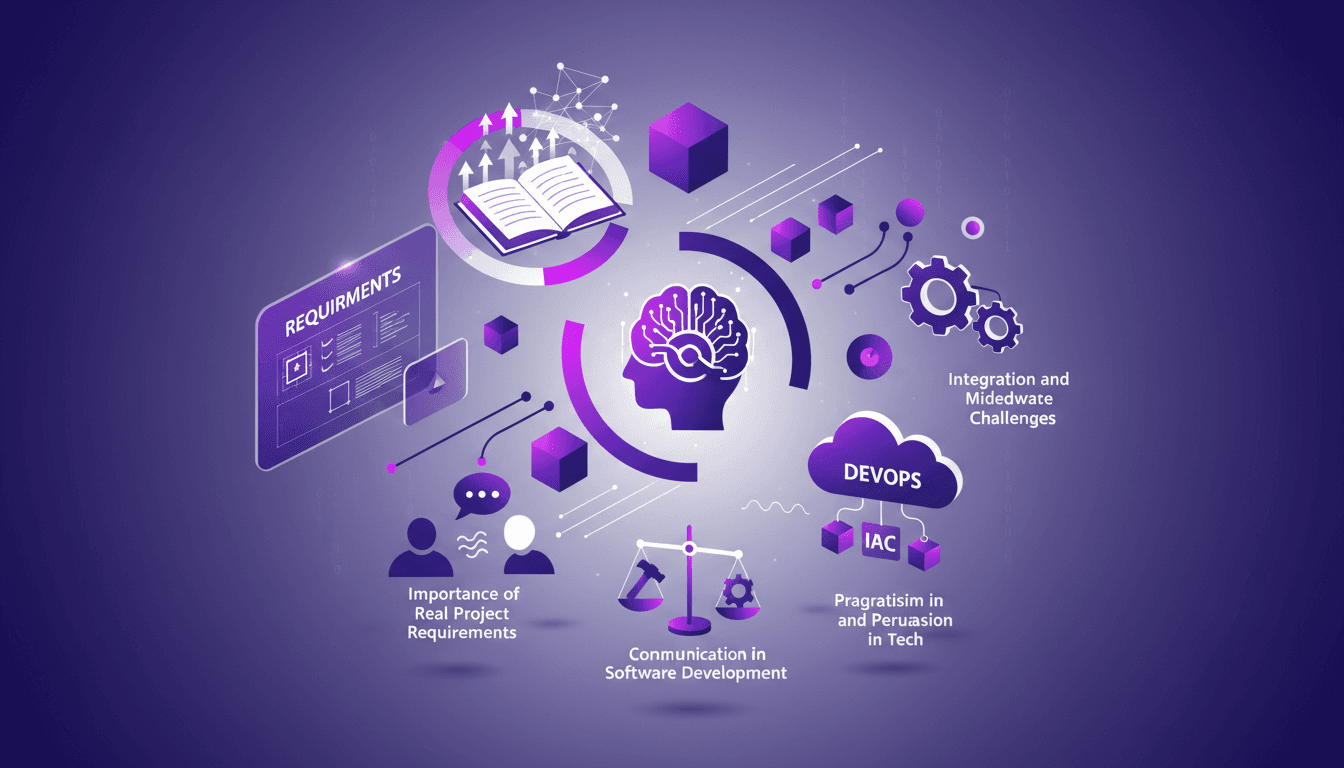
I remember when I first dipped my toes into software engineering. It felt like a maze of code and concepts. Fast forward to today, I'm orchestrating complex systems as an architect. Moving from a junior developer to an architect is about more than just coding. It's about mastering the art of software engineering, understanding real project demands, and navigating integration challenges. Let's talk about the core skills: continuous learning, reading and understanding code, facing middleware and DevOps challenges, and effectively communicating in tech. Let's dive in, I'll show you the way.
Generating €120K/Month with Influencer SaaS
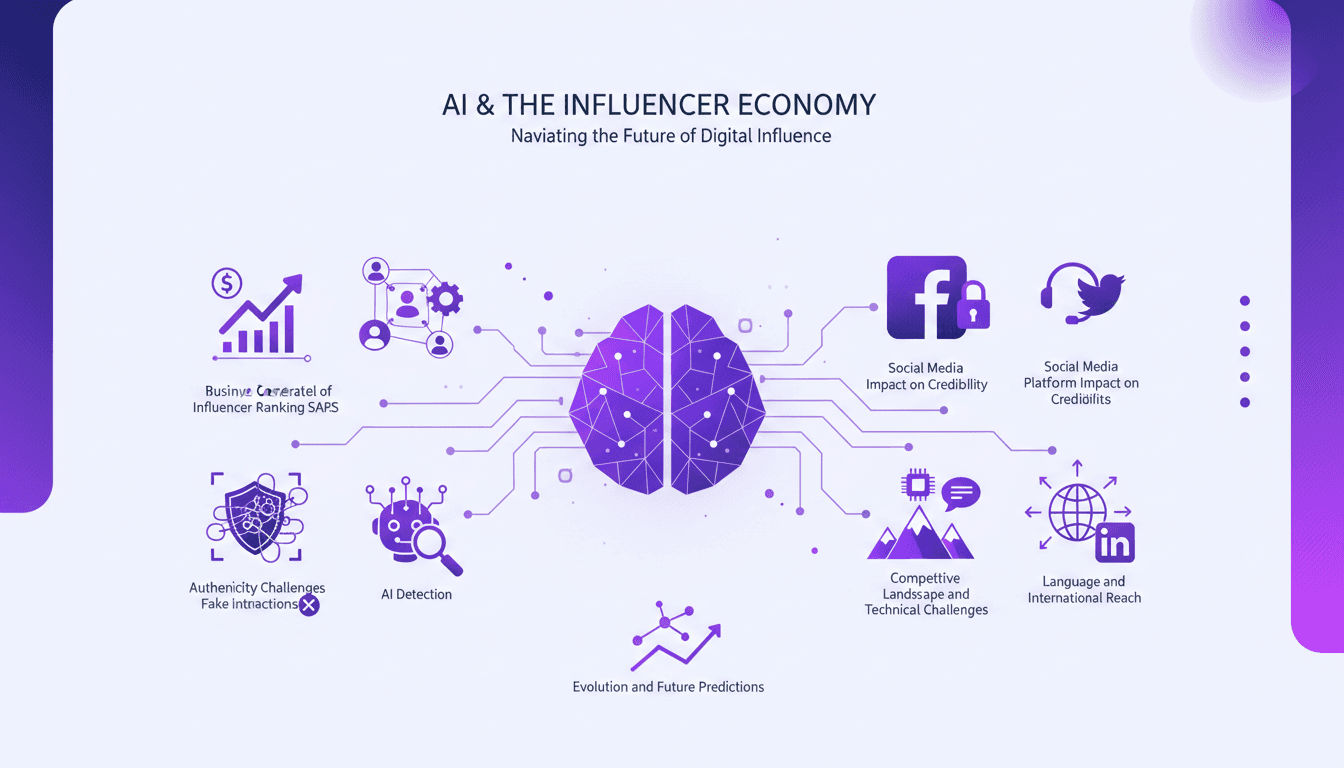
I started with an idea and a laptop, and now my SaaS is pulling in €120K a month. I built an influencer ranking platform that cuts through the noise of fake engagements and delivers real value. In today's influencer marketing landscape, authenticity is king. But with fake interactions rampant, how do you build a tool that truly ranks influencers by their real impact? Here's how I tackled this challenge using AI, PLG, and a relentless focus on authenticity.