Impact of AI on Hiring Junior Engineers
I've been deep in the tech hiring trenches, and AI is shaking things up. Initially, it was just about evaluating junior engineers' skills. But then I realized it's about adapting these talents to AI-driven roles. AI isn't just a buzzword; it's redefining productivity and expectations. In this article, I dive into how AI impacts our hiring processes and the critical balance between junior and senior talent. We'll explore the practical implications, challenges, and opportunities for tech companies. Make no mistake, integrating AI into your teams is more than just adding another tool to your toolkit.
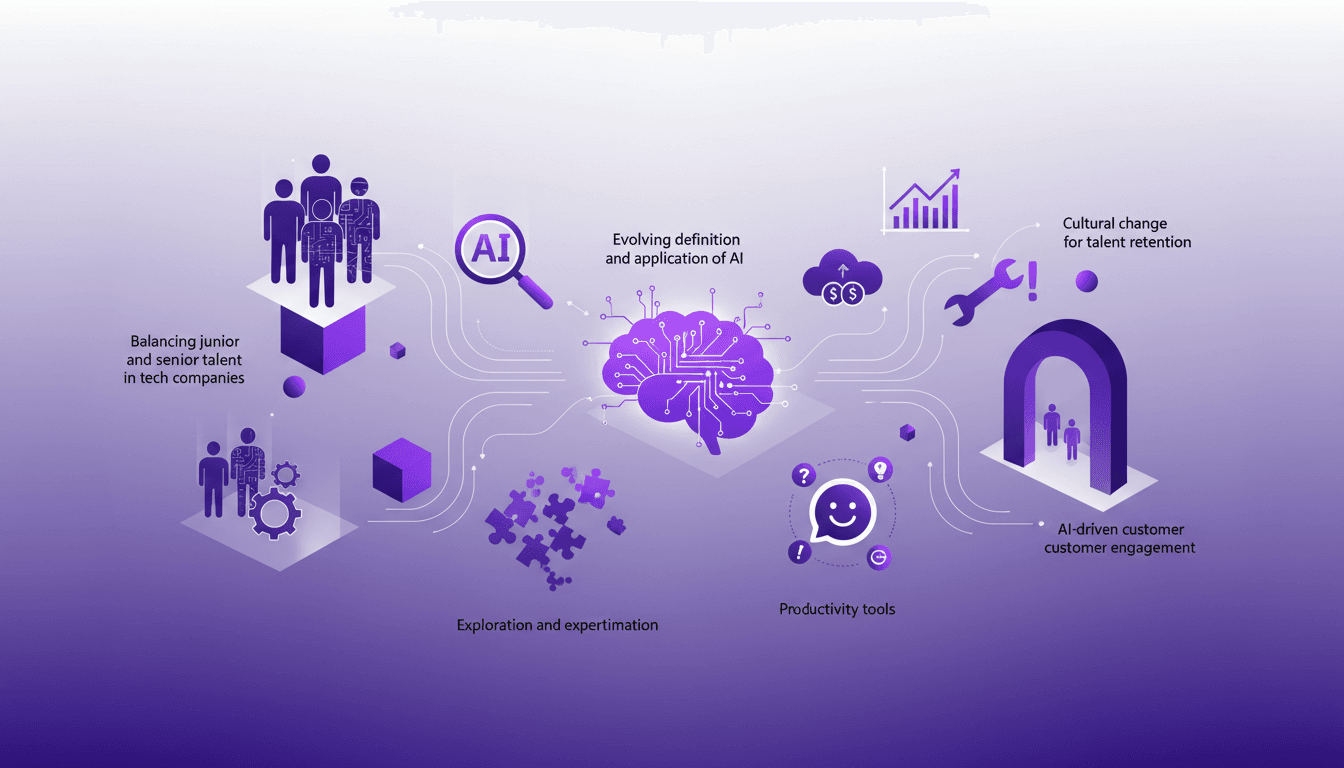
I've been in the trenches of tech hiring, and AI is shaking things up. First, I noticed how we evaluate junior engineers is changing. It's not just about their technical skills anymore; it's about adapting to AI-driven roles. That's when it hit me: AI isn't just reshaping tools, it's reshaping teams. With generative and predictive AI tools, the landscape for junior engineers is getting a makeover. So, let's dive deeper. How does AI affect our hiring processes and balance between junior and senior talent? What's the impact on talent retention? Most importantly, how do we navigate this environment where 20% of our time is spent experimenting? I'm sharing my experiences, my mistakes, and some strategies to leverage this tech revolution without losing sight of human value.
Impact of AI on Hiring Junior Engineers
When I look at how AI is transforming the hiring of junior engineers, I see a massive upheaval. AI tools are automating tasks that juniors traditionally handled. For example, ChatGPT and other code generation tools can write basic code segments, rendering some junior tasks obsolete. This means companies are now looking for people who can manage these tools rather than just execute tasks. But watch out, over-reliance on AI can stifle junior growth. The role is evolving towards AI facilitation.
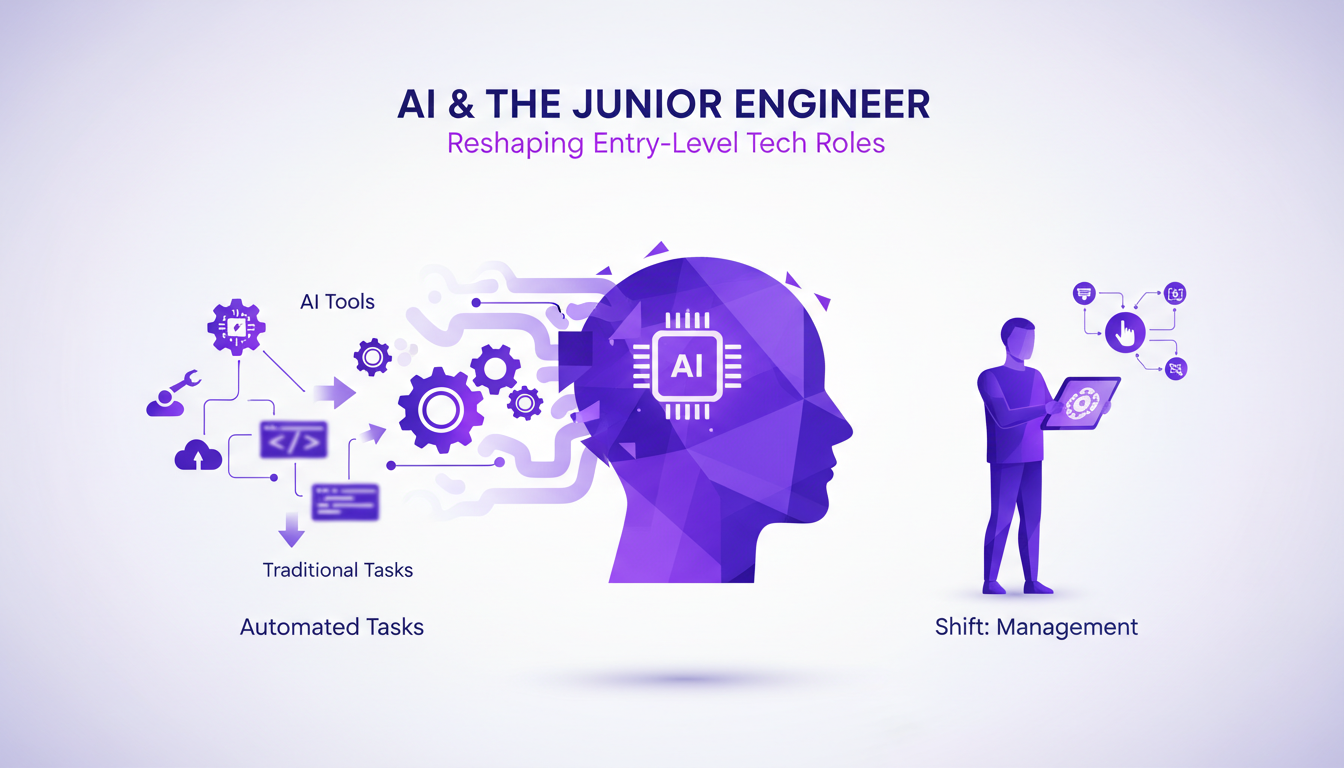
In 2025, companies are reconsidering hiring junior talent in the tech industry. On one hand, junior roles have decreased by 23%, which means many believe they are no longer necessary. But don't underestimate the value of fresh perspectives and agility that juniors bring. Shahin Shahkarami, from Ikea Retail, argues this is the best time to hire juniors.
- AI tools automate basic tasks.
- The skill set required for junior roles is evolving.
- Beware of over-reliance on AI.
- Juniors are moving towards AI facilitation roles.
Balancing Junior and Senior Talent in Tech
The balance between senior and junior engineers is crucial. Seniors mentor juniors on AI tool usage, creating synergy. But this balance requires understanding AI's impact on roles. For instance, AI can accelerate junior learning, but it requires proper senior oversight to avoid misuse or overuse.
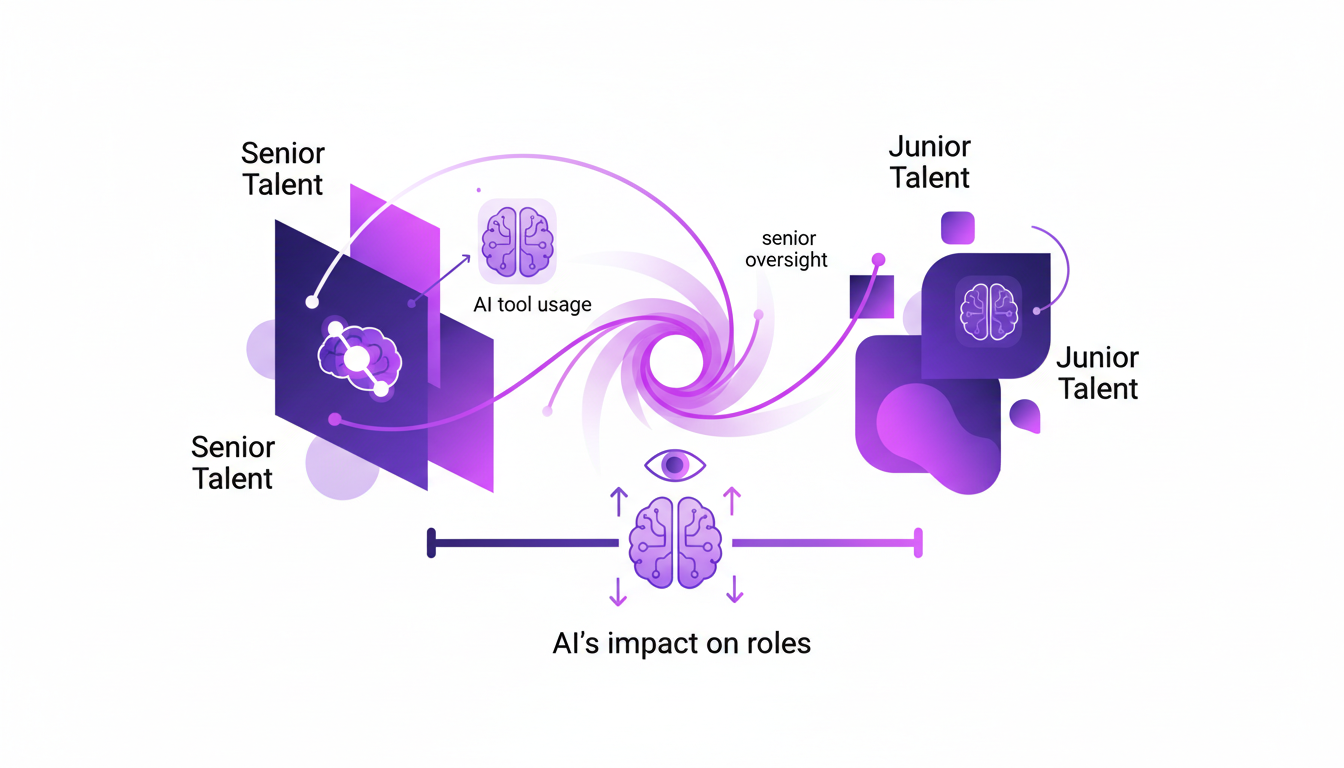
Companies need to adapt to cultural shifts necessary to retain talent in an AI-driven environment. One challenge is not underutilizing junior creativity. As a small group of five, this balance is even more crucial. The cultural impact is huge, and for companies that don't account for it, the risk of losing talent is significant.
- Seniors guide juniors in AI usage.
- Understanding AI's impact on roles is crucial.
- Cultural shifts are vital for talent retention.
- Beware of underutilizing junior creativity.
Evolving Definition and Application of AI
When we talk about AI, we often think of automation. But it's much more than that. AI enhances decision-making and unlocks new business opportunities. For instance, generative AI can lead to new business outcomes. I've seen it myself in projects where it allowed rapid idea testing. Predictive AI helps in strategic planning and efficient resource allocation.
Semantic search is changing how we retrieve and use data. In live coding sessions, AI is integrated for real-time problem-solving, which is a real game changer, but watch out for context limits.
- AI is more than just automation.
- Generative AI creates new business opportunities.
- Predictive AI optimizes strategic planning.
- Semantic search transforms data usage.
Role of Generative AI in Business Outcomes
I see generative AI as a true game changer. It boosts productivity, but watch out for context limits. For example, beyond 100K tokens, things get tricky. Orchestration is key. AI-driven tools are great for prototyping and testing ideas quickly, but they need alignment with company goals for direct business impact.
Don't overuse AI. It can become a crutch rather than a tool. I've seen teams rely too much on these tools, which ultimately stifled their creativity and innovation capacity. To avoid this, careful orchestration of AI use is crucial.
- Generative AI boosts productivity.
- Watch out for context limits.
- AI tools are great for rapid prototyping.
- Alignment with company goals is essential.
Exploration, Experimentation, and Cultural Change
To innovate, you should spend 20% of your time on experimentation. It might seem like a lot, but it's essential for driving innovation. Cultural change is vital for integrating AI into daily workflows. AI tools demand a shift in how teams collaborate and communicate. I encourage exploration to keep up with rapid AI advancements.
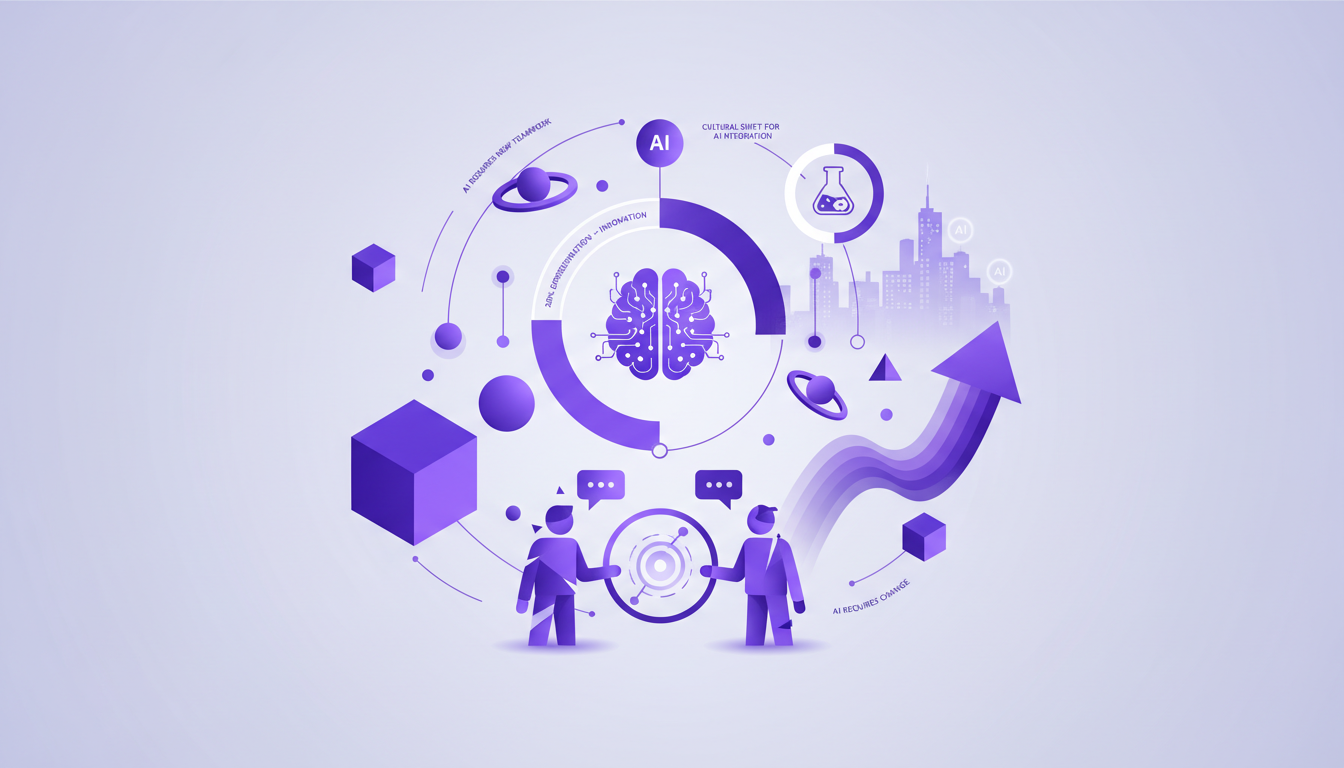
Retention strategies must evolve with AI-driven job roles. The culture of experimentation is essential for optimizing short-term value and balancing job responsibilities with exploration. I've experienced this in my agency, and the result was increased personal productivity and creativity.
- 20% of time for experimentation is crucial.
- Cultural change is vital for AI integration.
- AI tools change team collaboration.
- Retention strategies must adapt to AI-driven roles.
For more on AI innovation, check out AI Innovations 2025: Gemini and Google Beam.
In the tech hiring landscape, AI is undeniably reshaping the game. First, I've seen its impact on hiring junior engineers. Companies are leveraging AI to automate simple tasks, which frees up time for more strategic missions. Second, balancing junior and senior talent is crucial. You can't just have juniors powered by AI without senior expertise to guide them. Third, the definition and application of AI are evolving; generative tools are game-changers, but watch out for limitations. Going from 0 to 80% with chatbots is easy, but the last 20% still needs human touch.
Looking forward, I encourage everyone to experiment and adapt relentlessly, because that's where true innovation lies. To really grasp these dynamics, I recommend watching the video "Stop Hiring Junior Engineers Because of AI?" on YouTube. It's your chance to get ahead of these issues, so don't hesitate to dive in.
Video link: https://www.youtube.com/watch?v=Jui-8Lx6kvk
Frequently Asked Questions

Thibault Le Balier
Co-fondateur & CTO
Coming from the tech startup ecosystem, Thibault has developed expertise in AI solution architecture that he now puts at the service of large companies (Atos, BNP Paribas, beta.gouv). He works on two axes: mastering AI deployments (local LLMs, MCP security) and optimizing inference costs (offloading, compression, token management).
Related Articles
Discover more articles on similar topics
AI Innovations 2025: Gemini and Google Beam
I was at Google I/O 2025, and the buzz was palpable. As a builder, I'm always on the lookout for tools that make a real difference in my workflows. This year, Gemini AI and Google Beam caught my attention. We're not just talking about minor upgrades; these are genuine game changers. New products and subscription plans, Gemini AI's evolution, and breakthroughs in scientific research are shaking things up. AI in immersive video communication and disaster response is no longer just a promise; it's a reality. With the Ironwood TPU delivering 42.5 exaflops of compute per part, performance has skyrocketed. It's time to dive into these innovations and see how they can transform our projects in real ways.
Generating €120K/Month with Influencer SaaS
I started with an idea and a laptop, and now my SaaS is pulling in €120K a month. I built an influencer ranking platform that cuts through the noise of fake engagements and delivers real value. In today's influencer marketing landscape, authenticity is king. But with fake interactions rampant, how do you build a tool that truly ranks influencers by their real impact? Here's how I tackled this challenge using AI, PLG, and a relentless focus on authenticity.
Unlock Productivity: Daily Habits and Key Tools
I started experimenting with productivity tools out of necessity. Eight-hour meetings were draining me, and my workflows felt outdated. So, I set up a Zettelkasten system and dove into 'Getting Things Done'. Here's how I transformed my daily grind into a streamlined machine. In this article, I’ll walk you through my journey of challenging workflows, leveraging AI, and balancing work with personal life. These aren't just theories; they're tested strategies that led to real productivity gains.
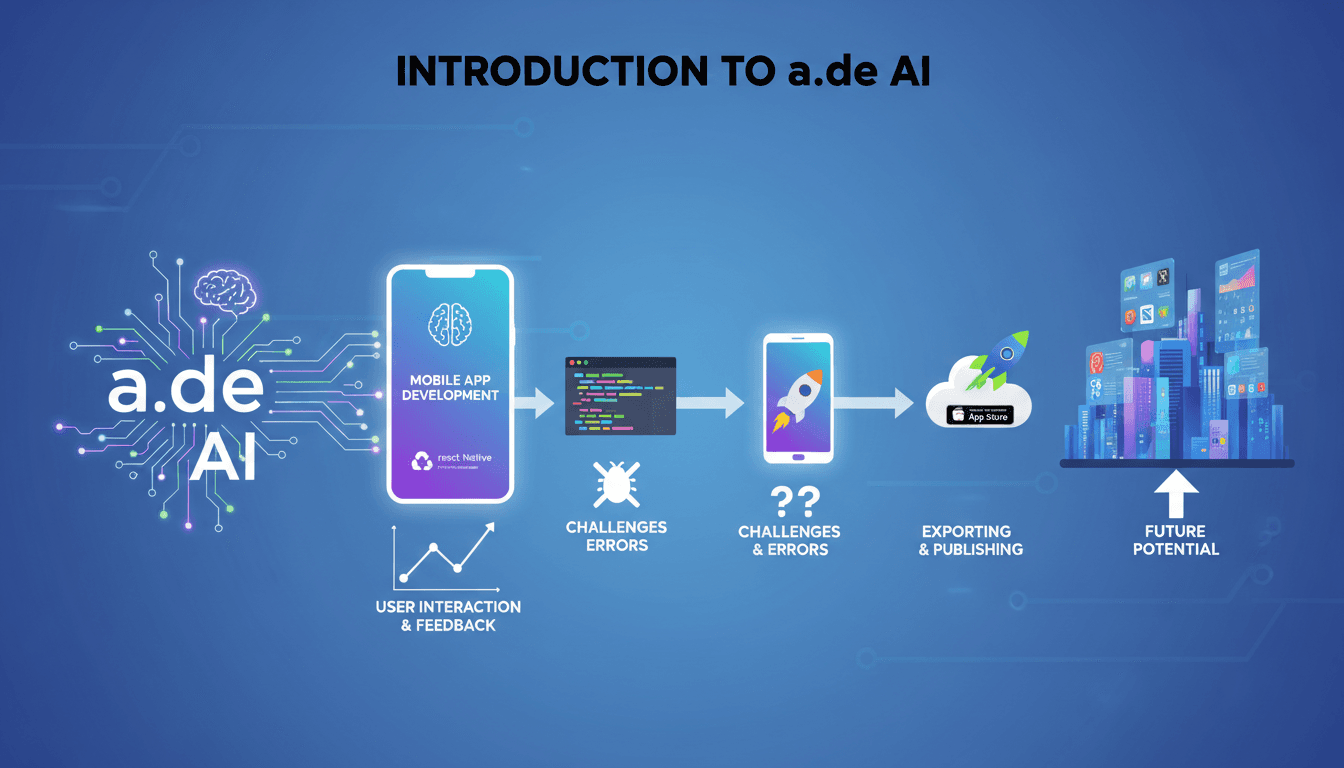
Building Mobile Apps with AI: Reality or Hype?
I dove into mobile app development with a.de AI, and let me tell you, it's a game changer—when you know how to navigate the quirks. This isn't just theory; we're building real apps using React Native and Expo, figuring out how to make AI work for us. I connect my components, orchestrate flows, but watch out for the errors along the way. Building with AI means embracing challenges, from user feedback to exporting to app stores. So, is it reality or just hype? You decide, but for me, the potential for app store publishing is real if you know what you're doing.
Clone Websites with AI in 2025: A Practical Guide
I remember the first time I cloned a website in under ten minutes. Yes, it was 2025, and I was using Replet Agent, an AI tool that made the process incredibly smooth. Gone were the days of relying on expensive development agencies. In this article, I'll show you how I did it. I'll guide you through integrating essential features like Stripe and encourage you to focus your energy on creation rather than technical complexities.