Generating €120K/Month with Influencer SaaS
I started with an idea and a laptop, and now my SaaS is pulling in €120K a month. I built an influencer ranking platform that cuts through the noise of fake engagements and delivers real value. In today's influencer marketing landscape, authenticity is king. But with fake interactions rampant, how do you build a tool that truly ranks influencers by their real impact? Here's how I tackled this challenge using AI, PLG, and a relentless focus on authenticity.
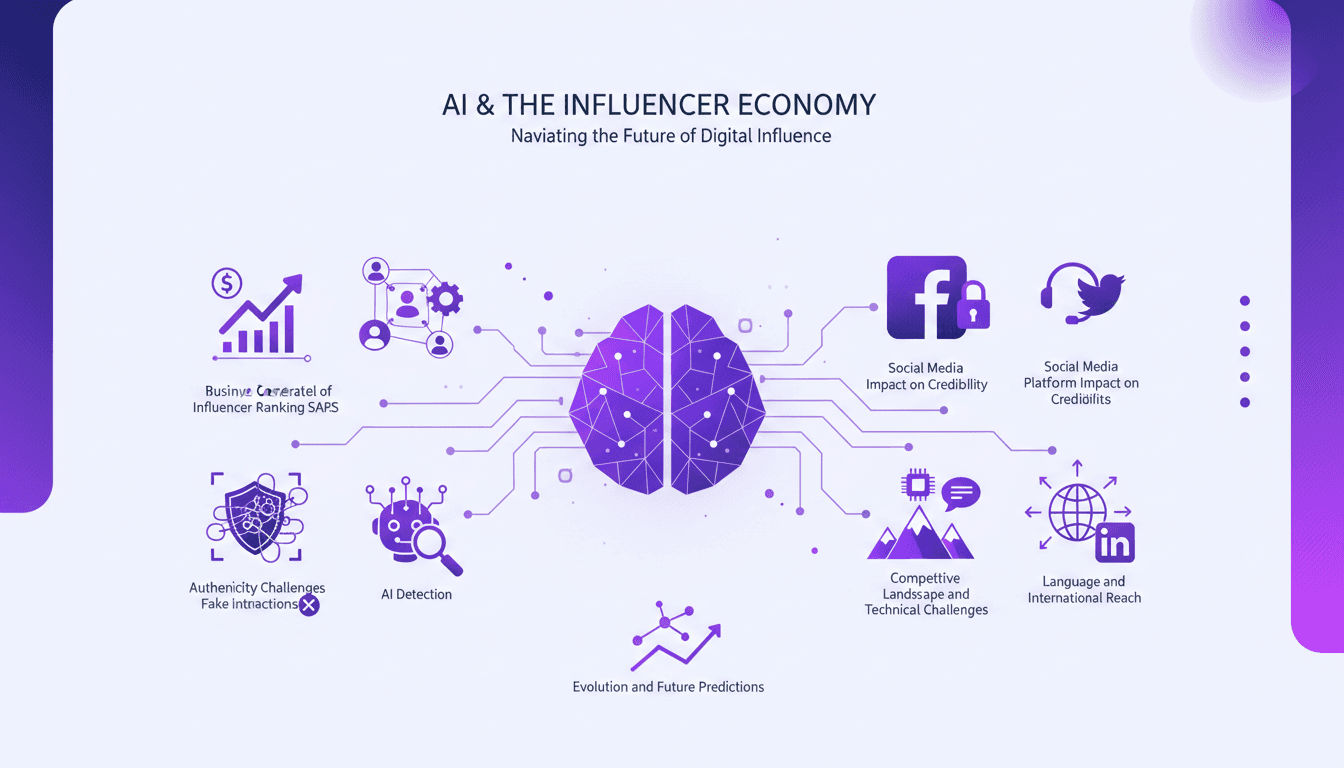
I started with an idea and a laptop, and now my SaaS is pulling in €120K a month. Not too shabby, right? But make no mistake, the journey wasn't a walk in the park. I had to build an influencer ranking platform that doesn't just follow the herd with inflated engagement numbers. In today's influencer marketing landscape, authenticity is king. But how do you ensure your tool genuinely ranks influencers by their real impact and not puffed-up stats? I got burned a few times before cracking how AI could sniff out fake interactions. Then, I went all in on Product-Led Growth (PLG) and a marketing strategy that leaves nothing to chance. The results? An authenticity score that's worth its weight in gold and credibility that reels in the big fish. And trust me, in a market where competition is fierce, every mistake can be costly. I'll walk you through everything, from battling fake engagements to the impact of social media on influencer credibility.
Crafting a Revenue-Generating SaaS Model
Starting my SaaS journey, I knew the monetization strategy had to be crystal clear. I chose a subscription-based model because it provided predictable, recurring revenue—crucial for hitting that €120K/month mark. Next, I leveraged PLG (Product-Led Growth) to slash customer acquisition costs and drive organic growth. In the second phase, PLG accounted for a full 100% of our marketing efforts.

But watch out—never rely too heavily on a single revenue stream. I iterated our pricing model based on user feedback and thorough market analysis. This kept us competitive and relevant. A tip: never put all your eggs in one basket, as market dynamics can shift rapidly.
- Plan a clear monetization strategy.
- Leverage PLG to cut costs and boost growth.
- Listen to feedback and adjust pricing accordingly.
- Avoid over-reliance on a single revenue stream.
Tackling Fake Interactions with AI
One of the biggest challenges in influencer marketing is distinguishing real from fake. I spent six months refining an AI model to score authenticity, slicing through fake likes and comments. Let me tell you, building this model was a real challenge. We analyzed thousands of profiles to fine-tune our algorithm. The outcome? An authenticity score that can drop as low as 6/100 for dubious accounts.
This AI-based scoring system is vital because it helps brands know who they're dealing with. However, there's a trade-off: AI complexity can slow down real-time processing. It's a delicate balance between accuracy and speed.
- Develop an AI model to score authenticity.
- Analyze profiles over a long period for precise results.
- Be wary of complexity affecting speed.
Navigating Social Media Platform Dependencies
In this field, I've heavily relied on web scraping and APIs to gather data. But beware, these come with their own legal and technical risks. Social media platforms have a direct impact on influencer credibility, and it's crucial to quickly adapt to changes to maintain data integrity.
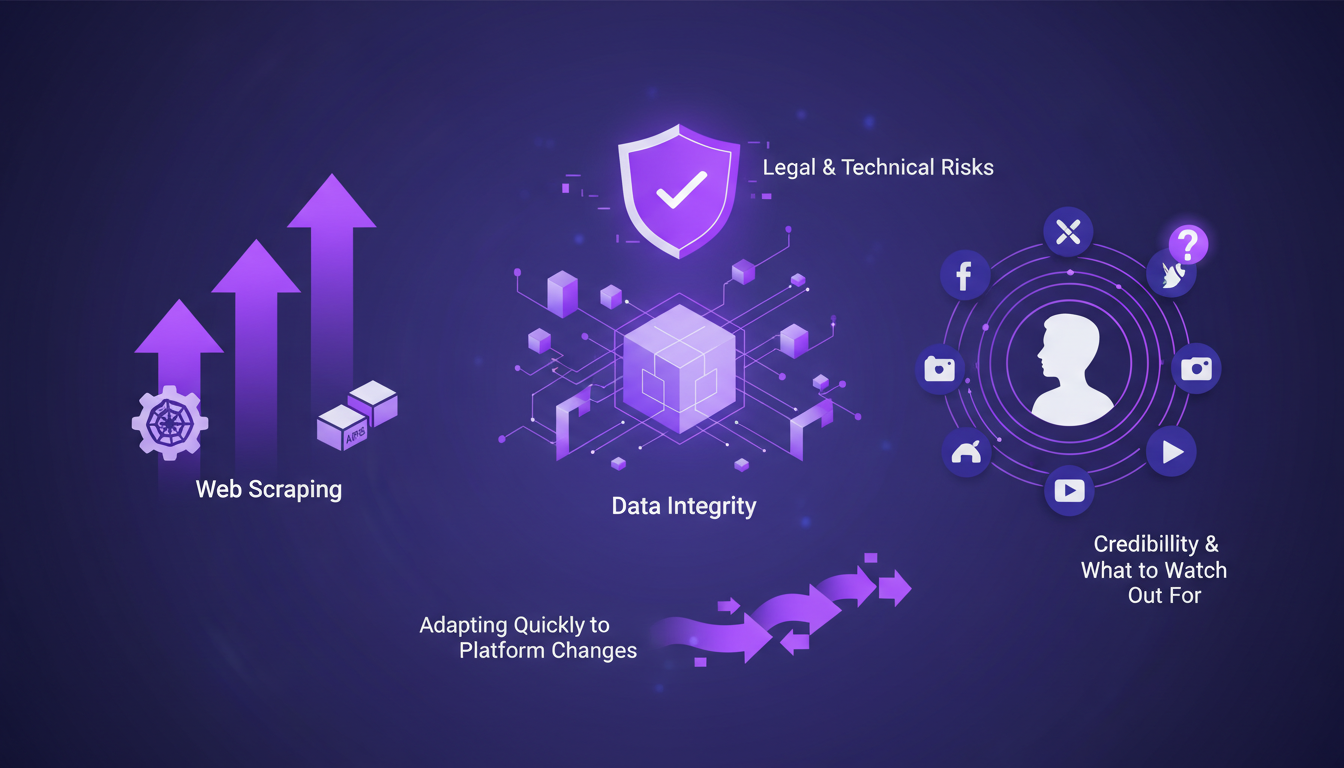
It's vital to strike a balance between data dependency and platform independence. Changes in API or scraping restrictions can throw your model off course. A tip: diversify your data sources as much as possible.
- Use web scraping and APIs cautiously.
- Adapt quickly to platform changes.
- Balance platform dependency and independence.
The Role of Virtual Assistants in Social Engagement
To optimize influencer interactions, I've implemented virtual assistants. These tools have automated repetitive tasks, significantly boosting efficiency. However, I always maintained human oversight to ensure authenticity and a personal touch in interactions.
Virtual assistants can't fully replace human intuition, especially in complex interactions. It's crucial to use them as a supplement, not a substitute.
- Implement virtual assistants to automate tasks.
- Maintain human oversight for authenticity.
- Don't replace human intuition with AI.
Scaling Globally: Language and LinkedIn Strategy
Global expansion hinges on content localization and leveraging LinkedIn's international network. Overcoming language barriers with AI translation tools is crucial for reaching a global audience. I focused my strategy on platform-specific approaches to maximize engagement.

But watch out, there are trade-offs between global reach and localized relevance. Focusing too much on the global aspect can dilute your message. That's where a well-balanced strategy is essential.
- Localize your content for global impact.
- Use AI translation tools to overcome language barriers.
- Balance your strategy between global reach and local relevance.
So here it is, building a successful influencer ranking SaaS that pulls in €120K/month isn’t just about tech—it's about market understanding and using AI for authenticity. First, I found that going 100% on Product-Led Growth (PLG) and marketing efforts is crucial, especially in the second phase. Next, the main challenge is authenticity—when you’re hitting a 6/100 authenticity score, your AI better be spotting those fake interactions efficiently. But watch out, social media platforms are always shifting, affecting influencer credibility. That's the real game changer: leveraging AI to navigate these complexities and deliver a product that's trustworthy.
For those looking to build your own SaaS or refine your influencer marketing strategy, start with authenticity and efficiency. Ready to swap insights? Check out the full video for deeper insights. See you out there!
Frequently Asked Questions

Thibault Le Balier
Co-fondateur & CTO
Coming from the tech startup ecosystem, Thibault has developed expertise in AI solution architecture that he now puts at the service of large companies (Atos, BNP Paribas, beta.gouv). He works on two axes: mastering AI deployments (local LLMs, MCP security) and optimizing inference costs (offloading, compression, token management).
Related Articles
Discover more articles on similar topics

Building a Successful SaaS with Twitter
I kicked off with a simple idea on Twitter and turned it into a $10K/month SaaS business. Building in public isn't just a catchphrase—it's a strategy that works. Let me show you how I orchestrated this transformation, from tools used to viral content tactics, overcoming challenges, and monetization strategies. If you've ever wondered how to leverage Twitter for building a thriving business, stay with me. I break it all down, step by step, including the importance of vulnerability and authenticity. Remember: never underestimate what the platform wants—that's the key to success.

Building a SaaS on Twitter: My Journey to $10K/Month
I started with a simple idea and a Twitter account. Fast forward, I'm pulling in $10K a month. How? By building a SaaS in public with SuperX. Every tweet, every mistake, every breakthrough was a lesson. Building on Twitter isn’t just about coding; it’s about crafting a community, being transparent, and having a smart strategy. I’m sharing my journey, the challenges I faced, and the tools that turned my vision into reality. This is a creation journey where authenticity and vulnerability are your best allies. Ready to find out how?
Launch Your SaaS Without Code Using Data Button
Ever been stuck paying for tools that promise the world but deliver little? I was there too, until I discovered how to launch a SaaS product without writing a single line of code, using Data Button and Firebase. First, I set up Firebase authentication for social logins. Then, I connected my app to Data Button, and it changed everything. Building your startup is about orchestration. Launch without breaking the bank, and let me show you how I turned this idea into reality.

Validate Your App Idea Using Viral Content
I remember the first time I thought I had a million-dollar app idea. I was ready to dive headfirst into development. But then, I discovered a smarter way: validating the idea with viral content. With Push School, I used this approach to hit $30K in monthly revenue without writing a single line of code. Let me walk you through how I orchestrated this, leveraging viral content and strategic distribution to ensure success. In this article, we'll explore how to validate an app idea, Push School's business model, and why distribution is crucial even before you think of an MVP.

How I Built an $800K App in One Year
I've been there—ten apps, ten failures. Then came Glow Up, which pulled in $800K in a year. I used TikTok, a robust tech stack, and sheer grit to turn things around. Let me take you through how I found the idea, kept costs low, and attracted 2 million users. This is real-world execution, not theory. Curious about those 90% profit margins and making $12.5K in a single day? Stick around, I'll break it all down.