Google's $40B Cloud Move: Impacts Unveiled
I never thought I'd see Google throw $40 billion at a cloud competitor. But here we are, and it's shaking up the tech landscape like never before. I'm diving into how this move, alongside advancements in AI and robotics, is reshaping the industry. We'll unpack Google's massive investment, explore the performance of cutting-edge AI models like Happy Horse and Grock 4.3, and examine the latest innovations in robotics. We'll also touch on tech giants' infrastructure investments and a new approach to AI collaboration.

I really didn't see it coming—Google dropping $40 billion into a direct cloud competitor. But that's the reality now, and it's seriously shaking up the tech landscape. I had to rethink my orchestration strategies after this news. In this article, I'll break down Google's massive investment and explore how cutting-edge AI models like Happy Horse, which is leading the pack by 115 points, are shifting the game. But let's not forget the limits: Mistral Médium 3.5 has licensing and performance issues. Then there are the robotic innovations by Kinetics AI and Meta's aggressive moves in that space. We also can't ignore the massive infrastructure investments by tech giants. Lastly, I'll delve into Recursive Mass, a new way of collaborating around AI. So get ready for an exciting dive into the future of cloud and AI.
Google's $40 Billion Bet: What's the Game Plan?
So, Google just dropped up to $40 billion into a major cloud player. That's not small change. I've seen massive investments, but this is a bold stroke. Strategically for Google, this is huge. Why? Because it completely repositions them in the cloud market. We know cloud is the future, and Google doesn't want to just follow; they want to lead. With a valuation of $350 billion and a potential to add $30 billion more, this cloud company is no small fry. This move could shake up cloud service pricing and ramp up competition.
"Google is investing $40 billion in a competitor itself."
And here's how it aligns with their long-term strategy. It's a clear sign of wanting to become indispensable, much like when Amazon started diversifying its services. Optimizing AI Models: Our Practical Approach might be worth a read to understand this dynamic. But watch out, this ambition comes with a price, and it's never without risk. For users, this could mean more affordable services but also increased pressure on smaller market players.
AI Models: Performance, Pricing, and Pitfalls
When I talk about AI, Happy Horse often comes to mind, boasting an Intelligence Index score of 115. Impressive, right? Except that in reality, it doesn't hold up. It's like having a sports car that stalls. On the other hand, Grock 4.3 is great for legal reasoning and corporate finance, with an API price of $1.25 per million tokens. Cheap, but beware of its average performance with an Intelligence Index score of 53.
And for Mistral Médium 3.5, it's another story. They've merged three models, but between performance issues and licensing challenges (switching to a modified MIT license), it makes you wonder if it's worth it.
- Happy Horse: Strong in benchmarks, weak in practice
- Grock 4.3: Cheap, but limited intelligence
- Mistral Médium 3.5: Licensing and performance in question
Choosing the right model is a balance between performance and cost. I've often found myself going back to simpler, cheaper solutions that get the job done without the hassle. For more details, see how AI models are evolving.
Robotics Innovations: Kinetics AI and Meta's Moves
In robotics, Kinetics AI is making waves. I've seen their humanoid robot, Kai, and it's quite a piece of work! With 115 degrees of freedom and a synthetic skin covered with 18,000 sensors, it's a game-changer. And then Meta's jumping into acquisitions, which is going to shake up the market.
The Chinese robot with its sensors is really futuristic. Imagine the precision of movements they can achieve. But beware, more sensors also mean more complexity. Maintenance and optimization can be nightmares if not handled right.
- Kinetics AI with 115 degrees of freedom
- Meta and its acquisition strategy
- Chinese robot with 18,000 sensors
These advances clearly show that robotics isn't just a gadget but a real industrial revolution. For a broader view, the socio-economic impact of AI is worth exploring.
Infrastructure Investments: The Tech Giants' Race
I've seen infrastructure investments skyrocket. Google and Amazon have committed around $65 billion to the industry. It's huge. TPUs (Tensor Processing Units) are at the heart of these investments. They enable incredible advances in AI and robotics.
But again, there are trade-offs. Increasing capacity is great, but it also means higher management costs and increased risks of failure. I've often seen infrastructures collapse under their own weight due to inadequate maintenance.
- $65 billion invested by Google and Amazon
- TPUs at the core of advancements
- Management challenges and increased risks
The future is promising, but you need to balance innovation with risk management. For more on infrastructure, Gemma 4 is a great starting point.
Recursive Mass: Rethinking AI Collaboration
Finally, let's talk about Recursive Mass. This concept is a game-changer in AI collaboration. Unlike traditional approaches, it allows for continuous, dynamic interaction between models. This is big.
But watch out, it has its limits. Implementation complexity is a real challenge. I've seen teams struggle to orchestrate everything correctly. The benefits are there, but you have to navigate between innovation and complexity.
- Dynamic AI collaboration with Recursive Mass
- Increased complexity in implementation
- Huge potential, but with challenges
For those looking to go further, Ralph Loops is a good example of how to simplify things.
So, Google drops $40 billion on its biggest cloud competitor, and it's not just a financial move. First off, this maneuver clearly signals where they want to steer the industry: more AI, more robotics. Then, AI models like Happy Horse, crushing Sébox 2.0 by a margin of 115 points, show us that text-to-video is evolving. But watch out, it's not all smooth sailing – licensing issues with Mistral Médium 3.5 are a case in point. Finally, on the robotics front, there's the Chinese robot with its 18,000 sensors, redefining machine sensitivity.
Watching these advancements also means understanding their limits. Strategic orchestration, efficiency, and cost remain crucial. What's next? Well, stay tuned, because these changes are just beginning. I strongly recommend checking out the original video for a deeper dive into this tech journey: YouTube.
Frequently Asked Questions

Thibault Le Balier
Co-fondateur & CTO
Coming from the tech startup ecosystem, Thibault has developed expertise in AI solution architecture that he now puts at the service of large companies (Atos, BNP Paribas, beta.gouv). He works on two axes: mastering AI deployments (local LLMs, MCP security) and optimizing inference costs (offloading, compression, token management).
Related Articles
Discover more articles on similar topics
Evolving AI Models: Limits and Opportunities
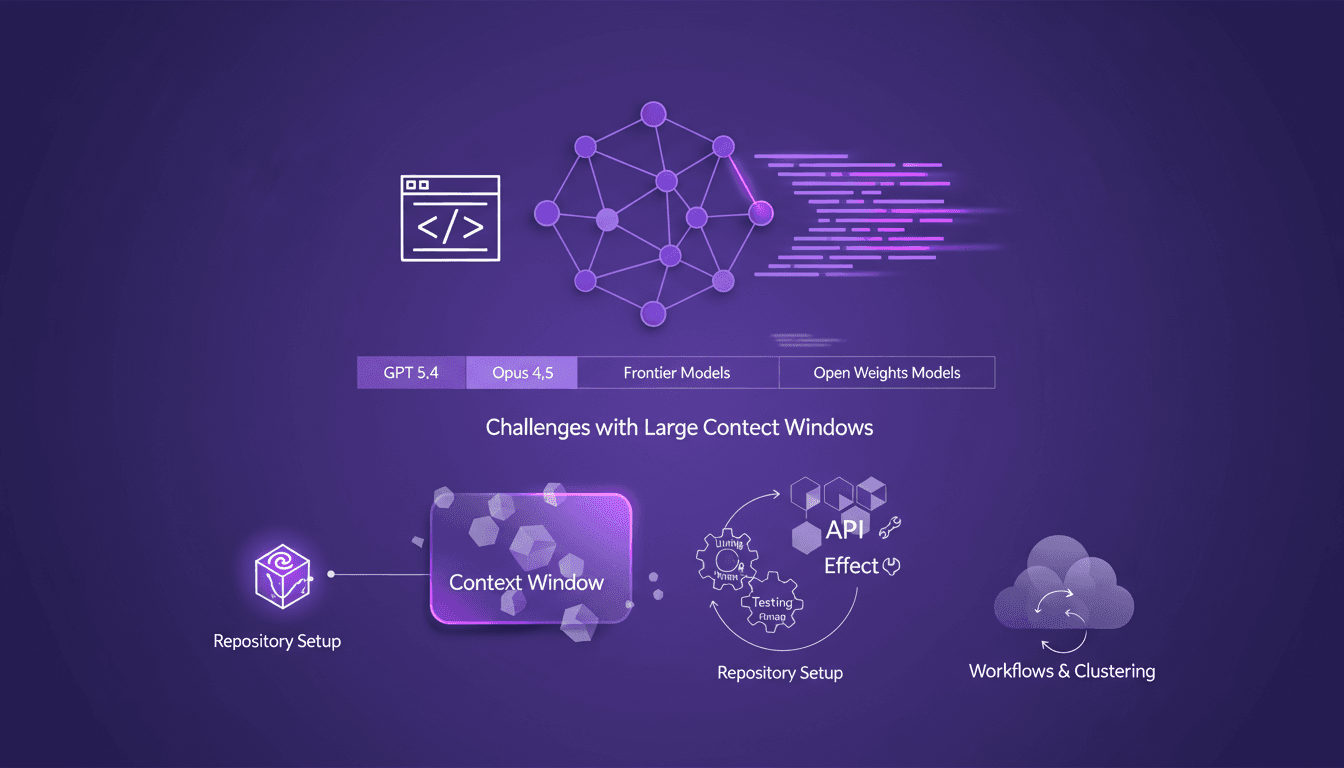
I still remember setting up my first repository for AI-driven code generation. It was a game changer, but also a minefield of potential pitfalls. In this talk, I'm diving into how AI models like GPT 5.4 and Opus 4.5 are reshaping our workflows and where they still stumble. Shifting from hand-coding to automated code generation is what I live daily in the field. But watch out—large context windows can be a real headache. Your repository setup is critical to avoid pitfalls, and I'll share how I use Effect and other tools for efficient API development. Buckle up, because understanding these models and their limitations is crucial for anyone navigating AI-assisted development.
Optimizing AI Models: Our Practical Approach
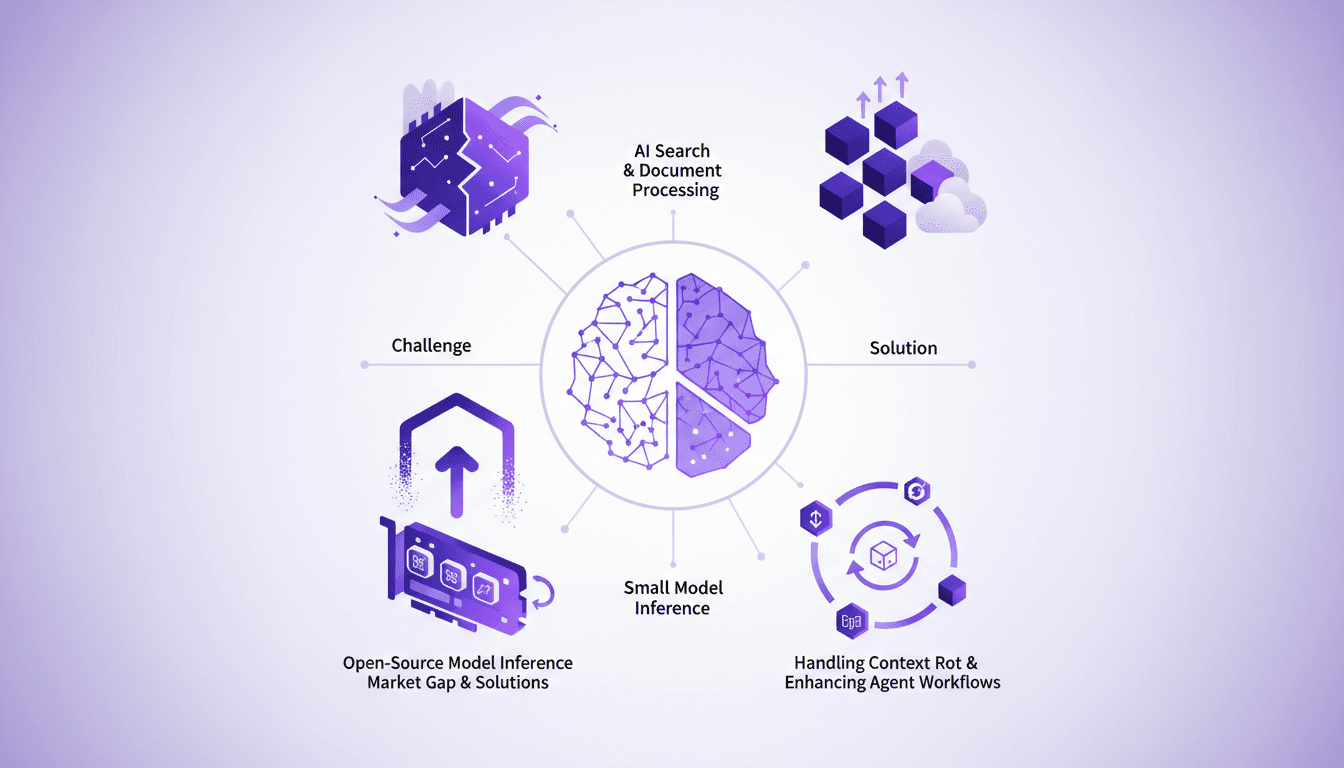
I saw a gap in the market for small model inference, so I decided to build the infrastructure myself. With over 3 million models on Hugging Face, the lack of effective infrastructure was glaring. Why is this important? Because small models play a crucial role in AI search and document processing. And the challenges? There were plenty, but I tackled them head-on. From context rot to optimizing agent workflows, each step was a learning curve. I orchestrated model swapping for efficient GPU usage while supporting various open-source architectures. In short, we filled a market gap with a robust, scalable solution.
Gemma 4: Transforming Edge AI Deployment
I dove into deploying AI on edge devices with Gemma 4, and let me tell you, it's a game changer. But there are nuances you need to know to make it work seamlessly. Gemma 4 brings new capabilities for processing data locally, reducing latency and bandwidth usage. I set up the Light RT deployment framework, and the performance boost with NPU acceleration is impressive. But don't get too excited just yet — cross-platform integration requires some tweaks. Community support and open-source contributions are key assets. Want to maximize these benefits? I'm sharing what I've learned from the field.
Ralph Loops: Building Simple, Effective AI
I remember the first time I built a Ralph Loop. It was like finding a missing puzzle piece in AI-driven development. Not just theory, but a real workflow that changed how I orchestrate tasks. These loops streamline automation using AI models like GPT 5.8, offering a practical, no-nonsense approach. Imagine orchestrating tasks seamlessly while addressing the challenges and benefits of using AI in software development. In this article, I'll take you through Ralph Loops, their practical applications, and how they can truly transform your workflow. Let's dive into the limits, security and ethical considerations, and scaling these processes in team environments. Yes, the future of AI in automating complex workflows is already here. Ready to dive in?
AI's Socio-Economic Impact: What You Need to Know
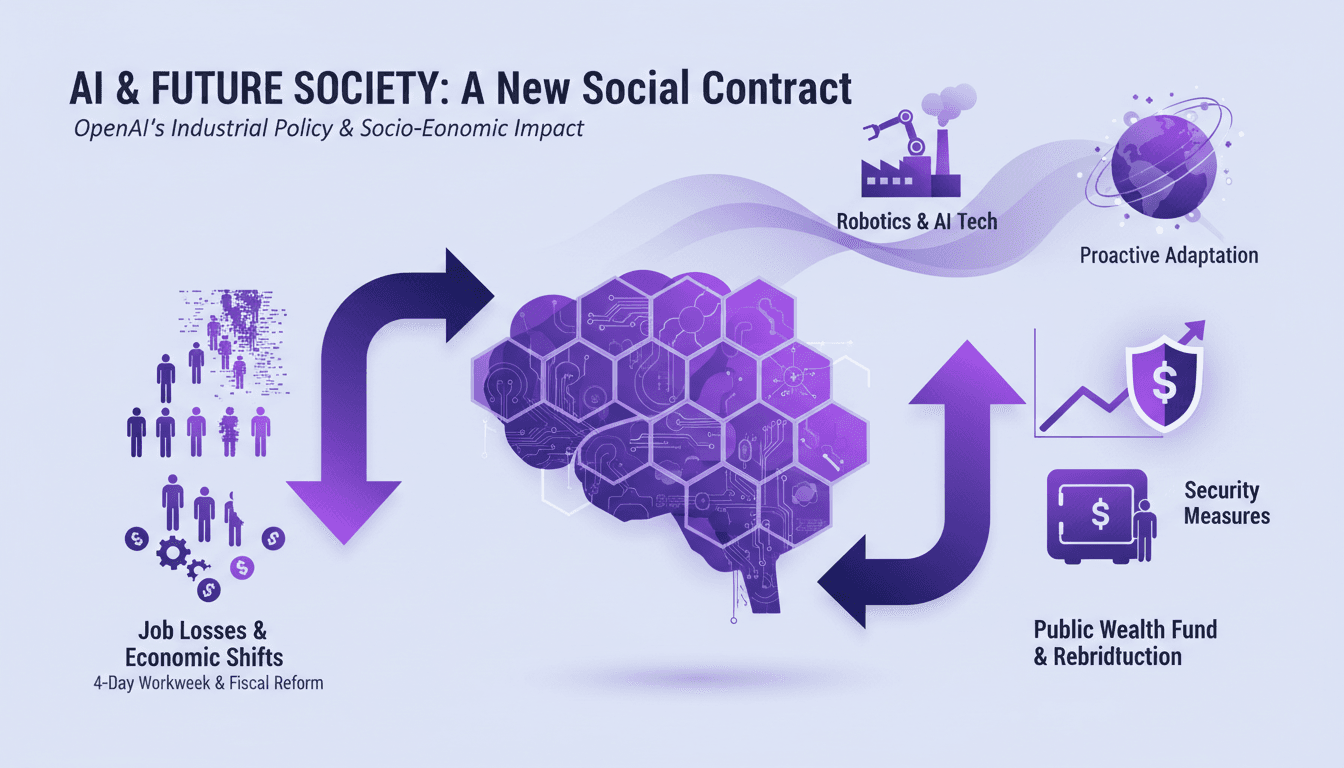
I've been in the trenches with AI, watching it reshape industries and redefine jobs. This isn't just theory—it's happening now. Let's dive into AI's socio-economic impact, especially LAGI. We're talking job losses, new workweek proposals, and even a public wealth fund to redistribute AI gains. If you're not adapting, you're already behind. Time is ticking—not in decades, but months before these changes become our reality. How do we gear up for this economic shift? We'll explore OpenAI's industrial policies and security measures for advanced models, alongside breakthroughs in robotics. Get ready for a candid discussion about the challenges and opportunities this tech brings.