Speed Up Foster Licensing with Binti and Claude
I've been in social work for over a decade, and let me tell you, the paperwork is relentless. But when I integrated Binti with Claude, everything changed. Suddenly, what used to take months now takes weeks. With over 400,000 children in foster care in the US, every second counts. Binti, paired with Claude, slashes approval times and enhances our engagement with families. Imagine what this could do for government agencies. But watch out, don't underestimate the importance of security and trust in data handling by Anthropic.
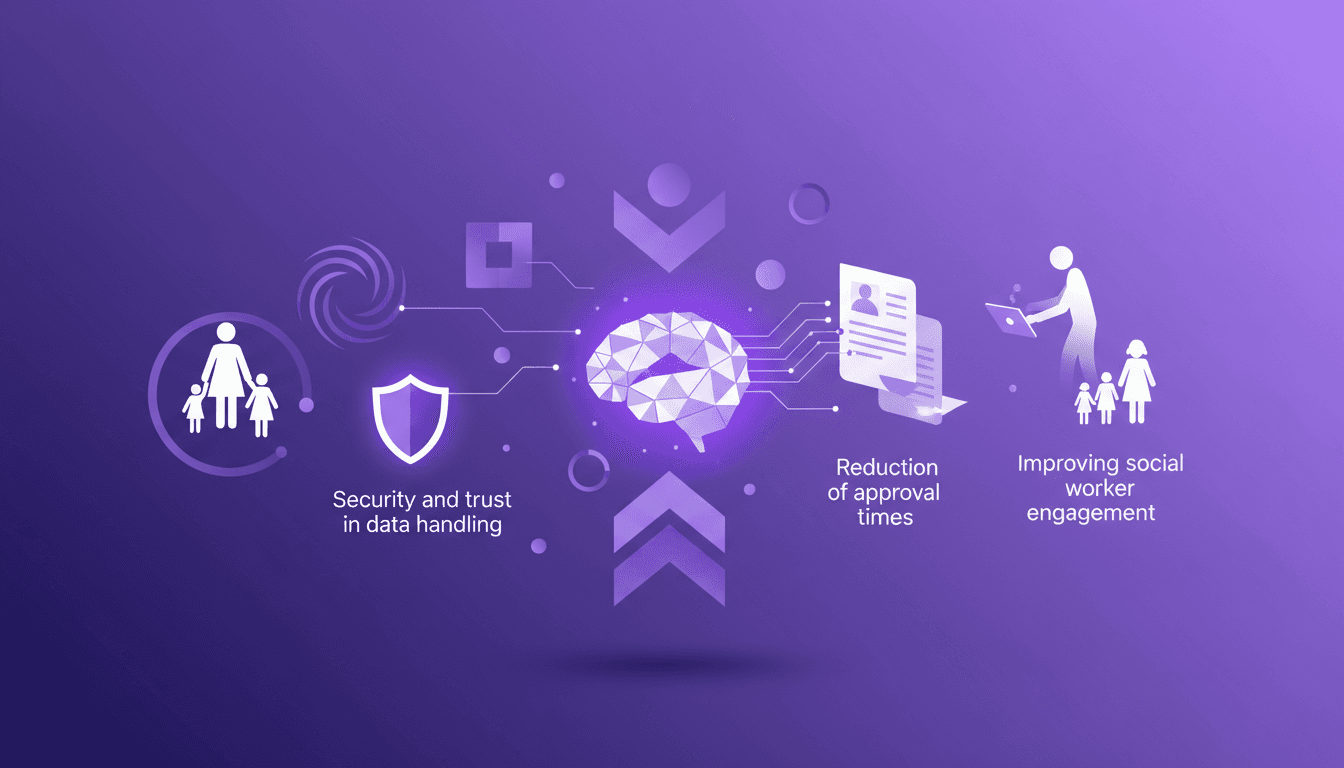
I've been in social work for eleven years, and let me tell you, the paperwork is a marathon. Approval times for foster families can stretch up to 300 days. But once I connected Binti with Claude, I saw a world of difference. The cumbersome processes that took months now take weeks. With 400,000 children in foster care in the US, we can't afford to waste time. The integration of Binti and Claude is like having a turbo in your engine. It slashes approval times and lets us engage with families more effectively. And for those wondering if this technology could transform government agencies, I say yes! But watch out, we can't overlook the importance of security and trust in data handling by Anthropic. It's a delicate balance to master.
Streamlining the Licensing Process with Binti
In the realm of social work, the licensing process for foster families often translates into endless paperwork. I've experienced it firsthand: hours spent on forms rather than with families. With 400,000 children in foster care across the U.S., finding a way to reduce these administrative tasks was crucial. Enter Binti, a tool that simplifies and automates these repetitive tasks.
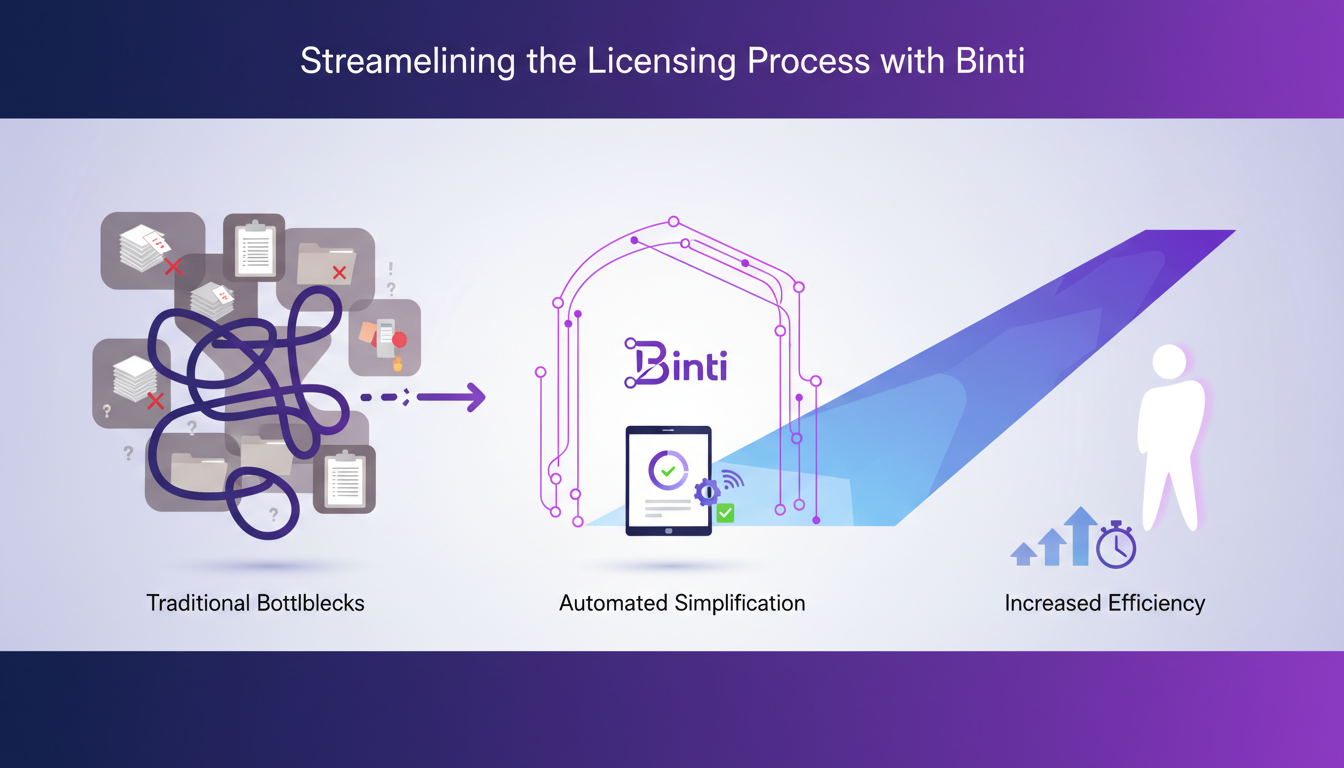
Binti significantly reduces the paperwork, allowing social workers to cut down the time spent from weeks to just hours for certain tasks. For instance, a meeting that once took weeks to document can now be processed in just hours thanks to digitization and automation.
- Reduced paperwork: Administrative tasks are cut in half.
- Increased efficiency: More time to engage with families.
- Time savings: Processing time goes from weeks to hours.
Ultimately, this allows social workers to dedicate more time to direct engagement with families, which is the heart of our work. But watch out, it's not a magic bullet: technology needs to be properly orchestrated to avoid data entry or processing errors.
Integrating Claude: A Game Changer
Why Claude? Because it's an AI tool designed to reduce the administrative burden while ensuring data security. For us, integrating Claude with Binti was a strategic choice based on trust and efficiency.
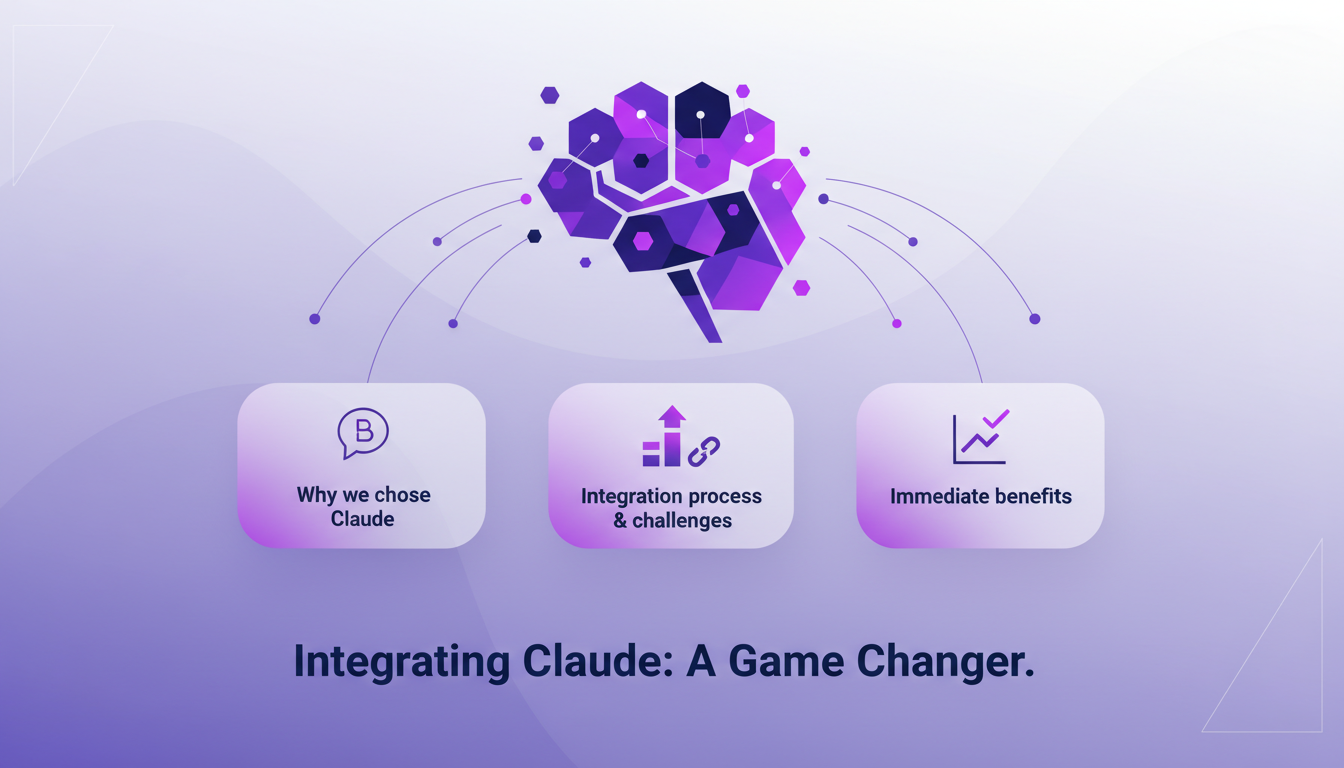
The integration process wasn't without its challenges. Initially, we had to ensure that data was properly transferred and secured. But once in place, the benefits were immediate: significant reduction in manual tasks and valuable time savings for social workers.
The efficiency gains are undeniable, but it's crucial not to lose sight of the need for a human touch. AI should be a tool, not an end in itself. That said, for us, Claude has been a game changer, enabling us to focus our efforts where they truly matter: with the families.
Reduction of Approval Times: A Real Impact
The numbers speak for themselves: approval times have dropped from about 300 days to under 100 days. This is a monumental change that has allowed many families to become foster homes much more quickly.
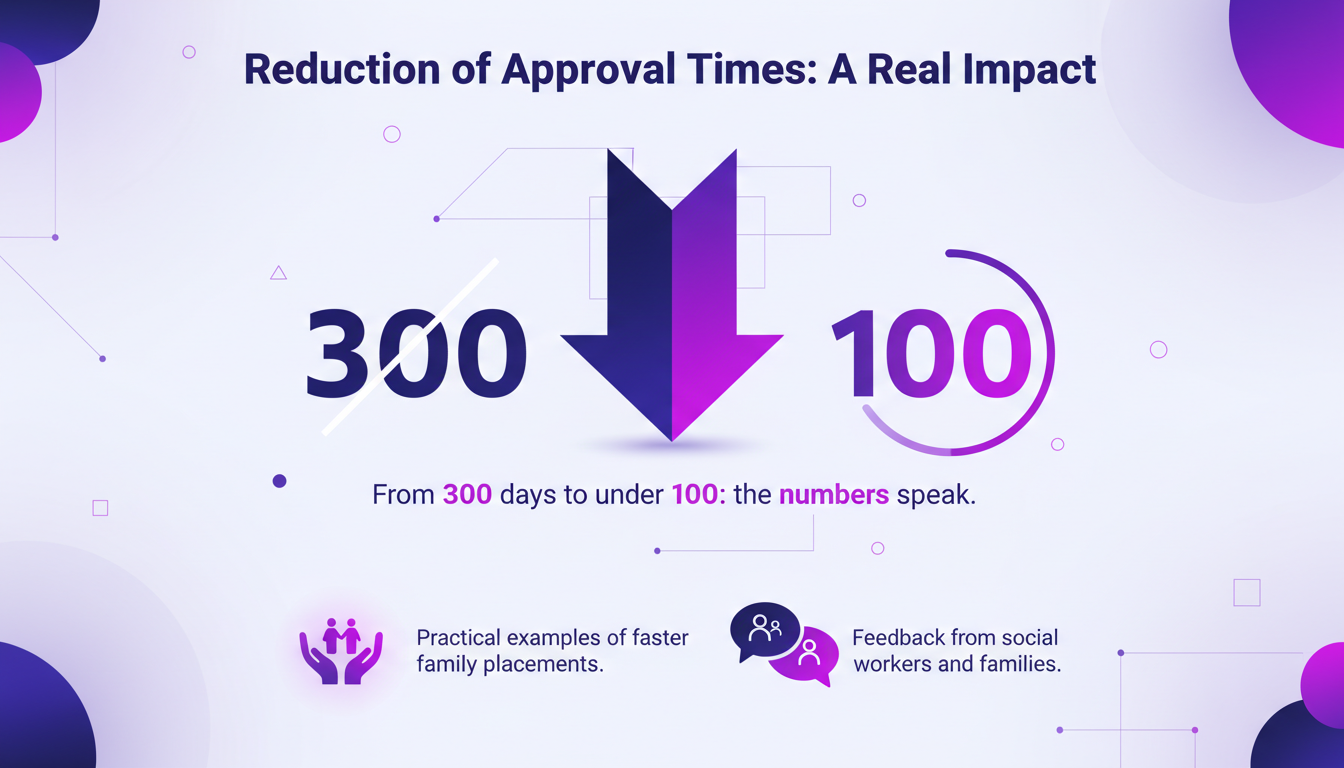
Feedback from social workers and families has been positive. Families feel supported, and the process is perceived as much smoother. This not only accelerates child placements but also improves the quality of support provided.
- Reduced timelines: From 300 to under 100 days.
- Faster placements: Families can welcome children sooner.
- Improved support: More time for quality interactions.
This model is indeed scalable, with the potential to extend these improvements to other states. But watch out, each deployment must comply with local regulations and the specific needs of each region.
Security and Trust in Data Handling
Data security is paramount, especially in the public sector. This is where Anthropic plays a key role. Their commitment to security and transparency is one of the reasons we chose to integrate Claude with Binti.
Building trust in AI applications is crucial, and it starts with rigorous data management. Government agencies need assurance that their data is handled safely and ethically.
- Trust: Data is managed responsibly.
- Security: Rigorous measures to protect sensitive information.
- Transparency: Commitment to ethical data management.
In the long term, this paves the way for broader AI adoption in the social sector, ensuring that innovation does not come at the expense of security or trust.
Expanding Claude's Potential in Government Agencies
Beyond the integration with Binti, Claude offers immense potential for other applications within government agencies. The lessons learned from this implementation can be applied to other departments to boost efficiency.
The efficiency gains in other departments could be just as significant, if not more. For instance, in public health or education departments, where administrative tasks are also burdensome.
Learning from past mistakes is essential to optimizing these future integrations. For example, having a well-orchestrated pilot phase is crucial to identify potential challenges before a full-scale deployment.
- Increased efficiency: Potential time and resource savings.
- Lessons learned: Importance of a pilot deployment.
- Opportunities: Applications in other departments.
Ultimately, the key is to ensure that each implementation is tailored to the specific needs and constraints of each department, while adhering to security standards and ethical expectations.
Integrating Binti with Claude has been a real game changer for streamlining the foster licensing process. I've personally seen approval times drop from around 300 days to a fraction of that, which is massive for families and social workers alike. But beware, it's not all smooth sailing—setting this up requires effort, and data management is crucial.
- Significant reduction in approval times, a huge time saver for us.
- Smoother, more interactive engagement with families thanks to Claude.
- Less paperwork, allowing us to focus more on the human side.
The potential of tools like Claude to transform social work is huge. But, as always, weigh the pros and cons carefully. If you're in social work or a government agency, think about how these technologies could optimize your workflows.
For a deeper dive, I highly recommend watching the full video. The insights are really relevant for anyone looking to improve their practices: Video link.
Frequently Asked Questions

Thibault Le Balier
Co-fondateur & CTO
Coming from the tech startup ecosystem, Thibault has developed expertise in AI solution architecture that he now puts at the service of large companies (Atos, BNP Paribas, beta.gouv). He works on two axes: mastering AI deployments (local LLMs, MCP security) and optimizing inference costs (offloading, compression, token management).
Related Articles
Discover more articles on similar topics
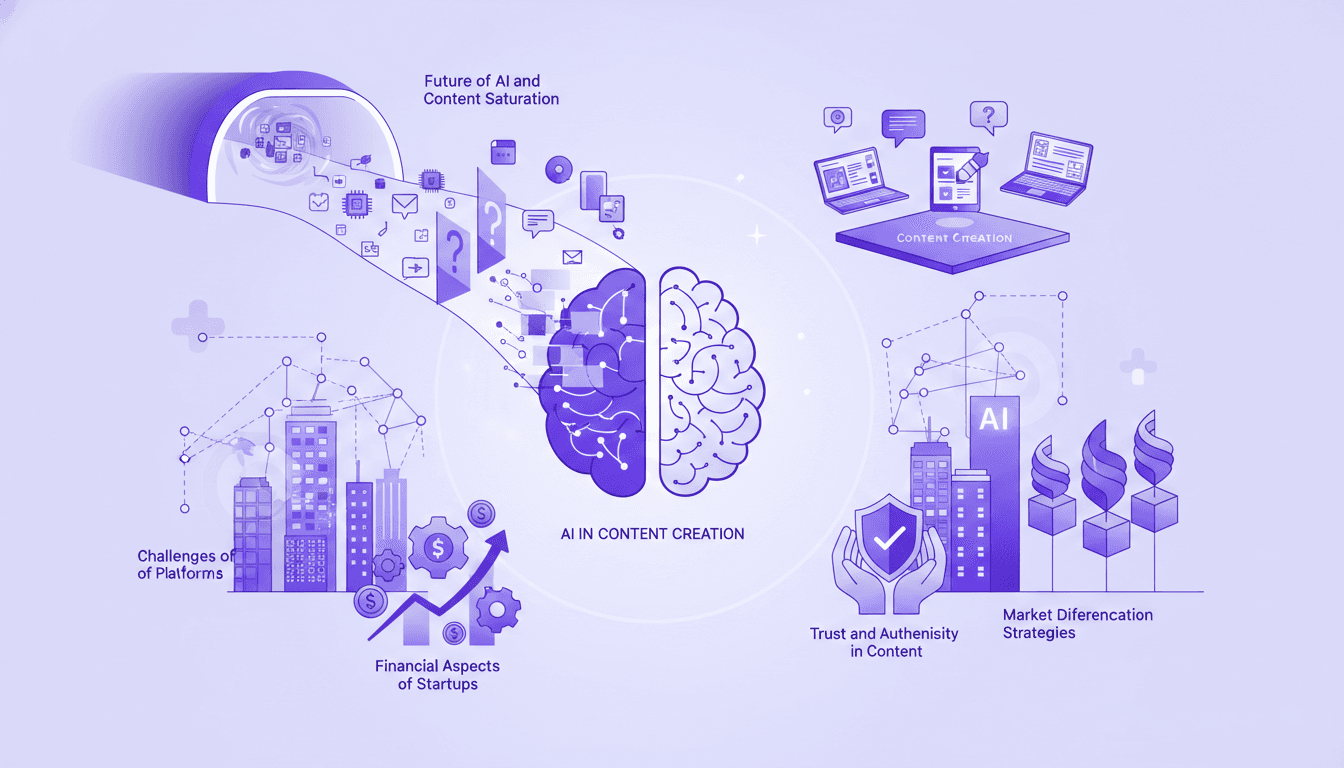
AI Revolution: Creating 100x More Content
I remember the exact moment I realized AI was about to disrupt content creation. It wasn't just about automation; it was about scaling our creativity to unimaginable heights. I connect my AI tools with the immediate impact in mind: creating 100x more content is a game-changer. But watch out, integrating AI into our business models raises challenges: understanding your audience, maintaining trust and authenticity... It's not as simple as hitting a button. In this article, I break down how I integrated AI into my workflow, the mistakes I made, and how I overcame the hurdles. It's a journey between innovation and the reality on the ground.

AI in Software Engineering: Revolution or Evolution?
I've been in the trenches of software engineering long enough to know AI isn't replacing us, but it's definitely reshaping our landscape. I've plugged AI-powered low-code platforms into legacy systems, and trust me, it's a game changer. We're talking redefined workflows, the essential blend of high-code and low-code, and what this means for us engineers. If you're still running 60-year-old COBOL apps, it's time to wake up! AI isn't just theory; it's what I'm doing every day to meet evolving demands. And while automation takes over 98% of the time, knowing when and how to intervene is critical. Let's discuss how these changes affect our roles and how to stay at the cutting edge.
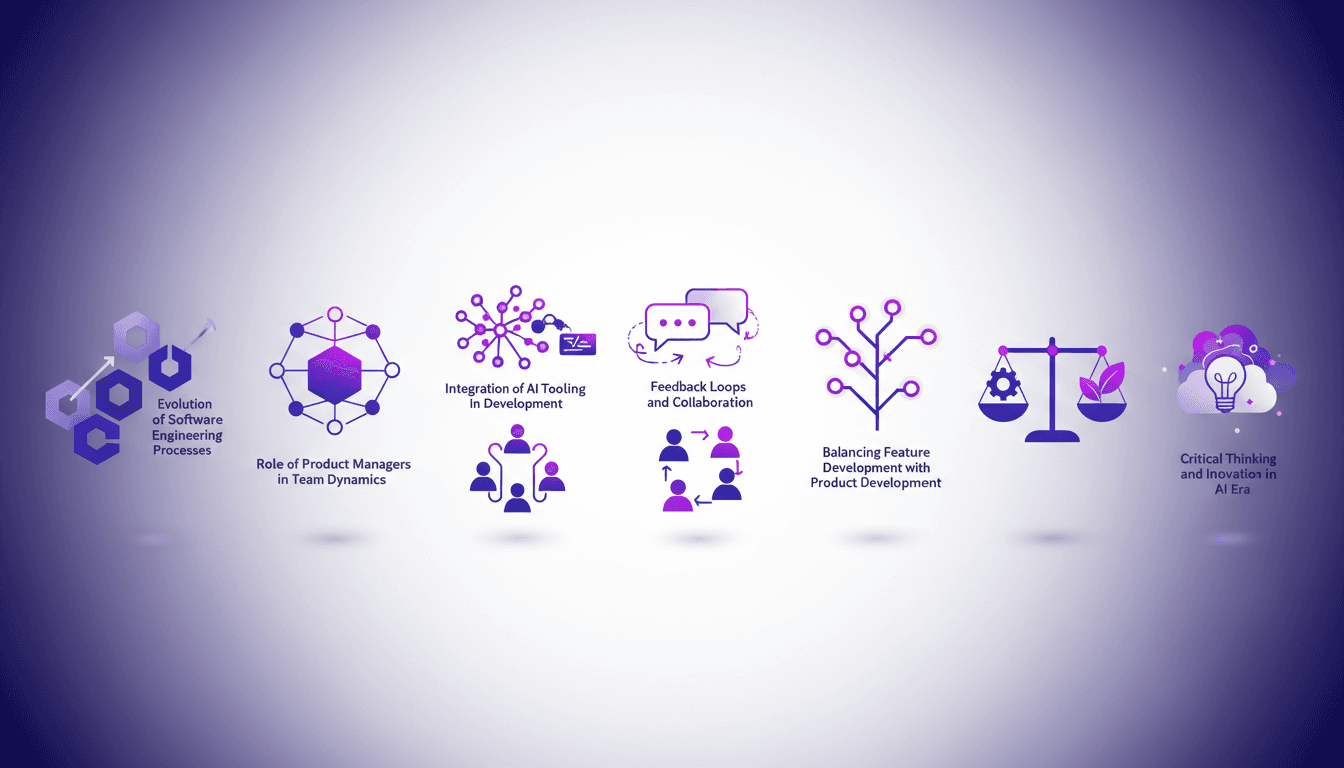
Merging Product and Engineering: Reinventing Processes
I was skeptical at first. Going from six engineers to just two seemed like a recipe for disaster. But merging product and engineering not only worked but thrived. In today's fast-paced tech environment, efficiency isn't just a buzzword—it's a necessity. By integrating roles and leveraging AI, we've redefined our workflow. This has transformed team dynamics, strengthening feedback loops and collaboration. Now, with one frontend and one backend engineer, we balance developing new features with maintenance. We experiment, adapt, and innovate. But watch out, the risk is moving too fast and losing sight of key objectives. When it works, the impact is tangible.
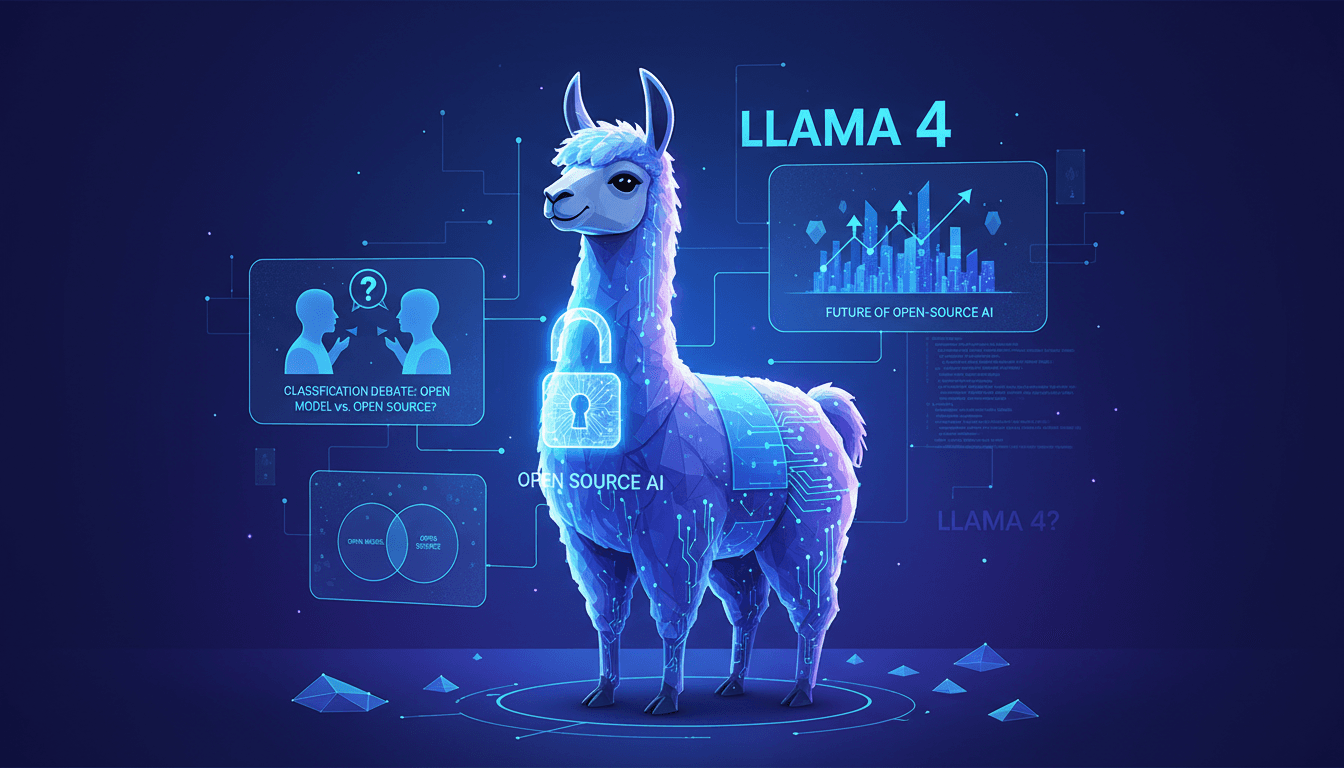
Llama 4 Deployment and Open Source Challenges
I dove headfirst into the world of AI with Llama 4, eager to harness its power while navigating the sometimes murky waters of open source. So, after four intensive days, what did I learn? First, Llama 4 is making waves in AI development, but its classification sparks heated debates. Is it truly open-source, or are we playing with semantics? I connected the dots between Llama 4 and the concept of open-source AI, exploring how these worlds intersect and sometimes clash. As a practitioner, I take you into the trenches of this tech revolution, where every line of code matters, and every technical choice has its consequences. It's time to demystify the terminology: open model versus open-source. But watch out, there are limits not to cross, and mistakes to avoid. Let's dive in!
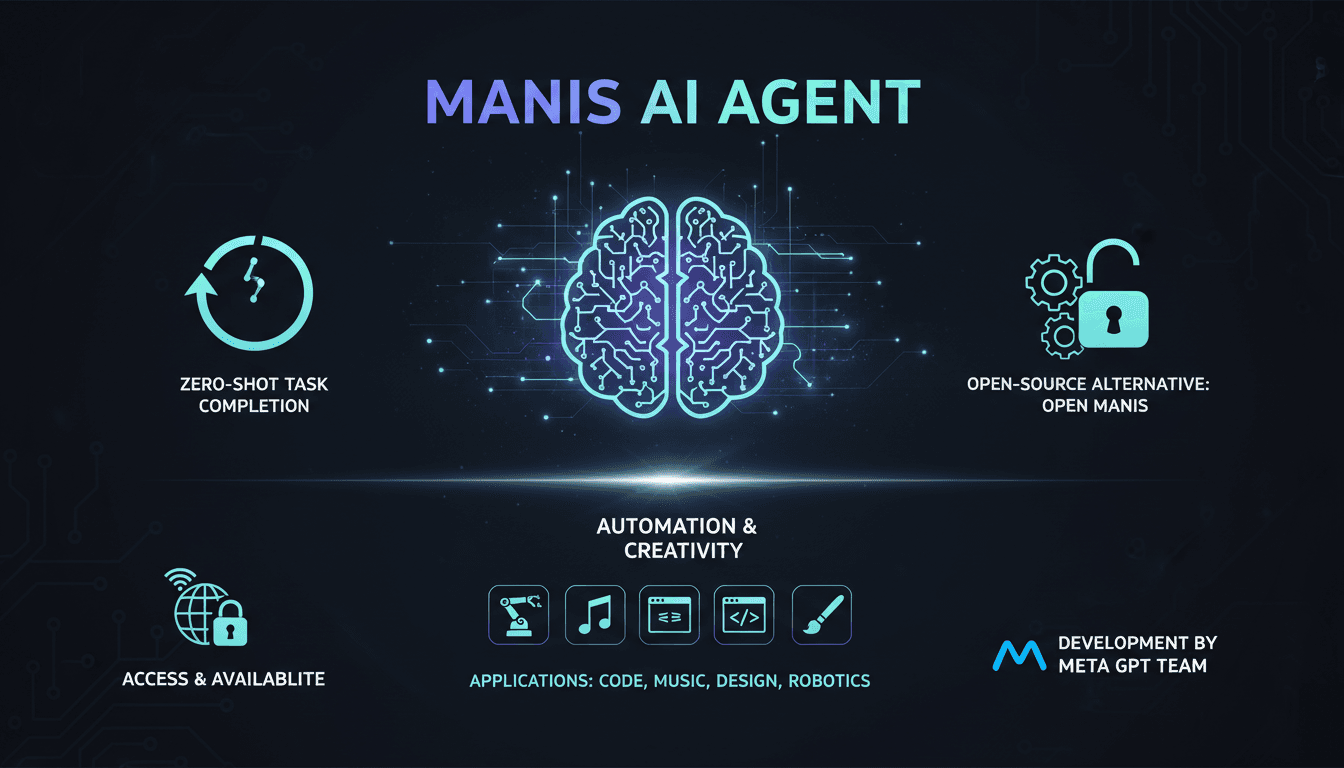
Manus AI: Reinventing Automation and Creativity
I dove into Manus AI, expecting just another tool, but it turned my workflow upside down. From coding games to planning trips, this AI agent is a real game changer. Developed by Meta GPT, it offers zero-shot task completion that cuts through the hype. I'm here to show you how I've integrated it into my daily projects. But watch out, you need to know its limits and orchestrate it effectively. And then there's Open Manis, the open-source alternative, which has already garnered 8,000 stars on its repo. Ready to discover what Manus can really do?