Designing Systems for Survivability: A Practical Guide
With over 30 years in software engineering, let me tell you, systems that last aren't built on the latest buzzwords. It's about tackling real-world challenges. Picture handling knowledge retention in legacy systems while transitioning from technical roles to management. I'll walk you through my approach, drawing on decades of experience. In our rapidly evolving software world, survivability and adaptability are crucial, yet often lost in practice. Let's dive into designing systems that thrive, even amid inevitable tech shifts and team dynamics.
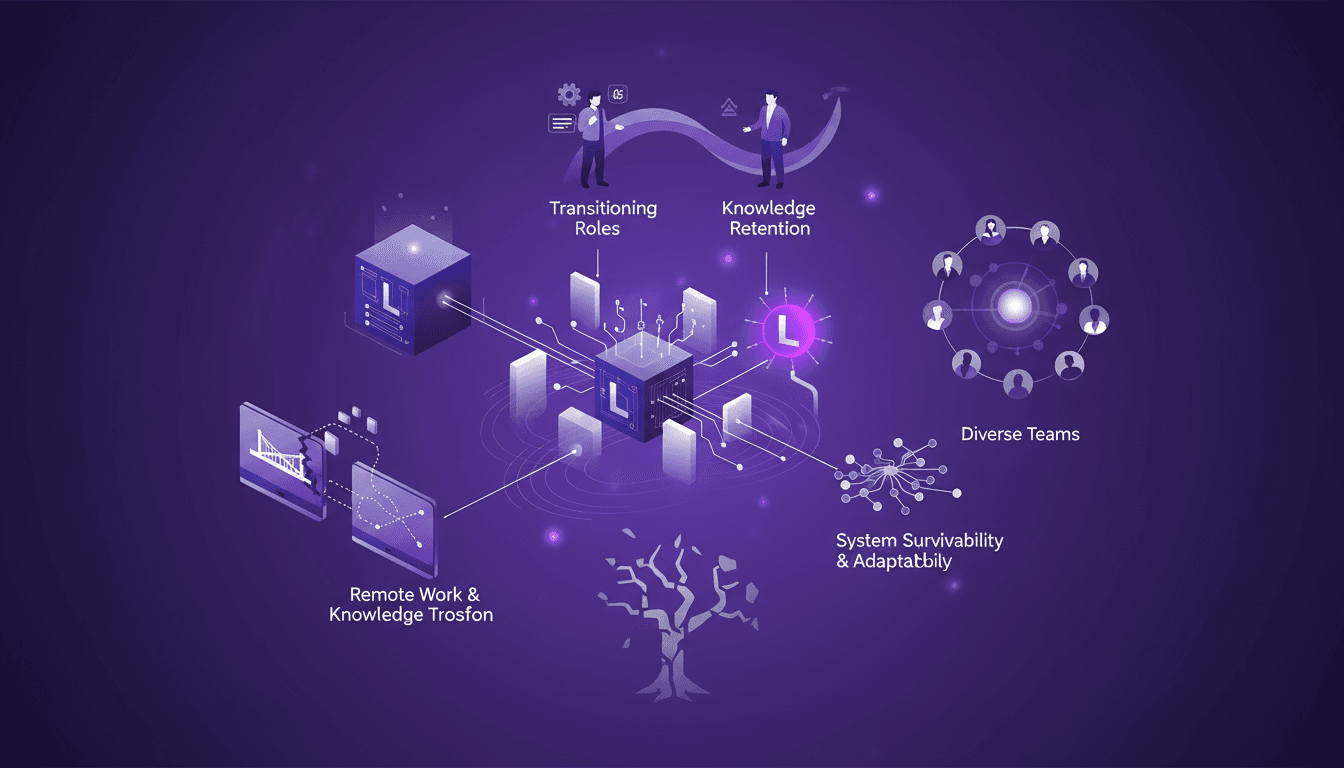
I've spent over 30 years building software, and if there's one thing I've learned, it's that designing systems that last isn't about the latest tech buzzwords. It's about confronting real-world challenges. Picture this: knowledge retention in legacy systems, the shift from technical roles to management. These are the real issues at play. Let me walk you through how I tackle these, drawing from decades of experience. In the ever-evolving software world, survivability and adaptability are key. Yet, too often, these concepts get lost in translation when moving from theory to practice. Let's explore how to design systems that not only survive but thrive, even amidst inevitable changes in technology and team dynamics. And by the way, the current state of eugenic tools isn't doing much for knowledge retention. Let's dive into the details.
Problem-Solving in Software Engineering
When tackling software engineering problems, breaking down complex issues into manageable parts is essential. I've often seen teams get bogged down by trying to solve everything at once. First, I focus on a core aspect of the problem (usually the most challenging) and address it head-on. Then, I integrate the solutions into a cohesive whole. It's like piecing together a puzzle, one piece at a time.
Feedback loops are crucial for refining our solutions. I've learned, often the hard way, that iteration is key. You test, learn, and adjust. But watch out for over-engineering. Sometimes, a simple solution is all that's needed. Take the example of three seniors who solved a complex issue in three weeks by focusing on core problems. Their secret? Not getting sidetracked by superfluous details.
“In software engineering, the real challenge is knowing when to stop.”
- Break down complex problems.
- Use feedback loops to improve.
- Avoid over-engineering; focus on essentials.
- Learn from past mistakes.
Navigating Legacy Systems and Knowledge Retention
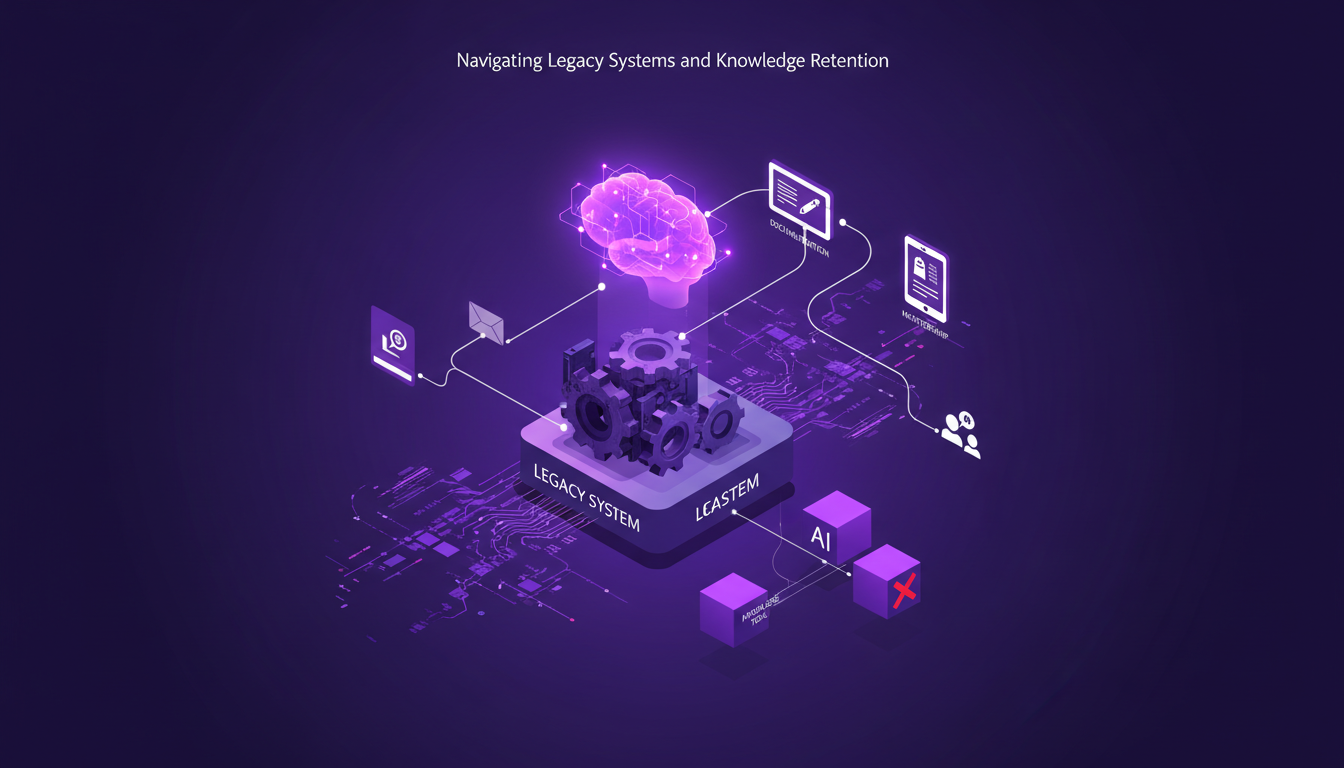
Legacy systems often form the backbone of a company, but they come with their baggage. I recall a project where the entire original team was no longer present. That system had become a nightmare to manage. To avoid this, capturing tacit knowledge through documentation and mentorship is vital. Otherwise, you risk losing 100% of that knowledge when experts leave.
An effective strategy I've found is documenting each critical step and encouraging knowledge sharing between senior and junior team members. However, beware of eugenic tools that can sometimes hinder knowledge retention. They promise the world but can be counterproductive if not used wisely.
- Document and share tacit knowledge.
- Avoid relying solely on eugenic tools.
- Ensure a smooth transition from legacy systems.
- Prevent knowledge loss during retirements.
Transitioning Between Technical and Management Roles
Transitioning from a technical role to a management role requires understanding the different skill sets needed. I've seen colleagues fail because they couldn't balance their technical expertise with their new leadership responsibilities. To succeed, it's crucial to maintain technical credibility while developing management skills.
Common pitfalls include losing touch with technological advancements and poor communication with the team. My advice? Regularly involve yourself in technical projects to stay connected and use these experiences to improve your leadership.
- Understand the skills needed for each role.
- Balance technical expertise with leadership.
- Avoid losing touch with technology.
- Communicate effectively with your team.
Importance of Diverse Teams in Software Development
Diverse teams bring varied perspectives that enhance problem-solving. I've personally observed that projects led by culturally and gender-diverse teams often result in more innovative solutions. But watch out for groupthink, which can stifle creativity.
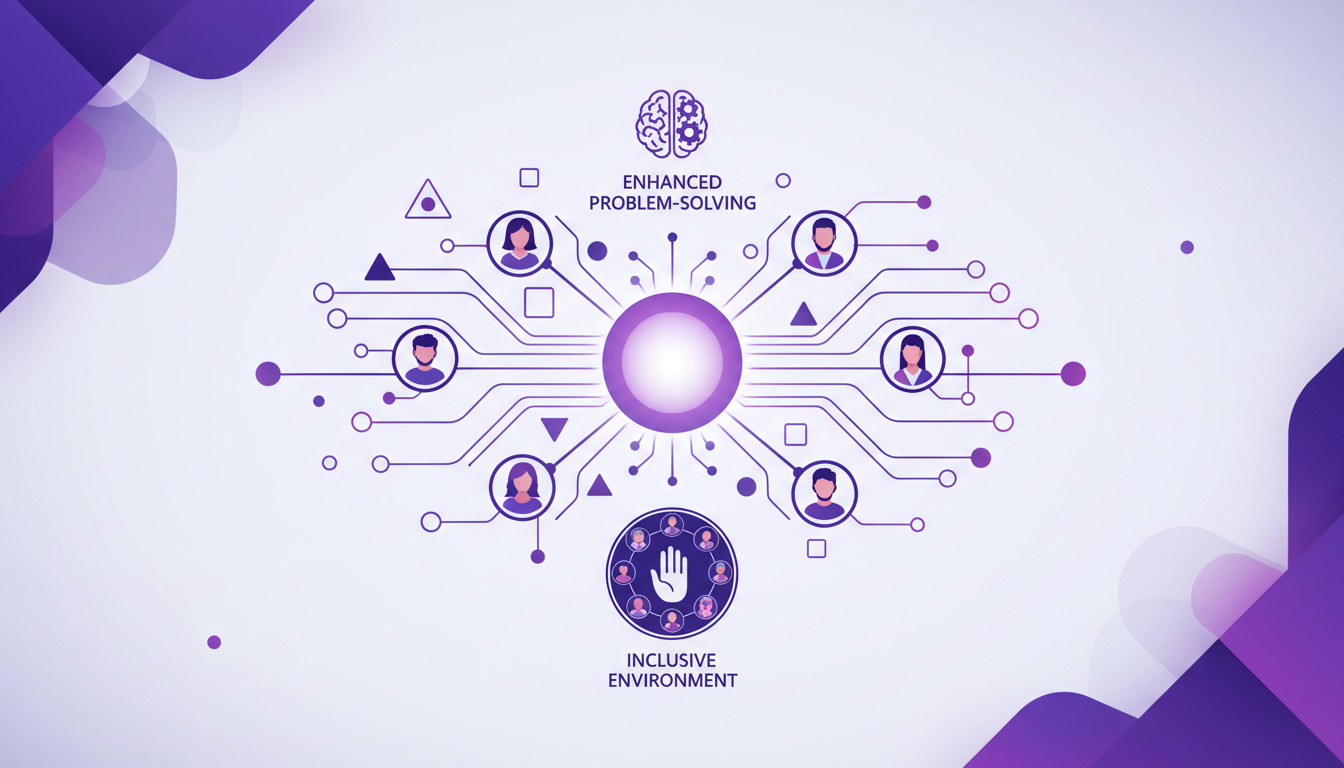
Promoting an inclusive environment is crucial to fully harness the team's potential. For instance, a recent project led by a diverse team showed a 30% increase in creativity and efficiency. This proves that diversity is not just a buzzword but a winning strategy.
- Bring varied perspectives to enhance problem-solving.
- Create an inclusive environment to maximize team potential.
- Avoid groupthink; encourage open dialogue.
Designing Systems for Survivability and Adaptability
Designing systems that can survive and adapt is a constant challenge. It is essential to focus on adaptability to future-proof systems. I use generative modeling to simulate various scenarios, allowing for testing a system's robustness against future uncertainties. However, it's crucial to find a balance between robustness and flexibility.
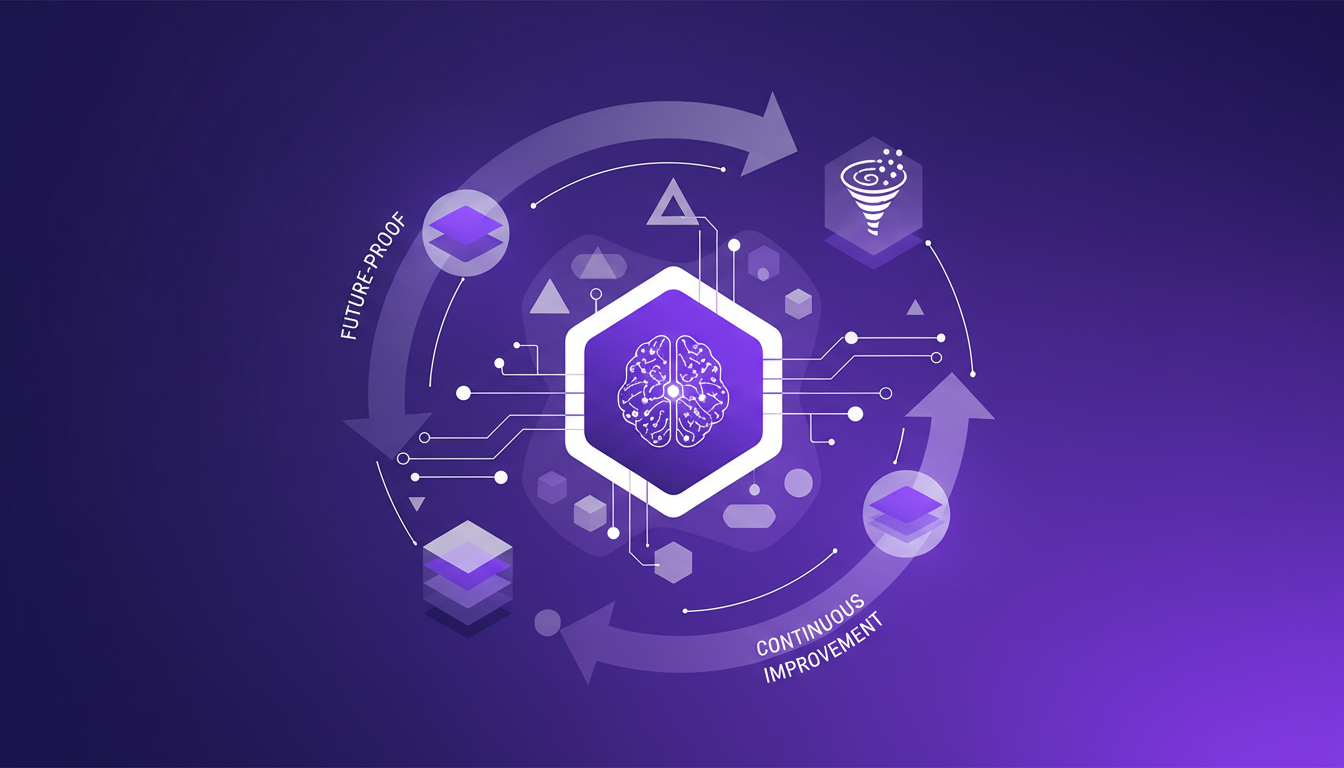
Feedback loops play a crucial role here for continuous improvement. But beware, sometimes simplicity beats complexity. I've seen systems fail because they were too complicated. Sometimes, a simpler approach is more viable.
- Focus on adaptability to future-proof systems.
- Use generative modeling to simulate future scenarios.
- Balance robustness and flexibility.
- Favor simplicity when possible.
When I build systems that last, I don't chase trends. I focus on core principles of adaptability and knowledge retention. Here’s what I’ve learned from the field:
- Prioritizing diverse teams is crucial. They bring varied perspectives that enhance problem-solving and strengthen system resilience.
- Effective transitions between technical and management roles: this is where knowledge often gets lost. I implement strategies to capture and transfer that knowledge.
- I used a random simulation to test system survivability, and it's a real game changer, but watch out for resource costs.
I'm convinced these strategies can transform your approach. Ready to build systems that stand the test of time? Start by evaluating your current processes and see where these strategies can make a difference.
For a deeper dive, I recommend watching the original video. It’s a peer-to-peer exchange worth checking out: YouTube link.
Frequently Asked Questions

Thibault Le Balier
Co-fondateur & CTO
Coming from the tech startup ecosystem, Thibault has developed expertise in AI solution architecture that he now puts at the service of large companies (Atos, BNP Paribas, beta.gouv). He works on two axes: mastering AI deployments (local LLMs, MCP security) and optimizing inference costs (offloading, compression, token management).
Related Articles
Discover more articles on similar topics
AI and Code: 90% Written by Agents
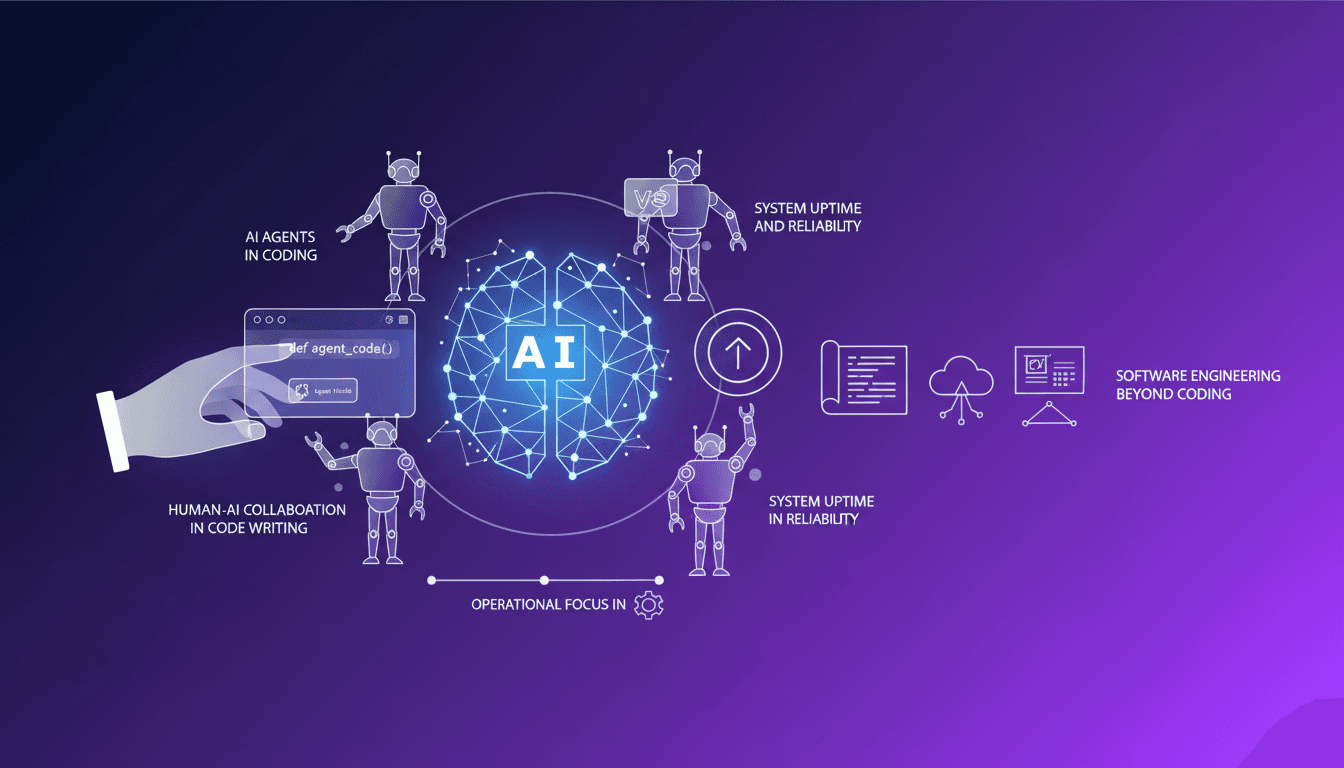
I never thought I'd let AI write 90% of my code, but here we are. As a GitHub senior engineer, I've embraced AI agents, and it's been a game changer—albeit with its quirks. AI in software development is more than a buzzword; it's reshaping our workflows. I've seen it firsthand, moving from traditional coding to orchestrating AI-driven solutions. We're diving into the impact of AI agents in our field, how it shifts our operational focus, and even boosts system reliability. I've had to adapt, learn from my mistakes (and trust me, I've made a few!), but the leap is worth it. If you've ever used VS Code's Agent Mode, you know what I mean. The future of development is already here.

Quantum Mass Production: Making It Happen
I remember the moment I realized quantum wasn't just theory anymore. At CES 2026, it hit me: we're finally moving from prototypes to mass production. But let me tell you, it's a wild ride. Transitioning from making one prototype to manufacturing ten is about more than just scaling up. We have to rethink systems engineering, secure significant capital, and overcome industry-specific hurdles. This transition is crucial for the quantum industry, and the promise is huge, but the path is littered with challenges we need to tackle together.
Boosting Wasmer with Codex: Efficiency Unlocked
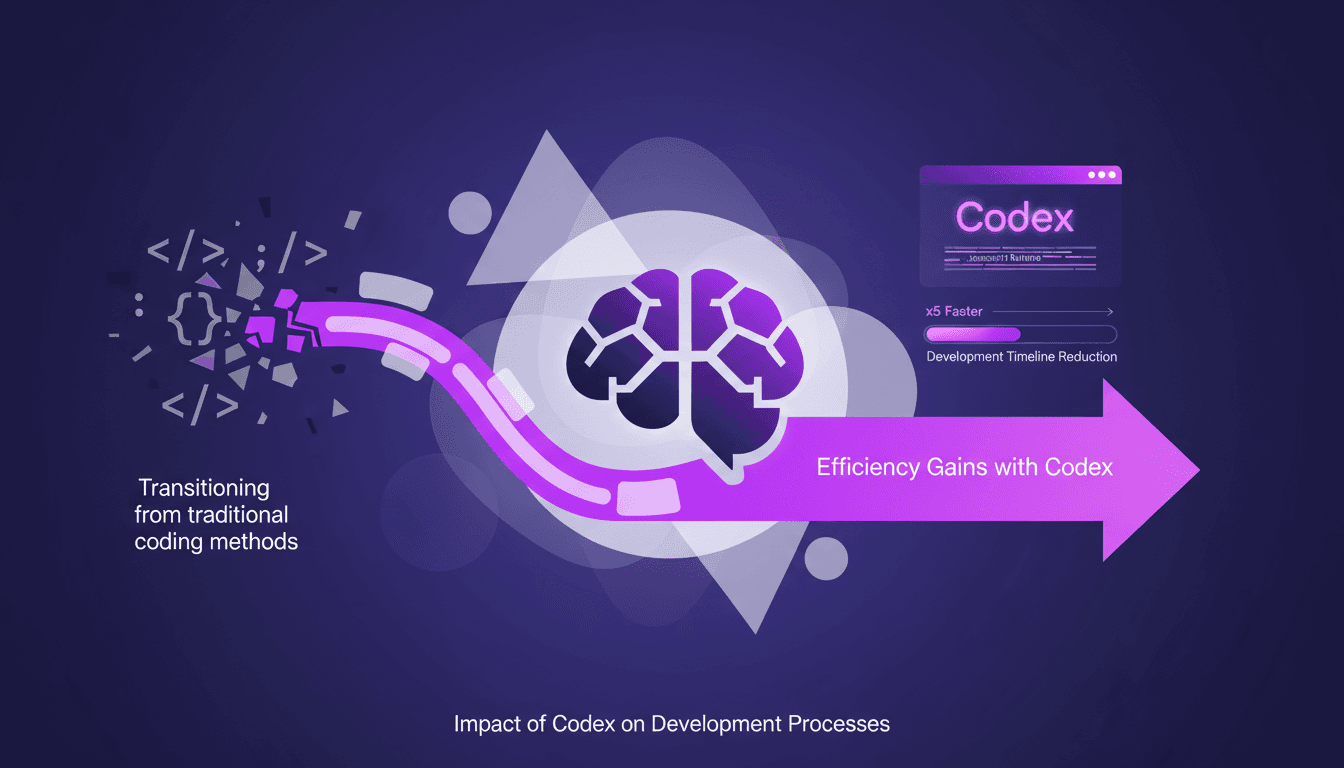
I remember the first time I integrated Codex into my workflow. It was like flipping a switch on development speed. Going from traditional coding to leveraging Codex transformed my approach to building a JavaScript runtime for Wasmer. In just two weeks, I completed a project that would have taken me a whole year without Codex. This article dives into how Codex revolutionizes development timelines, especially in creating a JavaScript runtime for Wasmer, and the efficiency gains it unlocks.
Codex: Revolutionizing Development Time
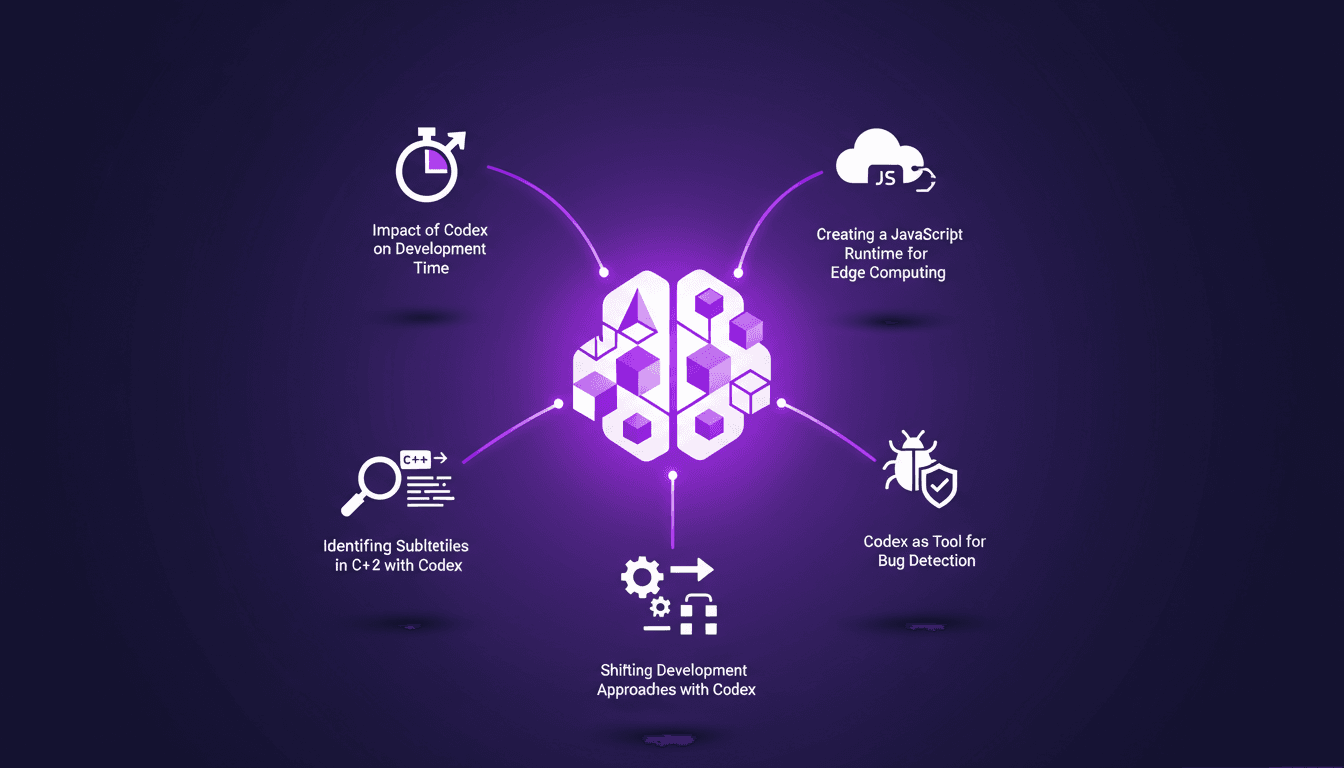
I used to spend weeks, even months, wrestling with development time. Then Codex came along and changed the game. Let me walk you through how it slashed my JavaScript runtime project from a year to just two weeks. Codex has been nothing short of transformative. From identifying C++ subtleties to creating a JavaScript runtime for edge computing, Codex has streamlined processes I once thought were set in stone. In this video, I dive into how Codex impacted development time, detected bugs, and shifted our development approach.
Self-Education: From Dropout to Senior Engineer
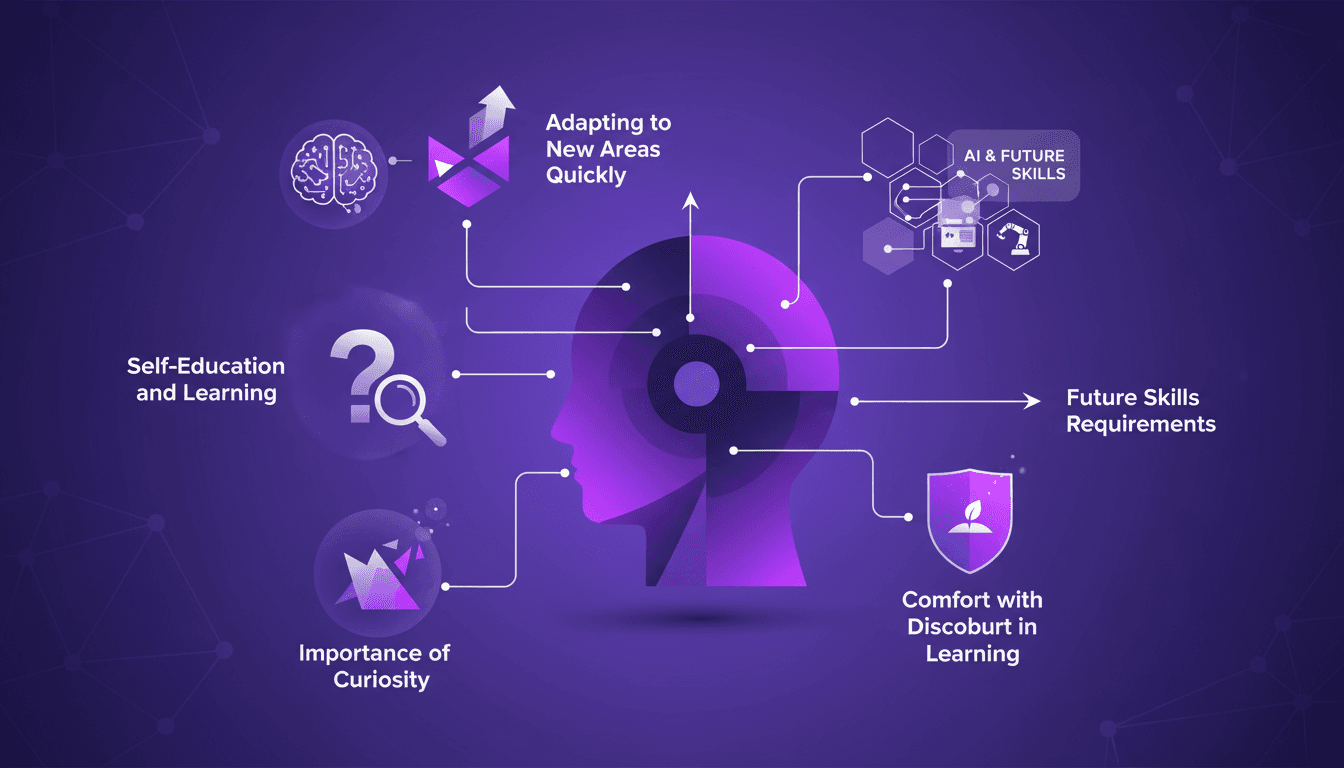
I never completed my computer science degree, yet here I am, a senior engineer at GitHub. How did I get here? Spoiler: it's anything but the traditional route. I banked on self-education, curiosity, and embracing discomfort. In a world where tech evolves at lightning speed, what really counts is our ability to learn quickly. I'll show you how these elements shaped my journey and how they can transform yours. We'll dive into how to swiftly adapt to new areas, the importance of daring to be curious, and why getting comfortable with discomfort has become crucial for future skills.