Clap Acquisition: Strategies and Challenges
I’ve been in the trenches of product acquisitions, and when Guillaume Moubeche took over Clap, it was more than just a business transaction. It was a masterclass in strategic pivots and technical integration. At the heart of this acquisition was a deep understanding of market dynamics and leveraging AI tools to boost sales. Let me walk you through how this unfolded and what we can learn from it. Make no mistake, this wasn’t just about adding another name to a portfolio. Challenges like remote work and complex data management were part of the deal. This is the kind of project where you realize 50% of new revenue comes from expansion each month. So, how was all this orchestrated? Let’s dive in together.

I’ve been in the trenches of product acquisitions, and Guillaume Moubeche’s takeover of Clap was more than just a business transaction. Picture a masterclass in strategic pivots and technical integrations. Step one: understand market dynamics, then leverage AI tools to boost sales. We’re talking 50% of new revenue coming from expansion each month here. This is real stuff. When Guillaume took Clap, it wasn’t just about adding another name to his portfolio, but a strategic, thought-out move. Challenges like remote work and complex data management were all part of the package. I’ve faced these challenges myself, and trust me, a poor technical integration can burn you fast. In this episode, I’m going to show you how it all unfolded and what lessons we can draw for our own projects.
Navigating the Acquisition: First Steps and Key Decisions
When Guillaume Moubeche decided to acquire Clap for 15 million euros, it wasn't just a whim. He had a clear vision. He identified Clap as a strategic acquisition target by analyzing the competitive ecosystem and spotting untapped potential. First, he had to connect Clap to the existing infrastructure. I remember needing to reorganize several integrations to ensure everything ran smoothly.
Challenges were abundant. I got burned by the complexity of technical integration, but by orchestrating priorities and delegating certain tasks, we overcame the obstacles. Strategic decisions, like retaining Clap's founding team, laid a solid foundation for future growth. It's an investment in time and resources, but one that promises significant returns.
Product Development Strategies and Market Positioning
The first key decision was to pivot product features to meet actual market needs. I used the 80% rule: drawing from what's working for competitors to avoid reinventing the wheel. This freed up 30% of the product team to focus on product growth. Positioning Clap in the market wasn't straightforward. We needed to differentiate while relying on proven tactics.
I learned the importance of balancing innovation with proven tactics. Don't get carried away with wanting to revolutionize everything. Sometimes, it's just about making a better Loom crossed with a Motion. That's where simplicity really shines.
AI Tools for Sales: Enhancing Team Efficiency
Implementing AI agents to automate certain sales tasks was a real game changer. I remember thinking it was too good to be true, but the results spoke for themselves: increased efficiency thanks to AI-driven insights. However, watch out for the technical limits. Beyond certain capabilities, these tools can start to show weaknesses.
I ensured not to disrupt existing workflows. Integrating AI solutions has to be smooth to avoid unsettling the team. The key is to start small and iterate. Don't overuse these tools, or you'll see performance degrade.
Technical Integrations and Data Management: A Tactical Approach
To integrate Clap's systems with existing platforms, I first used API integrations and the MCP protocol. This ensured smooth operations. But managing data flow while ensuring SOC 2 compliance is quite the puzzle. I had to juggle between technical requirements and regulatory standards.
Data management challenges are numerous in a growing company. It's crucial to have a clear strategy to avoid data bottlenecks and ensure security. Good data management is the backbone of any successful integration.
Growth Strategies and Financial Considerations
Developing a product-led growth (PLG) strategy was pivotal for driving user acquisition. I leveraged financial strategies to support the acquisition, while taking into account the cost implications of expansion, such as SOC 2 certification, which costs around 10,000 euros annually.
Evaluating financial health post-acquisition is crucial. I learned not to underestimate hidden costs. Rapid growth can be enticing, but it must be carefully managed to ensure the company's sustainability.
Acquiring Clap was a real strategic chess move by Guillaume Moubeche. I've seen how he took calculated risks and developed innovative strategies, and it's inspiring. I integrated advanced AI tools into my own projects after watching their impact on sales teams. But watch out, with fierce market competition, you really need to position yourself smartly.
- 50% of new revenue comes from expansion each month — that's massive for a growing company.
- Alexis has a client with potentially more than 1000 licenses, showing the market potential.
- Certifications can cost around $10K a year, so you need to calculate your ROI carefully.
I'm convinced that the path is paved with technical challenges, but that's where you learn the most. If you're considering a similar journey, weigh your strategic options carefully and dive into the technical challenges head-on. Watch the full video here: YouTube for more details and inspiration. Let's keep building and learning together.
Frequently Asked Questions

Thibault Le Balier
Co-fondateur & CTO
Coming from the tech startup ecosystem, Thibault has developed expertise in AI solution architecture that he now puts at the service of large companies (Atos, BNP Paribas, beta.gouv). He works on two axes: mastering AI deployments (local LLMs, MCP security) and optimizing inference costs (offloading, compression, token management).
Related Articles
Discover more articles on similar topics
Engineering Leadership: Beyond Coding Skills
I once thought mastering coding would skyrocket my career. But leading a team of ten engineers showed me it's only part of the equation. The real challenge? Understanding customer needs, leading with empathy, and weaving AI into our workflows. In today's world, being a great coder isn't enough. We need to grasp business needs, collaborate with product managers, and mentor others. Let's dive into what truly propels your engineering career forward.
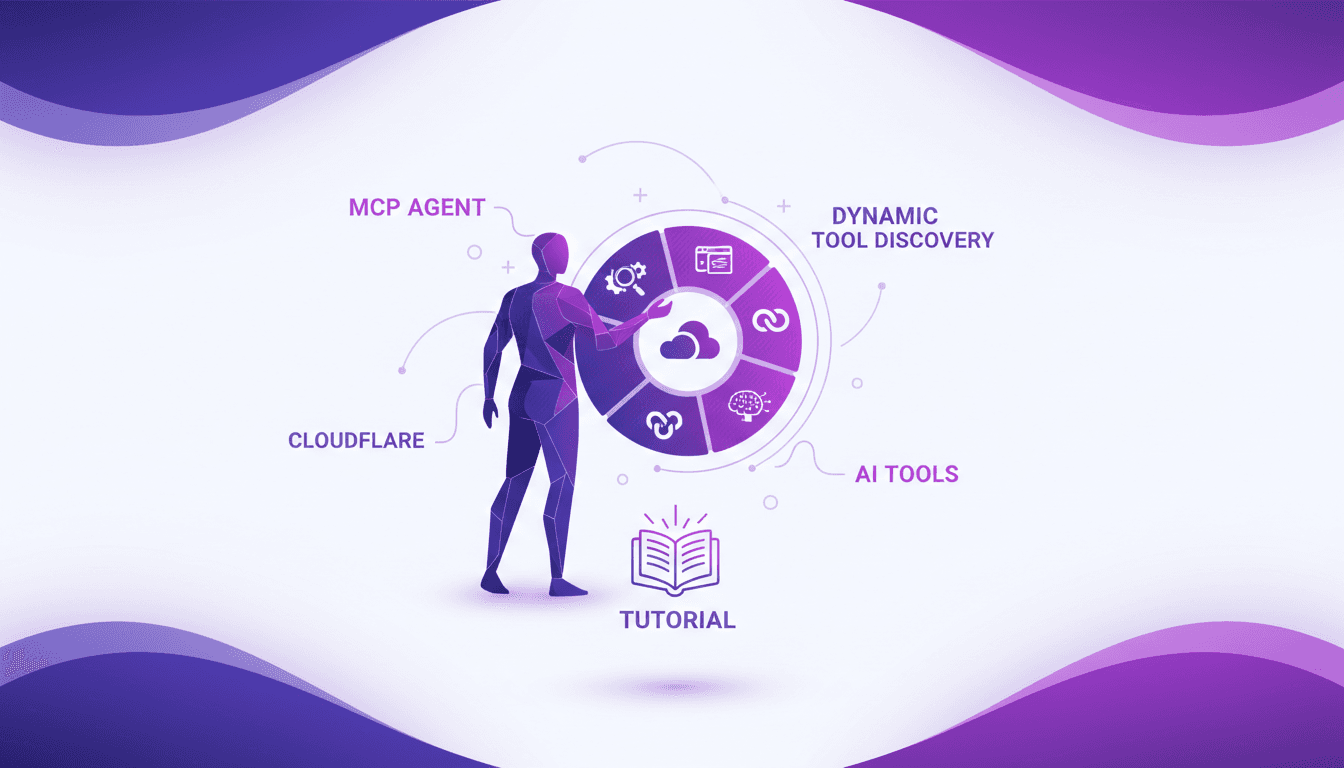
Build MCP Agent with Claude: Dynamic Tool Discovery
I dove headfirst into building an MCP agent with LangChain, and trust me, it’s a game changer for dynamic tool discovery across Cloudflare MCP servers. First, I had to get my hands dirty with OpenAI and Entropic's native tools. The goal? To streamline access and orchestration of tools in real-world applications. In the rapidly evolving AI landscape, leveraging native provider tools can save time and money while boosting efficiency. This article walks you through the practical steps of setting up an MCP agent, the challenges I faced, and the lessons learned along the way.
Native Tools: Build a Cloudflare MCP Agent
Imagine harnessing the full power of cloud platforms with just a few clicks. Welcome to the world of MCP agents and native provider tools. As AI technology evolves, integrating tools across multiple cloud platforms becomes essential. This tutorial explores building a Cloudflare MCP agent using Langchain, making complex integrations seamless and efficient. Discover how native tools from OpenAI and Entropic transform your cloud experience. Dive into dynamic tool discovery, integration, MCP server connections, and the advantages of using native tools. Let's explore practical scenarios and envision how these tools shape the future of AI applications.

Understanding the AI Bubble: Economic Implications
Artificial intelligence has transformed our lives. But are we on the brink of stabilization or witnessing a looming economic bubble? In this article, we delve into the AI economy, shifting model preferences, and potential economic impacts. From infrastructure companies to new AI applications, we explore emerging trends and their effects on startups and innovation. What are the technical challenges ahead? Most importantly, what does the future hold for AI development? Dive into this compelling analysis with us.

Startup Ideas: Legal Gray Areas & Opportunities
In a world where tech races ahead, laws lag behind. Startups seize the moment in these legal gray areas. Companies like Lyft and Open AI are rewriting the rules. They drive innovation while sparking legal change. Discover how these trailblazers navigate murky waters. Balancing innovation and legality is tricky. Yet, consumer benefits are undeniable. Dive into the riveting tale of technology versus legislation.

Chasing Hard Problems in Innovation
In the fast-paced world of technology, the greatest innovations often arise from tackling daunting challenges. Are you ready to chase those hard problems? This article delves into the art of pursuing technically challenging ideas. It highlights how courage and sharp skills are essential for innovation. Avoid isolation: discover the vital importance of customer feedback in refining your products. Learn to balance product readiness with customer interaction. Read on to understand how the brightest minds of our time chase hard problems to shape the future.
AI's Impact on Consumer Startups Today
Imagine a world where creating music is as easy as listening to it. Thanks to AI, that future is within reach. Consumer startups are breaking down traditional barriers. With insights from industry expert Mike McNano, we explore how AI is revolutionizing content creation and personalizing education. Platforms are evolving, distribution challenges are intensifying, but opportunities abound. Let's uncover how AI is redefining taste and craftsmanship in product development. Don't miss the untapped opportunities AI offers today.