Understanding the AI Bubble: Economic Implications
Artificial intelligence has transformed our lives. But are we on the brink of stabilization or witnessing a looming economic bubble? In this article, we delve into the AI economy, shifting model preferences, and potential economic impacts. From infrastructure companies to new AI applications, we explore emerging trends and their effects on startups and innovation. What are the technical challenges ahead? Most importantly, what does the future hold for AI development? Dive into this compelling analysis with us.
Artificial intelligence has transformed our world, but are we on the verge of stabilization or another economic bubble? This burning question haunts investors and entrepreneurs alike. Is the AI economy on the brink of collapse or merely stabilizing? In this article, we examine current trends in the AI economy. Preferences for models are shifting rapidly, influencing infrastructure companies' strategies. We also explore the economic implications of a potential AI bubble. What new AI applications are emerging? What role does AI play in startups and innovation? Technical and infrastructure challenges abound. Yet, one thing is certain: the future of AI development is as exciting as it is uncertain. Get ready for a captivating dive into the fascinating world of artificial intelligence.
Stabilization of the AI Economy
The AI economy is stabilizing thanks to massive investments that are reshaping the economic landscape. These investments have enabled the development of robust infrastructure layers, essential for the smooth operation of AI technologies.
Companies are adapting their strategies to stabilize growth by focusing on sustainable business models. For example, consulting firms that focused on seasonal services are now diversifying to offer real-time advisory services, showing a maturation of the AI industry where the emphasis is on continuous optimization rather than one-off solutions.
Regulation also plays a crucial role in economic stabilization. Indeed, clear and consistent rules are necessary to avoid excesses and ensure fair competition.
- Massive investments: foundation of the AI economy
- Adaptation strategies: towards sustainable growth
- Regulation: necessary for market stabilization
Changing Preferences in AI Models
Preferences for AI models are rapidly evolving, as illustrated by the latest selection at Y Combinator. For instance, Anthropic has recently surpassed OpenAI in popularity among startups, indicating a changing of the guard in the world of Large Language Models (LLM).
An emerging concept is Vibe Coding, where AI models are optimized to understand and respond to human emotions. This new approach is refined through Fine-tuning with Reinforcement Learning (RL), allowing models to continuously improve through feedback loops.
AI model orchestration is also becoming crucial. It optimizes the use of different models based on specific application needs, ensuring optimal performance.
- Changing preference: Anthropic surpasses OpenAI
- Vibe Coding: emotional understanding
- Fine-tuning with RL: continuous improvement
- Model orchestration: optimized performance
The AI Bubble and Economic Implications
The notion of an AI bubble is reminiscent of past economic bubbles, such as the dot-com bubble. An AI bubble is characterized by an overvaluation of AI companies, leading to excessive investments and potentially a market crash.
The economic risks associated include a market correction that could impact many sectors. Companies need to prepare for this possibility by diversifying their investments and focusing on truly sustainable innovations.
In the long term, the AI industry offers promising economic prospects. However, prudent management is essential to avoid the pitfalls of overly rapid expansion.
- AI Bubble: overvaluation and risks
- Preparation: diversification and sustainable innovation
- Long-term prospects: promise with caution
Emergence of New AI Applications
Innovative AI applications are emerging in various sectors, offering new opportunities. For example, in healthcare, AI helps diagnose diseases more quickly and accurately.
Startups particularly benefit from AI, enabling them to rapidly develop competitive products. However, they must also overcome technical challenges, such as integrating new systems and maintaining data security.
AI drives innovation and competitiveness, forcing companies to constantly innovate to remain relevant in the market.
- Innovative applications: healthcare and beyond
- Opportunities for startups: speed and competitiveness
- Technical challenges: integration and security
- Role of AI: innovation driver
Future Trends in AI Development
Predictions for the development of LLMs indicate a continuous advancement towards more powerful and efficient models. These technological advancements require robust infrastructure, with investments in the necessary hardware and software.
Trends in AI regulation and ethics are also crucial. Responsible regulation will ensure that technological advancements respect ethical values and human rights.
Companies must prepare for future technological developments by adopting a proactive approach, investing in research and development, and training their talent to meet future needs.
- LLM development: towards more power
- AI infrastructure: necessary investments
- Regulation and ethics: necessary framework
- Company preparation: proactive approach
As the AI economy stabilizes, several key takeaways have emerged:
- Changing preferences in AI models are reshaping business strategies.
- Infrastructure and model companies are central to current transformations.
- AI is more than just a bubble; it has lasting economic implications. Businesses and investors must anticipate these changes to seize upcoming opportunities. The future belongs to those who can navigate this rapidly evolving technological landscape with agility. Stay informed on the latest trends and prepare for future challenges. For deeper insights, I encourage you to watch the original video "The Truth About The AI Bubble." It offers essential perspectives on the current dynamics of AI. Stay ahead and be part of this ever-evolving technological revolution.
Frequently Asked Questions

Thibault Le Balier
Co-fondateur & CTO
Coming from the tech startup ecosystem, Thibault has developed expertise in AI solution architecture that he now puts at the service of large companies (Atos, BNP Paribas, beta.gouv). He works on two axes: mastering AI deployments (local LLMs, MCP security) and optimizing inference costs (offloading, compression, token management).
Related Articles
Discover more articles on similar topics
Startup Ideas: Legal Gray Areas & Opportunities
In a world where tech races ahead, laws lag behind. Startups seize the moment in these legal gray areas. Companies like Lyft and Open AI are rewriting the rules. They drive innovation while sparking legal change. Discover how these trailblazers navigate murky waters. Balancing innovation and legality is tricky. Yet, consumer benefits are undeniable. Dive into the riveting tale of technology versus legislation.

Amplitude's Journey: From AI Skepticism to Embrace
Imagine a world where AI skepticism turns into full adoption, revolutionizing a company's tech approach. This is Amplitude's story. A leader in product analytics, Amplitude initially approached AI cautiously. However, through strategic changes and mindset shifts, they embraced AI, transforming operations and product offerings. This article delves into their journey, challenges faced, and strategies implemented. Discover how Amplitude overcame AI integration hurdles, the role of skepticism in AI adoption, and the impact of this technology on software engineering and analytics.
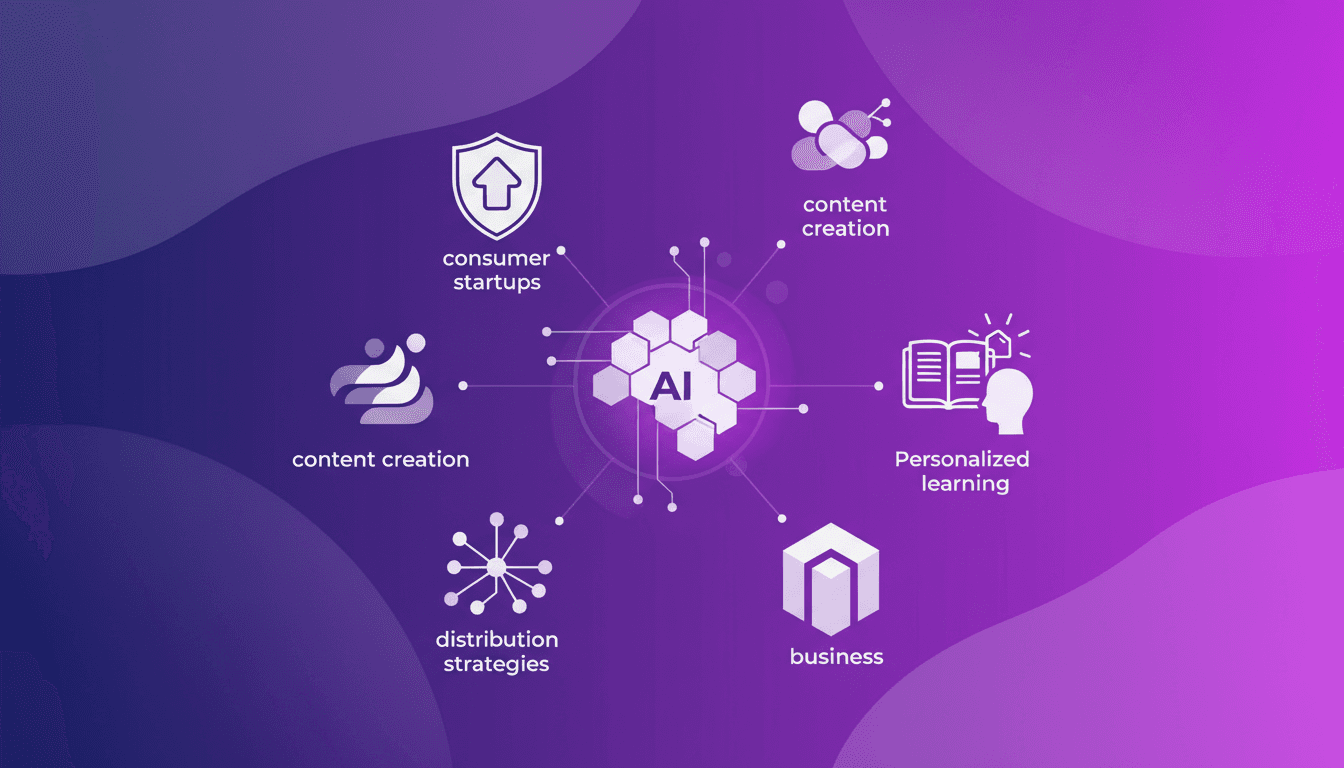
AI's Impact on Consumer Startups Today
Imagine a world where creating music is as easy as listening to it. Thanks to AI, that future is within reach. Consumer startups are breaking down traditional barriers. With insights from industry expert Mike McNano, we explore how AI is revolutionizing content creation and personalizing education. Platforms are evolving, distribution challenges are intensifying, but opportunities abound. Let's uncover how AI is redefining taste and craftsmanship in product development. Don't miss the untapped opportunities AI offers today.

Chasing Hard Problems in Innovation
In the fast-paced world of technology, the greatest innovations often arise from tackling daunting challenges. Are you ready to chase those hard problems? This article delves into the art of pursuing technically challenging ideas. It highlights how courage and sharp skills are essential for innovation. Avoid isolation: discover the vital importance of customer feedback in refining your products. Learn to balance product readiness with customer interaction. Read on to understand how the brightest minds of our time chase hard problems to shape the future.

Building Intelligent Agents with Manus AI
Imagine an AI that not only understands your research needs but also executes them seamlessly. Welcome to the world of Manus AI. In a recent conference, Ivan Leo from Manus AI (now Meta Superintelligence) unveiled the revolutionary capabilities of this tool. Manus AI is set to transform how we interact with intelligent agents. Learn how to integrate Manus AI into your projects and explore its innovative applications. Whether you want to build advanced applications or manage your data with enhanced intelligence, Manus AI is here to guide you. Ready to explore the future of intelligent agents?