Startup Ideas: Legal Gray Areas & Opportunities
In a world where tech races ahead, laws lag behind. Startups seize the moment in these legal gray areas. Companies like Lyft and Open AI are rewriting the rules. They drive innovation while sparking legal change. Discover how these trailblazers navigate murky waters. Balancing innovation and legality is tricky. Yet, consumer benefits are undeniable. Dive into the riveting tale of technology versus legislation.
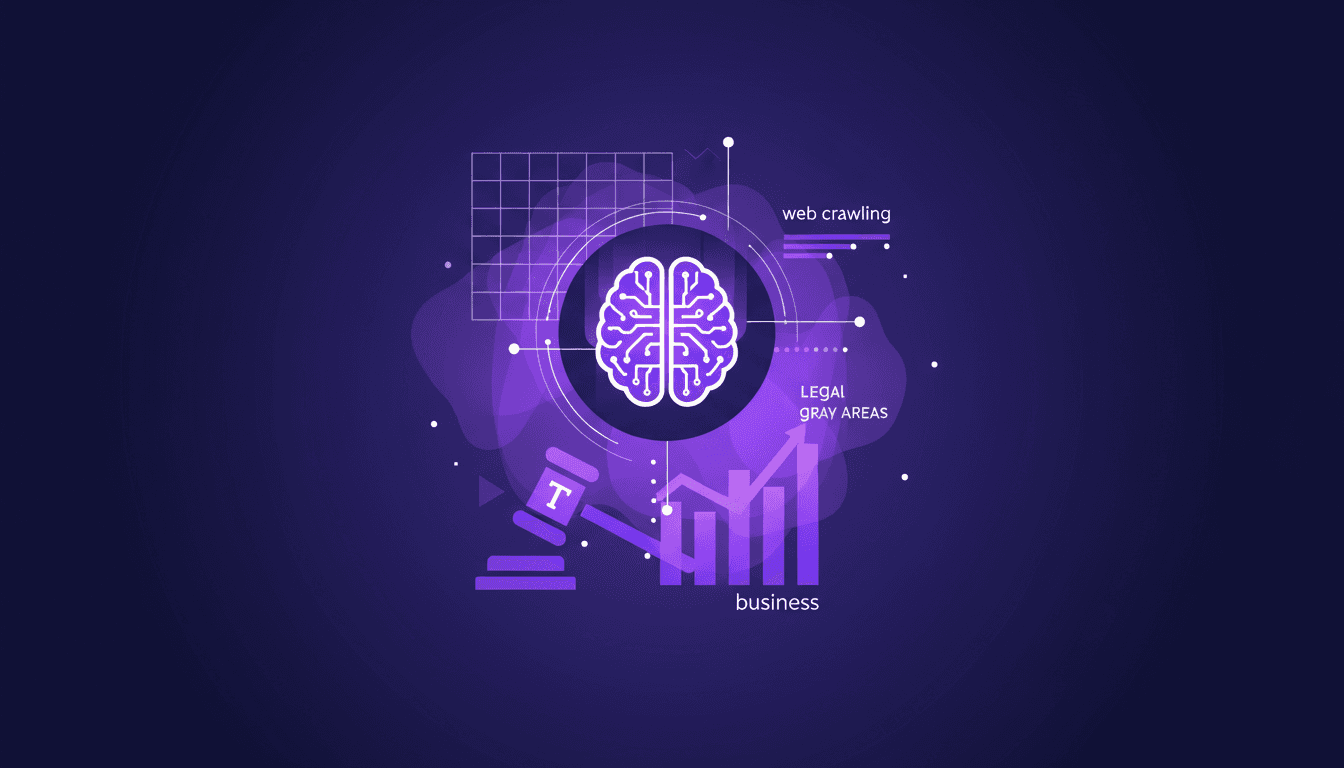
Technology races forward at lightning speed, while laws struggle to keep up. In this gap, startups find a goldmine of opportunities. Companies like Lyft and Open AI exploit these legal gray areas to innovate. They don't just adapt; they push the boundaries of what's possible. Sometimes, they even force laws to change. This podcast dives into the fascinating stories of these companies navigating murky legal waters. We explore how Lyft challenged public transport laws in its early days and how Open AI uses web scraping to train its models. As regulations lag, these trailblazers are rewriting the rulebook. Consumer benefits are often the reward, prompting legislative reforms. Get ready to explore how the history of laws collides with the rapid evolution of modern technology.
Understanding Legal Gray Areas in Startups
Legal gray areas refer to situations where laws are not clearly defined, much like driving on a road without any signs. For startups, these areas can be opportunities for innovation. When the rules are unclear, there is room to experiment and propose novel ideas.
Many companies have thrived by navigating these gray areas. For instance, Uber and Airbnb disrupted the transport and hospitality sectors before legislation adapted to their models. However, operating in a gray area comes with risks, such as potential lawsuits or fines.
- Gray areas offer opportunities for innovation.
- Success examples: Uber, Airbnb.
- Risks: legal lawsuits, fines.
Open AI's Web Crawling: Legal and Ethical Dimensions
Web crawling is a process involving the automatic browsing of the web to collect information. For Open AI, this was crucial in training its AI models. However, this practice raises legal questions, particularly regarding copyright and fair use.
Ethically, there is a debate around public perception. Is this massive data collection legitimate? Open AI has had to navigate these murky waters by implementing policies to respect content creators' rights.
- Web crawling is essential for AI.
- Legal questions: copyright, fair use.
- Ethical considerations: respecting creators.
Lyft's Launch: Navigating Legal Challenges
When Lyft launched, the company faced numerous legal hurdles. The concept of ride-sharing challenged traditional transport laws. The founders took the risk to launch despite the legal uncertainties.
Consumer demand for more flexible transport services eventually pushed for a change in laws. Lyft demonstrated how market forces can influence regulation, prompting authorities to adapt their legal frameworks to meet new economic realities.
- Lyft challenged traditional transport laws.
- Consumer demand prompted legal changes.
- The market can influence regulation.
Technology's Impact on Legal Systems
Laws have always lagged behind technological advances. Historically, every new technology has required legal adjustments. For example, the advent of automobiles led to traffic laws.
Today, digital technologies are causing similar shifts. Consumer benefits play a crucial role in legal evolution, forcing legal systems to catch up to stay relevant.
- Laws evolve with technology.
- Examples: automobiles, digital technologies.
- Consumer benefits drive legal evolution.
Consumer Benefits and Legal Evolution
Consumer benefits are often at the heart of legal adaptations. When a technology offers significant advantages, laws are often revised to allow its integration. For instance, the legalization of streaming platforms was accelerated by their popularity.
Innovation must be balanced with regulation to protect users while allowing progress. In the future, we can expect laws to continue evolving in response to new technologies.
- Consumer benefits drive legal evolution.
- Examples: streaming platforms.
- Balance between innovation and regulation.
Startups like Lyft and Open AI illustrate how navigating legal gray areas can spark innovation and legal evolution. Here are some key takeaways:
- Legal gray zones can serve as launchpads for innovation.
- Open AI's data collection practices show how technology can redefine existing rules.
- Lyft successfully navigated legal concerns to establish itself.
As technology continues to reshape the legal landscape, opportunities abound for those willing to explore these boundaries. Stay informed on how technology transforms legal systems and consider the opportunities it presents. Watch the video "Finding Opportunity in Outdated Rules" for a deeper understanding of the topics discussed. Watch the video
Frequently Asked Questions

Thibault Le Balier
Co-fondateur & CTO
Coming from the tech startup ecosystem, Thibault has developed expertise in AI solution architecture that he now puts at the service of large companies (Atos, BNP Paribas, beta.gouv). He works on two axes: mastering AI deployments (local LLMs, MCP security) and optimizing inference costs (offloading, compression, token management).
Related Articles
Discover more articles on similar topics

Amplitude's Journey: From AI Skepticism to Embrace
Imagine a world where AI skepticism turns into full adoption, revolutionizing a company's tech approach. This is Amplitude's story. A leader in product analytics, Amplitude initially approached AI cautiously. However, through strategic changes and mindset shifts, they embraced AI, transforming operations and product offerings. This article delves into their journey, challenges faced, and strategies implemented. Discover how Amplitude overcame AI integration hurdles, the role of skepticism in AI adoption, and the impact of this technology on software engineering and analytics.
AI's Impact on Consumer Startups Today
Imagine a world where creating music is as easy as listening to it. Thanks to AI, that future is within reach. Consumer startups are breaking down traditional barriers. With insights from industry expert Mike McNano, we explore how AI is revolutionizing content creation and personalizing education. Platforms are evolving, distribution challenges are intensifying, but opportunities abound. Let's uncover how AI is redefining taste and craftsmanship in product development. Don't miss the untapped opportunities AI offers today.

Chasing Hard Problems in Innovation
In the fast-paced world of technology, the greatest innovations often arise from tackling daunting challenges. Are you ready to chase those hard problems? This article delves into the art of pursuing technically challenging ideas. It highlights how courage and sharp skills are essential for innovation. Avoid isolation: discover the vital importance of customer feedback in refining your products. Learn to balance product readiness with customer interaction. Read on to understand how the brightest minds of our time chase hard problems to shape the future.

Building Intelligent Agents with Manus AI
Imagine an AI that not only understands your research needs but also executes them seamlessly. Welcome to the world of Manus AI. In a recent conference, Ivan Leo from Manus AI (now Meta Superintelligence) unveiled the revolutionary capabilities of this tool. Manus AI is set to transform how we interact with intelligent agents. Learn how to integrate Manus AI into your projects and explore its innovative applications. Whether you want to build advanced applications or manage your data with enhanced intelligence, Manus AI is here to guide you. Ready to explore the future of intelligent agents?

LLM Memory: Weights, Activations, and Solutions
Imagine a library where books are constantly shuffled and some get misplaced. That's the memory challenge for Large Language Models (LLMs) today. As AI evolves, understanding LLMs' limitations and potentials becomes vital. This article delves into the intricacies of contextual memory in LLMs, highlighting recent advancements and ongoing challenges. We explore retrieval-augmented generation, embedding training data into model weights, and parameter-efficient fine-tuning. Discover how model personalization and synthetic data generation are shaping AI's future.