AI's Impact on Consumer Startups Today
Imagine a world where creating music is as easy as listening to it. Thanks to AI, that future is within reach. Consumer startups are breaking down traditional barriers. With insights from industry expert Mike McNano, we explore how AI is revolutionizing content creation and personalizing education. Platforms are evolving, distribution challenges are intensifying, but opportunities abound. Let's uncover how AI is redefining taste and craftsmanship in product development. Don't miss the untapped opportunities AI offers today.
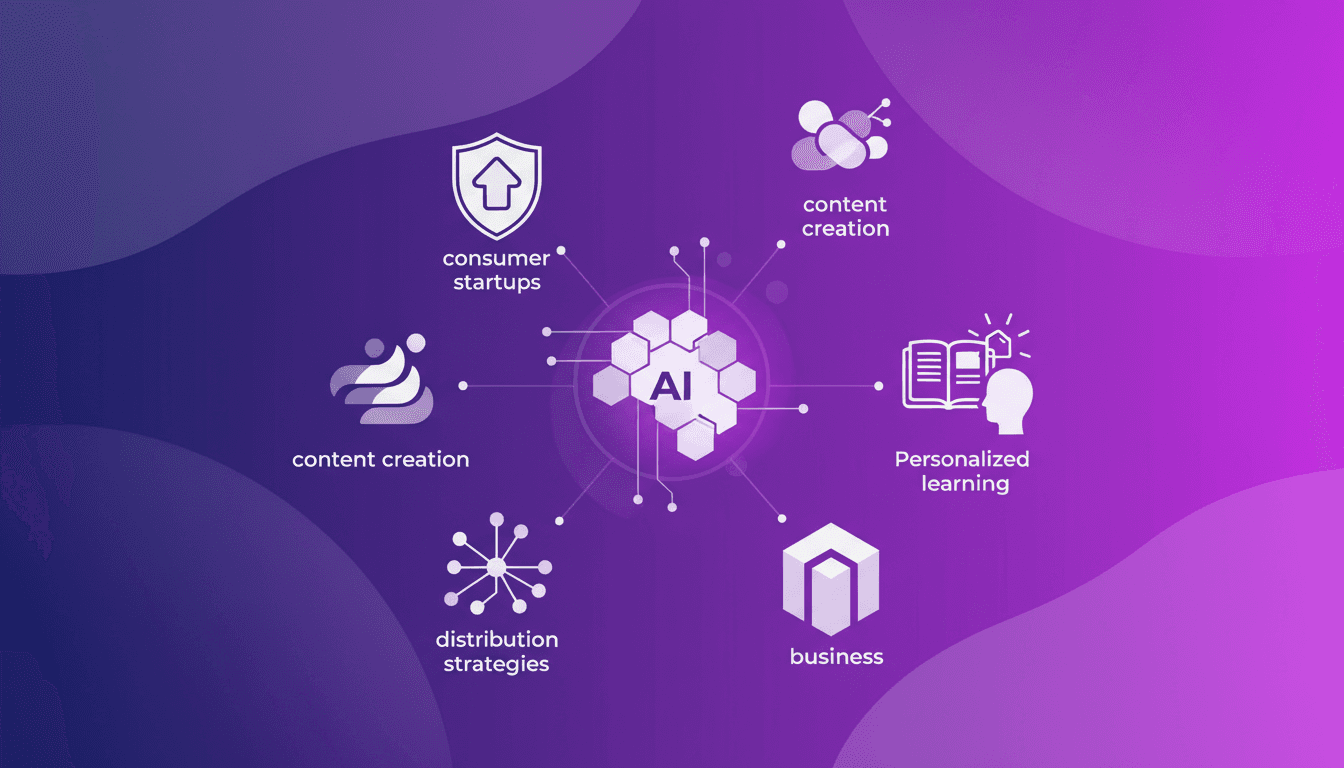
Imagine a world where anyone can create music as easily as they listen to it. Sounds unbelievable, right? Yet, thanks to artificial intelligence, this dream is becoming a reality. Consumer startups are transforming at a blistering pace. Traditional barriers are falling, paving the way for new forms of content creation. In this article, we dive into the fascinating world of AI and its impact on consumer startups. Industry expert Mike McNano shares his valuable insights on how AI is democratizing creation and personalizing education. We explore how platforms are evolving, the distribution challenges that arise, and the importance of timing and cultural relevance. AI is redefining taste and craftsmanship in product development. Don’t miss out on these untapped opportunities that AI offers. Ready to explore this new frontier?
The Evolution of Consumer Platforms
Consumer platforms have undergone significant transformation over the past few decades. Initially, they were primarily consumer-focused, but over time, there has been a shift towards B2B (business-to-business) models. This shift has largely been driven by the distribution challenges that startups face. With the consolidation of social platforms, distribution has become more challenging, prompting companies to reassess their strategies.
A notable example of this transition is the evolution of Ankor, a podcast platform founded by Mike McNano before its acquisition by Spotify. Originally focused on a consumer model, Ankor had to adapt to new market realities to succeed. The introduction of AI (artificial intelligence) has played a crucial role in helping these companies overcome distribution hurdles. Through AI, platforms can better target their audiences and optimize their reach.
- Historical Context: Shift from consumer-focused to B2B models.
- Challenges: Increasing complexity of distribution.
- Role of AI: Facilitating transition and optimizing targeting.
AI Democratizing Content Creation
AI has opened new avenues in content creation, making these tools accessible even to non-experts. In the music and art industries, for example, AI-powered platforms allow creators to produce high-quality content without requiring deep technical skills.
This increased accessibility particularly benefits small creators and startups who can now compete with larger companies. Mike McNano highlights AI's impact on the democratization of music creation, enabling anyone to create and share their music. With tools like AI-based music generators, even novices can compose tracks that match professional standards.
- Accessibility: AI tools available to everyone.
- Impact: Lowering barriers for small creators.
- Examples: AI music generation tools.
Personalized Learning Through AI
Education is a field where AI shows tremendous potential to personalize learning. Obo Labs, co-founded by Mike McNano, is an example of a platform using AI to tailor educational experiences to individual student needs.
With AI, educators can offer customized learning paths, allowing each student to progress at their own pace. This not only improves teaching efficiency but also increases student engagement. The future of education looks promising with the potential for more AI integration to further personalize the educational experience.
- Personalization: Tailoring educational paths.
- Benefits: Improved efficiency and increased engagement.
- Future: More AI integration in education.
Taste and Craft in Product Development
In a competitive market, taste has become a key advantage. Successful product development requires not only technical understanding but also aesthetic sensitivity. Products that combine AI efficiency with human creativity stand out.
Examples of success include product designs that capture the essence of what consumers desire while being functional. Mike McNano emphasizes the importance of not sacrificing taste for efficiency, finding a balance between technology and human creativity.
- Competitive Advantage: Importance of taste.
- Craft: Blending technical and aesthetic.
- Balance: Technology vs creativity.
Creators and Influencers in Distribution
Modern distribution strategies increasingly involve influencers to promote products. AI tools assist creators in optimizing their content for better engagement, transforming marketing campaigns.
Case studies show how successful campaigns have used influencers to reach a wider audience. As AI evolves, these trends will continue to develop, making distribution more strategic and effective.
- Modern Strategies: Use of influencers.
- AI Tools: Content optimization.
- Future Trends: Strategic distribution with AI.
AI is significantly transforming consumer startups. Key takeaways include:
- AI democratizes content creation, allowing more voices to be heard.
- It personalizes education, making learning more accessible.
- It enhances product development, speeding up innovation. These shifts enable startups to better navigate the ever-evolving landscape. Looking forward, it's crucial for startups to remain agile and adapt to emerging technological trends. Don't miss the chance to stay informed about AI's impact on consumer industries. Subscribe to our blog for the latest insights and trends. For deeper understanding, watch the original video "The Best Consumer Startup Ideas Were Impossible Until Now" on YouTube: link.
Frequently Asked Questions

Thibault Le Balier
Co-fondateur & CTO
Coming from the tech startup ecosystem, Thibault has developed expertise in AI solution architecture that he now puts at the service of large companies (Atos, BNP Paribas, beta.gouv). He works on two axes: mastering AI deployments (local LLMs, MCP security) and optimizing inference costs (offloading, compression, token management).
Related Articles
Discover more articles on similar topics

Chasing Hard Problems in Innovation
In the fast-paced world of technology, the greatest innovations often arise from tackling daunting challenges. Are you ready to chase those hard problems? This article delves into the art of pursuing technically challenging ideas. It highlights how courage and sharp skills are essential for innovation. Avoid isolation: discover the vital importance of customer feedback in refining your products. Learn to balance product readiness with customer interaction. Read on to understand how the brightest minds of our time chase hard problems to shape the future.

Building Intelligent Agents with Manus AI
Imagine an AI that not only understands your research needs but also executes them seamlessly. Welcome to the world of Manus AI. In a recent conference, Ivan Leo from Manus AI (now Meta Superintelligence) unveiled the revolutionary capabilities of this tool. Manus AI is set to transform how we interact with intelligent agents. Learn how to integrate Manus AI into your projects and explore its innovative applications. Whether you want to build advanced applications or manage your data with enhanced intelligence, Manus AI is here to guide you. Ready to explore the future of intelligent agents?

LLM Memory: Weights, Activations, and Solutions
Imagine a library where books are constantly shuffled and some get misplaced. That's the memory challenge for Large Language Models (LLMs) today. As AI evolves, understanding LLMs' limitations and potentials becomes vital. This article delves into the intricacies of contextual memory in LLMs, highlighting recent advancements and ongoing challenges. We explore retrieval-augmented generation, embedding training data into model weights, and parameter-efficient fine-tuning. Discover how model personalization and synthetic data generation are shaping AI's future.

Poolside: Revolutionizing AI with Jason Warner
Imagine a world where AI seamlessly converts code across languages. Poolside is making this a reality. In a recent talk, Jason Warner and Eiso Kant unveiled their daring mission. Their Malibu agent aims to optimize efficiency and innovation. Discover how Poolside is redefining AI's future. A stunning code conversion demonstration captivated the audience. What are the challenges of AI in high-stakes environments? What are Poolside's future deployment plans? Jason Warner and Eiso Kant share their journey and the collaboration driving this revolution. Reinforcement learning is pushing AI capabilities to new heights. Poolside is set to transform the infrastructure and scale of AI model development. Don't miss this captivating exploration of revolutionary AI.

AI Evaluation Framework: A Guide for PMs
Imagine launching an AI product that surpasses all expectations. How do you ensure its success? Enter the AI Evaluation Framework. In the rapidly evolving world of artificial intelligence, product managers face unique challenges in effectively evaluating and integrating AI solutions. This article delves into a comprehensive framework designed to help PMs navigate these complexities. Dive into building AI applications, evaluating models, and integrating AI systems. The crucial role of PMs in development, iterative testing, and human-in-the-loop systems are central to this approach. Ready to revolutionize your product management with AI?