Build MCP Agent with Claude: Dynamic Tool Discovery
I dove headfirst into building an MCP agent with LangChain, and trust me, it’s a game changer for dynamic tool discovery across Cloudflare MCP servers. First, I had to get my hands dirty with OpenAI and Entropic's native tools. The goal? To streamline access and orchestration of tools in real-world applications. In the rapidly evolving AI landscape, leveraging native provider tools can save time and money while boosting efficiency. This article walks you through the practical steps of setting up an MCP agent, the challenges I faced, and the lessons learned along the way.
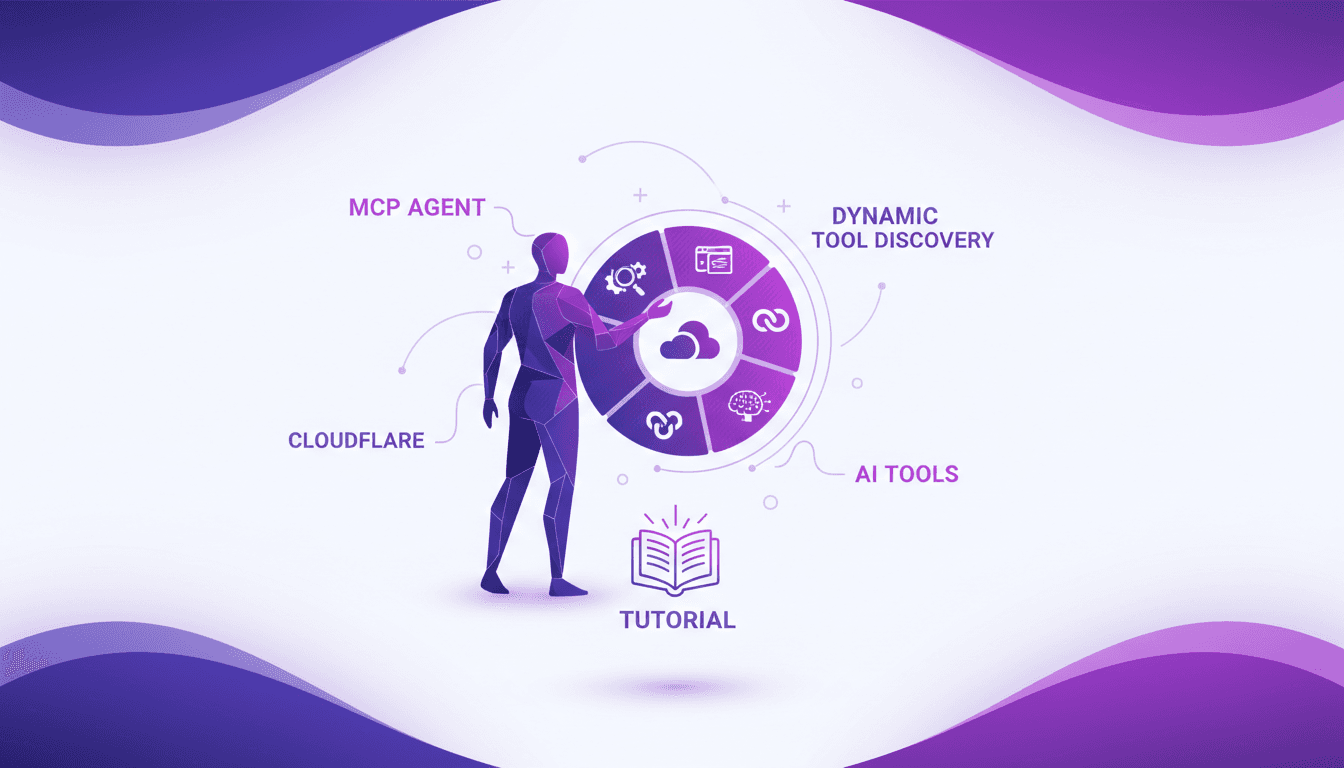
I dove headfirst into building an MCP agent with LangChain, and let me tell you, it’s a game changer for dynamic tool discovery on Cloudflare MCP servers. First off, I got my hands dirty with the native tools from OpenAI and Entropic. The aim was clear: streamline access and orchestration of tools for real-world applications. In today's fast-paced AI landscape, leveraging native provider tools can save you both time and money while boosting efficiency. I’ll walk you through how I set up an MCP agent, the hurdles I faced, and the lessons I learned along the way. We’ll explore dynamic integration with Cloudflare MCP servers, how I implemented a chat interface for platform access, and why these tools are essential for real-world applications. So buckle up, because the insights I’ve gathered might just revolutionize how you work with AI models.
Understanding Native Provider Tools and MCP Servers
When we talk about native provider tools, we're talking about a real shift in how we build and integrate applications. First, these tools are designed specifically to maximize the efficiency of the models they work with. Take OpenAI and Entropic for example: they provide optimized tools, MCP (Multi-Cloud Platform) toolsets that allow for seamless integration. The key here is understanding that these tools aren't just simple function calls; they're integrated into the model for maximum performance.
MCP servers, on the other hand, play a crucial role in our ability to operate across multiple cloud platforms. Why does this matter? Because it enables dynamic tool discovery, meaning we can load and use tools as needed in real-time. This is where cost and efficiency benefits come in: fewer wasted resources, finer orchestration. But watch out, you always need to monitor token usage to avoid unnecessary overloads.
- Native tools: Optimized integration for maximum performance.
- MCP servers: Allow dynamic discovery and flexible use of tools.
- OpenAI and Entropic: Leading providers offering integrated and optimized tools.
- Benefits: Increased efficiency and reduced operational costs.
Building the MCP Agent with LangChain
Now let's get into the nitty-gritty: building an MCP agent with LangChain. I've often found the initial setup a bit confusing. But once you're in, everything gets clearer. First, you need to set up LangChain to work with MCP. This involves connecting the right endpoints and ensuring the tools you plan to use are properly integrated.
Next, orchestrating the tools within the MCP framework is essential. Without a robust setup, you might run into performance issues. A tip? Don't overload your setup with too many unnecessary tools right off the bat. I've been burned several times thinking more tools would mean more capabilities. In reality, it can slow down your system.
- Setup: Connect MCP endpoints and integrate necessary tools.
- Orchestration: Importance of a robust setup to prevent performance issues.
- Pitfalls: Avoid overloading with non-essential tools.
Dynamic Tool Discovery Across Cloudflare MCP Servers
Dynamic tool discovery is like having a personal assistant that tells you exactly which tool to use and when. With Cloudflare, integration with MCP servers makes this discovery even smoother. You can search and dynamically load tools as needed.
GraphQL plays a crucial role here. It's thanks to it that we can query the servers and get the necessary information to choose the most appropriate tools. But watch out, dynamic loading has its limits. The more tools you load dynamically, the more you risk running into performance issues.
- Concept: Dynamic tool discovery for maximum flexibility.
- Integration: Cloudflare MCP facilitates integration and discovery.
- GraphQL: Key role in querying and selecting tools.
- Trade-offs: Watch out for performance issues related to dynamic loading.
Implementing a Chat Interface for Platform Access
Creating a chat interface on Cloudflare is like adding an accessibility layer to your tech stack. This interface not only aids in accessing tools but also facilitates their orchestration. I faced some technical challenges during implementation, particularly regarding user session management.
To optimize this interface, think simplicity. An overly complex interface can deter users. The impact on user experience and operational costs is significant: a well-designed interface reduces costs in time and money.
- Steps: Setting up a chat interface to facilitate tool access.
- Challenges: Session management and tool orchestration.
- Optimization: Simplicity and efficiency to enhance user experience.
- Impact: Cost reduction and improved accessibility.
Practical Applications and Future Potential
I've seen MCP servers being used in applications ranging from DNS log management to automating administrative tasks. The benefits are evident: time savings, reduced human errors, and increased flexibility to meet changing business needs.
Looking forward, I am convinced that AI model tools will continue to evolve, offering even more possibilities. Cost savings and efficiency gains are here to stay. However, it's important to stay vigilant regarding how these tools are deployed to avoid potential pitfalls related to increased complexity.
- Applications: DNS log management, task automation.
- Benefits: Time savings and error reduction.
- Future Developments: Potential for innovation and efficiency.
- Caution: Watch out for complexity and potential pitfalls.
Building an MCP agent with LangChain has been a journey of discovery and efficiency, and I'm here to share my hands-on tips for maximizing native tools. First, I streamlined tool access and orchestration using OpenAI and Entropic's native solutions, saving time and cutting costs. Then, dynamic tool integration with Cloudflare MCP servers made the whole process smoother. Finally, I implemented a chat interface for accessing the Cloudflare platform, making it more interactive. Watch out for limits, though: you need to master server config to avoid crappy performance. The potential for AI tools is vast, and staying ahead of the curve is crucial to avoid falling behind. Ready to dive into building your own MCP agent? Start with LangChain and explore the dynamic world of tool discovery. Check out the full video for a deeper dive: YouTube link.
Frequently Asked Questions

Thibault Le Balier
Co-fondateur & CTO
Coming from the tech startup ecosystem, Thibault has developed expertise in AI solution architecture that he now puts at the service of large companies (Atos, BNP Paribas, beta.gouv). He works on two axes: mastering AI deployments (local LLMs, MCP security) and optimizing inference costs (offloading, compression, token management).
Related Articles
Discover more articles on similar topics
Native Tools: Build a Cloudflare MCP Agent
Imagine harnessing the full power of cloud platforms with just a few clicks. Welcome to the world of MCP agents and native provider tools. As AI technology evolves, integrating tools across multiple cloud platforms becomes essential. This tutorial explores building a Cloudflare MCP agent using Langchain, making complex integrations seamless and efficient. Discover how native tools from OpenAI and Entropic transform your cloud experience. Dive into dynamic tool discovery, integration, MCP server connections, and the advantages of using native tools. Let's explore practical scenarios and envision how these tools shape the future of AI applications.
Amplitude's Journey: From AI Skepticism to Embrace
Imagine a world where AI skepticism turns into full adoption, revolutionizing a company's tech approach. This is Amplitude's story. A leader in product analytics, Amplitude initially approached AI cautiously. However, through strategic changes and mindset shifts, they embraced AI, transforming operations and product offerings. This article delves into their journey, challenges faced, and strategies implemented. Discover how Amplitude overcame AI integration hurdles, the role of skepticism in AI adoption, and the impact of this technology on software engineering and analytics.

AI Evaluation Framework: A Guide for PMs
Imagine launching an AI product that surpasses all expectations. How do you ensure its success? Enter the AI Evaluation Framework. In the rapidly evolving world of artificial intelligence, product managers face unique challenges in effectively evaluating and integrating AI solutions. This article delves into a comprehensive framework designed to help PMs navigate these complexities. Dive into building AI applications, evaluating models, and integrating AI systems. The crucial role of PMs in development, iterative testing, and human-in-the-loop systems are central to this approach. Ready to revolutionize your product management with AI?

AMP Code: AI Revolution in Programming
Imagine a world where coding feels as intuitive as chatting with a colleague. That's the promise of AMP Code, the next-gen AI tools introduced by Beyang Liu. In his conference talk, Liu outlined how AMP Code is redefining AI-driven programming. Discover AMP's unique features, its innovative user interface, and its vision centered on accessibility. Dive into AMP's bold architectural choices, the role of sub-agents, and how AMP tackles coding agent challenges. Join us as we explore how AMP Code transforms the user experience and engages the community towards a promising future.
LangChain Academy: Start with LangChain
I dove into LangChain Academy's new course to see if it could really streamline my AI agent projects. Spoiler: it did, but not without some head-scratching moments. LangChain is all about building autonomous agents efficiently. This course promises to take you from zero to hero with practical projects and real-world applications. You'll learn to create agents, customize them with middleware, and explore real-world applications. For anyone looking to automate intelligently, it's a game changer, but watch out for context limits and avoid getting lost in module configurations.
LangChain Academy: Start with LangChain
I dove into LangChain Academy's new course to see if it could really streamline my AI agent projects. Spoiler: it did, but not without some head-scratching moments. LangChain is all about building autonomous agents efficiently. This course promises to take you from zero to hero with practical projects and real-world applications. You'll learn to create agents, customize them with middleware, and explore real-world applications. For anyone looking to automate intelligently, it's a game changer, but watch out for context limits and avoid getting lost in module configurations.