Breaking Light Speed: Reality or Myth?
I was knee-deep in a quantum computing project when it hit me: what if the speed of light isn't the untouchable barrier we've always thought it was? This revelation opened up a world of possibilities. Today, I'm diving into how quantum mechanics and AI are reshaping our understanding of the universe. We'll explore why 97% of physicists still hold onto this belief and what it could mean for the future of interstellar communication. Don't be fooled by conventional wisdom; the future might be much faster than light lets on.
I was deep in a quantum computing project when it hit me: what if the speed of light isn't the untouchable barrier we've always believed? This realization opened a world of possibilities, and I dove headfirst into the realms of quantum mechanics and AI. In my daily workflow, these technologies are challenging long-held certainties. Consider the 97% of physicists who still see light speed as an absolute limit. But with advancements in quantum computing and AI, we're starting to glimpse unprecedented pathways for interstellar communication. Hidden variables in quantum mechanics and super determinism are becoming relevant in exploring beyond known boundaries. Voyager 1, crossing a historic milestone in November 2026, reminds us of current limits, but I'm convinced the future holds surprises. So let's break the myth of light speed and envision a future where AI could propel us beyond the stars.
The Speed of Light: Re-evaluating the Barrier
97% of physicists accept the speed of light as an impenetrable barrier. Yet, reflecting on Voyager 1, launched nearly 50 years ago, we see how this limit constrains us. Messages to this probe now take 24 hours to reach it, perfectly illustrating our current communication constraints. By November 2026, Voyager 1 will become the first human-made object to be a light-day away from Earth. It's an achievement, but also a stark reminder of our limitations.
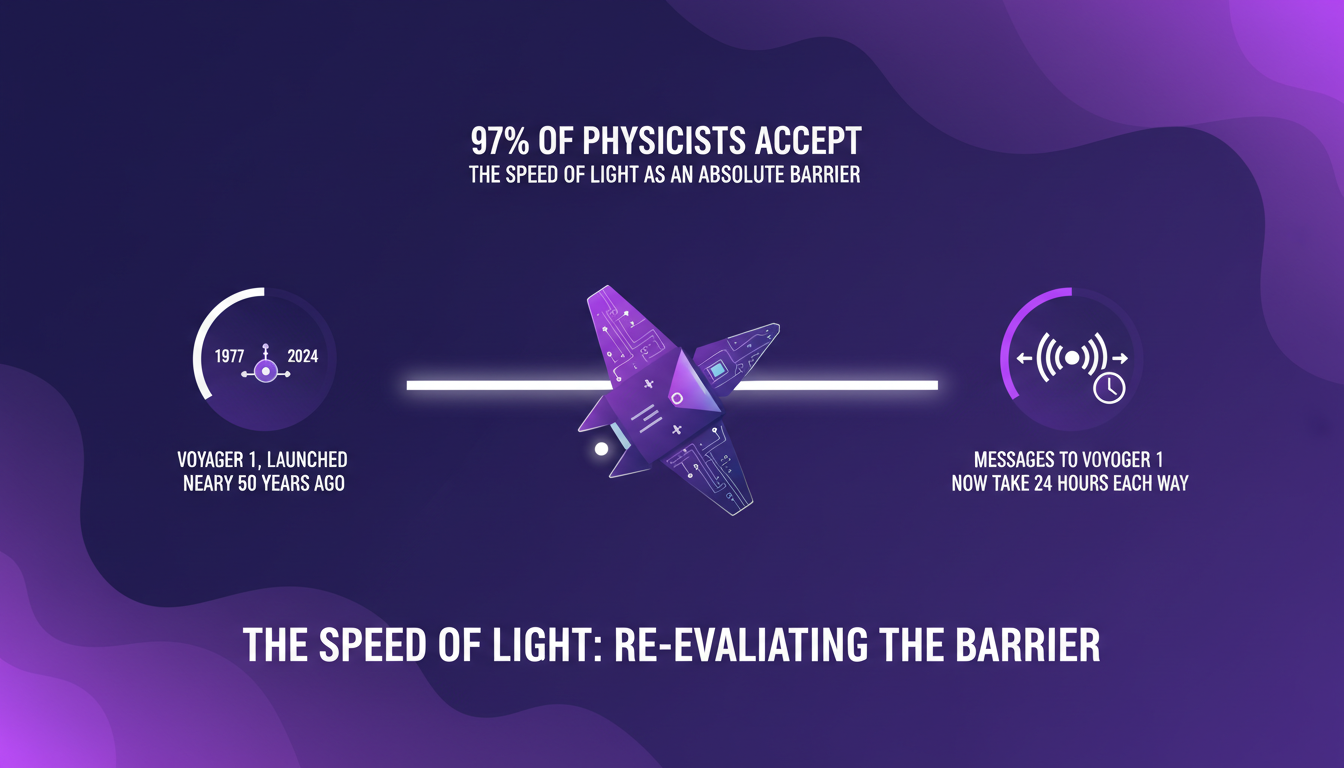
What's fascinating is that quantum mechanics might challenge this barrier. Recent research suggests that in a quantum space-time, particles could deviate from the trajectories predicted by classical relativity. This opens up immense prospects for technology and future exploration.
"The speed of light is seen as a fundamental constant, but perhaps fundamentally incomplete."
If we re-evaluate this barrier, the implications for future technologies and exploration are enormous. However, caution is needed. The theory of special relativity is mathematically elegant and physically verified, yet it does not account for quantum effects.
Quantum Mechanics: Hidden Variables and Super Determinism
Quantum mechanics diverges radically from classical trajectories. It introduces concepts like hidden variables and super determinism, which could revolutionize our understanding. Super determinism proposes a deeper reality than that described by current quantum mechanics. Imagine an invisible web of hidden variables influencing every measurement outcome.
In practical terms, super determinism could transform technology. However, this doesn't come without trade-offs. By adopting this approach, we must rethink some foundations of theoretical physics. But watch out, don't overhaul everything without discretion.
- Introduction of hidden variables in models
- Implications for future technologies
- Need for re-evaluation of existing theories
Super determinism could be a true paradigm shift, but it requires careful exploration of its implications.
Quantum Computing: Advancements and Logical Qubits
Advancements in quantum computing are tangible. Logical qubits, for instance, are the building blocks of this groundbreaking technology. With companies like Quantumum and IBM enhancing error correction methods, we're pushing the boundaries of current theories.
What excites is how this revolution could challenge the speed of light barrier. However, it's crucial to balance efficiency and complexity. Quantum computing projects can be costly and complex to manage, but the potential cost savings and time efficiencies are significant.
- Advancements in error correction
- Challenges in managing quantum projects
- Potential long-term savings
AI's Role in Scientific Discovery and Space Exploration
Artificial intelligence plays an increasing role in accelerating scientific discovery. By integrating AI with quantum mechanics, we can gain deeper insights. Imagine AI solving interstellar communication challenges in record time.
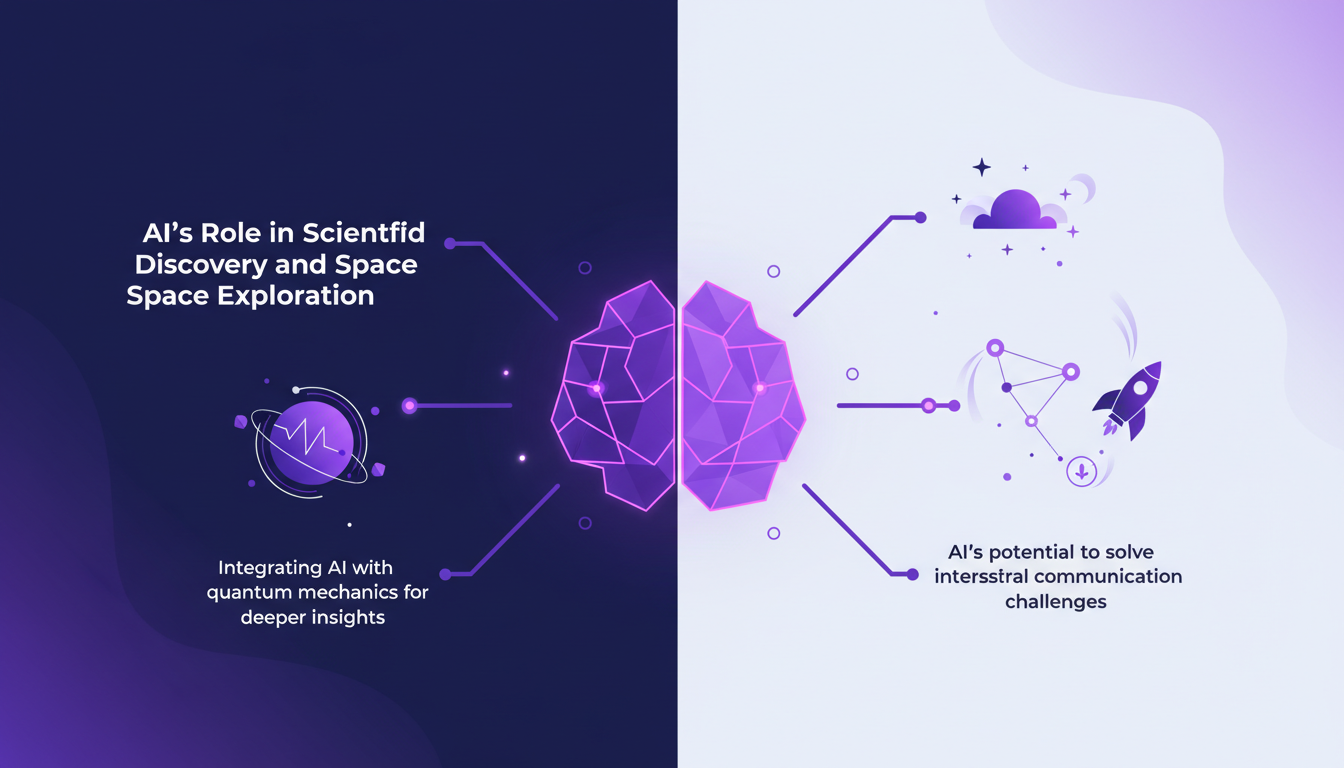
However, there are trade-offs. Relying on AI for critical scientific advancements can lead to unforeseen risks. But practical examples of AI-driven innovations in space exploration show tremendous promise.
- AI integrated with quantum mechanics
- Solutions to interstellar communication challenges
- Practical examples of AI breakthroughs
Future Implications: Physics and Space Exploration
So, what does the future hold for space exploration with quantum and AI advancements? Theoretical physics will undoubtedly guide new exploration methods. However, we must balance innovation with practical limitations.
These advancements could have a massive impact on future missions, but watch out for the trade-offs and limitations in pushing the boundaries of current physics. Space exploration, enriched by these technologies, continues to captivate our imagination.
- Innovations in space exploration
- Guided by theoretical physics
- Balance between innovation and practical limitations
Alright, we're on the brink of a breakthrough with this speed of light business. First, I see the stats: 97% of physicists treat it as a hard limit, but honestly, with quantum mechanics and AI, I don't think we should just stop there. Next, super determinism is a mind-bender, but it opens doors on how we might decode the universe. And then, with quantum computing, we've got tools that surpass everything we imagined 50 years ago. But watch out, we can't forget the current limitations of our tech, we're still far from mastering it all completely.
I'm excited to see how these advances will rewrite our future, especially in space exploration. To really dive into the topic, check out the video "La vitesse de la lumière n'est PAS une limite absolue" on YouTube. We're on the cusp of a new era, and your insights can make a difference. Share your experiences and thoughts, that's how we move forward together!
Frequently Asked Questions

Thibault Le Balier
Co-fondateur & CTO
Coming from the tech startup ecosystem, Thibault has developed expertise in AI solution architecture that he now puts at the service of large companies (Atos, BNP Paribas, beta.gouv). He works on two axes: mastering AI deployments (local LLMs, MCP security) and optimizing inference costs (offloading, compression, token management).
Related Articles
Discover more articles on similar topics
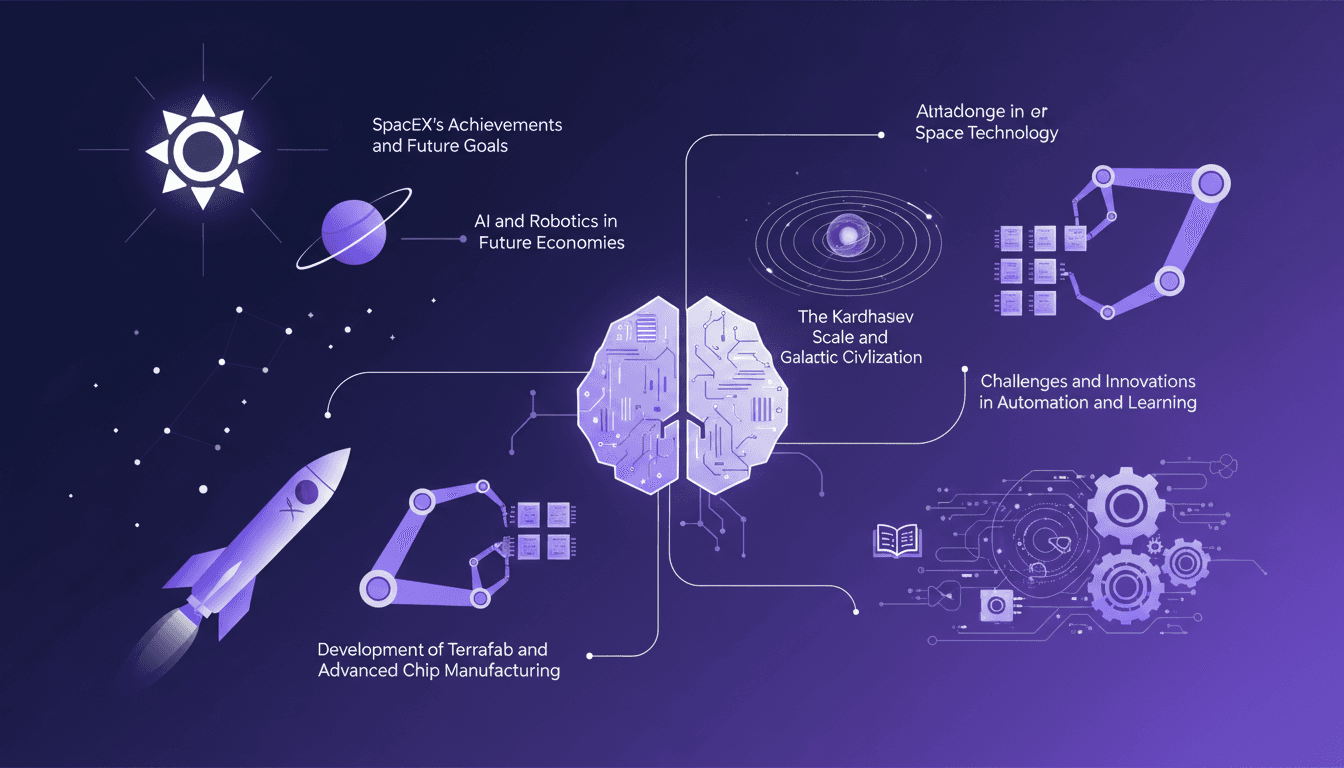
Harnessing Solar Energy for Space Exploration
I was there at the TERAFAB conference when Elon Musk went beyond the limits. Picture this: harnessing solar energy in space—it's not just sci-fi anymore. We're talking about 1 TW of potential energy, a figure that could redefine our future. But watch out, the technological challenges are immense, from advanced chip manufacturing to AI-driven automation. SpaceX isn't just dreaming; they're doing it. Our task is to understand how these innovations integrate into our daily lives. This is a future where an AI-based economy could multiply our current world. Buckle up, we're exploring the next frontier.
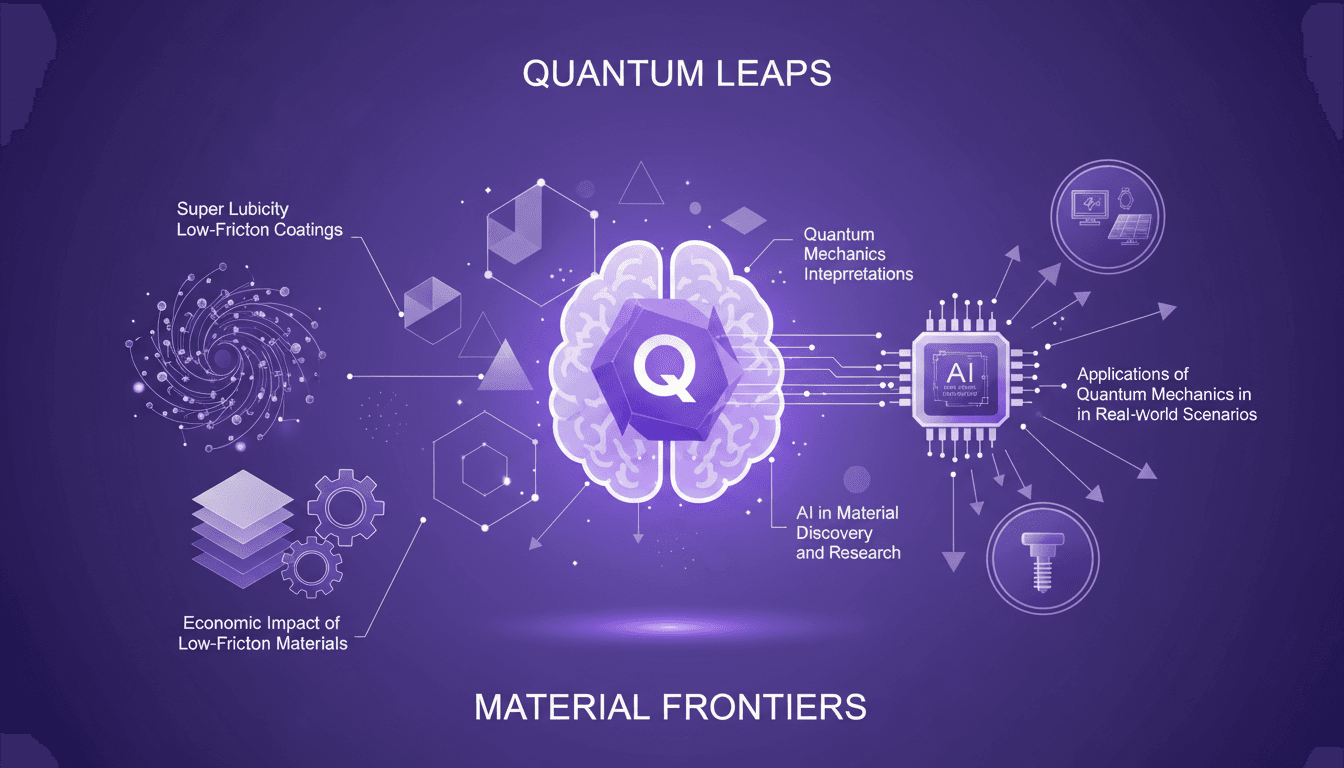
Super Lubricity: Material Revolution from Experience
I still remember the first time I heard about super lubricity. It sounded like sci-fi. But when I saw that 10^-6 friction coefficient in action, I knew we were onto something big. Material science is on the brink of a revolution, and these breakthroughs aren't just theoretical. They're redefining entire industries. In this article, I'll show you how super lubricity and other quantum advancements are practically transforming our material world. We'll dive into economic implications, challenges in quantum mechanics interpretations, and the role of AI in material discovery. In short, we're entering a world where what seemed impossible yesterday is becoming our everyday reality today.
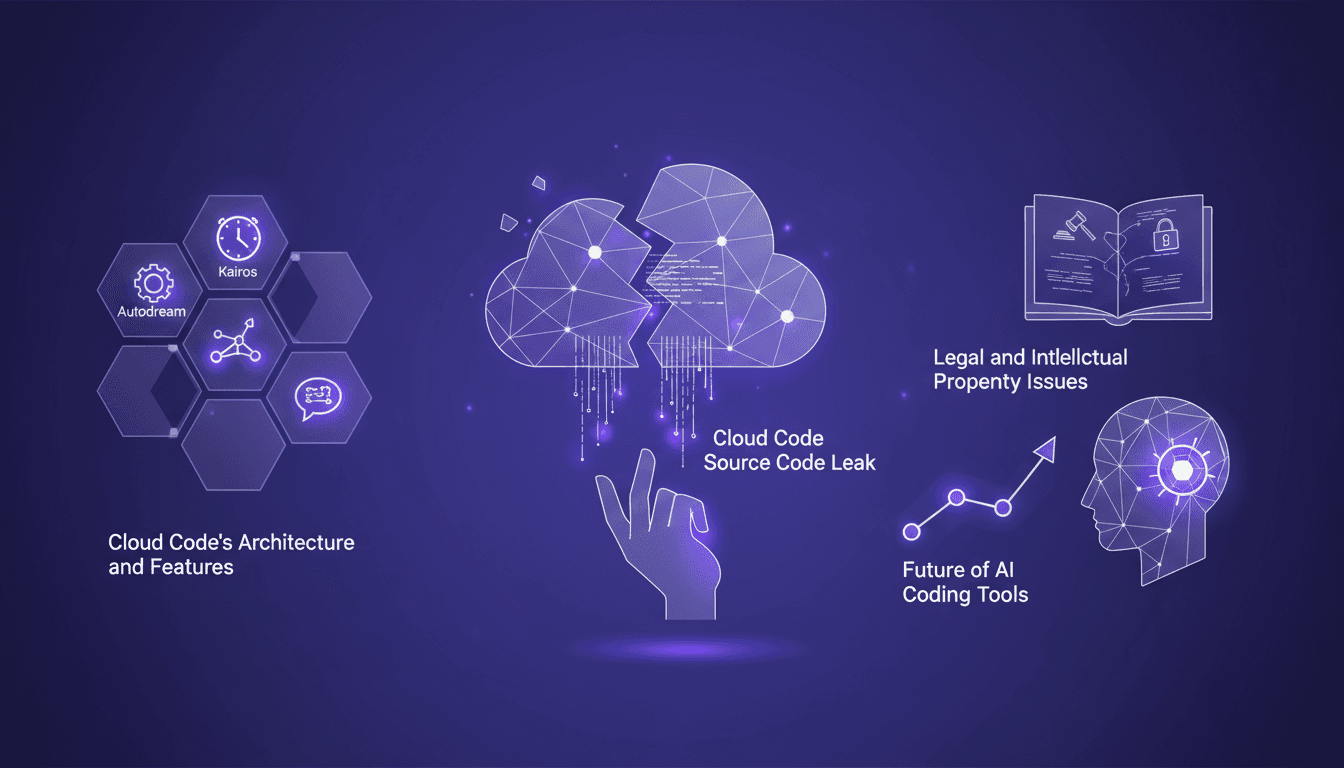
Cloud Code Source Leak: Implications Unveiled
I was knee-deep in debugging when the news hit: Cloud Code's source code had leaked. My first thought? This changes everything. As someone who's worked with similar architectures, I get the stakes. Let's dive into the architecture, security implications, and what the future holds for AI coding tools. 512,000 lines of code converted overnight, and over 41,000 copies already circulating. It's time to see how we, as builders, need to adapt to this new reality.

North Pole Shift: Tech Impact and Navigation
I remember the first time I realized the magnetic north pole was on the move. It was a quiet day at the lab, and suddenly, our navigation systems were off by several degrees. That's when I knew something big was happening. The magnetic north pole isn't just a curiosity for geologists; it's a critical component of our navigation systems and technology. As it moves, the implications ripple through various industries and even nature itself. Imagine having to repaint 150 kilograms of numbers on US airport runways. That's what a rapid pole shift means. In this article, I'll share the impacts of this phenomenon on navigation, technology, and even animal life, while exploring the geological influences on Earth's magnetic field.

EVO 2: AI Revolutionizing DNA Analysis
I've always been fascinated by the idea that AI could one day write the language of life itself. With EVO 2, we're no longer in the realm of science fiction, but in a reality that's transforming synthetic biology. I connect the dots between genetic mutation predictions and the fight against antibiotic resistance, showing you how this tool is revolutionizing DNA analysis. EVO 2 is not just an AI model; it's a revolution in our understanding of the human genome. But beware, this power comes with its risks. How do we balance innovation and ethics? What are the future impacts? I share the mistakes I've made and how I've integrated EVO 2 into my workflows to maximize its potential without falling into its traps.