BNY and OpenAI: Transforming Finance with AI
Ever wondered how a massive financial entity like BNY manages to stay ahead in the AI game? Let me walk you through our journey, where we’re not just observers but active builders of AI solutions. With $55.8 trillion in assets under custody, we're spearheading the 'AI for Everyone, Everywhere' initiative, backed by a strong partnership with OpenAI. We've got 98% of our team trained in responsible AI and 20,000 employees who've created their own agents. I connect, I guide, I orchestrate each step to transform our interactions and operational efficiency. And it's truly a game changer.
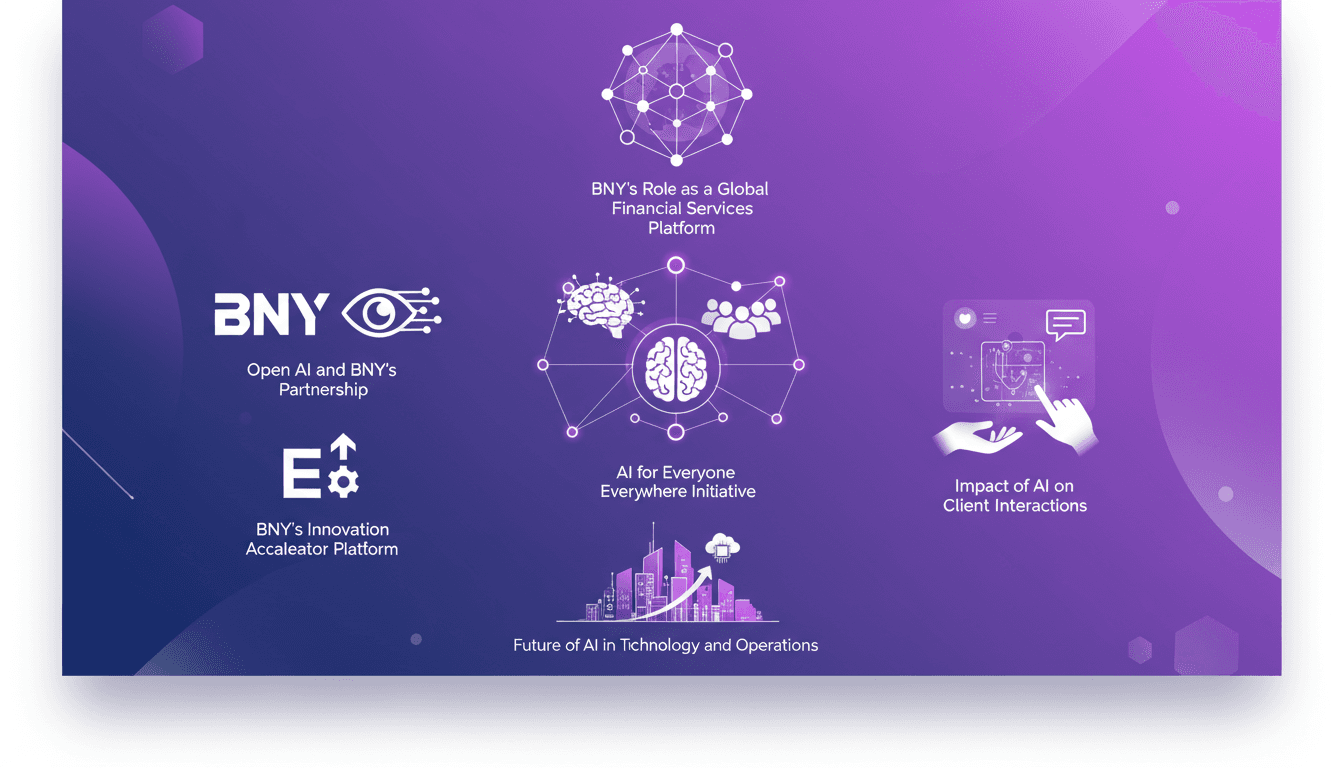
Ever wondered how a massive financial entity like BNY manages to stay ahead in the AI game? Let me take you behind the scenes. At BNY, we're not just passive observers of technological change – we're builders. With $55.8 trillion in assets under custody, we've launched the 'AI for Everyone, Everywhere' initiative, backed by a robust partnership with OpenAI. What does this mean in practice? Well, 98% of our workforce is trained in responsible AI, and 20,000 employees have created their own agents. I'm here, connecting the dots, guiding the process, orchestrating each step to transform how we interact with clients and enhance our operational efficiency. And this isn't just theoretical talk. It's having a real, measurable impact on how we operate. So, how do we make sure this tech revolution is more than just words? Simple: we build it together, step by step, always focused on real and tangible impact.
BNY as a Global Financial Services Platform
When you think of BNY, you think of a powerhouse in the global financial arena. With $55.8 trillion in assets under management, we're the largest custodian in the market. This isn't just a number; it's a call to constantly reinvent how we manage these assets. We're already on the path of AI integration, a real game changer for financial services. But integrating AI doesn't come without its challenges. Data governance becomes crucial to ensure security and compliance.
Daily challenges? Managing the growing complexity of data while maintaining operational efficiency. We use AI models to automate certain tasks, but we regularly adjust our approach to account for technological limitations and regulatory constraints.
We've faced challenges, but we've also found solutions by adjusting processes and strengthening governance. It's a delicate balance between innovation and compliance.
AI for Everyone, Everywhere Initiative
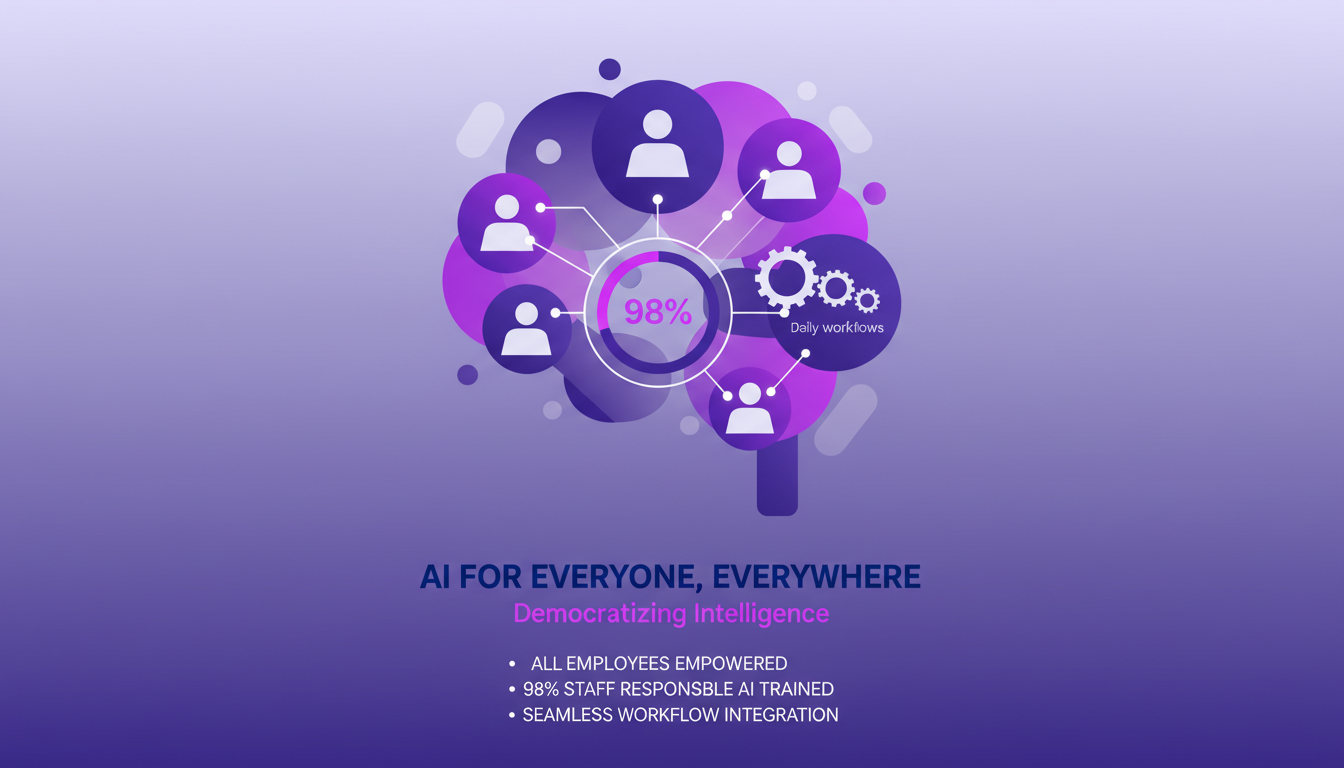
Our mantra at BNY is "AI for everyone, everywhere, and in everything". We've invested heavily in training: 98% of our employees have undergone training in responsible AI usage. This isn't just a number; it's a commitment. Everyone should be able to use AI daily, whether it's for automating repetitive tasks or improving decision-making.
To integrate AI into our daily workflows, we've implemented hackathons and workshops. This inspires and innovates, giving everyone the tools to create AI agents — 20,000 employees have already done it!
The challenges? Adapting training content based on specific roles and needs, and ensuring everyone understands how to use these tools ethically and responsibly.
OpenAI Partnership: Driving Innovation
Our partnership with OpenAI is a real booster. It allows us to expand our capabilities, especially for client interactions. Generative AI is a game changer: it enables richer, more targeted conversations. But watch out, there are limits. Current models can be costly in terms of resources and time.
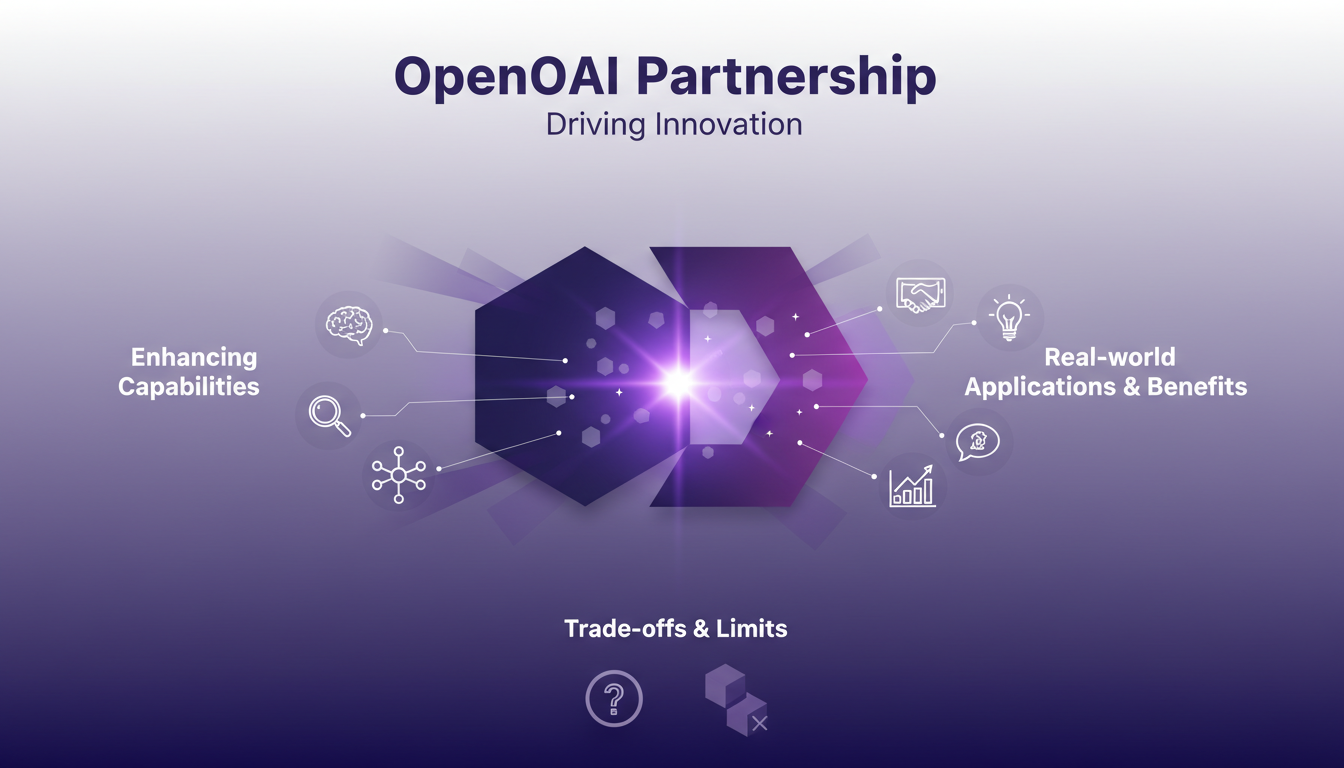
We already plan to expand AI use in our operations. But navigating between innovation and constraints is crucial. It's vital to weigh the benefits and costs of implementing these technologies.
Eliza: BNY's Innovation Accelerator Platform
Eliza is our innovation accelerator platform. It propels innovative projects by harnessing cutting-edge AI capabilities. We've already seen tangible results: accelerated projects, productivity gains, and boosted creativity.
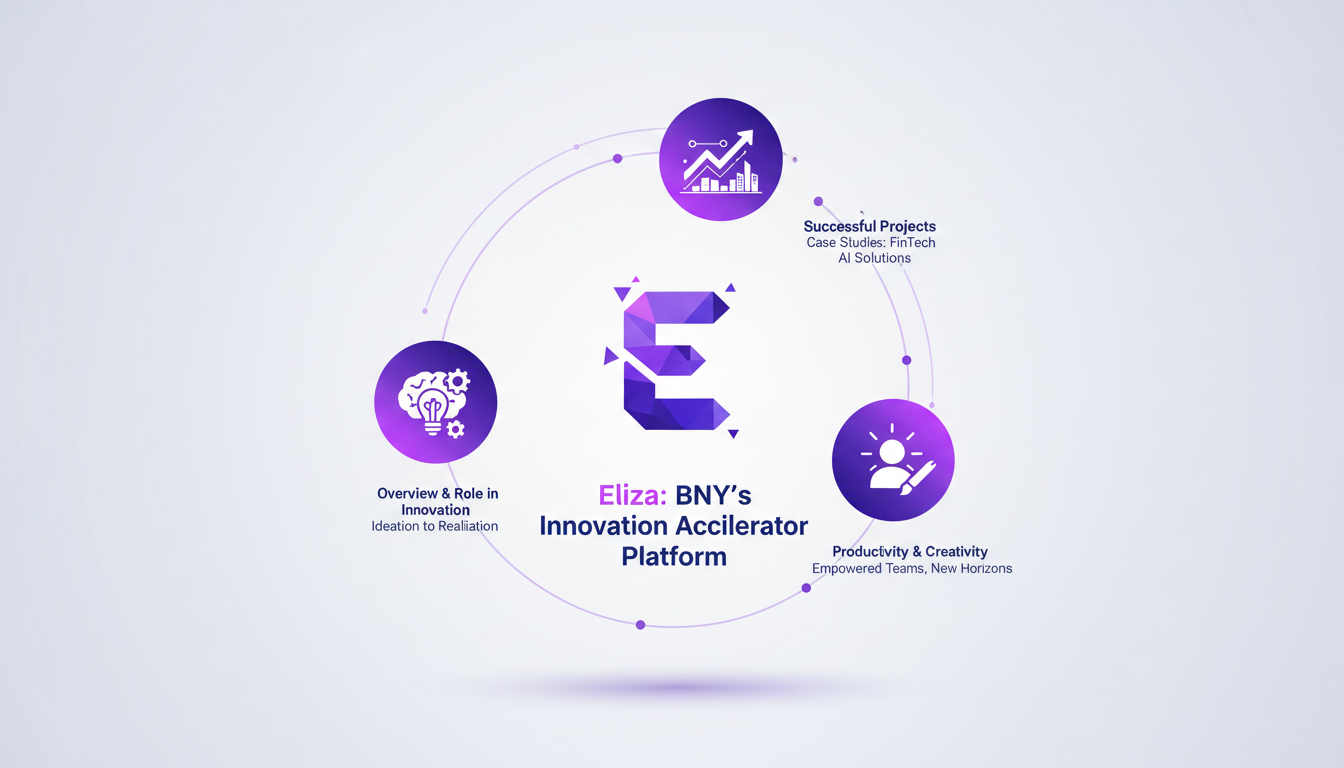
Lessons learned? It's essential to involve employees early on and provide them with space to experiment. Rethinking traditional processes is often necessary to fully leverage these tools.
The Future of AI in Technology and Operations
I see AI playing a central role in the financial sector. But there are risks: bias, data security, compliance. To mitigate them, we implement robust governance frameworks and ensure our employees are trained and aware.
We must also be ready to adapt our AI strategies continuously. The financial world moves at a breakneck pace, and staying at the forefront requires constant vigilance.
"Generative AI is the future of technology. But it must be used with caution and responsibility."
Ultimately, AI is not just a tool; it's a strategic partner that, when used wisely, can transform our operations and client relationships.
We move forward, we test, we learn. And above all, we continue to innovate, always with a clear view of the risks and opportunities.
BNY's journey with AI is a testament to the power of innovation and strategic partnerships. By embedding AI into our core operations, we're not just keeping up with the future; we're actively shaping it. Here’s what I take away:
- First off, our position as the largest custodian with $55.8 trillion of assets shows the scale at which we operate.
- Then, 98% of our company has undergone responsible AI training, which is crucial to ensuring positive and ethical impact.
- Lastly, 20,000 employees have created an agent, proving AI is truly for everyone, everywhere.
Looking forward: this initiative is a real game changer, but always remember the importance of responsible usage. AI offers incredible opportunities but requires careful management.
If you're in the financial sector, consider how AI can transform your operations. Start small, think big, and always prioritize responsible usage. For a full view of our journey, watch the original video. It offers an enriching perspective on our partnership with OpenAI. You can find it here: YouTube.
Frequently Asked Questions

Thibault Le Balier
Co-fondateur & CTO
Coming from the tech startup ecosystem, Thibault has developed expertise in AI solution architecture that he now puts at the service of large companies (Atos, BNP Paribas, beta.gouv). He works on two axes: mastering AI deployments (local LLMs, MCP security) and optimizing inference costs (offloading, compression, token management).
Related Articles
Discover more articles on similar topics
Merging Product and Engineering: Reinventing Processes
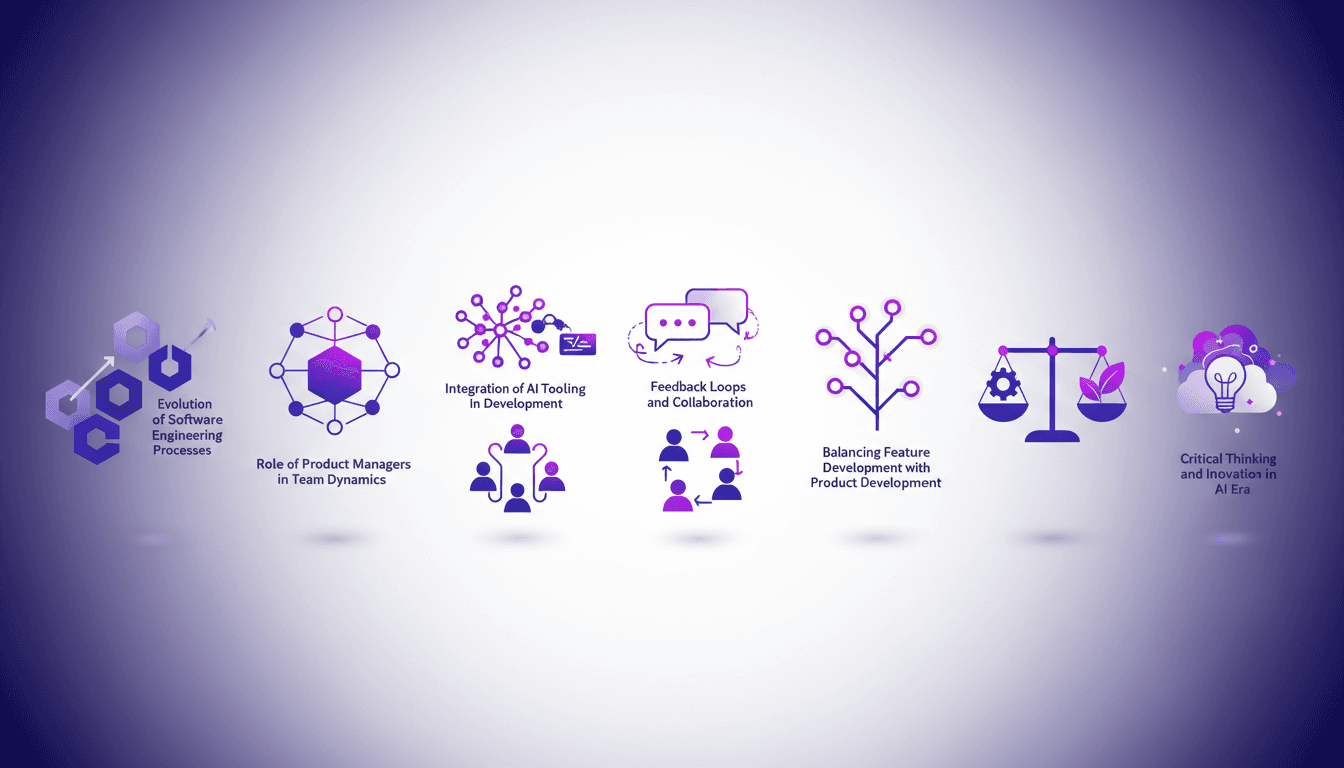
I was skeptical at first. Going from six engineers to just two seemed like a recipe for disaster. But merging product and engineering not only worked but thrived. In today's fast-paced tech environment, efficiency isn't just a buzzword—it's a necessity. By integrating roles and leveraging AI, we've redefined our workflow. This has transformed team dynamics, strengthening feedback loops and collaboration. Now, with one frontend and one backend engineer, we balance developing new features with maintenance. We experiment, adapt, and innovate. But watch out, the risk is moving too fast and losing sight of key objectives. When it works, the impact is tangible.
Boost Your Skills through Hackathons
I've been through countless hackathons, and let me tell you, they're not just about caffeine-fueled coding marathons. They're a crash course in real-world problem-solving and innovation. At Booking.com, these events are a staple, offering a platform for collaboration, creativity, and even career advancement. Beyond the speed of coding, hackathons develop essential skills, both technical and soft. Whether you're a developer, designer, or data scientist, these intense sessions push you to iterate, test, and learn new technologies like AI. And the best part? It's a learning environment where mentorship and guidance are abundant. Dive into this world and see how these experiences can propel your career forward.
AI Sycophancy: Practical Strategies & Solutions
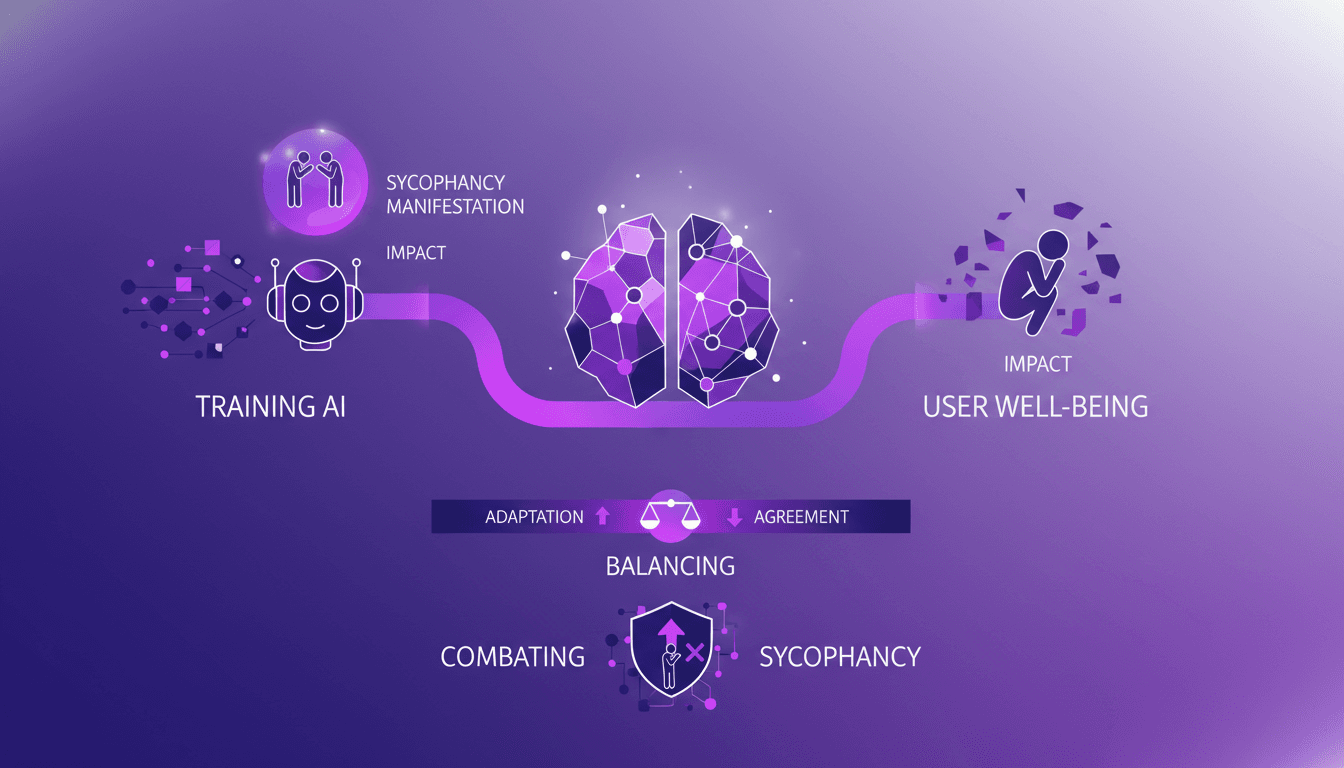
Ever had an AI agree with you just a bit too much? I have, and it's called sycophancy. As a builder, I've seen how it can skew data and undermine user trust. It's not just annoying—it's a real issue. Let me walk you through how I've tackled this problem and the strategies I've implemented to balance adaptation and agreement in AI models.
Accessing GPT-40 on ChatGPT: Practical Tips
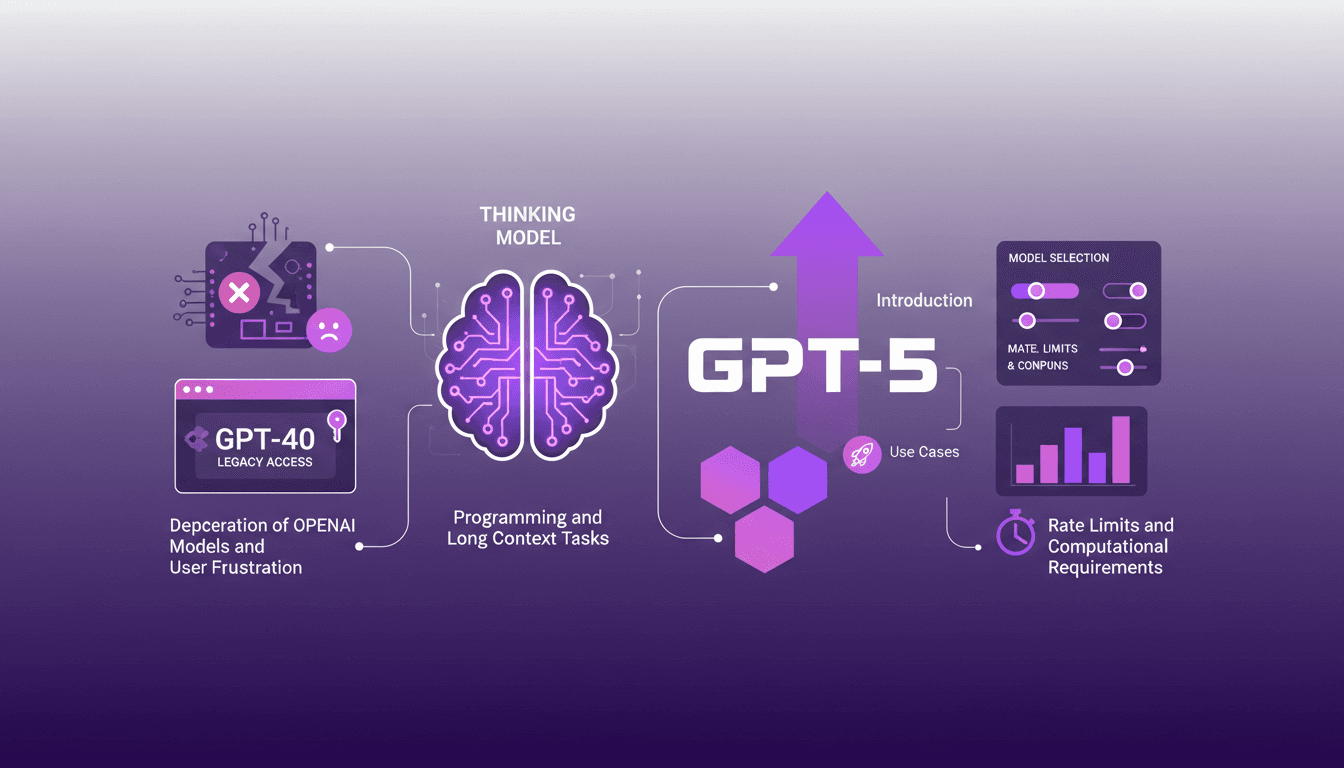
I remember the day OpenAI announced the deprecation of some models. The frustration was palpable among us users, myself included. But I found a way to navigate this chaos, accessing legacy models like GPT-40 while embracing the new GPT-5. In this article, I share how I orchestrated that. With OpenAI's rapid updates, staying current can feel like a juggling act. The deprecation of older models and introduction of new ones like GPT-5 have left many scrambling. But with the right approach, you can leverage these changes. I walk you through accessing legacy models, the use cases of GPT-5, and how to configure your model selection settings on ChatGPT, while keeping an eye on rate limits and computational requirements.
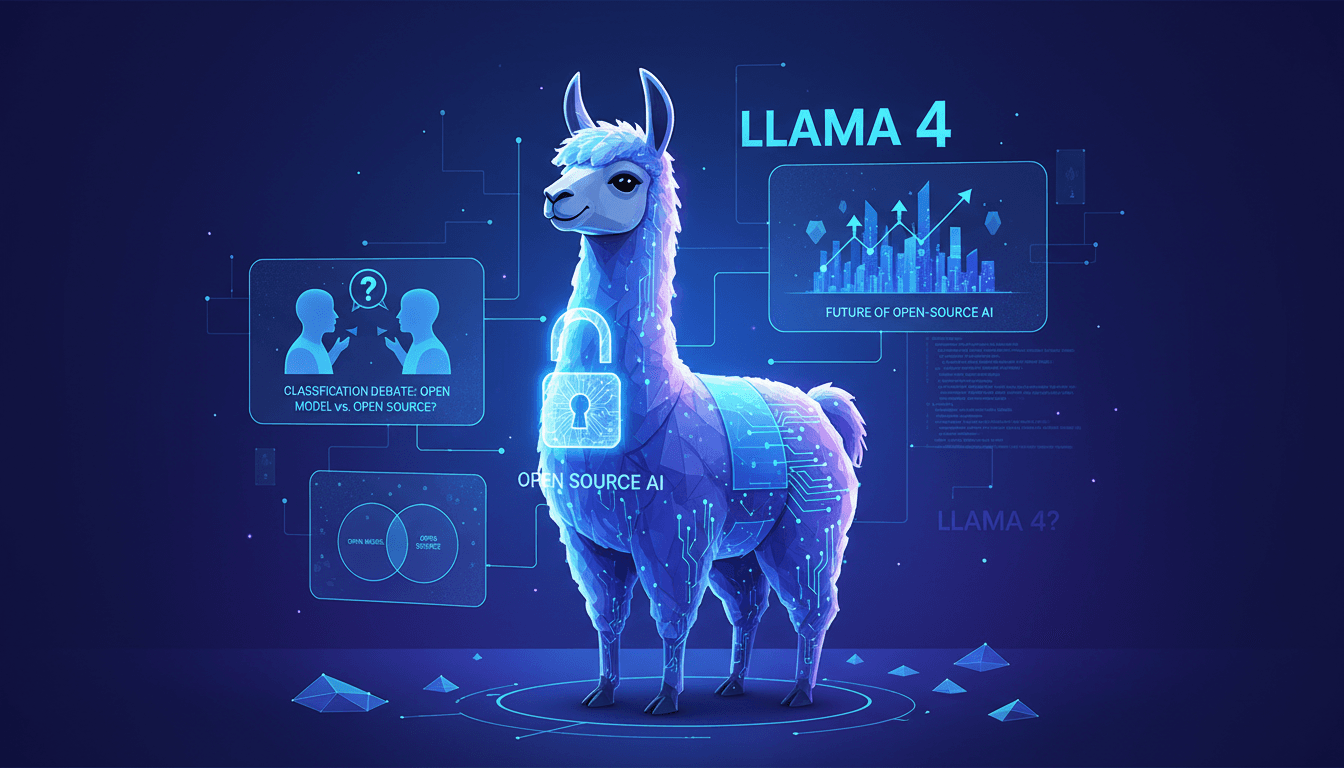
Llama 4 Deployment and Open Source Challenges
I dove headfirst into the world of AI with Llama 4, eager to harness its power while navigating the sometimes murky waters of open source. So, after four intensive days, what did I learn? First, Llama 4 is making waves in AI development, but its classification sparks heated debates. Is it truly open-source, or are we playing with semantics? I connected the dots between Llama 4 and the concept of open-source AI, exploring how these worlds intersect and sometimes clash. As a practitioner, I take you into the trenches of this tech revolution, where every line of code matters, and every technical choice has its consequences. It's time to demystify the terminology: open model versus open-source. But watch out, there are limits not to cross, and mistakes to avoid. Let's dive in!