AI's Transformative Impact on Software Engineering
I vividly remember the first time I integrated AI into my software engineering workflow. It felt like moving from a bicycle to a jet. But let's be honest, it's not all smooth sailing. Navigating AI's transformative impact requires overcoming user adoption hurdles and understanding the trade-offs between generalized and specialized models. In the OpenAI Town Hall with Sam Altman, we dive into how AI is revolutionizing software engineering, the challenges, and the real gains in efficiency and cost. From cost reduction to personalization and deflationary economic impacts, it's about steering this tech smartly. But watch out, every technical choice comes with its own limits and constraints. Let's dive into what's genuinely useful and what's just noise.
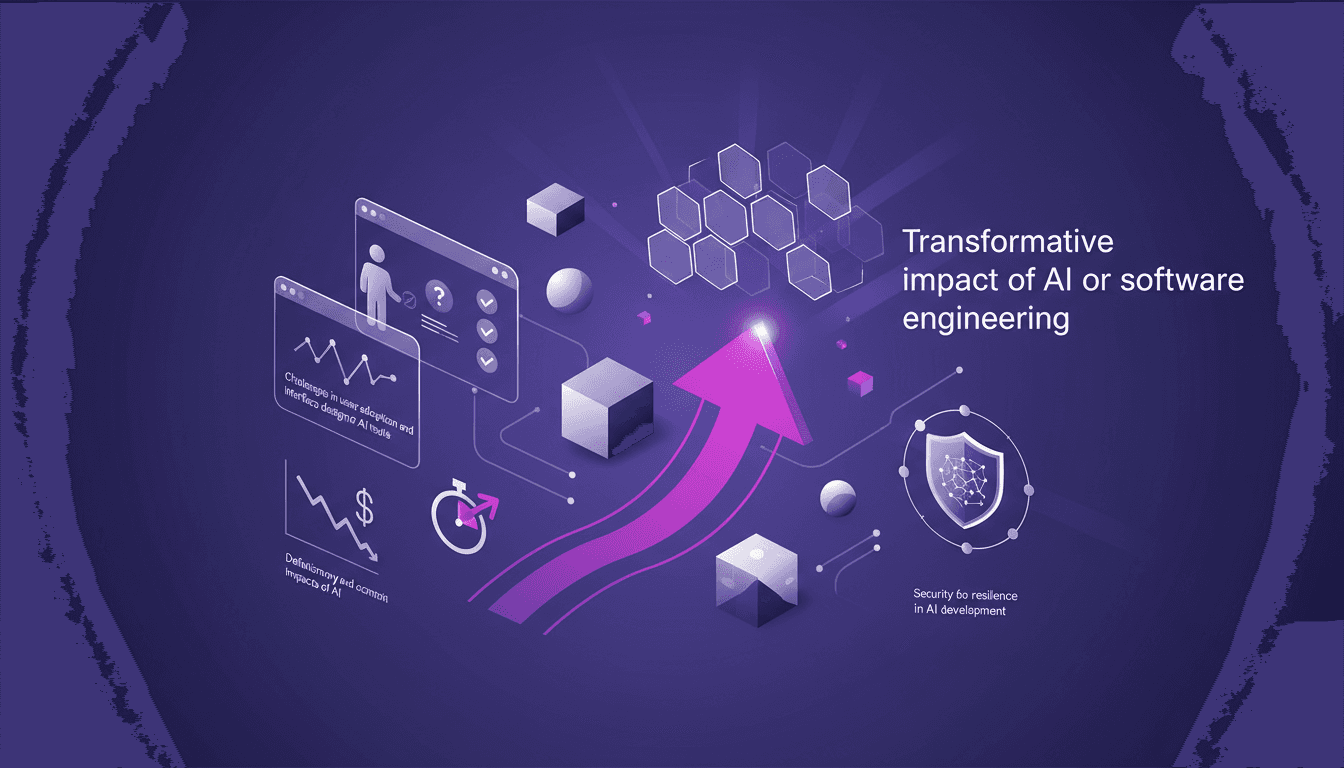
I remember the first time I integrated AI into my software engineering workflow. It was like switching from a bicycle to a jet. But let's not kid ourselves—it's not all smooth sailing. Integrating AI means juggling user adoption hurdles and the trade-offs between generalized and specialized models. In the OpenAI Town Hall with Sam Altman, we dove into AI's transformative impact on software engineering. We're talking cost reduction, speed improvements, personalization... but watch out, every technical choice comes with its limits. From AI's deflationary economic impact to its role in education and human collaboration, steering this tech requires nuance. Plus, there's the question of security and resilience in AI development. As a practitioner, I know that every decision counts and it's crucial to separate what's genuinely effective from what's just noise. Let's dive into what truly transforms the way we code.
Transformative Impact of AI on Software Engineering
AI tools have turned my workflow upside down, like going from a bicycle to a jet. The promise of faster development cycles and smarter debugging is now within our grasp. But beware, it's not all sunshine and rainbows. There's a learning curve, and user adoption is not a given. A concept I find particularly relevant here is Jevans Paradox: the more efficiency we gain, the more we consume. In our case, the better AI tools make our work, the more we tend to use them, sometimes to the point of dependency. And that's where caution is needed: don't over-rely on AI, as human oversight remains crucial.
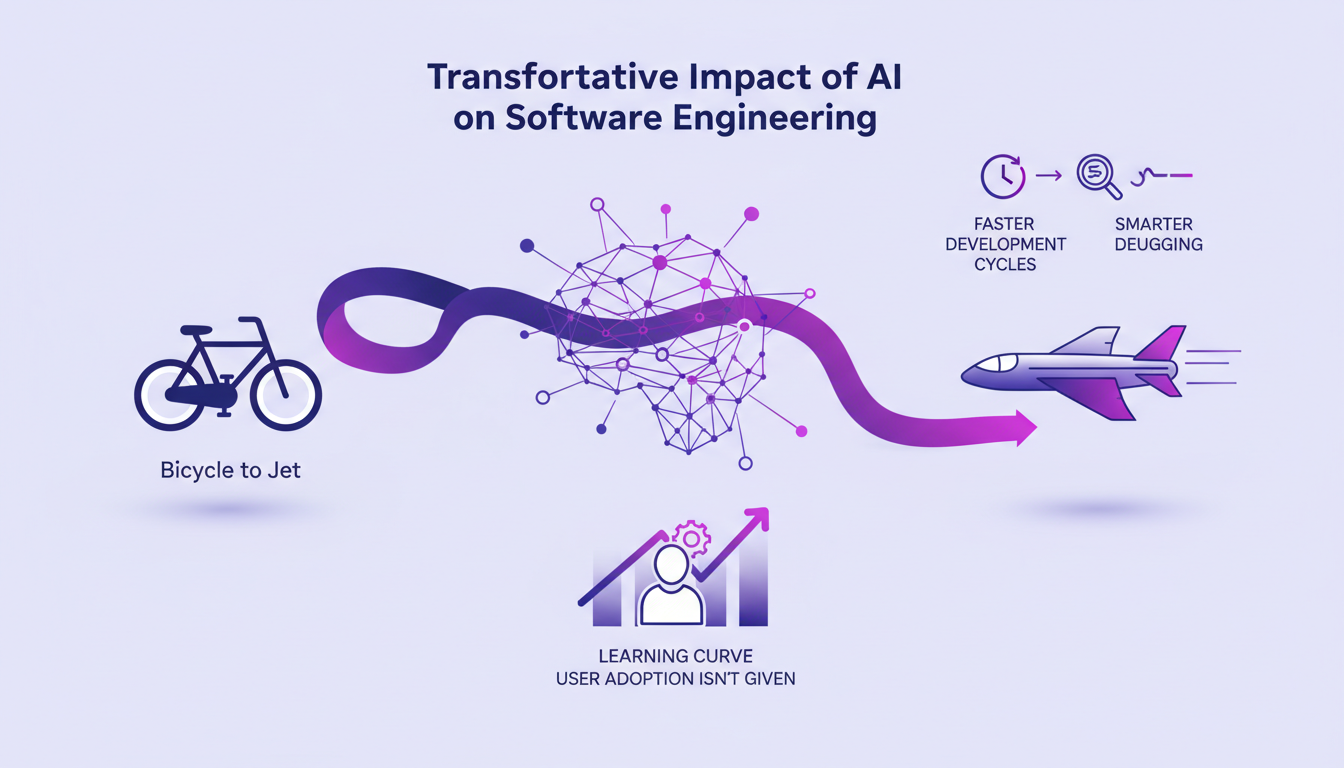
For example, a special version of a model used internally is 5.2 times more capable than the current one. Imagine the impact on productivity! But it doesn't mean the role of engineers will become obsolete. On the contrary, it will evolve into more value creation.
- Radical workflow change: from bicycle to jet
- Watch out for over-reliance: human oversight needed
- Jevans Paradox: increased efficiency, increased consumption
Overcoming User Adoption and Interface Design Challenges
I've often faced user interfaces that, while promising, turned out to be complex and confusing. Intuitive design is crucial but often overlooked. Balancing complexity with usability requires constant iterative testing. Sometimes, simpler is better. Don't overcomplicate interfaces! Feedback loops with users are essential for refining these tools.
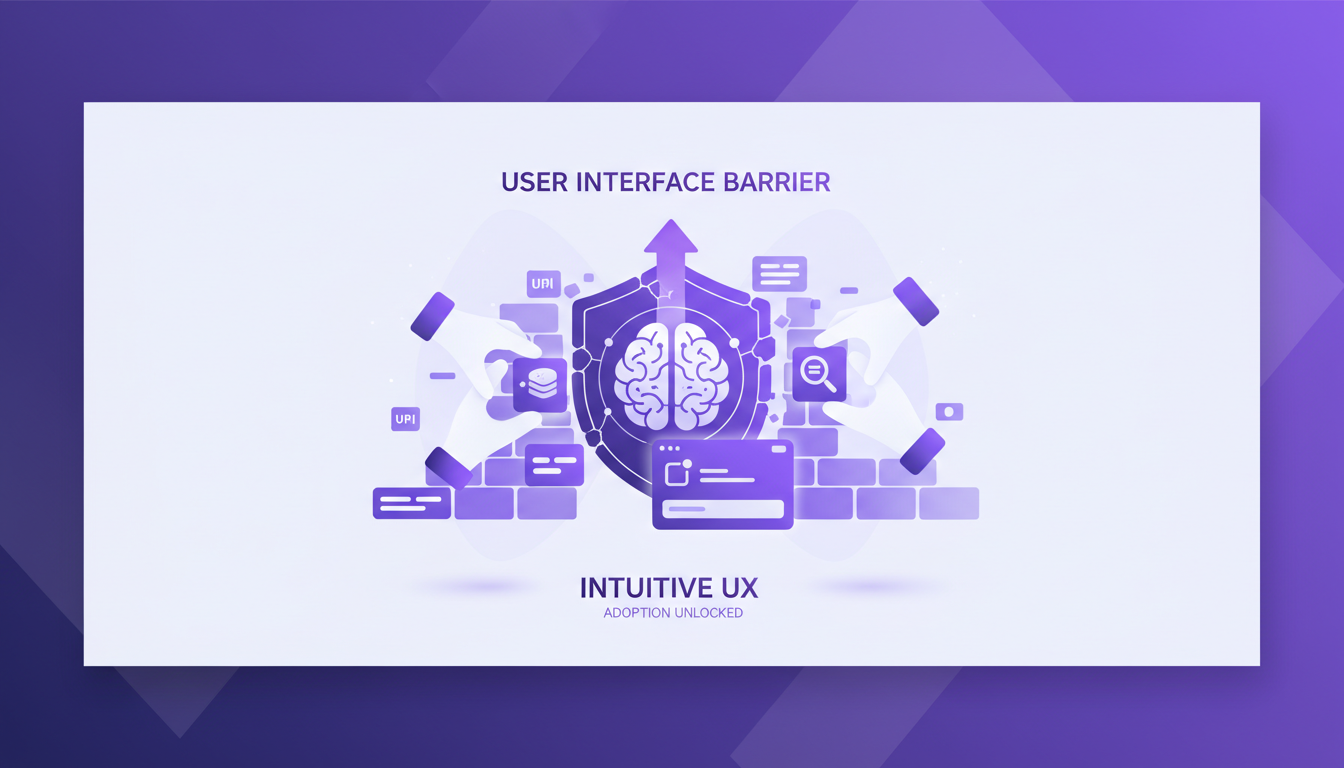
For instance, I found myself working with a multi-agent orchestration tool where the interface's complexity was a major hurdle. Users felt lost, and simplifying it improved engagement. But beware, it's not an exact science. Every user has their preferences.
- Interfaces can be a barrier: simplify
- Iterative testing to balance complexity and usability
- User feedback loops: essential for refinement
Cost Reduction and Speed Improvement in AI Outputs
AI can significantly cut costs, but don't be fooled: the initial setup isn't cheap. Speed improvements are real, but watch those inference costs, which could hit $100 or even $1,000. Batch processing and model optimization can save time and money. However, deflationary pressure can affect pricing strategies.
For instance, in a recent project, I chose to pilot on a small scale before scaling up. This saved me from costly mistakes. Think about it: it's better to adjust gradually than risk it all at once.
- Real cost reduction, but watch inference costs
- Batch processing and optimization: save time and money
- Pilot small before scaling: avoids costly mistakes
Customization and Personalization in Software Development
AI allows for unprecedented levels of customization. Specialized models can outperform generalized ones in niche areas. But personalization requires careful attention to data privacy. Balancing customization with performance is a constant juggling act. And don't forget: more data isn't always better. Quality over quantity.
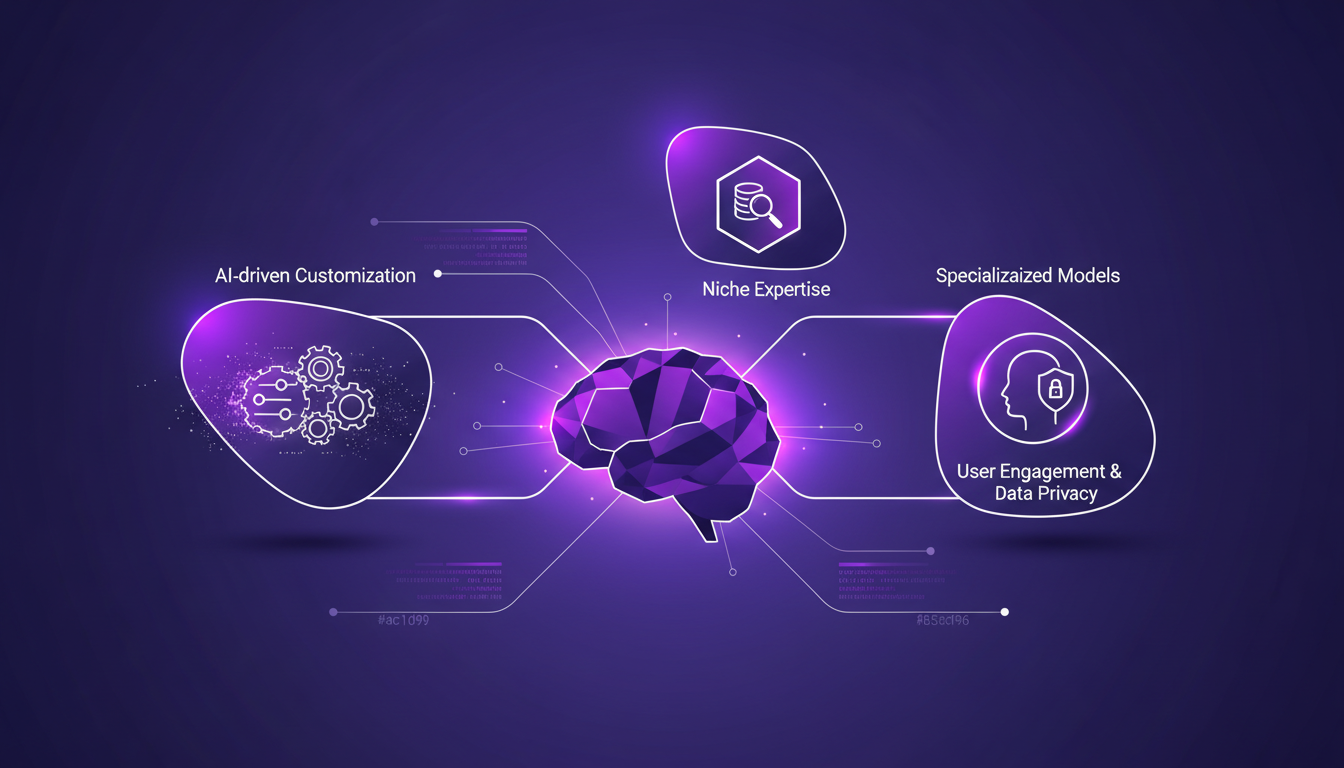
In my experience, specialized models often require less data to perform well but are costlier to develop. It's worth it if you're targeting a niche market.
- Increased customization thanks to AI
- Specialized vs generalized models: choose according to need
- Data privacy: essential for personalization
Ensuring Security and Resilience in AI Development
Security in AI isn't optional. It's foundational. Preparing for failures is key to resilience. I've learned this the hard way. Regular audits and testing for vulnerabilities are non-negotiable. AI as a reasoning engine requires robust ethical guidelines. Stay updated on security protocols: it's a fast-evolving field.
In one of my projects, we integrated regular security audits from the start. This not only strengthened our system but also reassured our clients about our commitment to security.
- Security non-negotiable: foundational base
- Preparing for failures: key to resilience
- Regular updates on security protocols
So, AI is truly a game changer in software engineering, but let's be clear, it's not a silver bullet. I've seen significant cost savings and customizations that make apps more user-friendly, but there are real challenges too. First, it's crucial to design user interfaces that don't alienate users, or all that AI potential goes down the drain. Then, implementations must remain cost-effective because expenses can quickly spiral with models 100 times more capable. Finally, security should never be overlooked, especially with such powerful models.
Looking ahead, I'd say AI offers incredible opportunities, but we need to tread carefully. Start small, iterate, and always watch out for both opportunities and pitfalls.
If you're ready to integrate AI into your workflows, watch the full 'OpenAI Town Hall' video for a deeper dive. It's a valuable resource for anyone looking to maximize AI's potential.
Frequently Asked Questions

Thibault Le Balier
Co-fondateur & CTO
Coming from the tech startup ecosystem, Thibault has developed expertise in AI solution architecture that he now puts at the service of large companies (Atos, BNP Paribas, beta.gouv). He works on two axes: mastering AI deployments (local LLMs, MCP security) and optimizing inference costs (offloading, compression, token management).
Related Articles
Discover more articles on similar topics
Elon Musk's Predictions: AI and Energy Future
I've been closely following Elon Musk's ventures, and his latest interview at Davos really got me thinking about the practical steps we need to take to prepare for an AI-driven future. With SpaceX and Tesla leading the charge, Musk isn't just dreaming of Mars, but also of sustainable abundance powered by AI and renewable energy. But watch out, there are technical limits to consider. For instance, rocket reusability might reduce space access costs, but it's not without challenges. AI might surpass human intelligence one day, but before that, let's focus on the actionable steps we can take today to harness this tech revolution. Ready to dive into Elon Musk's predictions? Let's go.

Building Reusable Rockets: Challenges and Wins
When I first thought about building reusable rockets, I was starting from zero. No roadmap, no precedent—just a belief that it could change the game. Back then, nobody was tackling it, the industry wasn't even trying. But I knew it was something worth pushing for. So we took that crazy idea and turned it into reality. Of course, it wasn't without challenges. Starting a space company isn't child's play, especially when you're one of the first to believe that reusing rockets is possible. I'll walk you through how we tackled these obstacles, from the initial conviction to the crucial entrepreneurial decisions. It's a story of perseverance, innovation, and believing in ideas that, on paper, seemed impossible.
Maturing AI Agents and Systems by 2026
I've watched AI grow from simple scripts to complex systems, often finding myself orchestrating solutions with agents that, let's be honest, sometimes fell short. But we're talking about 2026 now, and I can sense something big is brewing. Multi-agent systems are getting refined, impacting real-world sectors like healthcare and startups. We have to discuss OpenAI's massive investments in compute power and the regulatory challenges ahead. As a builder, I see opportunities for us, especially for startups looking to carve out a spot in this rapidly evolving ecosystem. Buckle up, because AI agents are coming with a punch that will redefine productivity and job roles.
Ollama Launch: Tackling Mac Challenges
I remember the first time I fired up Ollama Launch on my Mac. It was like opening a new toolbox, gleaming with tools I was eager to try out. But the real question is how these models actually perform. In this article, we'll dive into Ollama Launch features, put the GLM 4.7 flash model through its paces, and see how Claude Code stacks up. We'll also tackle the challenges of running these models locally on a Mac and discuss potential improvements. If you've ever tried running a 30-billion parameter model with a 64K context length, you know what I'm talking about. So, ready to tackle the challenge?

Vending at CES 2026: Strategies and Insights
I still remember setting up my vending booth at CES 2026, right in the middle of that buzzing hive of innovation. It was more than just a sales opportunity; it was a chance to connect directly with tech enthusiasts and industry leaders. But let's be real, vending at an event this massive isn't just about showing up. I had to navigate logistical hurdles, understand the constant flow of visitors (and not just hand out flyers). From setup to ongoing conversations with potential clients, every step was a lesson in optimizing presence and maximizing impact. If you think it's just about the tech, you're missing the point. It's a complex dance between strategic preparation and on-the-ground agility.