Choosing the Right Multi-Agent Architecture
I remember the first time I tried to implement a multi-agent system. Overwhelmed by the architecture choices, I made a few missteps before finding a workflow that actually works. Here’s how you can choose the right architecture without the headaches. Multi-agent systems can really change how we tackle complex tasks by distributing workload and enhancing interaction. But pick the wrong architecture, and you could face an efficiency and scalability nightmare. We'll explore sub agents, handoffs, skills, and router architectures, plus criteria for evaluating them. And why sometimes, starting with a single-agent system is a smart move. I'll share where I stumbled and where I succeeded to help you avoid the pitfalls. Ready to dive in?
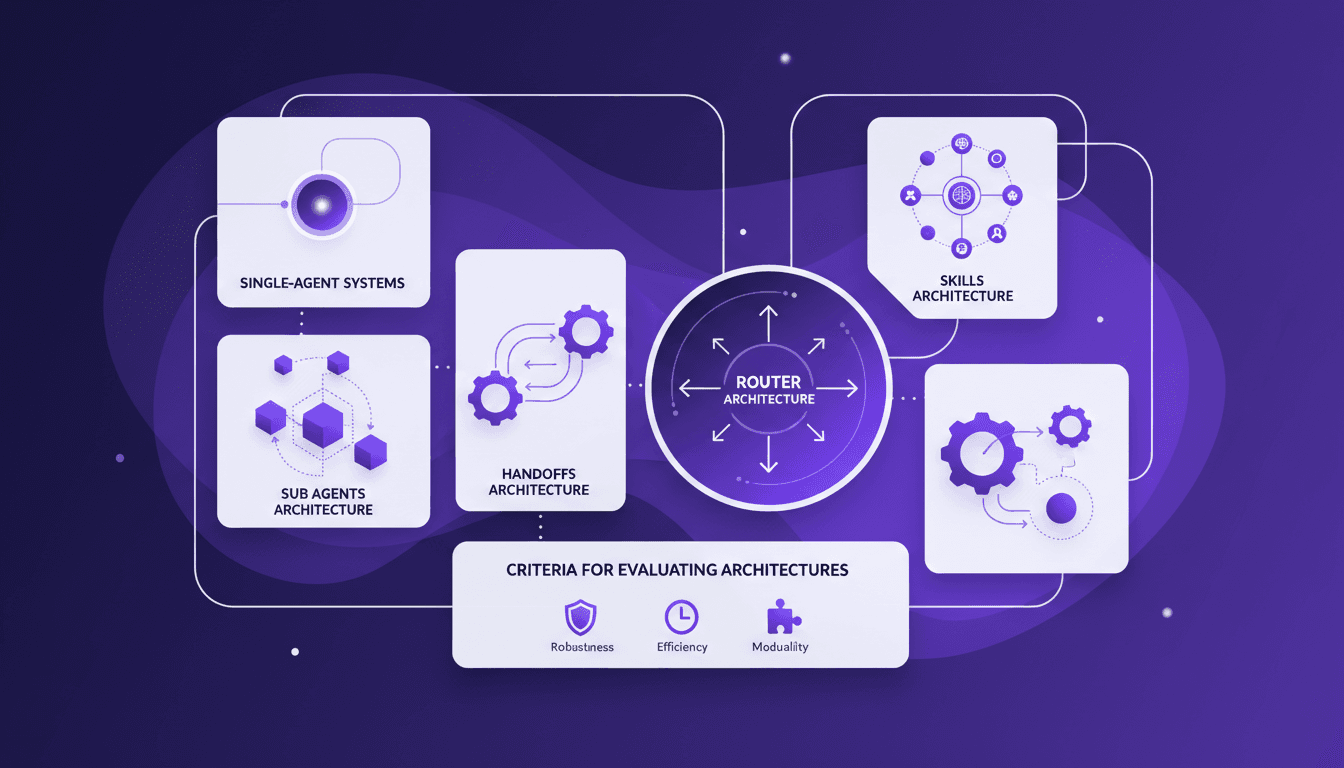
I remember the first time I set out to implement a multi-agent system. It was a maze of architecture choices, and I got overwhelmed. After a few missteps (and a lot of frustration), I finally nailed down a workflow that actually works. Multi-agent systems can revolutionize how we handle complex tasks, distributing workload and enhancing interaction. But choosing the right architecture is crucial. Otherwise, you’re looking at a potential efficiency and scalability nightmare. Let's talk straight: you've got sub agents, handoffs, skills, and router architectures. Each has its strengths and weaknesses. I'll share my own experiences with evaluating these options and why starting with a single-agent system can sometimes be the smartest move. I've been burned a few times, but now I pilot these systems differently. Let's dive in, so you can avoid making the same mistakes.
Understanding Multi-Agent Architectures
As a builder, not just an observer, I can tell you that multi-agent architectures play a critical role in managing complex tasks. Let's first break down what these systems are. A multi-agent system consists of several autonomous agents, often used to perform different tasks in a coordinated manner. The choice of architecture is crucial for system efficiency. It's not just about choosing a structure that works, but orchestrating agents to communicate effectively.
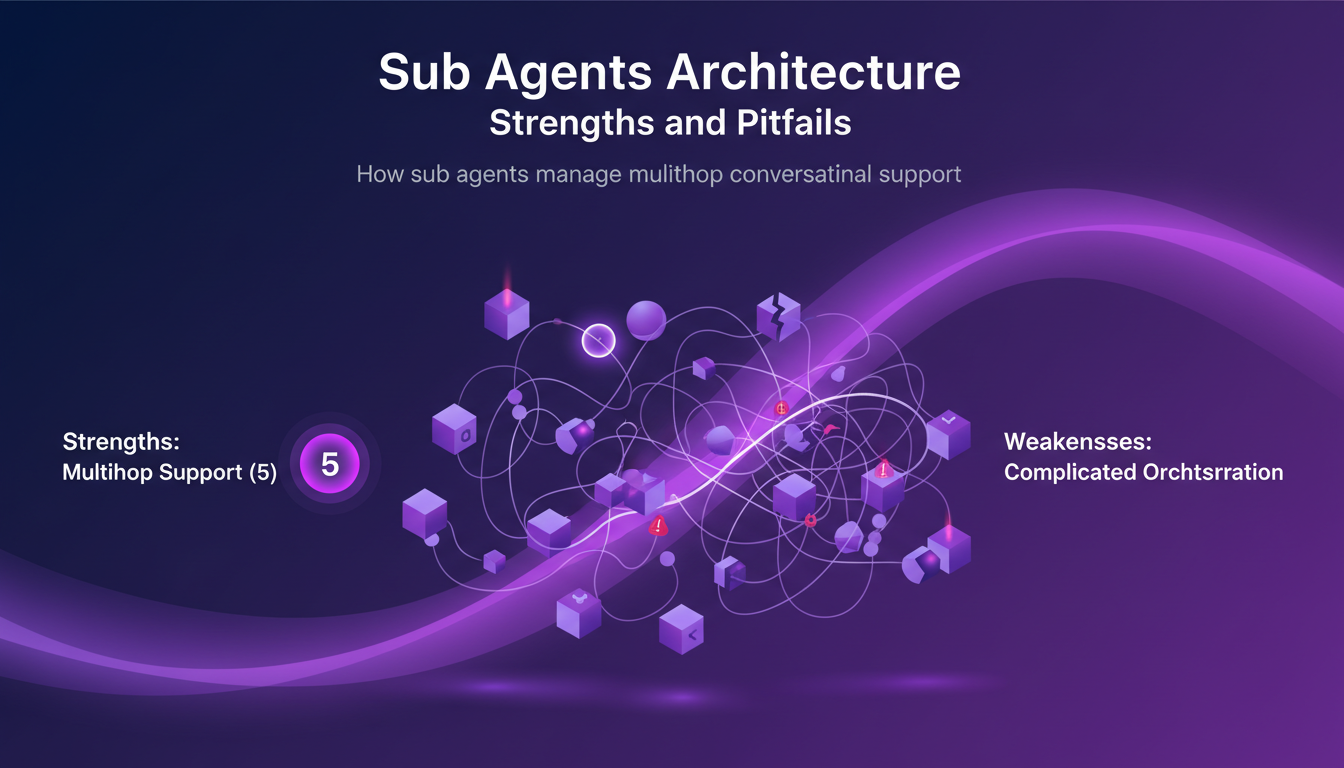
Why does architecture matter? Simply because it affects your ability to parallelize and distribute development. To evaluate an architecture, focus on four criteria: distributed development, parallelization, multihop conversational support, and direct user interaction.
- Distributed development: Can teams maintain components independently?
- Parallelization: Can you execute multiple agents simultaneously?
- Multihop conversational support: Does the architecture support calling multiple agents in series?
- Direct interaction: Can agents interact directly with users?
I've seen projects fail because they didn't consider these aspects. So, before diving into specific architectures, keep these criteria in mind.
Sub Agents Architecture: Strengths and Pitfalls
Now let's move on to the sub agents architecture. Here, a main agent coordinates sub-agents like tools. This works well for multihop conversational support (score of 5). Why? Because you can easily organize complex conversations in multiple stages. However, watch out, it can complicate orchestration.
Sub agents are perfect when you need to manage multiple tasks simultaneously. But I've often found myself with chaotic orchestration. Therefore, choose this architecture if your project requires strong coordination between agents. That said, it's less effective for direct user interaction. Basically, every message passes through the main agent, which can slow down interactions.
- Strength: High support for multihop conversations.
- Weakness: Increased orchestration complexity.
- When to choose: Projects requiring strong coordination.
Handoffs and Skills Architectures: Best Practices
The handoffs architecture is ideal for multihop conversations and direct interaction. In this model, one agent can transfer control to another, which is perfect for complex conversations. However, it's weak in distributed development and parallelization. So, if you have a dispersed team, this can be problematic.
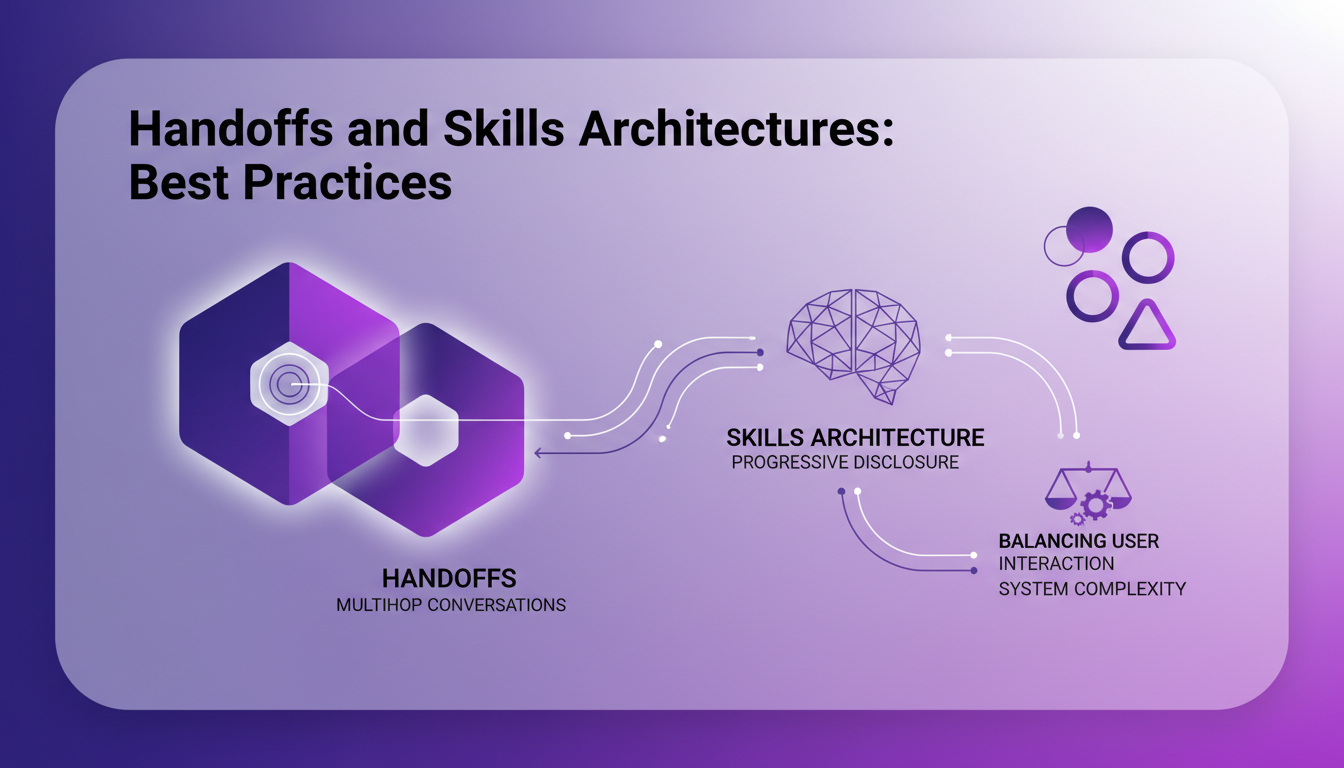
The skills architecture, on the other hand, relies on progressive disclosure. Here, a single agent remains in control but loads specialized skills on demand. This allows for effective distributed development. But beware, parallelization is not its strong suit. I've often seen teams juggling with this setup.
- Handoffs: Best for multihop conversations.
- Skills: Good in distributed development but moderate in parallelization.
- Balance: User interaction vs system complexity.
Router Architecture: Harnessing Parallelization
The router architecture is excellent for parallelization (score of 5), but watch out for potential bottlenecks. Here, a router classifies inputs and directs them to specialized agents. This allows for distributed development, though limited (score of 3). However, it's not ideal for multihop conversational support.
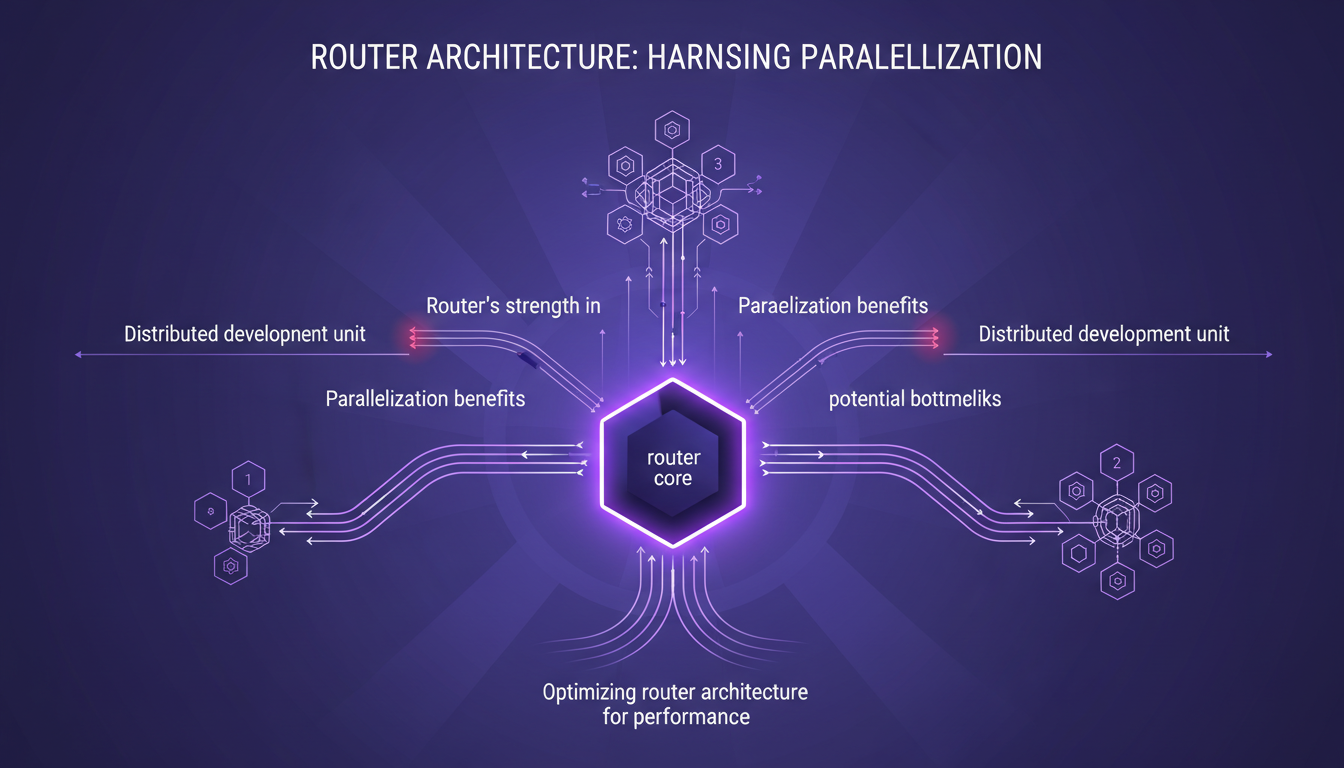
To optimize this architecture, be sure to manage router states well. I learned the hard way that not doing so can degrade performance. So, if you're aiming for parallelization, it's a solid option, but be prepared to manage its limitations.
- Strengths: Parallelization and distributed development.
- Weaknesses: Limited multihop support.
- Optimization: Managing router states.
Starting Simple: Single-Agent Systems
It's sometimes tempting to dive straight into complex architectures, but starting with a single-agent system can be beneficial. Why? Because it allows you to gradually build complexity while controlling costs and time. I've often saved resources by starting simple, avoiding the pitfalls of complex orchestration right off the bat.
A single-agent system is perfect for testing the waters before diving into multi-agent. Once the need and complexity increase, you can then scale up to more sophisticated architectures. So, keep this in mind: start simple, but be ready to evolve.
- Advantages: Simplicity, cost and time savings.
- Progression: Building complexity progressively.
- Evolution: Scaling to multi-agent architecture when needed.
Choosing the right multi-agent architecture feels like balancing complexity with functionality. First, I start simple, evaluate my needs, and scale up as the project demands. Take the sub agents architecture, for instance, with its 5-point multihop conversational support score — it's a game changer, but watch out for the complexity creep. The router architecture scores a 3 in distributed development. It's solid for task segmentation, but don't underestimate the coordination effort involved.
Looking ahead, imagine having a well-oiled architecture that's ready to adapt and grow with your project. Start with the basics, and let's refine these multi-agent systems together. Ready to dive in? Catch the full video for deeper insights and share your journey: https://www.youtube.com/watch?v=fqvbxkgU6vE.
Frequently Asked Questions

Thibault Le Balier
Co-fondateur & CTO
Coming from the tech startup ecosystem, Thibault has developed expertise in AI solution architecture that he now puts at the service of large companies (Atos, BNP Paribas, beta.gouv). He works on two axes: mastering AI deployments (local LLMs, MCP security) and optimizing inference costs (offloading, compression, token management).
Related Articles
Discover more articles on similar topics
Automating Large-Scale Refactors with Agents
I've been knee-deep in code refactoring for over a decade, and let me tell you, automating this beast with parallel agents is a game changer. We're talking about an orchestration that can revolutionize your workflow. First, I set up my agents, then orchestrate them to maximize productivity impact. This is where the evolution of coding agents comes into play, having real impacts on software development. But watch out, it's not challenge-free. Security and scalability of cloud environments for agent execution are critical. Dive in to discover how to effectively collaborate with AI in software engineering.
Enhance Agent UX: Stream Events with LangChain
I remember the first time I faced lagging user interfaces while working with agent tools. It was frustrating, especially when you're trying to impress a client with real-time data processing. That's when I started integrating custom stream events with LangChain. In this article, I'll walk you through setting up a responsive user interface using LangChain, React, and Typescript. We'll dive into custom stream events, the config.writer function, and deploying with the langraph dev server. If you've ever lost time to sluggish tool calls, this tutorial is for you.
Harnessing Quen 3 Multimodal Embeddings
I dove into Qwen 3's multimodal embeddings, aiming to streamline my AI projects. The promise? Enhanced precision and efficiency across over 30 languages. First, I connected the embedding models, then orchestrated the rerankers for more efficient searches. The results? A model reaching 85% precision, a real game changer. But watch out, every tool has its limits and Qwen 3 is no exception. Let me walk you through how I set it up and the real-world impact it had.
Mastering Cling Motion Transfer: A Cost-Effective Guide
I still remember the first time I tried Cling Motion Transfer. It was a game-changer. For less than a dollar, I turned a simple video into viral content. In this article, I'll walk you through how I did it, step by step. Cling Motion Transfer is an affordable AI tool that stands out in the realm of video creation, especially for platforms like TikTok. But watch out, like any tool, it has its quirks and limits. I'll guide you through image and video selection, using prompts, and how to finalize and submit your AI-generated content. Let's get started.

Fastest TTS on CPU: Voice Cloning in 2026
I remember the first time I tried running a text-to-speech model on my consumer-grade CPU. Slow, frustrating, like being stuck in the past. But with the TTH model, everything's changed. Imagine achieving lightning-fast TTS performance on regular hardware, with some astonishing voice cloning thrown in. In this article, I guide you through this 2026 innovation: from technical setup to comparisons with other models, and how you can integrate this into your projects. If you're a developer or just an enthusiast, you're going to want to see this.