State vs Business: Understanding the Ecosystem
I've been in the trenches as a CTO, and let me tell you, the state isn't a business—it's a full-blown ecosystem. Navigating this beast isn't about profit margins; it's about orchestrating a symphony of independent parts. First, let's debunk some myths. The state can't be managed like a traditional business. Picture a series of interconnected ministries, each with its own rules and needs. Efficiency doesn't come from centralization but from flexibility and resource sharing. I got burned trying to copy-paste business strategies, but I learned the real challenge lies in coordination and adaptation. Let's talk about how to turn this complexity into strength.
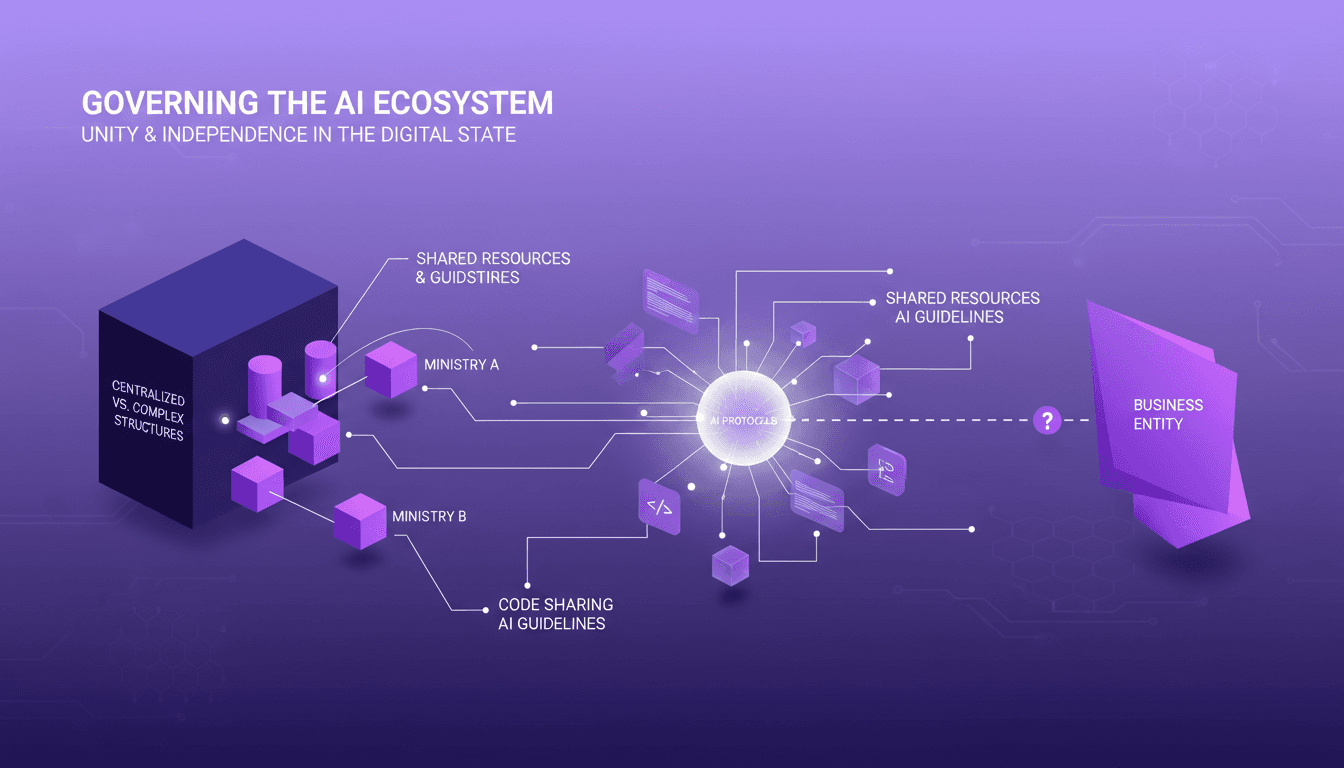
I've been in the trenches as a CTO, and let me tell you, the state isn't a business—it's a full-blown ecosystem. Navigating this beast isn't about profit margins; it's about orchestrating a symphony of independent parts. First, let's debunk some myths. Many think the state can be run like a business, but that's a simplistic view. Picture a collection of independent ministries, each with its own rules and needs. I tried to copy-paste business strategies and got burned multiple times. I learned that efficiency doesn't stem from centralization but from flexibility, resource sharing, and well-defined guidelines. We often talk about the complexity of the state as a downside, but it's an asset when managed correctly. Let's discuss how to turn this complexity into strength and the importance of adaptability in this unique ecosystem.
Rethinking the State: Not Just Another Business
When I dive into the role of the state, it's clear that the state isn't just a regular business. It's not about maximizing profits, but delivering public services. Here, complexity and diversity are strengths, not weaknesses. While businesses can pivot quickly to follow market trends, the state needs to orchestrate its actions carefully to meet the population's needs. Watch out, applying business metrics can mislead when evaluating state operations. Don't fall into the trap of thinking everything should be measured by immediate ROI.
I've often seen that efficiency metrics used in businesses can lead to poor decisions in a state context. For example, cutting staff to "optimize" may seem logical in a company, but it can harm access to public services. The state plays a different game, where each decision must be weighed through the lens of social impact, not just economic.
Centralized vs Complex Structures: The Real Deal
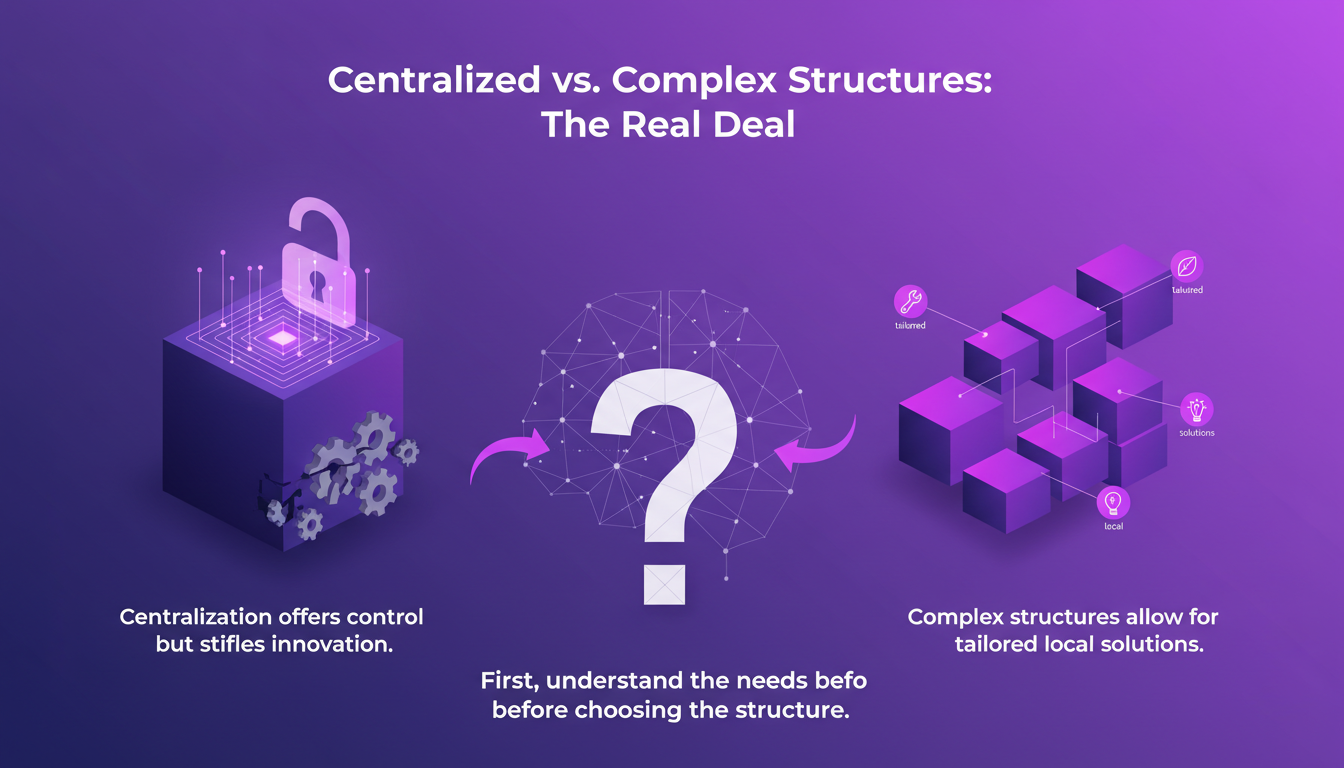
Centralization offers certain control, but it can stifle innovation. I've seen it firsthand: when everything is commanded from the top, solutions on the ground lack flexibility and local adaptation. On the other hand, complex structures allow for tailored solutions, responding to specific regional or sectoral needs. But first, you need to understand these needs before choosing the appropriate structure.
It's a well-known dilemma. Centralization can simplify procedures, but at what cost? The loss of local autonomy can lead to uniform solutions that don't fit everyone. Take the example of educational systems where an overly centralized approach sometimes fails to meet local needs. This article explores these challenges in more depth.
Resource Sharing: The State's Hidden Superpower
Resource sharing is often underestimated in the public sector, yet it can boost efficiency impressively. For example, sharing guidelines between ministries can significantly improve processes. I've seen projects where code sharing halved development time. But beware, too much standardization can kill creativity.
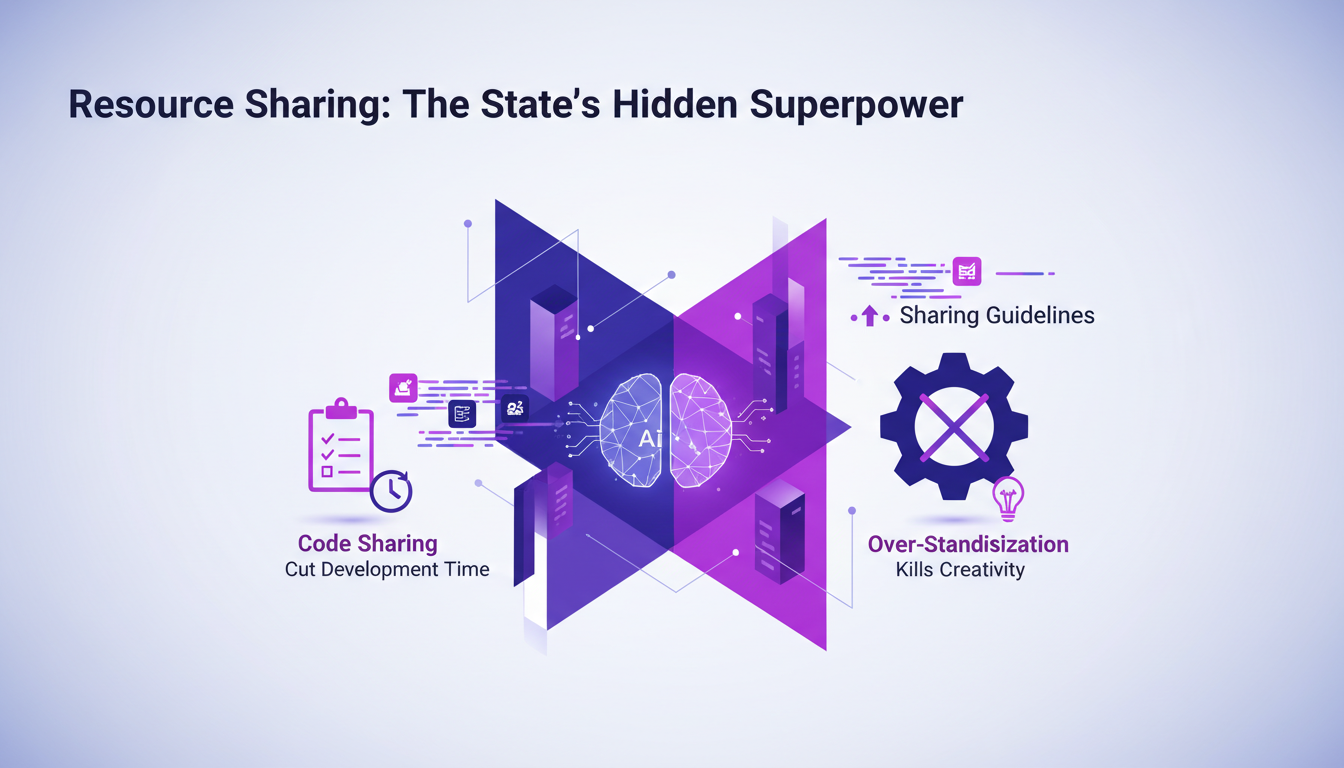
Practical tip: Start small with pilot projects to test resource sharing. Don't rush into large-scale sharing without first evaluating potential impacts. It's an approach I've adopted, and it has always paid off.
Independence Within the Ecosystem: Balancing Act
Ministries need autonomy to tackle specific challenges, that's a fact. Independence can foster innovation, but it requires coordination. First, it's crucial to establish clear boundaries and shared goals. I've often seen that without effective coordination, excessive independence can lead to fragmentation of efforts.
The trap here is believing that total independence is always beneficial. Too much autonomy can lead to redundancies and a loss of inter-ministerial synergies. The real challenge is finding the right balance between autonomy and collaboration. This PDF article provides insights into these dynamics.
Guidelines and Code Sharing: Orchestrating Success
Guidelines provide a framework without stifling creativity. Code sharing can unify efforts, but it needs robust oversight. First, identify common goals, then develop shared resources. But watch out, not all code is shareable. Protect sensitive data.
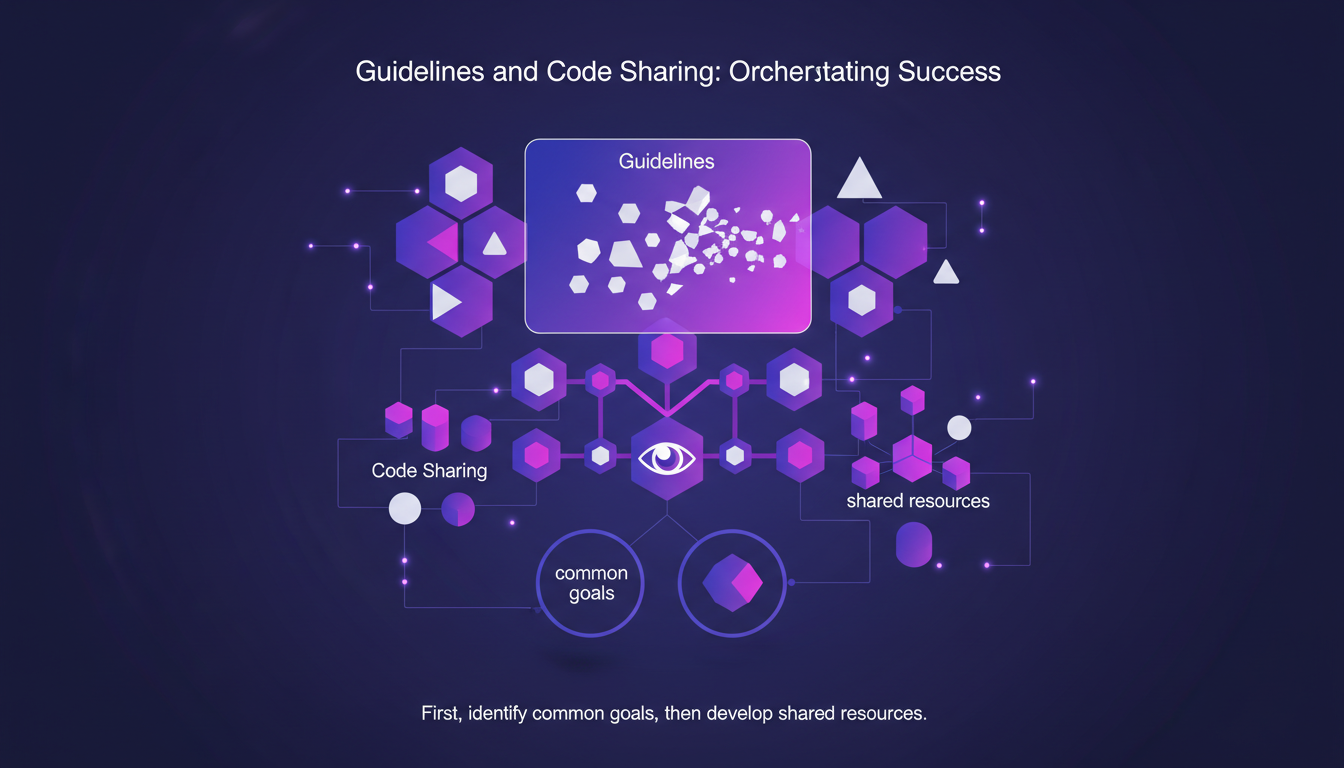
I've been burned more than once by neglecting this aspect. Now, I make sure any sharing initiative includes a rigorous risk assessment. Just because code can be shared doesn't mean it should be. Strong governance is essential to orchestrate these efforts successfully.
In conclusion, the state must remain a world apart, complex and distinct. Its role isn't to generate profits but to ensure effective and equitable public service. By combining autonomy, collaboration, and resource sharing, we can build a resilient and innovative state. I encourage you to explore more of these dynamics through resources like Supporting AI Engineers: Lang Chain's Mission and Tech Entrepreneurship: How I Drive the Revolution.
Seeing the state as an ecosystem rather than a business entity has opened up new pathways for effective governance. First, it's about balancing centralization and complexity—don't swing too far in either direction. Then, leveraging resource sharing and guidelines can cut down on redundancy. Lastly, keeping ministries independent is key to fostering innovation and responsiveness. But watch out, too much centralization can choke local creativity. Looking ahead, we could really shift to a more agile, responsive system—it's a game changer if you manage the trade-offs well. For your next project, think about how these principles can make your system more efficient and responsive. I highly recommend watching the full video for deeper insights—it's like chatting with a colleague who's already navigated these waters. YouTube link
Frequently Asked Questions

Thibault Le Balier
Co-fondateur & CTO
Coming from the tech startup ecosystem, Thibault has developed expertise in AI solution architecture that he now puts at the service of large companies (Atos, BNP Paribas, beta.gouv). He works on two axes: mastering AI deployments (local LLMs, MCP security) and optimizing inference costs (offloading, compression, token management).
Related Articles
Discover more articles on similar topics
Supporting AI Engineers: Lang Chain's Mission
I've been in the AI trenches, building and iterating, and let me tell you, the need for robust support systems for AI engineers is more critical than ever. That's where Lang Chain comes into play. It's not just another tool; it's a mission-driven initiative aimed at empowering agent engineers through collaboration and community. At the Interrupt26 event in San Francisco, the focus will be on the importance of these robust support systems. As a practitioner, I've witnessed the challenges engineers face daily, and Lang Chain aims to tackle these by highlighting the power of a united community.

Tech Entrepreneurship: How I Drive the Revolution
I remember the first time I realized the sheer power of tech entrepreneurship. It was a game changer, watching companies evolve from garage startups to market giants. But how do we navigate this ever-evolving landscape? Today, tech entrepreneurs aren't just participants; they're leaders shaping the future. In this podcast, I dive into how we, as tech builders, can harness this power. I discuss the role of tech in major market capitalizations, challenges for tech CEOs, the impact of AI, and the French tech ecosystem. Ready to explore?
Reindustrialize with Modern Metal Mills
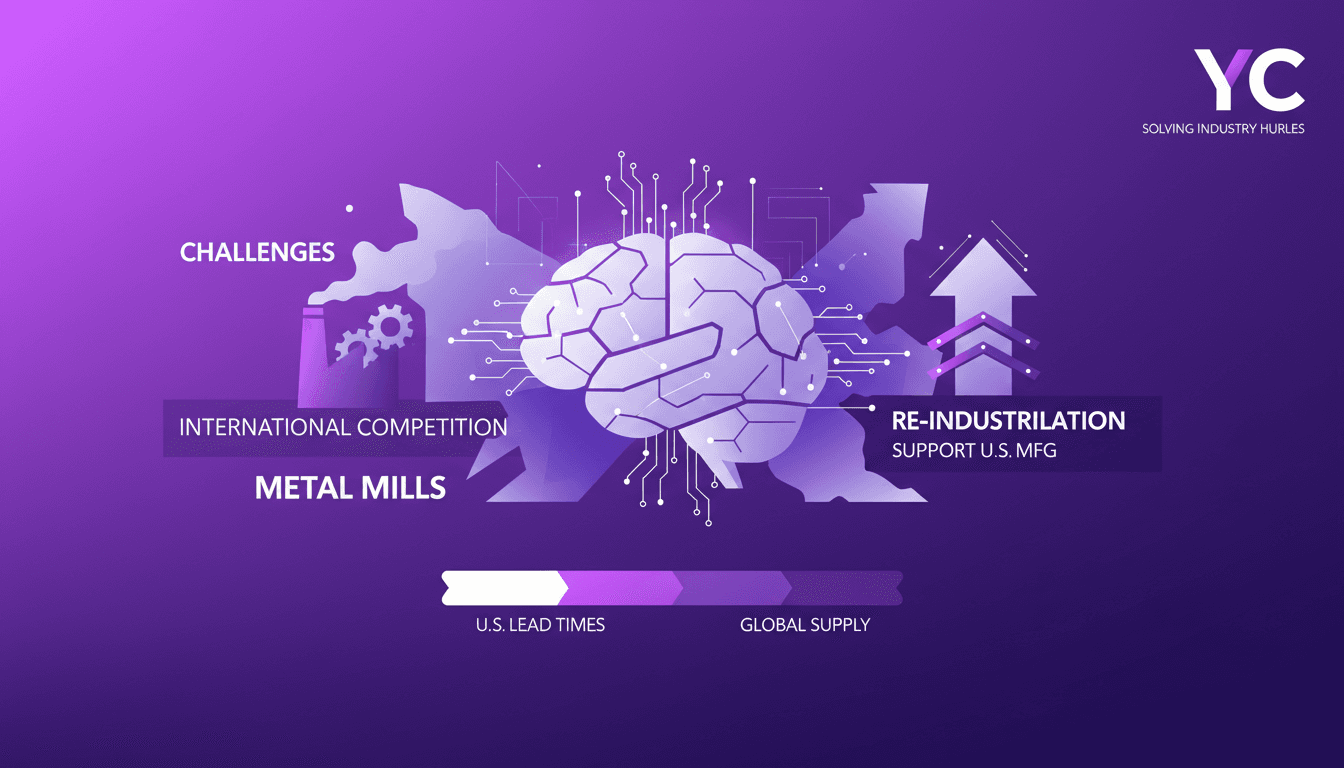
I've been in the trenches with American metal mills, and let me tell you, the lead times are a killer. Eight weeks for an aluminum plate? Eight months for stainless steel? It's clear we need to rethink and reindustrialize. Here's how we're tackling these challenges head-on. With international competition breathing down our necks and lead times that just don't cut it anymore, it's crucial to support our modern manufacturers. I'm laying out practical steps and solutions to slash these delays. We can't afford to wait eight months for stainless steel needed in aerospace and defense. I got burned several times before realizing we need to operate differently for real impact.
Quin 3.5: Cheaper and Better than GPT
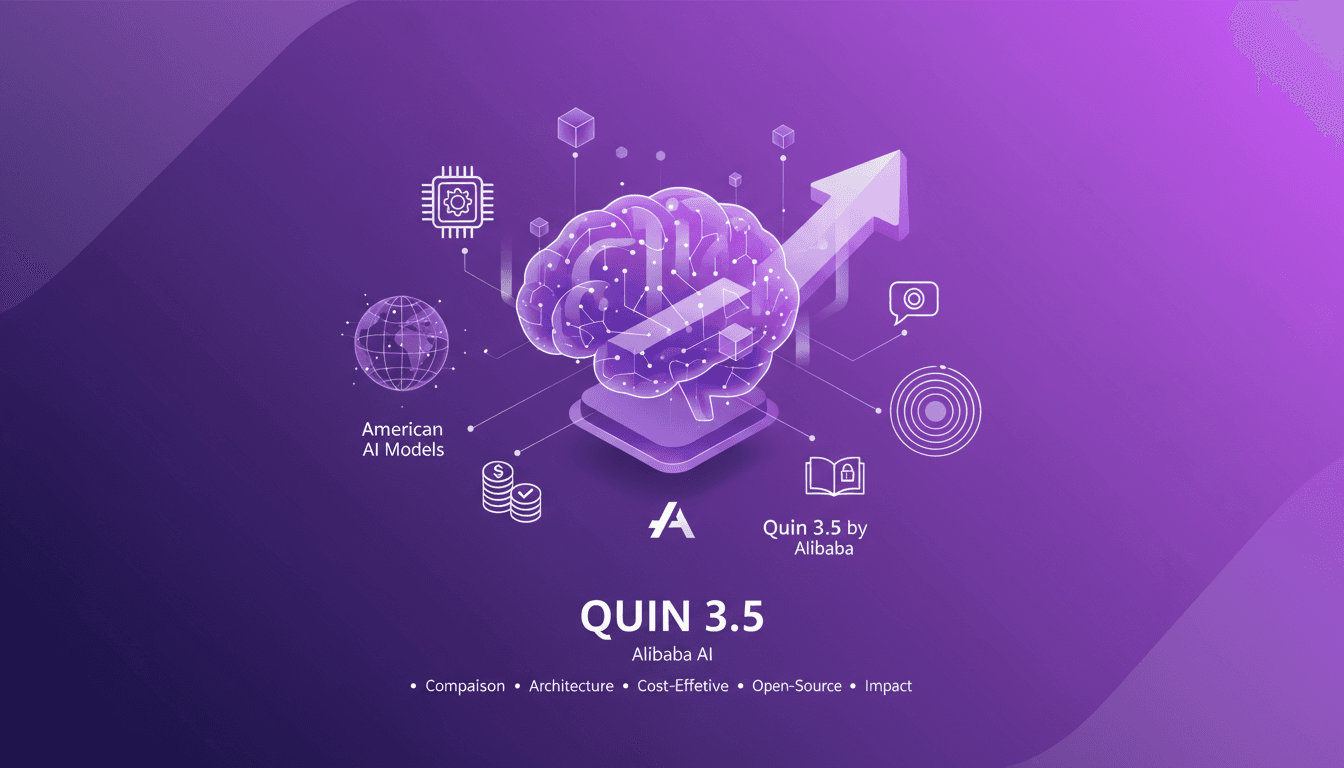
I stumbled upon Quin 3.5 by Alibaba and, honestly, it blew my mind. Imagine an AI that's 17 times cheaper than GPT and outperforms it on multiple benchmarks. In the AI world, where cost and performance reign supreme, Quin 3.5 is changing the game. With 397 billion parameters, it offers efficiency and cost-effectiveness that its American counterparts struggle to match. We'll dive into its technical innovations, multimodal capabilities, and Quin 3.5's potential impact on the AI landscape. Intrigued? Let's explore how this technology might just shake things up.
Google's Data Collection: What You Don't Know
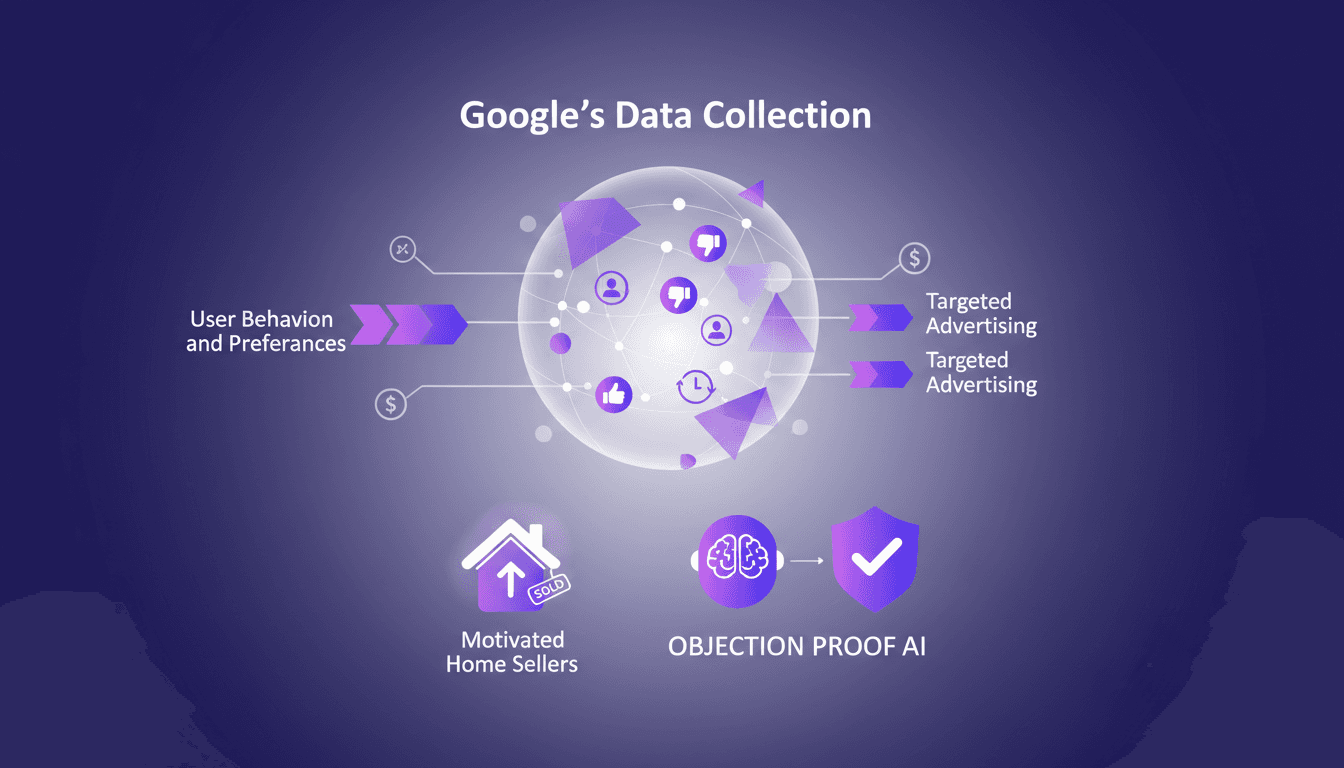
I remember the first time I truly grasped how much Google knew about me. I was setting up a marketing campaign and the targeting options were eerily precise. It was like having a secret marketing assistant who knew my clients better than I did. Google doesn't just track your search history. It's a complex web of user behavior, preferences, and more. Are you leveraging this in your strategies yet? Let's dive into how Google collects and uses this data to fuel its advertising machine, and how you can take advantage of it.