Shape-shifting Robots: Walk, Fly, Swim
When I saw a robot walk on water, I knew things were changing. Following robotics evolution closely, I recognize this isn't science fiction—it's today's reality. These shape-shifting Chinese robots—walk, fly, swim—are redefining what's possible. In China, robotics advancements aren't just impressive, they're groundbreaking. With 315% shape-shifting capabilities, these autonomous robots, orchestrated by Lim X Dynamics, are set to integrate into our daily lives by 2026. Throw in AI automation and virtual agents with N8N, and you have a recipe for major technological transformation. Let's dive into this new era where robotics redefines the boundaries of art, architecture, and even space exploration.
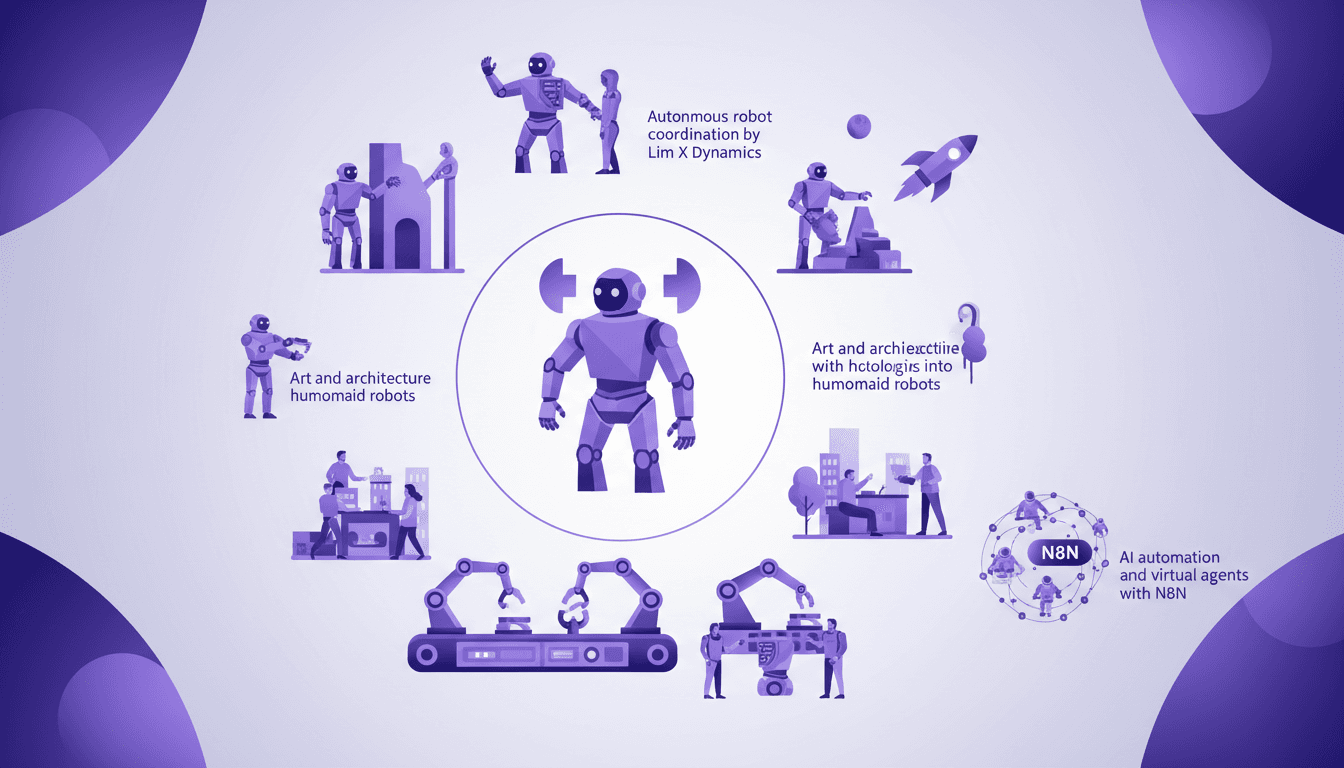
I've been following the evolution of robotics, and when I saw a robot walk on water, I knew things were changing. This isn't just theory—it's happening now. In China, the landscape of robotics is evolving at breakneck speed. Imagine a robot with 315% shape-shifting capabilities, walking, flying, swimming. Yes, it's real, and these advancements are literally transforming the field. Orchestrated by Lim X Dynamics, these autonomous robots are set to integrate into our daily lives by 2026. Add to that AI automation and virtual agents with N8N, and you have a major technological transformation on your hands. But watch out, it's not without challenges. These robots are also redefining the boundaries of art and architecture, and even space exploration. Let's dive into how all this is unfolding on the ground.
Shape-Shifting Robots: A New Frontier
Imagine a robot that can change its shape at will. That's exactly what China is exploring with shape-shifting robots. These machines, inspired by biomimetic design, can expand up to 315% of their original size. During an astonishing demonstration on January 26 at 3 am, a robot walked on water at a speed of 16 mm per second. This is more than just a technical feat; it demonstrates how robotic innovation can redefine physical boundaries.
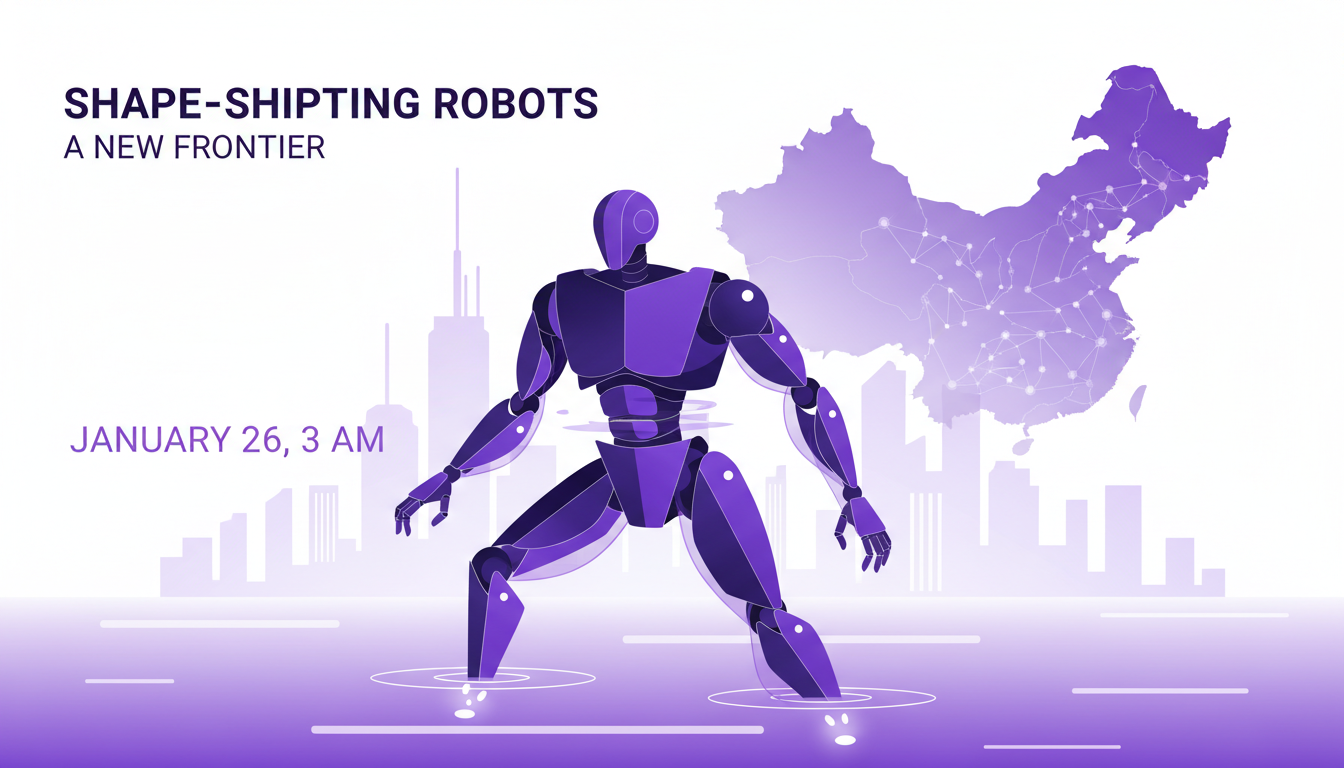
These capabilities of expansion and contraction (up to a 61% width reduction) are made possible through biomimetic linkages. Each segment of the robot incorporates inflatable soft chambers, tensioned cables, and rigid adapters. This allows the robot to navigate complex environments, such as crawling under collapsed beams, which is crucial for rescue missions.
Autonomous Coordination with Lim X Dynamics
Now, let's talk about autonomous coordination. Lim X Dynamics, based in China, has demonstrated how 18 humanoid robots can move in formation without direct human control. Their system, called Cognitive OS of Agent (COSA), coordinates autonomous movements using a three-layer architecture. This includes full-body motion control, skill integration like navigation and manipulation, and a cognitive layer for natural language understanding.
The coordination of these robots relies on satellite communication, essential for collision avoidance and action synchronization. However, watch out for the increasing complexity of managing these autonomous systems. The more precise the coordination, the more complex it becomes to orchestrate. I got burned on this several times before understanding the balance between precision and simplicity.
Humanoid Robots in Art, Architecture, and Space
Humanoid robots are not just for industrial tasks. They are also influencing art and architecture. The robot Haida, for example, designs habitats for the Moon and Mars. With their Cognitive OS of Agent (COSA), these robots balance creativity with technical constraints, which is crucial in environments as extreme as space.
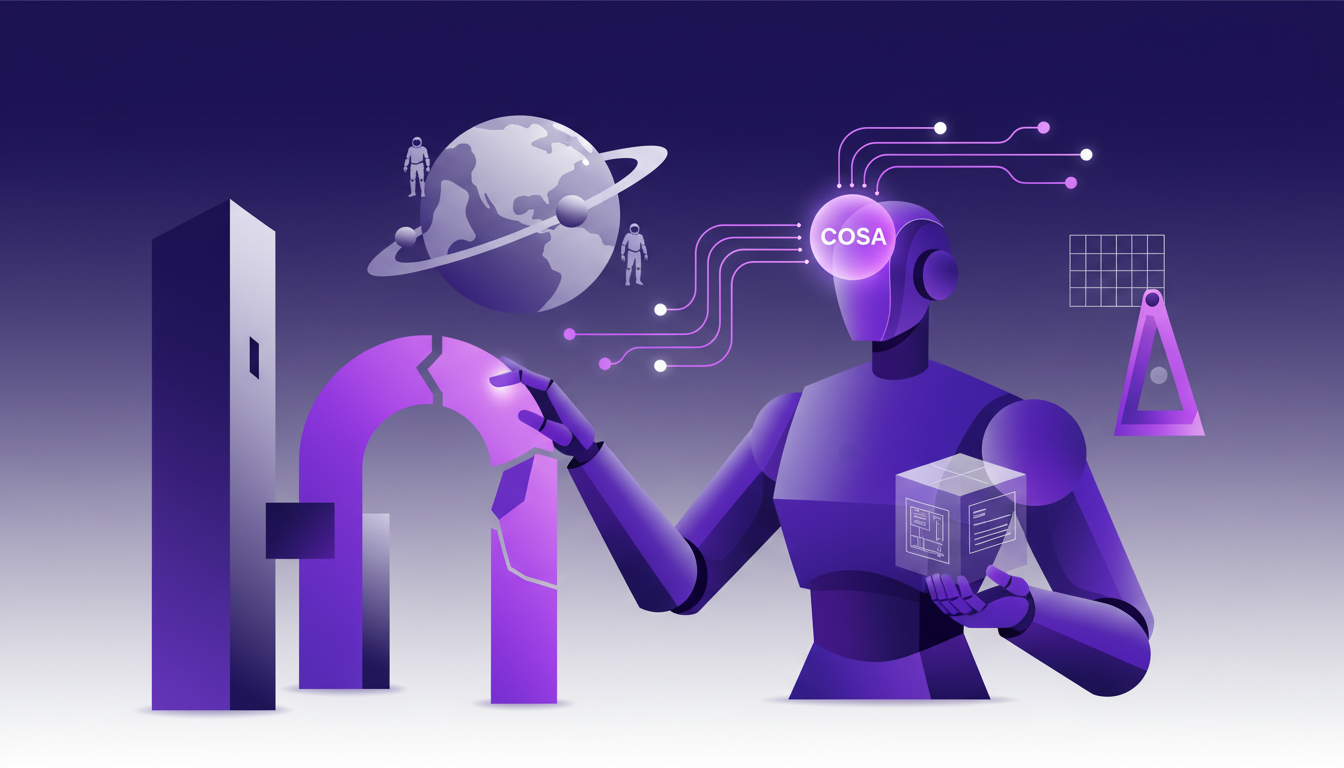
However, joint resolution remains critical for movement precision. This is a point where cost-cutting is not an option, even if it increases manufacturing costs. A balance is needed between creative designs and mechanical constraints that ensure stability.
Manufacturing Advancements and Daily Integration
Recent breakthroughs in humanoid robot manufacturing are impressive. An automated production line in Shanghai has reduced costs by 40% between 2023 and 2024. This paves the way for more accessible integration of these technologies into our daily lives by 2026. The Olly robot, priced at 158,000 UAN, is set for massive delivery in the Middle East.
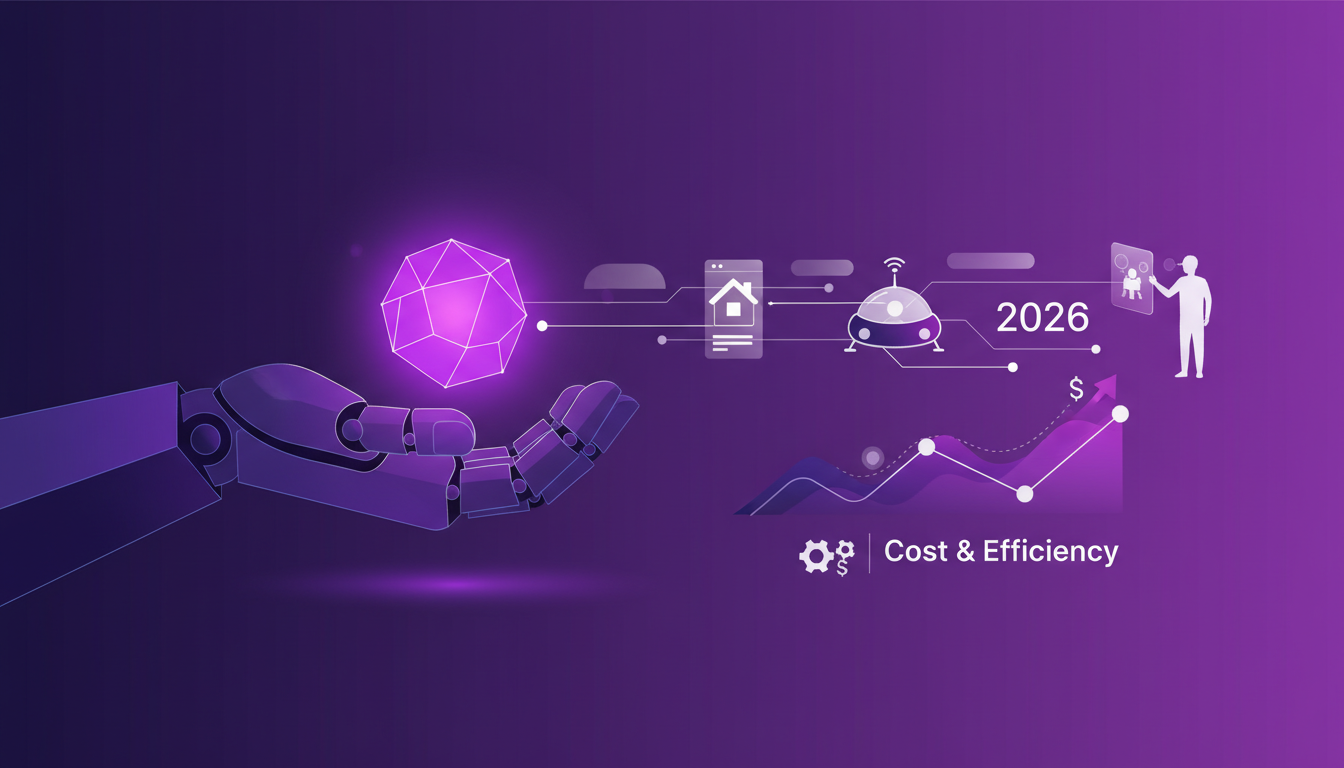
However, don't lose sight of the trade-offs between scaling production and maintaining quality. I've seen projects fail due to too much focus on rapid expansion at the expense of robustness and functionality of final products.
AI Automation: The Role of N8N
Finally, AI automation takes a new dimension with N8N. This program enables the creation of virtual agents without deep technical knowledge. Integrating N8N into existing systems can generate significant cost savings. However, be aware of the current limitations of AI. Systems are not foolproof and require regular adjustments.
To effectively integrate N8N, start by clearly defining your automation goals. Then, test your workflows in a controlled environment before deploying them on a large scale. This has saved me from costly mistakes multiple times.
- Define clear goals before automation
- Test workflows in a controlled environment
- Monitor systems to avoid costly errors
In conclusion, robots are no longer just futuristic concepts. They are increasingly integrating into our daily lives, changing the way we live and work. As a practitioner, it's crucial to understand not only the underlying technologies but also the practical implications of their use and the challenges to overcome.
I've been really impressed by the advancements in shape-shifting robots and humanoid integration. Here are the key takeaways I noted:
- On January 26 at 3 am, a robot in China walked on water, showcasing how we're breaking traditional physical limits.
- The technology allows the robot's body to expand by up to 315%, which opens massive possibilities for industrial flexibility and adaptation.
- Humanoid robots are no longer confined to art and architecture; they're starting to venture into space exploration.
As we move towards 2026, these technologies will increasingly become part of everyday life. It's a real game changer, but watch out for limits like autonomous coordination and integration costs.
My advice: stay ahead of the curve by exploring how these technologies can be integrated into your current workflows. Experiment, iterate, and prepare for the future.
For deeper understanding, I recommend watching the original video here: YouTube link.
Frequently Asked Questions

Thibault Le Balier
Co-fondateur & CTO
Coming from the tech startup ecosystem, Thibault has developed expertise in AI solution architecture that he now puts at the service of large companies (Atos, BNP Paribas, beta.gouv). He works on two axes: mastering AI deployments (local LLMs, MCP security) and optimizing inference costs (offloading, compression, token management).
Related Articles
Discover more articles on similar topics

Deploying Open Clow: Key Features and Insights
I remember the first time I deployed Open Clow, thinking I'd be stuck for hours. But in under five minutes, I was live. This open-source AI assistant is a game changer, but you need to know how to navigate its pitfalls. With over 150,000 stars on GitHub, Open Clow isn't just hype. It's reshaping how we think about AI assistants and automation. In this post, I'll dive into its key features, security risks, and how it could become your virtual employee. We'll also look at technical requirements, costs, and real user experiences. Ready to see why Open Clow is turning the game upside down?
SpaceX and XAI: Revolution or Imminent Disaster?
I remember the first time I heard about SpaceX's acquisition of XAI. It felt like witnessing the birth of a new era in space and AI. But with great ambition comes great complexity. SpaceX isn't just acquiring a startup; it's a leap towards integrating AI with space technology. But what does this mean for the industry? What major challenges lie ahead? From XAI's bold financial strategies to the controversies surrounding the Grock chatbot, the stakes are high. And let's not forget the regulatory and environmental concerns that could shake the industry. Elon Musk has an audacious vision, but is this a revolution or an imminent disaster for major tech companies?
AI CEOs' Predictions: What's Coming Next
I found myself amid a sea of AI visionaries, each predicting a future both exhilarating and daunting. Five of the most influential AI CEOs came together, and their consensus was nothing short of a wake-up call. We're on the brink of a new era, where AI is not just a tool but a force reshaping our world. From employment shifts to economic upheaval, everything is changing at breakneck speed. The convergence of AI CEOs on future predictions, the impact of AI on employment and productivity, and the emergence of superintelligent AI present fascinating yet intimidating challenges. With advancements in AI hardware and infrastructure, Meta is even envisioning personal superintelligence for everyone. But watch out for alignment and self-preservation concerns. The economic implications of these advancements are enormous.
Google's Génie 3: Breaking Reality, New Horizons
I remember the first time I saw Google's Génie 3 in action. It felt like stepping into a new dimension. This isn't just tech hype—it's a game changer, but with some caveats. Google's Génie 3 project is setting new standards in AI, especially in the gaming industry. But watch out, every tech comes with its limitations and trade-offs. Génie promises a world generated in 60 seconds, but requires a rethink on economic accessibility and potential applications across various fields. I got burned thinking it was all-powerful, but in reality, there are nuances to understand.

XR Glasses Evolution: Success and Limits
Walking through CES 2026, I couldn't ignore the buzz around Rokin's booth. Everyone was talking about their lightweight XR glasses, and I had to see what the fuss was about. From crowdfunding triumphs to sleek designs, these glasses are shaking up the market. It's not just tech novelty anymore; these glasses are becoming practical, everyday tools. Rokin and Rokid are leading the charge, showing that XR glasses evolution is just taking off. But beware, not everything is perfect, and it's crucial to understand the limits to avoid getting burned.