Optimizing Third-Party Tools in Agentic Workflows
I've spent years tinkering with third-party tools, and let me tell you, bending them to fit your workflow without breaking them is an art. When I first tackled a public MCP server, I got burned by agentic workflows and deterministic guardrails. But once you get the hang of it, it's a game changer. In this article, I'll walk you through how I optimized tools from third-party MCP servers, focusing on practical takeaways and real-world applications. Whether you're dealing with JWT tokens or tailoring tools for specific use cases, I've got you covered.
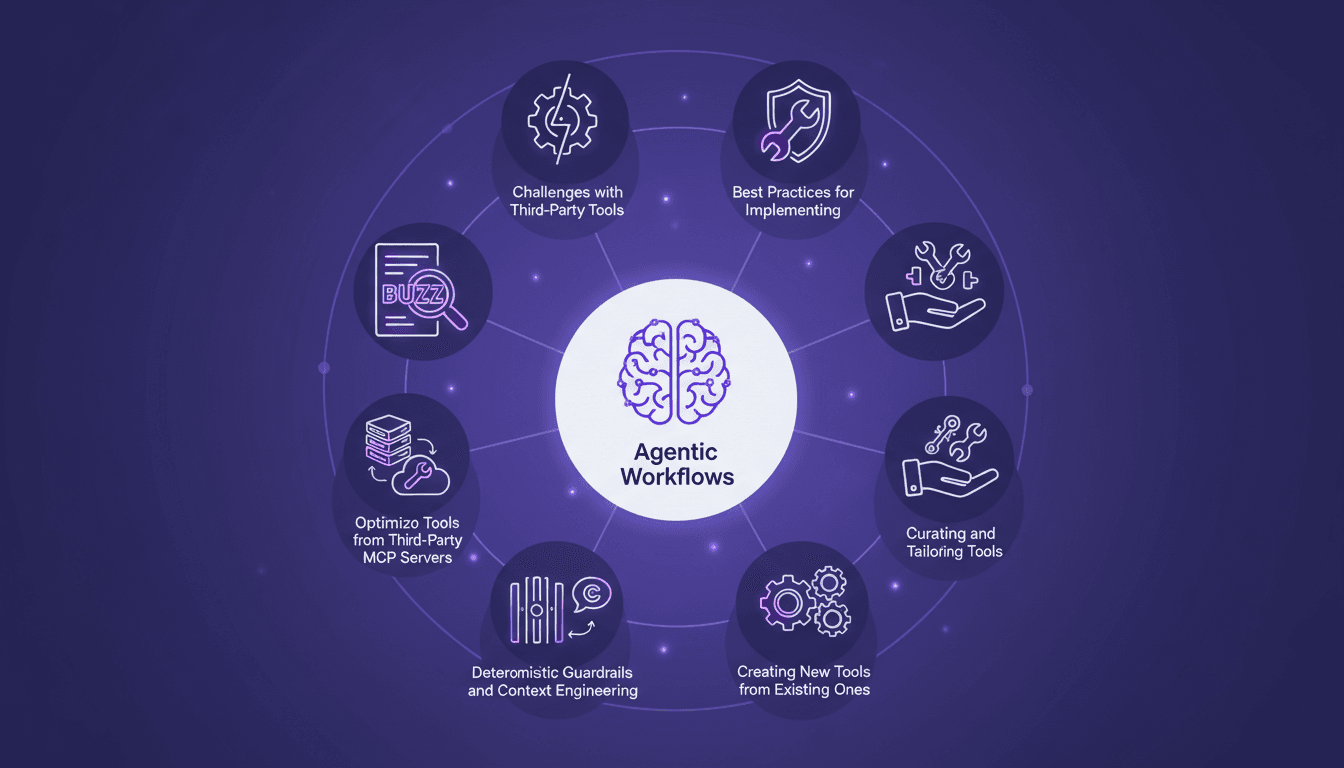
I've spent years tinkering with third-party tools, and let me tell you, bending them to fit your workflow without breaking them is an art. The first time I tackled a public MCP server, I got burned by agentic workflows and deterministic guardrails. But once you get the hang of it, it's a game changer. In this conference talk, I'll walk you through how I optimized tools from third-party MCP servers, focusing on practical takeaways and real-world applications. Whether you're dealing with JWT tokens or tailoring tools for specific use cases, I've got you covered. I'll also share insights from Buzz's Spec Reviewer, a fascinating use case where I trimmed the toolset from 21 to 16. The trick is knowing how to navigate the challenges of third-party tools, with five best practices I'll lay out. Get ready to discover how to orchestrate these tools effectively without losing sight of your goals.
Understanding the Challenges with Third-Party Tools
When it comes to integrating third-party tools in agentic workflows, several challenges arise. First, these tools can lead to compatibility and integration issues. I've often encountered unexpected behavior and limited customization options, which can be a real headache when trying to make everything work seamlessly.
Third-party tools are like a double-edged sword. Sure, they can boost our capabilities, but they can also create bottlenecks, especially in terms of token usage and server load. Trust me, I've been burned more than once by a sudden token usage spike. I had to learn to orchestrate differently to minimize disruptions and maximize efficiency.
Here's an interesting statistic: only 11% of AI agent deployments are fully adopted by enterprises, and 40% of deployments will be canceled by 2027 due to rising costs or unclear value. That's something to ponder, right?
Best Practices for Implementing Third-Party Tools
There’s a framework of five best practices I follow religiously. First, assess tool compatibility and integration potential. It saves a lot of surprises down the road.
Then, I prioritize tools that offer deterministic guardrails for better control. Nothing worse than letting an agent run without safety nets. This approach allowed me to reduce my toolset from 21 to 16 for a specific use case, significantly lightening the system.
It's important to tailor tools to specific use cases. Each tool should have its place and purpose clearly defined.
Buzz's Spec Reviewer: A Case Study
Let’s dive into Buzz's Spec Reviewer, a real-world application of these principles. Founded in 2023, Buzz leverages curated tools to streamline operations. I had to do a significant amount of context engineering to align the tools with our business goals.
I learned from my mistakes to avoid common pitfalls and optimize our setup. The initial test with Playrite's tools failed because the agent couldn't navigate correctly. This pushed me to reevaluate our tool selection.
Curating and Tailoring Tools for Specific Use Cases
Curating tools is about more than just picking the right ones; it’s about integrating them effectively into your workflow. I wrap tools with tailored descriptions to ensure clarity and purpose.
It’s crucial to balance between tool capabilities and business requirements. Sometimes, trade-offs are necessary, but they must always be made thoughtfully.
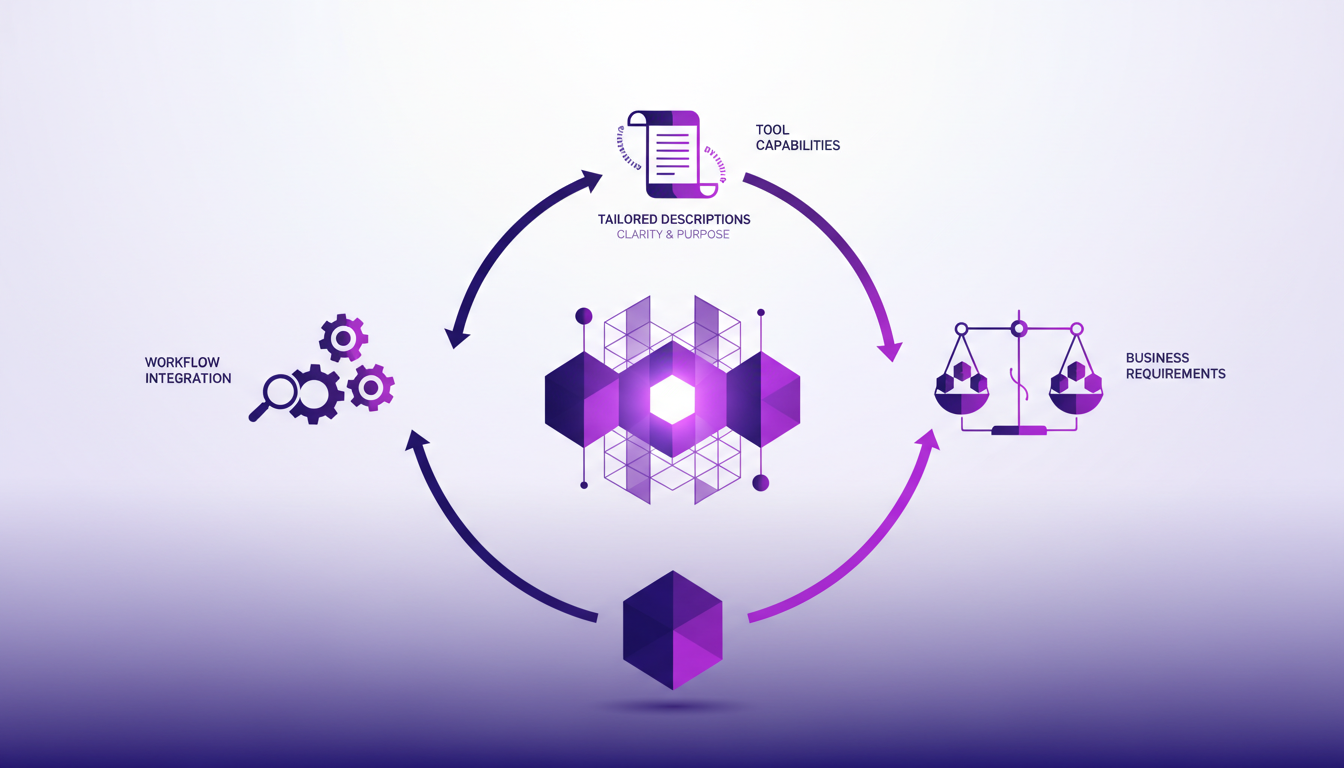
I've often found that fewer tools, but better chosen, improve efficiency.
Creating New Tools from Existing Ones
Innovation often means repurposing existing tools to meet new challenges. I’ll walk you through how I’ve created new tools from existing ones. This involves a lot of trial and error, but the results can be rewarding.
I focus on deterministic guardrails to ensure reliability and consistency. Understanding context limits is essential before diving into tool creation.
Ultimately, a good understanding of contextual limits is crucial before embarking on tool creation.
Optimizing third-party tools in agentic workflows isn't a walk in the park, but with the right practices, it's entirely doable. I dove into the challenges of third-party tools, and the first thing I do is pinpoint the specific hurdles. Then I create tailored tools to fit my needs. I discovered five best practices for effectively integrating these tools. Trust me, this framework is a must-have. For instance, Playrite offers 21 tools for browser manipulation, but for the specific use case of the Spectre viewer, I cut that down to 16 effective tools. First, identify your needs, then apply these practices.
Looking ahead, optimizing third-party MCP servers is a real game changer if done smartly, but watch out for trade-offs. Ready to take your workflow to the next level? Start applying these strategies today and watch your efficiency soar.
For deeper understanding, I encourage you to watch the original video. Nimrod Hauser from Baz shares valuable insights that could truly transform your approach. Don't miss it: watch the video.
Frequently Asked Questions

Thibault Le Balier
Co-fondateur & CTO
Coming from the tech startup ecosystem, Thibault has developed expertise in AI solution architecture that he now puts at the service of large companies (Atos, BNP Paribas, beta.gouv). He works on two axes: mastering AI deployments (local LLMs, MCP security) and optimizing inference costs (offloading, compression, token management).
Related Articles
Discover more articles on similar topics
Agentic Engineering: Collaborate with AI
I remember when I first started integrating AI tools into my workflow. It was like discovering a new continent. But the trick wasn't just using AI; it was working with it. That's where agentic engineering comes into play. Today, collaborating with AI goes beyond automation. It's about forging a true partnership with technology. In this article, I'll share how I and other engineers are making this shift—integrating AI models into our development processes, managing context effectively, and configuring AI agents that adapt to our needs. We're no longer passive users; we're active orchestrators. Ready to explore this new frontier?
Accelerating AI: Building a Superintelligent Future
I've spent countless hours building AI systems that push boundaries. Imagine accelerating a decade of scientific progress in just one year. That's what Sam Altman and his OpenAI team are showcasing in their talk on the future of AI. We're diving into real-world applications, tangible challenges, and the potential societal impact. From AI democratization to personalized medicine and resilience against threats, the AI era is here. But watch out, there are challenges to tackle. Join me in exploring how we're shaping policies and economic models to integrate AI into our daily lives.
Starting a Farm: Key Steps and Pitfalls
I remember the day I decided to make my dream of starting a farming and poultry business a reality. It wasn't just about passion; I had to make it viable. Let me take you through my journey from idea to investor interest. I started by crafting a solid business plan (trust me, it's more than just paperwork). Then, I had to convince investors with a tight budget of £5,000 to £6,000—not much, but enough to get started. I'll share the mistakes I made and how I overcame them, hoping it saves you some burns. Let's dive in, I’ll tell you everything.
Securing Software: Project Glasswing
I've spent years wrestling with software vulnerabilities, and let me tell you, the game has changed with Project Glasswing. It's not just theory—I've seen it in action. With the Claude Mythos Preview Model, we're revolutionizing vulnerability detection, especially in systems like OpenBSD and Linux. Imagine this: a bug lurking for 27 years in OpenBSD, uncovered thanks to this initiative. In just a few weeks, more bugs found than in my entire life. Software security is no longer an endless chase; it's a new era of collaborative cybersecurity.
CES 2026: NEURA Robotics' Winning Strategies
I’ve just stepped out of CES 2026, where I've been closely following NEURA Robotics. Let me tell you, it’s not just another tech show. It's where innovation meets opportunity, but only if you play your cards right. Beyond the flashy booths and tech demos, there’s a strategic dance of branding, networking, and partnerships. I’ve seen firsthand how NEURA Robotics orchestrated all of this, and trust me, it’s a masterclass in strategy. I learned that CES isn't just a place to showcase your tech; it’s where you build your brand and meet the key decision-makers who can tilt the scales.