Accelerating AI: Building a Superintelligent Future
I've spent countless hours building AI systems that push boundaries. Imagine accelerating a decade of scientific progress in just one year. That's what Sam Altman and his OpenAI team are showcasing in their talk on the future of AI. We're diving into real-world applications, tangible challenges, and the potential societal impact. From AI democratization to personalized medicine and resilience against threats, the AI era is here. But watch out, there are challenges to tackle. Join me in exploring how we're shaping policies and economic models to integrate AI into our daily lives.
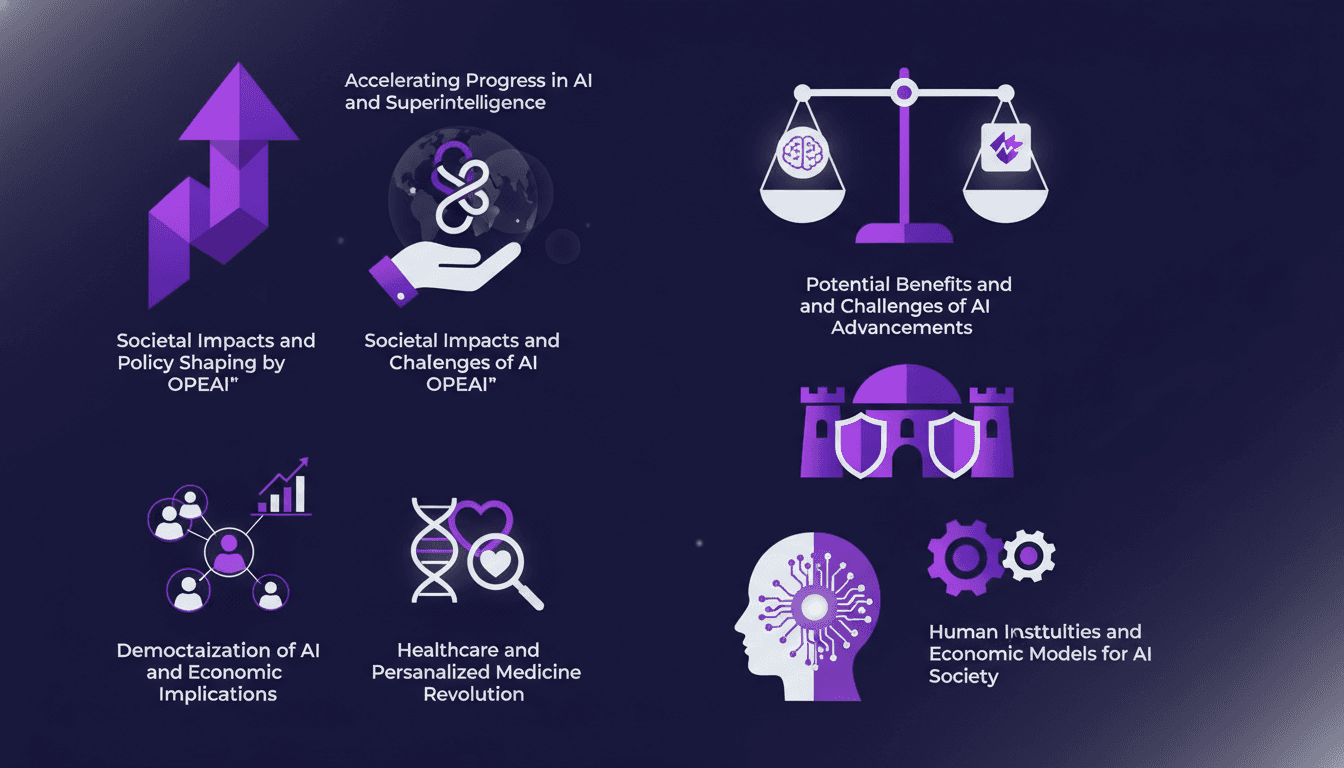
I've been in the trenches, building AI systems that push boundaries. When Sam Altman discusses the future of AI, it's not just theory—it’s about real progress and game-changing applications. Imagine compressing a decade's worth of scientific advancement into a single year. Ambitious, right? But that’s what we're seeing unfold. From democratizing AI to revolutions in personalized healthcare and resilience against threats, we are on the brink of a new era. Of course, there are challenges: how do we responsibly integrate AI into society? How do we shape policies and economic models for this new age? I've made mistakes, I've learned, and now, I invite you to dive into these pivotal issues with me. AI integration is already a part of our daily lives, and it's time we build this future together.
Accelerating Progress in AI and Superintelligence
I dive into the rapid advancements in AI, where we're achieving a decade's worth of progress in just one year. It's amazing, but this isn't just a buzzword. It's a goal we're actively pursuing. It all starts by integrating cutting-edge algorithms into our systems. I remember the first time I integrated one of these algorithms, and the speed at which it transformed our process was astounding.
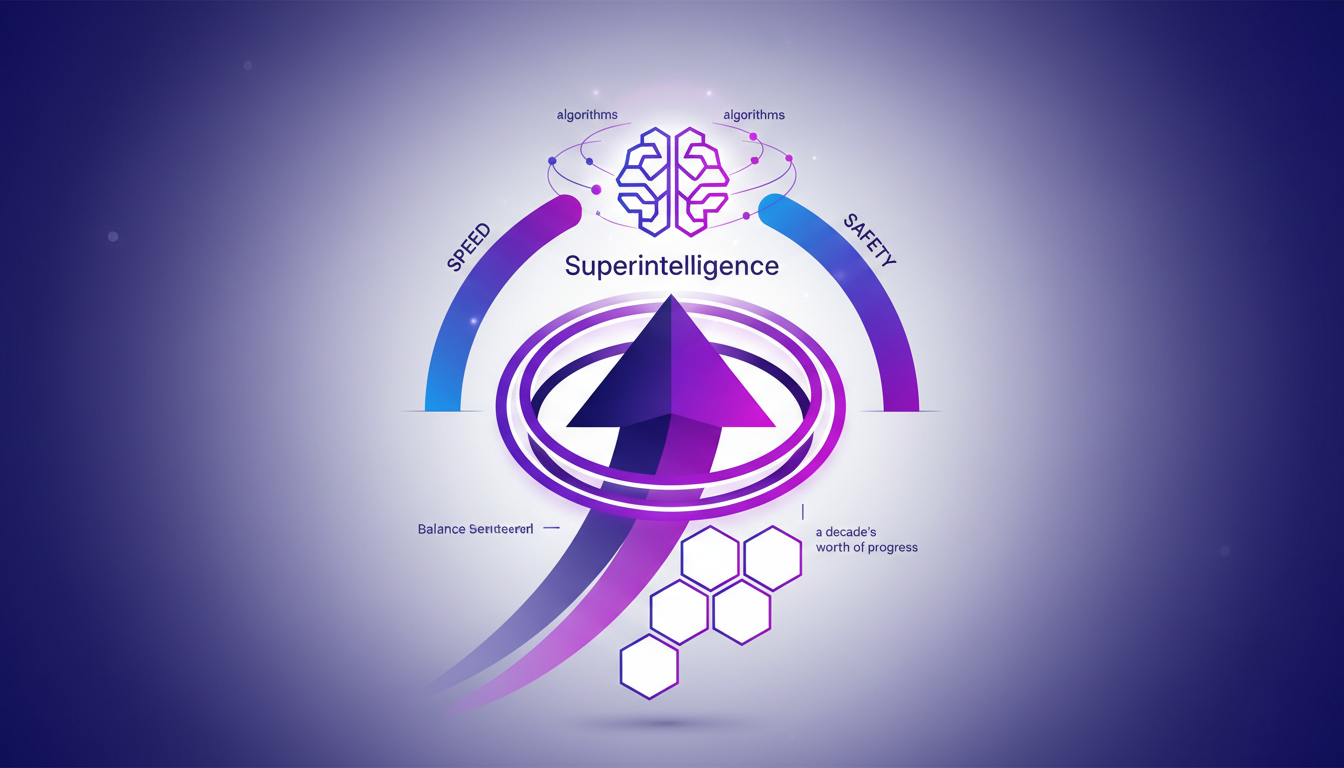
But watch out, resource allocation can quickly lead to an explosive increase in compute power usage if not carefully orchestrated. I've been burned by this before, and trust me, it's an easy trap to avoid with proper orchestration. We also have to juggle the speed of innovation with ethical considerations. Sometimes, it's tempting to push the limits, but that can lead to risky compromises.
- AI progress: a decade condensed into a year.
- Superintelligence: not just a buzzword, but a goal.
- Balance between speed and safety: crucial to avoid costly mistakes.
Societal Impacts and Policy Shaping by OpenAI
First, I connect AI development with societal needs; it's not just tech for tech's sake. OpenAI's role in policy shaping is crucial for my projects. Navigating this regulatory landscape isn't simple, but it's necessary.
Aligning AI goals with societal values is essential. I recall a time when a misaligned policy nearly derailed a project. The current policy limits show we need adaptive frameworks to keep up with the fast-paced evolution of AI. AI progress and recommendations | OpenAI discusses this.
- Connecting AI to societal needs: indispensable.
- OpenAI's role in policy shaping: influential and necessary.
- Adaptive frameworks: needed to keep up with AI's evolution.
Resilience and Defense Against AI-Related Threats
I tackle resilience in AI systems, especially in supply chains. This is crucial as AI-driven cybersecurity threats become increasingly sophisticated. I've orchestrated robust systems capable of withstanding AI-related disruptions. But how to balance accessibility and security? It's a constant challenge.

Watch out for the pitfalls of over-relying on automated defenses. I've seen systems fail because they relied too much on automatic solutions. Cybersecurity challenges require a collective defense effort.
- Resilience in supply chains: essential.
- Cybersecurity threats: robust defenses needed.
- Over-reliance on automation: to be avoided.
Democratization of AI and Economic Implications
I explore how democratizing AI impacts economic landscapes. Making AI tools accessible to non-experts is a game changer, but there are nuances. I've often found that accessibility must be balanced with adequate control over technology. Economic models emerge as AI becomes widespread.
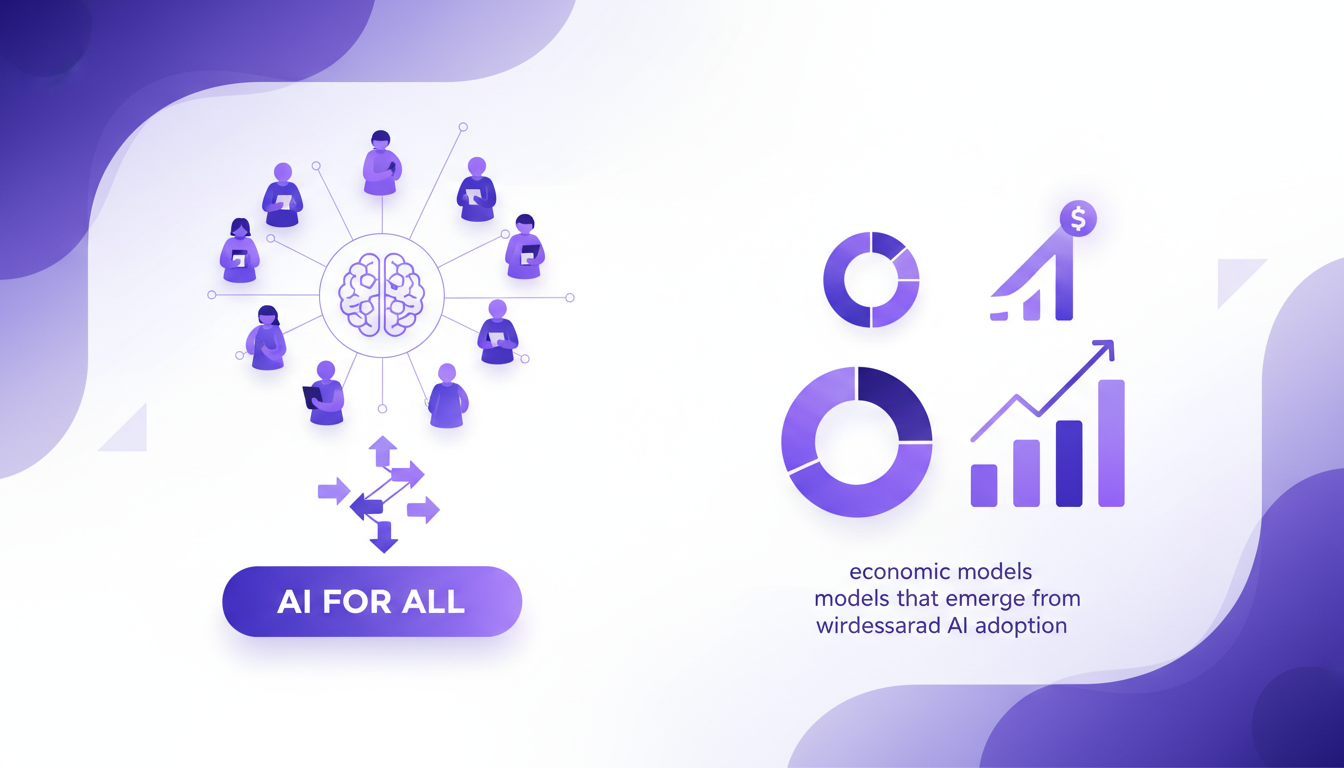
Anticipating economic shifts is crucial. I remember a time when I underestimated a shift, and it caused delays. Preparing for the future is key.
- Democratization of AI: significant economic impact.
- Emerging economic models: anticipation needed.
- Balance between accessibility and control: crucial.
Healthcare and Personalized Medicine Revolution
I dive into AI-driven personalized medicine and its potential to cure numerous diseases. Integrating AI in healthcare systems can be challenging, but the rewards are immense. I've seen concrete examples where AI has transformed patient care.
Challenges in data privacy and ethical considerations should not be underestimated. Innovation must be balanced with regulatory compliance, a balance sometimes hard to maintain. The AI revolution in personalized medicine: Clinical applications ... discusses this in detail.
- AI-driven personalized medicine: huge potential.
- Efficient AI integration: a challenge but necessary.
- Balance between innovation and regulation: crucial.
AI is reshaping our world at an incredible pace. I've seen a decade's worth of scientific progress happen in just a year. It's a real game changer, especially when you consider the ton of diseases that AI could potentially cure. But, watch out, we need to balance this with responsible innovation.
- First takeaway: AI accelerates progress at an astounding speed, but it requires careful management of societal risks.
- Second takeaway: OpenAI is pivotal in shaping policies that govern AI's impact on society.
- Third takeaway: The potential benefits of AI are immense, but the threats are not to be overlooked.
Looking ahead, I believe we have a unique opportunity to push the boundaries of what's possible while maintaining an ethical approach. Join me in building this future. For a deeper dive into these topics, I recommend checking out Sam Altman's full video on YouTube. Let's make responsible innovation a reality together.
Frequently Asked Questions

Thibault Le Balier
Co-fondateur & CTO
Coming from the tech startup ecosystem, Thibault has developed expertise in AI solution architecture that he now puts at the service of large companies (Atos, BNP Paribas, beta.gouv). He works on two axes: mastering AI deployments (local LLMs, MCP security) and optimizing inference costs (offloading, compression, token management).
Related Articles
Discover more articles on similar topics
GMA4: Google's Open-Source AI Revolution
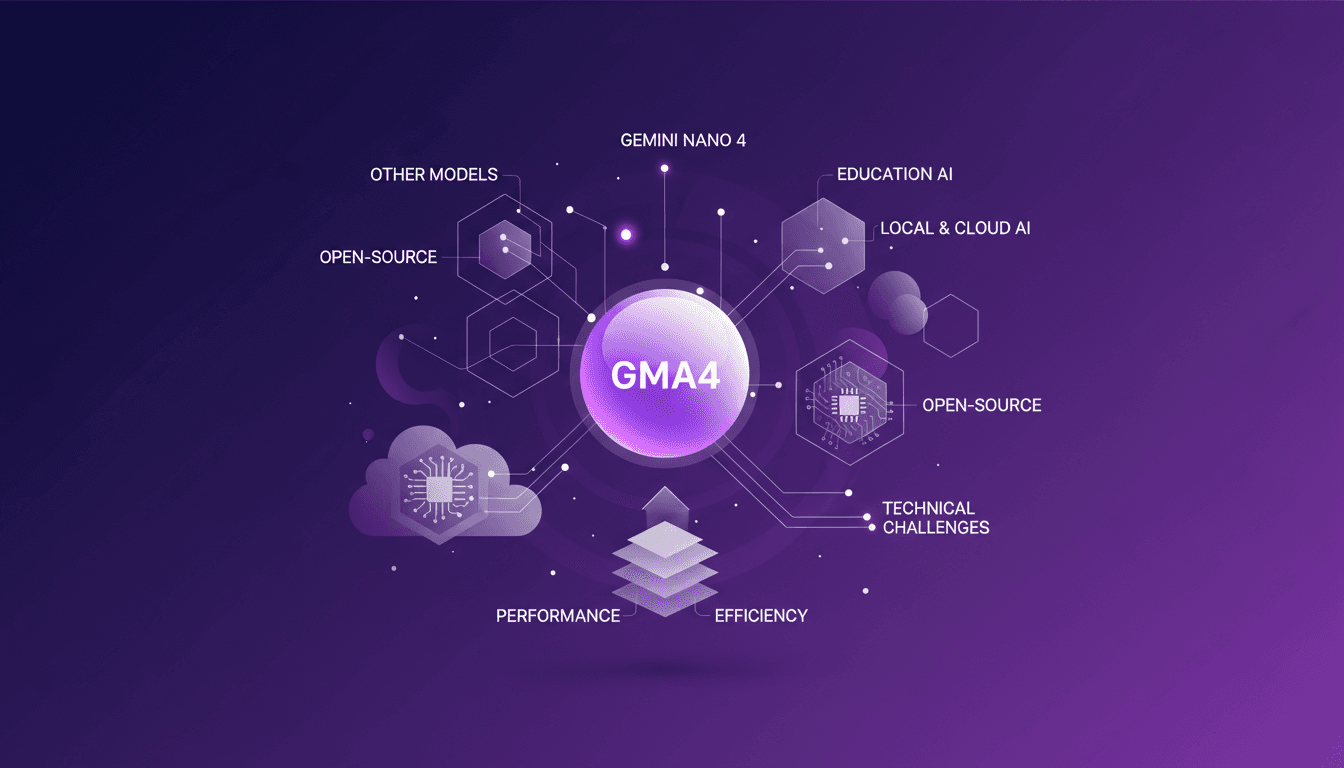
When Google released the GMA4 model, I knew it would be a game changer. I dove right into integrating it with Gemini Nano 4 for Android. And let me tell you, it wasn't a walk in the park. GMA4 is not just another AI model. With its open-source structure, it redefines local AI processing. But watch out, there are technical traps to avoid. I got burned several times, especially on performance optimization and efficiency. Yet, when you truly get a handle on these aspects, the impact is massive. Imagine a model 30 times smaller than its competitors but just as powerful. That's GMA4, a revolution in local and cloud AI. We'll talk about the educational opportunities for integrating this technology and what it means for the future of AI.
Securing Software: Project Glasswing
I've spent years wrestling with software vulnerabilities, and let me tell you, the game has changed with Project Glasswing. It's not just theory—I've seen it in action. With the Claude Mythos Preview Model, we're revolutionizing vulnerability detection, especially in systems like OpenBSD and Linux. Imagine this: a bug lurking for 27 years in OpenBSD, uncovered thanks to this initiative. In just a few weeks, more bugs found than in my entire life. Software security is no longer an endless chase; it's a new era of collaborative cybersecurity.
Influencer Strategy: $35K/Month with One App
I turned an app idea into a $35K/month cash machine by partnering with just one influencer. How? By orchestrating an influencer marketing strategy that skyrocketed our revenue by 10,000%. I'll walk you through how I navigated the challenges of app development, international market launch, and powerful content creation. And watch out—there are pitfalls to avoid (I've been burned more than once)!
Terrafabilé Project: Industrial Revolution or Madness?
I dove headfirst into the Terrafabilé project, a venture that could either redefine industrial standards or be the craziest bet in history. The stakes are high: from the ambition to revolutionize EUV lithography to the assembly of chiplets, Elon Musk isn't doing things halfway. The question is: will this project truly shake up the industry, or are we looking at a technological utopia? I'll walk you through how I navigated this complexity and the economic and geopolitical implications that follow.
Codex: Revolutionizing Code Review at RAMP
When I first integrated Codex with GPT 5.4 at RAMP, I knew we were onto something big. The way it slashed code review times from hours to minutes was a game changer. That's not just talk. By pairing Codex with GPT 5.4, we've not only optimized our workflows but also developed an AI-driven on-call assistant that changed how we tackle complex problems. Codex has become the industry standard for code review, and at RAMP, our engineers swear by it. Let's dig into how this setup works and why it's winning over everyone here.