Introduction to LangChain: AI Agents in Python
Imagine a world where AI agents handle your daily tasks effortlessly. Welcome to LangChain, a powerful tool in Python that makes this a reality. LangChain is changing how developers craft AI agents. Explore the new LangChain Academy course, designed to arm you with the skills to build sophisticated AI systems. Learn to create customized agents with the 'create agent' abstraction and refine their behavior with middleware. This course guides you through practical modules and projects to master this groundbreaking technology. Don't miss the chance to revolutionize how you interact with AI!
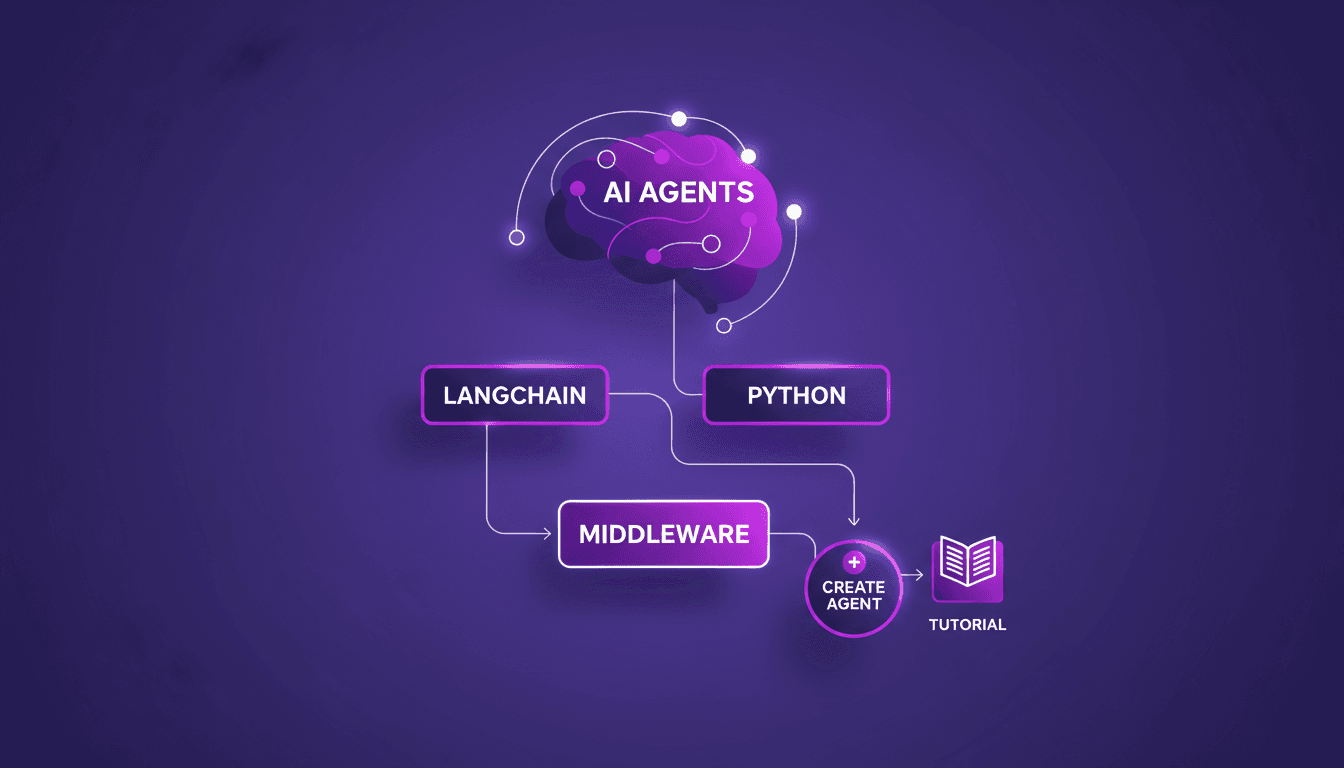
Imagine a world where your daily tasks are effortlessly managed by intelligent agents. That's exactly what LangChain promises to deliver, a powerful tool in Python that revolutionizes how developers create and customize AI agents. Curious about how it works? The new LangChain Academy course is your gateway. It's designed to equip you with the skills needed to build sophisticated AI systems. Right from the start, you'll dive into LangChain concepts, learning to use the 'create agent' abstraction to build your own smart agents. You'll also discover how to customize these agents with middleware, adding layers of complexity and efficiency. This course isn't just about theory; it immerses you in practical modules and projects so you can truly master this groundbreaking technology. Ready to transform your interaction with AI? Dive into the world of LangChain and explore the endless possibilities it offers.
Understanding LangChain and Its Benefits
LangChain is an innovative framework designed to simplify the integration of large language models (LLMs) into applications. It provides powerful tools for developing autonomous agents capable of reasoning and interacting with their environment. Imagine a team of virtual assistants that can summarize your emails, schedule your appointments, and conduct market research 24/7.
Key Benefits of LangChain
LangChain stands out due to its ease of use, flexibility, and powerful abstractions. Unlike traditional AI development methods, which often require complex programming, LangChain allows you to create a simple agent in under 10 lines of code.
- Easy integration of various tools (e.g., search APIs, data processors).
- Agent abstractions to delegate subtasks to specialized modules.
The “create agent” abstraction is a central feature of LangChain. It captures the essential qualities of an agent in their simplest form, making agent creation accessible even to beginners.
Building AI Agents: Course Breakdown
The course "Introduction to LangChain in Python" guides you through building deployment-ready AI agents. It is structured into several modules, each with specific objectives.
Module 1: Building a Personal Chef Agent
In this module, you will learn to customize a language model with out-of-the-box arguments and system prompts. The goal is to create a personal chef that suggests recipes based on pictures of your fridge.
Module 2: Developing Multi-Agent Systems
Here, your agent will become more sophisticated by using multi-agent systems for complex tasks, like synchronized wedding planning with up-to-date flight prices and venue details.
Module 3: Enhancing Agents with Middleware
You will learn to use middleware to customize your agents with dynamic tools, prompts, and models, allowing the introduction of the human in the loop to gate sensitive actions.
- Final project: Creating an automated email assistant.
LangChain's 'Create Agent' Abstraction
Imagine the “create agent” abstraction as a magical toolbox. It simplifies AI agent development by encapsulating complex processes into simple commands. For example, you can create an agent that manages your schedule in just a few lines of code.
- Easy integration with existing Python projects.
- Examples of agents: personal assistants, task planners.
This abstraction benefits developers and businesses by saving time and reducing the complexity of AI projects.
Customizing AI Agents with Middleware
A middleware acts as an intermediary in AI systems, allowing for enhanced customization. LangChain facilitates this customization by integrating middleware that enhances agent capabilities.
Examples of Middleware
Middleware can introduce dynamic tools, custom models, and scalable workflows. For instance, middleware might allow an agent to filter emails according to predefined criteria.
- Increased flexibility and scalability.
- Use cases: finance, healthcare, logistics.
Exploring Multi-Agent Systems and Human in the Loop
Multi-agent systems are crucial for managing complex tasks by distributing work among different agents. LangChain excels in developing these systems, facilitating their integration and management.
The concept of human in the loop is vital to balance automation with human oversight, ensuring that critical decisions are reviewed by humans.
- Real-world applications: customer service, project management.
- Future trends: increased AI integration in decision-making processes.
LangChain offers a powerful toolkit for building AI agents in Python. Key takeaways include:
- An effective introduction to Python for AI development.
- Simplified agent creation and customization with the 'create agent' abstraction.
- Middleware capabilities for tailoring agents to specific needs. Looking ahead, LangChain is set to revolutionize AI system development and deployment. For those ready to transform their AI approach, now is the time to act. Enroll in the LangChain Academy course today. For a deeper understanding, watch the full video on YouTube: LangChain Academy New Course: Introduction to LangChain - Python. Discover how LangChain can bring your AI ideas to life.
Frequently Asked Questions

Thibault Le Balier
Co-fondateur & CTO
Coming from the tech startup ecosystem, Thibault has developed expertise in AI solution architecture that he now puts at the service of large companies (Atos, BNP Paribas, beta.gouv). He works on two axes: mastering AI deployments (local LLMs, MCP security) and optimizing inference costs (offloading, compression, token management).
Related Articles
Discover more articles on similar topics
Build MCP Agent with Claude: Dynamic Tool Discovery
I dove headfirst into building an MCP agent with LangChain, and trust me, it’s a game changer for dynamic tool discovery across Cloudflare MCP servers. First, I had to get my hands dirty with OpenAI and Entropic's native tools. The goal? To streamline access and orchestration of tools in real-world applications. In the rapidly evolving AI landscape, leveraging native provider tools can save time and money while boosting efficiency. This article walks you through the practical steps of setting up an MCP agent, the challenges I faced, and the lessons learned along the way.
Native Tools: Build a Cloudflare MCP Agent
Imagine harnessing the full power of cloud platforms with just a few clicks. Welcome to the world of MCP agents and native provider tools. As AI technology evolves, integrating tools across multiple cloud platforms becomes essential. This tutorial explores building a Cloudflare MCP agent using Langchain, making complex integrations seamless and efficient. Discover how native tools from OpenAI and Entropic transform your cloud experience. Dive into dynamic tool discovery, integration, MCP server connections, and the advantages of using native tools. Let's explore practical scenarios and envision how these tools shape the future of AI applications.

Autonomy in Software Engineering: Key Insights
Imagine a world where software writes itself, adapts, and evolves with minimal human intervention. This isn't science fiction—it's an emerging reality in the world of Software 2.0. In a recent conference talk, Eno Reyes of Factory AI delves into the transformative potential of AI agents in software development. This article explores how autonomy, specification-driven development, and automated validation are reshaping codebases. Discover how these innovations redefine validation criteria and feedback loops within software organizations.
LangChain Academy: Start with LangChain
I dove into LangChain Academy's new course to see if it could really streamline my AI agent projects. Spoiler: it did, but not without some head-scratching moments. LangChain is all about building autonomous agents efficiently. This course promises to take you from zero to hero with practical projects and real-world applications. You'll learn to create agents, customize them with middleware, and explore real-world applications. For anyone looking to automate intelligently, it's a game changer, but watch out for context limits and avoid getting lost in module configurations.
LangChain Academy: Start with LangChain
I dove into LangChain Academy's new course to see if it could really streamline my AI agent projects. Spoiler: it did, but not without some head-scratching moments. LangChain is all about building autonomous agents efficiently. This course promises to take you from zero to hero with practical projects and real-world applications. You'll learn to create agents, customize them with middleware, and explore real-world applications. For anyone looking to automate intelligently, it's a game changer, but watch out for context limits and avoid getting lost in module configurations.
Unlocking Gemini 3 Flash: Practical Use Cases
I dove into Gemini 3 Flash expecting just another AI tool, but what I found was a game changer for OCR tasks. This model, often overshadowed by the Pro, turns out to be a hidden gem, especially when you factor in cost and multilingual capabilities. In this article, I'll walk you through how Gemini 3 Flash stacks up against its big brother and why it deserves more attention. We're talking efficiency, technical benchmarks, and practical use cases. Spoiler: for certain tasks, it even outperforms the Pro. Don't underestimate this little gem; it might just transform your OCR handling without breaking the bank.