VEED Ships AI Features Fast and Effectively
When I first joined VEED, I was blown away by how quickly we could iterate on AI features. It's not just about deploying fast; it's about making sure those features actually work for users. Let me walk you through our approach. VEED, the largest browser-based AI video editing platform, aims to deliver tools that genuinely enhance user experience. In this article, I share our workflow: how we ship AI features fast that resonate with our users without overcomplicating things. We focus on user interaction, identifying pain points, and balancing speed with creativity and maintenance. It's a delicate dance between following AI trends and evolving the product.
When I first started working with VEED, I was blown away by how quickly we could iterate on AI features. But it's not just about speed—it's about ensuring those features actually work for our users. VEED has become the largest browser-based AI video editing platform, and our goal is to deliver tools that enhance user experience without complicating things. We've got a well-honed workflow for shipping AI features that resonate with users. First, we engage with users to identify pain points, then we balance speed with creativity without sacrificing maintenance. It's a delicate dance between following emerging AI trends and evolving our product. If you've ever wondered how to combine fast deployment with truly useful features, let me show you our approach.
Harnessing AI for Video Editing
At VEED, I haven't just stood by and watched; I've been part of the AI revolution in video editing. As the biggest browser-based, AI-powered video editing platform, VEED stands out with its pragmatic approach: here, functionality trumps perfection. We're not aiming for infallibility, but ensuring a seamless user experience. AI must not break the experience, and that's our daily challenge.
Every day, we integrate new AI features, such as generating multiple content options for users. Imagine: the AI offers several versions of a video, and the user selects the best fit. It's a real game changer, but watch out, this demands precise orchestration to avoid burdening the user experience.
"VEED is the biggest browser-based, AI-powered video editing platform."
User Feedback: The Backbone of Development
Make no mistake, at VEED, user feedback is our compass. Every week, I ensure to speak with at least one user. It's an indispensable practice for our product managers. These interactions allow us to capture insights that are impossible to glean from metrics alone. This is where we discover the real pain points, those that guide our product roadmap.
We employ feedback loops to refine AI features. It's a process where quantitative analysis of qualitative data is crucial. For instance, we've developed features like the teleprompter and AI eye contact thanks to these exchanges.
- Weekly user interaction
- Identifying non-obvious pain points
- Developing features based on user feedback
Rapid Deployment: Strategies and Challenges
In a world where speed is essential, our approach at VEED is straightforward: rapid prototyping and immediate deployment. But don't get me wrong, balancing speed and quality is a constant challenge. We've implemented decision-making frameworks that prioritize functionality without compromising user satisfaction.
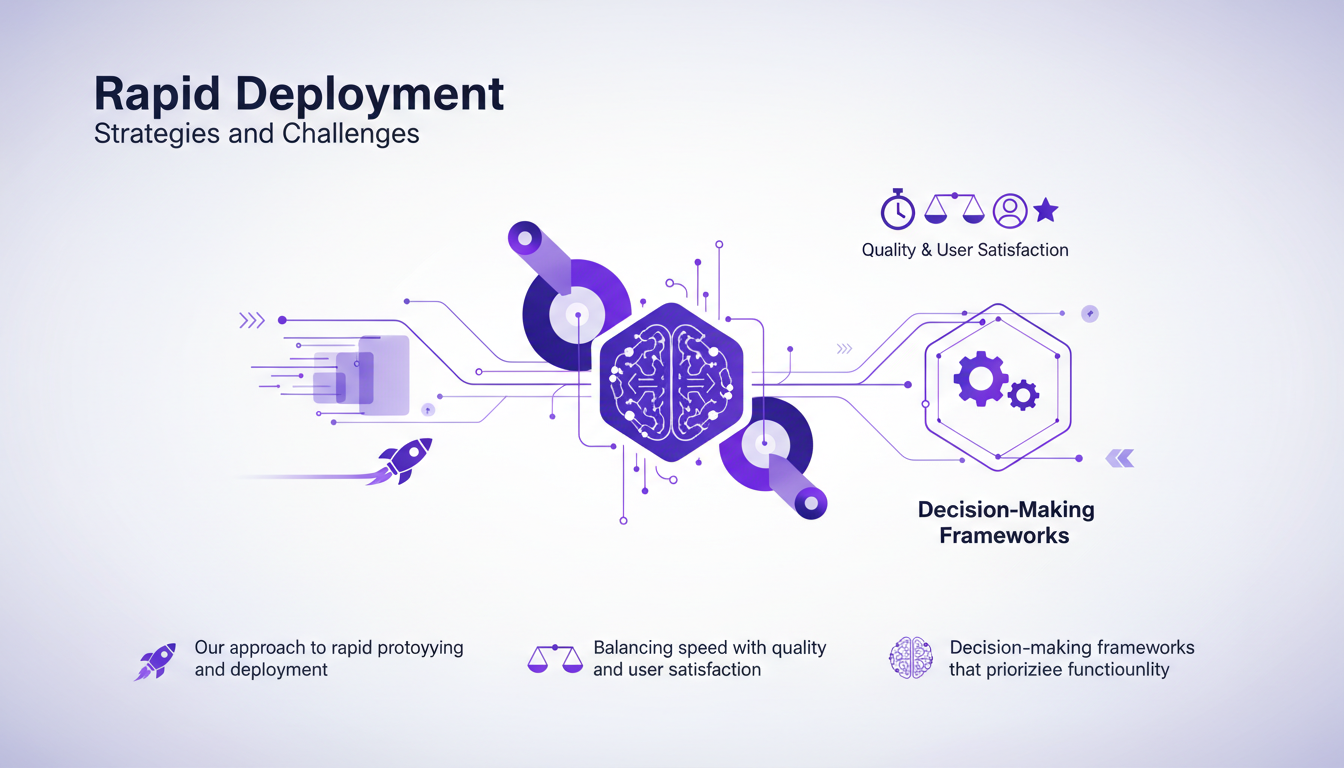
There are, of course, trade-offs between rapid deployment and maintenance. Every new feature must be tested, and sometimes it's quicker to revert to a previous version rather than persist.
- Rapid prototyping and deployment
- Balance between speed and quality
- Trade-offs between rapid deployment and maintenance
Building Trust and Encouraging Creativity
At VEED, trust within teams is paramount. We foster a culture of trust where everyone can propose creative solutions, often through hackathons. These events are an opportunity to develop projects like video games, which, while playful, stimulate innovation.
It's crucial to align team goals with user needs and AI trends. I ensure that creativity remains at the heart of our process, even as we adhere to strict timelines.
- Culture of trust within teams
- Encouraging creative solutions
- Aligning goals with user needs
Adapting to AI Trends and Future-proofing
To stay competitive, it's essential to stay ahead of AI trends. We constantly iterate on our AI models based on user feedback. This allows us to future-proof our platform against evolving user demands.

Trade-offs are an integral part of adopting new AI technologies. Each update must be weighed for its benefits and potential limitations.
- Continuous iterations of AI models
- Future-proofing the platform
- Trade-offs in adopting new technologies
At VEED, I've mastered deploying AI features that really work. First, I focus on gathering continuous user feedback. Then, I deploy rapidly, blending speed with creativity. But remember, AI tools don’t have to be perfect, they just shouldn’t break the user experience.
- VEED is the largest browser-based AI video editing platform.
- We've created video games during hackathons, showing our creative edge.
- Our AI tools aim for functionality over perfection.
Looking forward, I'm convinced that keeping iterating and staying open to feedback is the only way to grow.
Ready to transform your video editing experience with VEED's AI tools? Dive in and see the difference for yourself. And for a deeper dive, I recommend watching the original video. It offers valuable insights for anyone interested in AI-powered video editing.
Frequently Asked Questions

Thibault Le Balier
Co-fondateur & CTO
Coming from the tech startup ecosystem, Thibault has developed expertise in AI solution architecture that he now puts at the service of large companies (Atos, BNP Paribas, beta.gouv). He works on two axes: mastering AI deployments (local LLMs, MCP security) and optimizing inference costs (offloading, compression, token management).
Related Articles
Discover more articles on similar topics
React Compiler: Transforming Frontend
I still remember the first time I flipped on the React Compiler in a project. It felt like turning on a light switch that instantly transformed the room's atmosphere. Components that used to drag suddenly felt snappy, and my performance metrics were winking back at me. But hold on, this isn't magic. It's the result of precise orchestration and a bit of elbow grease. In the ever-evolving world of frontend development, the React Compiler is emerging as a true game changer. It automates optimization in ways we could only dream of a few years ago. Let's dive into how it's reshaping the digital landscape and what it means for us, the builders of tomorrow.

AI Innovations 2025: Gemini and Google Beam
I was at Google I/O 2025, and the buzz was palpable. As a builder, I'm always on the lookout for tools that make a real difference in my workflows. This year, Gemini AI and Google Beam caught my attention. We're not just talking about minor upgrades; these are genuine game changers. New products and subscription plans, Gemini AI's evolution, and breakthroughs in scientific research are shaking things up. AI in immersive video communication and disaster response is no longer just a promise; it's a reality. With the Ironwood TPU delivering 42.5 exaflops of compute per part, performance has skyrocketed. It's time to dive into these innovations and see how they can transform our projects in real ways.
Manus AI: Reinventing Automation and Creativity
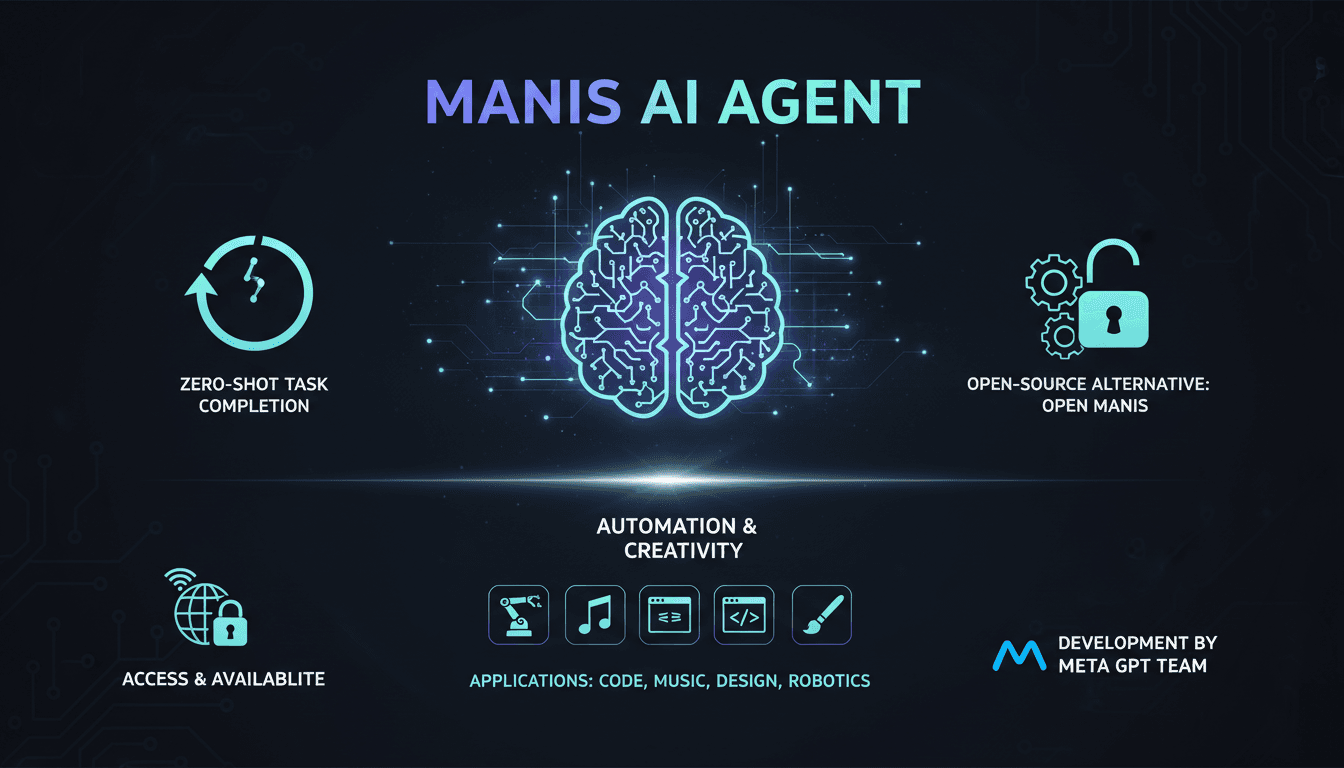
I dove into Manus AI, expecting just another tool, but it turned my workflow upside down. From coding games to planning trips, this AI agent is a real game changer. Developed by Meta GPT, it offers zero-shot task completion that cuts through the hype. I'm here to show you how I've integrated it into my daily projects. But watch out, you need to know its limits and orchestrate it effectively. And then there's Open Manis, the open-source alternative, which has already garnered 8,000 stars on its repo. Ready to discover what Manus can really do?
Building Mobile Apps with AI: Reality or Hype?
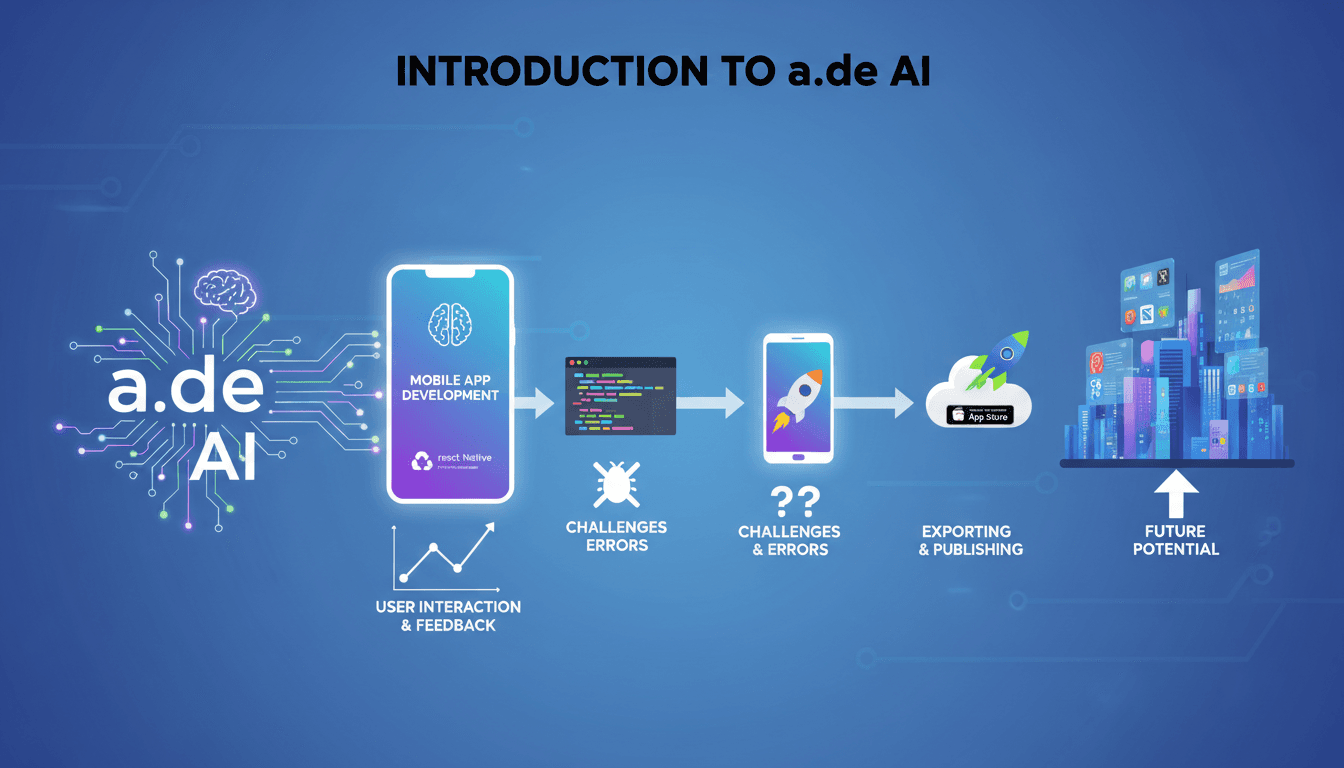
I dove into mobile app development with a.de AI, and let me tell you, it's a game changer—when you know how to navigate the quirks. This isn't just theory; we're building real apps using React Native and Expo, figuring out how to make AI work for us. I connect my components, orchestrate flows, but watch out for the errors along the way. Building with AI means embracing challenges, from user feedback to exporting to app stores. So, is it reality or just hype? You decide, but for me, the potential for app store publishing is real if you know what you're doing.
Launch SaaS Without Code Using Data Button
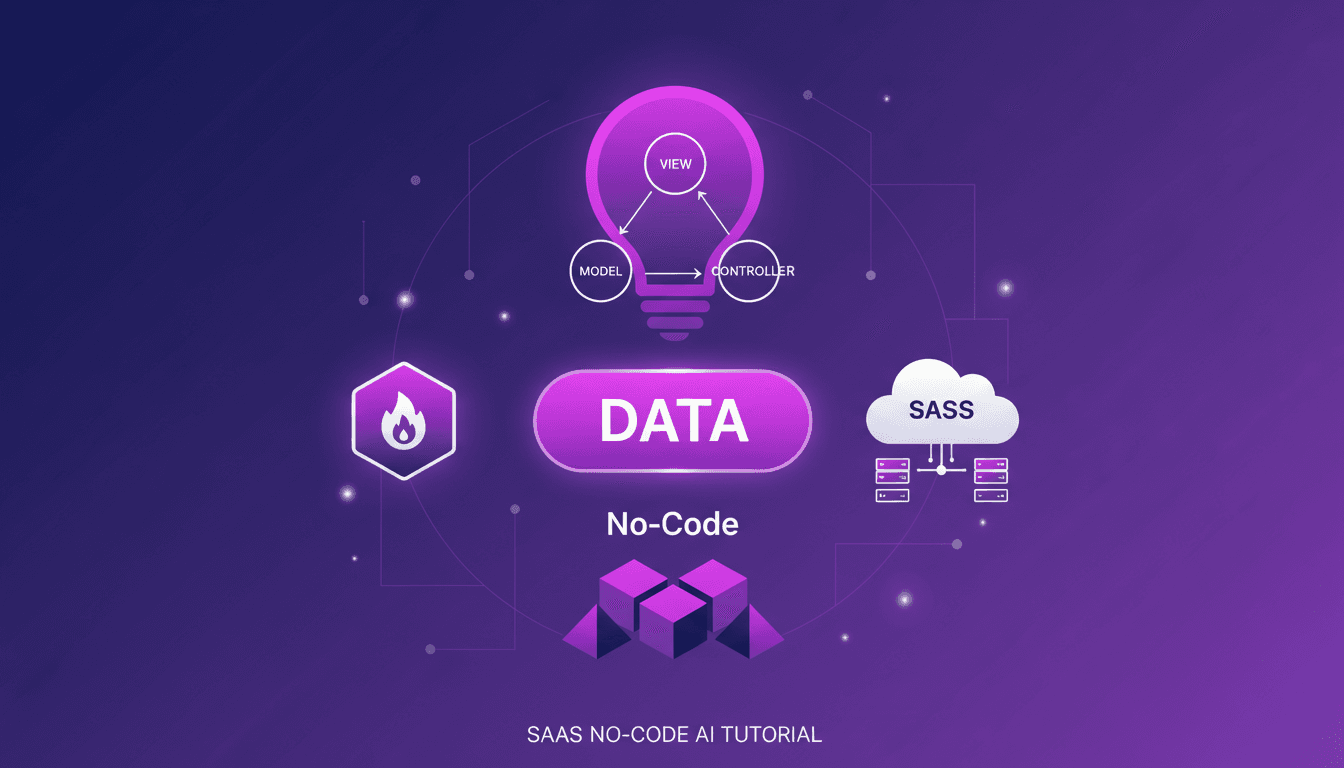
Ever thought launching a SaaS without writing a single line of code was a pipe dream? I did too, until I stumbled upon a game-changer: Data Button. Let me walk you through how I launched my own SaaS, integrating Firebase authentication and deploying it seamlessly, all without touching a line of code. In today's tech world where time and efficiency are crucial, this approach not only saves time but also drastically cuts costs, making it perfect for startups with limited resources. By organizing my files using the MVC design pattern and deploying directly to a custom domain, I've simplified the SaaS deployment process with AI.