Google's Anti-gravity: Revolutionizing Development
I've been in the development trenches long enough to spot a game changer when I see one. Google's acquisition of Windsor and the introduction of Anti-gravity has me rethinking my workflows entirely. With Anti-gravity, Google DeepMind is redefining agentic development and asynchronous work. Its innovative features and potential to outshine tools like Cursor are exciting. But watch out: the promises are big, and the limits must be understood. Let's dive into what could very well be a revolution for us seasoned developers.
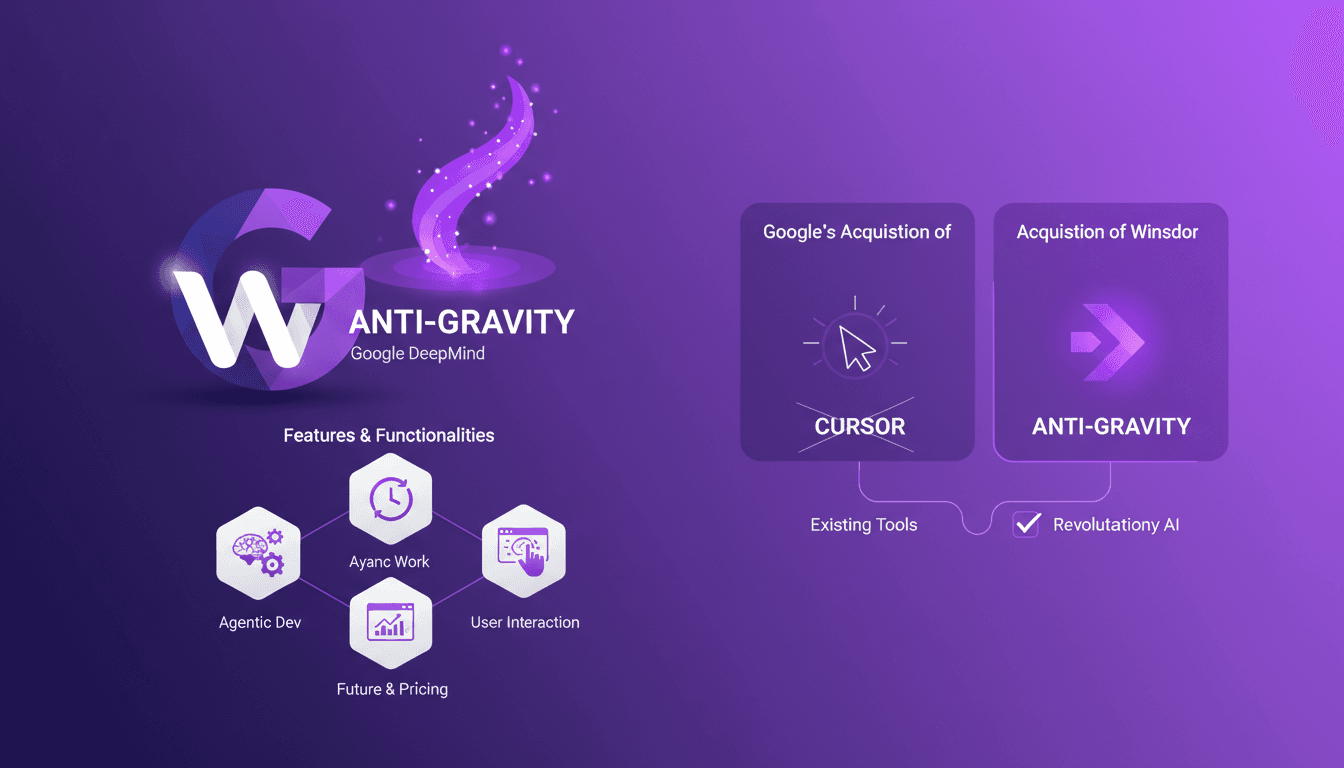
I've been in the development trenches long enough to recognize a game changer when I see one. Google's acquisition of Windsor and the introduction of Anti-gravity has me seriously rethinking my workflows. Just imagine: in just four months since they joined Google DeepMind, they're transforming how we approach agentic development and asynchronous work. Anti-gravity promises to surpass tools like Cursor, but not without a few caveats. I've been burned before by not paying attention to the limits of certain tools. Here, it's the promise of fluidity and efficiency, but be careful not to expect too much too soon. We'll dive into Anti-gravity's features, how they integrate into our daily work, and what it means for the future of development. Get ready for a journey that might just change the way we build our projects.
Windsor Acquisition: A Power Move by Google
I've seen my share of acquisitions, but this one is a heavyweight. Google snagged Windsor's core team for $2.4 billion, while OpenAI was ready to shell out over $3 billion. This acquisition didn't just bolster Google's AI capabilities; it was a strategic blow to OpenAI. The 200 team members from Windsor are now part of Google DeepMind. It's a bold move showing just how far Google is willing to go to stay at the forefront of AI.
Google doesn't leave anything to chance. By integrating these talents, they strengthen their position in the AI race. This isn't just for show; it's a strategic move. We're talking about a team that had already proven its worth. This acquisition is a game changer, but watch out, it doesn't guarantee automatic success. Integrating such talents quickly can sometimes pose organizational challenges, but Google seems to have orchestrated this carefully.
Introducing Anti-gravity: A New Era in Development
Anti-gravity is Google's latest gem from DeepMind. As soon as I got my hands on it, I saw the potential. It's a tool focused on agentic development and asynchronous workflows. Sure, it sounds a bit jargon-heavy, but simply put, it means agents can work autonomously to create development artifacts. It's truly promising.
But watch out, the learning curve can be steep. Integrating Anti-gravity into your existing workflows requires time and patience. The integration challenges are real, but once mastered, the efficiency gains are undeniable. It's a tool that, if used well, can transform how we build and develop projects.
Features and Functionalities: What Sets Anti-gravity Apart
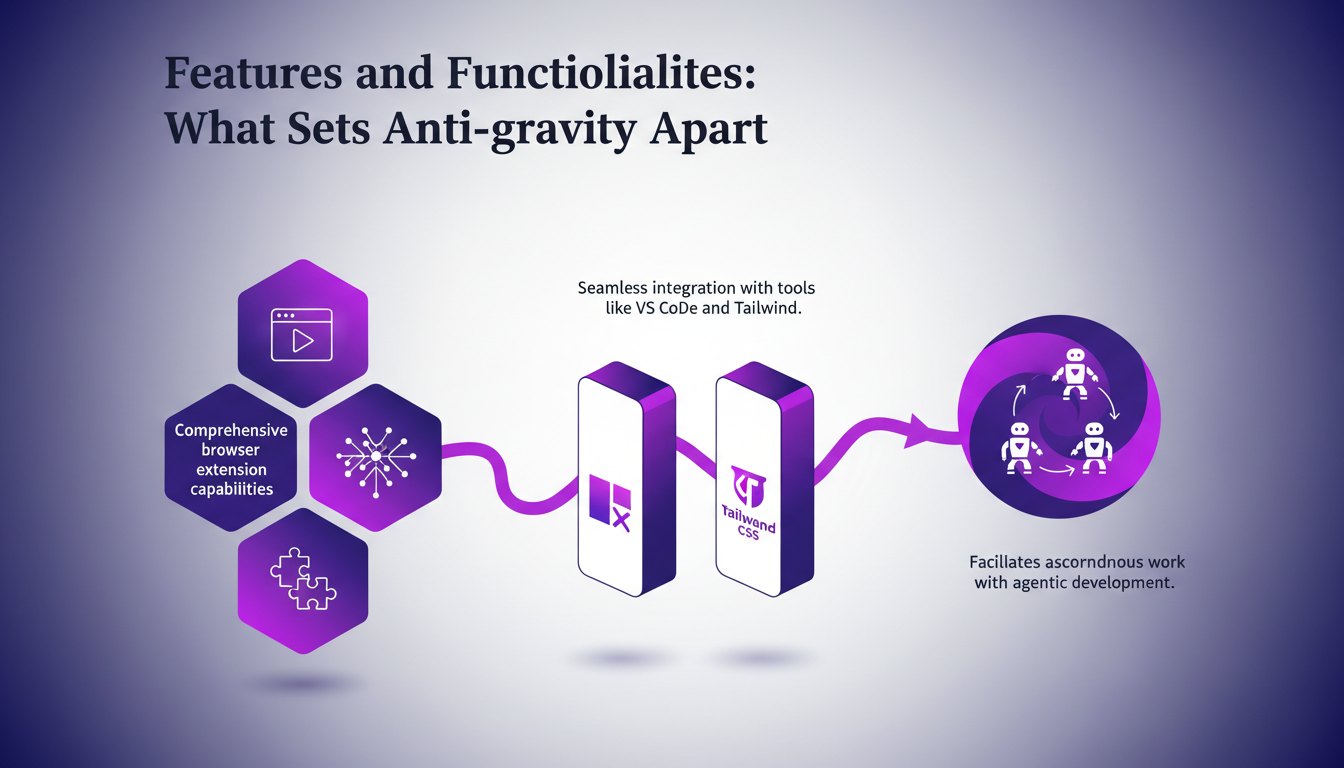
What strikes me about Anti-gravity are its browser extension capabilities. It integrates seamlessly with tools like VS Code and Tailwind. This integration is smooth, allowing for asynchronous work with agentic development. Compared to existing tools like Cursor, Anti-gravity stands out with its ability to create and manage artifacts in real-time.
Having tested the tool, I must say the way it handles tasks and testing is impressive. You can resize elements, test, and make on-the-fly changes. It's like having a personal assistant working behind the scenes for you.
User Interaction and Practical Application
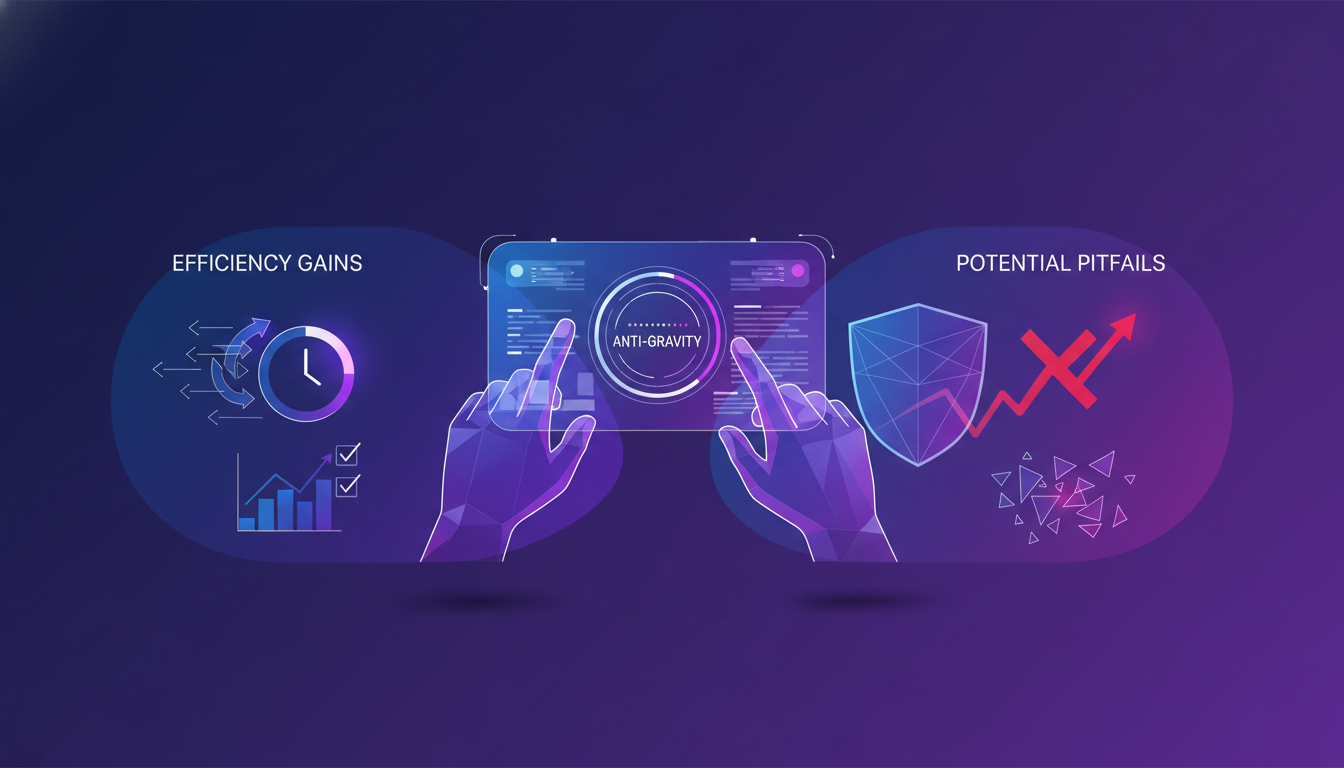
When I got my hands on Anti-gravity's interface, the efficiency gains were immediately evident. It's a tool that, when used well, can save you a lot of time in real-world scenarios. However, there are potential pitfalls to avoid. For example, don't overload the agents with too many tasks at once; it can slow down the process.
To maximize productivity, I recommend planning tasks well and letting the agents work autonomously. Don't rush to intervene manually. Let the tool do its work, and you'll get optimal results.
Future Plans and Pricing: What's Next for Anti-gravity
Google has an ambitious roadmap for Anti-gravity. The tool is currently available with a free plan, but more advanced pricing models are likely to emerge. The impact on the developer community is already visible, and future adoption could be massive.
Finding a balance between cost and the value offered by Anti-gravity will be crucial. For now, the free plan already offers a lot, but it will be interesting to see how Google positions future paid offerings. Developers will need to assess whether the cost is worth the promised productivity gains.
First off, Google's strategic acquisition of Windsor sets the stage for a paradigm shift in our workflows with the introduction of Anti-gravity. This isn't just another tool; it's a game changer, especially considering Windsor was on track to be bought by OpenAI for three billion dollars. Next, with only four months since the team joined Google DeepMind, Anti-gravity is already flexing its muscles with robust features that might just upend our development practices. But watch out, every revolution has its hurdles and the transition won't be without challenges. Yet, the potential efficiency gains make this tool worth exploring. Finally, comparing it to existing tools like Cursor highlights both the power and limits of Anti-gravity.
Looking forward: Anti-gravity has the potential to deeply transform our development processes. It's time to dive in and stay ahead of the curve.
Call to action: Watch the full 'Antigravity Google's Cursor Killer' video on YouTube to dive deeper into how this tool can change your development routine. Trust me, it's worth it!
Frequently Asked Questions

Thibault Le Balier
Co-fondateur & CTO
Coming from the tech startup ecosystem, Thibault has developed expertise in AI solution architecture that he now puts at the service of large companies (Atos, BNP Paribas, beta.gouv). He works on two axes: mastering AI deployments (local LLMs, MCP security) and optimizing inference costs (offloading, compression, token management).
Related Articles
Discover more articles on similar topics
Gemini 3 Pro: Unveiling Key Advancements
When I first got my hands on the Gemini 3 Pro, I knew I was stepping into a new realm of AI capabilities. DeepMind and Google have teamed up to deliver a model that redefines AI performance. But this isn't just marketing noise. With seamless integration into Google platforms and groundbreaking features, I'll show you why this model is a real game changer for us developers. We'll cover advancements in dynamic UI, comparisons with previous versions, and what this means for our technical day-to-day.
React Compiler: Transforming Frontend
I still remember the first time I flipped on the React Compiler in a project. It felt like turning on a light switch that instantly transformed the room's atmosphere. Components that used to drag suddenly felt snappy, and my performance metrics were winking back at me. But hold on, this isn't magic. It's the result of precise orchestration and a bit of elbow grease. In the ever-evolving world of frontend development, the React Compiler is emerging as a true game changer. It automates optimization in ways we could only dream of a few years ago. Let's dive into how it's reshaping the digital landscape and what it means for us, the builders of tomorrow.
Launch SaaS Without Code Using Data Button
Ever thought launching a SaaS without writing a single line of code was a pipe dream? I did too, until I stumbled upon a game-changer: Data Button. Let me walk you through how I launched my own SaaS, integrating Firebase authentication and deploying it seamlessly, all without touching a line of code. In today's tech world where time and efficiency are crucial, this approach not only saves time but also drastically cuts costs, making it perfect for startups with limited resources. By organizing my files using the MVC design pattern and deploying directly to a custom domain, I've simplified the SaaS deployment process with AI.
Build Your Own AI Fashion Influencer
I dove into the world of virtual try-on tech to build my own AI fashion influencer. It's like playing dress-up, but with code. First, I integrated an AI model using tools that cost less than a dollar per virtual try. Each generation takes about 40 seconds and costs just 4 cents. It's a real game changer for fashion advertising. I'll walk you through how I orchestrated everything—from model integration to cost management—and how this opens up new monetization opportunities in the industry. Don't get burned by context limits; beyond 100K tokens, it gets tricky. Ready to transform your fashion marketing approach with AI? Follow along, I'll show you how.
Elevate Your Engineering with Picnic
I remember the first time I walked into Picnic's training program. It was like stepping into a new world of engineering. The energy was palpable, and the focus on not just coding, but thinking like an entrepreneur, was a game changer. In the engineering world, standing out means more than just knowing your code. It's about mindset, continuous learning, and leveraging the right tools. Let's dive into how Picnic's approach bridges the gap between good and great engineers. We're talking Java, Spring Framework, and the importance of deeply understanding technology, not to mention soft skills and AI tooling for aspiring engineers.