Building an AI Closer: Sales Revolution
I spent six months knee-deep in code building an AI Closer, and believe me, it's a game changer. We're not just talking tech here; it's about completely redefining how we approach sales. Traditional sales training has been stuck in the same gear for a century, unable to evolve. With AI, we aren't just automating tasks; we're fundamentally transforming the emotional landscape of sales. Say goodbye to ego and hello to a more efficient, emotionally intelligent approach. This new era of sales could shake up established norms, and if you don't move forward, you might just get left behind.
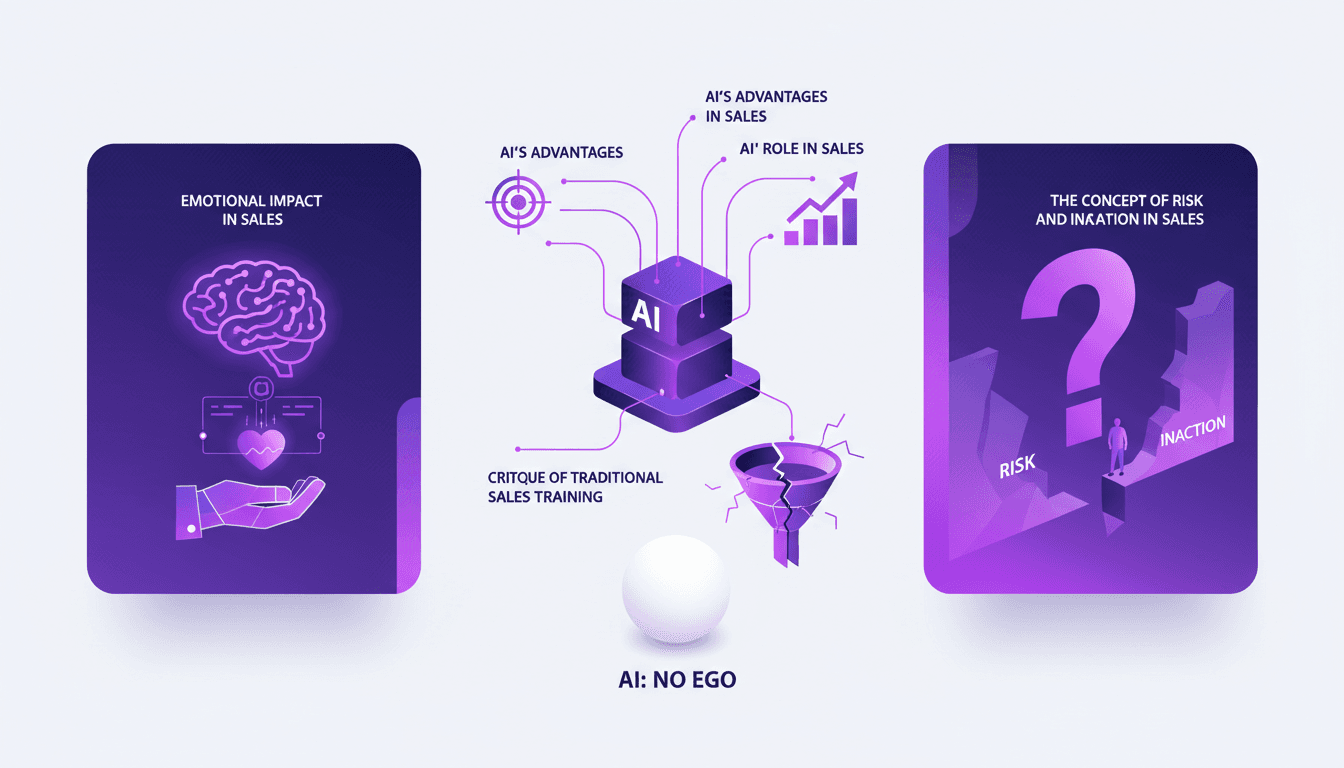
I spent six months knee-deep in code, building an AI Closer, and let me tell you, it's a game changer. From the first line, I knew I wasn't just adding another tech tool to my arsenal. No, I was part of a true sales revolution. Traditional sales training? Stuck in the past for a century. But now, with AI, we're doing more than automating; we're redefining the emotional landscape of sales. Picture an AI with no ego, focused on efficiency and human connection. It's a game changer, and if you don't adapt, you might get left behind. So, let me take you through this tutorial, breaking down how this revolution is unfolding and why it's crucial to your sales strategy.
Understanding the AI Closer: What I Built and Why
Embarking on the development of the AI Closer six months ago was driven by a straightforward yet ambitious goal: revolutionize the sales approach. As a developer, creating this tool was both a challenge and an exciting playground. The idea was simple but ambitious: leverage AI to handle crucial emotional aspects in sales, often overlooked by traditional methods.
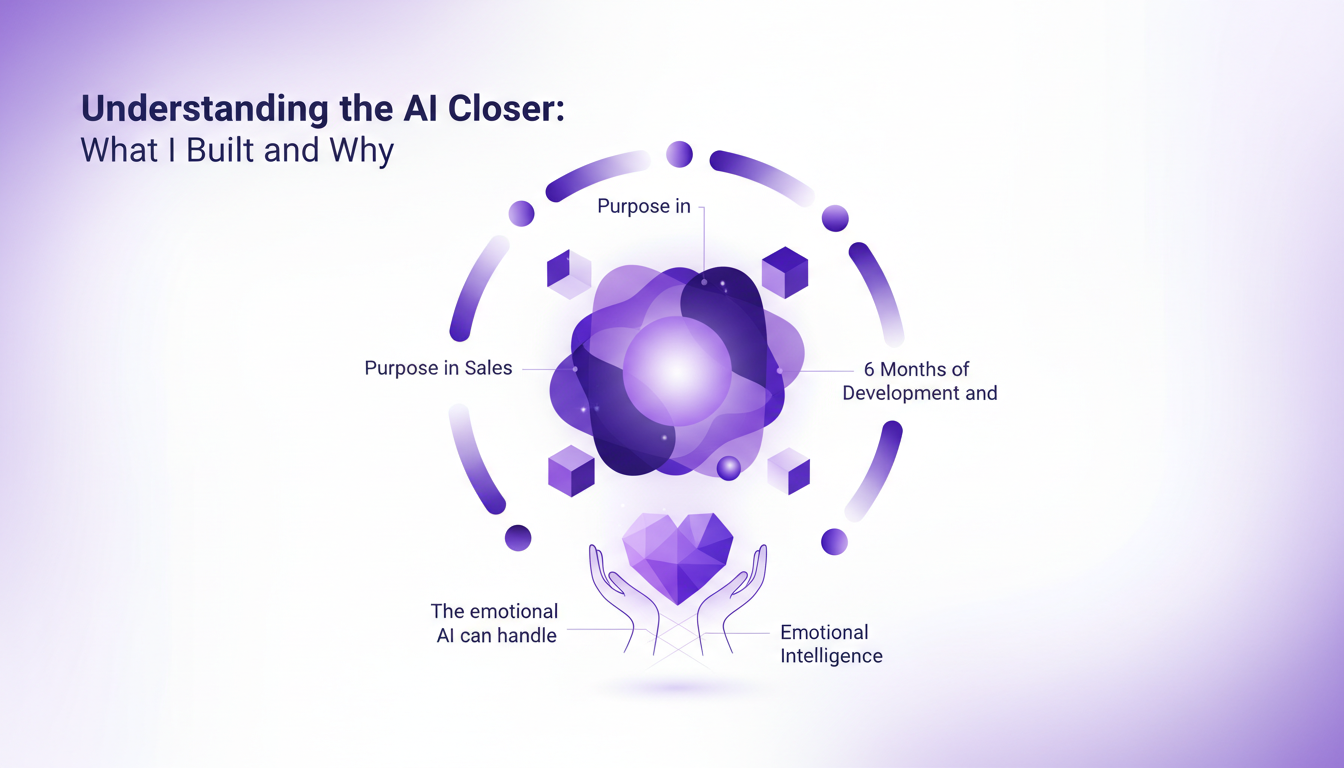
After six months of relentless development and iteration, I finally orchestrated a system capable of reading and interpreting emotional cues. Traditional methods often fail in establishing an emotional connection with the client. The AI Closer has no emotional impact on customers, and this is intentional. This absence of emotion is a key feature, not a bug, as it allows for an objective and impartial approach.
Emotional Impact in Sales: Why It Matters
In the sales domain, emotional impact often distinguishes a closed deal from a missed opportunity. The AI Closer is designed to understand and respond to emotional cues, which is essential for closing deals. By analyzing 100% of sales interactions, it provides instant, data-driven feedback.
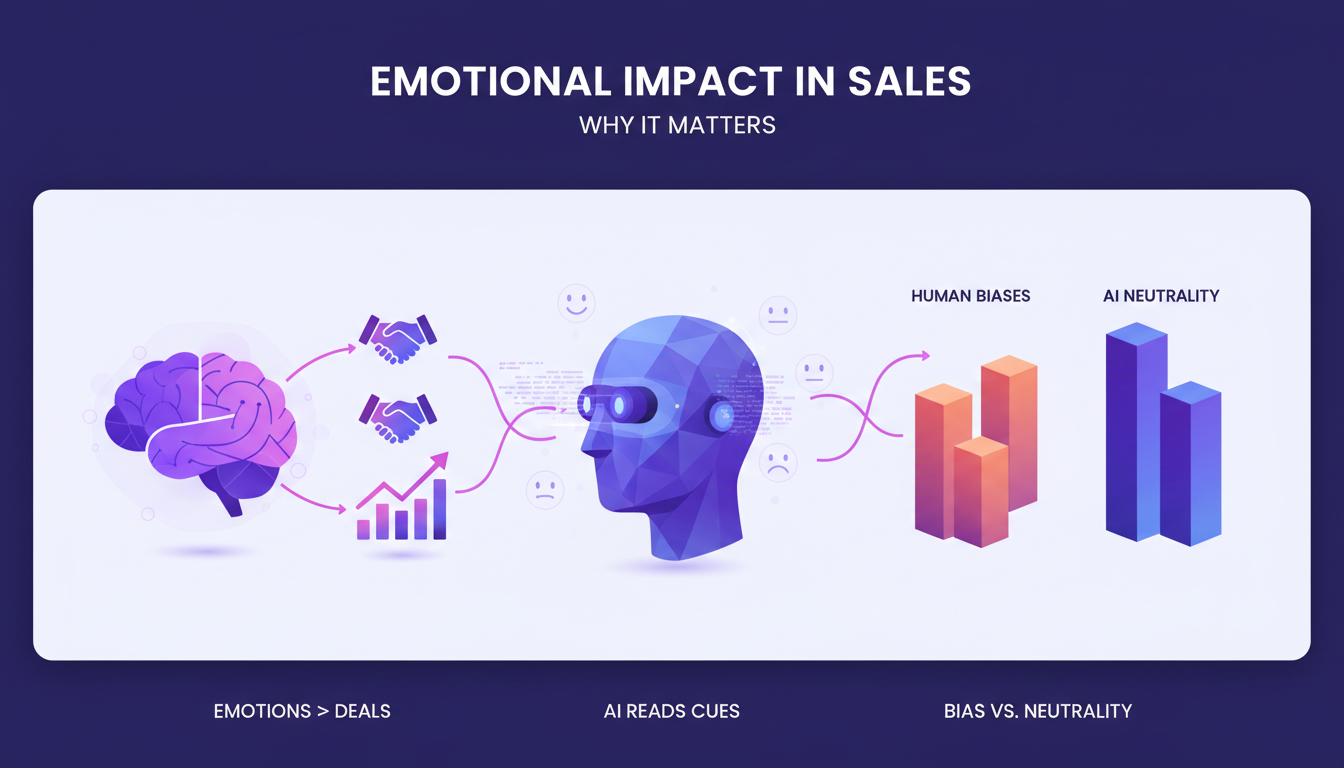
Compared to human biases, AI offers emotional neutrality, which can be beneficial. However, be cautious not to overly rely on it for emotional tasks, as AI cannot replace human empathy. For instance, a Gallup study found that customers who feel emotionally connected to a brand are more likely to become loyal, increasing revenue by 26%.
AI's Role in Modern Sales: Efficiency and Beyond
AI plays a crucial role in streamlining the sales process. I integrated the AI Closer into our sales teams to optimize time and cost. For example, a Salesforce case study shows companies using its platform see a 30% increase in customer satisfaction and a 25% increase in referral rates.
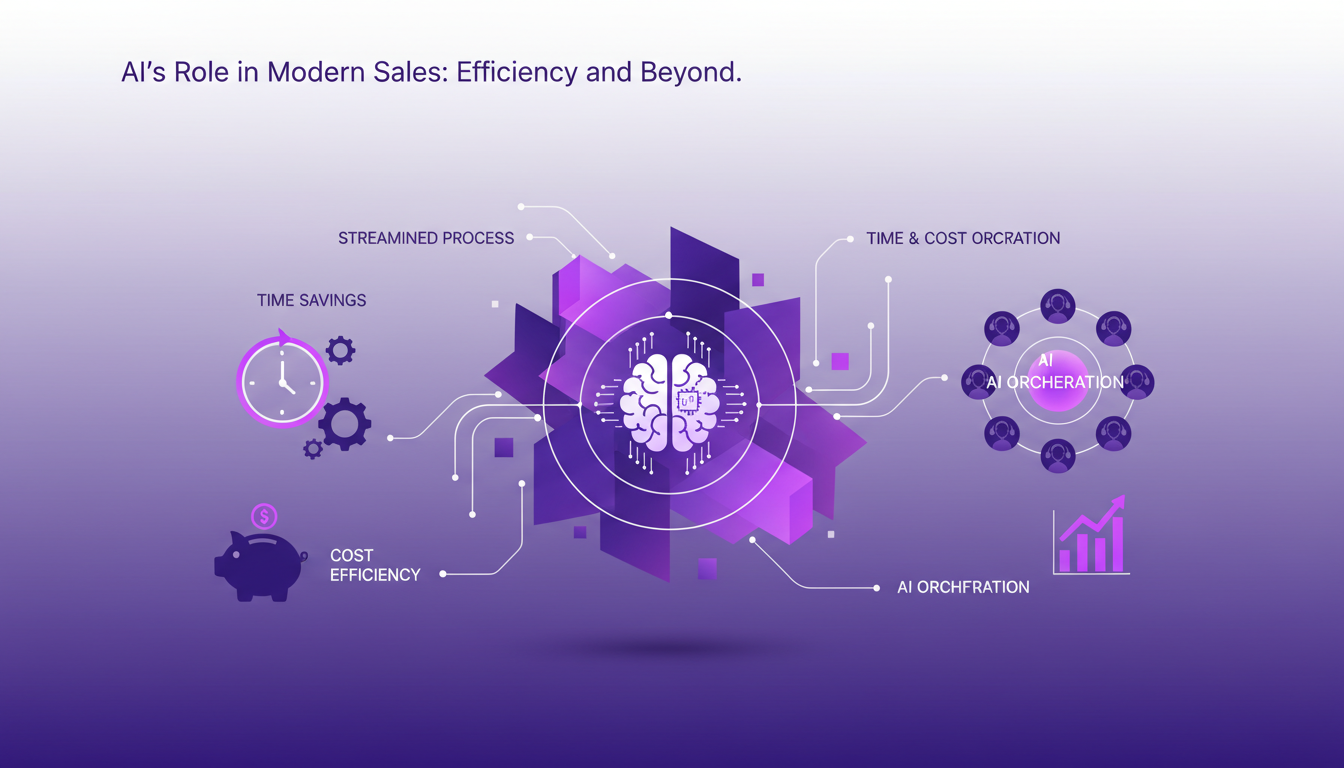
But watch out, AI has its limits and requires human oversight to ensure decisions are in the best interest of the business. Balancing AI optimization with human management is crucial.
Critiquing Traditional Sales Training: A Century of Missteps
Traditional sales training methods have been outdated for too long. They do not address real-world challenges. With the AI Closer, I bridged this gap by adapting our approach to constantly evolving sales environments.
Resistance to adopting AI in sales is notable, but in my experience, it's often an unfounded fear of the unknown. Many traditional trainings have been teaching the wrong things for 100 years, and AI allows us to surpass these limitations by quickly adapting to new market dynamics.
Risk and Inaction: The AI Advantage
AI handles risk fundamentally differently than humans. It lacks ego, eliminating biases and allowing for more objective evaluations. For instance, in scenarios where inaction could be costly, the AI Closer makes doing nothing more painful than taking calculated risks.
However, be cautious, excessive reliance on AI risk assessments can be dangerous. Balance is key, and while AI provides valuable insights, it should not completely replace human judgment.
Building an AI Closer was a real eye-opener on the future of sales. We're not talking about replacing humans but enhancing how we sell. Here's what stood out to me:
- Efficiency: AI streamlines processes, freeing up time for more value-added tasks.
- Emotional Intelligence: Surprisingly, AI models can catch and react to emotional cues, often outpacing the century-old traditional sales training.
- Fresh approach to risk: AI measures and adapts its actions in real-time, a real game changer. But watch out, there are limits with personalization and tech dependency. Looking forward, integrating AI into your sales strategy promises transformation, but do it gradually and iterate. Start small, experiment, and watch the transformation unfold. Interested in seeing how this plays out in practice? I encourage you to check out the full video for a deeper dive into this fascinating topic: YouTube video.
Frequently Asked Questions

Thibault Le Balier
Co-fondateur & CTO
Coming from the tech startup ecosystem, Thibault has developed expertise in AI solution architecture that he now puts at the service of large companies (Atos, BNP Paribas, beta.gouv). He works on two axes: mastering AI deployments (local LLMs, MCP security) and optimizing inference costs (offloading, compression, token management).
Related Articles
Discover more articles on similar topics
Teaching AI to Close: 6 Months of Insights
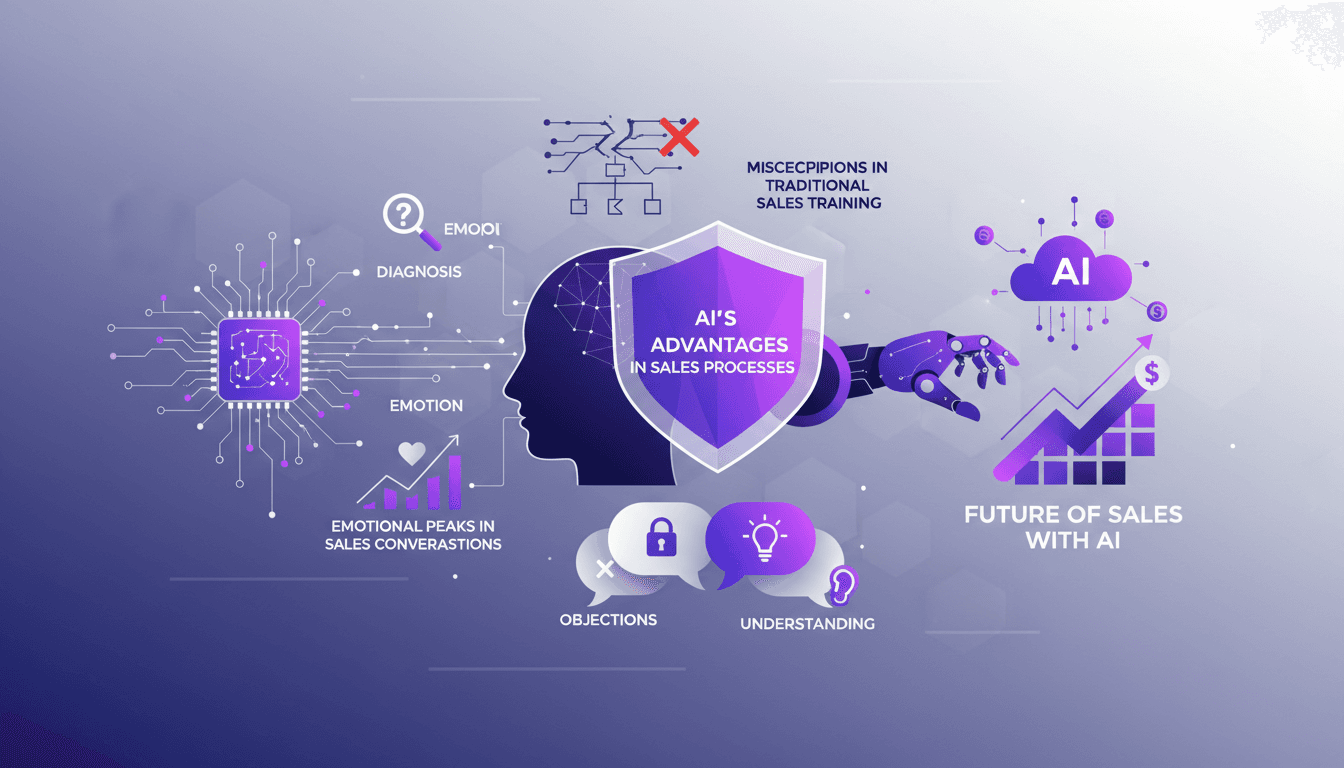
I spent six months training an AI to close deals—230 real estate investors and wholesalers later, I learned that AI's edge isn't speed, but its lack of ego. This journey reshaped my understanding of sales, challenging traditional training methods. In a field that's been taught the same way for a century, AI is changing the game. Let's dive into how AI can optimize sales processes and redefine how we approach prospects. Topics include AI's role in sales, misconceptions in traditional sales training, the importance of diagnosing prospects, and the future of sales with AI. Get ready for a deep dive into the future of sales, where AI might just become your best ally.
Old Real Estate Model Dead: Adapt or Fail
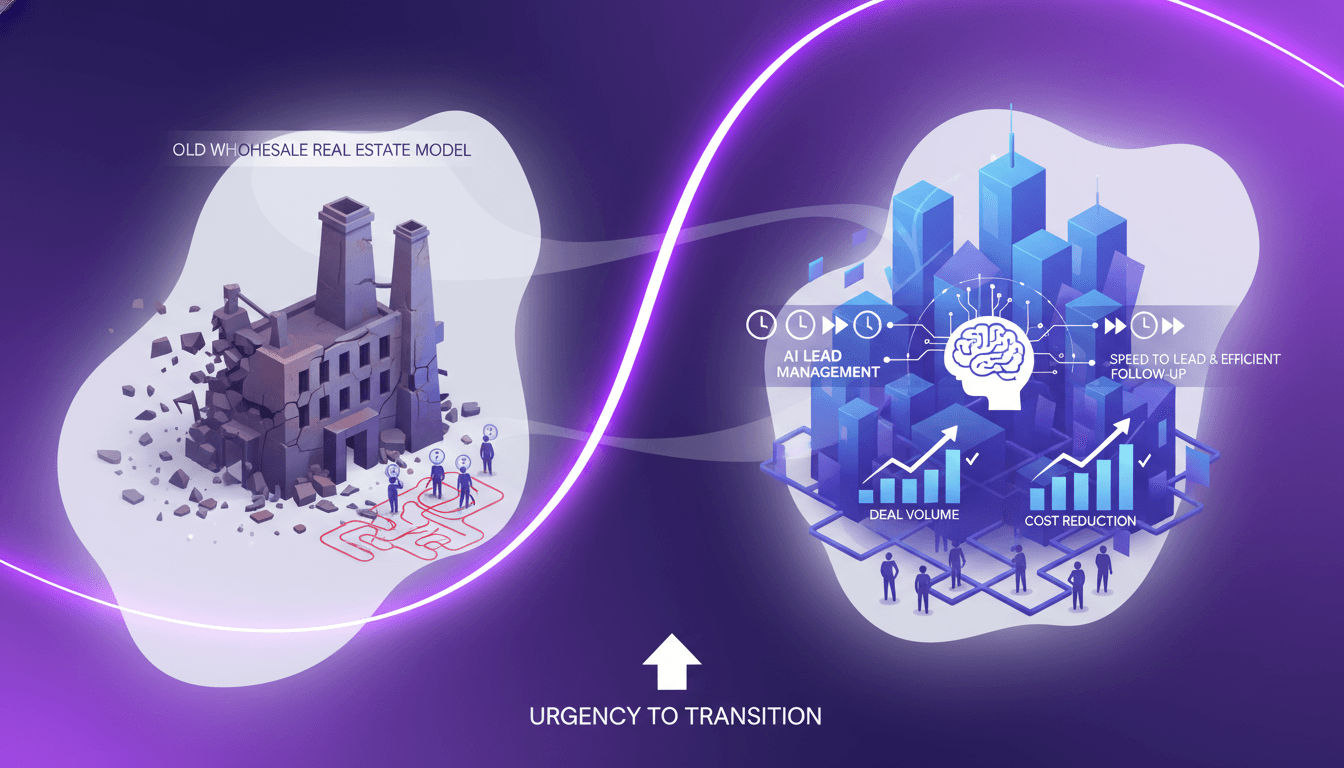
I've been in the trenches of wholesale real estate long enough to see the old model crumble. The game has changed, and if you're not adapting, you're already losing ground. I've worked with over 200 investors, and the shift is undeniable. In this article, I'll walk you through why the traditional model is obsolete, how AI is reshaping our approach, and why speed to lead isn't just a buzzword—it's a lifeline. We'll compare old and new operating models, delve into challenges faced by those stuck in the past, and highlight the tangible benefits of the new paradigm. The urgency of transitioning is real, especially when AI cuts costs and boosts deal volume. If one of our clients is paying $30 per lead and keeps their cost per contract under $1,000, it's clear there's a significant shift to be made.
Introducing GPT5.5: Efficiency and Tools
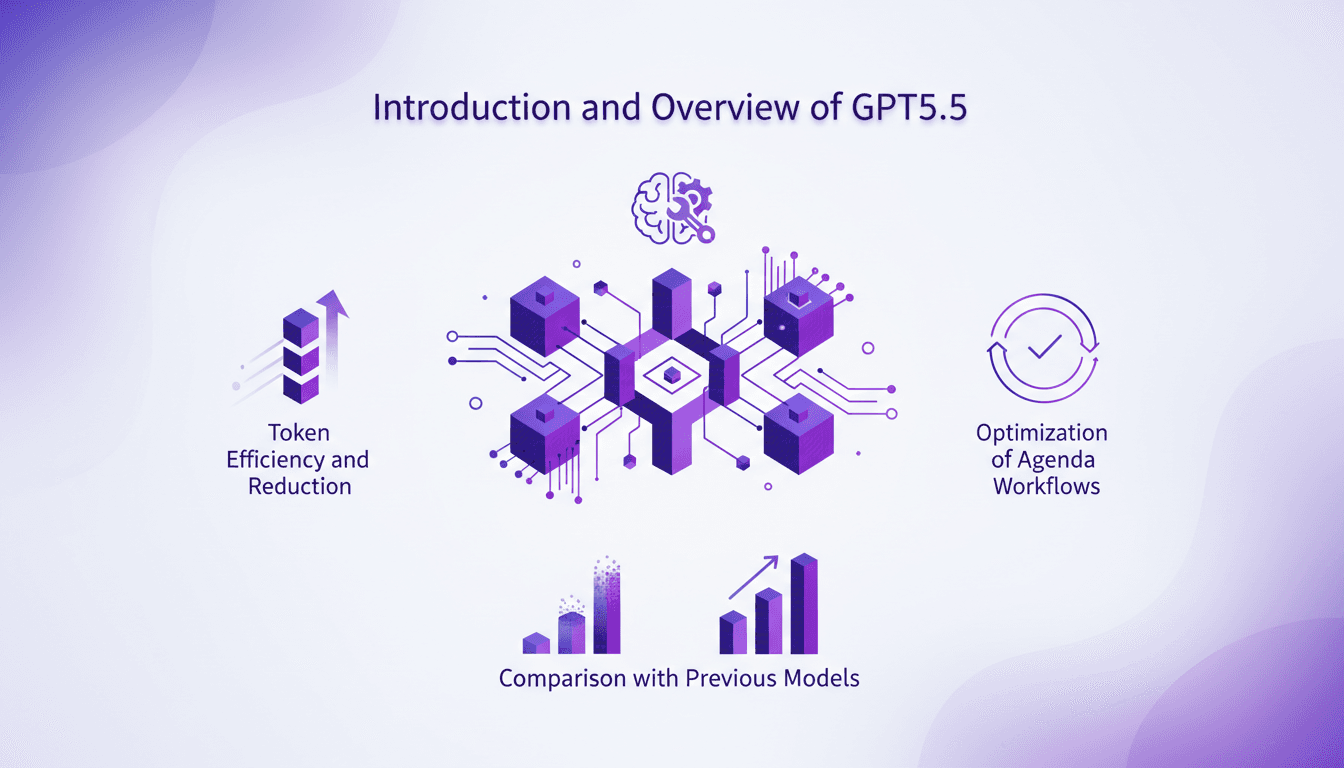
I remember vividly the first time I integrated GPT5.5 into my workflow. It wasn't just an upgrade; it was a complete game changer. This model reshaped my daily operations, from token efficiency to building internal tools. With GPT5.5, I managed to cut down token usage by 56%, significantly impacting costs and execution speed. I even built an internal tool in just one hour, a personal record. Let's dive into the practical applications of GPT5.5 and see how it optimized my workflows compared to previous models. Get ready to discover the benefits of this new AI generation.
Building an AI Closer: Busting Sales Training Myths
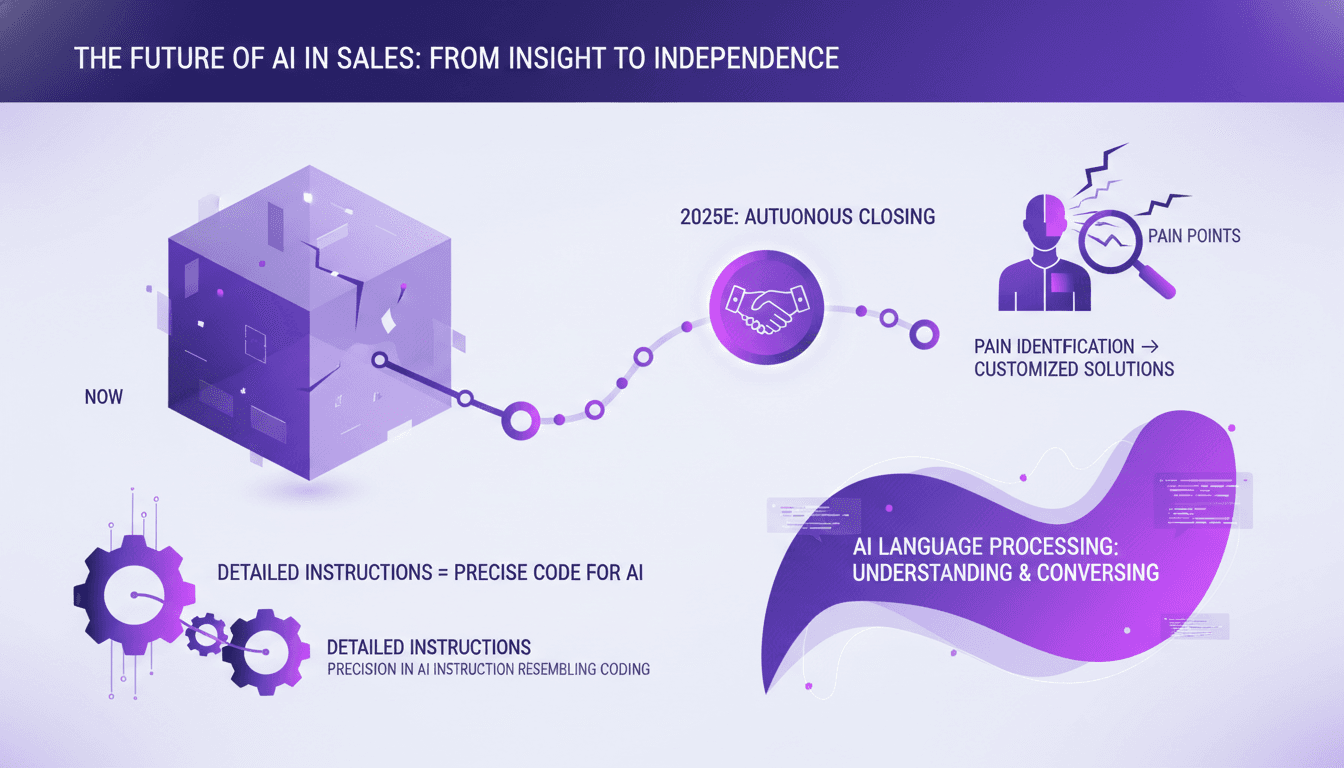
I've spent countless hours trying to get AI to close sales for me, and let me tell you, we're not there yet. But I've learned what it can do now and how to make it work effectively. In the sales world, AI is the shiny tool everyone talks about. Yet, it can't close a deal on its own—yet. What it can do is transform our approach to sales training and execution, especially in identifying and addressing customer pain points. We might be five years away from AI closing a sale, but with the right instructions, it can already recommend 80% of solutions based on pain identification. Follow along, and I'll show you how to orchestrate this for direct impact.
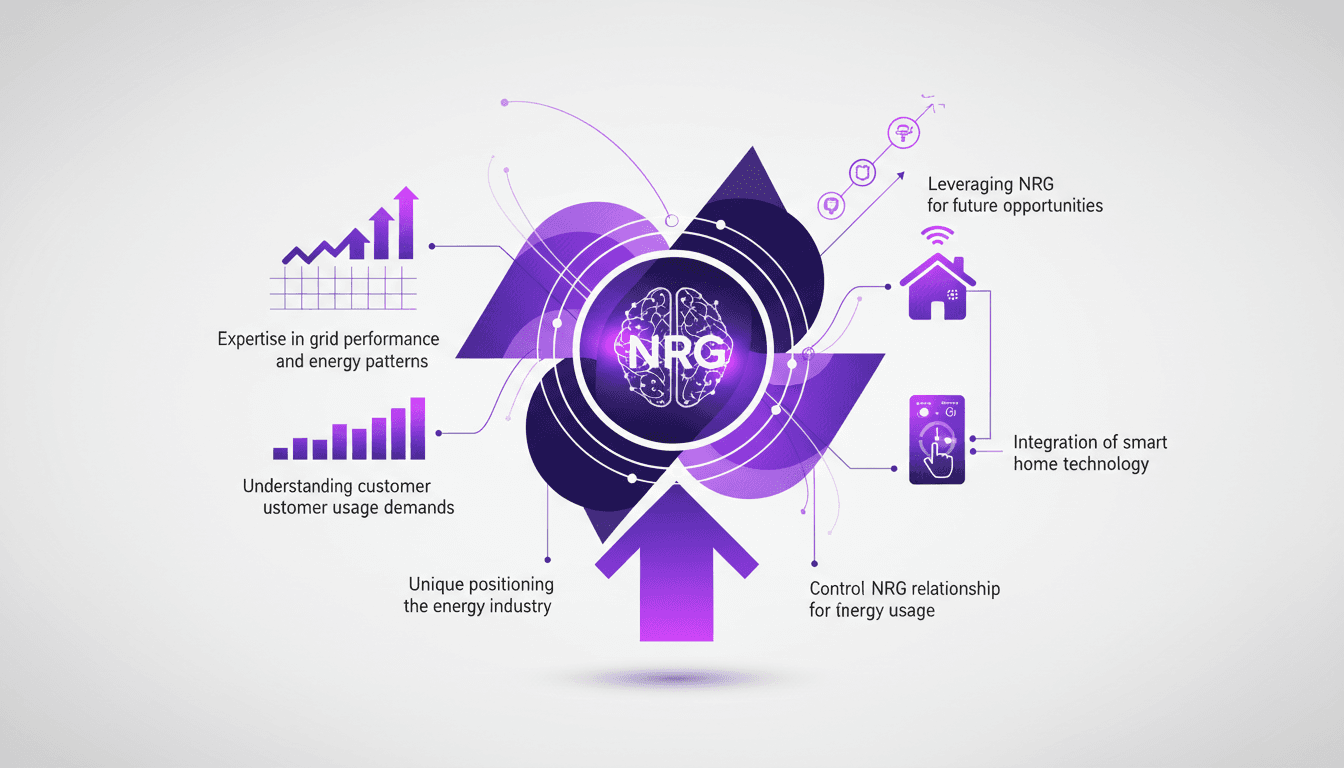
Integrating AI in Energy: My NRG Experience
Joining the NRG family wasn't just a career move; it was like stepping into a new era of energy innovation. I connect our AI expertise directly to grid performance, and every day, I'm hands-on with smart home tech that reshapes how we think about energy. In this article, I'll walk you through how we've leveraged our position within NRG to enhance grid performance, understand energy patterns, and meet evolving customer demands, all while integrating cutting-edge smart home technology. We'll discuss the impact of our acquisition by NRG, our expertise in grid performance and energy patterns, and our unique positioning in the energy industry. This exploration will give you insight into our true competitive edge and how we're setting the stage for future opportunities.