Agentic Search: Boosting Context Engineering Efficiency
I remember diving into context engineering with a fixed pipeline mindset. It was limiting, cumbersome, and frankly, a bit outdated. But then, I discovered agentic search—game changer. In this article, I walk you through how I transformed my approach. We shift from rigid logic to dynamic tools like Lang Chain that enhance our search capabilities. We'll talk challenges, parameter complexity, and hybrid tools that make a difference. If you're in the field, you know that context engineering is about 80% agentic search.

I remember diving into context engineering with a fixed pipeline mindset, and frankly, I got stuck. It was limiting, everything felt cumbersome and a bit outdated. But then, I discovered agentic search—a real game changer. Let me share how I transformed my approach. First, I started exploring tools like Lang Chain. That's when I saw the difference: moving from rigid pipelines to more dynamic searches. You know, about 80% of context engineering hinges on agentic search. We'll discuss the challenges of building effective search tools, tool descriptions, and how hybrid tools and sub-agents can enhance performance. I also ran into issues with parameter complexity, but found practical solutions. We're talking real-world application here, not theory. So, let's dive in together.
Understanding Agentic Search in Context Engineering
When I talk about agentic search, I'm referring to these dynamic, autonomous retrieval processes. It's like moving from a rotary phone to a smartphone. In the past, we used fixed pipelines, rigid and inflexible. Now, with agentic search, we can adapt our searches in real-time. It's a game changer, I tell you. Agentic search makes up about 80% of context engineering. In practice, this means more relevant results with less manual tweaking. It's like your system getting smarter without you having to do all the work.
"Agentic search is the key to more efficient and adaptable context engineering."
I've seen this in action on several projects. Transitioning from fixed pipelines to agentic tools was a real paradigm shift. It allowed me to optimize my workflows and save precious time. But watch out, don't fall into the trap of excessive parameter complexity.
- Increased flexibility: Replacing fixed pipelines with dynamic processes.
- 80%: Context engineering is mainly about agentic search.
- Relevant results: Less manual adjustments needed.
From Fixed Pipelines to Agentic Search Tools
Previously, fixed pipelines were the norm. You know, those systems where everything was predefined, no room for adaptation. But they severely lacked flexibility. With agentic tools, we can now set dynamic parameters like the top K results. For instance, I set the limit to three, which allowed me to effectively filter out unnecessary results. This was a turning point for me, enabling me to streamline my operations.
However, beware, parameter complexity can quickly become a headache. I got burned several times before finding the right balance. Sometimes it's better to start simple and build complexity as you go.
- Dynamic parameters: Ability to adapt searches in real-time.
- Top 3: Limit results to optimize relevance.
- Beware of complexity: Start simple, then adjust.
Building Effective Search Tools: Challenges and Solutions
Selecting the right search tool is already half the battle. I learned that parameter complexity can easily overwhelm. My advice: start with simple configurations and test different options to find the optimal settings. Don't overcomplicate things. I've seen simpler solutions work much better than expected.
- Tool selection: Essential for an efficient workflow.
- Parameter complexity: Start simple.
- Test and adjust: Find the optimal configuration.
Leveraging Lang Chain and Other Tools
Lang Chain is kind of like the magic wand for integrating complex search queries. It connects seamlessly with tools like ESQL for enhanced performance. I used it to streamline my context retrieval processes. But be aware of context limits — beyond a certain point, performance dips.
By incorporating tools like Lang Chain, I managed to smooth out my workflows. But it's crucial not to exceed context limits, or you risk losing efficiency.
- Simplification: Lang Chain makes integrating complex queries easier.
- Connections: Connects with ESQL for better performance.
- Context limits: Beware of performance dips.
Hybrid Tools and Sub-Agents: Enhancing Performance
Hybrid tools combine the best of multiple search technologies. Sub-agents can autonomously handle specific tasks. Incorporating these tools significantly improved my search efficiency. However, balance is key; too many sub-agents can lead to unmanageable complexity.
I've found that using autonomous sub-agents for specific tasks improved search accuracy while filtering out irrelevant results. But watch out, too many sub-agents can make the system hard to manage.
- Combining technologies: Enhances search capabilities.
- Autonomous sub-agents: Handle specific tasks.
- Balance: Too much complexity hampers efficiency.
Transitioning to agentic search tools completely changed the game in my context engineering workflow. First, I leveraged tools like Lang Chain to boost efficiency and adaptability. Then, by setting the top K to three, I managed to get the most relevant results without unnecessary overload. The key takeaway is that context engineering is about 80% agentic search. But watch out—these tools come with their own set of challenges. They require a keen understanding of technical limits to avoid performance issues. I'm convinced that these tools are game changers, especially when integrated smartly. So, ready to upgrade your search capabilities? Start experimenting with agentic tools today and see the difference. For a deeper dive, I recommend checking out Leonie Monigatti's video on Agentic Search for Context Engineering. You'll see the impact for yourself.
Frequently Asked Questions

Thibault Le Balier
Co-fondateur & CTO
Coming from the tech startup ecosystem, Thibault has developed expertise in AI solution architecture that he now puts at the service of large companies (Atos, BNP Paribas, beta.gouv). He works on two axes: mastering AI deployments (local LLMs, MCP security) and optimizing inference costs (offloading, compression, token management).
Related Articles
Discover more articles on similar topics
Integrate GPT Realtime-2 into Your Voice Agents
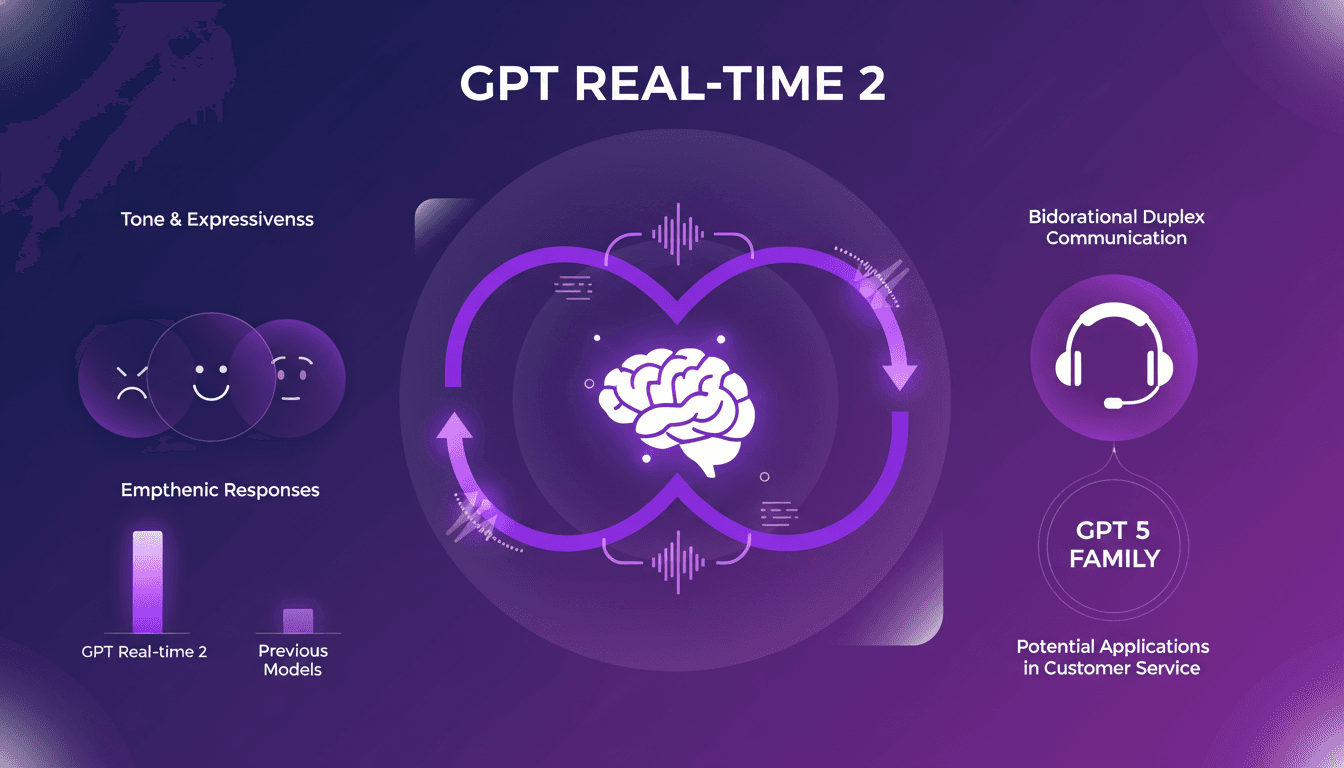
I've been hands-on with GPT Realtime-2, and let me tell you, it's a game changer for voice agents. When I first integrated it, the fluidity and responsiveness blew me away. As someone who's in the trenches with AI models, I know the pain points of latency and lack of expressiveness. GPT Realtime-2 directly addresses these, and it's not just hype. The bidirectional duplex communication and improved tone expressiveness are significant. Responses are more empathetic, conversations more lifelike. Compared to previous models, it's a leap forward. In customer service, the potential applications are vast. Integrated into the GPT 5 family, this model redefines the limits of what voice agents can achieve.
GPT Real-Time 2: Performance Boosts and Use Cases
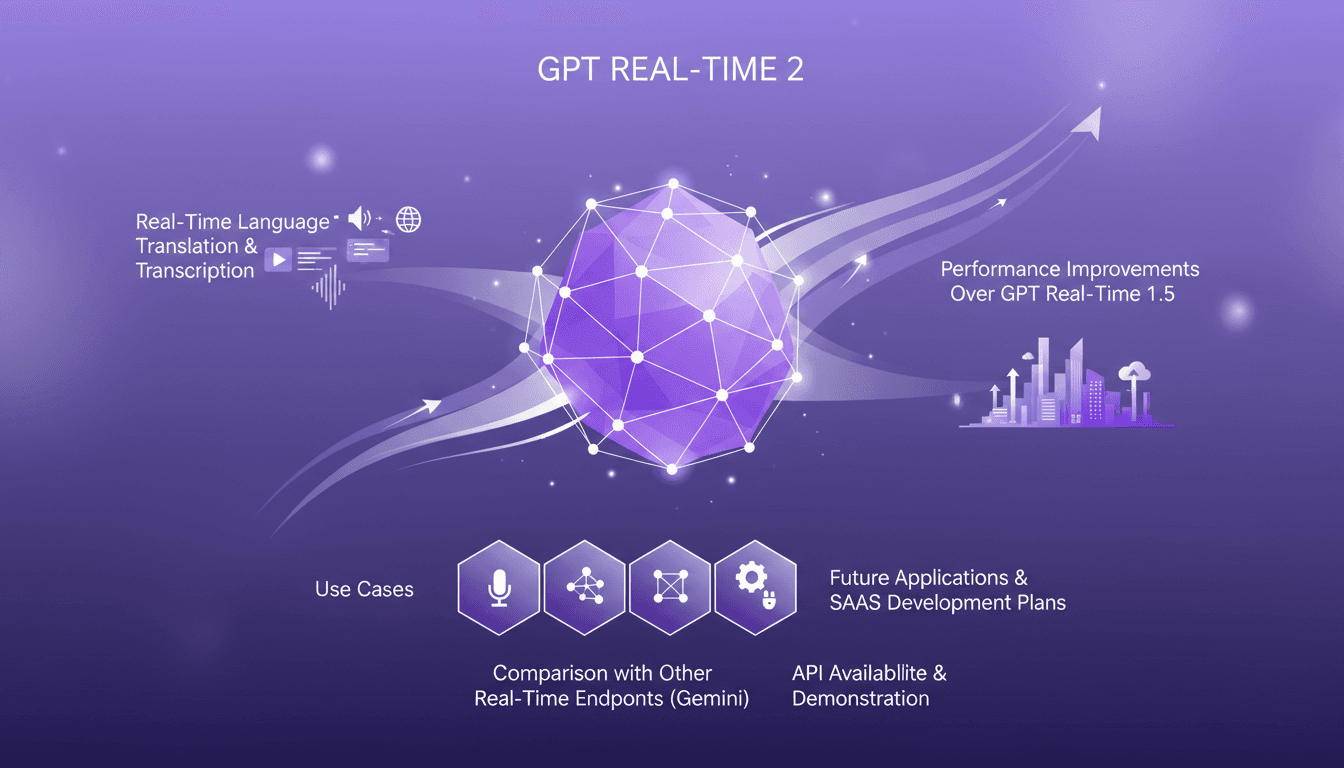
I still remember the first time I tested OpenAI's GPT Real-Time 2 model. It was like upgrading from a bicycle to a sports car—everything was faster, smoother, and just plain better. With this model, I can finally orchestrate real-time translations without a hitch and seamlessly integrate instant transcriptions into my apps. But watch out, it's not without its limits, especially when dealing with heavy loads. In this article, I'll show you how I use this model in real-world scenarios, comparing it with other options like Gemini. We'll also talk about the API, its future applications, and what it means for SaaS development.
OpenAI Audio Models: Real-Time Integration
I still remember the first time I integrated voice models into my system. It was utter chaos, but the results were a game changer. Now, with OpenAI's new real-time audio models, we're taking it to a whole new level. Imagine translating across 70 languages live or using voice agents with intelligent reasoning. In this article, I'll show you how these models can revolutionize your workflow. From real-time translation to intelligent voice agents, every integration step is crucial. Watch out for technical terms and language switching—it can become a headache if mishandled. But when orchestrated well, voice becomes the primary interface for interaction. Ready to transform your system? Let's dive in!
IBM Granite ASR: Setup and Optimization
I dove into IBM's Granite Series ASR models to see if they're as fast as they claim. Spoiler: they're impressive, but let's break it down. With AI-driven ASR models becoming crucial for real-time applications, IBM's Granite Series promises speed and accuracy. But how do they really perform in a practical setup? I connect my environment, set up the technical requirements, and put the Granite Speech 4.1 model to the test. Result: a 5.33 word error rate and 95% accuracy. But watch out, there are trade-offs. Set it up right or you'll get disappointed. It's a balancing act between performance and resources.
GPT 5.5 Instant: Revolution and Comparison
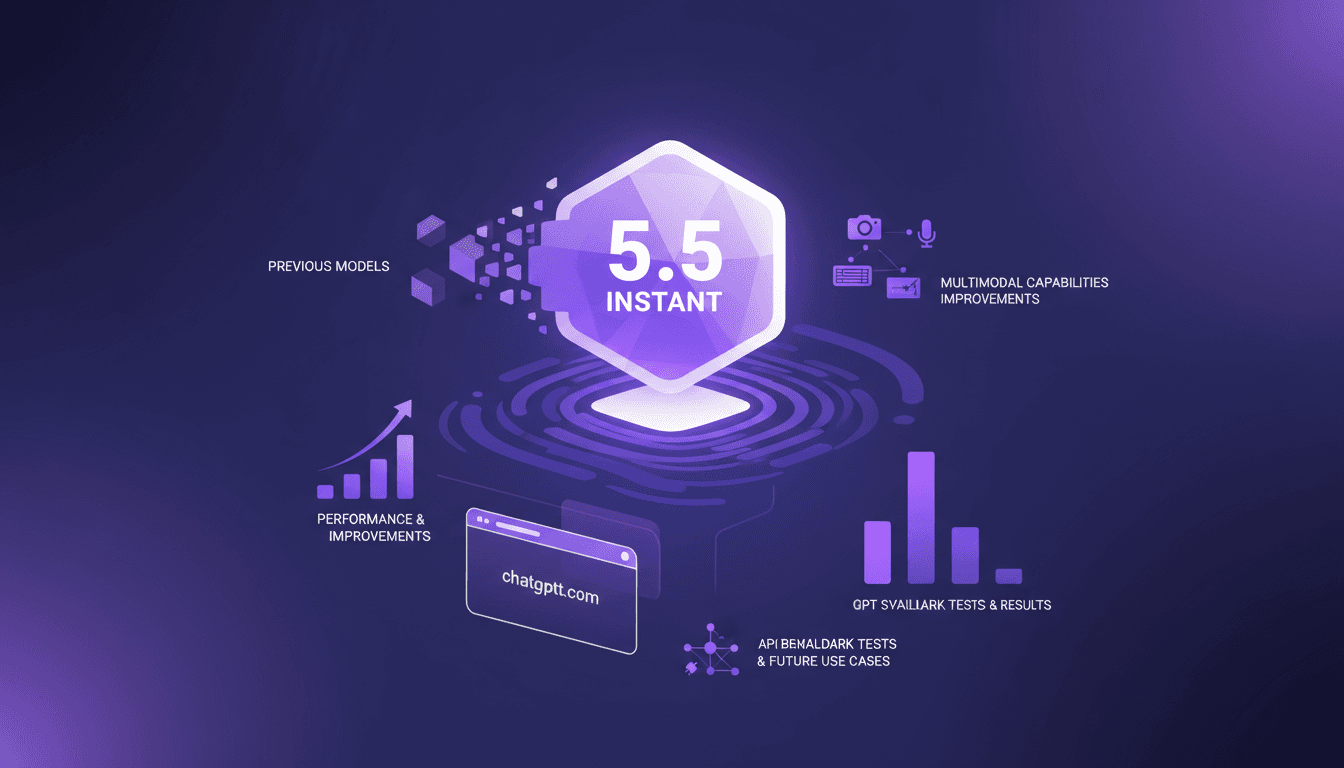
I've been diving deep into OpenAI's latest release, the GPT 5.5 Instant model. It's not just another upgrade; it's a genuine game changer in the AI world. Let me walk you through what I've discovered. With its multimodal capabilities and performance enhancements, the promises are big. But how does it really stack up against its predecessors? I'll show you how it performs in benchmark tests, how its API might revolutionize our future use cases, and why it might just outdo the Claude Haiku 4.5 model. Get ready, because this journey is intriguing.