Token Maxing: Building Software Efficiently
I returned to coding after years in management, and it felt like coming home. But the landscape had shifted. Tools evolved, and so did my approach. In this journey, I'll show you how I developed 'Gary's List' and tackled the challenge of token maxing. We'll dive into my plan-ge-review method and the impact of personal AI. This is a hands-on guide to navigating modern software development, comparing tools, and reflecting on quality education. And yes, I spent 200 dollars on a Claude Code Max account, but the payoff was worth it.

I returned to coding after years in team management, and it felt like coming home. But surprise, the landscape had changed. Tools evolved, and so did my approach. I had to relearn coding, but this time with a fresh mindset. I developed 'Gary's List' and faced the challenge of token maxing. You know, that moment when you realize every token counts and every decision can have a significant impact on your results. I'll show you how I implemented my plan-ge-review method and how personal AIs are transforming the way we work. This is a practical guide to navigating the modern software development world, a comparison of tools, and a reflection on the importance of quality education. I spent 200 dollars on a Claude Code Max account, but trust me, it was worth it. Get ready to dive into a world where technology and efficiency meet to create something exceptional.
Gary Tan's Return to Coding: A New Approach
Getting back into coding after years in management is like dusting off an old bike only to find out the roads have turned into six-lane highways. Gary Tan lived this experience, boosting his coding output by 400 times after a 13-year break. That's no small feat. It's like coding while driving a Ferrari. Modern tools like OpenClaw propel you at unprecedented speeds, but beware, it's also a Ferrari that can break down on the roadside. I had to relearn how to juggle with 400 times more complexity, starting with diving into massive open-source projects exceeding 100,000 lines of code.
With these tools, I focused on boosting context engineering efficiency. It's like each line of code is a brick in a larger construction. Open-source projects taught me how to handle overwhelming complexity while relying on an engaged community.
"It was after a Lyon episode that I realized I wanted to bring together all the people who believed what I believed for California."
Developing Gary's List: Practical Workflow Insights
Starting Gary's List felt like embarking on a journey with incomplete maps. From the get-go, I faced setup challenges and the balance between efficiency and resource usage. I invested $200 in Claude Code Max, a crucial investment for optimal performance. It's not just about writing, but orchestrating processes to avoid waste. I cross-referenced 20 sources for robust solutions, vital for a platform aiming to blend blogging with investigative journalism.
By using the right tools, I built a solid foundation. But watch out, the danger is getting lost in endless research. That's why I recommend staying focused on the goal. This project reminded me of the importance of filtering information to keep only what's essential, as Gary did in his approach.
- Initial $200 investment on Claude Code Max.
- 20 sources to ensure robust solutions.
- Balance between efficiency and resource management.
Token Maxing in Software Development
Token maxing is like juggling invisible juggling balls. In software development, it means maximizing the use of available "tokens" or resources without falling into inefficiency. I had to orchestrate my processes to avoid overload and inefficiencies. The key is finding the right balance between performance and resource allocation. It's tempting to maximize everything, but it can lead to performance issues.
I recommend setting clear limits from the start, as going beyond 100,000 tokens can become tricky. Think of it as a delicate dance; every step must be measured. Understanding trade-offs is essential to maximize token utility without exhausting your resources.
- Orchestration of processes to avoid overload.
- Trade-offs between performance and resource allocation.
- Caution beyond 100,000 tokens.
Plan-ge-review and CEO Plan for Product Development
Plan, execute, review – that's the basis of the plan-ge-review I've integrated into my processes. It ensures structured progress and improved code quality. The CEO plan, an expanded version of the mega plan, aligns product vision with execution. It's a balance between strategic oversight and hands-on involvement. For example, I applied this system for political campaigns in California successfully.
Using skills like the plan CEO skill and the conductor, I streamlined my workflow. It's like conducting an orchestra; every element must be in harmony to create a cohesive symphony.
- Structured progress with plan-ge-review.
- Alignment of vision and execution with the CEO plan.
- Concrete examples of successful applications in California.
The Role of Personal AI in Future Technology
Personal AI is like having a digital assistant that evolves with you. Exploring agentic systems, we can see how latent space impacts AI development. These systems have the potential to transform our workflows, but beware of limits and ethical considerations.
Personal agents can make daily tasks smoother, but it's essential not to overuse them. AI's impact on the future of work is immense, but it requires reflection on ethical implications and boundaries that shouldn't be crossed.
- Exploration of agentic systems.
- Impact of latent space on AI development.
- Potential to transform workflows.
- Ethical considerations and limits.
Getting back to coding isn't just a nostalgia trip; it's about adapting to a new era of software development. By embracing tools like token maxing and personal AI, I've boosted my efficiency and innovation. These aren't just theoretical concepts; they're practical, actionable strategies.
- Token Maxing: A strategy to maximize efficiency and cut costs (200 dollars on a Claude Code Max account, and it pays off).
- Personal AI: A game changer for driving innovation, but watch out for usage limits.
- Quality Education: Investing in the right learning prevents costly mistakes.
The future of software development is exciting with these tools, but be careful of overusing them. Ready to transform your development process? Dive into these strategies and see the impact firsthand. For those looking to dive deeper, I highly recommend watching the original video "Thin Harness, Fat Skills: The New Way To Build Software" on YouTube. You won't regret it.
Frequently Asked Questions

Thibault Le Balier
Co-fondateur & CTO
Coming from the tech startup ecosystem, Thibault has developed expertise in AI solution architecture that he now puts at the service of large companies (Atos, BNP Paribas, beta.gouv). He works on two axes: mastering AI deployments (local LLMs, MCP security) and optimizing inference costs (offloading, compression, token management).
Related Articles
Discover more articles on similar topics
Agentic Search: Boosting Context Engineering Efficiency
I remember diving into context engineering with a fixed pipeline mindset. It was limiting, cumbersome, and frankly, a bit outdated. But then, I discovered agentic search—game changer. In this article, I walk you through how I transformed my approach. We shift from rigid logic to dynamic tools like Lang Chain that enhance our search capabilities. We'll talk challenges, parameter complexity, and hybrid tools that make a difference. If you're in the field, you know that context engineering is about 80% agentic search.
Ralph Loops: Building Simple, Effective AI
I remember the first time I built a Ralph Loop. It was like finding a missing puzzle piece in AI-driven development. Not just theory, but a real workflow that changed how I orchestrate tasks. These loops streamline automation using AI models like GPT 5.8, offering a practical, no-nonsense approach. Imagine orchestrating tasks seamlessly while addressing the challenges and benefits of using AI in software development. In this article, I'll take you through Ralph Loops, their practical applications, and how they can truly transform your workflow. Let's dive into the limits, security and ethical considerations, and scaling these processes in team environments. Yes, the future of AI in automating complex workflows is already here. Ready to dive in?
Integrate GPT Realtime-2 into Your Voice Agents
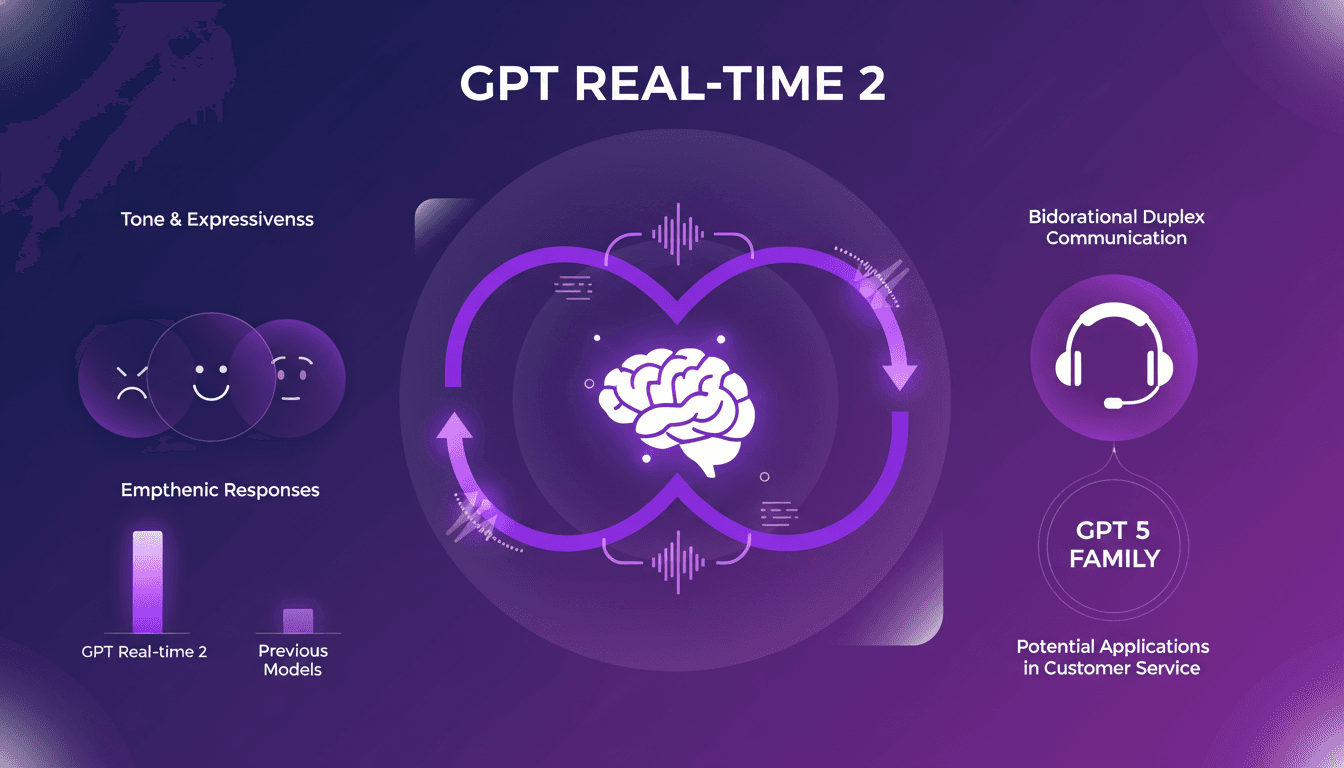
I've been hands-on with GPT Realtime-2, and let me tell you, it's a game changer for voice agents. When I first integrated it, the fluidity and responsiveness blew me away. As someone who's in the trenches with AI models, I know the pain points of latency and lack of expressiveness. GPT Realtime-2 directly addresses these, and it's not just hype. The bidirectional duplex communication and improved tone expressiveness are significant. Responses are more empathetic, conversations more lifelike. Compared to previous models, it's a leap forward. In customer service, the potential applications are vast. Integrated into the GPT 5 family, this model redefines the limits of what voice agents can achieve.
GPT Real-Time 2: Performance Boosts and Use Cases
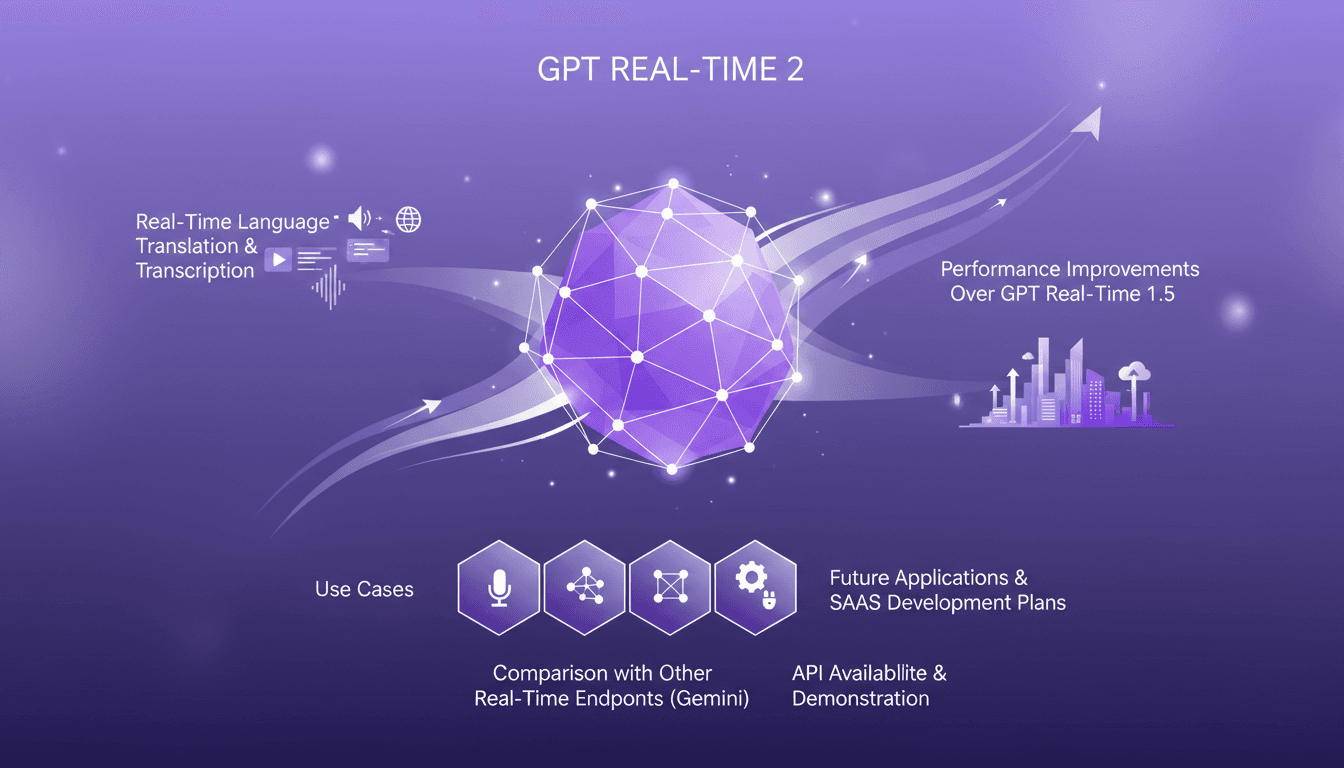
I still remember the first time I tested OpenAI's GPT Real-Time 2 model. It was like upgrading from a bicycle to a sports car—everything was faster, smoother, and just plain better. With this model, I can finally orchestrate real-time translations without a hitch and seamlessly integrate instant transcriptions into my apps. But watch out, it's not without its limits, especially when dealing with heavy loads. In this article, I'll show you how I use this model in real-world scenarios, comparing it with other options like Gemini. We'll also talk about the API, its future applications, and what it means for SaaS development.
OpenAI Audio Models: Real-Time Integration
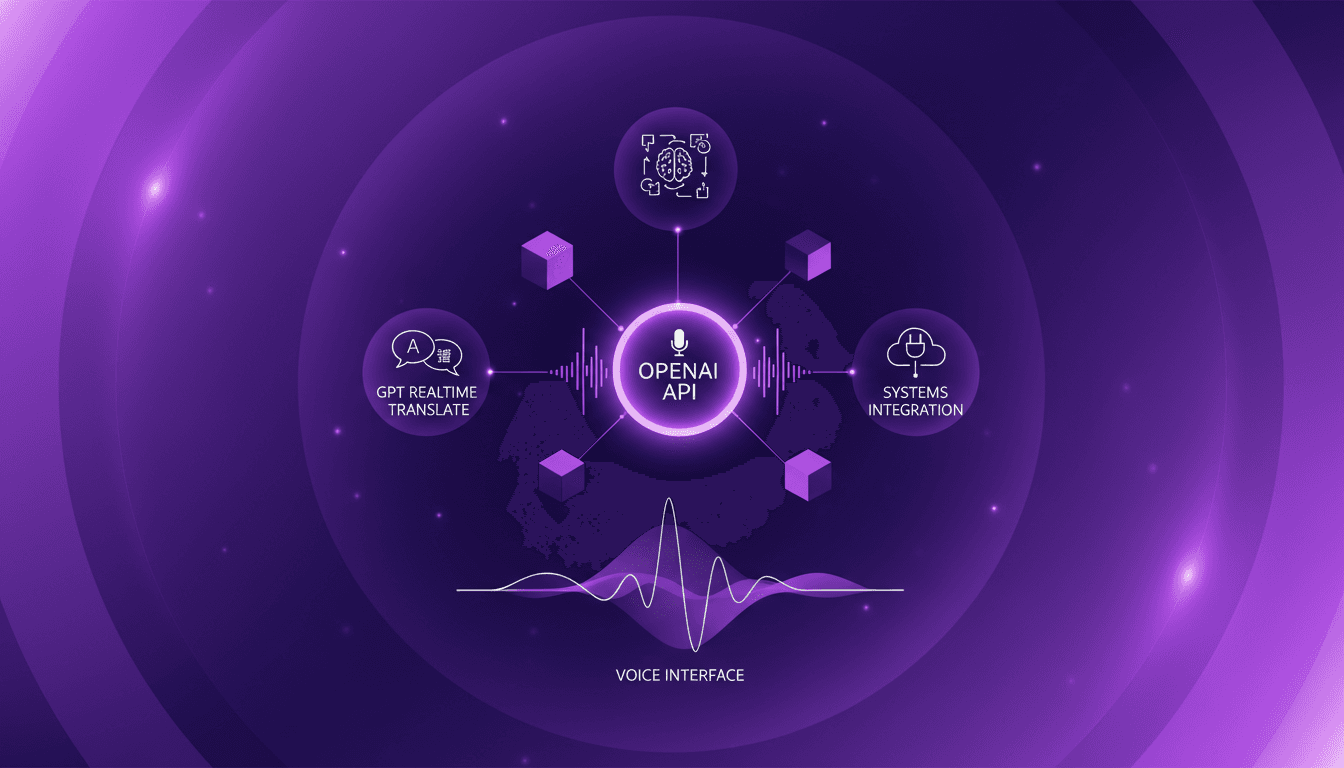
I still remember the first time I integrated voice models into my system. It was utter chaos, but the results were a game changer. Now, with OpenAI's new real-time audio models, we're taking it to a whole new level. Imagine translating across 70 languages live or using voice agents with intelligent reasoning. In this article, I'll show you how these models can revolutionize your workflow. From real-time translation to intelligent voice agents, every integration step is crucial. Watch out for technical terms and language switching—it can become a headache if mishandled. But when orchestrated well, voice becomes the primary interface for interaction. Ready to transform your system? Let's dive in!