Finding a Job in London: Challenges and Solutions
I remember the struggle of job hunting in London's saturated tech market. Honestly, it was like running a gauntlet. But one day, I pivoted, and everything changed. I stopped chasing job titles and focused on creating an app from a book I loved. That's when I discovered my hidden potential. In a city where opportunities are plenty but the path is often fraught with hurdles, I'm sharing how I transitioned from job seeker to app creator. It's all about mindset and recognizing your personal talent. If you're stuck in that job-hunting spiral, maybe it's time to pivot.

I remember the relentless struggle of job hunting in London's saturated tech market. It was like an endless obstacle course. I spent months sending out resumes, going to interviews, often for roles that never truly excited me. Then one day, I decided to pivot. I stopped focusing on job listings and started creating an app from a book I loved. That's when I discovered a potential in myself I never knew existed. While London is bursting with opportunities, the tech scene can become a real puzzle. But carving out your own path can be the key. In this interview, I share how I transitioned from job seeker to app creator and why recognizing your own talent can make all the difference. If you're feeling stuck, maybe it's time to rethink your approach.
Navigating London's Tech Job Market
When I first landed in London, the stark reality of the competitive tech job market hit me like a ton of bricks. Job listings were everywhere, but so were the applicants. Each position seemed to attract a swarm of qualified developers, all eager to land the role. I quickly realized that standing out was not just important, it was critical. I started by polishing my resume, but that was just the beginning.
This is when networking became my lifeline. I attended meetups, networked with other professionals, and built connections. And here's a pro tip: don't get lured in by the big names. I've found smaller firms often offer better growth and learning opportunities. This is something you only discover by talking to those already in the trenches.
Shifting to Self-Employment: A Game Changer
Tired of waiting for offers, I decided to create my own opportunities. When I received a job offer for just £20, it was a wake-up call. I realized I needed to value my skills better. I began accepting freelance projects, not for the money, but to build a solid portfolio.
Self-employment taught me more about business than any job ever could. I learned to manage clients, estimate time, and set fair rates. But be warned, it's not for everyone. Risk tolerance is key when navigating the uncertainties of freelancing.
Developing an App for a Book: A Step-by-Step
I saw potential in turning a book into an interactive app. First, I mapped out the book's content into app features. This forced me to really understand and organize the content logically.
Then, I chose a tech stack that would allow the app to scale easily. Choosing the right technology is crucial; it needs to support rapid iterations and be robust. I tested the app with users and iterated based on their feedback. And remember, don't overcomplicate things: simplicity is often the key to success.
Recognizing and Harnessing Personal Talent
Before I could move forward, I had to acknowledge my own skills and potential. Self-awareness is the first step to growth. I started documenting my strengths and areas for improvement, which allowed me to focus on what really matters.
Mentorship was crucial in identifying my blind spots. A good mentor can show you what you don't see yourself. But watch out for imposter syndrome; it's a sneaky obstacle that can emerge at any moment.
Mindset Shift: From Employee to Entrepreneur
The biggest shift was psychological, not just professional. I learned to embrace failure as a learning tool, not a setback. It's through failing that I've learned the most. I also gained a lot by surrounding myself with other entrepreneurs, sharing with them is a goldmine of information.
Being able to pitch my ideas effectively is a crucial skill I developed. But remember, entrepreneurship is not a sprint; it's a marathon. You need patience and perseverance.
Transitioning from a job seeker to a creator has been a journey of self-discovery and strategic pivots. First, I tackled the challenge of finding a software engineering job in London—not an easy feat. By recognizing my own potential, I embraced the entrepreneurial path. I took calculated risks, leading to the development of an app linked to a book, which was a real game changer for me. It's not easy, and sometimes offers like £20 seem meager compared to the effort. But ultimately, creating your own path is about recognizing your talents' true worth.
- Recognizing your potential and talents is crucial.
- Entrepreneurship can be a liberating path, but it requires courage.
- Developing apps can turn your ideas into tangible reality.
If you're feeling stuck, think about the entrepreneurial route. Watch the original video to see how it can be a game changer. Trust me, it's worth it.
Frequently Asked Questions

Thibault Le Balier
Co-fondateur & CTO
Coming from the tech startup ecosystem, Thibault has developed expertise in AI solution architecture that he now puts at the service of large companies (Atos, BNP Paribas, beta.gouv). He works on two axes: mastering AI deployments (local LLMs, MCP security) and optimizing inference costs (offloading, compression, token management).
Related Articles
Discover more articles on similar topics
Make $100K with AI Influencers on TikTok
I built an app that pulled in $100K in just two months using AI influencers on TikTok. How did I do it? By orchestrating a strategy that blended technical development with innovative marketing. At 19, Raphael Kramer, an experienced developer with over 50 apps under his belt, leveraged artificial intelligence to create virtual influencers that captivate and drive massive revenue. From idea validation to implementation and ethical challenges, let's dive into this unique entrepreneurial journey.
Multi-Agent Systems: Integration and Optimization
I've been in the software engineering trenches long enough to know that human attention is a bottleneck we can't ignore. When I first stumbled upon multi-agent frameworks, it was a revelation: a way to bypass this limitation. Picture a system that runs for days, with agents working seamlessly together. In this article, I'll walk you through how we built Missions, a system that integrates, optimizes, and fully harnesses the potential of multi-agent systems. We'll dive into architecture, workflows, and crucial pitfalls to avoid. You'll see how concepts like parallelism and serial execution can transform your software development approach.
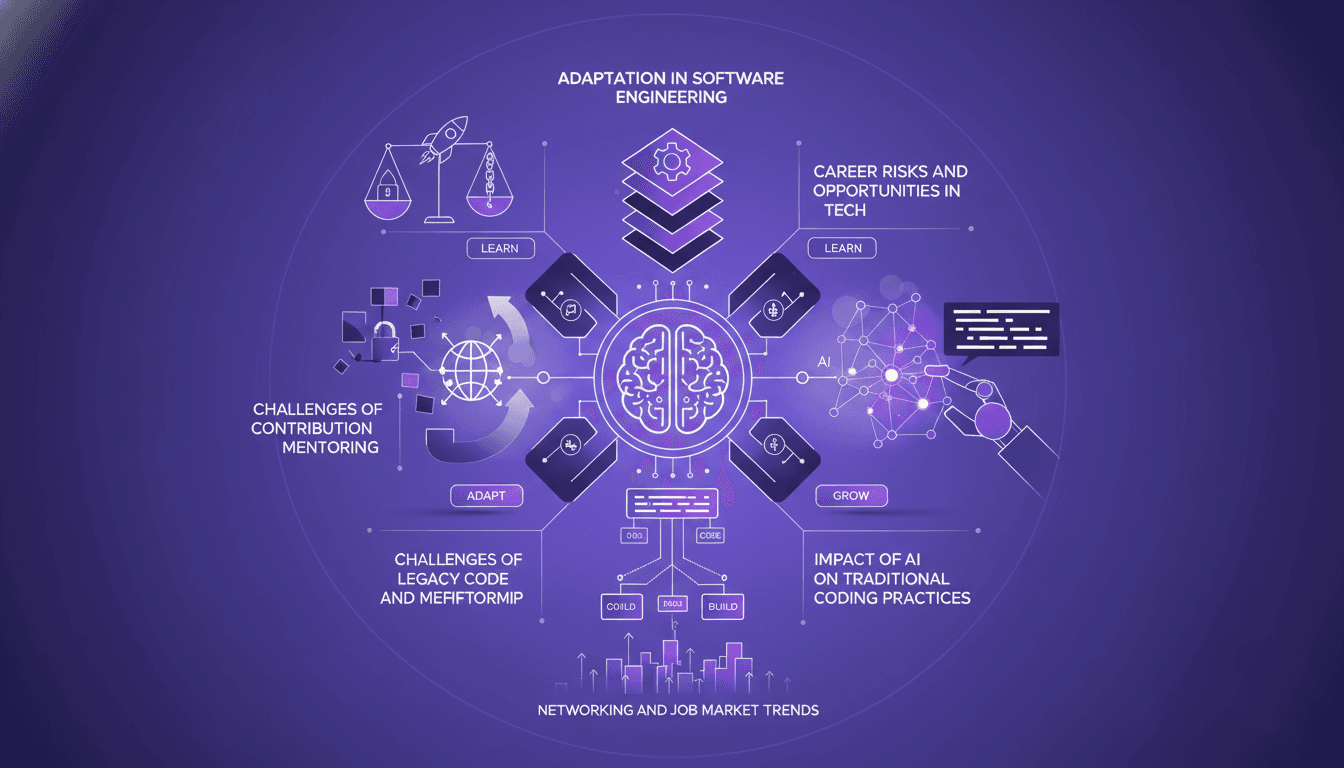
Adaptation in Software Engineering: Avoid Becoming Legacy
I've been in the trenches of software engineering long enough to see that if you can't adapt, you're on the fast track to becoming obsolete. The pace of change in the tech world is astonishing, and if you're not keeping up, you're getting left behind. Let's dive into the keys to staying ahead: continuous learning, the importance of open source contributions, and the role of mentorship. Simultaneously, we can't ignore the impact AI is having on traditional coding practices. It's time to reassess our work methods and ensure our careers don't become relics of the past.
Alternatives to Hand-Coding: Revolution or Myth?
I still remember the first time I heard about alternatives to hand-coding. I was skeptical, but intrigued. Could this really change the way we build software? As software engineers, we're often buried under lines of code. But what if we could streamline this process? Let's dive into these emerging alternatives and see what they mean for our workflows. This revolution—or perhaps myth—could very well shake up the software development landscape, challenge our current skills, and even influence organizational policies. I'll share what I've discovered, the pitfalls to watch out for (believe me, I've been burned more than once), and how it could impact our personal productivity.
TTS Models: From Theory to Practice
Last week, I dove headfirst into the release of a new open-source text-to-speech model. It's not just a game changer—it's a whole new ball game. We're talking real-time capabilities and voice cloning, but it also comes with its own set of challenges. From real-time speech-to-text and latency reduction to compressing audio for efficient processing, this model reshapes our approach to voice technology. But watch out, transforming audio into tokens is no easy feat. There are profound implications for vocal identity in branding and fascinating directions for the future of TTS.