Claude Code: Unveiling Architecture and Simplicity
Imagine a world where coding agents autonomously write and debug code. Claude Code is at the forefront of this revolution, thanks to Jared Zoneraich's innovative approach. This article unveils the architecture behind this game-changer, focusing on simplicity and efficiency. Dive into the evolution of coding agents and the importance of context management. Compare different philosophies and explore the future of AI agent innovations. Prompt engineering skills are crucial, and the role of testing and evaluation can't be overlooked. Discover how these elements are shaping the future of AI agents.

Imagine a world where coding agents can autonomously write and debug code. Welcome to the era of Claude Code. Developed by the ingenious Jared Zoneraich, this system is at the forefront of a technological revolution. But what makes Claude Code stand out? It's the simplicity and efficiency. Behind its facade lies an architecture meticulously crafted to optimize every line of code it generates. The article you are about to read will unveil the secrets of this innovation. We'll explore the evolution of coding agents, highlight the importance of context management, and compare different philosophical approaches. Moreover, we'll examine how prompt engineering and evaluation skills are redefining current AI standards. Get ready to dive into the future of AI agents with Claude Code.
Understanding Claude Code's Architecture
Claude Code embraces a minimalist design philosophy. Like a craftsman carefully choosing his tools, Claude Code favors simplicity to maximize efficiency. This approach mirrors the Unix philosophy, where each tool is specialized and does one thing well.
A central element of this architecture is the use of bash. Bash is a Unix shell used to automate tasks through scripts. In the context of Claude Code, bash simplifies processes by enabling quick and efficient automations.
The integration of unified diffing is another crucial aspect. This method allows for efficient file comparisons, facilitating code modification management. Finally, the use of sub-agents for task management optimally distributes work.
- Minimalist design for efficiency
- Use of bash for automation
- Unified diffing for managing changes
- Sub-agents for task management
The Evolution and Improvement of Coding Agents
Since the modest beginnings of coding agents, numerous advancements have been made. Early agents like Codeex were often limited by their capabilities. With the emergence of Claude Code, a new era began, marked by significant innovations.
Claude Code stands out from predecessors like AMP and Cursor by integrating innovations that enhance coding fluidity and efficiency. For instance, context management and prompt optimization have significantly improved coding agent performance.
Looking to the future, trends indicate that coding agents will continue to evolve, integrating even more advanced technologies to meet developers' growing needs.
- Advancements of early coding agents
- Comparison: Claude Code vs. Codeex, AMP, Cursor
- Innovations of Claude Code
- Future trends for coding agents
The Critical Role of Context Management in AI
In the realm of AI, context management is crucial for effective decision-making. Claude Code excels in this area by maintaining contextual accuracy, allowing agents to make informed choices.
However, maintaining context accuracy poses challenges. Contextual information must be constantly updated to avoid errors. Therefore, context management is a key area for future improvements.
- Importance of context management
- Contextual accuracy in decision-making
- Challenges in maintaining context
- Potential improvements
Prompt Engineering: The Skill Behind AI Success
Prompt engineering is the art of crafting clear instructions for AIs. Claude Code adopts a rigorous approach, ensuring each prompt is optimized for precise results.
Effective prompt engineering requires specific skills, including a deep understanding of AI models and the ability to anticipate responses. This skill significantly impacts AI agents' performance and reliability.
- Definition of prompt engineering
- Claude Code's approach
- Skills required
- Impact on agent performance
Testing and Evaluation in AI Agent Development
Strategies for testing and evaluation are essential for developing AI agents like Claude Code. These methods ensure agents function as intended and allow for continuous improvement.
Robust evaluation methods are crucial for identifying potential flaws and optimizing performance. By incorporating feedback loops, Claude Code ensures each iteration improves the final product.
- Testing strategies for AI agents
- Importance of robust evaluation methods
- Continuous improvement through feedback loops
- Future directions for testing methodologies
Claude Code exemplifies the future of AI coding agents with its innovative architecture and focus on simplicity. Key takeaways include:
- Claude Code prioritizes simple design and the use of bash, making it accessible to developers.
- The evolution of coding agents highlights the critical role of context management for optimal performance.
- As AI evolves, mastering prompt engineering becomes indispensable.
Looking forward, those who excel in context management and prompt engineering will shape the future of AI. Stay informed about the latest in AI development by following our blog for more insights and updates. Watch the original video "How Claude Code Works" by Jared Zoneraich to gain a deeper understanding and see how it can transform your coding approach. Watch now.
Frequently Asked Questions

Thibault Le Balier
Co-fondateur & CTO
Coming from the tech startup ecosystem, Thibault has developed expertise in AI solution architecture that he now puts at the service of large companies (Atos, BNP Paribas, beta.gouv). He works on two axes: mastering AI deployments (local LLMs, MCP security) and optimizing inference costs (offloading, compression, token management).
Related Articles
Discover more articles on similar topics

AI Measurement: Benchmark vs Economic Evidence Gap
Imagine a world where AI capabilities match human performance in reliability. Yet, measuring these capabilities reveals a significant gap between benchmark and economic evidence. This article delves into the challenges of assessing AI performance. By highlighting differences between reference data and economic proof, we explore ways to bridge this gap. Why is understanding these nuances vital? To ensure AI becomes as predictable a tool as our own human capabilities. Discover how field experiments and developer collaborations can lead to innovative solutions for more accurate AI assessment. A path to more reliable and productive AI is in sight.

GenBI's Impact at Northwestern Mutual Explained
Imagine a world where AI doesn't just support business decisions but fundamentally transforms them. At Northwestern Mutual, GenBI is doing precisely that. Join Asaf Bord as he delves into the world of GenBI, an innovative blend of Generative AI and Business Intelligence. Discover how this project is revolutionizing decision-making processes in a Fortune 100 company. From integrating real data to managing risks and building trust, GenBI proves that small bets can lead to significant impacts. Asaf Bord shares technical and strategic challenges faced, offering insights into the future of SaaS pricing in the GenAI era. A captivating dive into GenBI's technical architecture for anyone eager to understand how AI can redefine business futures.

Developer Experience: Challenges and AI Agents
In a world where technology races ahead, developers must keep pace. AI coding agents are reshaping the developer experience, creating exciting opportunities and fresh challenges. Max Kanat-Alexander from Capital One sheds light on these transformations. How can we harness AI while balancing human and machine productivity? Dive into strategies for standardizing development environments and maximizing the value of AI agents. This article is essential reading for understanding the impact of AI on today's software development landscape.

System Prompt Learning for Code Agents: A Guide
Imagine coding agents that continuously learn, adapting with every line of code. This is the promise of system prompt learning. In the AI realm, this method is emerging as a powerful technique, especially for coding agents. This article dives into the intricacies of this approach and compares it with traditional methods like reinforcement learning. Discover how benchmarking with SWEBench and tools like Claude and Klein measure this technique's effectiveness. Also, explore the role of advanced language models (LLM) as judges in evaluating these prompts and how this method stacks up against others like GEA. The article highlights the impact of prompt learning on coding agent performance and emphasizes the importance of eval prompts in this context.

AMP Code: AI Revolution in Programming
Imagine a world where coding feels as intuitive as chatting with a colleague. That's the promise of AMP Code, the next-gen AI tools introduced by Beyang Liu. In his conference talk, Liu outlined how AMP Code is redefining AI-driven programming. Discover AMP's unique features, its innovative user interface, and its vision centered on accessibility. Dive into AMP's bold architectural choices, the role of sub-agents, and how AMP tackles coding agent challenges. Join us as we explore how AMP Code transforms the user experience and engages the community towards a promising future.
Integrate Claude Code with LangSmith: Tutorial
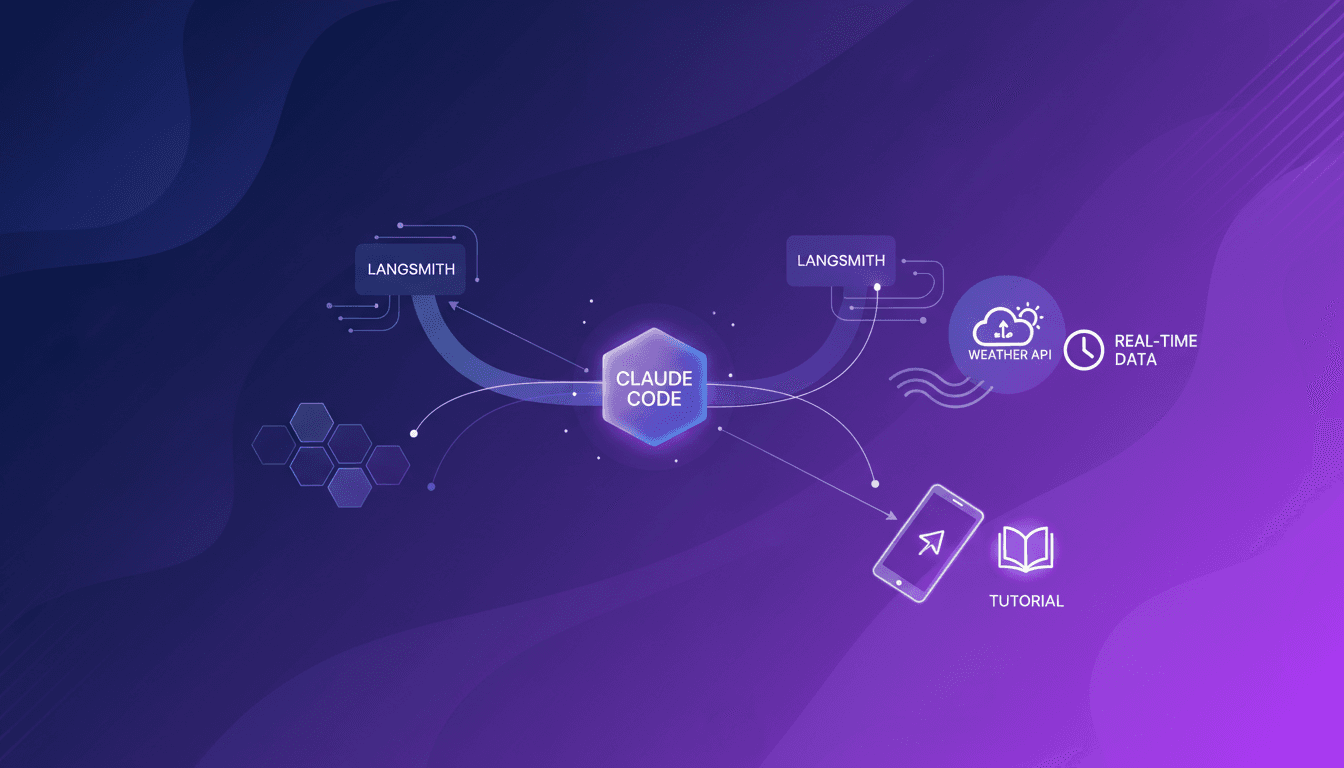
I remember the first time I tried to integrate Claude Code with LangSmith. It felt like trying to fit a square peg into a round hole. But once I cracked the setup, the efficiency gains were undeniable. In this article, I'll walk you through the integration of Claude Code with LangSmith, focusing on tracing and observability. We’ll use a practical example of retrieving real-time weather data to show how these tools work together in a real-world scenario. First, I connect Claude Code to my repo, then configure the necessary hooks. Watch out, tracing can quickly become a headache if poorly orchestrated. But when well piloted, the business impact is direct and impressive.
Claude Code-LangSmith Integration: Complete Guide
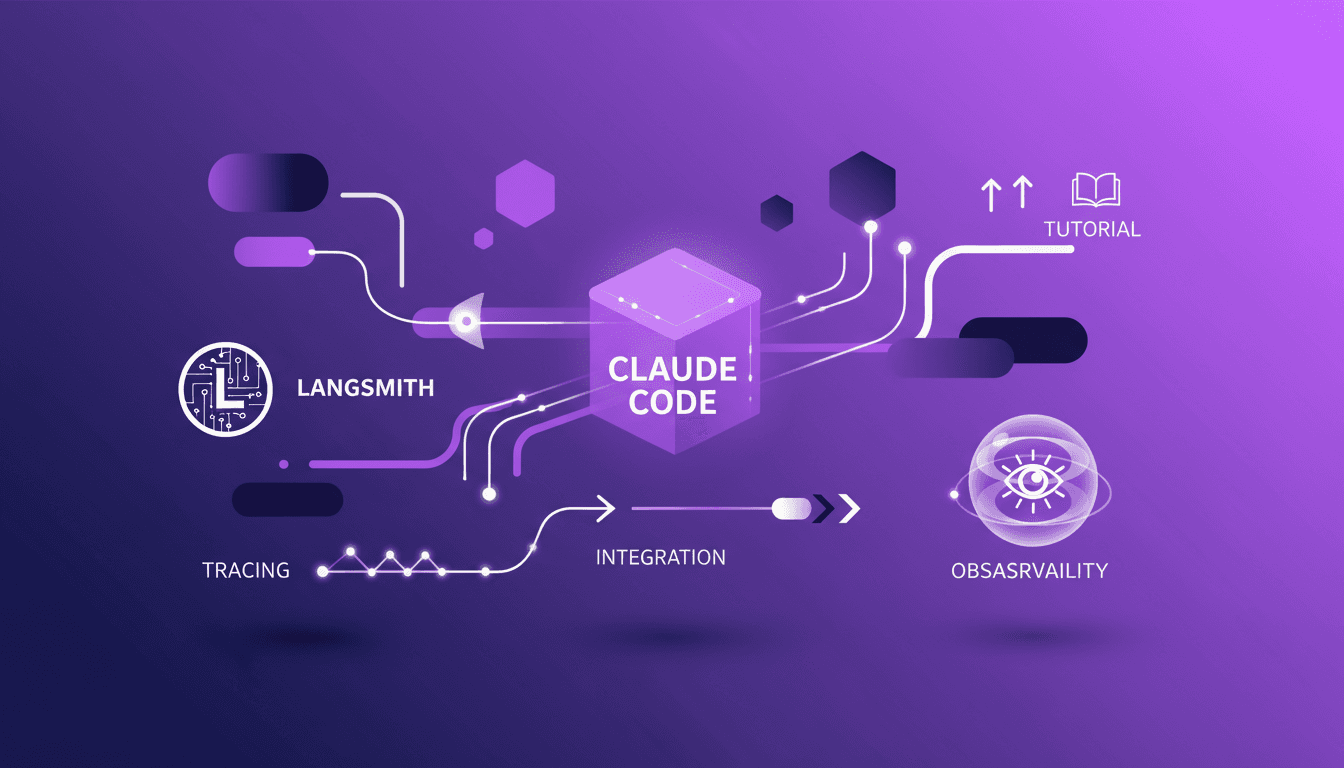
Step into a world where AI blends seamlessly into your workflow. Meet Claude Code and LangSmith. This guide reveals how these tools reshape your tech interactions. From tracing workflows to practical applications, master Claude Code's advanced features. Imagine fetching real-time weather data in just a few lines of code. Learn how to set up this powerful integration and leverage Claude Code's hooks and transcripts. Ready to revolutionize your digital routine? Follow the guide!

Autonomous Coding Agents: The Future of Development
Imagine a world where even those without technical skills can craft sophisticated software solutions. Autonomous coding agents are making this future possible. In a recent conference talk, Michele Catasta explored their revolutionary potential. How can we make these powerful tools accessible to everyone? This article breaks down the key concepts, types of autonomy, and challenges involved. Learn how context management and parallelism are crucial in developing these agents. Dive into proposed solutions for orchestrating autonomous agents. The future of development is closer than ever.
Integrate Claude Code with LangSmith: Tutorial
I remember the first time I tried to integrate Claude Code with LangSmith. It felt like trying to fit a square peg into a round hole. But once I cracked the setup, the efficiency gains were undeniable. In this article, I'll walk you through the integration of Claude Code with LangSmith, focusing on tracing and observability. We’ll use a practical example of retrieving real-time weather data to show how these tools work together in a real-world scenario. First, I connect Claude Code to my repo, then configure the necessary hooks. Watch out, tracing can quickly become a headache if poorly orchestrated. But when well piloted, the business impact is direct and impressive.
Claude Code-LangSmith Integration: Complete Guide
Step into a world where AI blends seamlessly into your workflow. Meet Claude Code and LangSmith. This guide reveals how these tools reshape your tech interactions. From tracing workflows to practical applications, master Claude Code's advanced features. Imagine fetching real-time weather data in just a few lines of code. Learn how to set up this powerful integration and leverage Claude Code's hooks and transcripts. Ready to revolutionize your digital routine? Follow the guide!