AI's Impact on Sales Training & Real Estate
I used to think AI was just another buzzword until it completely transformed how we handle sales and real estate. Picture this: 1,000 consecutive calls to potential clients without lifting a finger. That's where AI becomes a real asset. In this article, I show you how AI is reshaping traditional sales training and disrupting real estate lead management. We're talking about increased efficiency and dramatically reduced costs. But watch out, there are limits to be aware of. Too often, businesses miss these opportunities because they don't grasp AI's tangible impact. And if I told you three people have already suggested I start my own AI company? That's the scale of the potential. AI isn't just a tool; it's a genuine game-changer for business.
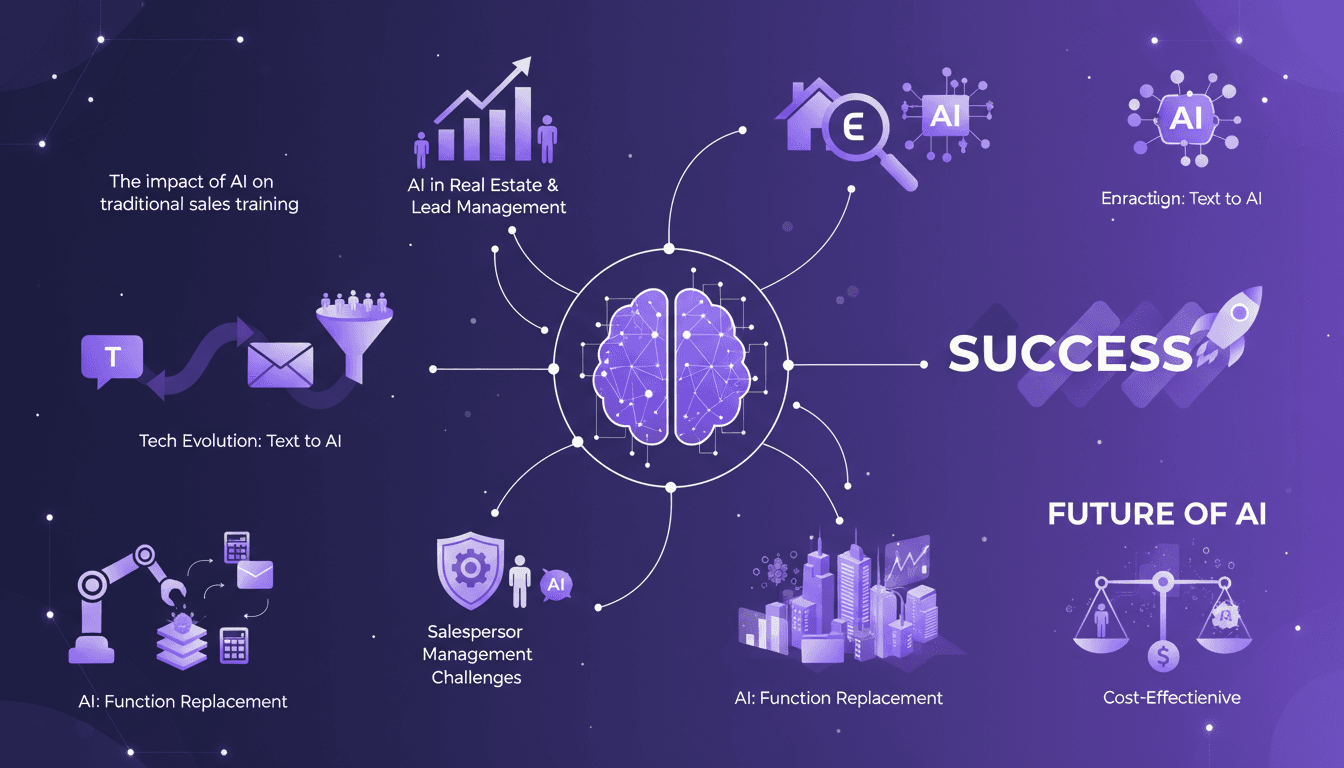
I used to think AI was just another buzzword until I saw it completely transform how we handle sales and real estate. Picture this: 1,000 consecutive calls to potential clients without lifting a finger. That's where AI becomes a real asset. First, I dove into traditional sales training. It was like watching a silent revolution unfold. AI exploded our efficiency while cutting costs in ways I never imagined. But watch out, there are pitfalls. Too often, businesses miss these opportunities because they don't grasp AI's tangible impact. It's a game changer, not just another tool. And if three people have already suggested I start my own AI company, that's the scale of the potential. Embracing AI is embracing the future of business. But don't get blinded by the hype; there are limits to respect.
AI's Threat to Traditional Sales Training
I've been in sales for quite some time, and let me tell you, AI is shaking things up. First off, traditional sales training methods are taking a hit. Imagine role-play bots that simulate real-world scenarios. It's a significant leap from conventional methods. AI-driven insights are reducing that notorious call reluctance we've all faced. And then there's SWOT analysis. With AI, it's like having a supercomputer sift through all possible data to give you a competitive edge. But beware, there's a catch: balancing human intuition with AI efficiency isn't easy.

I've often found myself reevaluating strategies after seeing how AI can outperform, sometimes at a fraction of the cost. A simple example: if I charge $1000 a month for training, why would someone pay that when AI can do it for $80? This is the reality we have to juggle with.
- AI challenges traditional methods with role-play bots.
- AI data reduces call reluctance.
- SWOT analyses enhanced by AI data processing.
- Watch out for underestimating human intuition.
From Texting Costs to AI in Real Estate
In real estate, I've seen communication costs skyrocket before AI arrived. A few years ago, sending texts cost us $400 per contract. With AI, those costs have plummeted. And the speed to lead is phenomenal. Imagine: I managed to close 22 contracts thanks to AI, spending only $50,000 on ads. But watch out, the initial setup of these systems can be resource-intensive.
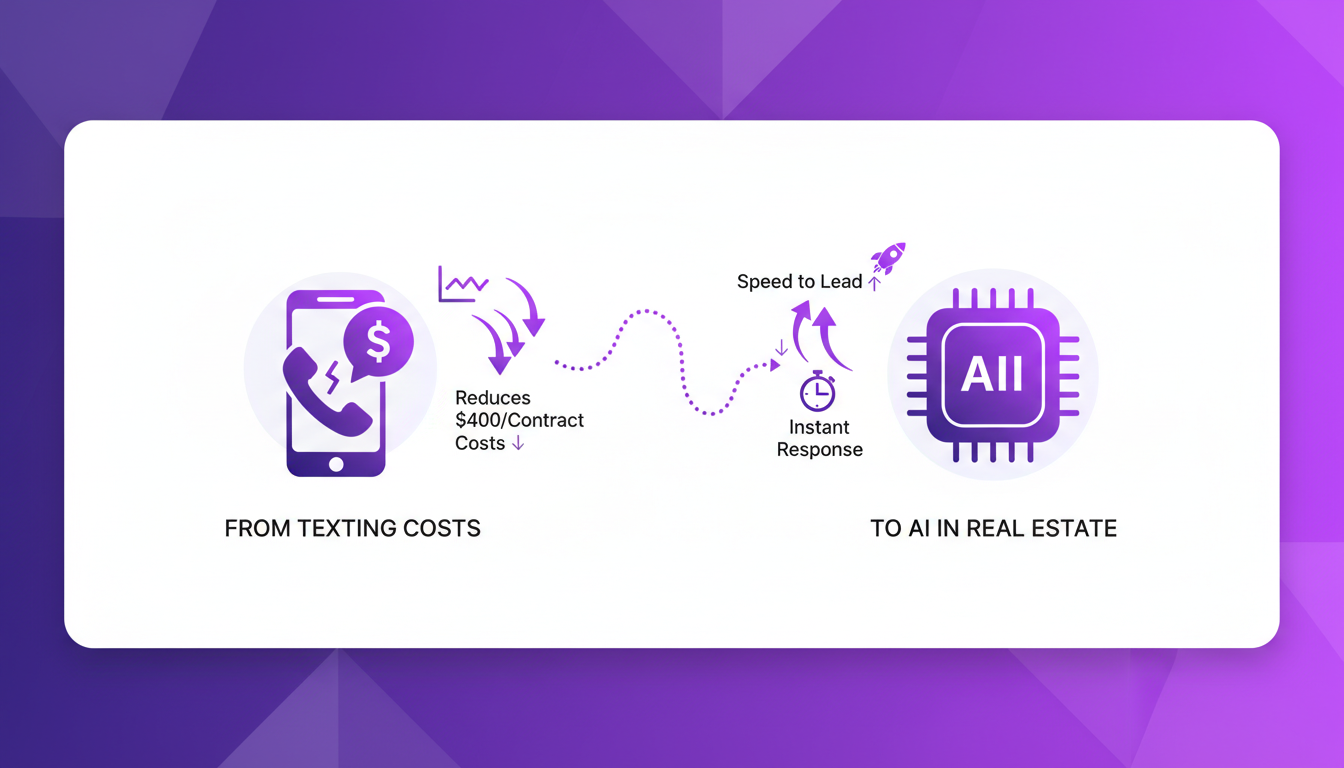
I remember the days of juggling data from various providers. Today, AI does all of that for us, and much faster. The impact on revenue is direct.
- Communication costs slashed by AI.
- Acceleration of speed to lead.
- 22 contracts closed with a $50,000 ad budget.
- Watch out for initial resource investment.
Managing Sales Teams with AI
Managing a sales team is a constant challenge. AI streamlines this task by providing real-time performance analytics. AI tools help us overcome daily challenges in salesperson management. But you have to be careful not to lose the human touch in team dynamics. The efficiency gains are real, with AI reducing administrative overhead and allowing us to focus on what really matters.
I've often found myself buried under a mountain of data and reports. Today, AI does the heavy lifting, but I make sure not to lose sight of the importance of human relations.
- AI facilitates sales team management.
- Real-time performance analytics.
- Essential balance between AI and human interaction.
- Reduction of administrative tasks thanks to AI.
AI in Lead Management and Sales Efficiency
Optimizing lead management processes with AI is a real boon for sales. AI tools enhance sales efficiency. They replace repetitive tasks, freeing up human resources. But beware, over-reliance on AI can lead to complacency. In terms of cost, AI is often more advantageous than traditional lead management.

I remember a time when every interaction had to be manual. AI has changed the game, but I keep an eye on maintaining a balance between technology and human presence.
- AI optimization of lead management processes.
- Improvement of sales efficiency.
- Replacement of repetitive tasks by AI.
- Avoid over-reliance on AI.
- Cost advantages vs traditional management.
Embracing AI for Business Success
AI is a strategic advantage for businesses. It has the potential to replace certain business functions. Integrating AI into business strategies is crucial to staying competitive. But care must be taken to balance AI adoption with existing workflows. The future looks promising with AI, shaping tomorrow's business landscapes.
I'm convinced that AI is here to transform our work methods. I've seen companies hesitate, but those that take the plunge are already reaping the benefits.
- AI as a strategic advantage.
- Potential replacement of certain functions by AI.
- Integration of AI into business strategies.
- Balance between AI adoption and existing workflows.
- AI shapes the future of business.
So, what do we take away from all this? First, AI isn't some futuristic fantasy, it's already reshaping our business routines. In sales training and real estate, it brings efficiency gains and cost savings. But watch out—using it unwisely can backfire. I’ve seen clients being called 1000 times in a row—that's what happens when you don’t calibrate your AI properly. Next, AI can reach 80% of the quality of services like Steve’s. Impressive, but not perfect yet. And three people have suggested I start an AI company, which shows the growing interest in this tool.
Looking ahead: AI will definitely drive the business of tomorrow. But it’s not an overnight shift. Start small, evaluate the impact, and then scale up.
For more depth, check out the original video. It's a goldmine of practical insights for anyone wanting to stay ahead of the curve.
Frequently Asked Questions

Thibault Le Balier
Co-fondateur & CTO
Coming from the tech startup ecosystem, Thibault has developed expertise in AI solution architecture that he now puts at the service of large companies (Atos, BNP Paribas, beta.gouv). He works on two axes: mastering AI deployments (local LLMs, MCP security) and optimizing inference costs (offloading, compression, token management).
Related Articles
Discover more articles on similar topics
AI Cost Race: How I Stay Competitive
I've been in the AI game for a while, and believe me, the next six months are going to be pivotal. We're at a crossroads where cost, efficiency, and strategic choices will define who comes out on top. I've seen the trends, felt the pressure, and here's how I'm navigating this landscape. AI products are evolving fast, and the cost competition is fierce. Picture paying $80 per user for your company or $1000 a month for your team. It stings, right? As a practitioner, I have to orchestrate my choices smartly to stay competitive without getting burned. AI is reshaping industries, but it's not just about having the latest tools. It's about strategic, well-calculated opportunities.
Mastering AI in Sales: Practical Strategies and Tools
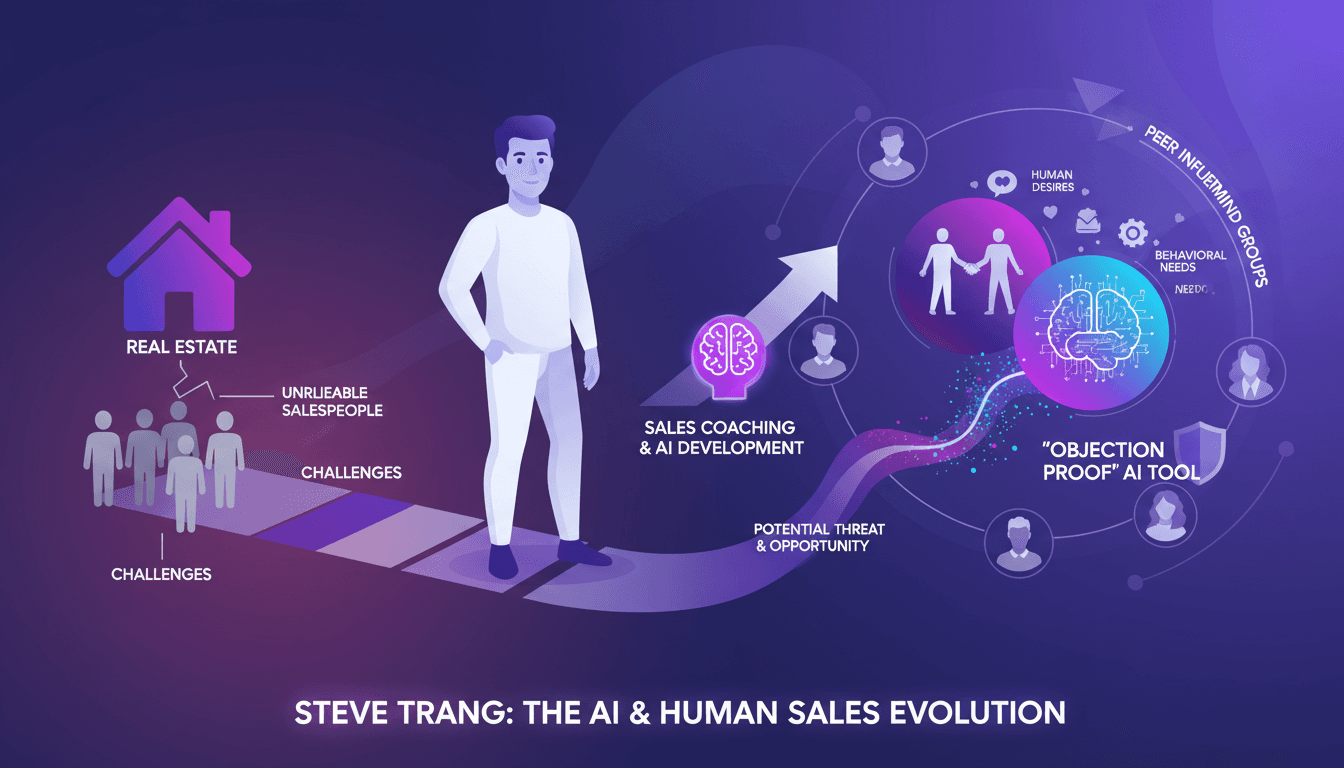
I transitioned from real estate to AI-driven sales coaching, not to follow a trend, but because unreliable salespeople can sink a business. In the next six months, mastering AI in sales training will decide who wins the race. With a tool like 'objection proof', costing under $80 per user compared to $1,000 a month for training, you can train and understand human desires. AI might seem like a threat, but for me, it's an opportunity. Let's see how I turned this challenge into a competitive edge.
Perplexity Challenges Google: A Tech Awakening
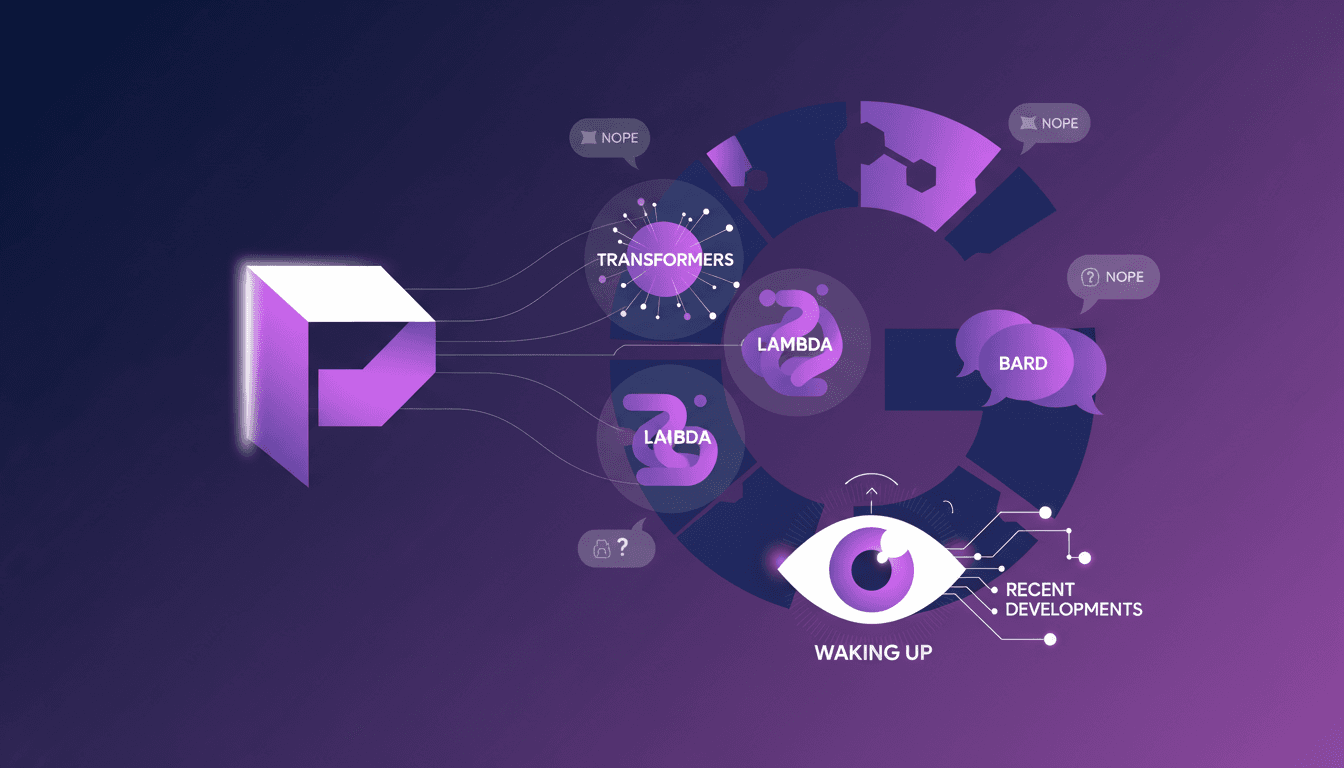
I remember the first time I realized Google's search might not be the unchallenged king it once was. It was when Perplexity started making waves, and suddenly, Google's dominance didn't seem so ironclad. Fast forward three years, and Google's been busy—Transformers, Lambda, Bard—names that sound like something out of a sci-fi movie, but they’re shaping our tech landscape. From the trenches, I see how these projects could really shake things up. But watch out, not everything that glitters is gold. There's potential, sure, but also pitfalls to avoid. Let's dive into what's really in Google's hand and what's just noise.
Scaling ChatGpt Enterprise at Commonwealth Bank
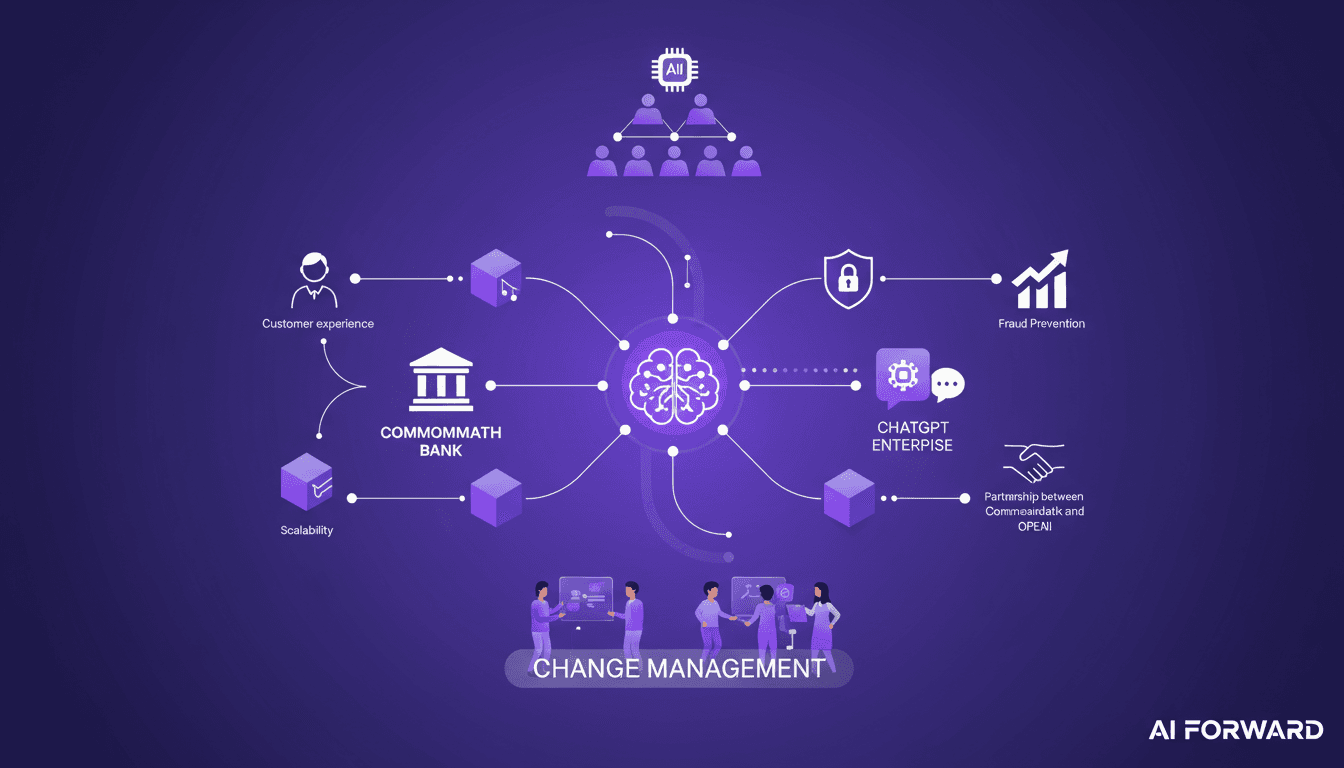
I remember the first time we decided to roll out AI at Commonwealth Bank. The excitement was there, but so were the questions. How do we scale this across 50,000 employees? More importantly, how do we ensure it's not just a fancy tool but a real game changer? With ChatGpt Enterprise, we found concrete answers. The impact? A significant enhancement in customer experience and increased resilience against fraud. But let me tell you, the real challenge was making sure this technology became a core part of our strategy. Let's dive into the details of this bold journey.
AI Agent for Learning at BNY
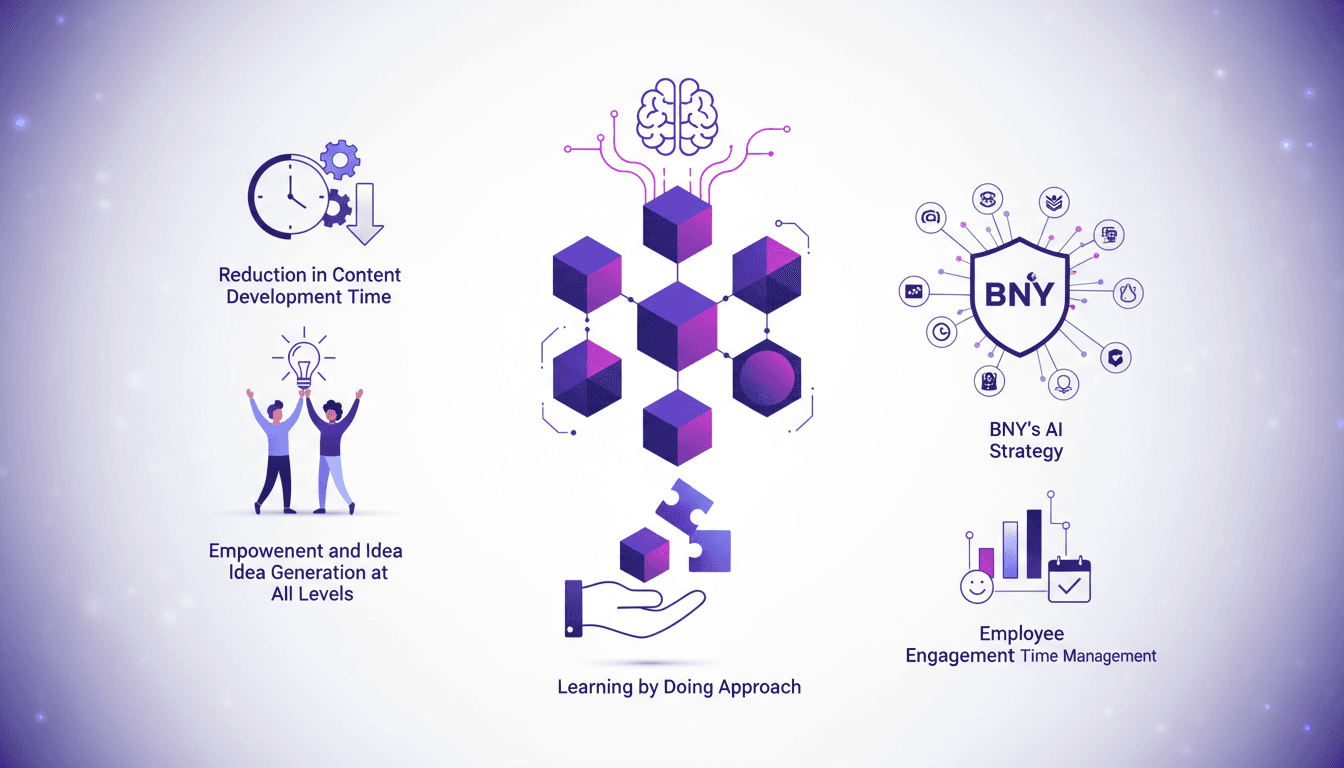
I remember when developing learning content at BNY used to take a month. Now, with our AI agent, it's down to an hour. This is a game changer that goes way beyond theory. With 20,000 employees, BNY People is transforming learning and development through AI. We're talking about drastic reductions in content development time and opening doors to innovation and employee engagement at every level. I connected our AI strategy with solid partnerships and orchestrated a learning-by-doing approach. But watch out, it's not without challenges. Here's how we did it.