Managing Technical Debt: Practical Strategies
I've been in the trenches of tech development long enough to know that technical debt can be a silent killer. It's like a credit card with a hidden interest rate. You don't see it coming until it hits hard. Technical debt isn't just a buzzword; it's a real challenge for startups and large enterprises alike. If it's not managed, it can cripple your project. Let me walk you through how I manage this beast daily, from a builder's perspective. We'll dive into understanding and managing technical debt, the role of the CTO, the impact of language and tool choices, and much more. Get ready to dive into the nitty-gritty.

I've been in the trenches of tech development long enough to know that technical debt can be a silent killer. It's like a credit card with a hidden interest rate—you don't see it coming until it hits hard. Technical debt isn't just a buzzword; it's a tangible challenge for both startups and large enterprises. If you don't manage it, it can literally cripple your project. Let me show you how I handle this beast on a daily basis. We'll talk about the CTO's role in managing it, the impact of language and tool choices, and strategies for refactoring and managing legacy systems. And then, there are those times when you realize (often too late) that rewriting an entire system is inevitable due to this infamous debt. Lastly, could AI actually help manage technical debt more effectively? Get ready to dive into the nitty-gritty with me.
Understanding Technical Debt: The Basics
Technical debt is like taking a shortcut while building a house—quick fixes that compromise the foundation. It works for a while, but eventually, the cracks will show. I've seen teams rush to meet tight deadlines, knowing they'll pay dearly later. Ignoring this debt is like ignoring a water leak—it only gets worse, and one day it bursts.
Sometimes people think technical debt is just for "average" developers, but that's a myth. It's a reality for any project and sometimes even necessary to quickly test ideas. The trap is not managing it. A CTO must be vigilant because it's crucial for the product's stability and growth. Early detection and proactive management are essential to avoid future catastrophes.
- Technical debt is like financial debt: borrowing time by making quick choices at the expense of quality.
- Managing this debt is crucial to avoid instability and poor technical decisions.
- CTOs need to be aware and detect these issues early to prevent costly complications down the line.
The CTO's Role: Managing Technical Debt
A CTO's role is to juggle innovation with managing technical debt. I've often had to prioritize debt reduction in the development cycle. Trust me, it's a delicate exercise. One effective strategy I've found is the 20% rule: dedicating part of the development time to refactoring. It helps maintain a balance between feature advancement and code stability.
For instance, in a startup I worked with, we dedicated one sprint out of five solely to refactoring. This significantly reduced our technical debt and sped up development in the long run.
- The CTO must balance innovation and technical debt management.
- Dedicate 20% of the time to refactoring as an effective strategy to reduce debt.
- Real-world examples show that this approach can lead to sustainable performance gains.
Impact of Language and Tool Choices
Language choice can significantly impact technical debt. I've seen projects spiral into complexity simply due to a poor initial choice. Cutting-edge tools can be enticing but often come with hidden debts. Sometimes, a stable, proven tool is better than an immature novelty.
In one project, we opted for a trendy language that turned out to be unsuitable for our needs, resulting in months of rewriting and delays. The lesson? Always carefully evaluate tools based on the project's specific needs.
- Language choice can increase or decrease technical debt.
- Cutting-edge tools can be risky and introduce hidden debts.
- Evaluating tools based on specific needs is crucial to avoid costly mistakes.
Refactoring and Managing Legacy Systems
Refactoring without halting progress is a constant challenge. I've learned not to rewrite everything but to improve incrementally. Managing legacy systems often means choosing between refactoring and rewriting. The 6-month architecture rebuild versus a 3-month pivot is a reality I've frequently encountered.
In one company, we chose to gradually refactor an old system, maintaining continuity while improving efficiency. This choice avoided costly interruptions and ensured a smooth transition to a modern architecture.
- Refactoring without blocking progress is possible with a gradual approach.
- The decision between refactoring or rewriting depends on the specific situation of the legacy system.
- Real-life examples show that well-planned refactoring can avoid costly complete rewrites.
Balancing Iteration with Debt Management
Balancing product iteration with debt management is a delicate art. Full rewrites are tempting but often risky. I've seen teams burn out and lose focus by trying to rewrite everything. Sometimes, focusing on incremental improvements is more effective and letting AI help manage technical debt.
By using AI tools, we were able to automate some refactoring tasks, increasing development speed by 25%. This time gain allowed us to focus on innovation while keeping debt under control.
- Balancing product iteration with debt management is crucial to avoid team burnout.
- Full rewrites are often risky and can lead to loss of focus.
- Using AI to manage technical debt can accelerate development and free up time for innovation.
Managing technical debt is a bit like juggling multiple balls while keeping an eye on the future. First off, I recognize that technical debt is inevitable, but it can be managed by strategically planning around it. I dedicate about 20% of my time to refactoring, which keeps my projects on track. Then, I think about the crucial role of the CTO in this process: they need to identify risk areas and anticipate future technology shifts (we're talking a 10-year horizon to really feel the impact). Lastly, I never underestimate the impact of language and tool choices on technical debt. A solid architecture can take 6 months, but it's a critical investment.
Looking ahead, I'm convinced that understanding our technical debt today prepares us for tomorrow's challenges. Don't just sit there; take a hard look at your current tech stack. Where's your technical debt hiding, and how can you start addressing it today? To dive deeper into these topics, I highly recommend watching the video "La dette technique : le piège des startups et des grands groupes?" on YouTube. Trust me, it's worth it.
Frequently Asked Questions

Thibault Le Balier
Co-fondateur & CTO
Coming from the tech startup ecosystem, Thibault has developed expertise in AI solution architecture that he now puts at the service of large companies (Atos, BNP Paribas, beta.gouv). He works on two axes: mastering AI deployments (local LLMs, MCP security) and optimizing inference costs (offloading, compression, token management).
Related Articles
Discover more articles on similar topics

Surviving the AI Era: Brutal Truths and Tips
I've been deep in the AI trenches, and let me tell you, it's not just about surviving; it's about thriving. With 700,000 graduates in England struggling to find jobs, AI is redrawing the job market's boundaries. Yet, I've learned this challenge is also an opportunity to amplify human capabilities and rethink careers. I'll walk you through how I've taken personal responsibility and crafted my own opportunities, and how you can do the same. Together, we'll explore the impact on traditional roles disrupted by AI, the importance of charting your own course, and how to harness AI to supercharge your skills. Get ready to rethink your professional future, armed with essential sales techniques and entrepreneurial skills.

Baguettotron: AI Integration on Zip Disk
I still remember the first time I tried to fit an AI model onto a zip disk. It was like trying to squeeze a modern engine into a vintage car. But that's precisely the challenge the Baguettotron project threw at me, and here's how I tackled it. The Baguettotron is this fascinating mix of retro tech and cutting-edge AI. Picture running a 320 million parameter AI model on a tiny 900 MB disk. Sounds crazy, right? But it's doable. We're diving into this technical adventure, discussing specs, compatibility, and the hurdles like finding those elusive disks. Hang tight, because we'll also touch on the unique marketing aspects of this project.

Brain-Computer Interfaces: Advances and Challenges
I remember the first time I connected a brain-computer interface to a retinal prosthesis. It was like watching the future unfold in real-time. But here's the kicker: the tech is only as good as our understanding of the brain's plasticity and its convergence with AI. We're at a crossroads where neuroscience meets artificial intelligence, and brain-computer interfaces (BCIs) are at the forefront of this revolution. Let's dive into how we're building this future, the challenges we face, and the potential it holds. From advancements in BCI technology for vision restoration to neural engineering and retinal prostheses, and including a risk-reward analysis of BCI adoption, this interview with Max Hodak promises to be enlightening. Get ready to explore biohybrid neural interfaces and ponder the future of intelligence through BCIs.
Profitable AI Agent: Strategies and Tools
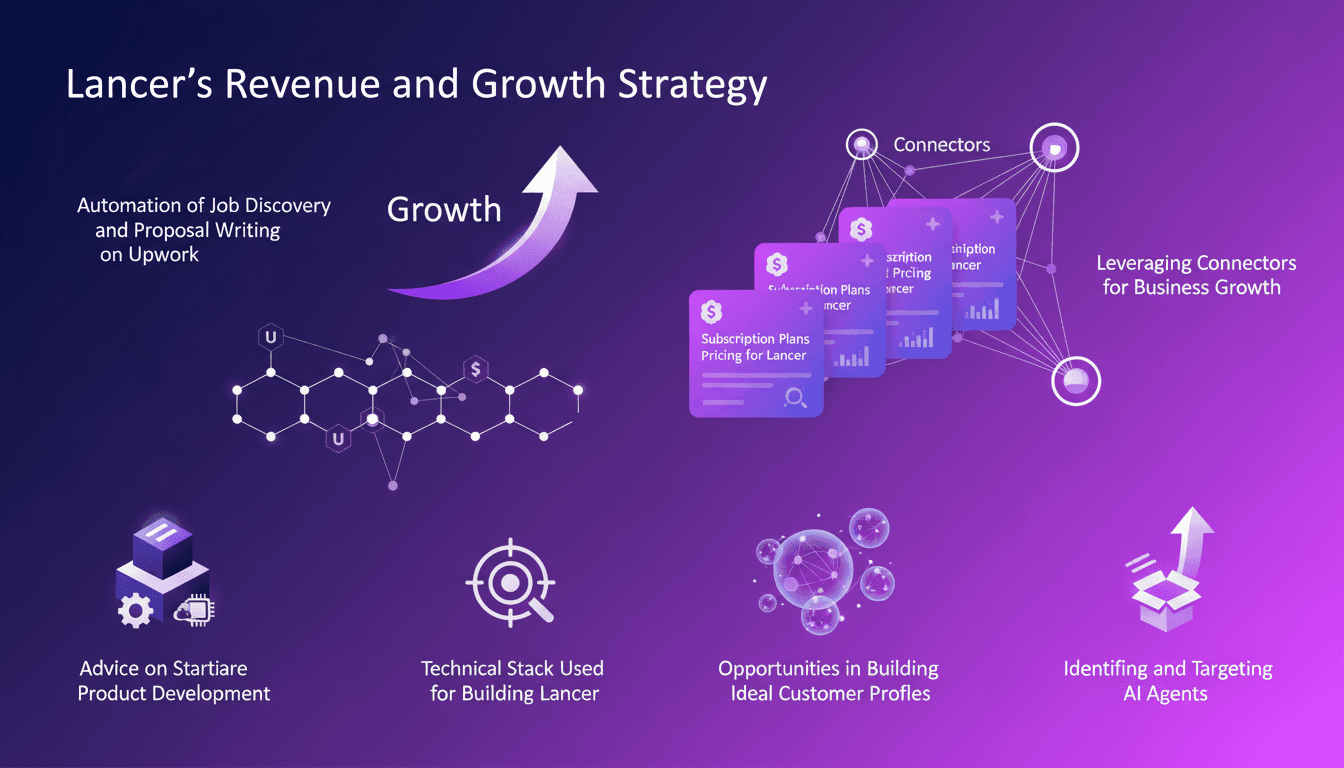
I built an AI agent that rakes in $10K a month without spending a dime on ads. Sounds crazy? Here’s how I did it. In a world where efficiency and automation are key, I developed Lancer, an AI agent that transforms how freelancers and agencies operate on platforms like Upwork. By automating job discovery and proposal writing, Lancer has revolutionized our approach. I share how I leveraged connectors for business growth, crafted subscription plans and pricing, and the opportunities I discovered in building AI agents. I'll also explain the mistakes I made, the tools I used, and how you can start your own software product development.

Startup School 2026: Inside the Event Experience
I remember my first Startup School like it was yesterday—a whirlwind of ideas, connections, and insights that reshaped my approach to building my startup. This year, Startup School 2026 promises to be even more transformative. With speakers like Jensen Huang and Sam Olman, we're in for some captivating discussions and unique opportunities. Let me walk you through what to expect from this must-attend event on July 25th and 26th. Whether you're a seasoned founder or just starting out, there's something here for everyone. Don't miss the chance to be where innovation meets execution.