Building Reusable Rockets: Challenges and Successes
I've spent countless hours in the lab, tweaking and testing components for reusable rockets. At Stoke Space, we're not just dreaming about the future of space travel— we're building it. Our mission? To make rocket reusability not just a possibility, but a reality. In the race to space, reusability is the name of the game. With about 150 commercial launches annually, the need for cost-effective, efficient solutions is clear. Stoke Space is at the forefront, developing fully reusable rockets that promise to transform the industry.

I've spent countless hours in the lab, tweaking and testing components for reusable rockets. At Stoke Space, we're not just dreaming about the future of space travel— we're building it. Our mission? To make rocket reusability not just a possibility, but a reality. In the race to space, reusability is the name of the game. With about 150 commercial launches annually, the need for cost-effective, efficient solutions is clear. We're at the forefront, developing fully reusable rockets that promise to transform the industry. The challenges are immense: dealing with heat that climbs over 2700° F during descent, controlling speeds of 17,000 mph. But we're pushing forward, innovating with the Nova and Andromeda rockets. Technology, AI, all of that plays a crucial role. And let's not even start on fundraising and financial strategy—it's the lifeblood for space startups. We're building the infrastructure for tomorrow's space launches—and we'll get there.
The Genesis of Stoke Space
When Andy and Tom left Blue Origin in 2019 to start Stoke Space, they weren't just dreaming of reusable rockets, they were jumping right into the thick of it. Their vision? To build fully reusable rockets, a task many consider the Holy Grail of rocket science. With only 150 commercial launches each year, most rockets are discarded after use. Stoke Space aims to change this.
"It was like an App Store moment for rockets," Andy remarked.
The beginnings weren't easy. Andy and Tom started testing prototype engines in a container set up in Tom's backyard. No offices, just determination and a small initial investment. But they quickly realized the need to raise significant funds. By 2024, they had raised nearly a billion dollars, a colossal sum for a space startup.
These funds were crucial to overcoming initial challenges and building their vision. In 2022, they successfully tested their first full engine and moved into a large factory designed to build about seven vehicles a year. The major financial hurdle was behind them, but the technical challenges were just beginning.
Technological Innovations in Nova and Andromeda
The Nova and Andromeda rockets aren't ordinary machines. Nova, with its high-performance engine, pushes the limits of fuel efficiency. Stoke's major innovation is the use of pressure-fed gaseous hydrogen liquid oxygen thrusters. This enables rapid reuse, an essential element for reducing launch costs.
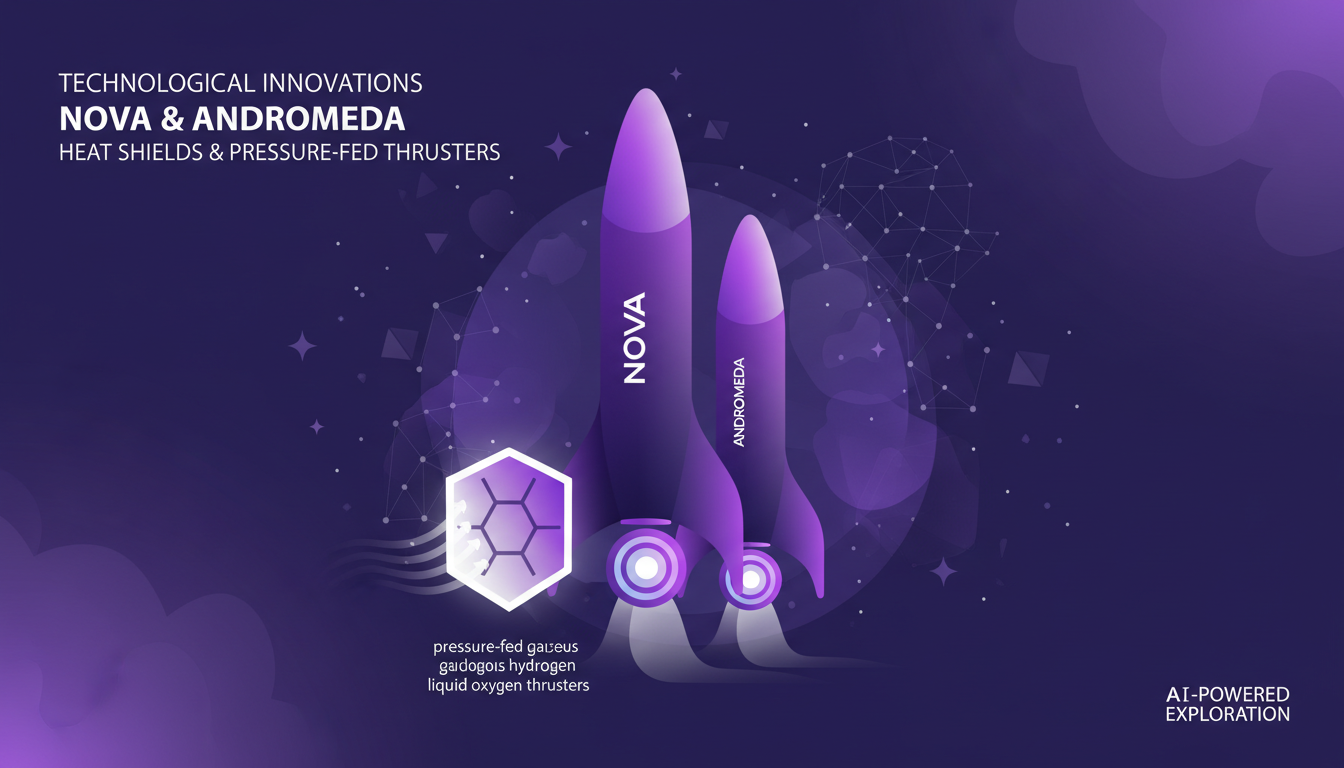
The Andromeda capsule is particularly clever, with a custom heat shield that uses cold liquid hydrogen to absorb the intense re-entry heat, soaring above 2700°F. The cryogenic conditions of space demand robust solutions, and this is where Stoke excels.
- Nova: High fuel efficiency
- Andromeda: Advanced heat shield
- Pressure-fed thrusters: Cost reduction
Software and AI: The Backbone of Efficiency
At Stoke Space, the software infrastructure isn't just a tool; it's the driver of operational efficiency. AI plays a critical role, particularly in testing and development cycles. With hardware in the loop testing, they receive real-time data, which accelerates adjustments and improvements.
"We got burned several times before really understanding how to orchestrate it all," Tom admitted.
The trade-off between automation and manual control is delicate. The temptation to automate excessively can hurt performance. But with rigorous testing, Stoke has found a balance that maximizes efficiency without compromising safety.
- AI: Accelerating test cycles
- Hardware in the loop: Real-time data
- Automation vs manual control: Necessary balance
Building Infrastructure for Space Launches
To create a reusable rocket, focusing solely on the technology of the craft isn't enough. The launch infrastructure must evolve as well. Stoke's launch site at Cape Canaveral is designed to support an increased launch frequency, which is crucial for rapid reuse.
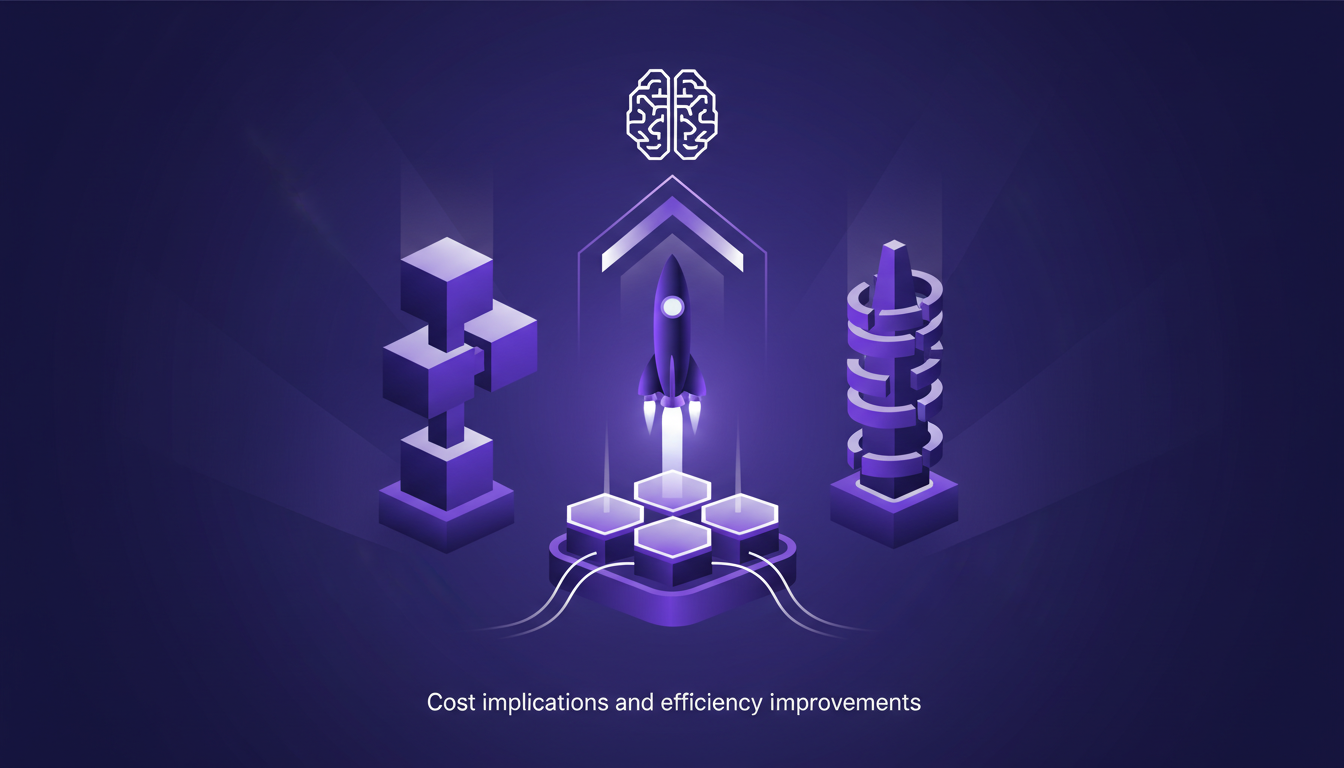
The construction and scaling of this infrastructure present a significant challenge. Costs are substantial, but improvements in efficiency and launch frequency should offset these investments. Future-proofing is crucial for Stoke as they prepare to build infrastructure capable of handling a higher launch cadence.
- Site design: Supporting rapid reuse
- Scaling challenges: Costs vs efficiency
- Future-proofing: Preparing for the future
The Future of Reusable Rockets
Stoke Space's vision for the future of reusable rockets is ambitious. Reducing turnaround time to 6 months could revolutionize the space industry. Traveling at 17,000 mph presents heat management challenges, but Stoke is ready to meet this challenge with continuous innovations.
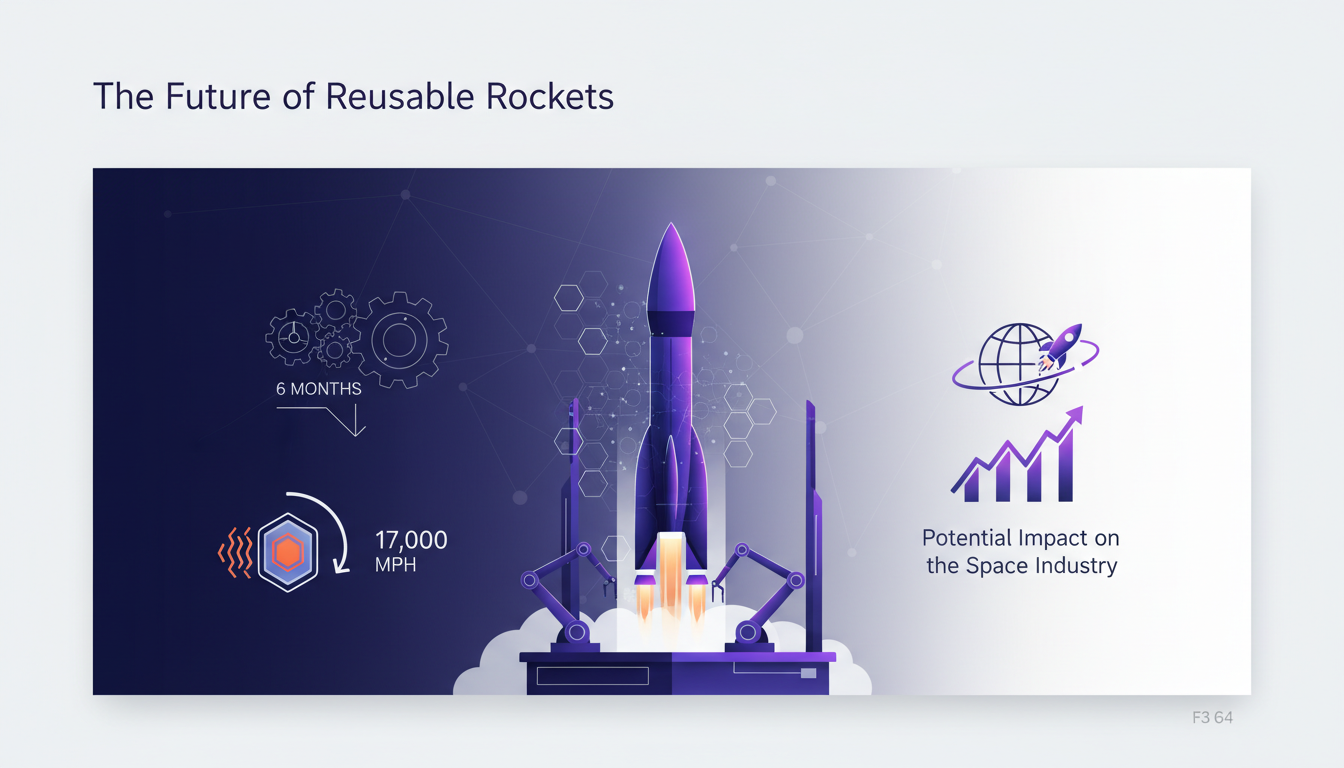
The implications of these advances are enormous. With rockets capable of quickly returning and being reused, costs could significantly decrease, making space more accessible. Stoke is already planning new innovations, and their strategy is clear: continue pushing the boundaries of what's possible.
- Turnaround time: 6-month goal
- Heat management: Challenges at 17,000 mph
- Future strategy: Continuous innovations
The era of reusable rockets, as envisioned by Stoke Space, promises to be exciting. It's time to look to the future, a future where space becomes a playground for innovation and discovery.
At Stoke Space, we're revolutionizing space travel with our reusable rockets. First, we've tackled the massive challenge of reusing rockets that fly at 17,000 mph and heat up to over 2700° F during descent. Next, we've packed technological innovations into our Nova and Andromeda models. Finally, we've set new benchmarks for efficiency and sustainability—these aren't just buzzwords, they're our daily focus. With around 150 commercial launches each year, every improvement matters. I'm genuinely excited about what we're building, but let's be honest, there are limits like cost and technical complexity to navigate. We're on the right track and we need you—join our journey and become part of the future of space travel. Check out the video "Inside The Startup Building Reusable Rockets" to dive deeper into our exciting story. It's an invitation from one colleague to another, to share in our vision.
Frequently Asked Questions

Thibault Le Balier
Co-fondateur & CTO
Coming from the tech startup ecosystem, Thibault has developed expertise in AI solution architecture that he now puts at the service of large companies (Atos, BNP Paribas, beta.gouv). He works on two axes: mastering AI deployments (local LLMs, MCP security) and optimizing inference costs (offloading, compression, token management).
Related Articles
Discover more articles on similar topics

Tech Justice: Ron Swart's Case and Implications
I've been in the tech trenches long enough to know that justice can often feel like a distant concept. Ron Swart's case hit me hard, prompting me to delve into the labyrinth of tech justice, data rights, and persistent disparities. The industry thrives on innovation but isn't immune to ethical and legal challenges. From massive downloads by tech giants to skewed justice in theft cases, the stakes are high. Can we truly talk about justice in tech?
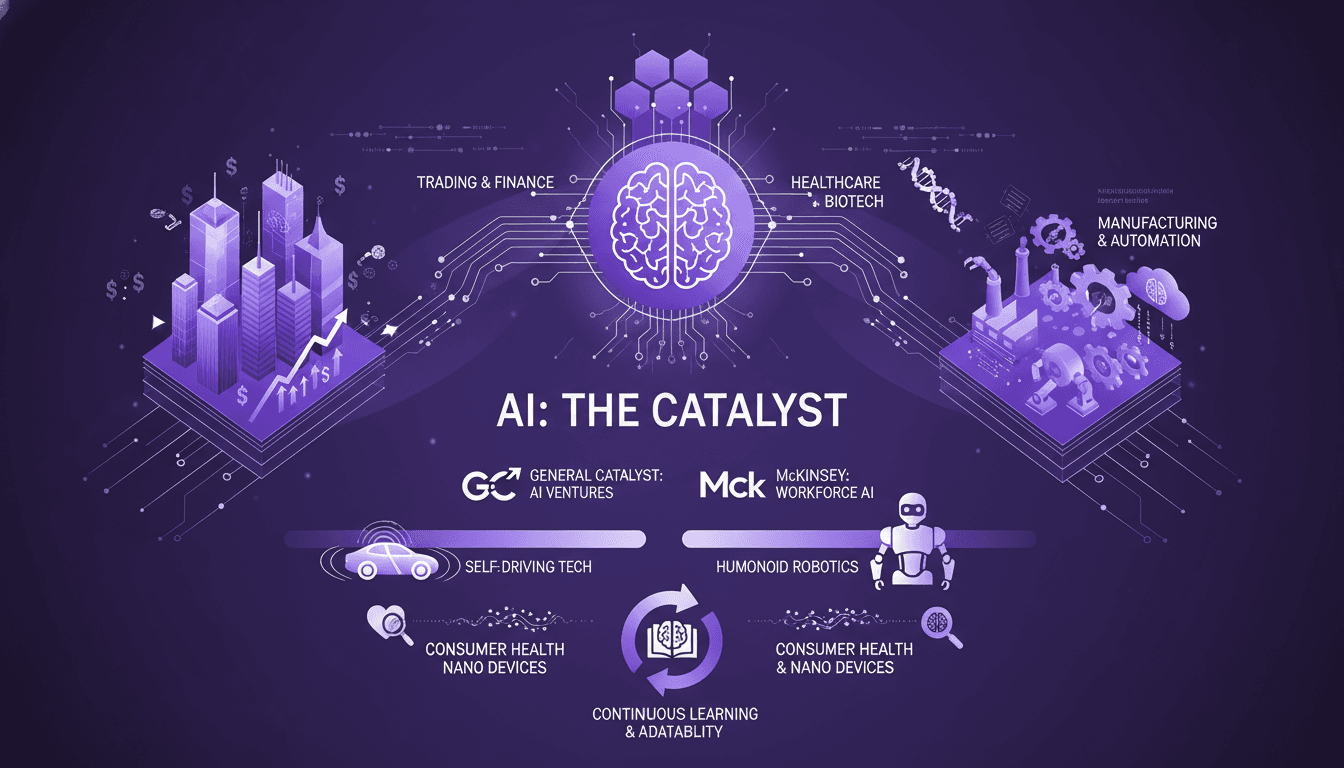
Rapid Innovation: How AI Transforms Businesses
I just got back from CES 2026, and let me tell you, the pace of innovation hit like a freight train. The conversations weren't just about tech; they were about transforming entire industries. AI is at the heart of this revolution, reshaping the industrial landscape. McKinsey is planning a 25% increase in client-facing personnel next year, a clear sign that things are shifting. Curious about how these changes impact our daily work? Read on to discover how AI, healthcare, and robotics are redefining our professions.
Attention Economy: Horizon Media Redefines Agencies
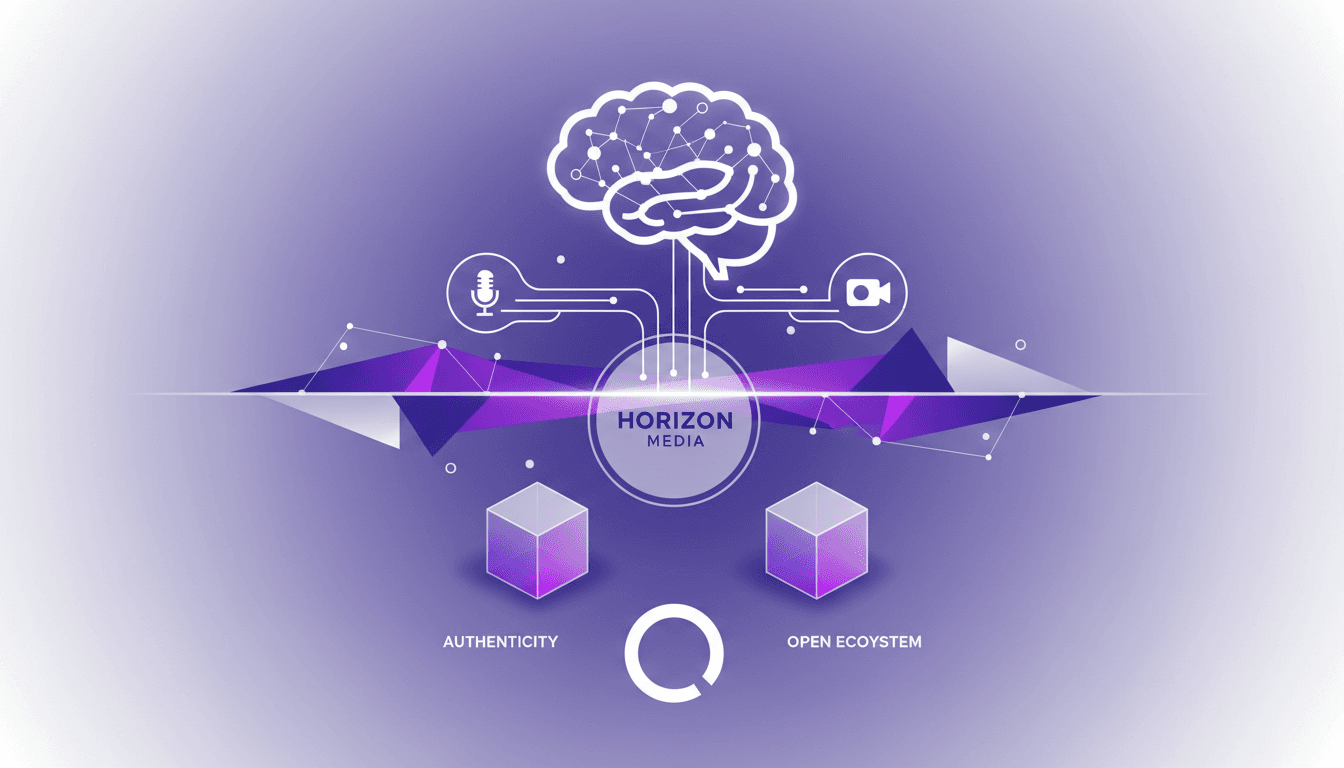
I dove into Horizon Media's strategies and saw firsthand how they're shaking up the marketing world. No empty talk, just real building. They're reinventing the agency model for this fragmented attention economy. It's about authenticity, transparency, and most importantly, integrating cutting-edge tech like generative AI. In just six months, their strategies are already making waves. Horizon Media isn't just following trends; they're creating them with strategies that merge podcast and video content for targeted, effective advertising. If you're looking to understand how innovation can transform your marketing approach, this is where you need to be. The open ecosystem they're orchestrating is a model for any savvy professional.
Caterpillar's AI Integration: 100 Years of Innovation
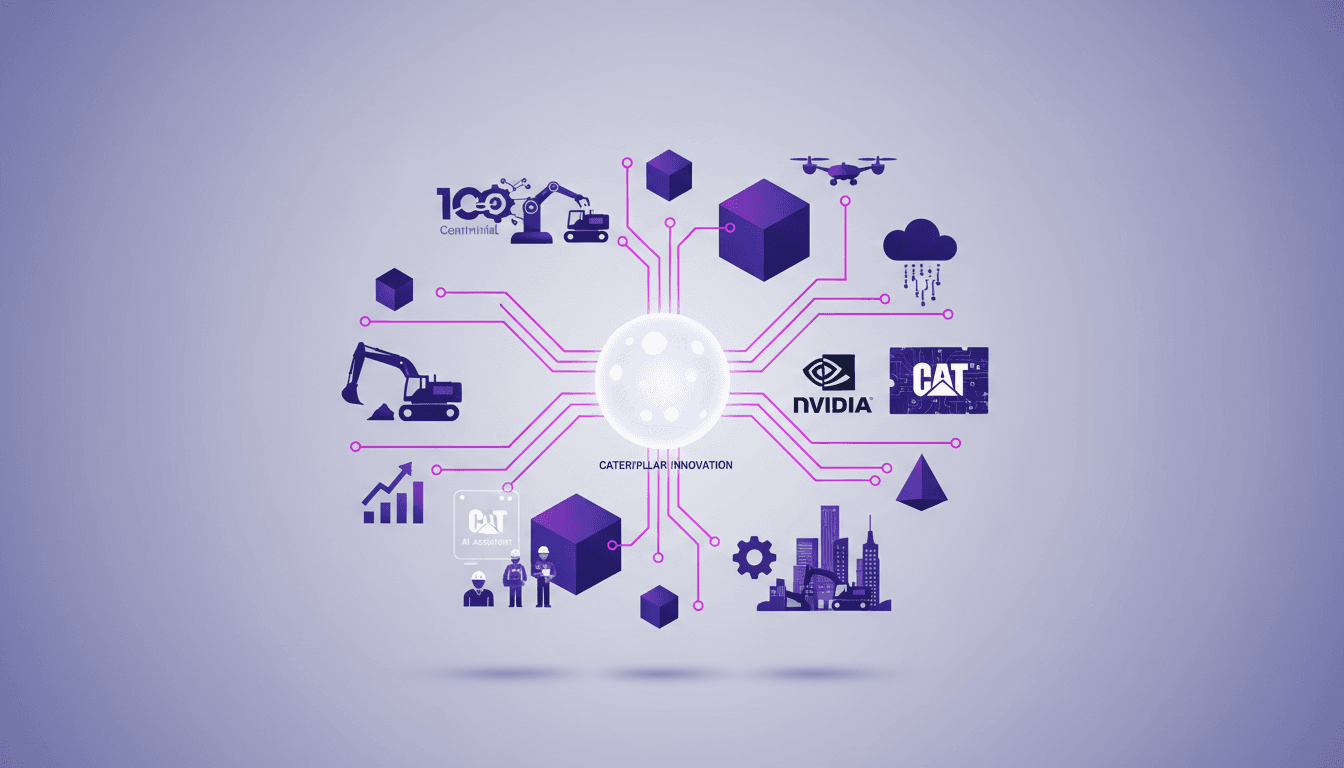
I remember the first time I saw a Caterpillar machine in action—it was a game changer in construction. Fast forward to CES 2026, and we're now discussing AI-driven innovations that could redefine the entire industry. As Caterpillar celebrates its centennial, they're pushing boundaries with machine learning, in partnership with Nvidia. We're not just talking about autonomous systems in mining and construction, but a whole ecosystem of autonomy and connectivity. And watch out, with the introduction of their CAT AI Assistant, there's a clear promise to transform how we approach workforce development and the future of autonomy in this sector. No empty promises here, just concrete solutions aiming to make a real impact.
Interactive TV Ads: Maximizing Engagement
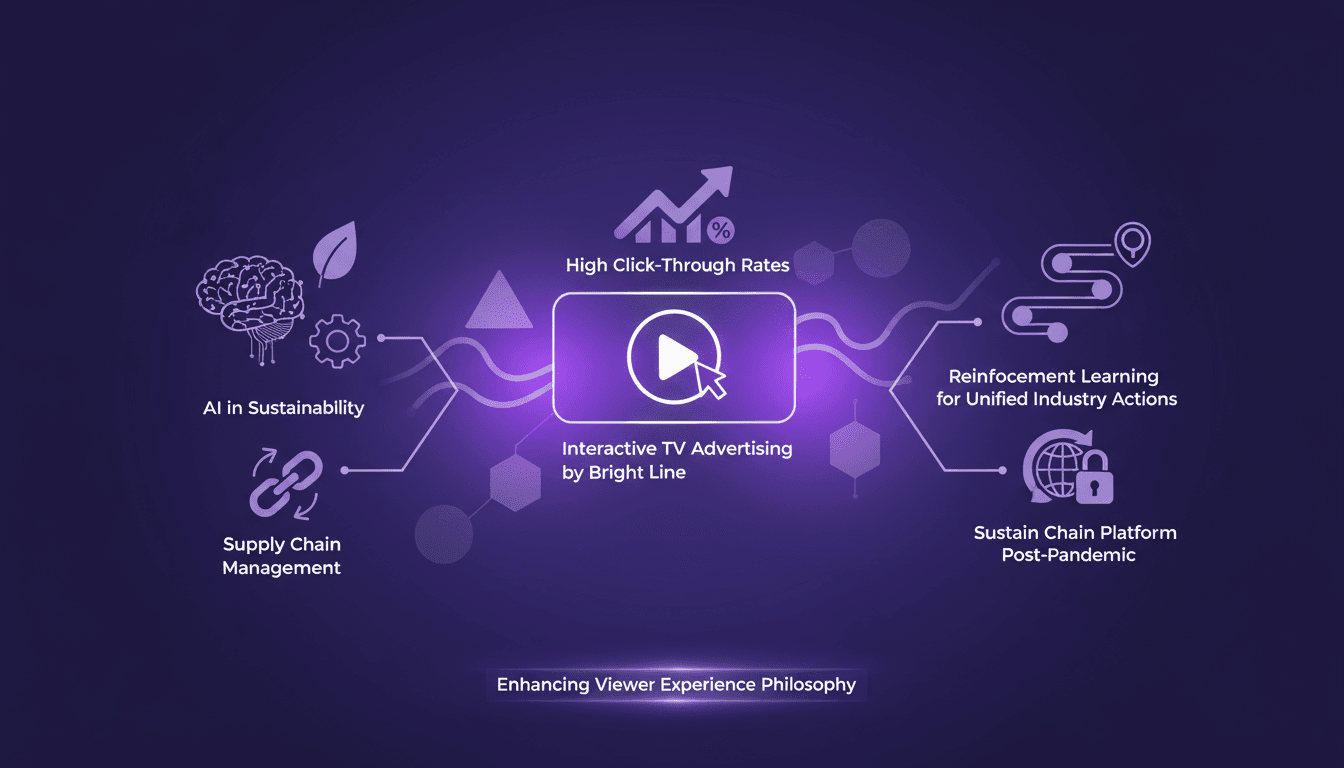
I remember the first time an interactive TV ad genuinely made me want to click. It was a BrightLine ad, and it shifted my view on what's possible in this space. Instead of being a gimmick, interactive TV advertising is reshaping viewer experiences, boasting click-through rates as high as 15% (compared to the usual 1%). BrightLine is leading the charge, leveraging AI to enhance user experience while pushing sustainability boundaries. In this article, I'll walk you through how they're orchestrating this transformation and why the future of TV advertising is already here.