Building a Niche App to $9K MRR: Strategies & Tools
I built Charardb, a niche app that hit $9K MRR. No small feat—and here's how I navigated the challenges, leveraged platforms like Hacker News, and orchestrated a tech stack that scales. In a world flooded with apps, standing out and hitting significant MRR is more than just luck. Charardb isn't a fluke; it's the result of well-thought-out strategies and precise technical execution. I'll share how I reduced user friction, optimized the launch, and pivoted from initial ideas to transform a concept into a tangible success.
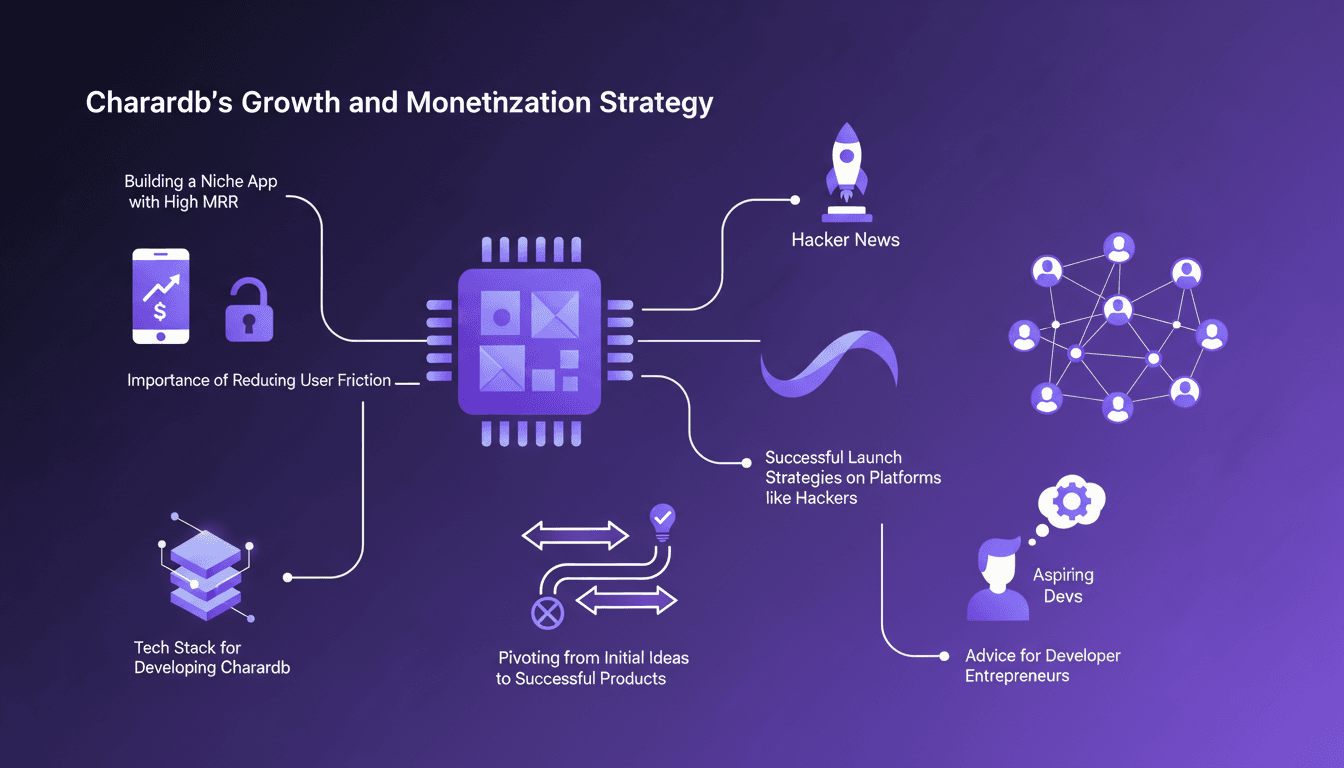
When I set out to launch Charardb, a niche app that hit $9K MRR, I knew I'd be in for a fight to stand out. (And trust me, it wasn't a smooth ride.) First, I had to make sure my idea truly met a specific need. Then I leveraged platforms like Hacker News to generate buzz and gather initial feedback. On the tech side, I orchestrated a stack that could handle scaling with increased demand. Reducing user friction was crucial; I got burned more than once ignoring that aspect. Finally, the pivot—always being ready to adjust the product based on feedback and usage data. It's this flexibility that's been the key to Charardb's success. Today, with 21,000 stars on GitHub and 250,000 developers using it, I can confidently say every technical and strategic choice mattered.
Understanding MRR and Monetization Strategies
Let's kick things off with a fundamental concept in our business: Monthly Recurring Revenue (or MRR). Essentially, it's the revenue you can anticipate each month from your subscriptions. For Charardb, we've hit a $9,000 MRR, a significant milestone for a niche app. Why? Because MRR gives you clear visibility into your cash flow and allows you to better plan your growth.
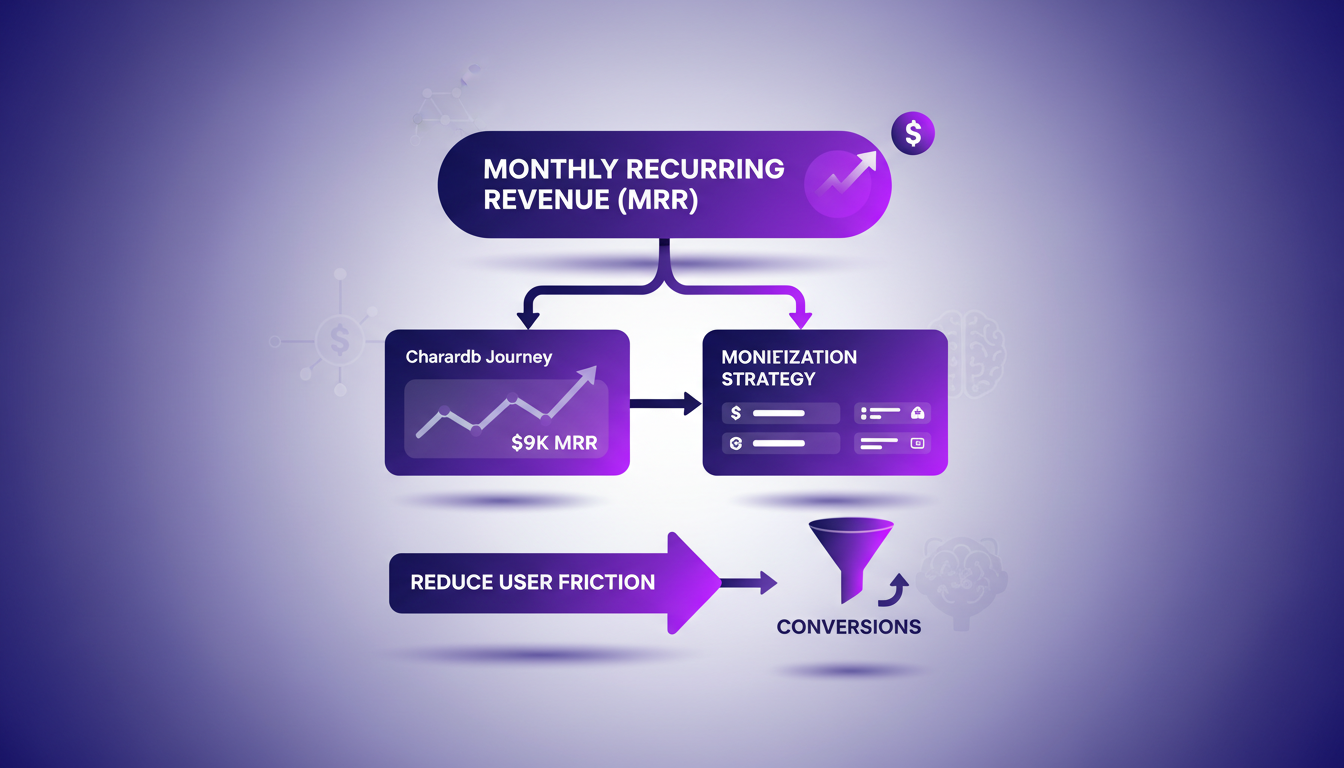
Our monetization strategy has been built on the idea of minimizing friction for the user. I've learned that the easier it is for the user, the more likely they are to upgrade to the paid version. We've focused on balancing free and paid features. Of course, you have to be careful with pricing decisions. Too expensive and you lose potential customers, too low and you risk undervaluing your product.
- $9,000 MRR
- 21,000 stars on GitHub
- 250,000 developer users
Launching on Hacker News: A Growth Catalyst
When I decided to launch Charardb on Hacker News, I knew it was a risky bet. But I needed a boost to grab developers' attention. The secret? Good timing and a clear presentation of our product's unique value. Within hours, we were on the front page, bringing us thousands of new users.
The community feedback was invaluable. Of course, there were challenges: managing sudden traffic, responding to constructive criticism, and most importantly, adapting the product based on feedback. This taught me that timing and presentation are crucial to maximize impact.
- Launch on Hacker News for massive visibility
- Importance of timing and presentation
- Immediate feedback and challenges to tackle
Tech Stack: Building with React, NodeJS, and More
For Charardb, I chose a simple yet effective tech stack: React for the interface, NodeJS for the backend, Tailwind for design, and React Flow for visualization. Why these tools? Because they are both powerful and well-supported by the open-source community. Plus, they integrate perfectly for product scalability.
Of course, it wasn't all smooth sailing. I had to juggle performance issues and bugs that only appeared in production. But with a bit of iteration and a lot of coffee, we got through it. Open source played a crucial role by allowing us to benefit from external contributions and continuously improve our product.
- React and NodeJS for a robust stack
- Integration of Tailwind and React Flow
- Technical challenges and solutions
Pivoting from Initial Ideas to Success
Initially, Charardb was a different idea. We thought of a database client with AI integration, but it didn't take off. Too complicated, too much friction. That's when I realized the importance of pivoting. We simplified, listened to users, and focused on a more visual and accessible product.
I got burned several times before understanding that flexibility is essential in product development. Persistence and adaptation are your allies. Ultimately, it's the feedback that shaped our final product.
- Importance of user feedback
- Adaptation and flexibility
- Lessons learned from failures
Advice for Aspiring Developer Entrepreneurs
If you're a developer and considering taking the plunge, here are some tips. First, build something you're passionate about and that meets a real need. Community and user feedback are your best allies, so listen to them.
Balancing development and marketing is often overlooked. Too many developers get locked in the code without thinking about distribution. Don't make that mistake. And above all, don't be afraid to take calculated risks. Every failure is a lesson.
- Build with passion and real need
- Importance of balancing development and marketing
- Taking calculated risks
Building Charardb to $9K MRR wasn't just about the right tech stack or launch strategy. It was about learning from each step, pivoting when necessary, and always keeping the user in focus. I found that the best strategies are those that reduce user friction, like we did on Hacker News. Here's what I learned:
- Constant iteration: Every user feedback is an opportunity for improvement.
- User-first approach: Reducing friction increases engagement.
- Effective launch strategies: Hacker News was a real game changer.
- Monetization and growth: $9K MRR, 21K GitHub stars, and 250K developers using Charardb.
Looking ahead, I see huge potential in applying these principles to other niches. Make sure to keep your users engaged and adapt continuously. Now, go build something great!
Watch the full video to see how I did it all, it's really worth it if you're in the same boat. YouTube Link
Frequently Asked Questions

Thibault Le Balier
Co-fondateur & CTO
Coming from the tech startup ecosystem, Thibault has developed expertise in AI solution architecture that he now puts at the service of large companies (Atos, BNP Paribas, beta.gouv). He works on two axes: mastering AI deployments (local LLMs, MCP security) and optimizing inference costs (offloading, compression, token management).
Related Articles
Discover more articles on similar topics
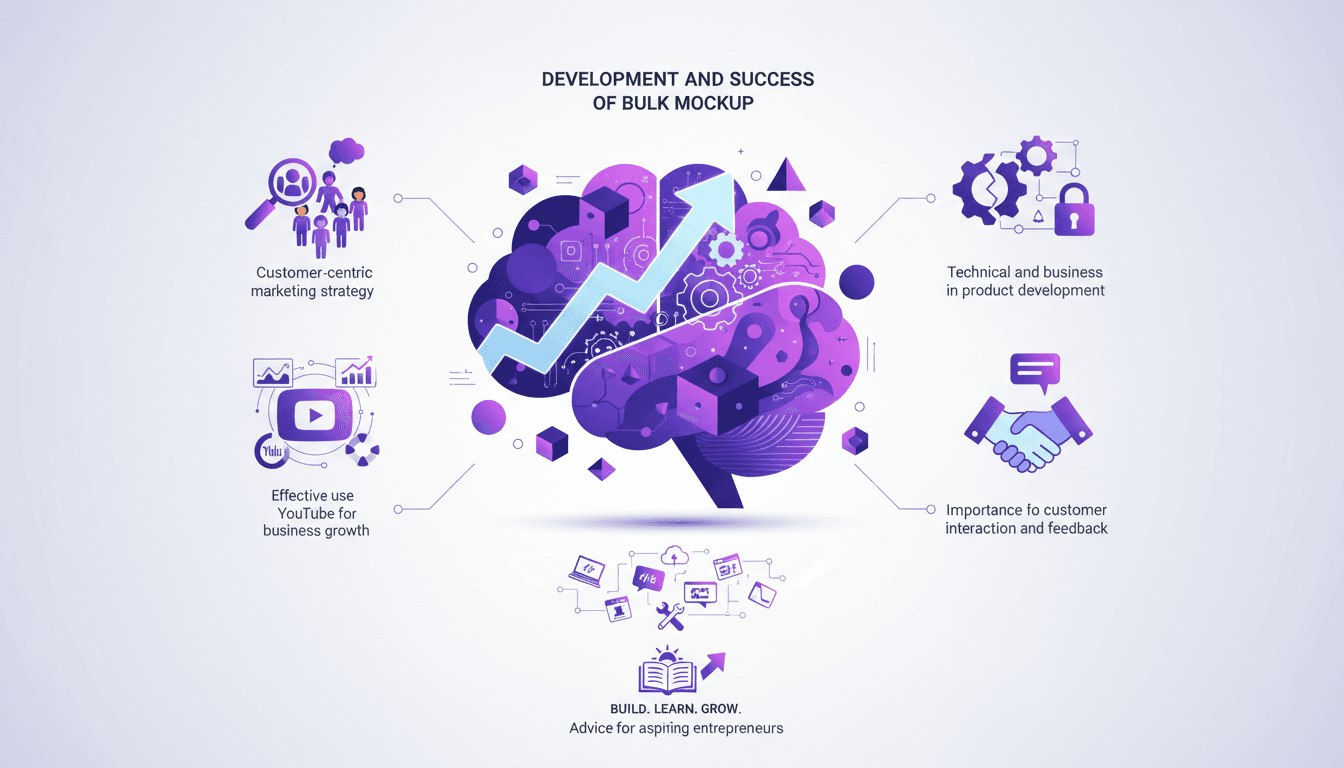
Growing Bulk Mockup: From Freelance to $12K/Month
I remember the exact moment I realized my side gig could become a real business. It was when I created 1,800 mockups in under 30 minutes and got paid $300 for it. That's when Bulk Mockup was born. In this article, I'll walk you through how I turned this Photoshop plugin into a $12K/month success story. By leveraging customer feedback, strategic content creation, and the right tech stack, Bulk Mockup became a market leader. I'll cover everything from technical hurdles to growth strategies, aiming to inspire aspiring entrepreneurs.

Launching a Property Development Business
I've always dreamed of owning my own property development business. It's not just about the buildings, it's about creating something tangible from a vision. In this article, I share insights from an interview on pursuing passions, finding purpose in past pain, and how an event like the London Palladium could fund your business idea. I'll walk you through my journey, the mistakes I've made, and the successes I've achieved to show you how to turn dreams into concrete projects.
Choosing Knowledge Over Cash: My Journey
I was faced with a simple choice: take $1,000 cash or a book. I chose the book, and that decision turned out to be a game-changer. In a world obsessed with quick wins, I learned that knowledge often trumps fast cash. Here, I share what this journey taught me about entrepreneurship and the importance of investing in oneself. Instead of settling for quick money, I bet on knowledge, and it paid off in the long run. This journey also highlighted the critical role of mentorship and guidance in personal growth. In short, choosing the book was a winning bet.
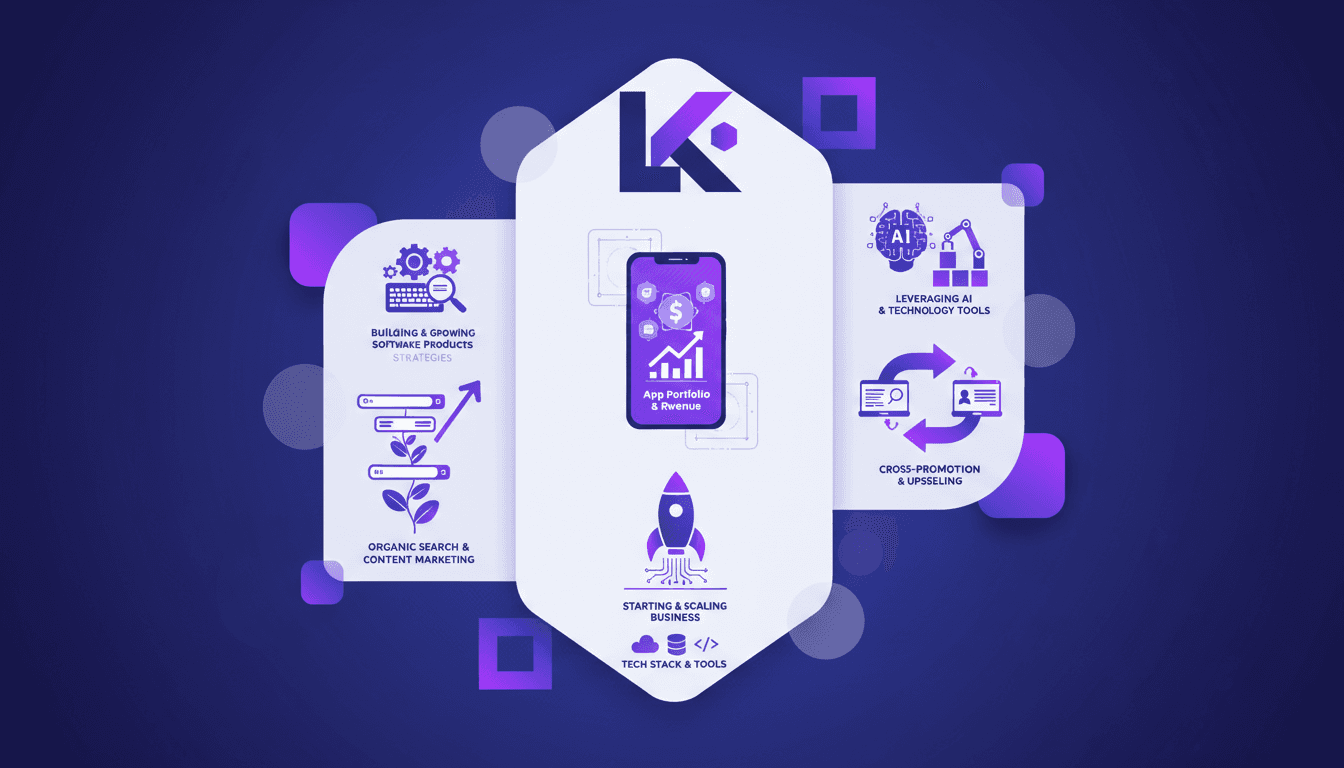
Making $150K/Month: Key App Strategies
I remember vividly when I first hit that $150K/month milestone with my apps. It wasn't magic; it was a mix of strategic moves, tech stack mastery, and a relentless focus on organic growth. This article dives into how Katie Keith orchestrates her 19 apps to generate $1.8 million annually. We discuss her strategies for building and growing multiple software products, the importance of organic search and content marketing, and how she leverages AI and technology tools for product development.

Codex: Code Navigation and Understanding
I've been knee-deep in codebases that felt like labyrinths. Then I found Codex—it was like finding the map I needed. Navigating code, managing PRs with Build Kite, everything started making sense. As a PM, diving into technical environments without coding can be daunting, but Codex bridges that gap. It's more than just a tool; it's a bridge between code navigation and team collaboration. Here’s how I use it to optimize code understanding, streamline team communication, and continuously improve my Codex skills. And even if you're not coding, a PM’s role in these environments can be really impactful.