AI in Media: 2026 Advertising Revolution
I remember sitting in on a panel at CES 2026, where the air buzzed with talk about AI's transformative role in media. It wasn't just hype—AI was reshaping everything from advertising to live events. We were on the edge of something monumental. I witnessed the explosion of digital audio, the redefinition of audience engagement through live events. We're not just talking algorithms here, but the future of media consumption. Here's how it all unfolded, and why trust and tech safety are pivotal for this future.
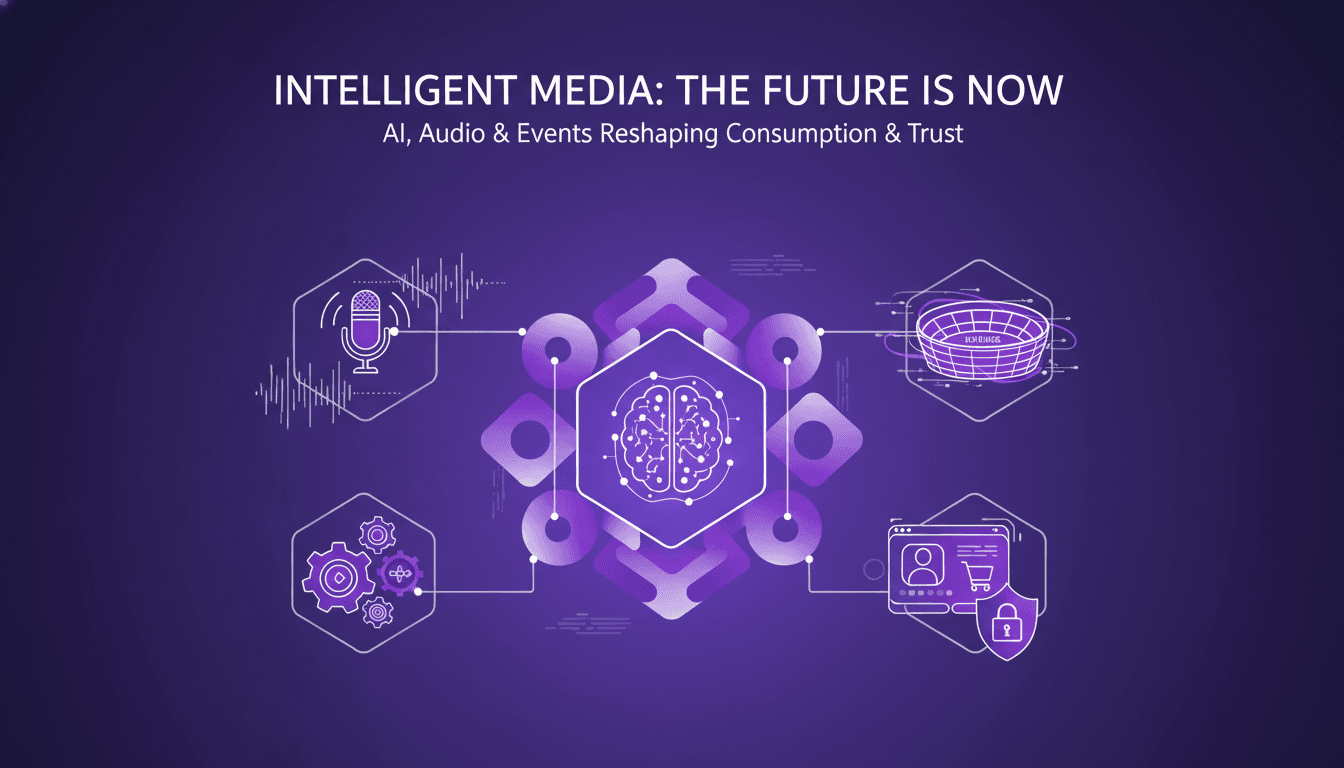
I remember a defining moment at CES 2026. Sitting in on a panel, there was this palpable energy, this buzz about AI's impact on media. No speculative bubbles here, I assure you—this was a real revolution in motion. AI was reshaping the landscape from advertising to live events. By 2026, digital audio was front and center, and I saw how it was redefining how audiences engage with content. We're not just talking algorithms, but the future evolution of media consumption. It's a major turning point, and the importance of tech safety and trust has never been greater. Why? Because AI integration into our business processes and consumer interactions is a game changer. Here's how it all unfolded, and why these changes are crucial for the future.
AI's Role in Media and Advertising
When we talk about AI in advertising, what comes to mind is these algorithms optimizing our ad placements. It's like having a personal assistant analyzing in real-time where and when to place your ads for maximum impact. Take Warner Brothers Discovery, for instance—they use AI to refine their campaigns, which cut costs by 20%. But watch out, efficiency comes at a price: user privacy might take a hit.
I'm fascinated by how programmatic advertising is evolving with AI. We're no longer just broadcasting ads; we're creating personalized experiences. Viant Technology has integrated AI to enhance targeting precision, boosting conversion rates by 15%. However, a common pitfall I've seen is relying too heavily on AI without a critical human eye. Consumer interactions become impersonal. We need to keep an eye on this closely.
Digital Audio and Podcasting Boom
2026 is touted as a pivotal year for digital audio. I can already see the predictions coming to life with a 31% increase in daily time spent on audio. AI plays a crucial role in personalizing audio content. iHeart Media, through its Guaranteed Human Promise, ensures a human touch in an increasingly automated landscape.
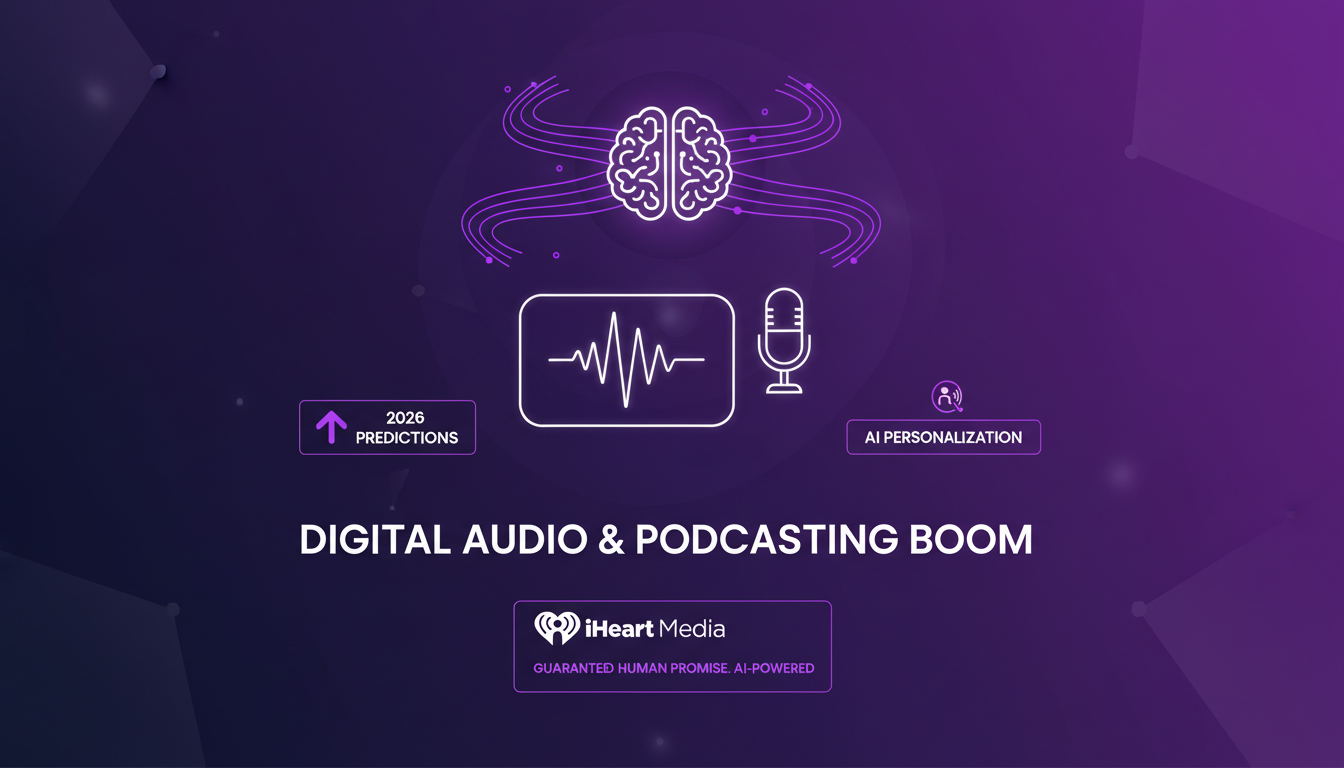
But don't be fooled. While AI can automate content curation, I find that a human touch is still needed to capture authenticity. In 2026, the balance between automation and human creativity will be crucial.
- AI personalizes audio content
- 31% of media time spent on audio
- iHeart Media emphasizes human touch
Live Events and Sports: The Media Frontier
Live events like sports are increasingly augmented by AI. NBC Universal uses AI to enhance live sports broadcasts, which is revolutionary. Real-time data integration allows for a more immersive coverage. But maintaining public trust remains a major challenge.
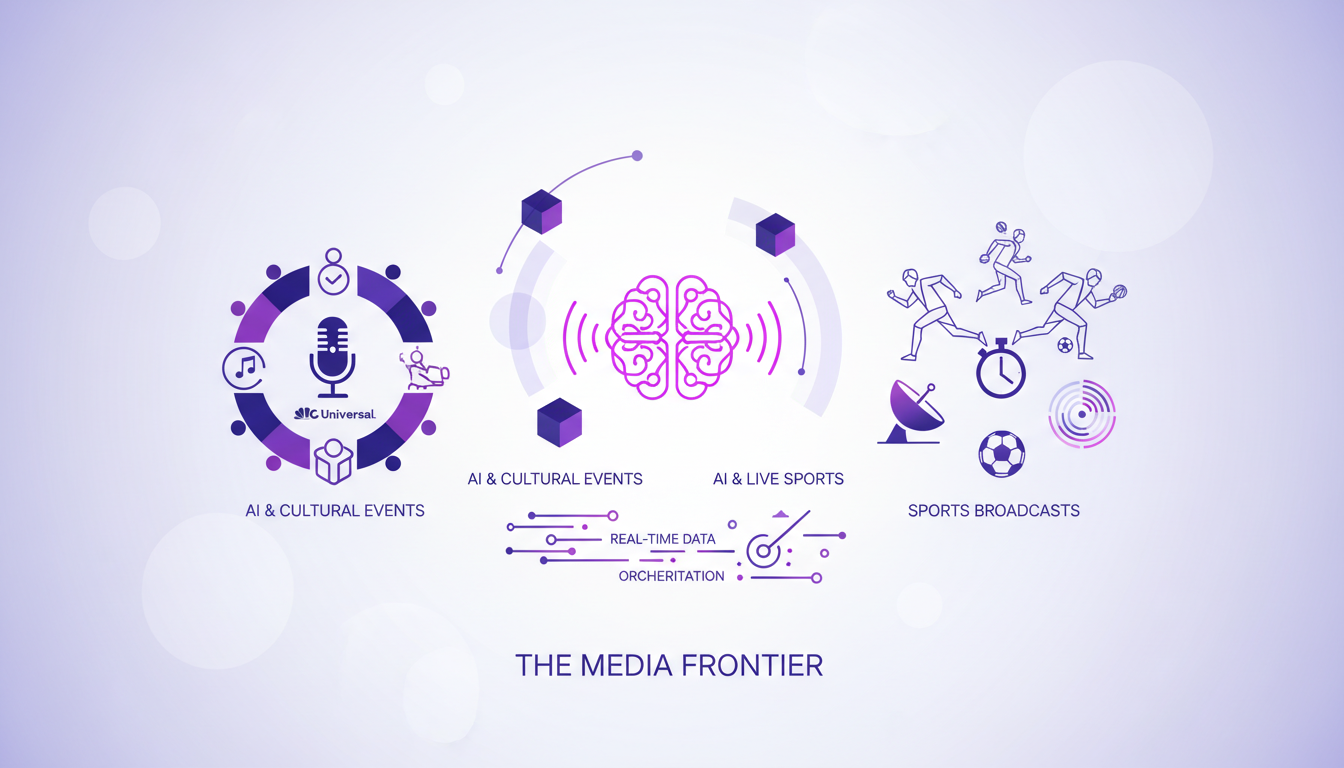
Real-world examples like the Olympics broadcasts show how AI can boost engagement. But I'm wary of over-reliance on AI, especially when it could affect the authenticity of human interactions.
- AI-enhanced broadcasts
- Importance of real-time data
- Maintaining public trust
Emerging Technologies and Media Consumption
Looking to the future, I foresee media consumption being profoundly transformed by emerging technologies. CES 2026 will showcase significant advancements. Qualcomm is already redefining intelligent computing, and the lattice brain concept could be a game changer.
But beware of excess. Innovation must be balanced with safety and trust, as emphasized by UL Standards. There's a lot of talk, but one must be critical about what's truly applicable.
- Qualcomm and intelligent computing
- The lattice brain concept
- Importance of safety and trust
Commerce Media and Personalized Experiences
Commerce media is being reinvented with AI. Mastercard offers solutions that personalize consumer experiences. But personalization comes at a cost: consumer privacy is often compromised.
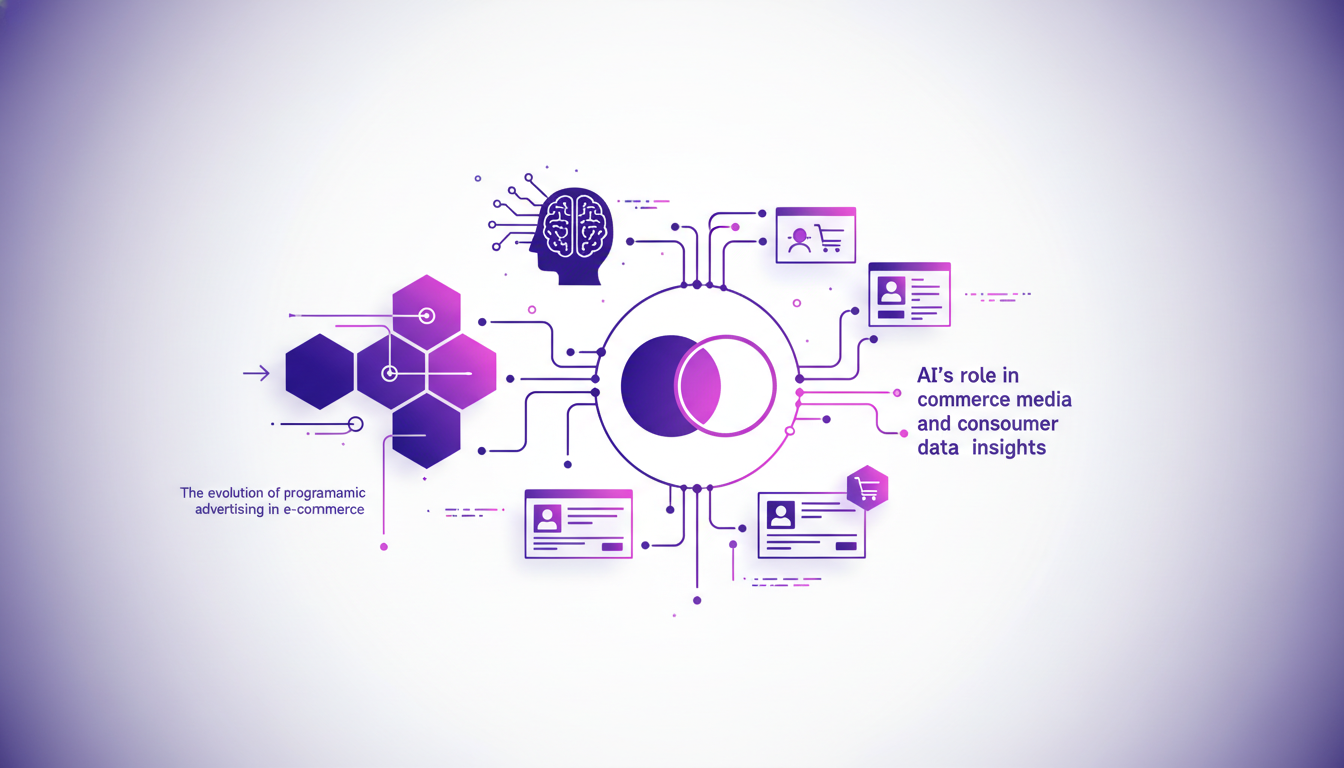
Case studies show how AI enhances commerce strategies, but I strongly advise not to overuse technology at the expense of humanity. Striking the right balance is crucial for successful integration.
- Personalized experiences
- Cost of privacy
- Case studies of successful strategies
So, diving into AI's impact on media and advertising, here’s what stood out to me. First, AI isn’t just a tool—it’s a true catalyst for change. I see how it enhances digital audio and revolutionizes live events, but with these advancements come challenges we shouldn't overlook. Next, 2026 is shaping up to be huge for digital audio, with CES being a pivotal moment to witness these innovations in action. Finally, while AI can optimize our business and human relationships, we need to keep a close watch on the balance between innovation and trust. Looking forward, the potential is there, but it's up to us to integrate it thoughtfully into our media strategies. I recommend checking out the full video to dive deeper into these ideas. Here’s the link: [https://www.youtube.com/watch?v=sTnfdo8XB9g]. It’s really a chance to stay ahead of the curve, but remember: every advancement comes with its limits.
Frequently Asked Questions

Thibault Le Balier
Co-fondateur & CTO
Coming from the tech startup ecosystem, Thibault has developed expertise in AI solution architecture that he now puts at the service of large companies (Atos, BNP Paribas, beta.gouv). He works on two axes: mastering AI deployments (local LLMs, MCP security) and optimizing inference costs (offloading, compression, token management).
Related Articles
Discover more articles on similar topics
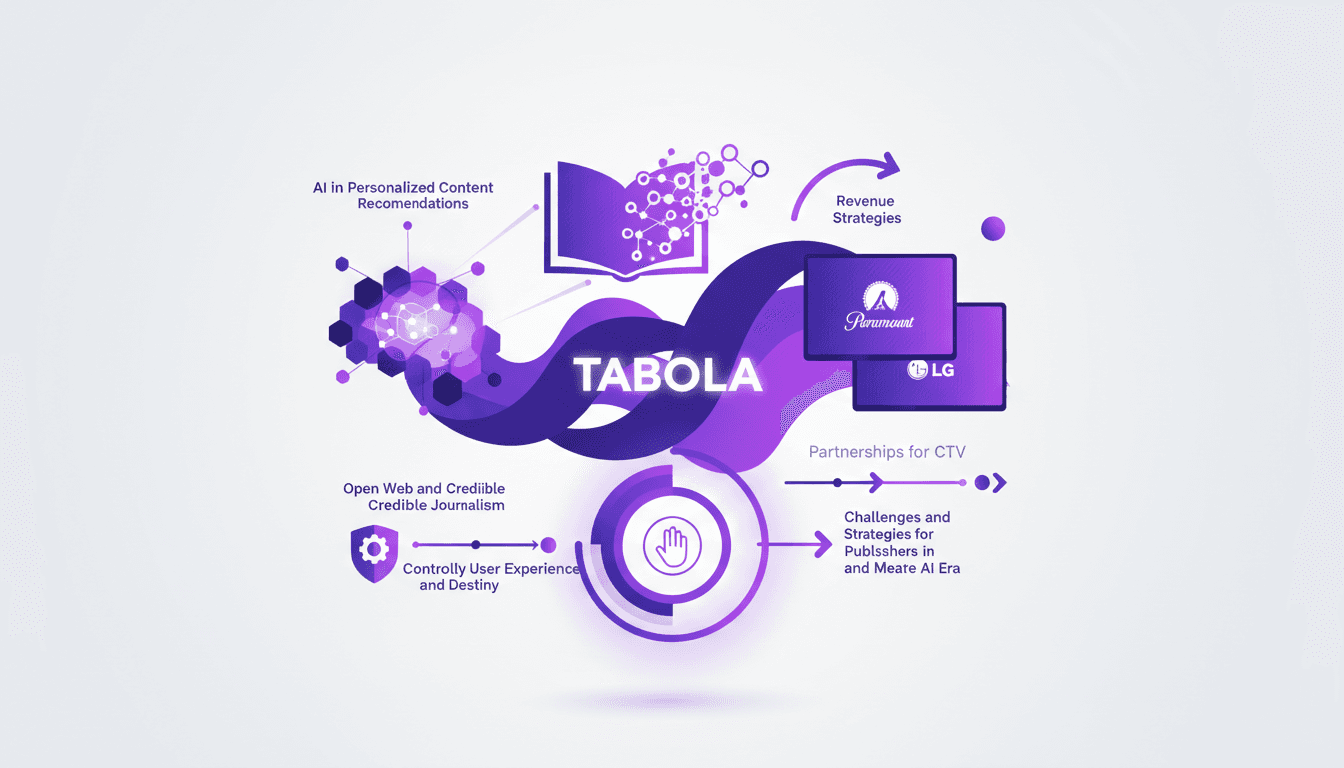
Taboola's CTV Move: Redefining Performance Advertising
I remember the first time I realized just how powerful AI could be in advertising. It was like flipping a switch—everything clicked. That's exactly what Taboola is doing with CTV and performance marketing. They're not just playing the game; they're setting the rules. With over 600 million interactions daily, Taboola aims to become the fourth pillar in performance advertising. Their strategy? Harnessing AI to tailor content and leveraging partnerships with media giants like Paramount and LG. Let's dive into how they're orchestrating this shift and what it means for the industry.
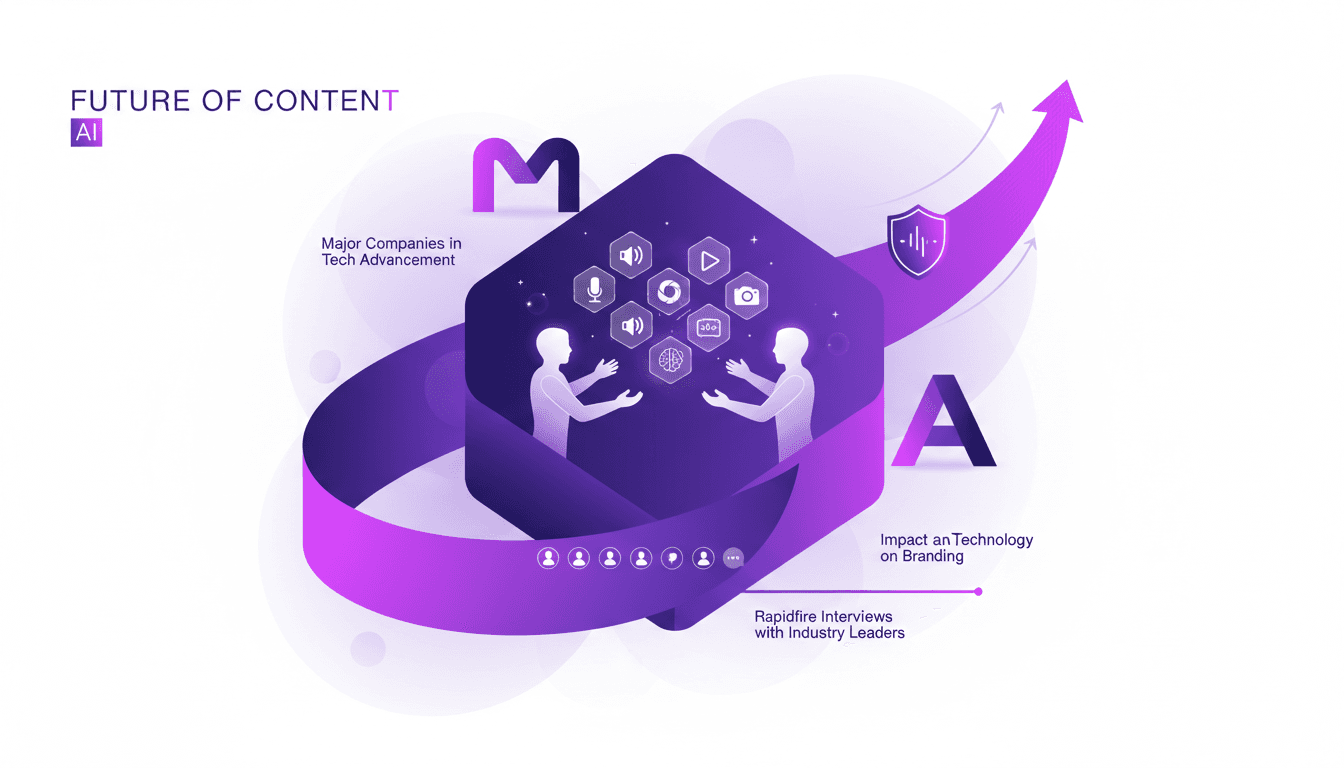
Future of Content: Key Tech Trends to Watch
I've spent countless hours in the CSpace Studio, dissecting what the future holds for tech. It's not just theory—it's about real conversations with industry leaders like James Keki, who are shaping the future of content. Listening to these 53 experts, we uncover key trends: technological innovation in media, the role of major companies in tech advancement, and marketing trends redefining brand engagement. Let's dive into these insights to see where tech is heading.

Boosting Ad Measurement with AI and Trust
I remember the first time I realized the chaos in digital advertising metrics. It was a mess of false positives and wasted impressions. That's when I knew a change was needed. Partnering with IAS and Mastercard, I saw firsthand how we could rebuild trust through independent verification and precision. In the rapidly evolving advertising landscape, trust and precision are paramount. This article delves into how AI, scale, and transparency can transform advertising effectiveness, particularly in the realm of CTV. It covers building trust through independent verification and measurement, the role of AI in reducing false positives, the importance of scale and precision in processing ad data, and ethical AI practices.
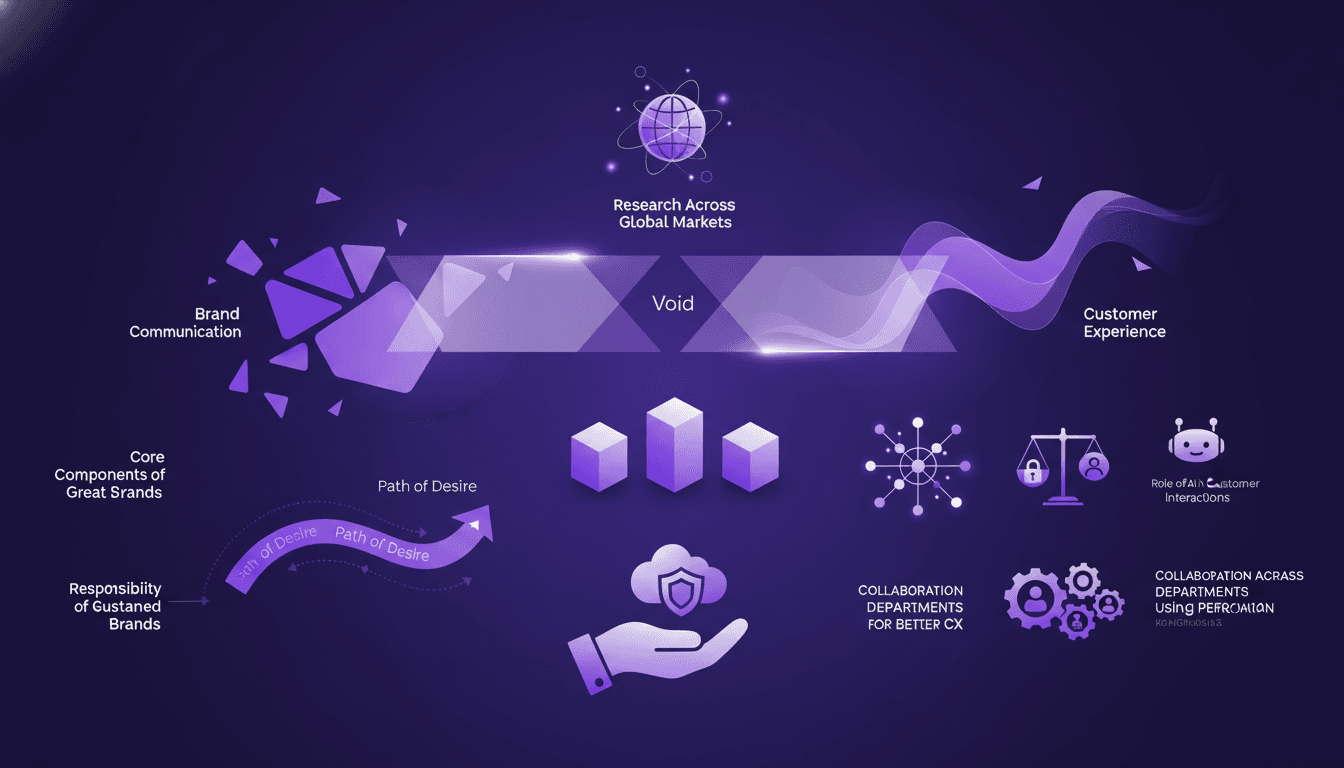
Leveraging AI for Human Customer Experiences
I've been in the trenches, trying to align brand messages with what customers actually experience. It's no easy task, especially when 91% of people see a gap. So, how do we bridge it? In this article, I walk you through how I tackled this, drawing on global research and my own missteps. We dive into the gap between communication and customer experience, core components of strong brands, the role of AI, and balancing privacy with personalization. It's a bumpy ride, but the impact is direct when done right.

Evolving Hospitality: Data and Personalization
I dove into the world of hospitality data with Marriott, where 250 million Bonvoy members aren't just numbers—they're the heart of a personalized experience. I connected the dots between data, brand partners, and privacy challenges to redefine hospitality. With Riot Media at the helm, we're turning personalization, targeted advertising, and cultural relevance into new industry standards. But watch out, compliance and customer consent are critical. The challenges of connecting multi-platform experiences shouldn't be underestimated. Here's how we navigate this exciting evolution.